← Giving Done Right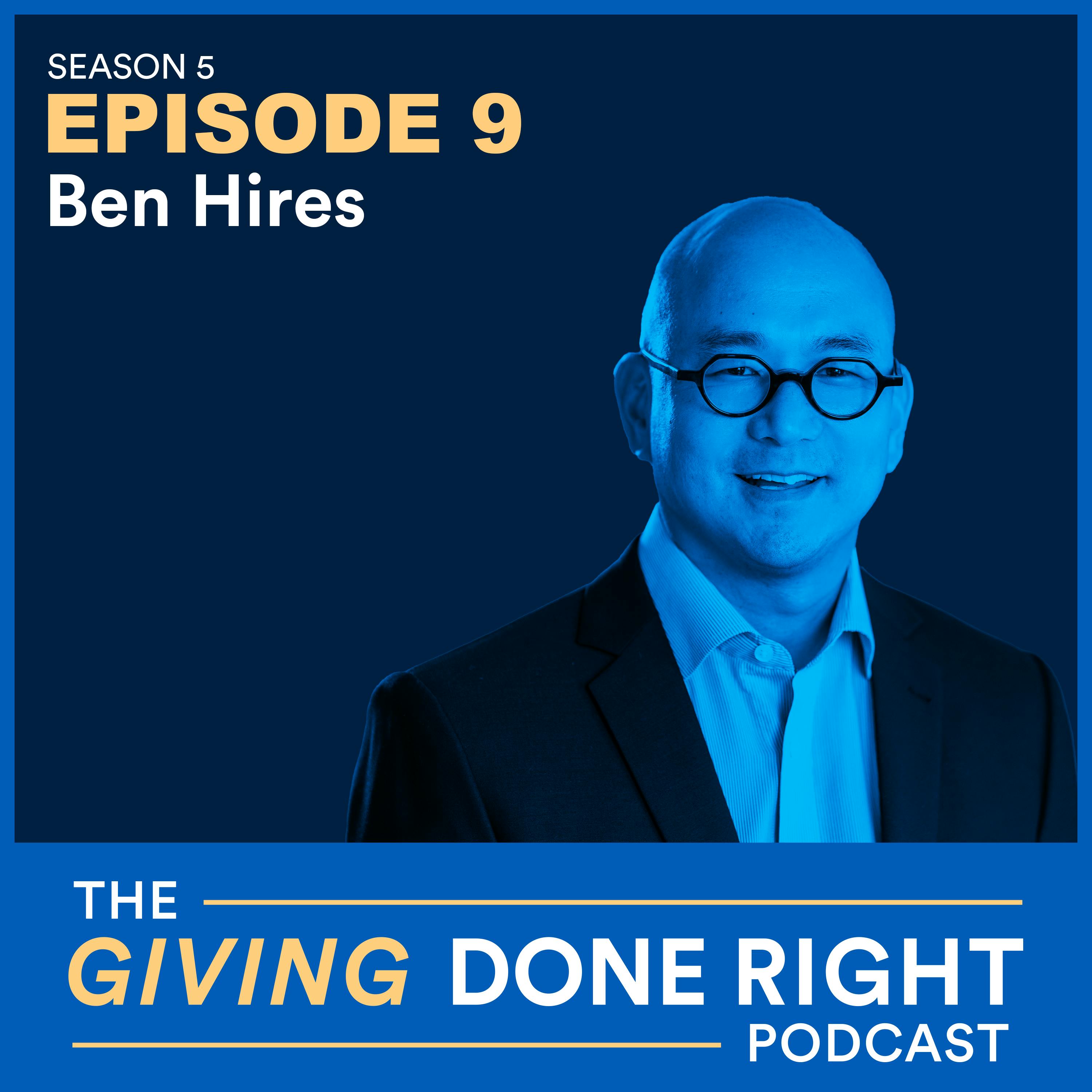
Loading summary
Transcript44 lines
- [00:02]
A
Now, it's true that there are a lot of challenges, especially in this day and age, a lot of uncertainty and fear, but the immigrant community in particular, we know is resilient and strong and is not going away. So I do think there's a lot of hope. And I think hopefully with philanthropy, you know, arm in arm with the community, a lot more can be accomplished.
- [00:27]
B
Welcome to giving Done right, Grace. I'm Grace Nicollette.
- [00:31]
C
And I'm Phil Buchanan.
- [00:35]
B
Today our guest is Ben Hires, CEO of the Boston Chinatown Neighborhood center, otherwise known as BCNC. Founded in 1969, BCNC has provided human services to new immigrants, especially Asians, the fastest growing racial group in Massachusetts, for over 50 years. As a non profit with several locations and an arts and culture space, we wanted to have Ben on the show as part of our efforts to spotlight voices from the frontline nonprofit leaders who serve our communities. Welcome, Ben.
- [01:04]
A
Hi. Thanks for having me.
- [01:05]
C
Great to have you on the show, Ben. And we have listeners all around the world. So hard as this may be to believe, some folks aren't that familiar with Boston. So can you start by sort of placing BCNC in Boston? You know, what kind of community are you serving and what exactly do you do?
- [01:23]
A
Sure, thanks for asking. BCNC is situated in Boston's Chinatown. So we're, you know, right in the center of downtown Boston. And this particular area of the city has been focused on immigrants for hundreds of years. And there's really this really long, rich history of immigrants living here as well as immigrant advocacy and activism. And that's kind of really where the history and the origin story of BCNC begins. BCNC has been around for over 50 years. It originated from just community members getting activated around the building of a community center, which was going to house a school and a community health center. And this is going back to 1969, 1968. From that little seed. Our organization 50 years later now is a $10 million organization that spans a range. Social services for families. So we've been serving the Asian and new immigrants communities with programs like family child care, our early education center, summer programs, and after school teen programs and employment opportunities, adult education and workforce development, family services. Grace mentioned the Powell Arts center, which is the only art center in Massachusetts dedicated to engaging the Asian community around arts and culture and is a partnership with Bunker Hill Community College. And I'm excited. This year in particular, we're about to launch a new program for bcnc, and that's a licensed mental health clinic. I would say that we have all of these programs because we have a very specific kind of methodology and strategy, and that is to be family centered. I would also say that family services is also part of a larger kind of understanding of systems theory, of the, this ecological model. So the idea being that the individual is kind of in the center of a circle and then these concentric circles going out represent the family, represent the school systems, the work environment, the political world, the legal system. So very much understands that there's a lot of things impacting immigrants, impacting families. But we recognize that especially in the Asian community, the family is so important. And when something's happening within the family, it's going to affect everybody. So that's kind of in a nutshell, we do a lot. Every day for sure.
- [03:57]
B
Fun fact. Many years ago, I was doing a summer program as a teenager in Boston, and I actually volunteered as an English tutor for new immigrants at BCNC at the time. And this was, gosh, over 30 years ago now. And even then I could really sense the deep roots that the organization has in Chinatown and in Boston. And I know that you've spent a lot of time mentoring and supporting youth through bcnc. So I'm curious, back when you were a mentor, did you imagine that you would be in your current role leading the organization one day?
- [04:32]
A
I definitely didn't. And I'll share sort of the background. I got into the nonprofit sector because I'd always done a lot of youth work in college and tutoring and so forth. And a lot of my career actually has been working in the youth arts non profit sector. And actually I worked at an organization, Boston Children's Corps, whose office was literally across the street from where BCNC is located. And I got involved, as you mentioned, as a teen mentor, helping a second or first generation young person get prepared for college, whom I'm also still, at this point, probably 10 years later, still in contact with. He's out in San Francisco, he's working in the financial sector. And, you know, we stay in touch when he's back home visiting his parents. You know, the other part of my background in history is that I was born in Korea and I'm adopted Korean, you know, so I personally did not grow up in an immigrant household or immigrant experience, though I did marry Asian immigrant, you know, with my wife. And now we have a son. You know, we're living in a bicultural, multilingual household now. You know, 10 years ago I wouldn't have expected that because of my own lived experience, in part because of my, you know, my personal life and my family but really seeing the transformation and the need that young people and immigrant families need. BCNC has just done a lot of powerful work helping young people get prepared and move on.
- [06:03]
C
Can we talk about the dynamic in this country right now for immigrants? We're in Massachusetts. It's a blue state. That doesn't really mean a lot. So we saw Romesa Osterk, a Tufts University student, taken off the street and put in a van because of an op ed she wrote in a town of Milford, which is not that far from here. Marcella gomes Da Silva, 18 year old, on his way to volleyball practice, detained by ICE in a really terrible detention facility in Burlington, Massachusetts, which is like two towns over from where I live for six, seven days before he got out. Those are just publicized examples. There have been ICE detentions of folks across the state. What do you see in terms of fear and concern from the communities that you serve at bcnc?
- [06:57]
A
Yeah, I definitely think it's important to recognize that, you know, not only here in Massachusetts and Greater Boston, but across the country for Asian Americans and immigrants. We're all living obviously in this new world of heightened fear and uncertainty. And I think, you know, Phil, as you're sharing, you know, top of the list is what's happening around immigrant enforcement and especially the manner in which it's taking place. You know, it's quite scary what we see on the news and social media. And I think that's definitely top of mind of especially parents of children who might be traveling back and forth from school or going to jobs and so forth. So that's number one. And one of the things that all of our colleagues in the immigrant serving community have been doing is just get prepared in terms of training, both in internally with our staff, but also for community members. Right. The Know youw Rights training. All of us have had to prepare new policies and procedures just to be prepared to support our staff and our families in case of, you know, an immigrant, you know, situation. I'm really proud that also the community, elected officials have come together to prepare for that and try to protect folks and do the right thing. I think a lot of the other changes that are happening at the federal level around birthright citizenship, even the talk around denaturalization, those are definitely all scary because 60% of the Asian immigrant community like myself, are naturalized. And that becomes very real when potentially your citizenship could be at risk. You know, especially in Massachusetts, there's been a lot of changes and pressure around visas and student visas and enforcement. At bcnc, we in particular rely on International students who have both the language and cultural backgrounds and educational expertise that we need to, you know, provide the types of programs and support for our families. You know, we even have a staff whose visa is through one of the local colleges. And they've been under incredible amount of sort of worry and stress about what's going to happen, you know, with their visa and their employment here with bcnc. You know, the final thing that isn't unfortunately new, but, you know, there's data around that and worry that this is going to get worse, is the continued anti Asian hate and anti Chinese political rhetoric that certainly impacts not only the Chinese community, but really, the data shows, really affects all Asian communities. There's definitely a lot that our community is facing, but I think there's a lot of efforts to come together to address these concerns and these fears.
- [09:49]
B
You know, I didn't realize that. I mean, it makes total sense that you do draw resources and help from international students as well. And I think that makes a lot of sense. So in some ways, right, it's multiple groups of folks that have touch points with you all who have been experiencing a lot of fear at this time. I actually, a friend of ours, mom, was attending church in Chinatown, this was during the pandemic, and was attacked in something that we think was related to her ethnicity. And so I think this has all felt really real. And so what are the conversations that you have then with your staff and with the folks who use your services? Like, obviously, it seems like you've been preparing really well. I mean, it's so hard, I can't even imagine what you would say to them. But I'm just curious, like, what sorts of comfort or resources are you all able to provide during this really uncertain time?
- [10:40]
A
You know, it's a fine balance between sort of incurring more fear and worry, but at the same time, as you're noting, helping people feel supported and sort of educated. So the know your rights training in language, whether it's in Cantonese or Mandarin, has been really important. And, you know, and there's been sort of nuanced messaging going to our participants around, you know, is your emergency contact information up to date, reminding people that we don't keep any visa status data around, you know, any of our participants, and that data is protected and things like that. So we're not welcoming ICE into here, but we're putting things into place that in general isn't necessarily new, but, you know, your information is protected. This is a safe place. Everyone is welcome. So those kinds of things, I think are really important because even as a parent myself, and if I was in this position of potential worry, that I would want to know that an organization like BCNC has been thinking about some of these things. And so again, it's sort of a fine dance to ensure that people feel safe and that we're thinking about these things, but not getting people too worried about it.
- [11:55]
C
I think I've said like 127 times on this show on previous episodes and now will be 128. Leading a nonprofit is uniquely challenging. Like it takes everything it takes to run an equivalent size business and a bunch more. It's really harder, not easier, despite what some people may think. And that just feels, listening to you, only more true now the complexities that you're navigating. And a lot of what we try to do here, what Grace and I try to do is really help donors understand that it's challenging and understand what it takes to be supportive and helpful. I guess I'd invite you to say, what would you like donors to know about what they can do to support you or even what the community might be like if you weren't there? What do you think it's important for donors to know right now?
- [12:52]
A
Yeah, I think an organization like bcnc, right, we're on the front lines every single day helping families, parents, adults, be able to provide for their families, you know, help their kids get ready for education, manage stressful situations that are in the household. We've got this deep focus now on the mental health of our families. And you know, this is super important for this community, which is very large, as Grace was saying, one of the largest, fastest growing immigrant communities in Massachusetts and really in the United States. I've heard you have some previous conversations with donors and foundation leaders, philanthropy leaders, about this balance between systems and policy work and direct service work. And some folks have said really the systems work and the policy work is going to have really this long term impact that's systemic change. And then other folks kind of say, hey, we need to feed people or we need to educate people. And earlier I was talking about, we have kind of this family centered approach which is very much on the ground helping families literally day to day, perhaps get what they need. But it's not without a greater understanding of all the systems that are in play. And so what I would invite donors to think about is it's not an either or, right? It's a both. And. And for some people, they're going to really prioritize and understand the importance of that day. To day work. We want families and immigrants to be a part of this community down the road when we know hopefully that systemic change will happen. Even BCNC's own story, like going back 50 years ago, you had immigrant communities stand up and advocate and sort of fight for some of that systemic change. Right? We need the folks today who are coming through our doors and other organizations doors to get the foothold and get the support they need because they're going to be part of the change longer term. We need everybody to, you know, be supporting the front lines but also supporting that policy work.
- [14:56]
B
Stick around. We'll be right back. Do you want to be part of a global movement of change makers? Social Venture Partners connects philanthropists with impactful nonprofits around the world. Join over 2100 partners across 5 countries. Learn More and find an affiliate near you@svpi.org ever wonder where your money goes every month? The pressure to keep up doesn't just drain our wallets. It keeps us from paying off debt and reaching the goals that actually matter. We're here to change that. Our on the Frugal Friends podcast, we help you ditch the shame of traditional budgeting, push back on over consumption, and actually spend on the things you love without the financial hangover. So if you want a holiday season and a life that feels intentional and sustainable, come hang out with us, listen and subscribe to the Frugal Friends podcast wherever you get your podcasts. You know, in our research at cep, we had this report out that when foundations really stepped up their giving for certain communities in 2020 and afterwards, that Asian American Pacific Islander communities didn't really see an increase in giving despite the rise in hate directed at Asian Americans. And we also saw that nonprofit leaders who identify as Asian American tend to have less positive relationships with their funders than any other racial group. And those findings really floored me when I first read them. So I'm curious, does that resonate with you? And like, what does fundraising for BCNC look like in this current context? And are there challenges in how you approach your relationships with donors?
- [16:38]
A
Great question. I think sort of a lot of facets to responding to this. I'll start with sort of my own personal journey I mentioned, you know, I come from this adopted background and spent a lot of my career, you know, not working in the immigrant space. And so I've been able to sort of work on kind of what I call the mainstream organizations that receive funding from again, sort of sort of mainstream type of funding sources, philanthropic sources. So I've kind of been on that side. And personally, you know, been fortunate to develop relationships with those folks. So when I was able to step in at bcnc, you know, I've been able to bring some of those relationships to bcnc. But at bcnc, you know, we have this long history of people from the community who've now sort of made it, if you will, or really see the value of supporting an organization like ours. And today you're continuing to have people say, you know, even though you've been supporting immigrants for the last 20 years, we still need your help. Even though there's more Asians in greater Boston, even though, you know, Chinese are doing better, we still have new immigrants coming in. And you know what it's like to need someone to help you navigate a system, help you learn English. I think for the folks who are maybe not so familiar with the community, you know, what I've been able to do is bin that bridge. And I think it's pretty natural that if you don't know the community, you don't know what the needs are, you're not going to be thinking about what this is. I think another element that I want to mention is the model minority myth, when actually within the Asian community, they have the widest socioeconomic gap, and there's a lot of families in that community that need help. And I think what happens is philanthropically, you know, where is the most philanthropic dollars? They're kind of when in the mainstream community. And so if all they're hearing, whether it's through media or reports, they're not going to think that the Asian community needs help. So I think it's like perhaps the disconnect, you know, not the lived experience, certainly, and then just this general myth of perhaps where Asians are at in contemporary sort of American culture. And, you know, the data proves this. So the Asian American Foundation TAF has done this annual report called Status, which is like the social index of Asian Americans in the US and, and their most recent report shows that the majority of Americans believe that Asians are treated fairly and are doing well. A majority of Americans see Asians as sort of white adjacent, whereas when they poll Asian Americans, majority of Asian Americans see them as people of color. So all of these perceptions and ideas are out there, and I think it trickles down into philanthropy.
- [19:37]
B
I don't know if that's the same report where people are asked if they could name a famous Asian American person. And I think the most common answer was Jackie Chan, who's not American. That was very, very sobering to read within Philanthropy, we talk a lot about, like, well, then you need to like, disaggregate the data about, you know, Asian Americans, for instance. Like, you need to basically see, like, who are the folks who are then struggling the most. And I feel like this might be a challenge because outside of the United States, everyone views themselves as being ethnically very distinct. And here we kind of all get lumped into being Asian American, which actually is a very historic and kind of powerful identity, if you look into it. Where are the opportunities within the AAPI community for more support?
- [20:24]
A
Well, that's. You mentioned disaggregated data, which means that every sort of specific ethnicity is tracked and you can kind of see the results. So rather than just the assumption that all Asians are doing well and highly educated, we can actually go down a level to look at the Vietnamese community, which is a refugee community, asylum community. You can look at the Cambodian community, you know, all these more recent Asian diaspora here versus maybe the Chinese or Japanese who've been here longer. So there's definitely differences and sometimes nuanced differences. And so being able to have that disaggregated data is really important both internally to the Asian community for advocacy reasons, but also for greater understanding kind of outside. And in Massachusetts, it's been a priority for our elected officials as well as community partners. And in this past year, we were able to work together and pass a data disaggregation bill, which not only is important to the Asian community, but really is going to disaggregate data for every ethnic group. And a lot of the power around that is exactly what I shared. You know, government programs, whether it's healthcare, whether it's education, is going to be beginning to be required to have many more boxes to identify who you are and what your background is. Because again, we want to be able to make the argument that there are needs and there are resources, and it's not just any kind of assumption about the wider group.
- [22:01]
B
The hope there is that with more accurate data disaggregated by different groups, that there can be more targeted assistance and support for those groups. Is that right?
- [22:12]
A
Yeah. And one of the areas that this is so important and been a long running opportunity is language access. So I think, you know, one of the reasons why sometimes Asians are left out of data or surveys or reports is because of the language access. And admittedly it can be complicated because of all the different languages that are possible. You know, being able to identify who's out there and what their needs are and the value and importance of getting things like language access or culturally appropriate types of programs. That's going to be the value of this aggregated data.
- [22:52]
C
There's so much to state the obvious pushback right now in the national conversation about basically the question of who is American and push back against the idea that the fact, in my opinion, that immigration has built this country is part of our history and present and strengthens us. And I don't think, color me naive, but 10, 15 years ago, I would not have imagined that some of the anti DEI nationalistic kind of theories and perspectives would be in the political mainstream to the degree that they are. And I wonder, given your work, you know, centered in this very racially diverse community, you know, in a city whose mayor has been, you know, hauled to Congress and I think done a remarkable job of kind of testifying to the ways in which diversity of culture and nationality and language strengthens us. Like, how do we do a better job of pushing back and making the case for a definition of what it is to be an American that celebrates our diversity of backgrounds and what they bring? Like, you're living this work. What would you want to tell people who are part of that backlash?
- [24:24]
A
I think at the heart of immigration is an effort around belonging. Right. I think immigration has been part of world history. I mean, from time immemorial, right? People have been moving around. And why have they been moving around? Why did the Pilgrims come here? Why was there the great, you know, immigration? In the early 20th century, people wanted a better life. You know, they wanted freedom, freedom for religion, freedom to, you know, be able to pursue jobs, education, be able to take care of their families. And that's not going to change. And I think, you know, the reputation that we probably, you know, and the vision that we believe in the United States about being a place for all of those things to occur and to happen is because this is a place that has historically welcomed and allowed people to pursue all of those things. So, again, you know, I think it's about this idea of belonging, and I think that's something that everybody can, you know, certainly understand, if not have had part of their own lives or even just the next generation above them. And so that's what I would talk about, because that doesn't differentiate the people who have just come here less than a year ago and who's in our English class, in their experience and in their, you know, challenges and sometimes struggles is no different than what, you know, I'm trying to do with my family every day and get them to, you know, School and go to work and, you know, be a part of the community. Right. It's all still here. It's just, you know, the language might be slightly different that they speak or the length of time that they've been here, but I think there's such beauty. And I'm so impressed by what immigrants bring in their spirit. And frankly, sometimes I feel like the folks that we are serving that are in our halls every day, sometimes they're true Americans about how much they are willing to do to come to this country and to be a part of it. So it is very visceral. I feel like I'm sort of trying to express. I mean, it's very visceral. Right. Physical moving and leaving and coming and, you know, sacrificing. Right. I mean, those are things I think, unfortunately, Americans, you know, when you're here along, you kind of lose. But I think if you talk about that, you know, it is something everyone can tap into.
- [26:52]
B
Ben, are there any partners or donors who've been especially helpful and effective that you want to spotlight and what made them so helpful?
- [27:02]
A
So, for example, one of the local hospitals that have funding every couple of years, they said, hey, we want you to engage the community, come up with a program, we'll give you some lead time, we'll allow for capacity building, and then put something together that has multiple people involved. And, you know, I think we've seen that has benefits on multiple levels. One again, has a much more responsive project because the community's bought in because they've been part of the process. The other piece that I think a lot of philanthropists and donors would appreciate is that ecosystem that develops. And we're very fortunate in Boston's Chinatown to have many long term, multi service or a lot of different agencies, whether they're focused on housing or workforce or community or education, be able to continue to work together. Right. Again, so that there is a community and ecosystem that when Covid hits, for example, we all come together. And it's not just one organization trying to tackle all of the issues of a worldwide pandemic. So I think those models have been really helpful. I appreciate them listening to us.
- [28:14]
C
Yeah. And I think that runs counter to what people sometimes assume, which is that nonprofits don't collaborate that well. And obviously there's examples where that's true. But I often see in community great coordination and collaboration. I think particularly in moments of crisis and challenge, sometimes that's the push for people to really get together and coordinate in a different way. And it's so Important, because no one organization is going to be able to deal with issues on its own. It requires that ecosystem. I wonder if you could then bring this down to the level of the personal. Like, is there a family, a person who's been served by your organization whose story you draw strength from or exemplifies? This is who we are at our best helping folks.
- [29:00]
A
I think one story exemplifies a lot of the elements, both the direct service and systems work. And that is in our childcare program, we had a family whose child was diagnosed with a developmental delay. And maybe like a lot of communities or families, but certainly in the Asian community, there is culturally and historically stigma admitting or, you know, getting extra help for someone who might be experiencing that. A lot of our staff who are bicultural and bilingual work really hard to advocate to parents and say, hey, it's okay if this is happening. And there's actually resources and help. And actually, you know, when you're thinking about a school age child, there's law mandated support that, you know, the systems are supposed to provide. But especially immigrant families, they, you know, you have the stigma and perhaps not the awareness that you can get the help that you need. So this family, you know, was able to, you know, step up and say, hey, we want to take advantage of that support. And this particular parent went deep, you know, not only because it was their child, but really recognized I can speak up for the wider community and really became an advocate for their child and for other families. And so right at the individual and family level, you know, they were able to get the help they needed for their child, but then went on to be sort of a spokesperson and got involved in the school system, you know, know, speaking out for their child and for these types of resources.
- [30:36]
B
That's awesome. I'm curious, others may not know, but in Boston we have an Asian American, Mayor Michelle Wu, who is Taiwanese American. Have you noticed any difference or change in the fact that, you know, from the highest leadership in the city that you do have an Asian American in power and has she been involved with BCNC's work in any way?
- [30:59]
A
It's been incredible to, you know, have the Boston mayor, a woman, a woman of color, a woman of Asian descent, obviously there's a level of pride in the, you know, Chinatown Asian community about Mayor Michelle Wu. You know, one of the great things about Mayor Wu is, you know, the things that she stands for, the values she stands for, the programs that she cares about. You know, not only is important to the Asian community, but really the whole city of Boston. Right. And that's why she overwhelmingly became the mayor, I think, talking about empowerment, this continued growth and empowerment of the Asian, Asian American community. So, for example, in Boston, we have our community foundation, the Boston Foundation. And one of the things that's occurred over the last couple of years is thanks to some amazing advocates like Paulie, you know, they have started the Asian Community Fund that's part of the Boston Foundation. And they've been focused on, you know, civic engagement, they've been focused on Asian business empowerment, they've been focused on mental health and the arts. So this never existed, you know, and the models of the Black Economic Empowerment Council and the Latino community that had a. An organization, you know, what was missing was this Asian Community Fund. And so that's been a real milestone for the community and for leaders to come together. Taft, the Asian American foundation, which kind of came out of COVID as well the last couple years. Now, that is another force out there promoting the Asian American community and needs. They have a current campaign, a national campaign about Asian stories. And so, you know, opposed to even five years ago when I started at bcnc, let alone, you know, further, there are these instances and examples of where the Asian community is much more vocal and empowered. And I think to me, that's quite the inspiration and hope. As I mentioned, my mentee, who's now probably 25 when I met him when he was 17, I mean, for folks like him, there is this pathway and this visibility for the community and not just for Asian Americans who've been here for multiple generations, but like my mentee, second generation young person, you know, now, you know, has all of these leaders and examples like Mayor Michelle Wu to say, hey, there's no bamboo ceiling. There's no limitation for us.
- [33:30]
C
I'm kind of struck by your optimism because, to be honest, I've been so lacking in it lately. And so it's great to hear your local, you know, examples of what feels like actual progress. You know, are you telling the truth? Are you really as optimistic as it sounds? Because there are so many headwinds, and yet the picture you're painting of Boston is obviously there's tons of challenges, but one that feels more hopeful than not in the way I hear you talking.
- [34:01]
A
Putting me on the spot, Phil.
- [34:03]
C
That's the idea.
- [34:04]
A
I think, honestly, you know, again, in my five years in this space doing this work with incredible people, there are actual accomplishments and milestones that we can count. The data disaggregation bill. I'm the co chair of the Asian Pacific Islander Civic Action Network. And we just hired our first director of that, where before it was all sort of volunteer led. You know, the mental health of the Asian community is big, being talked about and prioritized. So I think for people who've been doing this work for decades, let alone someone like myself who's been doing this for five years, there's incredible strides now. It's true that there are a lot of challenges, especially in this day and age, a lot of uncertainty and fear, but the immigrant community in particular, we know is resilient and strong and, you know, is not going away. So I do think there's a lot of hope and I think hopefully with philanthropy arm in arm with the community, a lot more can be accomplished.
- [35:10]
B
Wow, that's a great reminder. Recently we've just been talking about how difficult everything is. And it's just a good reminder that donors who are giving faithfully over time and supporting local communities can and do make a huge difference. So it's really good to be reminded of that.
- [35:27]
A
Yes.
- [35:28]
C
Correct me if I'm wrong in what I said earlier about your job being really hard. I'm curious whether you, whether you agree or disagree, but I'm just going to go out on a limb again and suggest that it's probably a pretty difficult grind and that there are some really hard and long days. I'm curious just as a leader, how you. Well, first, whether you agree with that premise or not, and secondly, if you do, how you take care of yourself and make sure that you're there for this community when they need you and that you don't run yourself into the ground. Because this is such a hot topic now among nonprofit leaders. So many conversations about burnout. Lots of data we've developed that suggests it's a real issue. How do you think about it for yourself and maybe for your team too?
- [36:22]
A
I mean, honestly, I think I mentioned in the immigrant community there's a really important strength around resilience. And again, it's a balance of just taking the pain, if you will, and pushing it down. But I think also there really is a spirit of we've got work to do, we're going to do it together and we're going to accomplish this. And you know, I would speak to this is really important to me as a leader and focusing on our team because I know burnout is so real and coming out of the pandemic and seeing what early education teachers were dealing with and even still today, you know, where children and young people are at and families are at with the stresses of where the community is at. You know, one of the things that we've committed to and is kind of a strategic priority for the organization is becoming trauma informed. And so just internally, we have been working with folks to become vicarious, trauma informed, trained, and so understanding that people that we're supporting coming in our doors are bringing all kinds of trauma and challenges. And then our staff who are working with them day in and day out can then vicariously in their own life kind of take on that. And so we were going to be very cognizant of that and become trauma informed. So for me, part of it is really just focusing on the team and when I know that they feel supported and appreciated, that's really valuable to me. I think for myself, you know, I'm just blessed with, you know, such a great team, you know, great leadership team, great frontline staff. Not jokingly, I feel like I have the easiest job and, you know, one of my main priorities is just making sure they have what they need and they know that I have their back. I do bring hopefully a good spirit and energy to the work and to the office. And I feel like our organization, you know, continues to benefit because we do value that here at bcnc.
- [38:25]
B
Ben, thank you so much for joining us today. This is a really great conversation, so.
- [38:29]
C
Appreciate all your work. Ben, thank you for sharing your insights with us today.
- [38:33]
A
Thank you too. I really appreciate being here with you.
- [38:46]
C
There are a slew of resources about effective giving on the center for effective philanthropy's website, cep.org as well as givingdoneright.org where you'll find all our episodes and show notes.
- [38:59]
B
You can also send us a note at GDRpodcast.
- [39:03]
C
We want to thank our sponsors who've made this season possible, including the Stubbsky foundation. And a note that any opinions expressed by our guests on the show do not necessarily reflect the views of CEP or our sponsors. If you like the show, please leave us a review on Apple Podcasts or invite a friend to listen or both.
- [39:21]
B
Giving Done Right is a production of the center for Effective Philanthropy. It's hosted by me, Grace Nicolette and Phil Buchanan. It's produced by Rococo Punch. Our original podcast artwork is by Jay Cuska. Special thanks to our colleagues Sarah Martin, Molly Heideman, Christina Tran, Chloe Hesket, Naomi Rafal and Serena Goosby for their marketing, research, writing and logistical support.