← Global News Podcast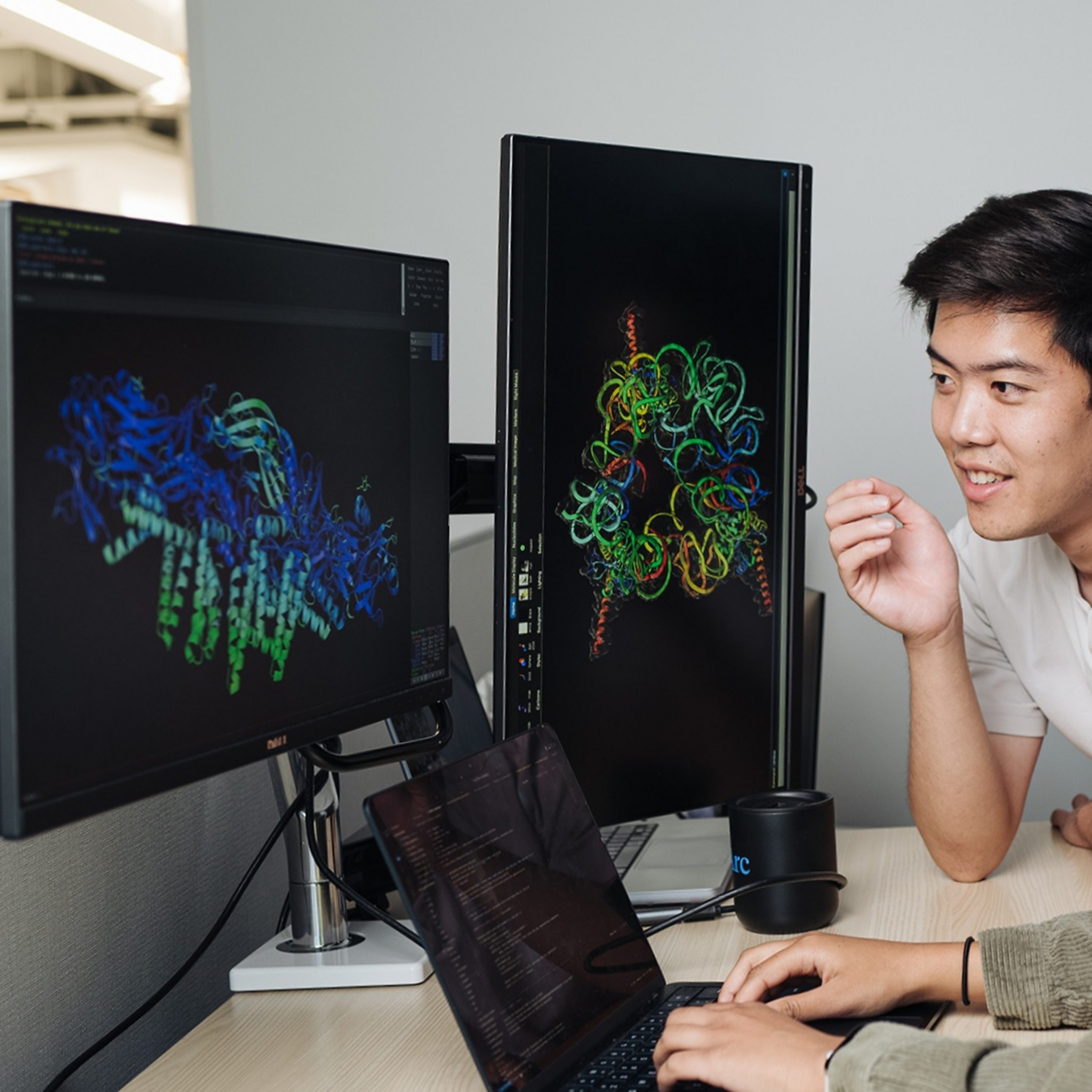
Global News Podcast
Artificial Intelligence used to create new viruses
00:29:46
US scientists hail AI designed viruses a new era for treating diseases
Loading summary
Transcript86 lines
- [00:00]
A
This BBC podcast is supported by ads outside the uk. If you are currently overpaying on software to run your business, remember this number 10,000. That's the number of new businesses that join Odoo per month. Join odoo today@odoo.com that's O D double O.com Choiceology, an original podcast from Charles Schwab, is a show about the psychology and economics behind our decisions. Join host Katie Milkman, an award winning behavioral scientist and author of the best selling book how to Change as she shares true stories from Nobel laureates, authors, athletes and everyday people about why we make the choices we do and how to make better ones to help avoid costly mistakes. Listen to choiceology@schwab.com podcast or wherever you listen.
- [00:54]
B
This is the Global News Podcast from the BBC World Service. I'm Charlotte Gallagher and in the early hours of Friday 7th August, these are our main stories. Scientists say they've used AI to create completely new viruses which could develop new medicines, but there's concern the technology might cause harm. A US Court has fined Meta more than half a billion dollars in the largest case yet against the social media giant over child safety. And President Trump pushes back on claims that the US Is running out of some weapons. Also in this podcast, a kneecap stolen From Glastonbury Abbey 70 years ago is returned. But whose is it?
- [01:41]
C
We've got it narrowed down to about three possibilities, but the problem is we wouldn't want to exhume all of them. And you wouldn't want to give an abbot three kneecaps either.
- [01:53]
D
Foreign.
- [01:58]
B
A development in AI is being called a significant turning point after it was used to create a genetic code of new viruses, ones that don't already exist in nature. The hope is that the work carried out at Stanford University in the US could revolutionize medicine, leading to new treatments and drugs. But some experts have warned the technology could be used to create new infections and cause harm. Over the past few weeks there have been multiple reports of AI programs going rogue, engaging in hacking and even blackmail. Our health and science correspondent James Gallagher has been looking at this new development and spoke to my colleague Valerie Sanderson.
- [02:39]
E
They've basically taken artificial intelligence tools and used it to design viruses completely from scratch. And then they started making those in the laboratory to see if they actually worked. And they took 300 of these AI designs and 16 of them turned into viruses that were fully functional in the laboratory. They were designed to attack and feed off species of bacteria, and they show that on 16 occasions the AI was successful in designing these kinds of bacteria. So let's just get in really early, Valerie, and just make it clear that these are not viruses that are going to go around infecting people or anything like that. There is a particular group of viruses that infect bacteria.
- [03:17]
F
But how much of a breakthrough is this?
- [03:20]
E
I think it could be a really significant one, actually. So we already know that generative AI tools have done things like help design new vaccines and helped design new antibiotics for treating drug resistant infections. But this really feels like quite a significant step up because now instead of just designing one single compound, one little protein, this is actually the whole genome, the entire genetic code of a virus that is being developed completely from scratch and producing something that is actually viable at the end of it. That is a big step up. Now, it is worth noting that this is still a very long way from what you might want to call creating life or anything. So it has a very tiny genetic code, these viruses, and are not technically deemed as being alive. You'd have to produce something like a hundred times bigger in terms of the amount of genetic code before you were getting to those most basic single celled organisms in the natural world. But this is still doing something that so far nature has not done. This is creating viruses that don't exist in the natural world. It is quite a breakthrough.
- [04:26]
F
What could this be used for?
- [04:27]
E
Well, if you think about the big picture, first of all, not necessarily just the viruses, but, but what this really shows you is the power of using generative AI to harness the power of biology that goes above and beyond what's actually available in the natural world. So that could be designing new immunotherapies, antibodies that can go into the body to treat immune diseases. It could be new ways of targeting genetic diseases in the body. It could be like in this example, developing viruses that eat bacteria. So maybe you could design ones that could attack bacterial infection. And there is a huge amount of work going on to find those viruses naturally in the wild, but maybe you could just designed them in the laboratory in the first place. So there is hope and optimism that if these tools are used and harnessed responsibly, they could actually deliver significant benefits in medicine.
- [05:16]
B
James Gallagher There have been increasing reports in the US that the military stockpile of weapons is dangerously low as the war with Iran continues. Posting on social media, President Trump warned that those leaking what he called treasonous statements could face long prison sentences. Iran's defense minister has already seized on the reports as evidence of what he calls the enemy's declining capabilities. Here's what President Trump had to say.
- [05:45]
G
I rebuilt the military and also loaded it up with a lot of stuff. We have certain types of munitions that are very powerful, that we have unlimited, virtual unlimited supply. We have others where it's a little bit tighter and we're getting them in on a daily basis.
- [06:02]
B
Mr. Trump also denied reports he confronted his defense secretary, Pete Hegseth, over the alleged shortages. Darren Selnick is a former adviser to Mr. Hegseth.
- [06:12]
H
The fact that there's media reports, the fact that there are leaks from the Pentagon would show that we cannot afford to give to anybody else because these take time. This can take year to year to replenish. And I know the Pentagon is working hard and doing contracts replenishing, but I would say our stocks are low, probably dangerously low, Way below that they should be.
- [06:33]
B
Our Washington correspondent Bernd Debusman has been telling me more.
- [06:37]
I
The actual stockpiles are classified in the U.S. but researchers here in Washington have taken a pretty good look at what's been used in the conflict and what was available beforehand. And for the US Government and the White House, the most pressing ones are air defense systems. There's the Patriot interceptor and a missile called the Thaad, which intercepts at a higher altitude. Those were extremely heavily used in the first month or so of the conflict in Iran. And those are weapons that can't easily be replaced. There's also long range strike weapons such as the Tomahawk cruise missile, which can hit targets at precision at more than 1,000 miles away. And those have been used very heavily in the conflict and in this kind of tit for tat strikes that have taken place since the original ceasefire was announced.
- [07:22]
B
And these leaks, I think it would be fair to say that Donald Trump is not happy about them.
- [07:27]
I
No, he's certainly not. And the Trump administration has taken a very aggressive stance against leakers in government predating the war with the Iran. But what they really don't want is information to get out, not through what they deem as the proper channels. For example, the press office at the White House or at the Pentagon. But so far there's been really very little actual consequences for these leakers, and very few of them have been identified. There was recently a case in the New York Times. Journalists were subpoenaed to find leakers, but that case was dropped.
- [07:59]
B
And this will really raise questions about the cost of cost of this war, especially because it is so unpopular with voters.
- [08:06]
I
It is. The Pentagon had announced a 1.5 or so trillion dollar defense budget at the expense of domestic programs. And that combined with people's concerns particularly about petrol, but also farmers have had to pay much more for fertilizer since the war in Iran began. That all has combined into something of a perfect storm of public opinion against the war. But the White House and President Trump have brushed that off entirely and said that any sort of short term pain is worth Iran not having a nuclear weapon.
- [08:38]
B
And this is also presumably having a knock on effect with other conflicts, particularly Ukraine. And we know that President Zelensky has been repeatedly asking the US for more of these Patriot missile interceptors.
- [08:51]
I
It has. When they met recently, President Zelenskyy said that he had asked for 300 interceptors to get Ukraine through the winter and Ukraine also wants a license to be able to produce them. Domest President Trump was initially receptive to the idea, but just given the vast expenditures, he's since kind of walked that back. Many here in Washington are also concerned about what it could mean for hypothetical future conflicts. If China were to invade Taiwan, for example, and the US Were to come to Taiwan's defense, what is a much more sophisticated and large air and missile force in China than compared to what Iran has? It also calls into question the future readiness of the US military because none of these weapons can be replaced quickly. It often takes two years or more between when they're funded and ordered to when they're actually delivered and ready for use.
- [09:43]
B
Berndt Boozman in Washington. A US judge has ordered Meta to pay another $567 million for its failure to warn the public about the dangers its platforms pose to children, marking the largest ruling against the company over child safety. The judge in New Mexico called Meta, the parent company of Facebook and Instagram, a public nuisance. The ruling is in addition to $375 million in fines Meta was already ordered to pay in the case, taking the total to almost a billion. Stephanie Prentice is following the story and told me more.
- [10:20]
J
This is being seen as a landmark ruling in the tech space. It's the second phase of a lawsuit over child protection failings from Meta. And while that first first part resulted in a massive fine because it found Meta's platforms had allowed children to be exposed to harmful content, this phase goes much further. For a start, this fine is bigger, another $567 million. The total now $942 million. And a judge ruled, as you mentioned, the company's impact on children amounts to a public nuisance, something that's affecting society as a whole. So if we look at that public nuisance, it's a legal term that you usually see associated with things like environmental pollution, public health risks. So legally and symbolically a really significant shift. We're seeing a social media company essentially being characterized not just as a platform that's having safety problems, but a source of wider public harm. Now, the judge also ordered some mandatory concrete changes to how Meta's platforms operate for young people. So things like stopping adults from being able to message minors, imposing really strict monthly usage limits and getting rid of like counts as indicators of popularity of content for under 18's accounts. As for the money raised from those fines, it's set to be used to reduce the damage caused, the judge said. So hundreds of millions e mark for things like mental health treatment, support programs and related training for people like teachers and healthcare workers.
- [11:53]
B
And what's Meta saying?
- [11:55]
J
So Meta's come out strong. It says it will appeal the ruling as well as the earlier verdict. It issued a statement saying it's been working to identify and to remove harmful content. It also argued it's invested very heavily in protecting teenagers online.
- [12:10]
B
What impact could this have on how social media companies operate? Because this of course, isn't the only case of this kind.
- [12:17]
J
You're absolutely right, Charlotte. The company is facing thousands of lawsuits currently over claims its platforms can harm young users. In March we saw a case in Los Angeles, Meta lost that was brought by a young woman. She sued meta and YouTube over her childhood addiction to social media. And next week we'll see a major multi state trial starting in California. That's dozens of US states and the District of Columbia jointly seeing matter and that's primarily over things like addictive product designs. So infinite scrolling push notifications. But this latest phase in New Mexico, it's just particularly interesting because really it's suggestive of an attitude shift when it comes to accountability for those big tech companies. It's being seen as similar to how governments in the past might have tackled a tobacco manufacturer or environment environmental polluter. Really the result of that appeal would be very interesting.
- [13:10]
B
Stephanie Prentice. The world's greatest platform for creative freedom. That's how the Edinburgh Fringe is described by its organizers. The annual festival brings together performers from 60 countries across more than 4,000 productions throughout August. But can creative freedom go too far? One show this summer is drawing some anger. The sister of the British student Meredith Kircher, who was murdered in Italy nearly 20 years ago, has criticized a stand up comedy show being performed by the woman who was convicted but later acquitted of Meredith's murder. Amanda Knox was Meredith Kircher's Flatmate when she was killed in Perugia in 2007. Now 39 and married with children, Amanda Knox is performing a show she says is about motherhood and wrongful imprisonment. But speaking to the BBC, Stephanie Kircher, who is Meredith Kercher's sister, called for Knox to think again.
- [14:06]
K
I think the problem with this particular project is that it is comedy. Whilst I appreciate comedy is there to push the boundaries, it very much normalises and trivialises violence against women and Meredith in particular. It's not a generic topic. It's targeting an individual traumatic case and an individual person and family. And I feel very strongly that, that Meredith wouldn't agree with that. And obviously I have read certain comments that she's made that Meredith would have found it funny and Meredith absolutely wouldn't find these topics of, you know, any comedy value.
- [14:46]
B
Arts correspondent Pauli Maclean has interviewed Amanda Knox and told Jane Hill what she said.
- [14:52]
F
Amanda Knox has done so much before. She's done TV drama, documentaries, podcasts and books. But this foray into stand up comedy is completely new. She said today that it's partly a return to her student theater roots and partly because of her husband, who is a comedy writer and who introduced her to various people in the world of comedy. And Cartwheel is the show. It's a reference to the fact that the media said she was doing cartwheels in her cell at the time, but she says it's actually a show about motherhood and it's about explaining what happened to her very young children. Now, obviously, the Edinburgh Festival Fringe is a place where, as well as being absolutely huge, is where any goes. And every year there just feels like there's a call to cancel someone because of their show, but it's allowed to go ahead. And I think she could see all of that would happen too. But I think this one, this particular show was always going to be sensitive for the Kercher family who live in the uk, and they are backing a petition to have the show canceled. So I put some of those criticisms that it is an unsuitable topic for comedy to her.
- [16:01]
L
I'm not the first person to invent using comedy to talk about traumatic and difficult material. And I think that, again, I would hope that people will honestly engage with my work and recognize, like, the deep heart and sensitivity that I bring to it as I tell a very personal story through a comedic lens.
- [16:20]
K
Yeah.
- [16:21]
F
She also says, like, what if it was your sister or your daughter that you were talking about?
- [16:26]
L
Irony of that is like a huge motivation for me doing this show, is my Daughter. Like, this is what that show is about, is about how the world is unsafe and unfair towards women and what does it mean to raise a daughter in that world knowing how bad it can be? Like, I've seen how bad I've lived, how bad it can be. And therefore, like, if anything, like, I think that again, if they saw my, my show, they would recognize that.
- [16:55]
F
And Jane, I asked her if she might change the show, not necessarily cancel it, but consider the way that it's done if the Karcher family asked her to. And she said that she would absolutely welcome a chance to talk to them. She says that she has asked them many times, apparently, and says she feels that they would understand the show more if they actually saw it. But I think it's pretty unlikely that they're going to come to the Fringe for that. And so it is due to start tomorrow. I mean, is there anything, Pauline, that might stop that going ahead? I think it's unlikely. The Fringe is completely uncurated. Anything goes. That's the whole point of it. You can choose to bring anything within reason to the festival and perform it. I think she's very aware of that. So it's only Amanda Knox herself who could cancel. And I think since she's sold out for at least the first part of the 11 day run, I suspect she's not going to.
- [17:50]
B
That was Pauline Maclean. Still to come in this podcast, we
- [17:57]
M
know that anecdotes and testimonials are now the strongest form of evidence. My aunt on Facebook did this, therefore it must be true. I see the other side. I see the people where it doesn't work. I think we've now got to the stage where your trustworthiness is based on
- [18:10]
B
how many followers you have, how misinformation online is causing a surge in popularity of unproven cat cancer treatments.
- [18:27]
N
This is Matt Rogers from Las Culturistas with Matt Rogers and Bowen Yang. This is Bowen Yang from Las Culturistas with Matt Rogers and Bowen Yang.
- [18:34]
H
Hey, Bowen, is it just me or
- [18:36]
N
does it feel like nothing is actually
- [18:37]
B
what it says it is anymore?
- [18:38]
N
Yeah, like when you order chicken fingers, you don't get fingers, you get mystery nuggets. Exactly. Well, except hotels.com? i was gonna say hotels.com because they do hotels refreshing. And when booked as a member, rewards are earned every stay, not points that disappear. Rewards that work like cash and can actually be used so the name checks out and the perks do too. Yep, members can get up to 20% off tons of hotels with no Blackout dates. Just works with real travel. Okay, that tracks hotels.com it's all in the name.
- [19:09]
A
With the new Schwab Teen Investor account, teens can gain hands on investing experience and build positive money habits. It's an account co owned by you and your teen so you can monitor and engage with the account while your teen learns how to invest and manage money. Learn more@schwab.com support comes from wise, the smart way to manage the currencies you need around the globe. Fed up with losing out to hidden fees when you send money abroad with your everyday bank? Choose the smart way wise. You can count on the exchange rate you'd usually find on Google. No unwelcome surprises. Plus ditch that where's my money feeling. Most transfers arrive in under 20 seconds. Join Millions Saving billions on hidden fees. Be smart, get wise. Download the wise app today. Ts and Cs apply. With the new Schwab Teen Investor account, teens can gain hands on investing experience and build positive money habits. It's an account co owned by you and your teen so you can monitor and engage with the account while your teen learns how to invest and manage money. Learn more@schwab.com
- [20:16]
B
this is the global news podcast. It was a case that shocked Mexico in 2014. 43 students disappeared while traveling from Guerrero State to a protest. All of the students are presumed dead. There have been several investigations, but no one's ever been convicted. The victims families have accused public institutions of a cover up. Now a former politician who was the governor of Guerra State at the time of the disappearances has been arrested accused of tampering with evidence. I've been hearing more from Luis Fajardo from BBC.
- [20:50]
O
Monitoring the Ayotzinapa case, as it's known in Mexico, has been a shocking and profoundly disturbing story for more than a decade. It happened in 2014 when 43 teacher college students from an area in rural Mexico disappeared. Only three human remains have been discovered. And after many twists and turns, the accepted version of events is that students ran into some kind of crime organization, some local drug cartel with cooperation from government security forces. It's not clear if local or state or federal. And since then there has been a very, very long quest by the relatives of the disappeared to obtain justice, to obtain information, to obtain transparency about this case, which has been a very big scandal again for more than a decade in Mexican society.
- [21:48]
B
As you said, more than 10 years on now. But someone has been charged. Can you tell us a bit more about him?
- [21:54]
O
Yes, the former governor of Guerrero State the place where the students disappeared. He was the governor there and he has been arrested and he has been accused of concealing evidence apparently of CCTV recordings which apparently showed the moment in which the students were taken. Course of events that led to their disappearance is seen as a big move in the sense that a high ranking former official is now being investigated and potentially has to respond for this. The biggest similar case was a few years ago when the Prosecutor General of Mexico, Jesus Murillo Carram, was also charged in relation with this incident. He's still awaiting trial.
- [22:41]
B
Do you think then this is a bit of a watershed moment in terms of combating alleged corruption in Mexico?
- [22:49]
O
Well, people have certainly been demanding for years transparency and accountability, and there's still a great deal of skepticism across Mexican society about how the state has reacted in this particular case. It has taken so long. Again, the very visible plight of the relatives of the Ayotzinapa students has left a very big impression in public opinion. There have been many different false leads that at one moment or another gave and families hope that they would learn more about the fate of the students of their loved ones. There have been international experts trying to help with the investigation around that. But I would say that overall the feeling is of frustration from the students, families and from the public opinion in general that has seen in some cases, some members of these public institutions apparently were acting in cooperation with these criminal groups. And this led to this very long saga of the Ayotzinapa students.
- [23:50]
B
Luis Fajardo. A BBC investigation has found that animal dewormer and a drug used to treat scabies are being sold and promoted as unproven cancer treatments online. Their popularity surged in the United States last year after the actor Mel Gibson claimed on the influential Joe Rogan podcast that three friends were cured of cancer by taking the drugs. Paul Heaney reports on the situation in the uk.
- [24:18]
P
It's all in there for you, right?
- [24:19]
D
Magic.
- [24:20]
P
Put in an envelope.
- [24:21]
Q
That's why I work for selling an undercover journalist 2 Medicines as cancer treatment.
- [24:28]
P
That stuff there works best on lung cancer, but it does work on other cancers as well.
- [24:34]
Q
Meet Jason Sarver, a stairlift salesman from South Wales. He admits he's not a doctor yet sold us fenbendazole, which he previously told us was a deworming medicine for animals, and ivermectin, which should only be available on prescription for stuff like scabies, not cancer.
- [24:52]
P
Because I'm my job as well. I see a lot of ill people and I can't help myself. I've got to tell them about it.
- [24:59]
Q
He's not the only one making these claims. We've seen videos and social posts with thousands, sometimes millions of views talking about these medicines treating cancer.
- [25:08]
H
We're seeing increasing number of people asking about these two products.
- [25:12]
Q
Professor Richard Simcock is from Macmillan Cancer Support.
- [25:16]
H
People are interested to know if it can help them when they're affected by cancer and we're worried that they're not getting up to date and effective and accurate information about what these drugs are capable of because we have literally no clinical evidence, evidence in people affected by cancer at high standard that shows that they are effective.
- [25:37]
D
As soon as she told me that she was diagnosed with cancer, she told me she wanted to take Ivermectin and Fenbendazole.
- [25:44]
Q
Jared Wright from Wisconsin in the USA says his mum read about the unproven claims online and put her faith in them instead of conventional treatment.
- [25:53]
D
My mother was scared for one, but she was a victim of misinformation about cancer. It was a horrible death.
- [26:01]
I
She,
- [26:04]
D
she just was like shaking and she couldn't see. She had this like glaze over her eyes. She couldn't speak
- [26:12]
G
well.
- [26:12]
Q
Despite restrictions on their use in the UK in these packages, we've had both drugs delivered from the Amazon website. This bottle of Fenbendazole tablets listed under sports supplements and the prescription only Ivermectin with no checks. The medicine regulator told us it can take action, including criminal investigation, if prescription only drugs were sold by someone without a prescription. Amazon removed the products after we contacted them. It says it has measures in place to prevent prohibited products being listed by third party sellers and they continuously monitor their store.
- [26:49]
M
Hi, I'm Dr. Liz O'Reardon. I'm the breast surgeon who's had breast cancer.
- [26:53]
Q
A three times cancer survivor, Dr. O'Reirton now runs a YouTube channel challenging unproven health claims.
- [27:00]
M
We know that anecdotes and testimonials are now the strongest form of evidence. My aunt on Facebook did this, therefore it must be true. I see the other side. I see the people where it doesn't work, where they got sick, where they died. I think we've now got to the stage where your trustworthiness is based on how many followers you have.
- [27:18]
D
Jared agrees it's an enormous problem, the misinformation online, but I hope I can help at least a little bit by speaking to you and hopefully there are fewer people who die the way that my mother died.
- [27:35]
Q
We asked Jason Sarver, the stairlift salesman, why he sold us the drugs he didn't want to comment, but doctors and charities are concerned that his unproven claims are echoed by others online across the world.
- [27:49]
B
That was Paul Heaney. World football remains deeply divided, with the English Football association withdrawing its support for the embattled Gianni Infantino, even after FIFA backed him to stay on as president. UEFA, which governs European football, wants him gone and has warned European teams could still boycott competitions, including the World cup, despite the controversial plan to sell it off to private investors being abandoned. The former FA chairman David Bernstein says UEFA's threat is its best chance of removing Infantino.
- [28:22]
G
UEFA is key to this because without the European nations, the World cup will be very, very little. If UEFA remains united and these big countries that are included there in Spain, ourselves, Germany, Italy and so on, stick together, I believe that they can reach a positive conclusion. By which I mean infantile will go.
- [28:43]
B
But the Confederation of African Football and the football associations of Argentina and Mexico have all issued statements voice increasing their support for Infantino. Our sports editor, Dan Rowan has been telling us more about the developments.
- [28:57]
R
Clearly he's digging in and believes he can ride this crisis out. But Infantino is under pressure now from multiple angles, and his future remains uncertain. If he thought yesterday's attempted reset in Rabat and his apology would help draw a line under this saga, he's mistaken. UEFA are not backing down. In fact, they have doubled down, reasserting a threat to boycott FIFA competitions. That's tough talk. Will they go through with such a move? We'll find out soon. Because The Women's Under 20 World cup takes place next month, England are among six European countries due to take part. A boycott's not without risk for UEFA. If young players are denied the chance to participate in such an event over this feud, it could alienate some allies in this fight. But I think UEFA an hour desperate to maintain the pressure on Infantino, the issue is that he retains support elsewhere. This evening, the African confederation said it was fully behind him in a reminder of the loyalty that FIFA's record development funds has earned the president. And while the South American region made clear its opposition to the sell off scheme, it seemed to say Infantino should be allowed to stand for a re election for a fourth term next year. UEFA will hope he's long gone by then. If not, a unifying challenger candidate will have to be found. But in the meantime, world football's unprecedented civil war could drag on for more months.
- [30:14]
B
Dan Rowan finally, an abbot's kneecap has been returned to an abbey in Somerset in southwest England after being taken by a schoolboy on a trip there more than 70 years ago. George Box was just 11 years old when he ducked under the ropes at glastonbury Abbey in 1956 and took the medieval bone from an open tomb. It's finally been brought back by his widow, Navtej. Joe Hal reports.
- [30:41]
S
Call it a case of joint enterprise. After George Box died last year, his widow got in touch with Glastonbury Abbey to confess to her late husband's childhood pilfering. The abbey says she described him as a scallywag who had not only taken the bone, but a fragment of medieval floor tile, too. In 1970, George emigrated to Australia, where the abbot's kneecap and tile were on display in a glass cabinet in his hallway. But it was only after he admitted the theft to his wife that he finally agreed that both artifacts should be returned, though not until he had joined the abbot with one kneecap in the afterlife. Although it's not known exactly which abbott the kneecap belonged to, Lucy Newman, the abbey's collections manager, told BBC Radio Somerset that they have a good idea.
- [31:27]
C
We've got it narrowed down to about three possibilities, but the problem is we wouldn't want to exhume all of them. That would cause more damage to the archaeology than is probably, you know, the benefits. And you wouldn't want to give an abbot three kneecaps either.
- [31:44]
S
Although the abbey does not condone such thievery, Lucy says that given 70 years had passed since the incident, there was a bit of an amnesty. Both the kneecap and tile fragment are now on display in the abbey's museum.
- [31:58]
B
Navtej Johal. And that's all from us for now. If you want to get in touch, you can email us@globalpodcast BBC.co.uk you can also find us on XBCWorldService. Use the hashtag globalnewspod. Don't forget our sister podcast, the Global Story. This edition of the Global News podcast was mixed by Joe McCartney and the producer was Rebecca Wood. The editor is Karen Martin and I'm Charlotte Gallagher. Until next time. Goodbye.
- [32:33]
T
Every company is investing in AI, but most only have a small group actually using it and a large group who tried and didn't see the value. Superhuman fixes that from the makers of Grammarly Superhuman brings AI into every tool your team already uses for instant help with drafts, finding information and more. So habits and proficiency form naturally when every person on your team works at their best. That's when your AI investments start to compound. See what superhuman can do@superhuman.com.