
Global News Podcast — "Iran: Attacks on Lebanon are 'Grave Violation'"
BBC World Service — Hosted by Celia Hatton
Recorded: April 9, 2026, 15:00 GMT
Episode Overview
This episode of the Global News Podcast centers on the escalating tensions in the Middle East following Israeli airstrikes on Lebanon in violation of a recently brokered ceasefire. Iran sharply criticizes Israel and the US, warning that ongoing attacks threaten peace negotiations. The episode also explores Argentina’s controversial new glacier mining law, global oil market impacts, India’s pivotal elections, the Artemis 2 lunar mission from the perspective of an astronaut’s family, and scientific revelations about an ancient ‘octopus’ fossil.
Main Topics & Key Insights
1. Crisis in the Middle East: Israel, Lebanon, and Iran
Tensions over Ceasefire Breach ([01:08]–[09:28])
- Iranian President Masoud Peschkin calls Israeli strikes on Lebanon a violation of ceasefire and a “grave violation.” Negotiations with the US on ending the war will be “meaningless” if attacks continue.
- Iran’s Deputy Foreign Minister Saeed Hatibsadegh to BBC:
"You cannot have a cake and eat it at the same time. That was the message that Iran sent quite clearly, crystal clearly to Washington and to the Oval Office last night… then your ally just starts a massacre—actually, it was a sort of genocide by the regime of Israel in Lebanon, just immediately after the ceasefire was accepted." ([02:44])
- Over 200 killed in the strikes; Israel, led by Prime Minister Benjamin Netanyahu, promises continued attacks on Hezbollah, with Netanyahu pledging to pursue Iran-backed militants “wherever necessary.”
- Former US President Donald Trump insists American forces will remain until Iran complies with a deal to reopen the Strait of Hormuz for international oil shipping.
Diplomatic and Strategic Dynamics ([03:56]–[06:19])
- Chief International Correspondent Liz Doucet explains that Israel announced the killing of Hezbollah leader Naim Kassan’s nephew.
- Pressure mounts on the US—Trump wants Iran to open the Strait of Hormuz, crucial for global oil flow.
- JD Vance asserts “Lebanon was never part of the deal,” pointing to communication confusion and emphasizing Iran’s alliance with Hezbollah as central.
- British and UAE officials push Iran to yield control over the Strait; Iran maintains it as a “red line.”
Will Israel Heed US Pressure? ([06:19]–[07:24])
- Liz Doucet: Israel has agreed to stop attacks on Iran, not Hezbollah.
“Prime Minister Netanyahu… said that Israel agreed to cease its attacks against Iran, but not against Hezbollah. But he also added, we're not done yet with Iran… Israel wants a permanent end to this war.” ([06:35])
On-the-Ground Impact in Lebanon ([07:24]–[09:28])
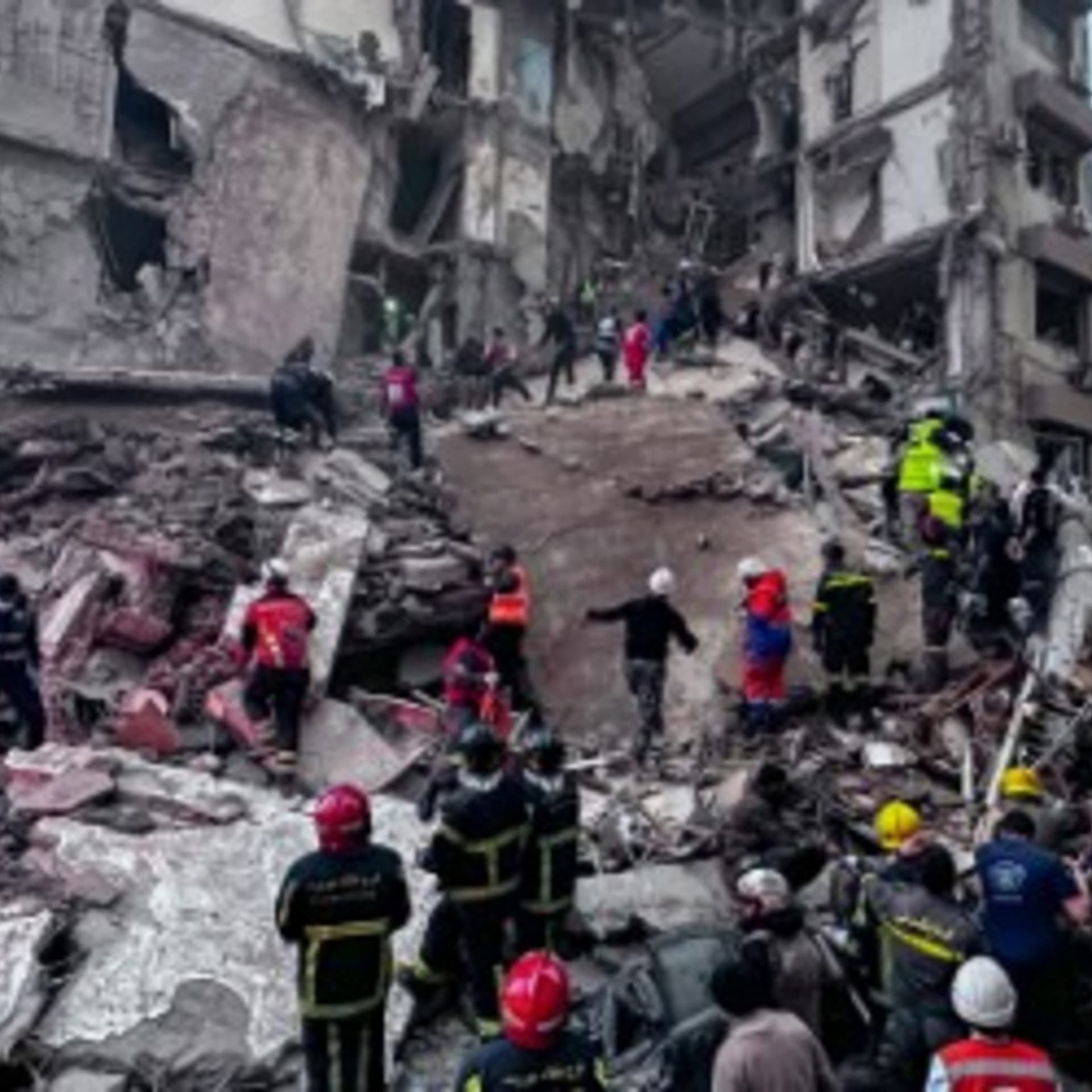
- Civilian areas heavily bombarded, with over 1,000 injured and 203 confirmed dead; rescue operations ongoing.
- BBC’s Lina Sinjab in Beirut:
“Many people in Lebanon would argue that this is not an attack on Hezbollah, this is an attack on Lebanon, on the people. This is an attempt by Israel to occupy the south of Lebanon.” ([08:12])
- South Beirut residents ordered to evacuate ahead of further strikes.
2. Global Oil Markets and US-Venezuela Energy Ties
Impact of Middle East Conflict on Oil Supplies ([09:28]–[13:14])
- Trump claims US won’t be affected by Strait closure due to domestic production and increased oil imports from Venezuela (after Maduro’s ouster).
- Mississippi refinery director Tim Potter:
“Prior to a few months ago, running about 30 to 40,000 barrels a day. And we're ramping that up to 100,000 barrels a day here at the Pascagoula refinery.” ([11:27])
- Despite more oil, American consumers see little relief at the pump.
“It went up… really mostly time to struggle gas prices.” — US Consumer ([12:15]) “I'm driving less and spending less on other things to make up the difference.” — US Consumer ([12:26])
- Potter explains:
“They've taken about 20% of the world oil supply off the market… demand is still there and it's driving the overall pump prices up.” ([12:47])
- Venezuelan oil could help prices, but global market instability persists.
3. Artemis 2 Lunar Mission: Family Perspective
Astronaut Jeremy Hansen’s Family Awaits Return ([13:14]–[17:09])
- Artemis 2 crew orbits the moon; Canadian astronaut Jeremy Hansen’s wife, Dr. Katherine Hansen, shares real-time emotional experiences.
“A lot of excitement, a lot of anxiety, but we are just so, so happy to see him living his dreams… we're having the time of our lives watching him.” ([14:01]) “It's so remarkable that we can do that. Absolutely. We had our second private family conference last night… Like having a family FaceTime conversation.” ([14:37]) “When Jeremy's back safely, we will absolutely come together first, just the five of us… and then we will absolutely celebrate with the world.” ([16:34])
- Emphasis on family involvement and the unique emotional challenges for astronaut relatives.
4. Argentina’s Glacier Protection Law Repeal
Controversial New Law Opens Glaciers to Mining ([21:37]–[25:07])
- Argentina passes law allowing provinces to approve mining on glacier land, reversing a key 15-year-old environmental protection.
- Protesters voice fears:
“How much is the water that we want to drink going to cost so that it doesn't poison us? Not to mention the water that we need for cooking. This is why we say no no, Honestly, it really hurts me a lot…” ([22:20])
- Mimi Swaby, Latin America specialist:
“Glaciers are thought to contain about 70% of Argentina's water… as well as being magnificent and beautiful, they're also incredibly valuable assets to the country.” ([23:24])
- New law lets provinces decide which glaciers are ‘essential’ and eligible for protection; risk of water contamination rises.
5. India’s State Elections: Stakes and Controversy
Elections as a Test for Modi’s BJP ([25:07]–[27:58])
- Five regions voting; results key for national political momentum.
- Ambar Senrajan explains:
“What happens in the outcome of these elections is not going to have an impact on the party of Prime Minister Narendra Modi at the federal level… For them, for the survival. Winning these elections are very crucial for these opposition alliance.” ([25:36])
- Controversy over removed names from voting rolls; opposition alleges Muslim voter disenfranchisement.
“People living in border areas… if they don't have this voter ID they won't be considered as a national. They will be treated as an illegal immigrant.” ([26:45])
6. Science: “Octopus” Fossil Is Really a Nautilus
Paleontological Revelation in Chicago ([27:58]–[30:58])
- 300-million-year-old fossil once thought to be world’s oldest octopus is revealed, via powerful X-ray scans, to be a shell-less nautilus.
- Dr. Thomas Clements:
“We were able to identify these tiny little teeth, and these teeth tell us that it isn't an octopus, but it's actually a nautilus.” ([29:26])
- Insight into fossilization of soft-bodied creatures and the evolving nature of scientific discovery.
7. Culture: Queen Elizabeth II Centenary Exhibit
Exhibition of the Late Monarch’s Outfits ([30:58]–[33:06])
- Queen Elizabeth II would have turned 100; exhibition at Buckingham Palace displays iconic garments—including her wedding and coronation dresses, her Olympic opening ceremony outfit, and everyday tartans.
- Daniela Rel, BBC Royal Correspondent:
“Vivid color featured strongly… The exhibition includes accessories and raincoats too. Each item tells a story. Many mark significant events in British history. Others show the more private dressed down moments of a monarch who was an early fashion influencer.” ([31:37]/[32:45])
Notable Quotes & Memorable Moments (Timestamps)
-
Iran’s Criticism:
"You cannot have a cake and eat it at the same time... then your ally just starts a massacre—actually, it was a sort of genocide by the regime of Israel in Lebanon..." — Iranian Deputy Foreign Minister Saeed Hatibsadegh ([02:44]) -
On Family and Artemis 2:
“We’re having the time of our lives watching him… in zero gravity, batting shrimp into his mouth.” — Dr. Katherine Hansen ([14:01]) -
US Oil Markets:
“I'm driving less and spending less on other things to make up the difference.” — American gas consumer ([12:26]) -
Argentina’s Eco Protest:
“How much is the water that we want to drink going to cost so that it doesn't poison us?... It really hurts me a lot…” — Argentinian protester ([22:20]) -
Fossil Science:
“We were able to identify these tiny little teeth, and these teeth tell us that it isn't an octopus, but it's actually a nautilus.” — Dr. Thomas Clements ([29:26])
Segment Timestamps
- [01:08] — Opening / Overview
- [02:44] — Iran's Stance & Quote
- [03:56] — Israeli, US, and International Policy
- [06:19] — Will Israel heed US?: Discussion
- [07:47] — Beirut Resident on Normalization of Violence
- [08:12] — Lina Sinjab’s Report from Lebanon
- [09:28] — Oil Market Impact of Conflict
- [10:36] — Venezuelan Oil & US Energy Supplies
- [13:14] — Artemis 2 Mission: Family Story
- [14:01–16:34] — Dr. Katherine Hansen Interview
- [21:37] — Argentina Glacier Law Change
- [22:20] — Protester Voices & Explainer
- [25:07] — India Elections Stakes
- [27:58] — Ancient ‘Octopus’ Fossil Revealed as Nautilus
- [31:37] — Queen Elizabeth II Centenary Exhibit
Tone and Language
The episode maintains the clear, authoritative, and measured journalistic tone characteristic of the BBC, interweaving urgent breaking news with human-centered reporting and expert analysis.
Summary
- The Middle East crisis dominates headlines as Israel’s attacks on Lebanon threaten a fragile Iran-brokered ceasefire, with high civilian casualties and regional stakes—including oil supply disruptions—raising global concerns.
- Argentina’s rollback of environmental protections to enable glacier mining ignites widespread protests, spotlighting water security and climate risks.
- Stories from the Artemis 2 lunar mission offer a personal lens on space exploration achievements.
- Election controversy in India and a scientific correction about a famous fossil round out a rich episode spanning geopolitics, environment, science, and culture.
For more in-depth coverage and personal stories, listeners are encouraged to visit the BBC News website and search the podcast section for related visual and expanded content.