← Global News Podcast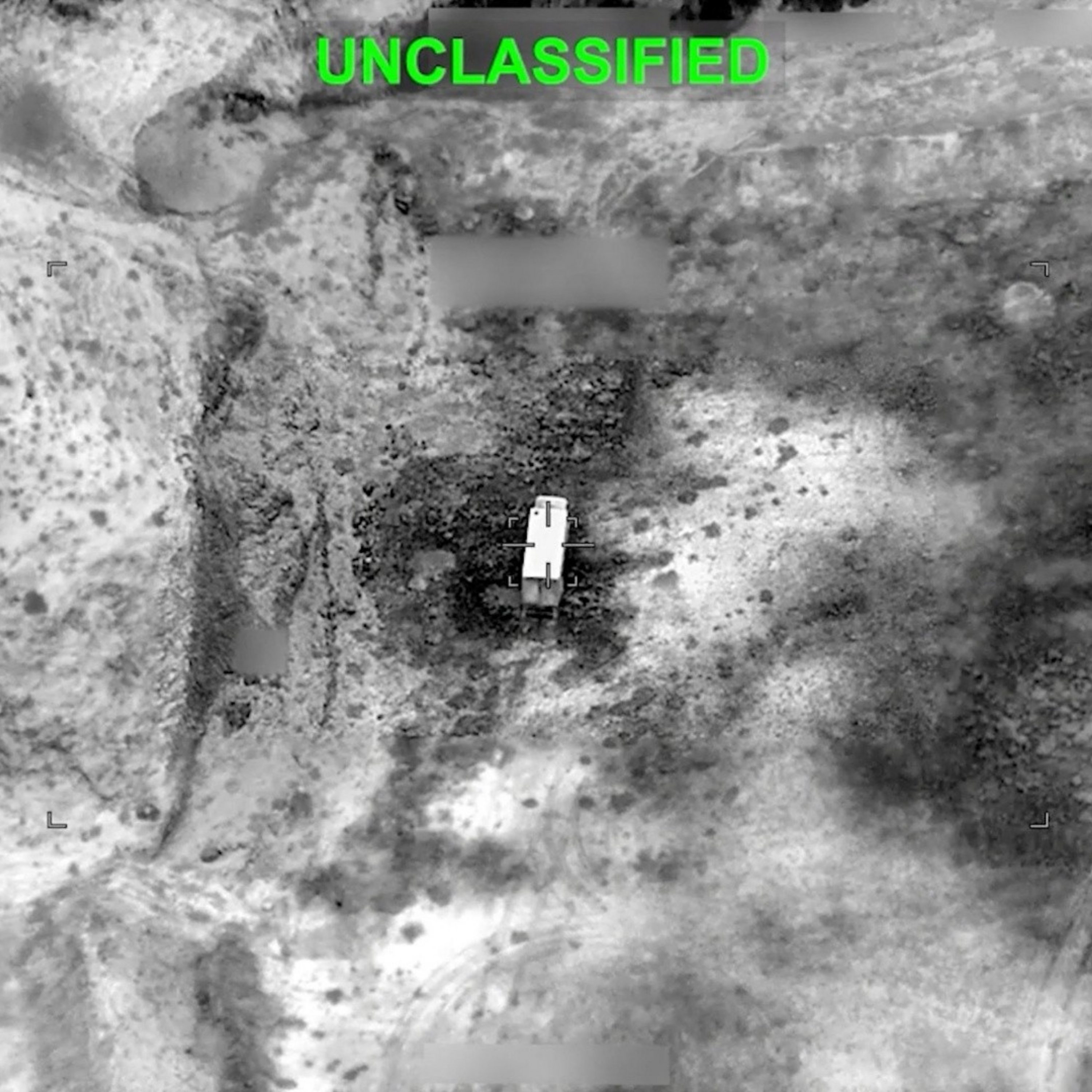
Global News Podcast
US military launches wave of attacks against Iran
00:26:52
Trump warns military strikes will intensify if Tehran does not cooperate in peace talks
Loading summary
Transcript75 lines
- [00:00]
BBC Podcast Announcer
This BBC podcast is supported by ads outside the uk.
- [00:06]
Made in Cookware Sponsor
This podcast is sponsored by Made in Cookware. Made in partners with multi generational artisans and some of the world's best chefs to create professional quality cookware knives and kitchen tools. Their products are trusted in Michelin starred restaurants worldwide and designed to perform just as well in your kitchen. From five ply stainless clad to carbon steel, every piece is built to last and made to actually make you a better cook. Discover award winning cookware@madeincookware.com
- [00:38]
Grainger Sponsor
Grainger knows when you're a procurement manager for an office park, you're not managing one building, you're managing all of them. And to stay ahead you need to see through walls and around corners. Lights about to fail, filters ready to clog H Vac on its last leg. If you wait until something breaks, you're already behind. Count on Grainger for quality products, easy reordering and 247 support. Call 1-800-GRAINGER, click grainger.com or just stop Granger for the ones who get it done.
- [01:09]
Oliver Conway
This is the Global News Podcast from the BBC World Service. Hello, I'm Oliver Conway. We're recording this at 15 hours GMT on Wednesday 15th July. The US says it's launched another wave of strikes against Iran as they battle for control of the Strait of Hormuz. Australia announces wide ranging plans to regulate AI including restrictions on data centers and Bolivia investigates the alleged recruitment of Bolivian men to fight for Russia. Also in the podcast, by some kind
- [01:41]
Cassandra Hatton
of miracle, the diameter of that plastic tip fit perfectly in that hole and armed the engine and saved their lives.
- [01:50]
Oliver Conway
The pen that helped rescue the Apollo moon mission. Are the US and Iran getting closer to a resumption of all out war in their battle for control of the Strait of Hormuz? The American military says it's launched another wave of daytime strikes today after a fourth night of attacks. The Iranian Revolutionary Guard Corps said it had targeted American military sites in Bahrain, Kuwait and Jordan. Media tallies suggest 35 people have been killed in Iran in the past week. The US says Iran has attacked seven ships the leaving nearly a dozen crew dead, injured or missing. At the same time, the two nations are stepping up their rhetoric. President Trump renewed his threats to destroy Iran's bridges and power plants, while Iran says it could cut off other transit routes beyond the Strait of Hormuz. So what happens now? Hossamzaki is a veteran Arab diplomat.
- [02:46]
Hossamzaki
We often condemn the Iranians, rightly so, but we also need to understand where the US is going with all of this it is understood that the US does not want to have the Iranians dictate any terms not related to the Strait of Hormuz, but also not related to the region in general.
- [03:07]
Oliver Conway
But Kirsten Fontenrose, a Gulf expert in the first Trump administration, says the memorandum of understanding between the two countries is not yet dead.
- [03:16]
Kirsten Fontenrose
You've seen rhetoric about this is over or the deputy foreign minister of Iran said yesterday that we hold ourselves to no commitments on the MoU, but they
- [03:26]
Unnamed Gulf Expert / Asma Khalid
have not formally exited, and neither has
- [03:28]
Kirsten Fontenrose
the US and you also see the
- [03:30]
Unnamed Gulf Expert / Asma Khalid
mediating countries really active.
- [03:32]
Kirsten Fontenrose
They've been meeting in musket. They've been talking to both sides.
- [03:34]
Unnamed Gulf Expert / Asma Khalid
So the mediation is still alive.
- [03:37]
Oliver Conway
I spoke to our chief international correspondent, Lise Doucet, and asked her first what Iran is referring to when it says it could cut off other export corridors.
- [03:46]
Lise Doucet
It would mean the other choke point close by in the Red Sea, Babel Mendeb. And the world has seen that before when one of Iran's allies in the region, the Houthis of Yemen, also disrupted commercial traffic through that vital waterway that went on for many, many months. And that threat has been hanging over this war, where the focus is the other choke point, the Strait of Hormuz, for many months. But the Houthis have been reluctant to get drawn into this war. They suffered significant military damage during the last one, and in some ways, Iran seemed to want to keep them the moment when they would have to escalate. And I should emphasize that Iran's relationship with the Houthis is not the same as it is with with Hezbollah in Lebanon. The relationship between Iran, in particular the Islamic Revolutionary Guard Corps and Hezbollah, goes right back to its creation in 1982. The ties between the Houthis and Iran are very close. Iran has provided them with absolutely critical training and equipments. But the Houthis also have their own agency.
- [05:00]
Oliver Conway
President Trump has also threatened to destroy Iran's bridges and power plants before, in comments that were widely condemned at the time. Might he do it this time?
- [05:10]
Lise Doucet
He has used this phrase many times to destroy every last bridge, every last power plant. This, of course, is a potential war crime. A similar kind of phrasing has been used by Israel before. Both of them have talked about bombing Iran back to the Stone Ages. Israel, particularly Prime Minister Netanyahu, would like to have another military go. And there is an argument in some circles that you have to go in and you have to really, really make Iran suffer. But the question is whether even that would make Iran capitulate. And it's Whether or not President Trump has the stomach to engage in that kind of a war, he is months away from the absolutely crucial November midterm elections. He knows the war is not popular even among his supporters. He knows that oil prices go up every time there is this kinetic activity. The Strait of Hormuz. It's just that he doesn't have any good options.
- [06:08]
Oliver Conway
Yeah, very hard to see a way out of this. Might we just see this sort of low level attacks continuing without the two sides resorting to all out war?
- [06:17]
Lise Doucet
A whole new lexicon has developed with this war. Ceasefire became lesser fire. A memorandum of understanding became a memorandum of misunderstanding, signed last month, which has a paragraph which has allowed Iran and the United States to read whatever they want into it concerning the future management of the Strait of Hormuz. The best solution will lie in regional management of that strait. But what they need most of all, both sides is an off ramp.
- [06:46]
Oliver Conway
Lee Stucette, our chief international correspondent. And we have more on the economic impact of the conflict on the BBC News YouTube channel. You'll find the global news podcast in the podcast section there. As it struggles with manpower shortages for its war on Ukraine, Russia has recruited fighters from many different parts of the world, many by dubious means. Now, prosecutors in Bolivia are investigating reports that Bolivian citizens are being tricked into joining Russian forces. Our global affairs reporter Mimi Swaby told me more about the alleged trafficking.
- [07:22]
Mimi Swaby
So this investigation follows reports that individuals were lured abroad with false job advertisements. Now, the Foreign Ministry, Bolivia's Foreign Ministry, has activated a assistance protocol after receiving reports from family members concerned about their loved ones. They believe that 16 Bolivian nationals are still fighting on the front lines in Russia. Now this inquiry also comes after footage circulated online showing Bolivians in Russian military uniforms describing life on the front line. In one video, you can see a 29 year old Bolivian describing what he has witnessed and what he's experiencing again on that front line. There are also lots of testimonies in place with one mother from Santa Cruz saying that her son told her that they were made to sign a contract in Russian for a year before they lost contact in May. So lots of testimonies coming together, building evidence and prosecutors in Bolivia putting it forward to Russia. However, the Russian embassy in Bolivia has denied any wrongdoing and any connection between its diplomatic mission and the alleged recruitment.
- [08:25]
Oliver Conway
And is this different from people just going to act as mercenaries in other countries?
- [08:30]
Grainger Sponsor
It is.
- [08:31]
Mimi Swaby
It's very different. This is deceptive recruitment. It is a form of trafficking. So individuals are lured in with promises of well paid jobs. Private security contracts or possibly even getting residency in Europe. However, they find themselves in very different situations, in this case on the front lines. It is not what they're signed up to. And like we heard from Matt Tesme, they could be forced to sign a contract. It could be in a language they don't understand. They might not know what exactly they're getting themselves into. But the key thing here is, is they are deceived. They do not wish and do not know in many cases that they will end up fighting for, in this case, allegedly Russia against Ukraine.
- [09:10]
Oliver Conway
And is this happening in other Latin American countries as well?
- [09:13]
Mimi Swaby
It is. Latin America is reportedly one of the main regions where its citizens are being lured to fight in this war between Russia and Ukraine. And it's one of the newer ones. A report by the International Federation for Human Rights said that up to 27 foreign fighters may be fighting in the Russian army now. Those include Peru, Cuba, Colombia and now more recently, Bolivia. Around 600 citizens in Peru, but nearly 10,000 Cubans, it's thought. So a lot of disparity between numbers, but yet an area which the Russians are seemingly trying to delve more into and recruit more heavily from.
- [09:50]
Oliver Conway
Mimi Swaby. The Australian government has announced plans to regulate the growing AI sector, particularly the impact of data centers and the abuse of copyright. Both issues have caused controversy in other parts of the world too, with New York on Tuesday becoming the first US state to impose a ban on the construction of large data centers. The Australian Prime Minister, Anthony Albanese, said data centers there would be made to minimise their use of water and to safeguard power supplies.
- [10:19]
Anthony Albanese
Our government will establish a set of Australian standards for AI.
- [10:24]
Martin Maur
In March this year, we announced a
- [10:27]
Anthony Albanese
set of expectations for large AI data centers. This will bring them into one regulatory framework, clear, consistent and mandatory.
- [10:39]
Oliver Conway
James Menendez spoke to Rita Mattuloniti, associate professor in law at Macquarie University in Sydney.
- [10:45]
Rita Matuloniti
We have seen in Australia very strong growth of data centers. We have them in hundreds and more are planned in a few years and a lot of them are growing in big cities like Sydney and Melbourne and, and people really started getting concerned about the fact that they're taking space, of course, using electricity, which would likely to increase prices, using water resources. And as you might know, Australia is the driest continent, so we don't have that much water and also actually taking builders taking away from building houses, they then occupied building data centers. So there was a bit of increasing concern among communities and actually even suggestions to establish moratorium. But the Prime Minister took a different position and Said, we will keep building them, but we will legislate, we will require them to feed electricity back into the grid. He talked about that. We have a lot of solar energy, we should be using it. We have a lot of space across our big Australia, so we maybe have to think about developing them outside the cities and so on.
- [11:48]
Richard Hamilton
And what about the issue of copyright? Because, I mean, countries are really struggling with this, aren't they, that AI companies are using, you know, music, books and so on to train their models, but the artists aren't getting the compensation they want. I mean, how would that work under law? I mean, would it work just simply by enforcing existing copyright laws, do you think?
- [12:09]
Rita Matuloniti
That's indeed another very controversial question in Australia. So government so far was actually quite strong on this and despite of a lot of lobbying from AI industry to introduce an exception like text and data mining that exists in UK and Europe, the government said no last year, we're not going to do that. You will have to essentially lie, license the content. And the Prime Minister today again reiterated that that they will respect the copyright industry's choices and it's not only about remuneration, it's sort of asking their permission as well. But they didn't provide no details how it's going to work. So I think the government doesn't yet know how to make it happen. There have been proposals by Antropic, for instance, that there could be a single fund to sort of where some compensation could be paid to right holders in exchange of text and data. Mine exception. But the government said we won't introduce such exceptions. So I think they see licensing as a way to go. But we don't know how this exactly licensing will look like.
- [13:15]
Oliver Conway
Rita Matuloniti, a pen that helped save the Apollo 11 moon mission in 1969 has sold at auction for more than $850,000. It helped bring Neil Armstrong and Buzz Aldrin home safely after they became the first men to walk on the lunar surface. Richard Hamilton takes up the story.
- [13:35]
Richard Hamilton
This is the first moon landing in July 1969, when Neil Armstrong famously said, that's one small step for man, one giant leap for mankind. And on that day, the 20th of July, Neil Armstrong and Buzz Aldrin were collecting rock and dust samples from the surface of the moon for about three hours.
- [13:56]
Tristan Redman
And.
- [13:56]
Richard Hamilton
And after that they made their way back to the lunar module, which had landed with a large engine for its descent, and then it had a smaller engine for them to lift off and return to the moon's orbit. And as they were Climbing back into this lunar module, Buzz Aldrin bumped into a circuit breaker with his backpack, and he bumped into this circuit breaker which controls the engine of the lunar module and broke the switch. So, effectively, they were stranded on the moon, and it would have taken months for another crew to come and rescue them. But Buzz Aldrin had a felt tip pen in his pocket. And at that moment, he made an instinctive and what many people would say as an inspired act of improvisation. Now, this pen last went up for auction with Sotheby's back in 2022. And Cassandra Hatton from Sotheby's explained the dilemma that Buzz Aldrin was facing.
- [14:57]
Cassandra Hatton
Buzz is looking at the circuit breaker panel and he thinks, okay, maybe I could put my little finger in there, but I might get electrocuted. And maybe I'll take a little piece of metal, but maybe I'll blow out the entire circuit breaker panel and then we're really dead, right? And then he realizes he's got this pen in his pocket that has a plastic tip at the end. And by some kind of miracle, the diameter of that plastic tip was the same as the diameter of the switch, and it fit perfectly in that hole and armed the engine and saved their lives.
- [15:32]
Richard Hamilton
That was Cassandra Hatton. And the pen itself cost 69 cents. And the story behind the pen is that one of the astronauts had bought a felt tip marker pen on his way to work. And then NASA found out that these pens actually worked when there's no gravity, which would enable astronauts to write in space. So NASA bought several hundred of these marker pens. And one article that I found said it was one small writing instrument for man, one giant life saving marker pen for Apollo.
- [16:06]
Oliver Conway
Yeah, very good. But looking back, history would have been very different if Buzz Aldrin hadn't intervened.
- [16:12]
Richard Hamilton
Exactly. So the success of Apollo 11 demonstrated that America had won the space race and that US Technological advances were superior to the Soviets. And the pen then got placed in the Smithsonian National Air and Space Museum. And after Apollo 11, there were a further six missions with crews, although of course, Apollo 13 was aborted after an explosion. And then in April this year, we had the Artemis 2 mission, which completed a successful lunar flyby going around the far side of the moon. But if it wasn't for that pen, many historians of space would say that a lot of this would never have happened. And effectively, the astronauts might still be on the surface of the moon.
- [17:01]
Oliver Conway
Richard Hamilton still to come on the
- [17:05]
Kath Russell
podcast, for those that don't know the venue, it's a really great way to promote these unique concert halls and really blend the sort of heritage with the
- [17:14]
Oliver Conway
technology, the new tool that allows you to hear how a concert will sound in different parts of a music venue.
- [17:29]
Kirsten Fontenrose
When you're a maintenance engineer in a beverage manufacturing plant, you keep production lines moving and quality on track because there is no room for slowdowns. With Grainger's vast selection of high quality motors, sensors, belts and hard to find parts, you can get what you need fast and all in one place. So nothing gets in the way of getting the job done. Call 1-800-GRAINGER clickranger.com or just stop by Granger for the ones who get it done.
- [17:59]
Unnamed Gulf Expert / Asma Khalid
The CIA has been carrying out covert operations around the world for decades. How has it shaped how people feel about the us?
- [18:06]
Anthony Albanese
I'm Asma Khalid and I'm Tristan Redman and together we host the Global Story Podcast from the BBC. As part of our series to mark the United States 250th birthday, we're exploring the CIA's hidden history.
- [18:19]
Tristan Redman
Do you think the word of the United States will be trusted in years to come?
- [18:24]
Unnamed Gulf Expert / Asma Khalid
For more, check out the global story on BBC.com or wherever you get your podcast.
- [18:30]
Kirsten Fontenrose
When you're a maintenance engineer in a beverage manufacturing plant, you keep production lines moving and quality on track because there is no room for slowdowns. With Grainger's vast selection of high quality motors, sensors, belts and hard to find parts, you can get what you need fast and all in one place so nothing gets in the way of getting the job done. Call 1-800-GRAINGER clickranger.com or just stop by Granger for the ones who get it done.
- [19:03]
Oliver Conway
This is the Global News Podcast. Tensions are escalating in Pakistani Administered Kashmir as security forces try to stop protesters marching on the main city of Mazafrabad to demand more political representation. More than 4,000 personnel have been deployed after clashes left 10 people dead including two police officers. Here's our Global affairs reporter Anbarasan Atirajan.
- [19:26]
Anbarasan Atirajan
This is a region controlled by Pakistan. About 4.5 million people live here in the Kashmir region. Now various civil society groups have been protesting for weeks asking for reforms in the regional Legislative Assembly. For the regional assembly saying 12 seats allocated for those who migrated from the Indian side and they should not be given to them because these people live outside the Kashmir region in other parts of Pakistan and it gives them overwhelming influence in the affairs of the running of the Legislative assembly and also being exploited by the mainstream Pakistan political party. So the region is scheduled to go for elections end of the month. So they want more local representation, basically, they want reforms to the Legislative Assembly. They can be better represented.
- [20:16]
Cassandra Hatton
But.
- [20:17]
Anbarasan Atirajan
But this has now become a big political issue. All these groups are operating under the name of Joint Awami Action Committee. And this group was banned by the Pakistani government in June. And more than 25 people have been killed in the violence. And the latest round was last evening. As we speak now, thousands of people are gathering near the town of Rav Lakot in Kashmir. They want to conduct a march towards the regional capital of Mosafarabad. And there is a tense situation. More than 4,000 police officers and paramilitary soldiers have been deployed there.
- [20:51]
Oliver Conway
Yeah. So what happens next? Can the tensions be reduced now?
- [20:56]
Anbarasan Atirajan
The supporters or the protesters, they are saying that they cannot withdraw this agitation. They are conducting this blockade that has resulted in a shortage of food and medicine in that particular region. But the government says, they are quoting a court order which says that these changes to the assembly composition cannot be done without a constitutional amendment. That was the court's decision. But what it shows, the continuing security issues being faced by Pakistan. On the one side, they have. On the northwestern side, you have Islamist militants targeting Pakistani security forces on Balochistan in the southwestern province, where there is an insurgency going on with separatist Baloch rebels attacking Pakistani forces. And now this is another protest. It is a huge headache for Pakistani officials and they are trying to stop these people from marching towards the Musabarabad city.
- [21:47]
Oliver Conway
Amrasan Eterajan. Hundreds of people crossed from Spain into Gibraltar overnight as border checks ended after more than a century. It followed the signing of a UK EU treaty on the status of the British Overseas Territory. The deal is designed to facilitate the movement of people and goods and avoid lengthy delays for the roughly 15,000 workers who cross the border each day. There was excitement as the last remaining stretch of fence came down. Gibraltar's Business Minister is Gemma Arias Vasquez.
- [22:24]
Gemma Arias Vasquez
What the frontier has done is, on occasion, made lives very, very difficult because you've had to queue for three, four, five hours on occasions. So it means that businesses for the first time know exactly what to expect, when to move to Gibraltar. So I think that the Gibraltar economy will go from strength to strength as a result of this treaty.
- [22:42]
Oliver Conway
Our Madrid correspondent, Guy Hedzko, told us about the significance of this moment.
- [22:46]
Guy Hedzko
This is something which had to be resolved in the wake of the UK's exit from the European Union, because Gibraltar has had a land border with the EU and somehow that had to be resolved. Gibraltar also has very close economic relations with the EU and financial services and online gaming and so on. So this new arrangement, which is seen as a massive change, is a way of keeping Gibraltar aligned with the EU, but maintaining British sovereignty over Gibraltar. And it means that people will now, as of today, be able to walk back and forth into Gibraltar and out of Gibraltar completely freely until midnight. Last night. There was a border check there between the two. And you mentioned those, those workers. There are 15,000 Spanish workers who have been crossing over from nearby Spanish towns into Gibraltar each day to go and work for Gibraltarian businesses. Now things are much easier for them because they don't have to go through border checks. They can simply walk or cycle or drive into Gibraltar as they wish. People arriving from outside the Schengen free travel zone into Gibraltar will face a border check which has been moved to Gibraltar's airport. There's also a border check at the port, but most people would be arriving at the airport. So, for example, if you're arriving from the UK to Gibraltar, you will show your passport to Gibraltarian officials or police and also to Spanish officials as well before you arrive at the territory. So now this Schengen and EU border has been moved to the airport.
- [24:30]
Oliver Conway
Guy Hedzko in Madrid. England and Argentina have a bitter footballing rivalry, made worse by the 1982 Falklands War, which left more than 900 people dead. Ahead of their World cup semi final. Later on Wednesday, the Argentine manager sought to play down the politics, saying it's no more than a football match. But locker room video showed his players chanting they would win for Las Malvinas, the Argentine name for the Falklands. Diego Maradona and Lionel Messi in probably his last World Cup. Tension ahead of the match was ramped up by Argentina's vice president directly linking it to the war, branding the English pirates and usurpers. But how relevant is the history today? Martin Maur is an Argentine journalist.
- [25:21]
Martin Maur
Malvinas is a national cause in Argentina, but that doesn't mean that the game itself is about Malvinas. The national cause is there. It's one of the reasons why the popularity of the candidate for president that in the end won the presidency almost was put in risk because he said he admired Margaret Thatcher. I think the game is, of course, part of this generation. But what Scaloni said, I think it's very important. He said, well, well, hold on. This is a football game. Don't try to bring everything on the table.
- [25:55]
Oliver Conway
Well, the US authorities have increased security in Atlanta ahead of the game, which was classed as the highest risk. Match of the World Cup. Paul Heywood is a sports writer at the Observer.
- [26:06]
BBC Podcast Announcer
There is a particular friction and tension and animosity about these games, and not just because of the Falkland War. I don't think that infects the game itself, but there is a current and there's a feeling about these games going back to the mainly to the hand of God goal in Mexico in 1986. Diego Maradona of course, these are modern teams and these players know each other from the Champions League. They're not carrying the baggage of history on their shoulders. But nevertheless, some games have a particular flavor and this one is true to that tradition. It's also, I think, embellished by the fact that this will probably be Lionel Messi's last international game if they if Argentina lose, possibly the greatest player we've ever seen. And I think that adds a great deal of sort of sporting energy to it.
- [26:57]
Oliver Conway
Sports writer Paul Hayward finally, when booking tickets for a play or musical, you might have come across one of those websites that helps identify the best seats with photos of the view of the stage. Now, there's something similar coming for how musical performances sound in different parts of a venue. Nimrod by Edward Elgar as heard at Halle St Peter's in Manchester. Here in the UK, it is now developing a digital tool to help conductors, musicians and even punters see how music sounds in different locations. As the venue's head of development, Kath
- [27:39]
Kath Russell
Russell, explained, we've been working very closely with our partners, Siemens. We're trying to create a really useful tool for for musicians, but also for concert halls to create really effective rehearsals so that you can listen to the music before you actually reach a concert hall, if you're on tour or if you've not been to that concert hall before. And you can decide where you might place sections of the orchestra for the best possible sound. And that will save time and money on rehearsals. Our assistant conductor Yuan Shields, was talking to me about how different that experience is if you're stood on the stage, and also different parts of the stage for different members, members of the orchestra. So being able to understand what that sound would be like for people in different seats around a concert hall that you don't know. But we also are working with Siemens on how it also could create more access to certain concert halls, particularly working with our international partners on how you could experience a concert in different concert halls, but experience it as if you were sat there. And then, of course, Halle St. Peter's it's a deconsecrated church that we've converted into this wonderful rehearsal, rehearsal space. So it's a beautiful place to sit and has a natural acoustic because it was originally a church. But for those that don't know the venue, it's a really great way to promote these, these unique concert halls and really blend the sort of heritage with the technology. And none of this is to stop you going to the concerts. The concerts are still the primary aim of all of this technology, to make the whole experience even better.
- [29:15]
Oliver Conway
Kath Russell of Halle St. Peter's
- [29:20]
BBC Podcast Announcer
and
- [29:20]
Oliver Conway
that is all from us for now, but the Global News Podcast will be back very soon. This edition was mixed by Holly Smith and produced by Alice Adderley. Our editor is Karen Martin. I'm Oliver Conway. Until next time. Goodbye.
- [29:39]
Unnamed Gulf Expert / Asma Khalid
The CIA has been carrying out covert operations around the world for decades. How has it shaped how people feel about the U.S. yes, I'm Asma Khalid.
- [29:47]
Anthony Albanese
And I'm Tristan Redman. And together we host the Global Story podcast from the BBC. As part of our series to mark the United States 250th birthday, we're exploring the CIA's hidden history.
- [30:00]
Tristan Redman
Do you think the word of the United States will be trusted in years to come?
- [30:05]
Unnamed Gulf Expert / Asma Khalid
For more, check out the global story on BBC.com or wherever you get your podcasts.