← Global News Podcast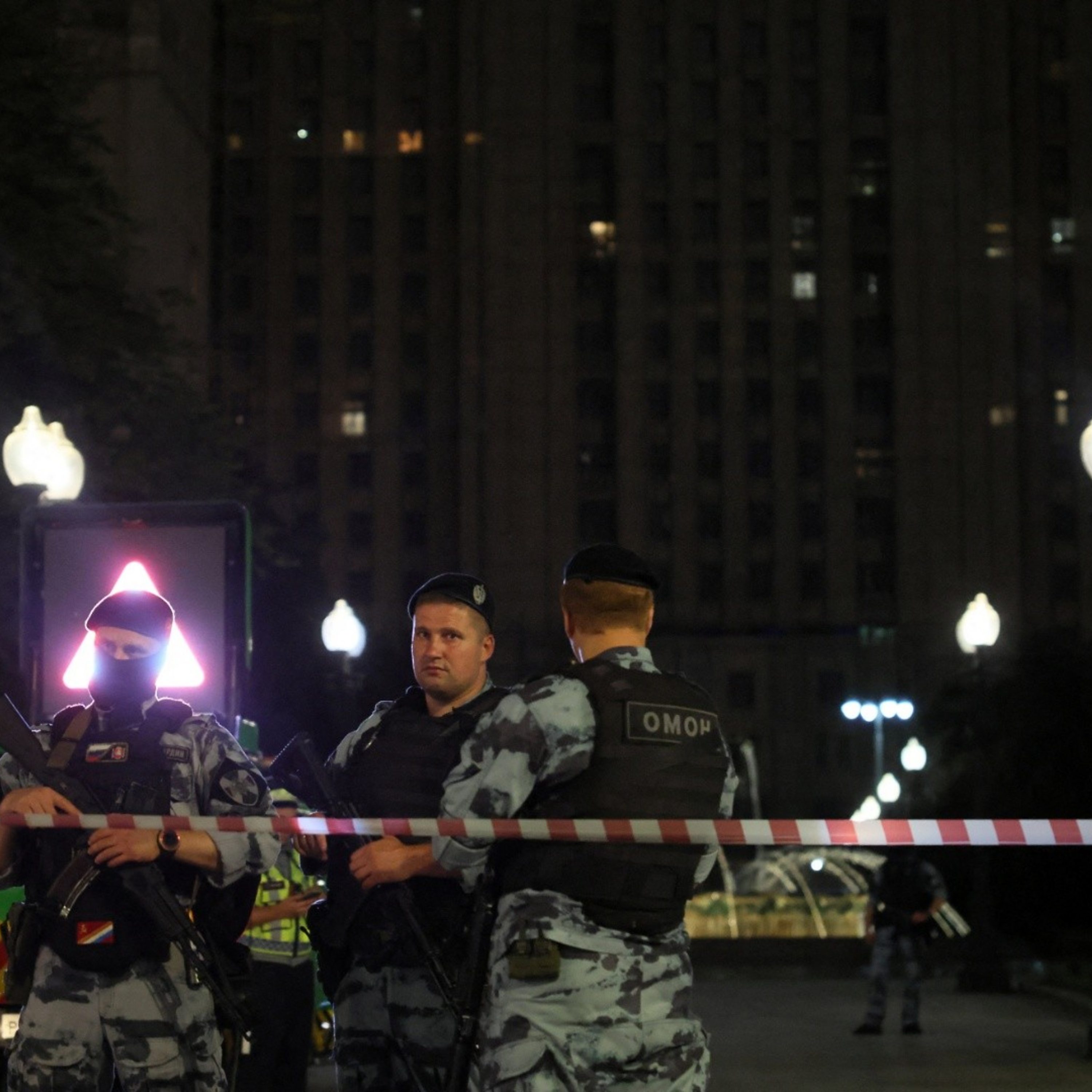
Global News Podcast
Deadly bomb blast in Moscow
00:28:50
Three people are killed in explosion at a restaurant in the Russian capital
Loading summary
Transcript85 lines
- [00:00]
Nick Miles
This BBC podcast is supported by ads outside the uk.
- [00:06]
Advertisement Announcer
If you are currently overpaying on software to run your business, remember this number 10,000. That's the number of new businesses that join Odoo per month. Join odoo today@odoo.com that's odoo.com Ever wonder why we make the choices we do and how to make smarter ones? Introducing Choiceology, an original podcast from Charles Schwab. Join Wharton Professor Katie Milkman, an award winning behavioral scientist and author of the best selling book how to Change as she shares true stories from Nobel laureates, authors, athletes and everyday people about why we do the things we do and how to make better choices to help avoid costly mistakes. Each episode covers the latest research in behavioral science and dives into themes like the power of self control, shaping your mindset for success, navigating new beginnings and why starting over can feel so hard. Listen to Choiceologywab.com podcast or wherever you listen.
- [01:15]
Nick Miles
This is the Global News Podcast from the BBC World Service. I'm Nick Miles and in the early hours of Sunday 2nd August, these are our main stories. A bomb blast at a restaurant in Moscow has killed three people and injured many more. So who was responsible? After his policy climb down, pressure grows on the head of world football and tributes to the well known mountaineer Nirmal Puja who died on a treacherous peak in Pakistan with nine other climates.
- [01:48]
Lucas (Teen Hacker)
Also in this podcast, mom was very like, oh, you've got a detective coming to speak to you. You're in a lot of trouble. So sat waiting, oh my gosh, who's going to come? How much trouble am I going to be in?
- [02:00]
Nick Miles
The growing number of young illegal cyber hackers and attempts to rehabilitate them. In recent months the Russian capital Moscow has become the target of ever increasing numbers of drone attacks from Ukraine. It's brought the conflict closer to ordinary Russians than ever before. Now we're hearing that there's been a bomb blast in the city in which at least three people have died and more than 20 injured. Emergency services and investigators have been at the scene, but the authorities have so far not confirmed who they believe was the target of the attack. BBC Russia's Olga Evshina told me what we know so far.
- [02:43]
Olga Evshina
Russian National Anti Terror Committee admitted that it has been explosion in the restaurant in the center of Moscow. The first version was that it might have been a gas equipment, but then they made a statement that this has been an explosive device. This already means a lot if you sort of, you know, decipher this Moscow official's talk, this means they admit that something extraordinary happened, rather than claiming it was just, you know, troubles with some gas equipment. And of course, the fact that the statement was done by National Anti Terror Committee means that they are treating this as an emergency and treating it as possible terror attack.
- [03:26]
Nick Miles
Now, Olga, are there other reports coming out from media that's not controlled by the state?
- [03:31]
Olga Evshina
Yes. So Russian independent media has been summarizing information, and it seems that eyewitnesses which have been on the ground were saying that possibly it was some military official who had some celebrations in that restaurant. And also they believe that the person who was trying to enter the restaurant, they exploded. They claim this was a woman. So this is not official information, but this is what has been reported by Russian independent media, citing their sources, that it has been a woman as she was stopped by a security guard at the entrance to the restaurant. She has exploded.
- [04:12]
Nick Miles
Now, in the last couple of years, several senior Russian military figures have been assassinated in and around the Russian capital. What reaction did Moscow have then?
- [04:22]
Olga Evshina
Indeed, it has been sort of a pattern. Since December 2024, three Russian generals have been successfully assassinated near their houses, and one more general has survived the assassination attempt. So clearly it has been a pattern. Of course, this is not discussed widely publicly because of Russian military wars. You know, the discussion of such things can bring you to jail for several years. But this is a restaurant in the center of Moscow, and of course it affects mood of people, especially in the big capital. They feel that the war has become. Is becoming closer and closer to them. They feel the impact, as opposed to a few months or a few years ago, especially for people living in Moscow and in other major Russian cities.
- [05:09]
Nick Miles
Olga Ivchina Football, so often dubbed the Beautiful Game, is still in the middle of an ugly standoff. It features the head of the sport's global governing body on one side, with increasing numbers of officials on the other. After days of uproar from regional football bodies, FIFA's boss, Gianni Infantino, scrapped his plans to sell stakes in the World cup and other competitions to private investors. But that may well not be the end of the matter. The European confederation UEFA said it had lost confidence in Mr. Infantino's leadership. Laura McAllister is the vice president of UEFA. So should he step down?
- [05:48]
Laura McAllister
It's his decision, isn't it? If momentum gathers and other confederations issue statements similar to ours, then I think it would make his position untenable. But let's see how the next 24 hours or so goes. Our responsibility always is to look after European football interests. And we've made that very clear in the statement that the events, not just of this week, but of previous weeks as well, in the World cup, over the overturning of the Baligan red card due to political interference and of course, various other events, have accumulated to give us a sense that the leadership of FIFA doesn't have the best interests of football at heart.
- [06:24]
Nick Miles
The governing body of north and Central American and Caribbean football, concacaf, says a comprehensive reckoning with the presidency was imperative. Mike McCarthy from BBC Sport gave me his assessment of these latest developments.
- [06:38]
Mike McCarthy
He has the confirmed support of at least one FIFA member, Qatar, the host of the Men's World cup in 2022. They commended what they called the wisdom of Infantino and his decision to withdraw the plan. In a statement, they said, we affirm our full support for Infantino's continued efforts to develop football around the world. Other football associations have praised the decision as well, without saying they still support Infantino. And then others have gone further. The Dutch FA say they no longer have confidence in Infant Infantino, for example. So what we've seen is an incredible shift. In the space of less than a week. Gianni Infantino has gone from looking unassailable in his bid to be re elected as FIFA president next year to his position being in real jeopardy. For his part, Infantino says, moving forward, my intent is to bring all interested parties back together in the coming days and weeks in the spirit of shared interest in our game, of course.
- [07:33]
Nick Miles
Mr. Infantino says he's seeking re election next March, but could there possibly be a vote against him?
- [07:40]
Mike McCarthy
There is a mechanism for triggering a vote of no confidence in the FIFA president that would need 43 of FIFA's 211 members to call an emergency congress. And as you mentioned, UEFA, the body which runs European football, says it has lost confidence in infantino. It's got 55 members, so in theory, they have the power to trigger that vote. But there will be more things to consider, not least finding a credible candidate that could win the votes of a majority of FIFA members and therefore replace Infantino. It's probably not a great strategy to call for a vote until you know you can win it.
- [08:15]
Nick Miles
And what about possible successors to Mr. Infantino?
- [08:18]
Mike McCarthy
It's a good question, not a lot of strong answers. No one is speaking publicly yet. The nature of the statements we've seen from certain confederations, though, probably tells us about the type of platform FIFA members might support. The Asian Football Confederation says the future of global football must always be shaped through proper consultation, collective dialogue and respectful for the established governance structures of our game. UEFA says it wants to see the end of secret schemes of dubious benefit. And CONCACAF called Infantino's plan a unilateral and egregious act of poor governance. So whoever steps forward as a leading contender is likely to have reform on the agenda. But reform might be easier to promise than it is to deliver. Miguel Maduro, who is a former chairman of FIFA's governance committee, told the BBC this week that FIFA works as what he called a political cartel. It is fed and supported on a system of patronage. The BBC asked FIFA for comment on those claims. And you may remember when Infantino was elected in 2016, he told FIFA delegates that they would restore the image of FIFA and the respect of FIFA. There are plenty who would question that today.
- [09:28]
Nick Miles
The longer this row goes on, the longer people around the world may well see this as being tarnished. At a fundamental level, it's all about the money, they might say.
- [09:38]
Mike McCarthy
The thing you could say to that is the way that football has responded to this plan in particular perhaps demonstrates that some federations around the world were able to put money to one side and the greater good of the game in there instead. So there are plenty of smaller federations that the money that was promised within this deal to sell parts of the World cup off to private investors would have yielded them much more than perhaps they make in any given year. But the members of concacaf, the smaller members of UEFA, and indeed the Asian Football Confederation, all said no to that. So that solidarity is something that many will praise in the game.
- [10:18]
Nick Miles
Mike McCarthy from BBC Sport. Spanish police have begun installing a floating 500 metre barrier in the sea to prevent people from swimming around the border fence to reach its North African territory of Feuta. The authorities say at least 67 people died whilst trying to reach Deuta, while the civil guard fear more bodies will be recovered from the sea. EU ministers are to hold an emergency meeting to discuss the influx there of tens of thousands of migrants from Morocco, which has sparked a tense diplomatic row across the European Union. Here's Sarah Rainsford.
- [10:56]
Sarah Rainsford
Most of the tens of thousands of migrants who swam into Ceuta have now gone, escorted back to Morocco by Spanish soldiers and police. But their sudden arrival has shaken Europe politically and it's exposed tensions. Spain's socialist Prime Minister Pedro Sanchez has hit back at those in the eu. He accuses of prejudice and playing politics instead of offering support. He means, above all, Italy, whose right wing government was quick to post pictures of migrants running through the streets of Ceuta and then suspend its Schengen deal with Spain, the free movement of people claiming security concerns in Ceuta today, Spain's Interior Minister, Fernando Grande Malasca, stressed that fears of migrants heading to mainland Europe from Ceuta were unfounded.
- [11:44]
Advertisement Announcer
That selfishness and failure to acknowledge the values of the European Union has meant that the president of the government has called that extraordinary high emergency meeting. Because here we are talking about bad faith and a lack of knowledge. Because as you know, Ceuta is not part of Schengen.
- [12:08]
Sarah Rainsford
It seems it was social media rather than Spain's migration policy that caused this crisis, though posts like this one with false promises of an easy path to Europe. Who started that rumor and why isn't clear yet. Spain is now reinforcing the border with Morocco, dropping a barrier into the sea to be patrolled by boats. But the political ripples from this crisis will continue.
- [12:34]
Nick Miles
Sarah Rainsford the prominent Nepali British climber Nirmal Puja is confirmed to be among the 10 people who died in an avalanche on Pakistan's Broad Peak Mountain on Thursday. Porcia became well known internationally after a Netflix documentary followed him as he scaled the world's famous 14 highest peaks in just over six months in 2019, Ambrasan Itharajan told Keith Adams More about Nirmalpuja
- [13:01]
Ambrasan Itharajan
he was one of the most celebrated mountaineers in the world, a big name in Nepal, where he was born. He came to Britain. He served the British military, first as a Gurkha soldier and then in the Special Forces division. When he went back to Nepal, he wanted to pursue his passion in mountaineering. That's why he left the British military and some of his records are unbelievable. The world's 14 highest peaks. He climbed that in about six months. The previous record was seven years. It is a huge challenge to any human body. He did it twice and the second time without supplementary oxygen and he was in Pakistan. Actually he was climbing a peak and on his way out suddenly he changed his mind because he was also pursuing 14 peaks challenge above 8000 meters for a third time without supplementary oxygen. In fact, his very famous post just before that, he said, oh, I haven't done this, why can't I? Opportunities doesn't scream it will come and whisper to those already working in silence.
- [14:04]
Nick Miles
So a real innovator. But he doesn't have a completely spotless record, does he?
- [14:09]
Ambrasan Itharajan
There have been issues about how he treated some of his supporters, and also the New York Times carried an article about women climbers who were with him in some of the expeditions, accusing him of sexual abuse, which he denied through his lawyers. He flew a helicopter directly to Camp 2 of Mount Everest without authorization. So people were criticizing him for doing that, whether he was misusing his connections.
- [14:37]
Nick Miles
And he was one of a team of 10 who died in this incident. What do we know about what happened to them?
- [14:43]
Ambrasan Itharajan
So there were Nirmal Puja and five other Nepalis and there was also one American, one Omani, a Chinese and a Pakistani. So they were going up in the morning, there was an avalanche. It swept them, brought them about thousand meters down and many of them were stuck in the snow. They were hit in the rocks. Three bodies have been recovered so far. The massive rescue effort was going on for the last two days and one of the Nepali Sherpa was talking about how these bodies are now scattered in very difficult places where you normally you can't go there. It can put the lives of the rescuers at risk. And mountains are at that altitude. Things can change anytime. And there are also fears of another avalanche. So they are weighing various options.
- [15:28]
Nick Miles
Anbrasan Itarajan speaking to Keith Adams still to come in this podcast, it's got
- [15:36]
Christine Maggs
translucent light transmitting bands that then are interspersed with red ones. Like a jewel.
- [15:44]
Nick Miles
We reveal a mesmerizing new underwater species.
- [15:55]
Advertisement Announcer
With the new Schwab Teen Investor Account, teens can gain hands on investing experience and build positive money habits. It's an account co owned by you and your team so you can monitor and engage with the account while your teen learns how to invest and manage money.
- [16:09]
Thumbtack Advertiser
Learn more@schwab.com I'm pretty confident talking into a mic. Hey, I'm doing it right now. But home projects? I second guess everything. Is that noise normal? Is that water damage? Who do I even call? That's where thumbtack comes in. Just upload a photo or voice note and it uses AI powered search to match you with the right top rated local pro. So instead of guessing you get clarity and can hire with confidence for your next home project. Try Thumbtack Hire the Right Pro today
- [16:39]
Advertisement Announcer
Ever wonder why we make the choices we do and how to make smarter ones? Introducing Choiceology, an original podcast from Charles Schwab. Join Wharton Professor Katie Milkman, an award winning behavioral scientist and author of the best selling book how to Change as she shares true stories from Nobel laureates, authors, athletes and everyday people about why we do the things we do and how to make better choices to help avoid costly mistakes. Each episode covers the latest research in behavioral science and dives into themes like the power of self control, shaping your mindset for success navigating new beginnings and why starting over can feel so hard. Listen to Choiceologywab.com podcast or wherever you listen.
- [17:35]
Nick Miles
This is the Global News podcast. Sometime over the next few days, a drifting rocket launched by Elon Musk's firm SpaceX is expected to crash into the moon at great speed, nearly 9,000 kilometers an hour. It's thought that it will leave a crater some 27 meters across and about 5 metres deep, with the dust and rubble visible through a telescope from Earth. A similar thing happened in 2022 when a segment of a Chinese rocket hit the moon on its far side. Caroline Wyatt got more from Dr. Jenny Millard, an astronomer who presents the awesome Astronomy podcast.
- [18:13]
Dr. Jenny Millard
So this is an episode from a SpaceX Falcon 9 rocket that is going to crash into the moon. Unbelievably, it sounds a little bit like our science fiction or something. We're expecting lots of lunar material to be kicked up and we'll see this PL material sort of stretching out miles above the lunar surface. Because of the low gravity, there's no winds to disturb it either. So it's just going to make its way out into space and there's going to be a brand new crater on the moon. With our orbiters up there, we'll be able to see it.
- [18:41]
Nick Miles
How did this SpaceX rocket come to be on the loose and take that trajectory? And how fast is it going?
- [18:48]
Dr. Jenny Millard
It's going to hit the moon about seven times the speed of sound. A really high energy impact. We're talking many tons of TNT equivalents. And the reason it's ventured near the moon is because last year it launched a couple of lunar landers. So because it launched these craft into a lunar mission, it meant that it too was go on a trajectory to go towards the moon. And it is avoidable. If you've got enough fuel left on board, you can fire the engines and kind of put these rocket bodies in orbit around the sun instead of just like leaving them loitering around in space doing who knows what. But unfortunately that wasn't the decision that was made and so now it's. It's going to impact the moon.
- [19:30]
Nick Miles
This sounds like a pretty major bit of space junk.
- [19:33]
Ambrasan Itharajan
How much of this stuff is currently
- [19:34]
Nick Miles
orbiting the Earth and is anyone tracking it all?
- [19:37]
Dr. Jenny Millard
Excellent question. So there's about 18,000 satellites up in space. About 16,000 of those are still working. So there's a couple of thousand satellites just knocking about, which are dead, they're defunct. But then beyond that, we actually track about 46,000 pieces of debris and satellites up there, and that's what we can track. They're bigger than about 10 cm in size, but there's much more that we can't track because it's just simply too small. And there's tens of millions, hundreds of millions of pieces, right down to the size of paint flax. And with, you know, possibly a million satellites, commissions to go up from all sorts of different private corporations, space is getting really busy and we cannot afford to have these uncontrolled bits of space rocket floating around up there.
- [20:25]
Nick Miles
Dr. Jenny Millard of the awesome astronomy podcast. The BBC has been given exclusive access to the UK's Teenage Hacker Rehab program, which is run by police to steer children away from cybercrime. The Cyber Choices program has become increasingly important after numerous high profile hacks in recent years. Cyber correspondent Joe Tidy has been speaking to young hackers who are on the program about how they strayed into minor illegal hacking before being caught.
- [20:57]
Lucas (Teen Hacker)
Mum was very like, oh, you've got a detective coming to speak to you. You're in a lot of trouble. So sat at the window waiting, oh, my gosh, who's gonna come? How much trouble am I gonna be in?
- [21:07]
Narrator (Cyber Choices segment)
Lucas lives in a picturesque village in Cumbria in the northwest of England. He was caught twice hacking his school computers to play games and visit blocked websites.
- [21:17]
Lucas (Teen Hacker)
You've succeeded in doing something that two, three trained professionals have spent a lot of time trying to stop you doing. Really, that's what I thought it was. It's just a challenge to see if I could.
- [21:26]
Narrator (Cyber Choices segment)
He was 16 when he was first given a warning.
- [21:29]
Lucas (Teen Hacker)
Because the teachers don't understand what I've done. They're just going to go off what the IT guys tell them. So if they say, get him out, they'll just kick me out.
- [21:36]
Narrator (Cyber Choices segment)
But Lucas wasn't expelled or arrested. He was enrolled onto a nationwide program steering kids away from illegal hacking.
- [21:44]
Nick Miles
There is a good side to being a tech wizard.
- [21:47]
Narrator (Cyber Choices segment)
Cyber Choices is like Hacker rehab. It was set up in 2017 and is busier than ever. From Spain and Finland to the UK and the us, teenagers are being arrested for increasingly high profile and harmful hacks. Cyber attacks on supermarkets have left shelves empty. Transport systems have been disrupted, even nurseries held to ransom. Paul Foster works for the National Crime Agency.
- [22:13]
Paul Foster
Young people are engaged with online activities and devices much, much sooner, and therefore they're exposed to the risks, not just of the online harms to them, but also their potential to cause really significant damage as a result of those digital skills.
- [22:28]
Isaac (Cyber Choices success story)
I learned the hard way what I did was illegal.
- [22:31]
Narrator (Cyber Choices segment)
Around a thousand teens and children have now been through the Cyber Choices program. 200 in the last year alone. Yes. What do you think we could do there, then? I've come to meet Constable Sam Cooper, the officer who knocked on Lucas door earlier this year. He's been guiding the teenager ever since, teaching him what's legal and what isn't, encouraging him to pursue a career in cyber security, even signing him up for online courses to improve his skills.
- [22:56]
Laura McAllister
I'll try and find where their interests are and try and divert them towards professional training qualifications. I want to scare them in a healthy way, not in a threatening way. There's loads of examples of teenagers or young adults who've got themselves into trouble and looking like being extradited to the us. Certainly anecdotally, I'm very comfortable in saying that the vast majority of individuals that I'm dealing with are neurodiverse.
- [23:23]
Narrator (Cyber Choices segment)
In Leicestershire, security Professional Isaac is another Cyber Choice's success story.
- [23:28]
Lucas (Teen Hacker)
I've got autism, adhd, so I used to struggle a lot with social.
- [23:32]
Narrator (Cyber Choices segment)
And at 15, Isaac hacked his school computers and found himself drawn into criminal groups online.
- [23:38]
Mike McCarthy
I was tempted.
- [23:39]
Nick Miles
I was mainly just watching, so I
- [23:40]
Lucas (Teen Hacker)
was in their server and they did try to get me involved, but I never really did.
- [23:45]
Narrator (Cyber Choices segment)
But Cyber Choices is voluntary. Owen Flowers from Warsaw refused to join the course when he was 16. Early this month, he was jailed for five and a half years for hacking Transport for London and two US healthcare companies.
- [23:59]
Paul Foster
We're mindful of the full spectrum of this.
- [24:01]
Narrator (Cyber Choices segment)
So could Cyber Choices actually be upskilling potential cybercriminals?
- [24:05]
Paul Foster
Paul Foster Again, it is giving people education, it's giving them insight and it's probably making them more informed. My fear is, though, that if we didn't give them something like Cyber Choices, where would they get that input and where would that input take them?
- [24:18]
Narrator (Cyber Choices segment)
The NCA admits Cyber Choices can never solve the problem on its own. But the agency says the scheme is working and notes that other countries, including Australia and Canada, have launched their own versions to tackle the issue of young people falling into cybercrime.
- [24:33]
Nick Miles
Joe Tidy. It's a body of water less than a meter deep. But the refurbishment of the Lincoln Memorial Reflecting Pool in Washington has become a bottomless source of embarrassment for Donald Trump. It was renovated in time to mark July's 250th anniversary celebration of US independence. But splits in the new lining appeared, flaws that the Trump administration blamed on a number of people, including a former Olympian who was accused of vandal on Friday. Though The U. S. Justice Department said the pool lining was poorly installed and there was no evidence of foul play. Well, President Trump has reacted and he is not happy with that decision. As our correspondent Nami Iqbal told me,
- [25:17]
Nami Iqbal
Donald Trump has conceded that there could be construction failure there, but he's still claiming that this is vandalism. And you know, just to remind the reflecting pool was his big baby. He wanted to renovate the whole thing in time for the 250th anniversary. Donald Trump is saying that it's still down to vandalism, but the Department of Justice, they have dropped the charges. They say that basically new evidence shows that the liner inside the reflecting pool had been failing way before David Hearn, the former Olympian canoeist who had been accused of vandalizing it before he arrived. And they concluded that that damage was down to this flawed, rushed installation. And so they've dismissed the case, which obviously has left the president pretty unhappy.
- [26:07]
Nick Miles
And it's interesting. It comes from the attorney who's responsible for the government's actions in Washington, D.C. jeanine Pirro, a real ally, total ally.
- [26:16]
Nami Iqbal
I mean, she, as far as I can remember, in the time that I worked in Washington, D.C. she stood completely in line with him on everything. There were some rumors that he might have made her an attorney general, but she has dropped that case because there's no evidence, the prosecutors have said so. He has criticized her over it. And I think that shows the way Donald Trump has relationships with so many people who are his allies and that when they do kind of deviate from his viewpoint on his way of doing things, he will lash out at them.
- [26:48]
Nick Miles
What now, then, over this? Will he want to perhaps sort of forget it? Because it's been hugely embarrassing from the start.
- [26:54]
Nami Iqbal
Maybe. But I think also Donald Trump does like to dig in. I think he will continue to. To, as he is doing, say that vandalism 100 to blame. It might be that he will move on and forget about it, but David Hearn certainly hasn't done so. His lawyers have said that he demands an apology over this, which I don't think will be coming from Donald Trump anytime soon. But as far as Donald Trump's concerned, I think it will be embarrassing for him because it's been a big project for him and it's just made bad headline after bad headline. And Nick, I've been to that reflecting pool in the summer. You know that it's so muggy. The weather is really sweltering. There's extreme heat, there's humidity, there's UV exposure And it's really tough on construction material. Critics say it was all rushed, the project, so this was bound to happen. But that is something that the president of course, denies.
- [27:47]
Nick Miles
Nomi Iqbal. And now to a scientist who proves the point that good things come to Those who wait. 45 years ago, Marine biolog Christine Maggs was diving off the coast of Cornwall in southwestern England. She was dazzled by the sight of strands of bright pink seaweed. Dazzled and intrigued. So intrigued, in fact, that she went back and back diving and researching the plant. Now she's managed to prove that it is a brand new species. These days, Christine is professor of phycology, that's the study of algae at Queen's University in Belfast. And she told Rebecca Kesby and more about this unusual plant.
- [28:27]
Christine Maggs
What's very conspicuous about this species is the banding. So it's got clear bands, translucent light transmitting bands that then are interspersed with red ones which are not transparent. And that was how it was described in the 19th century, as a bit like a jewel because of the way the bands glisten.
- [28:50]
Isaac (Cyber Choices success story)
Yes, it's stripy, isn't it? And it actually looks pink.
- [28:54]
Christine Maggs
Yes, it's bright pink.
- [28:56]
Isaac (Cyber Choices success story)
It's also got funny little grippy looking claw type things on, on the top.
- [29:01]
Christine Maggs
That's the characteristic of the whole genus, this whole group of species. The tips, they curve in together. When it branches, each tip makes two tips and then the two tips roll in towards each other, making something a bit like a pincer, which is why, you know, it's often called something like a pincer weed.
- [29:19]
Isaac (Cyber Choices success story)
Yes. So you came across this back in the 80s. Tell us about the moment that you saw this and what went through your mind because you had a hunch way back then that it was something special.
- [29:30]
Christine Maggs
My PhD supervisor had offered me a different topic and I said no. And then he said, well, what about Merle? Now I knew Merle was interesting. So Merle is these banks of coral, like seaweed. So I went down and started diving on the banks of coral seaweed. And I wanted to describe what happens like a year on the Merl Beds, what grows when, what reproduces when, and the interactions, a sort of ecology project. But I soon realized that I couldn't actually put names to many of the species. We needed really to describe them as species that weren't known to science. This little tiny one, this little ceramium, I couldn't really put a name to it and it was just far too small. And in those days there was no molecular opportunities. You couldn't use DNA to identify things. So I sort of put it away. I knew it was there and then I found one living on an ascidian. That's a sea squirt. And we did grow that and we did get DNA sequence from it and we knew it was a new species.
- [30:33]
Isaac (Cyber Choices success story)
So we need a new name for this species, which you've now identified. And because of its pretty appearance, there are lots of ideas coming around. Pink zebra weed is one suggestion, Ribbon claw is another. What's your favourite name for it?
- [30:49]
Christine Maggs
The Latin name. I am naming it to honour my colleague in Oslo called Jan Runes. So it's going to be called Runesianum. And he's just sent me a message this morning to say that he saw it on the news in Oslo this morning and it's his birthday.
- [31:07]
Nick Miles
Christine Max. And that's all from us for now. But if you want to get in touch, you can email us@globalpodcastbc.co.uk. you can also find us on X at BBC World Service. Use the hashtag globalnewspod. And don't forget our sister podcast, the Global Story, which goes in depth and beyond the headlines on one big story. This edition of the Global News Podcast was mixed by Chris Lovelock and the producer was Emma Joseph. The editor is Karen Martin. I'm Nick Miles and until next time, goodbye.