← Global News Podcast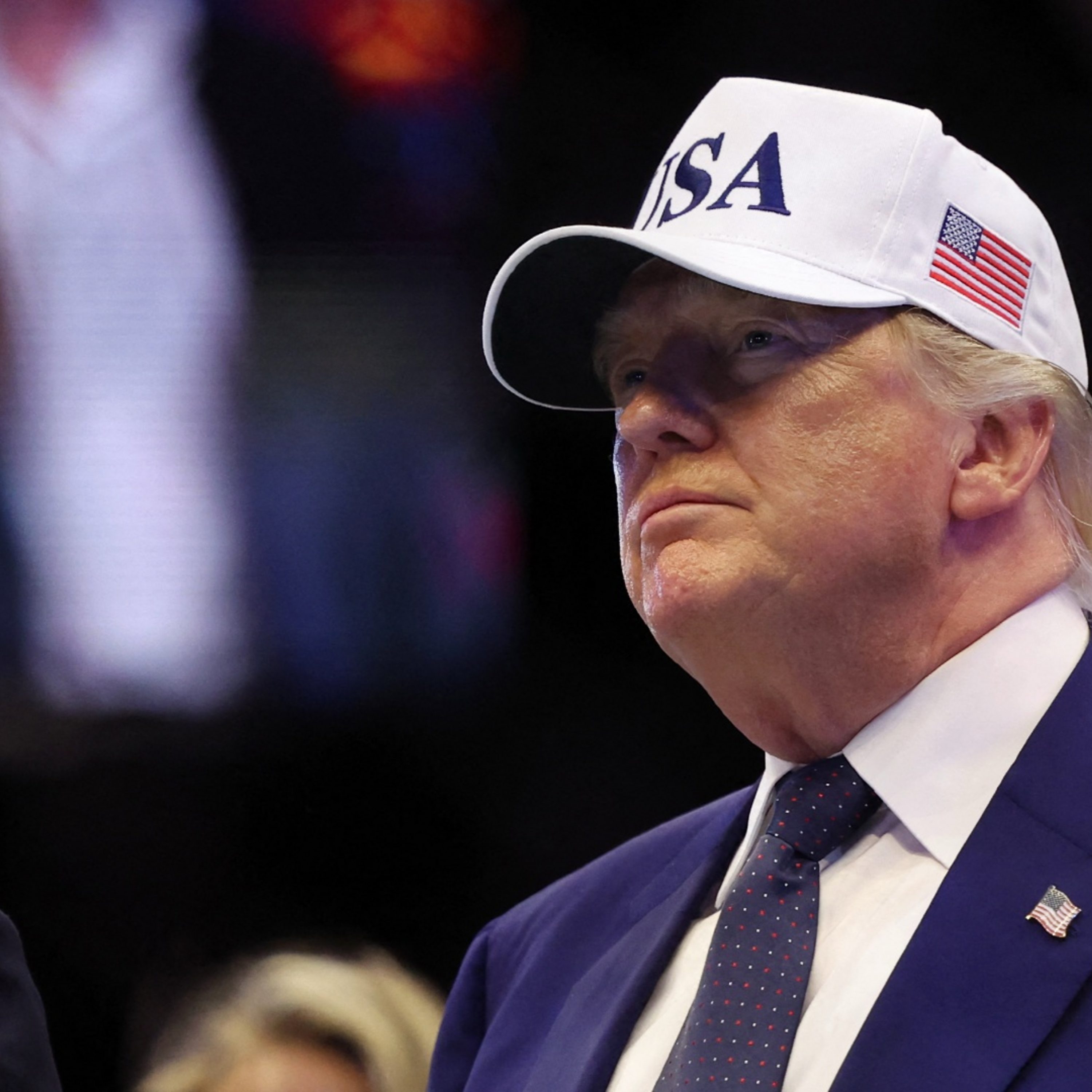
Global News Podcast
Strait of Hormuz will reopen says Trump
00:26:38
The peace deal between the US and Iran is due to be signed on Friday
Loading summary
Transcript74 lines
- [00:00]
BBC Announcer
This BBC podcast is supported by ads outside the uk.
- [00:06]
Ryan Seacrest
Hey, it's Ryan Seacrest for Albertsons and Safeway for you. Save days are here now through June 23rd. Find hot deals throughout the store and earn four times the points. Look for in store tags to earn on eligible items from General Mills, Pillsbury, Snickers, Oreo, Tillamook, Ziploc, Gold, Peak and Heinz. Then clip the offer in the app for automatic event long savings. Stack up those rewards to save even more. Enjoy savings on top of savings. When you shop in store or online for easy pickup or delivery, restrictions apply. See the website for full terms and conditions. It's called soccer.
- [00:39]
Ankur Desai
It's called football.
- [00:41]
Ryan Seacrest
Soccer.
- [00:42]
Rob Watson
Football.
- [00:44]
Ryan Seacrest
Domino's Best deal ever. Lets you get any pizza, including stuffed crust with any toppings for 9.99. Okay, we can agree on that.
- [00:53]
Nick Marsh
Yeah, fully.
- [00:54]
Ryan Seacrest
So pineapple. Don't ruin it. Get any pizza, including stuffed crust with any toppings for 9.99. Finally, something everyone can get behind. And if the rest dis, that's between them and Domino's. Which means the only thing left to fight over is who's ordering Dom. Price is higher for some locations. Excludes XL and specialty pizzas. Select this offer from 615 to 726 online only. Size availability varies by crust tank max 7 toppings, 6 for pan and New York style crust. Minimum purchase required for delivery prices, participation, delivery area and charges may vary.
- [01:27]
Ankur Desai
This is the Global News podcast from the BBC World Service. Hello, I'm Ankar Desai and at 14 hours GMT on Monday 16 June, these are our main stories. We've got the latest from the Middle east as both the US and Iran try to portray a newly announced framework deal to end the war as a victory for their side. A Russian airstrike has caused major damage to a thousand year old monastery in Kyiv. And Britain has announced plans to ban under 16s from using social media and it's expected to come into force by spring of next year.
- [02:03]
Healthcare Worker / Reporter
The devil's going to be in the
- [02:04]
Ankur Desai
detail of how this actually happens, but I think, yeah, well done. Thank you. Also in this podcast, the stepson of Noye's crown prince has been found guilty of rape and sentenced to four years in prison. And Starbucks staff in South Korea will attend a history lesson and shut stores following a public outcry over a marketing stunt.
- [02:27]
Shaima Khalil
Foreign.
- [02:32]
Ankur Desai
After nearly four months of on and off again fighting, the US and Iran say they've reached a deal to halt their war. Both sides say they've agreed a framework for peace including the reopening of the Strait of Hormuz and the ceasing of all military activities, including in Lebanon. Countries across the world have welcomed the news. The UK France, Germany and Italy released a joint statement praising the end to hostilities, but stressed that Iran must never acquire a nuclear weapon. Iraq, Turkey, Pakistan and Saudi Arabia and Egypt all welcome the agreement. I spoke to our correspondent in Jerusalem, John Donison, about the contents of the peace deal which is due to be signed on Friday.
- [03:15]
John Donison
It has very little detail other than to say the key issue I think, for the Americans is the reopening of the Straits of Hormuz. They will lift their blockade of Iranian ports and Iran will allow shipping to pass. But that in itself could take 30 days to really start flowing because of course you've got to clear mines that have been laid in the streets. And then what we're going to have is over the next 60 days, there is then this two month period to really get into the nitty gritty of the difficult issues, in particular Iran's nuclear program, what's going to happen to Iran's enrich uranium. So we haven't really thrashed that out yet. So while this is a sort of positive step, we're not there yet. I don't think it could be described
- [04:06]
Ankur Desai
that Israel is a wild card in this deal. Can they be trusted to abide by the rules of the agreement, particularly with the clause that says that military operations must cease in Lebanon?
- [04:16]
John Donison
Israel is going along with this, but reluctantly. It's been dragged kicking and screaming really to go along with this deal under pressure from its main ally, the United States. We had President Trump in an interview with the New York Times overnight saying that Benjamin Netanyahu, the Prime minister here, was, as he called him, a very difficult guy. So I don't think U S Israel relations are great at the moment. And I think crucially we're going to have to see what happens in Lebanon. Will the fighting between Israel and Hezbollah, Iran's proxy in Lebanon, will that stop? Because Israel is giving no signs that it's ready to pull out its forces which are occupying a large chunk of southern Lebanon. It is saying it's going to maintain its operations there.
- [05:04]
Ankur Desai
And because it's been such an uncertain time for so many weeks and months, it's going to be difficult to forecast whether this deal will hold. So it feels as though this can still change in the coming days before that agreement is signed on Friday.
- [05:17]
John Donison
It could do. I mean, I don't think Israel is going to go against what President Trump clearly wants in the next five days, but you're right, over the next two months. It isn't a done deal yet. And the truth is that we are basically back to the status quo before this war started. And when you think back to the initial war aims, we had President Trump and Prime Minister Netanyahu saying that one of the aims was regime change in Iran. Well, that hasn't happened. We haven't got rid of Iran's ballistic missile program. There's no mention of that in this memorandum of understanding. So then you get to the point where you say, well, look, if nothing really significant has changed, billions and billions of dollars have been spent on this war. It's caused huge damage to the global economy. Thousands of lives have been lost. But if nothing, those war aims haven't been achieved. You do have to ask, well, you know, what was the point of the war in the first place?
- [06:14]
Ankur Desai
John Donison reporting from Jerusalem. Donald Trump has said on social media that the Strait of Hormuz would be open toll free. But Iranian state media are reporting that Tehran added the imposition of so called maritime service fees in the strait. In the final moments of negotiations, oil prices fell sharply and shares surged after the announcement of the peace deal. I asked our business reporter Nick Marsh whether an end to the war will
- [06:41]
Nick Marsh
ease cost pressures to a certain extent. The economic damage has actually already been done. You know, nearly a billion barrels of oil have been taken out of the world's supply. Major oil producers, you know, Saudi Arabia, uae, Kuwait, they've stopped producing oil because it's got nowhere to go. Not entirely stopped producing oil, but they've really, really cut down, restarting those refineries. It's not like flicking a switch. So that's going to take some time, repairing all the damages as well. You know, Qatar's gas facilities, other oil refineries that have been hit. Repairing that's going to take years and
- [07:17]
Ankur Desai
not months for people who go to the petrol pump. Will they start seeing those prices drop now? Is there hope for everyday people?
- [07:23]
Nick Marsh
I don't think straight away, no. Given all of the caveats that I've mentioned, basically what needs to happen is that world oil supplies need to be in a place that they were before the war. And that is going to take a long, long time. There might be an easing of the pressure ultimately going into 2027 y, you ordinary people might see things a little bit kinder on them. But like I say, unfortunately a lot of the damage has been done.
- [07:49]
Ankur Desai
Nick Marsh in Singapore and we have more on this on our YouTube channel. Just search for BBC News and you'll find Global News Podcast in the podcast section. There's a new story available every weekday. To Ukraine now, where 11 people were killed overnight in waves of Russian missile and drone attacks. The, the strikes came just before the first phase of negotiations about Ukraine joining the European Union get underway in Luxembourg. The country asked for membership following Russia's full scale invasion in 2022. But opposition from Hungary had been holding up the process. Our Europe correspondent in Kyiv, Nick Beek, spoke to us from the UNESCO World Heritage site which was attacked.
- [08:32]
Nick Beek
We have actually come to this site. It is the Kyiv Puchesk Lavra monastery. It's a series of buildings. It dates back a thousand years. UNESCO heritage, as you say. And I'm looking at the cathedral, which is gold domed, but this morning is a place where emergency services are all around. The firefighters have been here overnight because there was a fire that took hold here. Very dramatic video. And just in front of me you can see burnt out debris that's fallen down from the golden roof, some pieces of gold still evident. And Ukrainians have really spoken out about this, saying that this is a completely unacceptable attack on their history, their culture, on Christianity. And we just heard from one official who said that a Russian drone had hit very near to the altar. The Russians are claiming that this was a defensive missile that ignited a fire. So this came, as you say, on a night where many, many missiles were fired. More than 70, 600 drones. The latest attack by the Russians I
- [09:40]
Ankur Desai
mentioned earlier as well. Ukraine wanting to join the European Union. So there will be talks today. How long could they go on for, though? Speculation it could go on for some time.
- [09:50]
Nick Beek
Yeah, absolutely. I mean, it could go on years because if you look at other countries that have joined recently, it's taken a decade in some cases. Some people want Ukraine to be fast tracked, to be part of the bloc as soon as possible. But what's happening today is that these talks are beginning and the first phase that Ukraine has to do is prove that democratically it's able to join the European Union. So they need to show that they've rooted out corruption and that the rule of law applies here, that the judges, the courts, the parliament all adheres to rules that Brussels and all the other capital cities agree with. So that starts today. They can move on to other discussions after that. But it is a long, long process. And as this diplomacy starts, it's clear that Vladimir Putin is sending his own message. We know that the, the G7 leaders are also meeting today. So he's not at the table during those talks, but certainly he's sending his missiles to this city and in front of us we can see and hear the damage from what he's done overnight.
- [10:52]
Ankur Desai
Nick Beek reporting from Kyiv. Children's use of social media has been a divisive issue in many households, between parents and their offspring around the world. Today, the British government has taken a firm approach by announcing that the countries under 16s will be banned from using social media. Britain's Prime Minister Keir Starmer said the new restrictions were the right choice, which would be welcomed by most parents.
- [11:19]
John Donison
Social media is making children unhappy. It's making it easier for bullies to harass and abuse them and it could even be harming their mental health, exposing them to content that is dangerous because that's what grabs the attention. It's designed to be addictive. Of course it is. Features like the Infinite scroll, they're designed to lock you in for hours.
- [11:46]
Ankur Desai
Our Cyber correspondent Joe Tidy told us more about the new rules.
- [11:50]
BBC Announcer
It's going to include all the big apps. So if you think about the big social media apps out there, Instagram, Facebook, Snapchat, TikTok, they're all going to be. They're all going to go. Even the sort of slightly smaller one like X for example, that's being. They're being called as sort of described as including. So there will be other apps included in this. Oh, and also YouTube as well. That's one. But it won't include WhatsApp and Signal. So messaging will continue, but the full ban will come into effect, he is saying, at some sometime in the spring, next year apparently he's saying the legislation is already there because the Online Safety act, so it will be sort of regulations written out and then enforced in the spring. There's also a couple of other extra bits as well. They're calling this kind of like an Australia plus because Australia became the first country to do this in December. So as well as a full band for under 16s, there will be no live streaming for children. There'll also be potentially a curfew. They're talking about on scrolling for people who are 16 and 17 at night time. And they're going to somehow bring in some laws to stop children talking to strangers on gaming platforms as well. So it goes further than previous sort of countries have done. The social media companies are saying, you know, we can fix this. They've been saying this for a couple of years. Of course they don't want this ban to come in place. YouTube has already said that our platform is a vital place for children to go for news and entertainment. But there are so many parents, of course, who have been very, very loud in campaigning and they're bereaved as well. Some of these parents who have had children that have died in the last couple of years because of taking their lives, for example, from seeing harmful content on social media or things like cyberbullying or sextortion, those kind of harms, they have been very important and pivotal in this kind of movement to get this ban brought into effect. But certainly the UK joining an absolutely enormous growing list of countries that are bringing in these kind of policies. The OECD put out a report in April saying that 25 countries are either thinking about it or in the process of bringing in a ban. So certainly the uk not the first here and won't be the last.
- [13:45]
Ankur Desai
These teenagers at a school in Manchester and England gave their reaction to the announcement.
- [13:50]
Healthcare Worker / Reporter
I think the issue is right now is the lack of guidance from parents. So I really think it should be the parents responsibility to guide us children through the website.
- [14:00]
Ambrasan Ethirajan
I think that social media really affects the mental health of children. You see things that you don't have on social media and that's why you don't appreciate the blessings that you already have.
- [14:09]
Ankur Desai
The only way is really going to affect, affect my life is I lose my snapstreaks. While a lot of people will be upset about it, I think in the long run it will have positive impact. Our political correspondent Rob Watson is looking at the difficulties that the UK government faces bringing in the new restrictions.
- [14:25]
Rob Watson
The obvious one is, you know, how do you identify who is under 16? I mean that sounds pretty straightforward, but it isn't. And that is why what the government says it will do is it'll get the regulator, the organisation that regulates media in this country called Ofcom. It's going to look at how best will age verification work. It's also important to stress that it's not going to be, you know, the kids who get done, if they try and access this, that the legal responsibility will rest with the social media companies.
- [14:54]
Ankur Desai
Has there been wide reaction from the political spectrum in the uk?
- [14:57]
Rob Watson
Absolutely. I guess the first thing to talk about is sort of, I don't know, popular reaction and polling suggests that this is massively popular with adults. Of course, I mean there's broad if not universal political support. The only the criticism comes from perhaps those what you might describe on the right of political spectrum saying this is all a liberal nanny state. And the other form of criticism is that if well intentioned, a social media ban might not deal with the real issue, which is young people spending so much time online and the kind of content that they can see. As for the social media companies themselves, they say, look, we want the Internet to be safe, we want social media to be self, but we don't think this is going to work. It will force kids to unregulated sites.
- [15:40]
Ankur Desai
UK political correspondent Rob Watson. Now there's one story that is dominating all news media outlets today in Norway. Following a seven week trial that has gripped the nation, the crown Prince of Norway's stepson Marius Borg Huiber has been sentenced to four years in prison for rape and a host of other offenses. Our Europe Digital editor Paul Kirby is following the case.
- [16:04]
Paul Kirby
So this is a case that began in February and because it's such an enormous case in Norway, there were 40 charges that he was accused of and he's been found guilty of more than 30 of those. Now the most significant trial charges were of rape. There were four counts of rape and he was convicted of two of those counts. He was found guilty of two and acquitted of the other two. There were six women who gave evidence in this case. So really it was a trial involving six women. And as you say, the son of the crown princess, Smette Marit, who is not a member of the royal family, he was born four years before she married the crown prince, but he is nevertheless very much part of the crown princess's circle, not a member of the royal family, but part of the family circle. So it has cast a very large shadow over the family itself.
- [17:00]
Ankur Desai
What more do we know about him and regarding court today? I gather that he wasn't there but some of the victims were.
- [17:06]
Paul Kirby
That's right. So he was not in court today for health reasons, unspecified health reasons, he was giving. He was sitting behind a desk. A video link from Iler prison near Norway. But he was not in the courtroom itself. He was in court during the trial, but not today. And we don't know exactly why. His lawyers did go there after the verdict was announced and they've been speaking to him and they've decided he will appeal against the judgment. But yes, you're right that one of the six women was in court. She was one of the two women involved in the two rapes that he was found guilty of. Now that case goes back to 2024. The other case goes back to 2018. So they very much six years apart when he was a much younger man. This was eight years ago that this happened. So a lot of the accusations go back many, many years.
- [18:04]
Ankur Desai
Just very briefly then, how is this being perceived by citizens in Norway as well? And how are the royal family handling this?
- [18:10]
Paul Kirby
So the royal family have decided not to comment on this and they've said they will not comment on this, nor will they consider commenting on Mette Marit's illness. She is facing a lung transplant. She's very, very ill. And, and Marius Borkoibi wants to be out of jail because she is so badly ill. That is a request that's been given to the court.
- [18:31]
Ankur Desai
Paul Kirby reporting. Still to come in this podcast, our correspondent reports from the epicenter of Ebola stricken areas of the drc, the frustration,
- [18:43]
Dr. Rishal Kojal
you know, losing health workers, every outbreak, you know, we have to lose. And focus. That is a really big. It's a frustration for me.
- [18:59]
Ankur Desai
This is the global news podcast to South Korea now and an advertising campaign that went badly wrong for the coffee chain Starbucks. All stores there will be shut for half a day next week for staff to attend a history lesson following a public backlash over a promotion that, that evoked a brutal military crackdown in 1980 on pro democracy protesters. Global affairs correspondent Ambrasan Ethirajan is following the story.
- [19:27]
Ambrasan Ethirajan
An innocuous coffee tumbler can create a national outreach. That's what happened in South Korea last month when Starbucks Korea, which is the local unit of the Starbucks company, so they launched an advertising campaign promoting the product and they came out with a tank, a special series of tumblers, reusable, basically, so the cups are bigger where you will have spacious volume. You can drink more coffee now. It sounds very fine. But they launched this campaign on the anniversary of one of the worst days for many Korean families because more than 180 people were killed in a pro democracy protest in 1980 in the city of Gwangju. And it is still in the, you know, it's vividly remembered and every year it is being honored because of the families. They suffered so much of a grief and loss. So it was an important day. So this tank motif, the tumblers, so that was seen as an insult that was lacking sensitivity. So that created an uproar, public backlash. How can you do this? It was called a tank day. So that was the campaign theme. So that really angered many people. In fact, even South Korean President Lee Ji Myung strongly condemned how you can be so insensitive when you're doing this. And the social media also called for a boycott Starbucks Korea. So now finally, so the company apologized and they sacked the CEO and they also withdrew that campaign. Now they're coming out with this lesson for its staff members for the first time since the company started in 1999. They're going to close it for half a day to give the historical lesson as well as social sensitivity. And it also includes the company's chief executives. And they also apologized. The Starbucks main office in the US Also apologized. So it is again a big lesson when you launch an advertising campaign. What are the factors you need to take into account
- [21:29]
Ankur Desai
now to the football World Cup? Iran's men are playing their first game on Monday evening US Time in Los Angeles against New Zealand. Their preparations, though, have been overshadowed by the war. With disputes over visas and security concerns, Iran's team had to move their base from Arizona to Mexico and will have to fly out of the US after their matches. Afshin Gottbe is a former coach.
- [21:55]
Afshin Gottbe
Everyone has sympathy for any athlete that has to be put under such a logistical and psychological challenge before maybe a dream tournament for most of these players as they were born to play the game and they live to be in the World Cup.
- [22:12]
Ankur Desai
Our North America correspondent, Shame Khalil is in Los Angeles and has more on the problems for the Iranian team.
- [22:19]
Shaima Khalil
The deal to end fighting between the US And Iran has come just a day before the Iranian team's opening World cup match here in Los Angeles, easing fears of further escalation but doing little to remove the controversy surrounding the team. Iran's striker Mehdi Tarimi told me that this ongoing tension has overshadowed the tournament from the moment the squad arrived. Preparations have also been disrupted. The team faced visa problems and was forced to move its World cup base camp to Mexico. And when Iran takes to the pitch here in la, many in the city's large Iranian community won't be there to watch. Watch. Some are planning protests against FIFA's ban on the pre revolutionary line and sun flag, while others see the team as representing a regime they want gone. The players insist they're here to unite Iranians and focus on football. But for this squad, politics has been impossible to escape.
- [23:11]
Ankur Desai
Shaima Khalil reporting from Los Angeles. The Ebola outbreak in the DRC has reached 782 confirmed cases and 181 deaths. The outbreak has continued to expand into new areas despite intensified surveillance and treatment efforts. Our Africa correspondent Anne Soy has been to one clinic in Ituri Province, which is the epicentre of the outbreak, and where she met a patient who's going home after recovering from the disease.
- [23:45]
Healthcare Worker / Reporter
About a dozen healthcare workers are singing and dancing as they escort a newly recovered patient from the Ebola treatment center in Mongolo. Daniel Kitambala walks in front of them holding a black plastic bag that has his disinfected belongings. You're now going home. What message do you have for those people you're going back to?
- [24:12]
Afshin Gottbe
The message for the people in the village is that they should come here for treatment.
- [24:19]
Healthcare Worker / Reporter
What will you tell them about how you've been treated here?
- [24:24]
Afshin Gottbe
They should just come. They should not be afraid.
- [24:28]
Healthcare Worker / Reporter
There are those in the community who have not accepted the message about Ebola.
- [24:34]
Afshin Gottbe
They should not listen to people. They should seek treatment. People are recovering. See, I have recovered.
- [24:41]
Healthcare Worker / Reporter
Walking beside him is Dr. Risha Lokodo, the hospital director in Mongolu. I ask him what this recovery means for them.
- [24:53]
Afshin Gottbe
We have faced many challenges and witnessed many deaths. However, seeing the situation improve makes us very happy.
- [24:59]
Healthcare Worker / Reporter
Dr. Lukodu is optimistic that the recoveries will help build trust in the healthcare system and boost the morale of hospital staff.
- [25:08]
Afshin Gottbe
At the beginning, we faced significant resistance because many people did not believe Ebola was real. This made the situation very difficult to manage. Many residents were reluctant to visit health facilities. Today we are seeing positive changes. People now understand the disease better and know the importance of seeking treatment.
- [25:28]
Healthcare Worker / Reporter
We saw the reports of the young people who came and burned down the facility that was treating Ebola patients. What happened?
- [25:41]
Afshin Gottbe
This happened at the beginning of the outbreak when Ebola had just been announced. Many people did not understand how the disease spread and reacted out of fear and misinformation.
- [25:53]
Healthcare Worker / Reporter
That was in May. Two days earlier, a similar facility in Rompara was burned down.
- [25:58]
Dr. Rishal Kojal
It was very complicated, you know, for the staff here, you know, very complicated for the staff.
- [26:04]
Healthcare Worker / Reporter
That's Dr. Rishal Kojal. He's the lead clinician at the facility managed by the medical charity Alima in Rampara. He has been at the frontline in previous outbreaks of Ebola and says the challenges he's encountered here are huge.
- [26:19]
Dr. Rishal Kojal
At the beginning of this outbreak, I lost some doctors here. I have a nurse, I have an anesthesiologist, I have a lab tech here. They are confirmed cases, you know, so it's a frustration, you know, losing health workers. Every outbreak, you know, you have to lose health workers. That is a really very. It's a frustration for me.
- [26:43]
Healthcare Worker / Reporter
One of the medics recovering from Ebola is Mirelle Gahindo. She's receiving treatment together with her 11 month old child. I spoke to her through a glass screen separating patients from the green area where visitors are allowed to access. Now I'm feeling better. My baby is feeling better. No more fever, no more diarrhea, no more bleeding.
- [27:05]
Ambrasan Ethirajan
Better.
- [27:06]
Healthcare Worker / Reporter
She looks forward to going back home to her husband and two other children. But first they must test negative for Ebola twice. Her doctor is optimistic she will. That would be reason for a little cheer where death and mourning have become all too frequent.
- [27:25]
Ankur Desai
Our Africa correspondent and Saw it reporting and that's all from us for now. If you want to get in touch, you can email us@globalpodcastbc.co.uk and you can also find us on XBCWorldService. Use the hashtag globalnewspod. And don't forget our sister podcast, the Global Story, which goes in depth and beyond the headlines on one big story. This edition of the Global News Podcast was mixed by Tom Bartlett and the producer was Vanessa Heaney. The editor is Karen Martin and I'm Ankur Design. Until next time, goodbye.
- [28:07]
Ryan Seacrest
Hey, it's Ryan Seacrest for Albertsons and Safeway for you. Save days are here now through June 23rd. Find hot deals throughout the store and earn four times the points. Look for in store tags to earn on eligible items from General Mills, Pillsbury, Snickers, Oreo, Tillamook, Ziploc, Gold, Peak and Heinz. Then clip the offer in the app for for automatic event long savings stack up those rewards. To save even more, enjoy savings on top of savings. When you shop in store or online for easy pickup or delivery, restrictions apply. See the website for full terms and conditions.
- [28:40]
Tech Podcast Host
Every story is in some way a technology story. And on the interface, we decode the tech that's rewiring your week and your world. On this week's episode, will your resume forever be stuck in AI Limbo? Is slow messaging better than instant messaging? And why on earth Are tech CEOs making their own game show? Listen on BBC.com or wherever you get your podcast, Every story is in some way a technology story. And on the interface, we decode the tech that's rewiring your week and your work world. On this week's episode, will your resume forever be stuck in AI Limbo? Is slow messaging better than instant messaging? And why on earth Are tech CEOs making their own game show? Listen on BBC.com or wherever you get your podcasts.