Loading summary
Transcript81 lines
- [00:00]
Bahman Kalbasi
This BBC podcast is supported by ads outside the uk.
- [00:06]
Charlotte Gallagher
Allergy season always has a way of sneaking up on you. One minute you're listening to your favorite podcast, the next it's non stop sneezing and a runny nose. That's why it's essential to keep Kleenex Ultra Soft Tissues on hand. They're silky soft for up to 100% irritation, free skin and allergist approved so when allergies hit and they will be ready with Kleenex Ultra Soft Tissues for whatever happens next. Grab Kleenex.
- [00:33]
Advertisement Voice
Spring into deals with stay green premium 2 cubic foot mulch 5 bags for $10 plus stay fresh with up to 35% off select major appliances and save an additional $100 on select laundry pairs. Our best lineup is here at Lowe's. Lowe's we help you save valid 3, 5, 6 mulch offer excludes Alaska and Hawaii. See lowe's.com for more details.
- [00:56]
Charlotte Gallagher
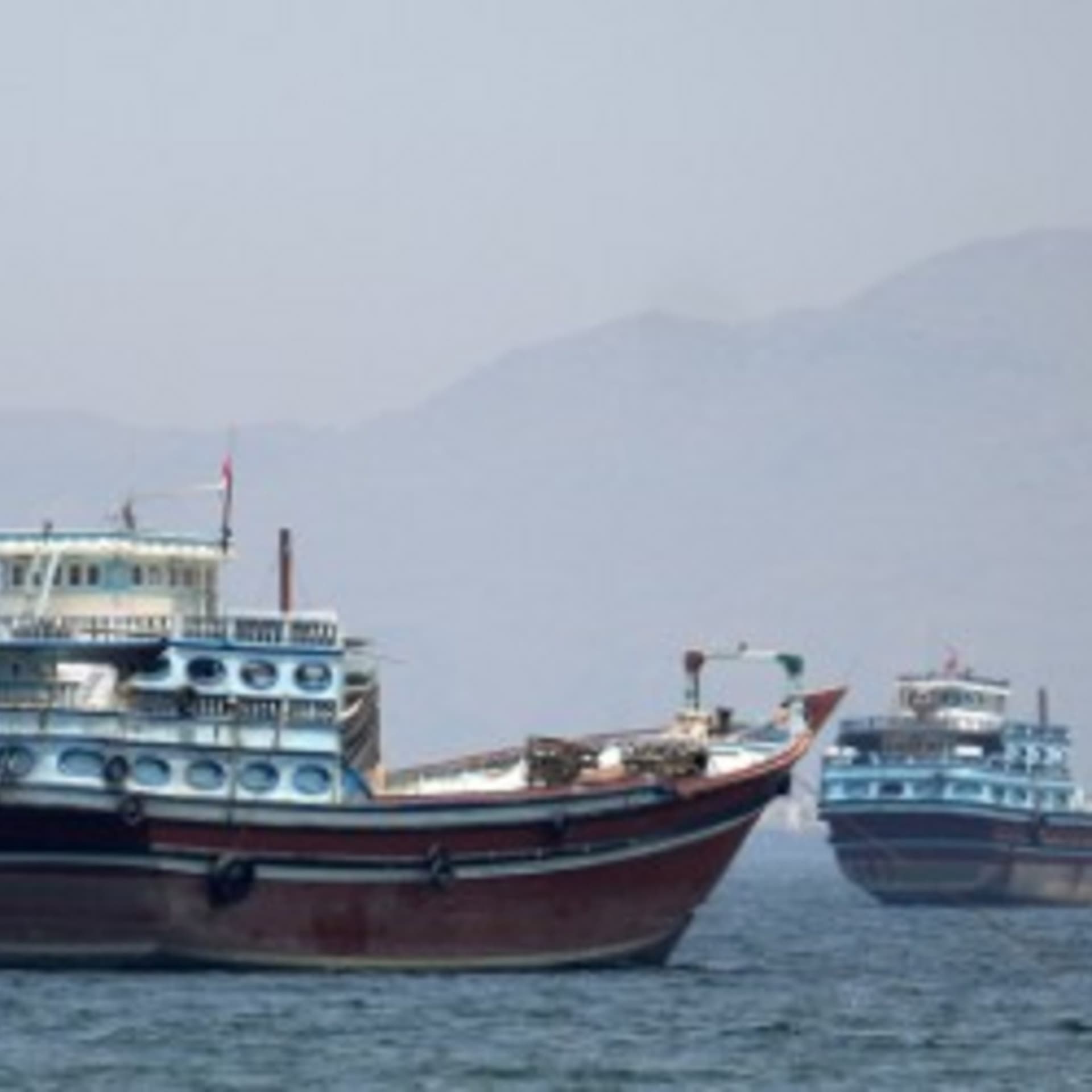
Visit your nearby Lowe's. This is the Global News podcast from the BBC World Service. I'm Charlotte Gallagher and in the early hours of Monday 4th May, these are our main stories. The US is to deploy Navy destroyers, aircraft and troops to restore navigational freedom in the Strait of Hormuz, but Iran warns any interference could end the ceasefire. We also hear from people in Iran on their fears for the future and World Press Freedom Day. How are things looking for journalists around the globe? Also in this podcast, I never like to show up too boring. So I think I have a pretty good idea and let's see if people like it. As some celebrities gear up for the Met Gala, others are asking if it's still the invite everyone wants. Now the boss of Amazon is funding it. For weeks now, hundreds of ships have been stranded in the Strait of Hormuz, the critical waterway which has become one of Iran's most powerful weapons in the ongoing war with the US and Israel. To try and end the long standoff which has seen oil prices rocket, Donald Trump has announced a fresh initiative to dubbed Project Freedom, which would begin in the coming hours and see US military vessels attempt to free stranded ships and escort them through the Iranian blockade. At the same time, informal talks on ending the fighting continue, with the US reported to have responded to a 10 point Iranian proposal which would have ended hostilities but left Tehran's controversial nuclear program unresolved. I asked Barman Karlbasi from BBC Persian how Project Freedom would work.
- [02:47]
Bahman Kalbasi
It's unclear what the response will be if Iran decides to attack every vessel that the US is escorting. Although the United States president has talked about these vessels being non hostile and that they will never be coming back. So it's just an exit. So it doesn't really fundamentally change the real problem, which is we're looking at oil prices going higher and higher every day. But we have heard from some Iranian government officials last few hours, including a Member of Parliament, saying this is basically a violation of the ceasefire and they shouldn't play with fire. So there is an implicit threat there that they might target these ships. We heard, we saw in that post by Donald Trump that he said, we will respond to any fire coming from Iran forcefully. It's also a question of how many cargo ships are willing to take that risk. Even though US is telling them that they will escort them out, that doesn't mean they won't be targeted and what happens if they are. So the number of ships that volunteer to be escorted is also one question that will be answered in the coming hours, will give us a picture of how effective this can be and where
- [04:08]
Charlotte Gallagher
are we with any kind of peace process.
- [04:12]
Bahman Kalbasi
Donald Trump has been very down on any peace process in the last few days. He even went as far as saying he doesn't think he could ever do a deal, at least in medium term, a deal with Iran. But then we've seen this zigzag of changing his positions constantly. And now in this post, for the first time in a few, maybe more than a week, he talks about the positive direction in the talks, which again, this is coming just an hour before Brent Futures market opens. So we have seen this happen before, right before the open market. There's always a line there that there is hope for possibility of a deal. But clearly United States is now stuck between a bad option of escalating again and a deal that Iran is offering that is not ideal at all and not very different from what they were offering before the war. So there are not that many good options before Mr. Trump to choose from. Clearly, the Iranians have also have an interest in ending this and possibly even coming to a grand bargain. But they're not going to offer something fundamentally different from what they offered before the war only to prove the point that the war has not achieved its
- [05:33]
Charlotte Gallagher
aims and inside Iran is the threat to the regime over now. I mean, and also, we've still not seen the Supreme Leader in public, have we?
- [05:42]
Bahman Kalbasi
We have not. And obviously the regime is committing atrocities every day. We just had another execution. This 25th execution of protesters in the days since the war has started. This is the highest number of people who've been killed. But there is no imminent threat to the regime as we speak, and the regime is tight in its grip. It's even more brutal than before, and the war has maybe in some cases
- [06:11]
Charlotte Gallagher
helped it entrench itself, as Bahman was saying. Opponents of the Iranian regime are coming under growing pressure. Human rights groups have accused the authorities of carrying out widespread arrests, torture and executions. With the help of sources inside Iran, the BBC has been able to speak with people who say they're living in fear for their safety. We're not using their real names or voices. This report was compiled by Fergal Keen.
- [06:39]
Fergal Keen
There's no escaping the simple fact the regime has survived. Its physical and psychological presence is everywhere. From the giant post office of assassinated leaders to the watchful, staring eyes of the intelligence services on the streets, a kind of surface normality has returned. People are shopping, taking their children to the park. But for many, like this young couple, hope is giving way to despair. In order to protect their identities, the conversation between Diaco and Sana is spoken by actors.
- [07:14]
Charlotte Gallagher
Things will change. It's already changed, changed. It's fallen into the hands of the Revolutionary Guards. The country is a mess. At the beginning, I did not want the war to happen. Through the middle of the war, as long as they were targeting key figures, I was genuinely overjoyed with every one of their deaths. But the thing is, so many of their people are still standing. What I had imagined did not come true. Everything got worse and we are left with the Islamic Republic. I am gutted that they won the war. I consider the Islamic Republic my enemy.
- [07:53]
Fergal Keen
The regime is still killing its internal enemies. 21 political prisoners have been hanged since the war started. That's the highest number in such a short space of time in 30 years. Thousands of others are in detention with repeated credible reports of torture.
- [08:11]
Stephanie Prentice
This was one of the arrested January protesters.
- [08:16]
Fergal Keen
Susan, not her real name, is a lawyer working for the detained and is confronted with a paradox. She wants peace, but fears that an end to the conflict will free the regime to mount an ever more punishing crackdown.
- [08:30]
Stephanie Prentice
Before the war, harsh treatment was reserved for those who were lead protesters, those who had Molotov cocktails or those who were armed. But during the war, that harshness has intensified significantly. I want the war to end. Still, though, I think that if the war does end, the regime will probably take out its rage from this war on the prisoners. We're living on borrowed time. I genuinely don't think much about the future.
- [09:00]
Fergal Keen
The Islamic Republic gives all the appearance of confidence that it is winning in the face of American confusion about how to end the war. Armin is an independent journalist who's also fearful about what might happen next, as the regime feels emboldened to persecute anyone it wants to call an enemy. I personally lie awake wondering what the future holds and that uncertainty brings with it a terrible anxiety. Before, we might be accused of a political offense, but in the current wartime conditions, if we report on the war, we could be accused of espionage. Before, we were trying to understand how many people had been harmed or what impact the protests would ultimately have. But now it's different. Now we're focused on staying alive, ourselves and our families. There are continuing rituals for those killed by the state, acts of remembrance, but also reminders of the cost of dissent. This is part of a mourning ceremony for a young man killed during anti regime protests. Family and friends are crowded together as close as they can get to a large framed photograph of the deceased, a man in his 30s. As the world wonders if talks to end the war will resume, the regime remains master of life and death.
- [10:30]
Charlotte Gallagher
That was Fergal Keen. World Press Freedom Day has been marked with a melancholic tone as a new report finds that established journalism is being suffocated. The latest figures compiled by Reporters Without Borders suggest press freedom is at its lowest level in 25 years amid growing authoritarian pressure. John Williams is a former BBC editor who now heads the Rory Peck Trust, fighting to protect independent journalism.
- [10:59]
Paddy O'Connell
This year, for the first time, more than half of the world lives in a climate where press freedom is either difficult or very serious. If I tell you that 25 years ago, 20% of the world had good press freedom and 20% had bad. Today, only less than 1% of the world live in a climate where press freedom is said to be good. The Middle east is particularly bad right now. Over the last two and a half years, we've seen more than 260 Palestinian journalists killed by Israel. And the danger there is that we're now seeing those same tactics being exported to Lebanon. Just two weeks ago, a journalist called Amal Khalil was killed in southern Lebanon. The other place, ironically, which is now critical, is the United States, for so long the defender of journalism of last resort. In this year's survey, Reporters Without Borders saw it fall seven places to 64. And it just cannot be business as usual. Journalists are protected under international humanitarian law. They are classed as civilians and targeting them is a war crime. There are International Criminal Court arrest warrants out for those that the court says are responsible. We need to see those indictments acted upon. Because if we don't, journalists then have a target on their back wherever they are. And before we know it, every journalist will have a target on their back. And we won't be getting any truth because people won't be able to report the truth.
- [12:20]
Charlotte Gallagher
John Williams from the Rory Peck Trust still to come in this podcast, this
- [12:28]
Roshana Desai Martin
is about restricting access to reproductive health care, another unnecessary hurdle.
- [12:35]
Charlotte Gallagher
The U.S. supreme Court is asked to restore access to abortion pills.
- [12:47]
Trace Dominguez
Your social media feed says, Eat more protein. Track your sleep, boost your VO2 max. Wake up in cold plunge. Cleanse yourself of parasites. You're intrigued but confused. So where can you turn? Welcome to Health versus Hype, the show where we take the loudest wellness trends on the Internet and ask the questions only science can answer. What's real, what's exaggerated, and what is completely wrong. I'm Trace Dominguez. Each episode we show the science behind viral health claims, from high protein diets to cold plunges, detoxing to sleep. Tech obsession. And we talk to the people in the middle of it all. Influencers, the curious, but more importantly, doctors and researchers. Not to cancel the trend, not to hype it more, but to understand it. Listen to Health vs Hype with the American Medical association on the iHeartRadio app, Apple Podcasts, or wherever you get podcasts. Slow the scroll. Start asking better questions. Hey, it's Ryan Seacrest for Albertsons and Safeway. Spring is a time to give yourself a refresh, so spend time on self rejuvenation. Shop in store and online for great savings on all your favorite personal care Items. Now through May 26th. Earn four times points when you shop participating items like Pantene Shampoo, Crest Toothpaste, Tampax Radiant Native Shampoo and Secret Gel Deodorant. Then redeem points for discounts on future purchases of groceries or fuel. Offer ends May 26. Restrictions apply. Offers may vary. Visit albertsons or safeway.com for more details.
- [14:17]
BBC Space Podcast Narrator
The crew of NASA's Artemis 2 mission have returned home safely after successfully completing their groundbreaking voyage around the moon.
- [14:25]
Paddy O'Connell
Splashdown confirmed.
- [14:27]
Stephanie Prentice
Humans are back in the business of
- [14:29]
Charlotte Gallagher
going to the moon.
- [14:30]
BBC Space Podcast Narrator
But while the mission is over, the Artemis space program is just getting started. 13 minutes the BBC Space podcast is looking back on their epic journey and discovering what the future holds for the Artemis Space program.
- [14:45]
Paddy O'Connell
Just imagine what we as humans can do next.
- [14:48]
BBC Space Podcast Narrator
Thirteen minutes presents Artemis 2 from the BBC World Service. Listen now wherever you get your BBC podcasts.
- [15:02]
Charlotte Gallagher
This is the global news podcast ahead of the presidential election in Colombia four People have been shot dead in the city of Kukata, near the border with Venezuela. The victims include the head of a neighborhood council in the city. And it comes after a bombing last weekend in the southwest of the country. So how political is this violence? I've been speaking to our Latin America specialist, Luis Fajardo.
- [15:26]
Luis Fajardo
There have been four people killed in what authorities are suggesting could have been retaliation between crime groups. It is certainly a high number of people killed in a single incident. But what we have seen across Colombia in the last weeks is a deterioration in the security condition, deterioration which is causing major incidents of violence across the country and which is generating a lot of uncertainty as the country gets near to its scheduled presidential election on May 31.
- [15:56]
Charlotte Gallagher
And is the violence linked to the election?
- [15:59]
Luis Fajardo
Well, Colombia has had violence for such a long time that unfortunately, some observers realize that every four years when the elections are approaching, you typically see a surge in violence. This is because in many cases violence is associated, besides the drug trafficking problems, to rebel groups, insurgent groups. And in many cases, both the rebels and other powerful illegal armed groups, like criminal gangs, want to, in a way, show their power with the incoming government, whichever it might be. And in that sense, it is not unusual just before elections to see an increase in armed actions as these armed groups try to show their power with the incoming government.
- [16:44]
Charlotte Gallagher
And as you said there, this violence has been going on for years. Why have successive governments failed to, to kind of get a handle on this with these armed groups and also with the drug traffickers?
- [16:55]
Luis Fajardo
A conservative point of view, particularly in recent years, would say that the Colombian state has done a lot to try to negotiate with many of these illegal armed groups. And they argue that the groups that are currently causing a lot of this violence are not so much interested in political issues, but are basically rent seeking groups, profit seeking groups in illegal industries like drug trafficking or like illegal mining. In that sense, they strongly criticize the strategy of the current government of leftist President Gustavo Petro, who have been trying to maintain negotiations with some of these groups. According to the conservative critique of this strategy, it would be, according to them, pointless to try to negotiate with these groups which are mainly interested in profit rather than any political objective. While on the other side, you see the, the more left wing argument, which says that in fact, Colombia still needs to have some kind of political negotiation with many of these groups. Whoever is right, the fact is that the Colombian violence is continuing. It is being fed by continuous drug trafficking profits which allow many of these groups of many of these illegal groups to continue fighting the Government with a lot of resources, and it continues creating a lot of uncertainty and a lot of frustration with Colombians. Colombia this year is commemorating the 10th year of a peace treaty that was signed with the revolutionary Armed forces of Colombia, AFARC. So 10 years ago, this conflict was supposed to come to an end. The sad reality is that it continues.
- [18:36]
Charlotte Gallagher
Luis Fajardo Security has been further tightened at Jewish schools, community centers and synagogues in Britain following stabbings in London last week. In March, ambulances belonging to a Jewish charity were set on fire. So how are members of the Jewish community feeling? Paddy o' Connell went along to a synagogue in North London and spoke to several teenagers.
- [18:58]
Jewish Teenager
Personally, I've never had anything anti Semitic aimed directly at me, but at the moment it's pretty scary with everything so close. But at school, everyone knows I'm Jewish and I don't receive anything negative coming towards me about that. I don't go to a Jewish school. I have one friend who's half Jewish, but everyone else is a different religion.
- [19:20]
Paddy O'Connell
And do you feel optimistic you're looking forward to doing your GCSEs? Can we get over the problems that life presents?
- [19:26]
Jewish Teenager
I think we probably can get over the problems, but the racism needs to somehow stop.
- [19:31]
Advertisement Voice
I think it's definitely scary, and I think it's now that I'm 16, as opposed to being younger right now and more aware of what's going on in the world, and it's definitely, definitely scary. I think in terms of optimism, I feel like this stuff has always happened. It's happened since before I was born. It's probably happened before many of the people listening have been born.
- [19:49]
Charlotte Gallagher
I go to a Jewish school, so there's loads of security at the gate and stuff.
- [19:54]
Fergal Keen
It's sort of a shame that there has to be such security there.
- [19:57]
Paddy O'Connell
Do you have any optimism?
- [19:58]
Charlotte Gallagher
Yeah, obviously I do. I think I'd like to stay in London.
- [20:02]
Fergal Keen
I like the city. I love the city.
- [20:04]
Paddy O'Connell
You still love the city?
- [20:05]
Charlotte Gallagher
Yeah, I do. I think it's great. I like the diversity of it, how there's so much to do, so many places to go.
- [20:12]
Advertisement Voice
I agree. I think London's probably the best city in the world. I tell my friends that.
- [20:15]
Paddy O'Connell
And even this is. Even though this has happened and you find it a bit scary.
- [20:18]
Advertisement Voice
Yeah, I think. I think it happens all over the world and I think it's a shame that it happens all over the world, but it is just one of those things that I've been taught as a young Jewish person that it just. It just happens.
- [20:28]
Jewish Teenager
I don't really feel like isolated. I don't go to a Jewish school, so it's kind of there's so many people that are really diverse and I don't feel isolated really.
- [20:37]
Paddy O'Connell
Have any of your friends said sorry about what's happened? Has anyone sort of shaken you by the hand or said, I've heard what's happened, I hope you're okay a bit,
- [20:44]
Jewish Teenager
but I don't think there's much talk about it at school for me. I know there could be for other people, but there is.
- [20:51]
Paddy O'Connell
What's the best thing about your life being 12? What's the thing you love doing?
- [20:54]
Jewish Teenager
I'm quite creative, so I like and sporty, so I like playing hockey and drawing and stuff like that. I feel like thinking about the news all the time would just make me a bit depressed. I don't think it's one thing that people need to do, but just to be generally, everyone needs to be more educated on how if you see something happening that's wrong, how to stop it.
- [21:15]
Jewish Teenager Friend
I think one of the things that surprised me most is how sudden it's been three or four incidents in the space for a few weeks. So that's kind of surprised me. I wouldn't be as obviously Jewish moving around. You know, I wouldn't wear my Staff David necklace if I was just walking around. I have lots of Jewish friends, but I don't go to Jewish school. So I have friends who are Muslim and Christian. You know, everything really. One of the things that's most important, especially that I see with my friends, is that if you're together and you talk to people of faith that are different to you, you can see that they're kind of they're just like you. There's no real difference. And that separation is what kind of leads to this sort of anti Semitism and racism.
- [21:50]
Charlotte Gallagher
That was Paddy o' Connell reporting. A manufacturer of the medication used in the majority of early abortions in the US has asked the Supreme Court to allow postal deliveries of the pill a day after they were blocked by a lower court in New Orleans. Abortion is banned in many US States, including Louisiana. Roshana Desai Martin from Washington center for Reproductive Rights told us about the ruling.
- [22:16]
Roshana Desai Martin
So before this decision, mifepristone was available in person at health centers or by mail or at a pharmacy after receiving care through telemedicine. Now people must pick up mifepristone in person at a health center. There's two things that I think are important to point out here. One is that this order is nationwide. It applies in every single state, even in states where abortion is protected in their state law or even in their constitution. And countless people like those who live in rural areas or people with disabilities or people who live far from clinics, will now have to fly or even drive to get access to mifepristone, which may mean they lose access to it altogether. And at a time where in this country now gas is nearing $5 a gallon, this is just another unnecessary hurdle. The health and safety and the science around mifecristone is very clear. It's been safely used in this country for more than 25 years. And leading experts agree that restricting telemedicine for mifepristone would have no safety benefit. So this is not about safety and health. This is about restricting access to reproductive health care. We get really caught up in what politicians think about this. And I want to focus for a moment on what the American people think about this. And they in wide majority support access to abortion. And this ruling really goes against their views.
- [23:52]
Charlotte Gallagher
That was Rushanna Desai Martin. Finally, the Met Gala in New York has become the grandest and possibly the most exclusive event in the global fashion calendar, attended by designers and a list celebrities. With the red carpet arrivals on its famous staircase watched by people all over the world. The live feed of it on Vogue's website alone gets around a billion views. Vogue has a central role in organizing the event, with Anna Wintour as lead chair, and she has the last word on who can come in. But this year's guest list has been causing controversy and raising questions about the future of the event. Our reporter Stephanie Prentice told me more.
- [24:37]
Stephanie Prentice
So basically, the Met Gala has gone from this fancy fundraising dinner in the 1940s for the museum's Costume Institute to one of the world's most high profile red carpet events. It's also one of the most expensive. Tables cost hundreds of thousands of dollars, and the gala raises tens of millions a year for the museum as well as huge attention for it and its guests on the world stage.
- [25:02]
Charlotte Gallagher
And it always has a theme, and some of those themes have been criticized in the past. But why is this year being called the most controversial yet?
- [25:09]
Stephanie Prentice
You're right. So usually people's interpretations of themes that have either cultural or maybe religious ties cause a bit of a backlash in recent years. There's also been a narrative that the displays of excess in extreme luxury daun sit well within a context of global inequality. That all seems to have come to a head with the involvement of Jeff Bezos and his wife. He of course is the billionaire founder of Amazon. He's sponsoring the event and he's been named honorary chair alongside his wife, Lauren Sanchez. Now that's controversial for a few reasons. So purists are saying the event is selling out to billionaires. It's no longer prestigious. And his close involvement is also fueling rumors he might buy Conde Nast, which owns Vogue. That has also been divisive. Now the Bezos key role started rumors that people who usually attend might be boycotting it. The guest list is private. We don't know who will attend on the night. But there are rumors Zendaya isn't going and that Meryl Streep turned down a co chair position in protest. They've given different reasons and Zoran Mamdani has confirmed he definitely won't be there. Now that will break a decades long tradition of New York mayors attending. He didn't name any names, but he said he wants to focus on issues like affordability in New York. So it will definitely be interesting to see who does turn up around New York. We've seen posters criticizing Jeff Bezos and we've seen videos from one British protest group. Now they've been planting 300 small bottles of fake urine around the museum ahead of the event. The bottles have Jeff Bezos face on them and they're said to be a nod to accusations that some of his drivers are denied bathroom breaks and they're told to urinate in bottles instead of.
- [26:53]
Charlotte Gallagher
So some people aren't happy with this event, but for others, it's still a night of fashion and costumes.
- [26:59]
Stephanie Prentice
I mean, it's undeniably a good time. If you like fashion, people go all out. Social media goes wild with people's takes on the costumes. This year's theme is fashion is art. And one person who has confirmed they're going and getting ready is the model Heidi Klum at a recent red carpet.
- [27:17]
Charlotte Gallagher
It is very abstract, but you know, I never like to show up. Too boring. So I think I have a pretty good idea and let's see if people like it.
- [27:25]
Stephanie Prentice
So we know Beyonce, Nicole Kidman and Venus Williams are co chairing. So they'll definitely be there in no doubt. Extravagant takes on the theme. I mean, in the past we've seen Katy Perry as a chandelier. We had Jared Leto holding a replica of his own head as he walked up the steps. Lady Gaga went one year wearing four outfits and she basically stripped down as she went along. So people do get really excited about it. And actually the British designer Zandra Rhodes was speaking to the bb. Earlier, she was asked about that criticism that the event nowadays is just about wealth and celebrities.
- [28:01]
Jewish Teenager
They're proposing themselves as art forms, I think, in a way, and I think
- [28:06]
Paddy O'Connell
it's probably a very new look on
- [28:09]
Jewish Teenager
how life is turning around.
- [28:11]
Charlotte Gallagher
They're actually proving that fashion is art and going to the extremes of it.
- [28:17]
Stephanie Prentice
So she doesn't mind celebrities being involved. She's looking forward to what those famous attendees might come up with, whoever they may be. And she's probably not alone in that.
- [28:27]
Charlotte Gallagher
That was Stephanie Prentice. And that's all from us for now. If you want to get in touch, you can email us@globalpodcastbc.co.uk you can also find us on XBCWorldService. Use the hashtag globalnewspod. Don't forget our sister podcast, the Global Story. This edition of the Global News Podcast was mixed by Martin Baker. The editor is Karen Martin in. I'm Charlotte Gallagher. Until next time.
- [28:52]
Roshana Desai Martin
Goodbye.
- [29:01]
BBC Space Podcast Narrator
The crew of NASA's Artemis 2 mission have returned home safely after successfully completing their groundbreaking voyage around the moon.
- [29:09]
Paddy O'Connell
Splashdown confirmed.
- [29:11]
Stephanie Prentice
Humans are back in the business of
- [29:12]
Charlotte Gallagher
going to the moon.
- [29:13]
BBC Space Podcast Narrator
But while the mission is over, the Artemis space program is just getting started. 13 minutes. The BBC Space podcast is looking back on their epic journey and discovering what the future holds for the Artemis space program.
- [29:29]
Paddy O'Connell
Just imagine what we as humans can do next.
- [29:31]
BBC Space Podcast Narrator
Thirteen minutes presents Artemis 2 from the BBC World Service. Listen now, wherever you get your BBC podcasts.