← Global News Podcast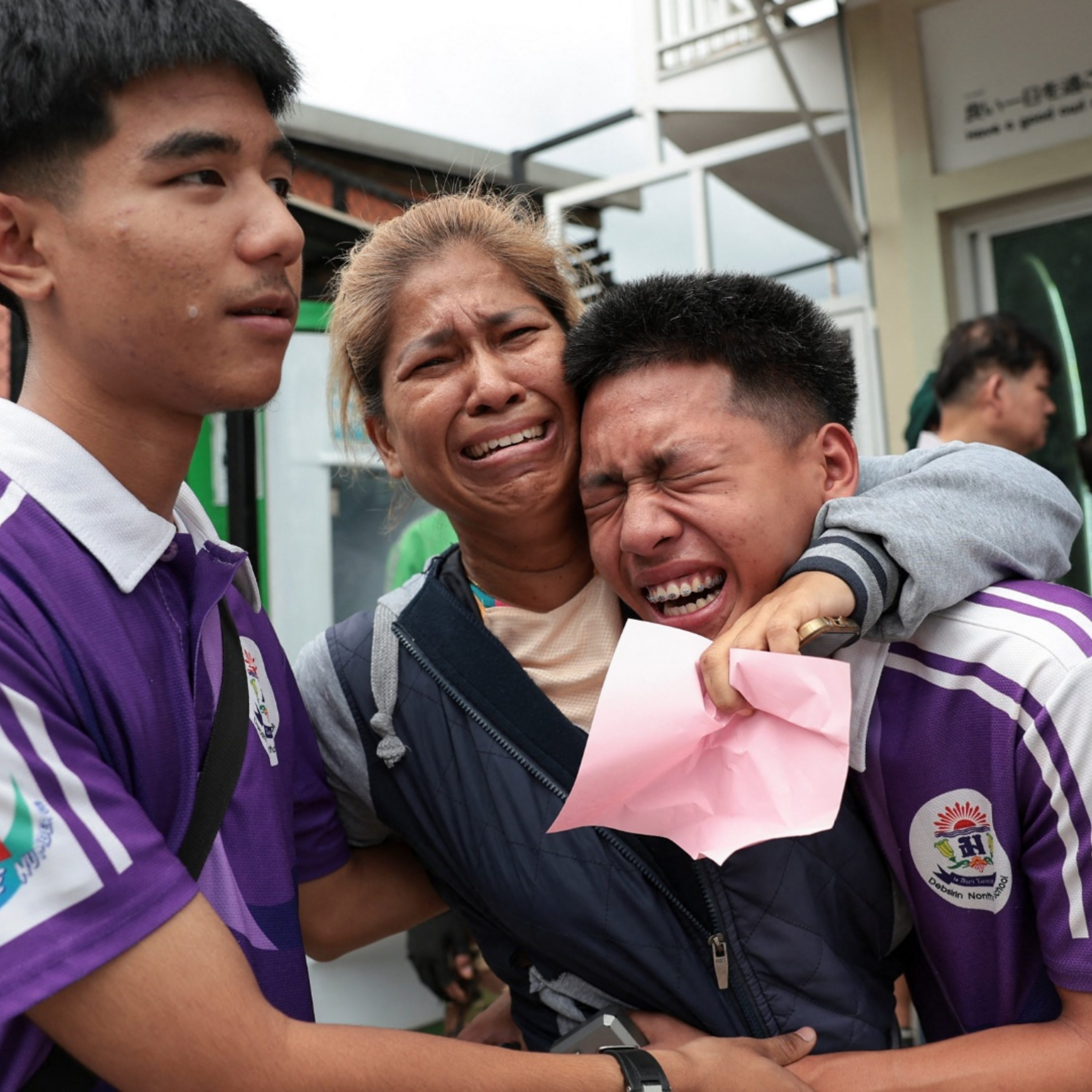
Global News Podcast
Teenager shoots 7 dead in Thailand
00:28:30
A 14-year-old Thai boy kills teachers - and his grandparents - before killing himself
Loading summary
Transcript78 lines
- [00:00]
Podcast Advertiser
This BBC podcast is supported by ads outside the uk. Imagine buying a toy for your kid, but it doesn't come with batteries. That sucks. But honestly, it's even worse. When you buy business software, you end up with fragmented, disconnected systems that cost a fortune and don't talk to each other. Odoo completely changes that. Odoo comes fully complete with all your business apps perfectly integrated and working together seamlessly. It's everything your business needs in one place, saving you time, headaches and serious money. Stop paying for missing pieces. Go to odoo.com that's odoo.com to learn more. Choiceology, an original podcast from Charles Schwab, is a show about the psychology and economics behind our decisions. Join host Katie Milkman, an award winning behavioral scientist and author of the best selling book how to Change and as she shares true stories from Nobel laureates, authors, athletes and everyday people about why we make the choices we do and how to make better ones to help avoid costly mistakes. Listen to choiceology@schwab.com podcast or wherever you listen.
- [01:15]
Oliver Conway
This is the Global News Podcast from the BBC World Service. Hello, I'm Oliver Conway. We're recording this at 15 hours GMT on Friday 7 August. A teenager in Thailand has shot dead seven people, including teachers at his school, before killing himself. Saudi Arabia, Turkey and Pakistan sign a NATO style defense agreement and as the Ebola outbreak in Congo hits 4,000 cases, health experts say local communities must play a greater role. Also in this podcast, Arau in London over plans to encourage drinkers not to stand in pubs.
- [01:55]
Katie Milkman
Sometimes there's like a bit of a buzz about it, isn't there? Like pub culture I suppose, of mingling and yeah, enjoying it and having fun.
- [02:00]
Oliver Conway
If you come to a pub and all the tables are full, you'd probably
- [02:03]
Marasan Etirajan
be like no, not going to bother.
- [02:05]
Oliver Conway
And the giant lizard of Lombardy. A school shooting in Thailand has left seven people dead and 13 people in hospital. It comes after a string of high profile attacks there in recent years, but has shocked the nation nonetheless. The Gunman was a 14 year old pupil and the school is part of a prestigious network which has educated royalty and prime ministers alike. Police say the boy killed his grandparents before opening fire at the school and then killing himself. This footage was recorded on a mobile phone by a student in one of the classrooms. Pupils in their blue uniforms crouched on the floor underneath their desks, trying to stay as quiet as possible. Later, these students spoke about what they saw. I was working in the room when
- [03:06]
Olga Robinson
I heard a gunshot followed by several More continuously. At first I thought somebody was playing with a gun so I called my friends to hide inside the room. He first opened fire underneath Building 5, then went up the building shooting students as he went.
- [03:23]
Oliver Conway
After that he went up to another building, Building 4, and shot at every room. I don't know why. One of my friends got shot.
- [03:32]
Olga Robinson
He walked up to the door and just fired. I don't know the shooter, but he seemed to be a student with special needs.
- [03:39]
Oliver Conway
The Thai Prime Minister Anutin Chanwarikoon said a friend of the gunman had told police the boy had been under great stress.
- [03:47]
Marasan Etirajan
This is violence but it's not caused by criminals. It is caused by an individual who carries pressures and tensions. This really has nothing to do with security measures in the school. The gun is a registered one. It is kept in the house. We don't know how this child got access to the gun. He intentionally came to school today to commit this unfortunate case.
- [04:19]
Oliver Conway
Our Southeast Asia correspondent Jonathan Head gave me this update from the school north of Bangkok.
- [04:24]
Jonathan Head
Well, it's the end of the day here, Oliver, but it's pretty quiet now. All the ambulances, the police officers, paramedics and of course family members who came down during the day after the shooting, which started at 10 o' clock in the morning, have now gone. But of course there are a number of the victims, well over 20 people who were injured within 20 and 30. But some of those victims are in critical condition in hospital so there's a lot of concern about them. And it's now down to the police to investigate a number of angles as to what actually happened here. This is a 14 year old pupil at the school who teachers say had shown no behavioral issues before, was a good student. The Prime Minister here has referred to the fact that he might have been under some stress or some pressure from his grandparents that of course we know he shot his grandparents before he came down to the school. Very vivid accounts from some of the students here describing hunkering down under their desk as he went systematically from classroom to classroom firing multiple shots into each of them. And the police have said they're quite surprised at how lethal he was, how accurate he appears to be, have been with the guns. So they think he may have had some kind of firearms training so that there's obviously there has to be an investigation as to how he got hold of a gun and quite a significant amount of ammunition. He had around 30 rounds still on him at the time that he shot himself. It appears it may have been his grandfather's gun and of course, investigations into his state of mind and what went wrong.
- [05:58]
Oliver Conway
And the fact that he was able to get hold of a gun despite strict laws there underlines the issue with gun control in Thailand.
- [06:06]
Jonathan Head
The strict laws apply to getting a licence and they've become stricter in recent years. In fact, the Prime Minister has pointed out that he tightened the gun permit rules three years ago when he was Interior Minister. This was by all accounts, a licensed gun. The problem in Thailand is not the rules, it's enforcement. This country is awash with guns. Corruption is rife in the armed forces and police as well. Anybody who wants to get a gun here can get one, and an awful lot of people have them with or without licenses.
- [06:34]
Oliver Conway
Jonathan Head at the scene of that shooting in Thailand. The Ebola outbreak in the Democratic Republic of Congo is now the fastest spreading on record. Latest figures show there have been more than 4,000 cases and nearly 2,000 deaths with infections confirmed in five provinces, including the epicenter Ituri. However, the head of Africa's Disease Control and Prevention Center, Dr. Jean Casea, remains optimistic as he told the BBC about a new action plan.
- [07:01]
Katie Milkman
The new strategy that we discussed with President Sekedi on the 5th of August, when Dr. Tedros, Jose and myself, coming together with a number of partners, came to suggest the new approach. What is this new approach? Is to have what we call the village centered response plan. Everything now would be at village level. And that one is a great revolution because we know that we can stop this outbreak when the community is involved.
- [07:32]
Oliver Conway
Our global affairs reporter Richard Kagoi told us more about this new village level approach.
- [07:37]
Richard Kagoi
The new response plan does involve community leaders, so you'd have leaders from various villages. The thing is that the Africa Centers for Disease Control and the WHO are saying there's need to change strategy because the response, especially from the local population, has really made the whole management of the outbreak a bit complex because there has been hesitancy from local residents to report people who have symptoms of Ebola. There has been skepticism just about the disease itself and also the health workers. So this has really proved sort of like a barrier. The containment efforts have been really quite complicated because the local population seems not to quite coordinate with health workers. And then of course, these are the cultural practices element. So like in terms of burial, how are those bodies being handled? And these have been also classified as super spreader events. And so what they're saying is that it's important to involve community elders who understand the cultural nuances and people who can be used to disseminate Information who are believable. And also part of it is to decentralize testing capacity, especially at the village level, and also making health services accessible by making them sure that it is free. So that's perhaps just the highlights of this new response plan that is going to be rolled out next week, as I mentioned, by the Africa cdc. Boss.
- [09:02]
Jonathan Lawson
Yeah.
- [09:02]
Oliver Conway
Can this approach realistically bring down the number of cases?
- [09:06]
Richard Kagoi
If you look at the numbers, the outbreak is spreading rapidly. But I think the involvement of this would help perhaps slow down the spread of the disease itself. Because what is happening is that especially rural communities, a lot of them seem to be quite disengaged exactly with what's happening, especially from the regional capitals in places like in Bornea and in North Kivu province where the disease is quite prevalent. So really changing the opinions and perspectives of the local population, getting their buy in for them to believe and even to support the health response. I think that would really be critical in terms of slowing down the response because if you look at it, experts say that it took just about 10 months for cases to hit 2,000 in the West African Ebola outbreak. But this has just been barely two months for the numbers to hit more than 2,000, now exceeding 4,000 cases.
- [09:57]
Oliver Conway
Richard Kagoi in Nairobi. Saudi Arabia, Turkey and Pakistan have signed a joint defense agreement. Against the backdrop of the US Israeli war with Iran, the NATO style pact was announced at a meeting in Mecca. But between Saudi Crown Prince Mohammed Bin Salman, Turkish President Recep Tayyip Erdogan and the Pakistani Prime Minister Sheba Sharif. So what does it involve? And Marasan? ETI Rajan is our global affairs reporter.
- [10:22]
Marasan Etirajan
This is significant both in terms of symbolism and substance. The three countries are talking about collective deterrence against any possible aggression in the future. Now you have three different countries with three different capacity and capability coming together. Saudi Arabia is one of the biggest oil producers in the world. It provides the financial muscle and one of the biggest weapons purchaser. And its strategic location is very key. Turkey is the second biggest military force in NATO and Pakistan is a nuclear weapon state and also has a very strong military. Now one of the key thing is that attack on any one country will be treated as an attack against all. So that is a very key wording here. They have not given out any specifics and details of this agreement. The fact that the three Sunni Muslim countries coming together and signing this agreement in the holy city of Mecca, calling this as Mecca Joint Declaration, joint defense agreement is quite an important message sending out to the regional powers there.
- [11:26]
Oliver Conway
Yeah. And Saudi Arabia is at the moment the country most likely to become embroiled in war. Will we realistically see Palestine, Pakistan and Turkey coming to its aid perhaps in the fight against the Houthi rebels in Yemen?
- [11:41]
Marasan Etirajan
Now they do have some sort of military cooperation, for example, on the ongoing Saudi's conflict with the Houthi rebels. Pakistan had sent thousands of troops and fighter jets and also an air defense and advisory group is already there and they have been what a military cooperation for several years. And Saudi Arabia agreed to buy drones from Turkey in a military cooperation. Now, if it comes to, for example, Iran, Pakistan is neighbor of Iran and whether they're going to come in the aid of Saudi Arabia if Iran attacks Saudi, that is a big question because they didn't come in the last round of conflict, even though they had a mutual defense pact signed last year that is between Saudi Arabia and Pakistan because Pakistan has its own security compulsions. But in the long run, what Iran will do, you know, these are the two things the three countries are looking at. Now. Some will describe this as an Islamic NATO where it can involve other Gulf states as well. What has changed in the Gulf in the past few months is that US used to be the net security provider. Now all these Gulf countries, Saudi Arabia, Qatar and UAE have seen their installations being attacked. They're running out of weapons and missiles. They're not able to protect any of those strategic places. Now they're looking at other options. See if the US is not going to step in and protect them, who is going to be the net security provider? And that is why they're having this bigger, larger combined effort.
- [13:06]
Oliver Conway
And very briefly, what will India make of this?
- [13:08]
Marasan Etirajan
India has already looked at it and then they've responded. And what they are saying is that they are looking at this agreement. A brief statement was made, but they will probably respond at a later stage.
- [13:18]
Oliver Conway
And Barasan Etirajan when treating brain cancer, the traditional approach has been to wait four to six weeks after surgery before chemotherapy can begin. Now though, research on mice has suggested that an alternative time scale would be to carry it out either straight after the operation or or between two to four days later. Dr. Tom Kisby from the University of Manchester is co lead on the study. He explained the results to Johnny Diamond.
- [13:45]
Katie Milkman
One of the main problems of brain tumours, both due to their location in quite a critical organ, obviously the brain, but also many of these are highly invasive, meaning that surgery itself can never be curative. The surgeons will always have to leave some cancer cells behind, which is exactly what we Try to treat with chemotherapy.
- [14:02]
Jonathan Lawson
I see.
- [14:02]
Johnny Diamond
So the chemo is then sort of sent in to flush out what is left. You normally wait for a few weeks, but now have discovered these two windows. Can you explain how they've been discovered?
- [14:17]
Katie Milkman
So one of the major challenges for brain tumors is that the brain is protected from the blood by a special barrier known as the blood brain barrier. So when we administer chemotherapies, these struggle actually to get into the brain and the site where we need them. What we've identified, which is exactly what these windows are, is certain time periods after surgery, this barrier becomes more disrupted, which means this allows certain types of chemotherapies, in our case nanomedicines, to be able to enter the brain at much higher levels than they would if we were to administer them four to six weeks after surgery.
- [14:46]
Johnny Diamond
Okay, so the surgery itself disrupts the blood brain barrier and sort of what opens it up for further therapy.
- [14:53]
Katie Milkman
Exactly, yes. So this is the two windows. The first one we think is a physical disruption of this barrier and then there's kind of a response of the patient in the brain that seems to reopen this window. A few.
- [15:02]
Johnny Diamond
A few days later, the research was done on mice. And again, daft question alert. Are you sure it transfers from mice to humans?
- [15:09]
Katie Milkman
So there is some indirect evidence in humans, from some imaging work that's been done, that these same kind of disruption of the blood brain barrier exists. But of course, absolutely. The next step that we need to do is confirm these same windows exist in humans and can be utilized in the same way.
- [15:23]
Johnny Diamond
So you, you now, I mean, if you get that, that next step and you, you adopt this as a, as a new procedure, you would jump in and forgive the phrase flood the zone whilst the blood brain barrier is disrupted. Is there a trade off of some shape or form in terms of safety if you ignore what was previously the recovery period?
- [15:44]
Katie Milkman
It's a good question. So again, this is something that I think really needs to be tested in clinical studies. We haven't seen any issues in our mice, but it could be that what we, it could mean that what we do administer, we have to be very careful that it doesn't disrupt some of those recovery and healing responses that occur in the brain.
- [16:00]
Oliver Conway
Tom Gisby talking to Johnny Diamond. Residents in the rural Italian town of Montichiari are used to sharing their neighbourhood with the likes of foxes, hedgehogs and badgers. But they have been warned to look out for a more fearsome visitor. A giant lizard with razor sharp teeth and claws. Chantal Hartle Explains.
- [16:21]
Chantelle Hartle
This tree climbing lizard is just over one and a half meters long, dark green in color with yellow spots and big curved teeth. The Papuan monitor lizard, also known as crocodile monitor, looks similar to its relative, the Komodo dragon. And as its name suggests, it is native to Papua New Guinea. So how it ended up in the countryside in northern Italy is a mystery. It was first spotted in July, prompting a major search operation. The mayor of Monticchiari, Marco Togni, said initially he didn't believe it was true. Two more sightings have since been confirmed. The authorities are attempting to track the lizard using drones with thermal cameras and night vision. They've also set up cage traps for filled with chicken to lure the reptile. The Papuan lizard typically feeds on animals such as pigs and deer. It's not known to prey on humans, but is capable of inflicting a powerful venomous bite when threatened. So the town is taking no chances. It has banned residents from walking and cycling in the areas where the lizard was seen. While this all might sound very alarming, some have seized the opportunity to get creative on social media. AI generated videos show the town's mayor as a lizard ranger chasing the creature by a pool, flying a light aircraft, and performing a song called Beware of the Lizards. The mayor has posted these memes to his own social media page, even suggesting the town adopts the reptile as a cultural mascot. But he also stressed that residents shouldn't overlook the seriousness of the situation and has urged people to be vigilant.
- [17:58]
Oliver Conway
Chantelle Hartle and still to come on
- [18:03]
Sarah Smith
this podcast, President Trump says that hundreds of thousands of people come to the United States every year claiming that they're coming on holiday, but really with the express purpose of giving birth to children who would then be able to obtain American citizenship.
- [18:16]
Oliver Conway
Donald Trump signed two new executive orders in his latest attempt to end a birthright citizenship. Best thing that's ever happened to you.
- [18:32]
Podcast Advertiser
Financially.
- [18:32]
Oliver Conway
Go easy.
- [18:33]
Jonathan Head
Sold by car on Carvana. Amazing offer, really.
- [18:37]
Oliver Conway
I hit 200 on the scratcher.
- [18:38]
Jonathan Head
Did the scratcher come to your house and hand you a check?
- [18:41]
Sarah Smith
No.
- [18:41]
Jonathan Head
How many scratchers did you hit to get that? I hit a button on Carvana.com once.
- [18:46]
Oliver Conway
Okay, that's fair.
- [18:47]
Jonathan Head
It's like the lottery, except you always win.
- [18:51]
Oliver Conway
Not like the lottery at all, actually.
- [18:53]
Jonathan Head
Exactly. Inexplicably good offers worth bragging about. Sell your car today on Carvana.
- [18:59]
Marasan Etirajan
Pick up.
- [18:59]
Jonathan Head
Fees may apply.
- [19:00]
Podcast Advertiser
Investing with Schwab is like spending a Saturday at a great farmer's market. You can fill your reusable tote with a bit of everything. Maybe you go for some free range self directed investing or perhaps you pick up a few farm fresh trades while you peruse. You can even get help from a dedicated advisor. That's Full Service Wealth Management Mix, match and change your mind whenever you want. Because at Schwab you can invest your way. No matter your goals or appetite for investing, Schwab has everything you need all in one place. Visit schwab.com to learn more. Support comes from wise the smart way to manage the currencies you need around the globe. Fed up with losing out to hidden fees when you send money abroad with your everyday bank? Choose the smart way Wise. You can count on the exchange rate you'd usually find on Google. No unwelcome surprises. Plus ditch that where's my money feeling. Most transfers arrive in under 20 seconds. Join Millions Saving billions on hidden fees. Be smart, get wise. Download the wise app today. Ts and Cs apply self directed Investing Trading Full Service Wealth Management Automated Investing Financial Planning Thematic Investing Retirement Planning. Phew. And to think, that's just a small taste of what Schwab offers. Because Schwab knows that when it comes to your finances, choice matters. No matter your goals, investing style, life, stage or experience, Schwab has everything you need all in one place so you can invest your way. Visit schwab.com to learn more.
- [20:38]
Oliver Conway
This is the Global News Podcast A BBC investigation has found that Russia is seizing tens of thousands of homes across areas of Ukraine it's captured during its invasion. The Russian government says the scheme is designed to, quote, integrate the regions into the Russian system. Olga Robinson led the investigation. I asked her, what exactly are the occupiers doing?
- [21:00]
Olga Robinson
I think what's very important to understand here is that the Russian forces haven't just captured physically some flats and houses. What they are doing there right now is they've created a whole legal framework that allows the occupation authorities to seize properties en masse. We found more than 34,000 homes which are currently in the process of being seized, and many of them belong to Ukrainians who have fled the fighting. And it works like this. Properties are declared ownerless even though they do have legal owners in Ukraine, and then they are transferred to local authorities and from there they could be allocated to Russian passport holders only into ownership. And the practice is not just some local scheme in the occupied territories. It's been endorsed by Russian President Vladimir Putin, who signed a law late last year formalizing this scheme.
- [21:51]
Oliver Conway
Now, of course, Russia claims this land that it's invaded as its own. What's it said about this particular case?
- [21:58]
Olga Robinson
Well, in this particular case, the Russian government told us that the scheme is part of its legal framework to reintegrate this, as they call it, reunited regions into the Russian system. And they also told us that the scheme manages properties whose owners cannot be identified or contacted while providing for compensation should lawful owners come forward. But then experts we spoke to say it seems to be part of a much wider effort to Russify the areas of occupied Ukraine and to make it much harder for Ukrainians to reintegrate these areas in future. Should they retake the territories at some point?
- [22:37]
Oliver Conway
Yeah. Realistically, what can the homeowners do, if anything?
- [22:41]
Olga Robinson
Well, Ukrainians we spoke to say once their property appears on any of the ownerless lists, it feels it's almost pretty much done deal. It's gone. That's because to try and get their properties back, Ukrainians are required to obtain a Russian passport and the returned to occupied Ukraine in person. That means also going through group dueling security checks at the Moscow Sheremetyev Airport, which are known as filtration. And they have to do all of that within just 30 days. So Ukrainians we spoke to say they feel it's neither safe nor possible for them to return to their homes. So a few of them did come across as almost resigned to the idea that their homes are all but lost.
- [23:23]
Oliver Conway
Olga Robinson and we have more from Olga, including her own personal insight into being half Ukrainian and half Russian on our YouTube channel. Search for BBC News on YouTube and you'll find the global News podcast in the podcast section. Staying with the war in Ukraine. And the highest court in Sweden has ruled that a cargo ship seized in the Baltic Sea earlier this year can be handed over to Kyiv. The Kafa was sailing under a false flag of guinea, but it's believed to have belonged to Russia's shadow fleet, which Moscow uses to avoid Western sanctions. Ukraine suspected it was illegally transporting grain stolen from territory occupied by Russia. Ben Wright heard more from Stephanie Baker at Bloomberg News, who's written extensively about Russia's shadow fleet.
- [24:09]
Stephanie Baker
It is significant because I believe this is the first time a foreign court has approved transferring a vessel to Ukraine at the request of Ukrainian prosecutors, who say that it is part of a war crimes investigation into the alleged theft of grain from occupied Crimea. So there have been probably a dozen instances of European authorities either boarding or detaining a ship. But Sweden has been particularly active this year and has detained five ships, and this one they have decided to hand over to the Ukrainians as part of this war crimes investigation. And the Ukrainians are saying this is a precedent setting case, implying that perhaps more of these actions could come in
- [25:00]
Jonathan Lawson
the near future because this was carrying grain.
- [25:02]
Oliver Conway
But most of the Shadow Fleet vessels that are boarded tend to carry oil, don't they?
- [25:08]
Stephanie Baker
That's right. And that's another reason why this is significant and different. Most of the Shadow fleet, about 600 vessels that have been sanctioned by the UK and Europe are carrying oil on behalf of Russia. And so this is a first in terms of seizing a cargo ship that was allegedly transporting grain from occupied Crimea to Syria and was sailing from Morocco to St. Petersburg. So this is a very different case. But the ship was operating in similar ways to Shadow Fleet ships. They initially detained it because Swedish authorities believed it had a false flag, and that gave it grounds to board the ship and investigate. But this is a huge problem because there are hundreds of vessels, many of them carrying sanctioned Russian oil, Iranian oil, and very few have been stopped. And many are carrying false flags or registering in jurisdictions that don't do checks on the underlying documentation or insurance. And European authorities have allowed these ships to transit European waters without checks and have not been aggressively checking them. Now, Sweden changed its rules last year to give its Coast Guard more authority to do checks, stop vessels and check for documentation, potential forged documentation, and the like. And that has led to Sweden really stepping up and being one of the most active countries in Europe to try to police the Shadow fleet. But other countries, the uk, France, have boarded ships in the past, but they could be much more aggressive in terms of policing their waters.
- [26:49]
Oliver Conway
Stephanie Baker from Bloomberg News. Weeks after the US Supreme Court overruled his last attempt to eliminate birthright citizenship, President Trump is trying again. On Thursday, he signed two executive orders aimed at curbing the right for anyone born in the USA to automatically become an American citizen.
- [27:09]
Marasan Etirajan
One man came in with a family head, said he had 56 children. Another one came in, they said they had 98 children. This was not what it was for. This was meant for the babies of slaves. It was, it was right after one week or two weeks after the Civil War ended. This wasn't for wealthy multimillionaires, billionaires coming in and bringing 15, 20, 30, 30 children along with them. It's become a big business, and we're ending that business.
- [27:38]
Oliver Conway
On North America, editor Sarah Smith looks at the president's new tactics.
- [27:42]
Sarah Smith
He's trying to use a different method to achieve some of the same result here, because the initial executive order that he signed on his very first day in office was aimed at getting rid of automatic birthright citizenship for children who were born of parents who were either undocumented migrants in America or we're only in the country temporarily. But that's what the Supreme Court justices ruled was unconstitutional. Now, this new order is a different route to try and get some of the same result. This order outlaws what he's calling birthright tourism. President Trump says that hundreds of thousands of people come to the United States every year claiming that they're coming on holiday, but really with the express purpose of giving birth to children who would then be able to obtain American citizenship. Well, he says that that is fraud and they would have fraudulently filled in visa forms. Therefore, they could be denied the citizenship for their children under immigration law. Now, it's a different way to try and work around the Supreme Court's initial ruling, but this is bound to be challenged in court itself, possibly all the way up to the Supreme Court. So it's not clear Donald Trump will get this time what it is that he wants.
- [28:49]
Oliver Conway
Sarah Smith in Washington. Now, if you've ever passed a pub in London during the summertime, you'll probably have noticed crowds of people milling around outside, drinking inside. There may well be crowds of people standing at the bar. But one local authority in the city is considering guidance that could see less of this so called vertical drinking. Westminster City Council says having more seating in pubs could discourage excessive drunkenness. The government has now weighed in, saying pubs full of people is not a public nuisance, it is British life. Here's what some pub goers here in London think.
- [29:23]
Katie Milkman
I mean, it depends on the place. Sometimes you go to some bars and you're stood up there for ages and you don't get served and it gets annoying. I guess when you're at a table, you can do like table service, you know, or scan a QR code and things like that. So I guess there's an argument for sitting down is better. But I don't know, sometimes there's like a bit of a buzz about it, isn't there, like pop culture, I suppose, of mingling and. Yeah, enjoying it and having fun.
- [29:43]
Oliver Conway
The businesses will struggle because if you come to a pub and all the tables are full, whereas before or now you would sort of like squidge in and sort of get a little pint with your mate and sort of have a little chat and then go to the train or whatever and be on your merry way. You'd probably be like, no, not going to bother you. Have more chats with people at the bar. Sometimes you meet people you don't know, not just your friends, but there'd definitely be a massive impact if you couldn't stand up and queue at the bar. Jonathan Lawson runs more than 100 pubs across the UK. What does he make of all this?
- [30:12]
Jonathan Lawson
When I first heard about this, it was yet another moment that I've had in this industry where I've scratched my head about governments, either a national or a local level, doing things that you really do perplex you. And once again, you've got an authority here getting involved in an issue which is not an issue. Pubs are wonderful, democratic things. You get to choose what you wish to do with people. And if you look at any group of people standing in any one of our pubs at any given time, some people will be drinking alcohol, some people won't. Some people will have one drink and then go. Some people will then have a few more drinks. The point is, you choose and you decide what to do. Pubs in London tend to be smaller and therefore actually the economic model doesn't work if you're trying to encourage all of those people to sit down. We just think a modern pub is an incredible thing now, where you might find locals drinking at the bar, you might find people in a business meeting, you might find people there for a special event or an occasion and a celebration. And that's a unique thing to be able to achieve within a British pub. They're fantastic things and actually the vast majority of customers behave completely responsibly and enjoy them. And I watch customers all day long and listen to them and that they are fantastic, wonderful things that we should look after.
- [31:30]
Oliver Conway
Jonathan Lawson, manager of a British pub group. And that is all from us for now, but the Global News Podcast will be back very soon. This edition was mixed by Sydney Dundon and produced by Alice Adderley. Our editor's Karen Martin. I'm Oliver Conway. Until next time. Goodbye.