← Global News Podcast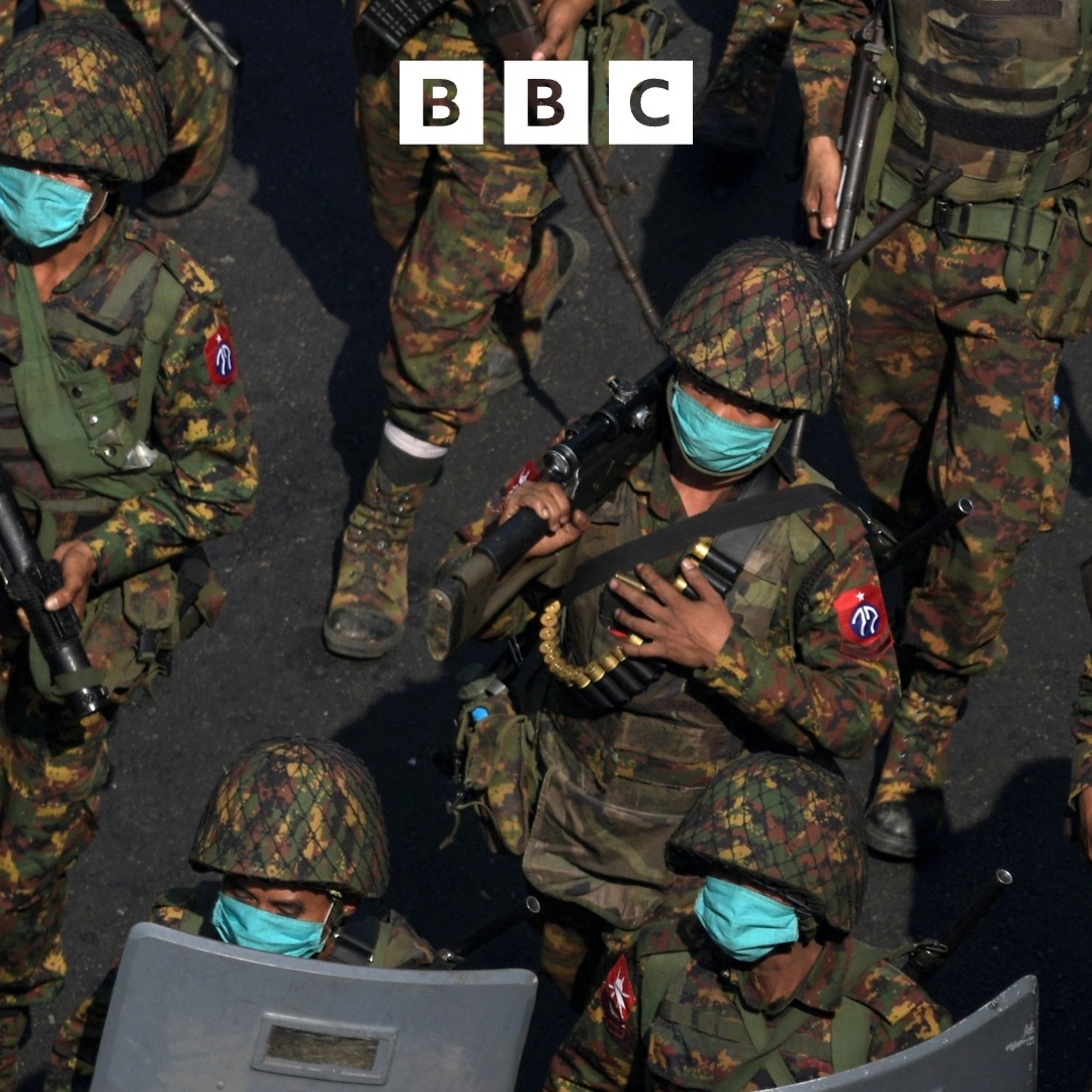
Global News Podcast
BBC speaks to civilians suffering in rebel-held Myanmar
00:30:02
Burmese military’s violent campaign to recapture land in Chin State displaces thousands
Loading summary
Transcript1 lines
- [00:00]
A
This BBC podcast is supported by ads outside the UK Looking for a fantasy that will keep you up all night? From Blood and Ash isn't just a story, it's the beginning of an obsession. From Blood and Ash launches you into a world where forbidden desire collides with deadly secrets and every choice could ignite a war. Expect heart pounding romance, fierce battles and a heroine who refuses to be caged. If you crave danger, passion and twists you'll never see coming, start the journey today. Grab from Blood and Ash, available in print, ebook and audiobook and enter a series you'll never want to leave. Save over $200 when you book weekly stays with VRBO this winter if you need to work, why not work from a chalet? If you haven't seen your college besties since, well, college you need a week to fully catch up in a snowy cabin. And if you have to stay in a remote place with your in laws, you should save over $200 a week. That's the least we can do. So you might as well start digging out the long johns because saving over $200 on a week long snowcation rental is in the cards book now@vrbo.com this is the Global News podcast from the BBC World Service. I'm Paul Moss and in the early hours of Monday 22nd December, these are our main stories. The military government in Myanmar has been bombing schools and churches in rebel held areas, according to evidence seen by the BBC. Israel has recognized 19 new settlements in the occupied West bank and US officials say the Coast Guard is pursuing another oil tanker off the coast of Venezuela. Also in this podcast, a brilliant opening ceremony with a light show inside the ground and fireworks inside the stadium bowl as a large Africa Carbonations trophy was lifted. Africa's biggest football tournament kicks off, but with controversy amidst the razzmataz. Schools and churches in rebel held areas bombed, civilians including children killed, all at the hands of Myanmar's military government. According to evidence seen by the BBC, the attacks in Myanmar's Western Chin State come ahead of the country's first general election since the army overthrew the government in 2021. Critics describe the vote as a sham. The military government does not allow foreign journalists to report freely from Myanmar, but our correspondent Yogitha Limai gained rare access amidst thickly forested mountains. We're driving into the base of the Chin national army, which is the biggest rebel group that is fighting in Myanmar's Western Chin State against the military junta. We're driving through winding roads and I can just see the Camp beginning to appear through thick green trees. We've just arrived at the hospital at the rebel base and you can really see the impact of the ferocity of the battle that is taking place on the front lines here. I've just entered one of the rooms. There are 10 beds in front of me, all of them full. And on many of them I can see people who've had limbs amputated. One of the fighters is sensing Mong. He's had his left leg amputated. He was brought in here just last night with four other rebel fighters. They were also attacked by drones, so he's got injuries on the upper part of his body as well. My friends dragged me with them even when the junta was raining bombs on us. I've lost my leg, but even if I have to give up my life, I'm happy to make the sacrifice so that future generations have a better life. On a bed across from CC Mong is Ban Naithang. He used to work in the government until the coup. Then he joined the resistance. He tells us the junta is pushing to recapture territory ahead of the election, but he and other fighters are determined not to let that happen, despite the personal cost to them. I do not like military rule at all because they harm and kill ordinary civilians. Chin groups say at least three schools and six churches have been targeted since October. In videos verified by the BBC, explosions can be heard as the body of seven year old Zohan Phun Lianchung is carried by his weeping brother as he and other villagers flee their homes. Zohan and 12 year old Zingcher Mui were killed in the attack on their school when they were attending lessons. Their classrooms are destroyed. The bombs rip through benches, school bags and whiteboards. I'm standing by the banks of the Teyau river, which forms the border between Myanmar and India. And I've crossed over to the Indian side. But from where I'm standing, I can see Burma's Chin state. As the fighting has intensified there, increasingly we are seeing a fresh influx of people displaced by the fighting into India. And actually this is one of the crossings that people are using to come over from Myanmar into India. I've come to the little village of Waapai. We've been told that just in the past one or two days, around 47 Burmese people have come here. We've been told that most of these people are from the K? Haimul village, which is in the Falam township. It's one of the townships where the junta is expected to hold the election 38 year old Eonzia Kim breaks down as she speaks to us. We had no time to think about what to take with us. We were so terrified. Hearing the sound of fighter jets dropping bombs, we could see the smoke. We grabbed some clothes and food and fled into the jungles nearby. We're shown videos of how they lived in jungles for a few days, building makeshift shelter, then moving from place to place before making it to safety. In one corner of the room, Ralak Thal, an elderly man, sits with his children and grandchildren. He says he's scared of the junta. The military will force us to vote if they catch us and if people don't do it, they will be arrested and tortured. Outside the community center, children pass time playing games. 80 year old Ralok Thang doesn't believe he'll live to see democracy restored in Myanmar, but hopes future generations will witness it. Yoga to limae and we asked Myanmar's military government for commentary but did not receive a response. With so much attention on Gaza, it's easy to miss the continuing conflict in the occupied West Bank. Violence has surged in the past two years and the United nations has warned that the expansion of Israeli settlements has reached its highest level for eight years. On Sunday, Israel's security cabinet officially recognized 19 West bank settlements. All settlements are considered illegal under international law. The far right finance minister, Bezalel Smotrich said the move was aimed at blocking the establishment, establishment of a Palestinian state. My colleague Lis de Set asked the Israeli government spokesman, David Mentzer, if that's the official position. When Israel withdrew from Gaza, it was effectively a de facto state. It had everything that a state needed. It had territory, weapons, autonomy. But it delivered the worst massacre of Jews since the Holocaust. So statehood without demilitarization, it doesn't bring peace. It just brought us October 7th. Now, could we not just. I'm really sorry to interrupt you, but in terms of the news of today, after the Security Cabinet approved the 19 new settlements, the finance minister, who is himself a settler, Bezalel Smotrid, said the move was aimed at blocking the establishment of a Palestinian state. Was he speaking for the entire government or is that a personal opinion? Well, look, the prime Minister's made clear that Judea and Samaria, you call them the West Bank, I find that slightly insulting because they are very much the cradle of Jewish civilization. And Hebron, that's also in the west bank, as you call it, Judea and Samaria, where Abraham, Isaac and Jacob were, are buried. These are chapters, key chapters in Jewish history. And they're not about modern politics and they predate any modern Palestinian claim. So we want to have peace with our neighbors, but it must come from a position of strength. The Prime Minister's made clear that a Palestinian state without security guarantees is not peace, it's a terror base. The Prime Minister has also said that he has spent his career blocking the establishment of a Palestinian state. So I think we are to read that this move is further facts on the ground to prevent any possibility of an establishment of a Palestinian state. We've just had a de facto Palestinian state and we've just fought a two year war because that state became a state. We're not going to agree on it. You've made your position, which is not recognized in international law, and you also. Let's also go back to. It wasn't a Palestinian state under international law, under UN resolutions, a Palestinian state is to be established on land in the west bank, occupied west bank and in Gaza. You mentioned Judea and Samaria. While that is of course culturally and religiously significant, the legal scholars will tell you that that does not override international law, that religious texts are not legal sources. International law, including most importantly the fourth Geneva Convention. We know because Israel always makes it clear. So we take it as given that Israel does not accept the overwhelming view of legal scholars that the establishment of illegal settlements on occupied land is a violation of international law, including the Geneva Conventions. Let me tell you about the national Israeli consensus rather than these so called scholars. You're giving me the consensus here in Israel and it's not a question of right versus left. It's the reality. You know, we just had a vote in alkanesset about it. 99 out of those 120 Knesset members oppose a Palestinian state. Not because they're against peace, because they know that whenever an opportunity is given to build a Palestinian state, instead of giving freedom to the Gazans or the Palestinians, it's simply turned into a forward operating base for Iran. It's simply turned into a terror state. So that was the Israeli government viewpoint. Lis Doucet also spoke to Jonathan Pollak, an Israeli campaigner against Israel's occupation. Israel is not only trying to block the establishment of a Palestinian state, but also to dispossess and displace Palestinians from their lands. We are talking about joint efforts by both Israeli civilians in the form of Israeli settlers and the official Israeli armed forces working in coordination to implement an Israeli policy of ethnic cleansing. Over the past two years, more than 100 communities have been forcefully displaced from where they were residing and this happens through violence. I'd give a very simple example. Just about two weeks ago, the army raided a village called in the west bank at the very same time, while the army invaded the village and have done nothing more than shooting tear gas and throwing concussion grenades in the streets. So no attempt to make arrest, no actual military activity. At the same time, settlers came and attacked a house on the outskirts of the village. This house is the only thing that keeps settler away from taking over about 60,000 dunams of land. A dunham is a square kilometer. The settlers left before the army left the village and then the army blocked residents from coming to the aid of the family. And the outskirts of village, they've stopped an ambulance from getting there. The wounded could not be evacuated before the early hours of the morning. So they are really working hand in hand to implement this policy of ethnic cleansing to displace these Palestinian communities. So the recognition of these 19 settlements, it is important because it is something that is easy for the world to see. But if you. There's absolutely nothing that Israel cannot do in the occupied territories and with complete impunity. Jonathan Pollack in the previous edition of this podcast, we reported on how the US had seized a second tanker off the coast of Venezuela. American officials claimed, without evidence that the ship was carrying sanctioned oil used to fund what it called narco terrorism. Caracas, however, accused Washington of international piracy and kidnapping. As we record this podcast, the U.S. coast Guard is pursuing another oil tanker in the same international waters. Our Latin America expert Luis Fajado has gave me the latest. There's officials who have told US media that there's an ongoing operation against a third tanker in the Caribbean. There's media reports saying that the tanker had been en route to Venezuela and that it was not carrying a recognized national flag. Therefore, it would be, according to these reports, subject to boarding and inspection by US forces. There's not much more known about it, the specific details. Apparently it is an ongoing operation. Have we heard anything? I mean, what does the Venezuelan government say? Not just about this particular American operation, but the seizure of the other two ships as well. Venezuela certainly has been very strongly rejecting these US operations. As you said, they have not confirmed either. They have not commented either on this third apparent action, but on the action that took place on Saturday. They said that they would be denouncing the action before the UN Security Council. And overall they have been saying in very strong terms that they reject this US actions which they describe as illegal. But do they deny the suggestion that these ships are breaking international sanctions by Bringing the oil out. Venezuela has been saying all throughout this crisis that the US has been engaged in what they describe as quote, unquote, piracy. They say that this is not about economics, that this is, there's a bigger political story going on, which according to the Venezuelan government, is the desire of the US to, to remove the government of Maduro, to provoke political change in Venezuela and eventually keep Venezuelan oil. So they suggest this is all part of what they describe as old fashioned colonialism by the US and they have rejected it in very strong terms. The United States has certainly made no bones about the fact that it wants to see Nicola Maduro removed from office. They don't recognize him as the legitimate leader of the country. And some have warned that all of this, plus of course, there was the Americans attacking what they said were boats carrying drug dealers out of Venezuela. All of this, they say, is a prelude to a full scale invasion of Venezuela. Is Venezuela preparing for this? Are they seriously worried that could happen? Venezuela has said in the specific action of the ships being boarded in the Caribbean that they would escort these oil tankers in Venezuelan waters with Venezuelan Navy vessels. This has not led to a direct confrontation yet. The ships that have been caught have been caught in international waters. There is little doubt that Venezuelan, the Venezuelan military would be no match to the enormous military presence that the US has built around the Caribbean. Of course, the largest aircraft carrier in the world, many of the most sophisticated military aircraft. So there's very little the Venezuelan military could do to confront them directly. Of course, what others suggest is that if this escalated, as some people suggest, could happen to a broader conflict and a broader US intervention in Venezuela, then things could become different. And there's some evidence that the Venezuelan government has been activating militias inside the country to prepare for a longer confrontation in Venezuelan territory, if that hypothetically happened. There's also the presence of Colombian rebels who are sympathetic to the Venezuelan Maduro administration and again, who are said to be preparing for this kind of conflict. But again, this is entirely hypothetical. There is very little doubt that in the immediate, in the short term confrontation in the Caribbean between the US Navy and the Venezuelan military, there's very little the Venezuelan military could actually do against it. Luis Fajardo. Venezuela is not the only Latin American country to be on the receiving end of Donald Trump's wrath. The US President has also accused Colombia and specifically its president of being complicit in the drugs trade. But Gustavo Petro has announced that his Navy just seized 27 tons of cocaine in collaboration with several other countries. Danny Eberhardt has more details. One photo published by Colombia's presidency shows piles of cling film wrapped packages said to be seized cocaine. Another shows large blocks wrapped in bin liners unloaded at a Pacific quayside. President Petro said one joint operation with European police saw 18 tons of cocaine seized off the Canary Islands in the Atlantic. He said that separately, nine tons were seized from several boats in the Pacific in operations carried out in conjunction with Australia, Panama, Costa Rica and El Salvador. In total, Mr. Petro said about 20 people had been arrested, but stressed that not a single person had been killed. It's likely a barbed reference to the US Policy of hitting alleged drug smuggling vessels with airstrikes, leading to more than 100 deaths since September. Mr. Petro has accused the US of carrying out murders. Danny Eberhard still to come, Spaniards cross their fingers for the lottery of the year known as El Gordo. Healthcare can feel complicated. That's why Optum uses technology to connect the people and processes that make healthcare easier, more affordable and more effective. We're making it clearer for you to know exactly what your benefits cover and to help you better manage your health. We're coordinating care between your doctors and your technology. We believe better, simpler healthcare is always possible. That's healthy optimism. That's Optum. Visit optum.com to learn more when it's time to scale your business. It's time for Shopify. Get everything you need to grow the way you want. Like all the way. Stack more sales with the best converting checkout on the planet. Track your cha chings from every channel right in one spot and turn real time reporting into big time opportunities. Take your business to a whole new level. Switch to Shopify. Start your free trial today. Hi, I'm Cindy Crawford and I'm the founder of meaningful beauty. When Dr. Sabah and I decided to do a skincare line together, he said to me, we are going to give women meaningful beauty. And I said, that's exactly right. We want to give women meaningful beauty. Which means each and every product is meaningful. It has a reason to exist. It's efficacious. You're going to get results and then you just go out and live your life. Meaningful beauty confidence is beautiful. Learn more@meaningful beauty.com did you know that parents rank teaching financial literacy as the toughest life skill? That's where Greenlight comes in, the debit card and money app made for families. With Greenlight, you can send money to kids quickly, set up chores, automate allowance, and track spending with real time notifications. Kids learn how to earn, save and spend responsibly while parents have peace of mind knowing smart money habits are being built with guardrails in place. Try Greenlight Risk free today@greenlight.com iheartra that's greenlight.com iheart. Here's a grim record. Saudi Arabia has carried out more executions this year than ever before. According to human rights groups, at least 347 people have been put to death so far. Last year's total of 345 was itself a record. Caroline Hawley reports. The UK based campaign group Reprieve, which tracks executions in Saudi Arabia, called this the bloodiest year in the kingdom since monitoring began. It says that two thirds of those put to death had been convicted of drug related offences and most of them were foreign rather than Saudi nationals. The UN has said that imposing the death penalty for drug offences is incompatible with international norms and standards. Also executed this year were a journalist and two young Saudi men who were children at the time of their arrest for their alleged role in protests. Jeed Basuni from Reprieve says that torture and forced confessions are endemic and the authorities are acting with impunity. It almost seems that it doesn't matter to them who they kill, who they execute, as long as they send a message to wide society that there is a zero tolerance policy on whatever issue they're talking about, whether it's protests, freedom of expression, drugs, anything like that. The Saudi authorities have not responded to requests for comment. But as the country increasingly opens up to the outside world, human rights groups have accused Saudi Arabia's partners abroad of looking away from the abuses it's committing. Caroline Hawley Monday sees yet another attempt to achieve peace between Cambodia and Thailand. Donald Trump thought he'd achieved it. Now Malaysia is hosting talks between the two countries. Both blame each other for ending a previously agreed ceasefire. Our global affairs reporter Ambaran Atharajan told Andrew Peach. It's difficult to work out exactly why a 120-year-old dispute over small strips of territory has erupted into such a large scale armed conflict. It's a long running territorial dispute. Probably you can say that leftovers of the colonial legacy in Asia is one of these long running conflict. Now in 1907 the French Colonial power in Indonesian they came out with a treaty and a map and now Thailand and Cambodia, they have a different interpretation. They have overlapping claims. Even though a UN court ruled some of these areas in favor of Cambodia. Now Thailand doesn't accept it. There have been clashes from 2008 intermittent, but this year it broke out in a big way. The first one was in July, five days of conflict, dozens of people were killed. Hundreds of thousands of people had to leave their homes in the border areas because these two countries, 800 kilometer border, there are many border cities where trade tails takes place. People's movement, tourists cross from one area to another and all of a sudden you have these densely populated areas, artillery fires and then rocket fires coming in, causing huge disturbance for the people. And that's what Cambodia was telling today. That's about half a million people have fled. And Thailand also says hundreds of thousands of people have fled from their homes. So it is, at the end of the day, even if two nations are fighting, it is the civilians who are bearing the brunt of this conflict. So off the back of the recent flare up of this old conflict, Cambodia seems to be getting the worst of it. And they're saying overtly now that half a million people have been displaced from their homes near the border. So far Cambodia has not given any details of military casualties, but Thailand claims that it has inflicted, you know, hundreds of Cambodian casualties during this fight. But on militarily, on paper, you see Thailand is a bigger power with a much better military wear. For example, they're using the American made F16 planes. Whereas Cambodia, on the other hand, it doesn't have that much of weapons or modern weaponry. It relies mostly on China. And Thailand has made it very clear that the ceasefire offer should come from Cambodian side and they will continue despite this international pressure. Particularly President Trump has been saying that, you know, he was backing the previous ceasefire deal. He was, you know, talking about how this was one of the conflicts he had solved. That particular ceasefire was short lived because we see that nearly two weeks of conflict now and both countries accuse each other of starting this latest round of fighting. And we've got talks in Kuala Lumpur taking place on Monday. So there are still international efforts going on to try to get back to a ceasefire situation. Malaysia is one of the countries playing an important role and also the U.S. so we have this meeting on Monday in Kuala Lumpur, ASEAN Foreign Ministers meeting, where both the Thai authorities as well as the Cambodian authorities are now saying that they are going to discuss, to find a possible solution or to stop the fighting because of this civilian suffering. Ambarasan Ethirajan when it comes to matters on the pitch, Morocco presumably couldn't be happier with the opening match in the Africa cup of Nations. Playing on home territory with an audience of more than 60,000, the Moroccan football team comfortably beat Comoros by two goals to nil. And yet this tournament had attracted controversy even before it began. There have been street protests sparked in part by anger at the vast sums Morocco is spending to host the tournament, not to mention resentment from within African football about its timing. Rob Stevens from BBC Sports Africa is there watching the football and soaking up the atmosphere. There's very much a mood of celebration before the game. A brilliant opening ceremony with a light show inside the ground and fireworks inside the stadium bowl as a. A large Africa Cabinations trophy was lifted. You know, descended even I should say from, from the skies into the center circle and really one of Moroccan pride because the Crown Prince, Moulay Al Hassan was in attendance and the cheers that he got when he stepped onto the pitch in the teeming rain were quite something to greet the teams before the, before the kickoff. And, you know, it's a mood of expectation here in Morocco. They think that they will be claiming this, this trophy come the 18th of January and the final back here in Rabat. That sounds like plenty of razzmatazz then for the opening ceremony. But there has been criticism within Morocco, indeed angry protests at people who feel like, well, this is not a rich country. We need more money spent on things like health care and maybe not so much on such an extravagant tournament. Yes, and a lot of the spending is also with an eye on hosting, co hosting the 2030 FIFA World cup alongside Spain and Portugal. Some $5 billion is being spent or has been spe partly hosting this tournament. A large amount of money of the $5 billion is being spent on a 115,000-seater stadium in the countryside outside of Casablanca near Ben Slimane. And there have been protests partly on the amount of money that's being spent on football, with the Gen Z212 protesters calling for more money to be spelled on health and education instead. And with the football itself. There's also been anger by some of the nations playing, taking part in the tournament, I gather because they feel they weren't given enough time to get their teams ready for them for the matches. Yeah, very much so. It's been squeezed into the calendar here in December, being played over Christmas and New Year for the first time. And usually ahead of these tournaments, clubs should release players 14 days before the first game. This time around it was seven days and that has sparked a lot of anger. The Mali coach, Tom San Feet, was one to criticize it. He said it was catastrophic. But. But in the end, FIFA and the European clubs got their way and teams had very little time to prepare or play friendlies. I've got to ask you, as someone who watches African football, who do you think are the favorites to to come out on top in this tournament? Obviously Morocco, the overwhelming favorite from my point of view. Senegal play the best football in Africa at the moment. I'd say as well conditions favor the North Africans. If you'd asked me a few months ago, I'd have said Egypt would be the firm favorites to win. The great thing about Afcon is it really delivers the unexpected so often. Rob Stevens it's known as El Gordo, literally the Fat One, Spain's annual Christmas lottery. With the world's largest lottery jackpot, it's a cherished tradition more than 200 years old, and the winner will be announced later on Monday. With more than $3 billion now up for grabs, Carla Conti reports. In Spain, it's not just the winter markets or dazzling light displays on busy streets that set the tone for the festive season, but the much awaited Loteria de Navidad, the country's annual Christmas lottery. Better known as El Gordo or the Fat One. It is the biggest lottery in the world in terms of total prize money, with approximately $3.2 billion to be shared out. The lottery is based on a five digit number and each number is printed many times, so lots of people can end up holding the same one. A full ticket or Beyette costs €200, just over $200. But most people buy a Decimo, literally a tenth of a ticket, which costs €20. And it's not just about the jackpot. There are lots of smaller prizes too, so some tickets win more modest amounts. That's why you'll often see friends, families or whole workplaces club together buying strips of decimos, so if their number comes up, everyone gets a share. In the months leading up to the draw, that shared anticipation grows everywhere. Then every 22nd of December, pretty much the whole of Spain tunes into a four hour TV extravaganza broadcast live from Madrid's Teatro Real Opera House. During the program, young school children pick the winning numbers from two large spinning globes and sing them out to the crowd. For Spaniards, it's an instantly recognizable sound, and it's how millions of people find out in real time whether they've won. And once the final prizes are announced, the broadcast often cuts straight to the places that sold the winning numbers, where people can be seen by flooding the streets and popping champagne bottles outside lottery shops. By lunchtime, the draw is over. But the conversation isn't. People compare what they won more in their losses and think about whether they'll buy in again next year. And of course, plenty of people get nothing at all. But the tradition of El Gordo endures because of what it brings to Spain, a shared sense of community. Carla Conti and that's all from us for now, but there'll be a new edition of the Global News Podcast later. If you want to comment on this podcast or the topics covered in it, you can send us an email. The address is globalpodcastbc.co.uk you can also find us on x@bcworld service, use the hashtag globalnewspod. This edition was mixed by Derek Clark and the producer was Muzaffar Shakir. The editor is Karen Martin. I'm Paul Moss. Until next time. Goodbye. Being a nurse means being focused on others, on what someone else needs to get through, to feel better, to get the job done. At Post University, our advanced nursing degree programs are focused on what you need to succeed with 100% online classes on your schedule and monthly start dates that are ready when you are so you can go from RN to bsn, BSN to msn, even MSN to dnp. Ready to move your nursing career forward? Apply now at Post Edu.