← Global News Podcast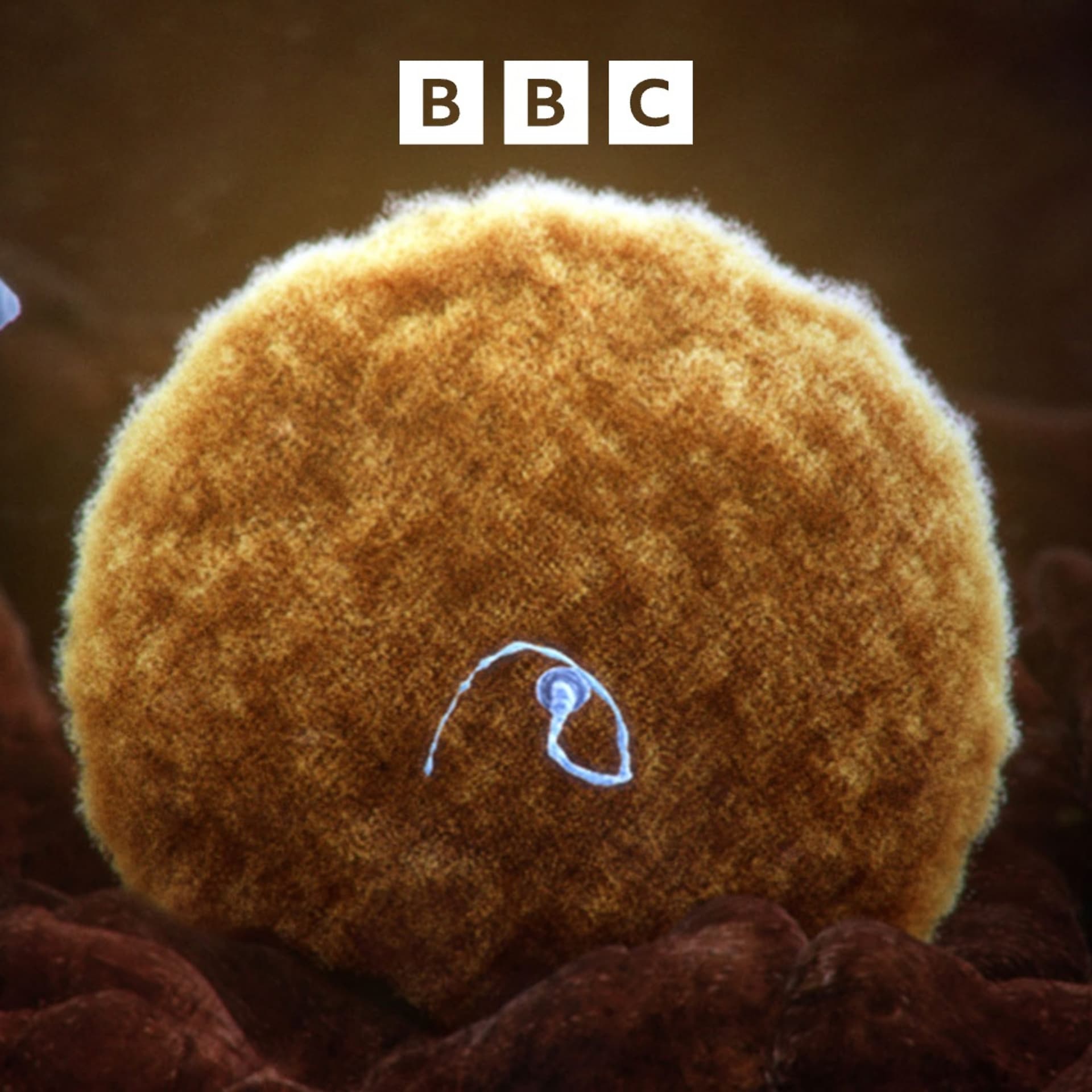
Global News Podcast
Cancer-causing gene found in donor sperm across Europe
00:30:43
Doctors confirm 197 children were conceived using sperm donor with cancer-causing gene
Loading summary
Transcript136 lines
- [00:00]
James Gallagher
This BBC podcast is supported by ads outside the UK.
- [00:06]
Commercial Advertiser
Saks off 5th is revealing the season's most wanted holiday steals. Whether you're gifting someone on your list or treating yourself to a designer, score, find deals on McQueen, Valentino, Versace, Stuart Weitzman and more at up to 70% off every day. Outshine at every event and outsmart your budget. From shimmer ready party looks to luxe layers and cozy giftable Accessories, Saks off 5th is your secret source for celebrating in style. Your holiday shopping mission starts now@saksofffift.com or a Saks off 5th store near you.
- [00:40]
Hear that? It's holiday cheer arriving at Ulta Beauty with gifts for everyone on your list. Treat them to fan favorite gift sets from Charlotte Tilbury and Peach and Lily. Go all out with timeless fragrances from ysl, Ariana Grande and Carolina Herrera. And you can never go wrong with an Ulta Beauty gift card. Head to Ulta Beauty for gifts that make the holidays brighter and even more beautiful. Ulta Beauty gifting happens here.
- [01:11]
Oliver Conway
You're listening to the Global News Podcast from the BBC World Service.
- [01:17]
Hello, I'm Oliver Conway. We're recording this at 16 hours GMT on Wednesday 10th December. Nearly 200 children have been fathered by a sperm donor with a cancer causing gene mutation. But how could it happen? The Venezuelan opposition leader Maria Corinna Machado calls on democracies to fight for their freedom in a speech delivered by her daughter at the Nobel Peace Prize ceremony.
- [01:40]
Jonathan Head
And I'm in a village. There's another boom of artillery about 3 km from the border. Standing next to a house that was hit by a rocket yesterday, we hear.
- [01:50]
Oliver Conway
From the Thai Cambodia frontier as half a million people flee the fighting.
- [01:57]
Also in the podcast, what we're trying.
- [01:59]
Dr. Will Sedley
To do is develop a form of sounds that helps actually quieten the tinnitus persistently. And they have a lasting effect.
- [02:05]
Oliver Conway
The new therapy offering hope to sufferers of tinnitus.
- [02:14]
Every year, egg and sperm donations help thousands of people with fertility issues start families of their own. But a Europe wide investigation has found that one sperm donor who fathered nearly 200 children unwittingly passed on a genetic mutation that dramatically increased their risk of cancer. Celine, not her real name, is a single mother in France whose child was conceived 14 years ago. She received a call from her fertility clinic in Belgium urging her to get her daughter screened. She told us of her fears over the possibility her child may develop cancer, but we have translated her words.
- [02:50]
Jonathan Head
We don't know when, we don't know.
- [02:52]
Vanessa Bushluter
Which one and we don't know how many. I understand that there's a high chance it's going to happen, and when it does, we'll fight.
- [03:00]
Jonathan Head
And if there are several, we'll fight several times. The most unacceptable thing for me is that I was given sperm that wasn't clean, that wasn't safe, that carried a.
- [03:10]
Vanessa Bushluter
Risk, that hadn't been properly tested.
- [03:12]
Jonathan Head
That's the most unacceptable thing for me.
- [03:15]
Vanessa Bushluter
He was not aware, I believe, that he was a carrier of a mutated gene. So I have absolutely no hard feelings towards him.
- [03:23]
Oliver Conway
Some of the children have already died, and only a minority who inherited the mutation will manage to avoid the disease entirely. I heard more from our health correspondent James Gallagher.
- [03:33]
James Gallagher
So this sperm donor donated back as a student in 2005, and we think that that sperm was used in around 67 fertility clinics across 14 countries. And the European Sperm bank said it would have not been possible to detect the mutation this man had by preventatively genetically screening him. And once they did know that he carried this mutation, it was immediately blocked. But so many women and families are affecting the sperm was used by so many people is because fertility rules don't work across country borders. So if you were to go to Belgium or Germany or Greece, each of those countries would have a limit on how often a sperm donor can be used in how many different families in that country. But there's nothing that stops you selling sperm to each and every one of those countries. And that's what's happened. The European Sperm bank in Denmark has collected this man's sperm and sold it into multiple countries. And that's why we have this figure of at least 197 children being born. And it could be more than that because we haven't got data back through this investigation from all the countries where we know the sperm was sold. There have been calls, though, for limits to be put in. It's worth stressing, though, that even if you reduced the number of times a sperm donor sperm was used, it doesn't necessarily reduce the risk of inheriting rare genetic diseases. But a lot of it is around psychological harm, actually, because there's a lot of discussion about what it means to be one of these children if you suddenly find out you have hundreds of.
- [05:04]
Oliver Conway
Half siblings and how common is this genetic mutation and what damage does it do?
- [05:12]
James Gallagher
Right. This genetic mutation is normally incredibly rare. It's something called TP53. And its role in the body is to help prevent cancer. And if it's defective, it causes a rare syndrome. And that increases your risk of cancer in your lifetime to up to 90%. So it really dramatically raises your risk of cancer. I mean, this is absolutely a horrific diagnosis. I mean, just imagine that you had your child and then you get a phone call from a fertility clinic that you haven't been back to for years telling you that you need to get your child tested for this rare genetic disorder. And if you find out that they're pretty certain going to get cancer at some point in their lifetime and up to 90% risk, the amount of testing that you have is like you have your brain scanned every year, you have the rest of your body scanned every year. You need ultrasounds of your stomach. Because these cancers can appear in multiple different organs within the body. It is a life changing diagnosis for these families. The donor isn't affected. He acquired mutations and that has affected his sperm. So most of his body does not contain this defective form of the TP53 gene. But around 20% of his sperm do carry the risk. And it's really worth stressing in this that the donor was unaware, as far as we understand, he was donating completely in good faith and didn't find out that he was carrying this mutation in his sperm until quite recently.
- [06:42]
Oliver Conway
And are there other similar conditions that can be passed on unwittingly by donors?
- [06:47]
James Gallagher
Yeah, there is screening of sperm donors. I mean, there is a reason why of the people that come forward for sperm donation, less than 5% of them are actually accepted. And that's through screening of not only the sperm quality, but also for other genetic diseases. Now, what the European sperm bank in Denmark has stressed as part of this is that overall, the risks from a sperm donor are lower than they are through normal conception, through meeting your partner to be, because the screening that is involved does reduce the risk. But cases like this can still happen. And many fertility experts have said to me that it is going to be impossible to reach a world where you can screen for every single genetic disease that could possibly be passed down.
- [07:35]
Oliver Conway
Our health and science correspondent, James Gallagher. The winner of the Nobel Peace Prize, Maria Corinna Machado, has been in hiding in Venezuela since accusing longtime president Nicolas Maduro of stealing the election last year. So there was some doubt over whether she'd be able to leave her homeland to attend the Nobel awards ceremony in the Norwegian capital, Oslo.
- [08:07]
Well, in the event, Ms. Machado didn't make it in time, but she released a statement saying she was on her way to the city. The prize was accepted instead by her daughter, Anna Corinna Sosa.
- [08:17]
Lucas de Groot
Machado, thanks to you, the struggle of an entire people for truth, for freedom.
- [08:26]
Commercial Advertiser
For democracy and peace, is today recognized around the world.
- [08:32]
Lucas de Groot
I am here on behalf of my mother, Maria Corina Machado, who has united.
- [08:38]
Kate Winslet
Millions of Venezuelans in an extraordinary effort.
- [08:43]
Lucas de Groot
That you, our hosts, have honored with a Nobel Peace Prize.
- [08:48]
Oliver Conway
Before handing out the award, the Peace Prize Committee chairman, Jurgen Vatna Fritnes called on the Venezuelan president to resign. Here today in this hall, with all the gravity that attends the Nobel Peace.
- [09:03]
Jordan Bardella
Prize and this annual ceremony, we will say what authoritarian leaders fear most.
- [09:12]
Oliver Conway
Your power is not permanent. Your violence will not prevail over people who rise and resist. Mr. Maduro, accept the election result and step down. Well, as we record this podcast, Ms. Machado is still thought to be heading to the Norwegian capital. In her earlier message, she said she was very grateful to the many people who risked their lives so I could get to Oslo and indicated she was getting on a plane. Her daughter said she would return to Venezuela very soon, but that will not be easy. As I heard from our Latin America editor, Vanessa, that is no easy feat.
- [09:55]
Vanessa Bushluter
But then it was no easy feat to leave Venezuela for her either. Remember, she had been in hiding for more than a year, ever since she spoke out against those disputed elections. And we think that she probably had been moving from one hiding place to the other. And we will be very interested to hear how she did manage to make it out of the country. Remember, there are very few flights in and out of Caracas at the moment as well, because the US President Donald Trump declared the airspace around the capital closed amid a heightening of military tension.
- [10:29]
Oliver Conway
Her daughter read her words. What do you make of the speech?
- [10:33]
Vanessa Bushluter
The speech was emotional, of course. You could hear Anna Corina Sosa's voice breaking at times as she tried to keep her composure. What I thought was very interesting is that she stressed the role of families in Venezuela and specifically of the families whose loved ones have emigrated. More than 8 million people have left Venezuela over the last 10 years as the economic and political crisis has gotten worse and worse. And Anacurina Saucer, reading out the words from her mother, said that these families and appealing to these families and telling them that if they can be in power, if Maria Corinna Machado and Edmundo Gonzalez, who stood in for her at the elections because she was barred from running, if they can come into power, they will make sure that all of those 8 million people have the chance to return to a safe Venezuela. And she said that it was that that made people often change their minds. And which united the hitherto very divided opposition.
- [11:38]
Oliver Conway
Will this award make any difference for people back in Venezuela?
- [11:41]
Vanessa Bushluter
I think it will inspire those who felt that international attention had turned away after the disputed election. Maria Corina Machado and her Opposition Move movement provided proof in the form of voting tallies of the victory, the election victory of Edmundo Gonzalez. And yet then nothing happened. Maduro took power. He was sworn in. He's still very much in control of the police, of the army. He lives in the presidential palace. So a lot of Venezuelans felt forgotten and abandoned by the international community. And I think this will give them impetus.
- [12:16]
Oliver Conway
Vanessa Bushluter and you can hear more on this story on our YouTube channel. Search for BBC News select podcasts and then the Global News News podcast. We update it every weekday. The last outbreak of fighting between Thailand and Cambodia in July was brought to an end with help from Malaysia and the United States. Back then, Donald Trump was able to use the leverage of trade negotiations to broker a ceasefire. But hostilities between the two Asian neighbors resumed this week. And the US President said on Tuesday night he would have to get involved again.
- [12:48]
Lucas de Groot
Cambodia, Thailand, and it started up today. Tomorrow I have to make a phone call. Who else could say I'm going to make a phone call and stop a war of two very powerful countries, Thailand and Cambodia.
- [13:00]
Oliver Conway
Are they going at it again? Well, the Malaysian prime minister said he had spoken to the leaders of Thailand and Cambodia on Tuesday and both were willing to, quote, continue negotiations to ease tensions. The clashes, which erupted over a long standing border dispute, have forced half a million people to flee. Our Southeast Asia correspondent, Jonathan Head is in a village on the Thai side of the frontier.
- [13:23]
Jonathan Head
There's been a pretty comprehensive evacuation right along the border. Now I've come to within 3km of it. This is, I suppose, a pretty risky place to be because yesterday the Cambodians fired thousands of rockets over the border. The house I'm standing in front of was hit by one. You can see where it's detonated and just shredded everything in the front of the house. Fortunately, nobody was living here. And that's the case for hundreds of kilometers along this border. These populations have been moved to somewhere they can be safe. That means more than 20 kilometers. That's the range of the rockets that Cambodia has been using. Meanwhile, from where I am, but pretty much anywhere you stop, you can hear the regular boom of outgoing Thai artillery. And we know the Thai military has announced yet more airstrikes. So the war is continuing very much at the same level that it has for the last three Days, you're not hearing really much in the way of softened language from either side. The Thai military really is running this show. The government in Bangkok is saying to the military, do what you need to do. And their view is that they need to hit the Cambodian military very hard to degrade its capabilities. Their argument would be to reduce the threat that populations along this border face. But I think also the Thai military has in mind some high points along the ridge that divides the countries, which they've been trying to take, were trying to take in July when they were stopped by President Trump's intervention. And that cease fire, obviously, that cease fire was always fragile, and we've seen just how fragile it is from what's happened in the last few days.
- [14:51]
Oliver Conway
Yeah. And President Trump has been speaking about it, saying he will have to pick up the phone again. Will he be able to do anything this time?
- [15:00]
Jonathan Head
I'm not sure. I mean, there's always a lot of leverage the US can apply, but the mood in Thailand is pretty tough. The prime minister is not giving any sense that he's willing to. To rein in the fighting right now. The Thai argument is that Cambodia has not shown sincerity. It's produced compelling evidence that Cambodian soldiers have continued to lay landmines. Seven Thai soldiers have lost limbs to those landmines this year. They say you can't have peace if a country does that. On the Cambodian side, they have 18 of their soldiers still being held here. They argue should have been released when the ceasefire happened. And they argue that Thailand is essentially a much bigger country and therefore bullying them. It's interesting. Cambodia makes regular appeals to international intervention and sympathy. They're very, very keen on President Trump to get involved again. But at the same time, they've brought these rocket launchers up. They're willing to risk quite high civilian casualties in their response to the Thai artillery and airstrikes. I don't sense that in terms of actions, either country is really ready to stop this yet. And I'm not sure this time that President Trump will have the same leverage. Remember in July, both countries were approaching a deadline to get the tariffs that he'd imposed on them down. It was just a few days before that deadline, and I think that leverage was effective then. I'm not sure now whether he will be as effective.
- [16:14]
Oliver Conway
But let's see Jonathan Head on the Thai side of the border with Cambodia now. Have a listen to this.
- [16:30]
That is a new sound therapy offering hope to millions of tinnitus sufferers. The condition leaves people hearing noises such as buzzing, humming, hissing, or throbbing despite there being no outside sound. Neurologist Dr. Will Sedley led the trial of this new treatment.
- [16:46]
Dr. Will Sedley
About one in eight people has long standing or permanent tinnitus. And about one in eight of them has a long term impairment to quality of life, suffering, sleep disturbance or other impairment on account of their tinnitus. So probably a billion people worldwide currently. Treatments aim not to take the sound away, but aim to help people live better with it. And we often use the analogy of the sound of a computer fan or an air conditioner in an office. But if the sound grabs your attention, it's hard to disengage from. It causes stress. So what we're trying to do is develop a form of sound that helps actually quieten the tinnitus persistently. Even when you're not listening to them, you listen to them on a regular basis, maybe an hour a day or more, and they have a lasting quietening effect. 53 people received this type of sound roughly an hour a day for six weeks. And we found that on average tinnitus got significantly partially quieter and this effect endured for even at least three weeks after they stopped listening. But we didn't monitor for longer after that. Really what we want to do is get funding to work with software developers and sound engineers to build that rippling or the subtle wavering you heard into sounds that people actually want to listen to for pleasure, like music or talk radio. And so their treatment for their tinnitus can be built into the listening they're already doing on a daily basis rather than having to listen to those weird buzzy notes.
- [18:05]
Oliver Conway
Dr. Will Sedley from Newcastle University in the northeast of England.
- [18:12]
Still to come on the global news podcast, can a typeface be too woke?
- [18:17]
Lucas de Groot
It's a hilarious and sad news item. I really don't understand it.
- [18:22]
Oliver Conway
We hear from the creator of Calibri. After the US State Department bans it's foreign.
- [18:35]
Commercial Advertiser
Beauty's big holiday beauty sale is back with up to 50 off. Must have gifts shop irresistible deals like the Shark Beauty Flex style and benefit cosmetics. Travel size mascaras with new offers weekly same day pickup or delivery. And our trusted associates. We make holiday shopping effortless. Head into Ulta Beauty today. Ulta gifting happens here.
- [19:03]
Kate Winslet
Looking for a fantasy that will keep you up all night? From Blood and Ash isn't just a story. It's the beginning of an obsession. From Blood and Ash launches you into a world where forbidden desire collides with deadly secrets and every choice could ignite a war. Expect heart pounding romance, fierce battles and a heroine who refuses to be caged. If you crave danger passion in twists you'll never, never see coming. Start the journey today. Grab from Blood and Ash, available in print, ebook and audiobook, and enter a series you'll never want to leave.
- [19:34]
Commercial Advertiser
Did you know that parents rank teaching financial literacy as the toughest life skill? That's where Greenlight comes in, the debit card and money app made for families. With Greenlight, you can send money to kids quickly, set up chores, automate allowance and track spending with real time notifications. Kids learn how to earn, save and spend responsibly while parents have peace of mind knowing smart money habits are being built with guardrails in place. Try Greenlight Risk free today@greenlight.com iheart that's greenlight.com iheart it never happens at a good time.
- [20:12]
Lucas de Groot
The pipe bursts at midnight, the heater.
- [20:15]
Oliver Conway
Quits on the coldest night.
- [20:16]
Lucas de Groot
Suddenly you're overwhelmed. That's when HomeServ is here. For $4.99 a month, you're never alone. Just call their 24. 7 hotline and a local pro is on the way. Trusted by millions, HomeServe delivers peace of mind when you need it most. For plans Starting at just $4.99 a month, go to homeserve.com that's homeserve.com not available everywhere. Most plans range between $4.99 to $11.99 a month. Your first year terms apply on covered repairs.
- [20:44]
Oliver Conway
The recent American condemnation of Europe's migration policies and praise for nationalism is good news for the national rally in France, which for years has been shunned as far right extremists. The party is now led by Jordan Bardella, who is currently favourite to win the French presidential election in 2027. He has been talking to Nick Robinson for the BBC's Political Thinking podcast.
- [21:10]
James Gallagher
Listen.
- [21:10]
Jordan Bardella
I believe there is a wind of freedom and national pride blowing across all major Western democracies. And it is true that President Trump in the United States was an expression of that current stream of ideas, of that great popular movement. And he managed, I think, by appealing to American pride and the ambition to make the United States a great power again, greater than it already is, around the concept of America first to reconcile the working class, the American middle class and part of the entrepreneurial elite. And he has done this, I believe, with a certain degree of success. Now Trump defends his country's interests. What I criticize French leaders for, and European leaders more broadly, is for not defending their country's interest strongly enough. It is True that Trump was giving a nod to patriotic parties around the world, and I welcome that with a certain goodwill. But as for me, I wish to defend the interests of my country tomorrow. I do not like this vassalization of Europe towards any great power. However, it is true that mass immigration and the laxity of our leaders over the past 30 years regarding migration policies are today disrupting the power balance of European societies, Western societies, and particularly the French society.
- [22:33]
Oliver Conway
You call it a cliche about your party.
- [22:36]
James Gallagher
It's a fact. Your party was a racist party. It is the history of the National Rally after it stopped being the National Front. Jean Marie Le Pen described the gas.
- [22:47]
Oliver Conway
Chambers used by the Nazis to murder.
- [22:50]
James Gallagher
Millions of Jews in this continent as a footnote in history. Do you not need to say to people, we were a racist party? We need to change?
- [23:03]
Jordan Bardella
I reject these accusations because there has never been, in the DNA or in the proposal of the National Front, now the National Rally, any statements or proposals intending to harm or offend groups of people in my country. However, it is true that there were remarks by Jean Marie Le Pen, which eventually caused a political rupture between the party's founder and Marine Le Pen, then its president, on the key issue of fighting antisemitism. She judged that Jean Marie Le Pen's ambiguities and verbal provocations were dragging the entire political movement into an unacceptable situation. And so, in 2015, Marine Le Pen, as I remind you, took the responsibility, an extremely difficult personal decision, of expelling her own father from the National Front.
- [23:56]
Oliver Conway
The French National Rally leader, Jordan Bardella. It's not just America's national security strategy that's changing under Donald Trump. It's the typeface used to present it as well. The US Secretary of State, Marco Rubio, has ordered diplomats to return to using Times New Roman for official communications. His predecessor in the Biden administration opted for Calibri because apparently its lack of decorative angular features made it more accessible for people with disabilities. And it was a Microsoft office default setting. Mr. Rubio called it a wasteful diversity move. Lucas de Groot is the Danish type designer who came up with Kolibri. Sean Lay asked him for his reaction.
- [24:37]
Lucas de Groot
It's a hilarious and sad news item. I really don't understand it.
- [24:41]
Jonathan Head
Do you think Calibri is woke in any way?
- [24:43]
Lucas de Groot
No. I mean, it was designed to facilitate reading on modern computer screens, and it was chosen to replace Times Neurone, the typeface that Rubio wants to go back to now in 2007, Calibri was designed to work well in tiny size and on course, office screens, which it still does much better than Times New Roman.
- [25:01]
Jonathan Head
What do you think are the advantages of Calibri?
- [25:04]
Lucas de Groot
It's specially meant for reading long pieces of text on screen, so the rhythm is great. And when you see it in big sizes, it's a friendly typeface. It has warmth, maybe even a little bit humanistic. Even though it's a sensory font.
- [25:17]
Jonathan Head
Yes, because one of the quotes from Marco Rubio's instruction to diplomats around the world was he said they were going to go back to Times who Roman to restore decorum to the department's written products. Do you think your typeface lacks decorum?
- [25:33]
Lucas de Groot
Well, of course, maybe the serifs. In Times in Roman, the little feet on the stems can be seen as decorum. But when you compare Times in Roman to a lot of other typefaces with serifs, Times in Roman is not really a good digital typeface. It was built in the early days of digital typography, and it has a lot of flaws that modern set of typefaces don't have. It was originally designed for a British newspaper and in print it looked really nice. But the digital version was based on drawings for bigger sizes and in high quality print, it's much too thin and too sharp and there would be a lot of much better serif typefaces to get this classic serif look. Still, Senseref works better in small sizes on core screens.
- [26:17]
Jonathan Head
Just on the question of screens, that's.
- [26:19]
Oliver Conway
A kind of an ephemeral media, isn't it? Do you think that in some sense.
- [26:23]
Jonathan Head
That means that we are less appreciative of lettering than we are in print?
- [26:27]
Lucas de Groot
Well, it depends very much on the screen. If you have a high resolution screen like a telephone, it doesn't really disturb the serifs, but most people in offices don't have it, and that's where the optimization for computer screens come in. And in those cases, Senseref works a lot nicer.
- [26:44]
Jonathan Head
Yeah.
- [26:45]
Oliver Conway
Just briefly and finally, are you confident.
- [26:46]
Jonathan Head
That Kolibri will survive this outrage?
- [26:52]
Oliver Conway
Typeface designer Lucas de Groot. Now, are you more like a meerkat gorilla or maybe a Californian mouse? Well, all those animals feature in a new monogamy league table which assesses how committed they and we are to pairing up. Humans are apparently 66% monogamous, far above chimpanzees and gorillas and similar to meerkats and beavers. We heard more from lead author and anthropologist Mark Dybal.
- [27:19]
Dr. Will Sedley
We know, of course, that humans vary cross culturally and within cultures in our marriage practices and mating behavior. But from an evolutionary point of view, there's value in stepping back and considering our species as a whole and characterizing our mating system as it were, in general mammalian context. So how do we compare to other species? That's partly because we're such a cooperative species and we often see the evol of highly cooperative animal societies follow on from the evolution of monogamous mating. So we have these theoretical debates about how monogamous humans are today and were in human evolutionary history. So what I did in the study was look at the proportion of full siblings versus half siblings we see in human societies and compare that to other mammals. So for all the mammal data, it's all genetic. For some of the human data, it's genetic, including some archaeological samples that go back several thousand years. But some of the human data is actually based on what people have told us. My paper doesn't directly address the question of why monogamy. One of the leading hypotheses is about resource distribution. In some species, groups of females can live together and don't need to compete for resources intensely, so they can live in groups. And in that situation, if you then have males distribute themselves around those females, it's difficult to get monogamy going. But in some species you have females who control the territory and don't compete with their neighbours. So in that case, monogamy gets going more readily.
- [28:42]
Oliver Conway
Anthropologist Mark Dibel the best selling author Sophie Kinsella has died at the age of just 55. The Shopaholic series writer, whose real name was Madeline Sophie Wickham, was diagnosed with an aggressive form of brain cancer in 2022. Lizo Mazimba looks back at her career.
- [29:00]
Jonathan Head
She sold almost 45 million copies of her books around the world with her best selling Shopaholic series, making her one of the UK's most famous authors. Like the book's central character, Sophie Kinsella started out as a financial journalist who wasn't great with money. But Kinsella's writing made her a literary superstar. The first two Shopaholic books being made.
- [29:25]
Oliver Conway
Into a Hollywood film.
- [29:27]
Kate Winslet
That'll be $120. How would you like to pay?
- [29:29]
Commercial Advertiser
Here's $50 in cash.
- [29:31]
Kate Winslet
Can you put 30 on this card?
- [29:33]
Lucas de Groot
10 on that.
- [29:35]
Jonathan Head
It's climbed with a film which at times felt semi autobiographical.
- [29:40]
Kate Winslet
The initial inspiration for the book, which is a girl opening her Visa bill and these emotions which go through her head.
- [29:48]
Commercial Advertiser
$200 on Marc Jacobs underwear.
- [29:51]
Kate Winslet
All of that came from my exact feelings when I opened my Visa bill, like what I went to this shop. I don't remember that. And not being able to sort of associate this bill with what I'd done in real life.
- [30:00]
Jonathan Head
As well as the Shopaholic books, Kinsella.
- [30:03]
Oliver Conway
Also wrote more than a dozen best selling standalone novels.
- [30:07]
Jonathan Head
Her writing never failing to strike a chord with readers.
- [30:10]
Kate Winslet
I think that they relate to my characters. They, they sort of see themselves in the characters. They see those flaws and foibles. They think, oh, I've done that.
- [30:19]
Jonathan Head
She'll be missed by people across the globe. A writer whose work resonated with the lives of millions of young women, Lizo.
- [30:27]
Oliver Conway
Mazimba on Sophie Kinsella, who has died at the age of 55. In her 30 year acting career, Kate Winslet has starred in hits like Titanic, the Avatar sequels and festive favorite the Holiday. Now for the first time, she has gone behind the camera to direct a film, Goodbye June, which was written by her son. She's been talking to our entertainment correspondent, Colin Patterson.
- [30:53]
Lucas de Groot
It's a big family.
- [30:54]
Kate Winslet
June, my gorgeous daughter.
- [30:57]
Jonathan Head
So lovely they can all be here for you.
- [30:59]
Commercial Advertiser
I'm here.
- [31:00]
James Gallagher
Kate Winslet's directorial debut, Goodbye June, is a family affair. Written by her son Joe Anders, it looks at siblings trying to put differences aside to honor their mother, played by Helen Mirren, as she dies at Christmas time.
- [31:15]
Oliver Conway
Do you all love your lover?
- [31:17]
Kate Winslet
Yeah, I'm cut. Brilliant.
- [31:20]
James Gallagher
Kate Winslet is clear on why now was the right time to take control behind the camera.
- [31:26]
Kate Winslet
There's a thing with female filmmakers, certainly actresses who turn into directors. There's a sort of a strange, almost like a slightly judgy thing of like, do we really know what we're talking about? Do we really know what to do with the camera? And I do feel that at this time in my life I really had learned everything pretty much. But also I think I felt that now is a time when my children are grown up enough that I can be that little bit more absent.
- [31:49]
James Gallagher
I looked at the top hundred films at the UK box office last year. 16 directed by a woman or co directed by a woman. 84 by a man.
- [31:59]
Kate Winslet
Yeah.
- [31:59]
James Gallagher
Why is that?
- [32:00]
Kate Winslet
There's just a lack of belief in women being able to do it actually. We're incredibly forward thinking, very resilient. We can cope extremely well with very little sleep and we get things done and just if there's more of us doing it, then hopefully more will follow and we'll be giving across the message that we're perfectly capable of, of doing that job just as well as the men.
- [32:22]
James Gallagher
Two of Kate Winslet's three children are following her into the business. This year her daughter Mia Thrippleton had a main role in a Wes Anderson film.
- [32:32]
Dr. Will Sedley
Why?
- [32:32]
Kate Winslet
It's been six years since our last meeting.
- [32:34]
Lucas de Groot
I have my reasons.
- [32:36]
James Gallagher
Which are what?
- [32:36]
Lucas de Groot
My reasons. I'm not saying.
- [32:38]
James Gallagher
And now she has helped her eldest son Joe have his script for Goodbye June turned into a film.
- [32:44]
Kate Winslet
Now, why don't we have goose for Christmas?
- [32:48]
Oliver Conway
I always like a cheap bird.
- [32:49]
Kate Winslet
Dad, shut up.
- [32:50]
James Gallagher
How difficult is it to get the balance between encouraging them with their career and the whole Nepel baby argument?
- [32:56]
Kate Winslet
Jo would say to me, I don't want people to think that this film is just being made because you're my mum. The film would have been made with or without me. The script is so, so good. And part of it actually is just teaching them to ignore the white noise of silly terms like Nepo baby, which you can't really do anything about.
- [33:14]
James Gallagher
Of course. The Kate Winslet Christmas film that is.
- [33:16]
Jonathan Head
A huge part of many people's Christmases.
- [33:18]
James Gallagher
Every year is the holiday home exchange.
- [33:20]
Oliver Conway
We switch houses, cars, everything.
- [33:23]
Dr. Will Sedley
Bingo.
- [33:24]
Vanessa Bushluter
I need you to answer this.
- [33:25]
Kate Winslet
Are there any men in your town?
- [33:27]
James Gallagher
But Kate Winslet hopes Goodbye June will become a new festive favorite.
- [33:33]
Kate Winslet
Maybe if I'm lucky, I'll come back as snow. Then I'll see you all at Christmas time.
- [33:42]
Oliver Conway
That report by our entertainment correspondent, Colin Patterson.
- [33:48]
And that is all from us for now. But the global news podcast will be back very soon. This edition was mixed by Holly Smith and produced by Stephanie Zakrisen and Nikki Verico. Our editor is Karen Martin. I'm Oliver Conway. Until next time. Goodbye.
- [34:09]
Commercial Advertiser
If you're an H VAC technician and a call comes in, Grainger knows that you need a partner that helps you find the right product fast and hassle free. And you know that when the first problem of the day is a clanking blower motor, there's no need to break a sweat. With Grainger's easy to use website and product details, you're confident you'll soon have everything humming right along. Call 1-800-GRAINGER Click grainger.com or just stop by Granger for the ones who get it done.