Global News Podcast Summary
Episode: Gaza: US pledges $30 million to controversial aid system
Release Date: June 27, 2025
Host: Ankar Desai, BBC World Service
1. Gaza Humanitarian Hub: Controversy and Concerns
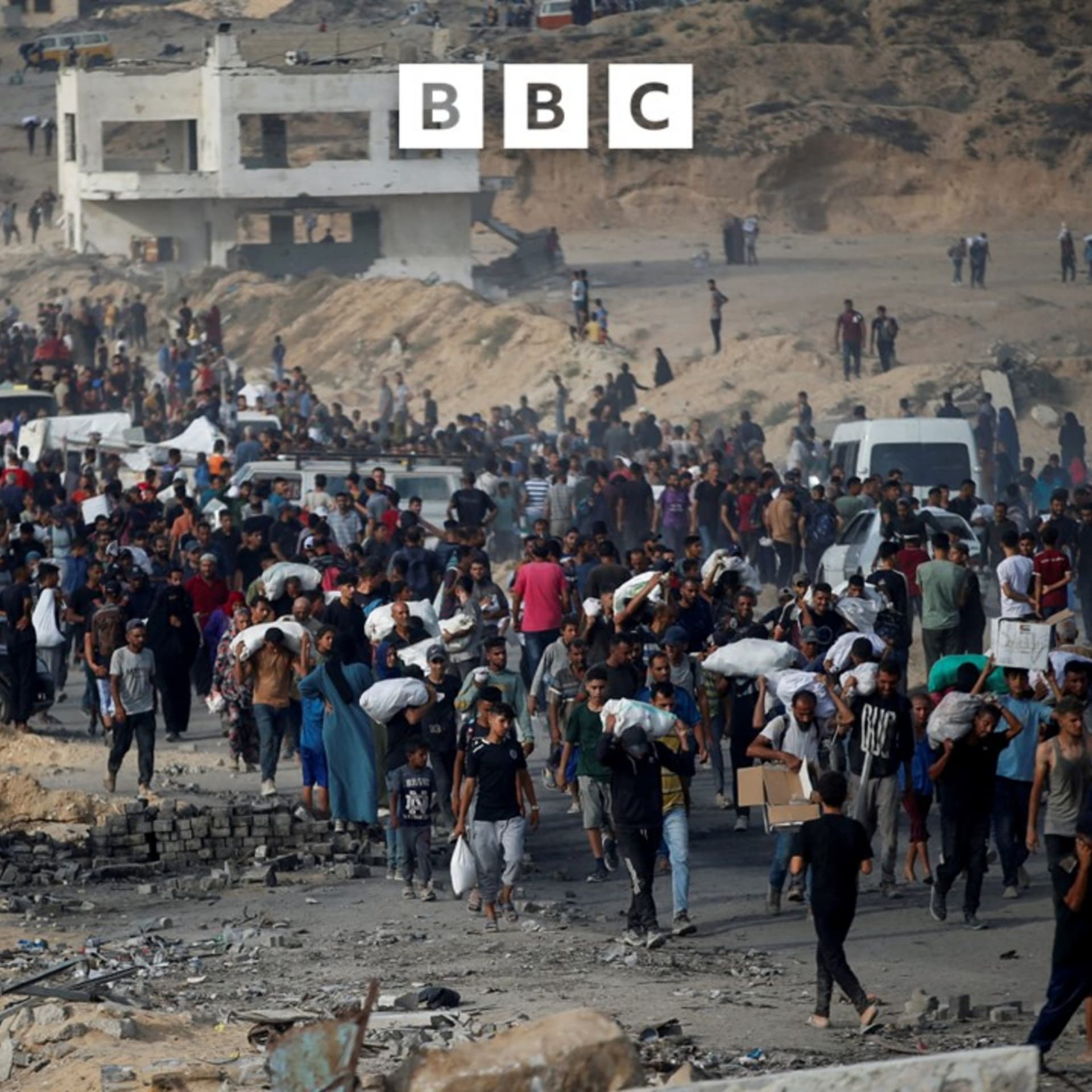
The episode opens with a deep dive into the Gaza Humanitarian Hub (DHF), a U.S. and Israeli-backed aid distribution system established in Gaza a month prior. Despite an influx of $30 million pledged by the United States to support the initiative, significant concerns about the system's efficacy and humanitarian implications persist.
Key Points:
-
Casualties Amid Aid Distribution: Daily reports have emerged of Palestinians being killed while attempting to collect food from DHF sites. Notably, on the day of the podcast release, seven individuals were reportedly killed by Israeli forces near an aid distribution site, amid ongoing Israeli airstrikes and shelling.
-
Criticism from Medical Organizations: Joanne Perry, a medical advisor with Médecins Sans Frontières (MSF) in northern Gaza, strongly criticized the DHF, describing the situation as "catastrophic" and "not humanitarian." She emphasized that the aid distribution contradicts humanitarian principles, leaving Palestinians with the dire choices of starvation or potential death (01:26-01:49).
-
US and Israeli Stance: Despite the controversies, the U.S. has reaffirmed its support for DHF, viewing it as a strategic mechanism to prevent aid from being diverted to Hamas. Dan Johnson, BBC’s correspondent in Jerusalem, highlights Israel's preference for DHF over traditional international organizations, aiming to mitigate Hamas's influence over aid resources. However, this centralization has led to logistical challenges, including increased travel distances to aid centers and confusion over distribution protocols, contributing to heightened tensions and tragic incidents (02:00-03:49).
-
UN's Position: The United Nations accuses Israel of "weaponizing food" in its conflict against Hamas, with over 410 Palestinians reported dead in related incidents. While the Israeli military denies these allegations, the persistent reports raise serious questions about the humanitarian impact of the DHF (03:49-04:49).
Notable Quote:
“The situation is best described as catastrophic. It's not humanitarian. People are walking long distances. Their choice is either starvation or possibly getting killed.”
– Joanne Perry, MSF, 01:26
2. China-US Trade Deal on Rare Earth Metals
Shifting focus to international trade, the podcast discusses the recent breakthrough in the China-US trade relationship, specifically concerning rare earth metals and computer chips.
Key Points:
-
Trade Agreement Details: China and the U.S. have agreed to a trade mechanism where rare earth metals will be exported to the United States, while sophisticated computer chips will flow into China. This deal marks a significant step following ongoing trade tensions initiated during the Trump administration (06:07-07:03).
-
Importance of Rare Earth Metals: Mickey Bristow, Asia Pacific editor, explains that rare earth metals are crucial for numerous technologies, including electric vehicles, smartphones, wind turbines, and military applications. China's dominance in production and processing grants it substantial leverage over global markets (07:09-08:11).
-
Implementation Challenges and Future Roadblocks: Despite the agreement, implementation has faced hurdles, primarily due to unpredictable policies under President Trump, who is perceived as unpredictable in his trade strategies. Bristow anticipates future challenges but believes the foundational agreement will persist, influenced by China's preference for stability in global trade (08:17-09:08).
Notable Quote:
“These 17 rare earth metals are absolutely vital. And China at the moment has the majority of production and processing of these rare earth metals. It has really a lot of leverage over the United States.”
– Mickey Bristow, Asia Pacific Editor, 07:09
3. Peace Agreement Between Democratic Republic of Congo and Rwanda
The podcast reports on a historic peace agreement aimed at ending decades of conflict between the Democratic Republic of Congo (DRC) and Rwanda, mediated by the U.S. and Qatar.
Key Points:
-
Agreement Details: The agreement encompasses territorial integrity, prohibition of hostilities, disengagement, and the disarmament of rebel groups, including the potential integration of these groups into national forces. A critical aspect is the withdrawal of Rwandan forces, estimated at up to 7,000 soldiers currently on Congolese soil (10:19-12:02).
-
Optimism and Skepticism: While the agreement is seen as a pathway to peace and potential Western investment in the mineral-rich region, critics like Abdullahi Halaki of Refugees International express doubts about the leaders' commitment to their populations, fearing that the deal primarily serves U.S. interests in securing mineral resources (10:19-12:26).
-
Impact of U.S. Involvement: The U.S.'s role is driven by the DRC's wealth in critical minerals such as lithium, cobalt, and coltan, essential for the global energy transition and technology sectors. This strategic interest underscores the U.S.'s influence in brokering the deal (12:02-12:26).
Notable Quote:
“The commitment of these leaders will not be to their people. They will be to please the United States… as long as the United States is happy and getting their minerals, no problem.”
– Abdullahi Halaki, Refugees International, 10:19
4. Execution of Takahiro Shiraishi in Japan
The podcast covers the first execution in Japan in three years, involving Takahiro Shiraishi, infamously known as the "Twitter Killer."
Key Points:
-
Case Overview: Shiraishi murdered nine individuals in 2017, luring suicidal victims through Twitter (now X) with promises of assistance in ending their lives. His crimes involved dismembering victims and disposing of their bodies in various containers, earning his residence the moniker "house of horrors" (12:48-14:40).
-
Legal Proceedings and Execution: During his trial, Shiraishi contradicted his defense, asserting that the murders were not consensual, leading to his conviction and execution. The Justice Minister cited the immense suffering of the victims' families as justification for the death penalty (12:48-14:40).
-
Impact on Social Media Policies: The case has prompted significant changes in Twitter's policies regarding discussions of suicide and self-harm, aiming to prevent similar tragedies in the future (14:40-19:30).
Notable Quote:
“We have a treatment that's targeted specifically for the disease. So that in itself is absolutely transformative and amazing.”
– Mary Udut, 24:18
(Note: The above quote seems misplaced and likely intended for another section. The correct quote related to the Twitter Killer case is:)
“The Justice Minister… said that the bereaved families and the victims themselves suffered beyond imagination.”
– Joanne Perry, 12:48
5. Breakthrough Treatment for APDS in Europe
Highlighting a medical advancement, the podcast introduces Mary Udut, a 19-year-old in England, who becomes the first patient in Europe to receive a newly licensed treatment for Activated Phosphoinositide 3-Kinase Delta Syndrome (APDS), a rare genetic disorder.
Key Points:
-
Personal Impact: Mary expresses profound relief and hope, stating, “With this medication, I know I can have a longer life, which is what she'd want” (24:40-25:09). The treatment, Lenolizib (Joengia), targets the faulty gene causing APDS, stabilizing her immune system and preventing severe health complications.
-
Medical Significance: APDS leads to heightened vulnerability to infections, lung damage, and blood cancers. The new drug offers a potential cure in the form of a simple tablet, marking a significant advancement in treating rare genetic disorders (15:03-25:50).
-
Family and Research Contribution: Mary's family played a crucial role in identifying the genetic origins of APDS, contributing blood samples that aided researchers at Addenbrookes Hospital in developing the treatment (25:33-25:50).
Notable Quote:
“We have a treatment that's targeted specifically for the disease. So that in itself is absolutely transformative and amazing.”
– Mary Udut, 24:18
6. Microsoft Retires the Blue Screen of Death
Concluding with a lighter yet impactful technological update, the podcast discusses Microsoft's decision to retire the notorious "Blue Screen of Death" (BSOD) in favor of a more efficient system restart protocol.
Key Points:
-
End of an Era: The BSOD, a long-standing symbol of Windows system failures, will be replaced with a "black screen of death." This change aims to eliminate the frustration associated with unexpected system crashes (25:50-27:49).
-
Contextual Importance: The retirement follows a major global Microsoft outage in summer 2024, where a faulty update led to massive disruptions across various sectors, including healthcare and transportation. The incident underscored the need for more reliable and swift system recovery processes (26:11-27:49).
-
Future Implications: Microsoft promises that future restarts will be streamlined, reducing the downtime experienced by users. The new system is expected to enhance overall user experience and system reliability (27:49).
Notable Quote:
“There's a serious side here. The refresh comes a year on from the major global Microsoft outage In the summer of 2024, hospitals, airlines, banks and other major businesses that use Windows were taken offline after a faulty update…”
– David Lewis, 26:11
Conclusion
This episode of the Global News Podcast provides comprehensive coverage of critical global issues, from the humanitarian challenges in Gaza to significant geopolitical and technological developments. Through insightful analysis and firsthand reports, the podcast offers listeners a nuanced understanding of complex matters shaping our world.
For more updates and to share your thoughts on this episode, you can contact the Global News Podcast at globalpodcast@bbc.co.uk or join the discussion on XBWorldService using the hashtag #globalnewspod.
Produced by Harry Bly and Stephanie Zakrissen. Mixed by Ben Martin. Edited by Karen Martin.