← Global News Podcast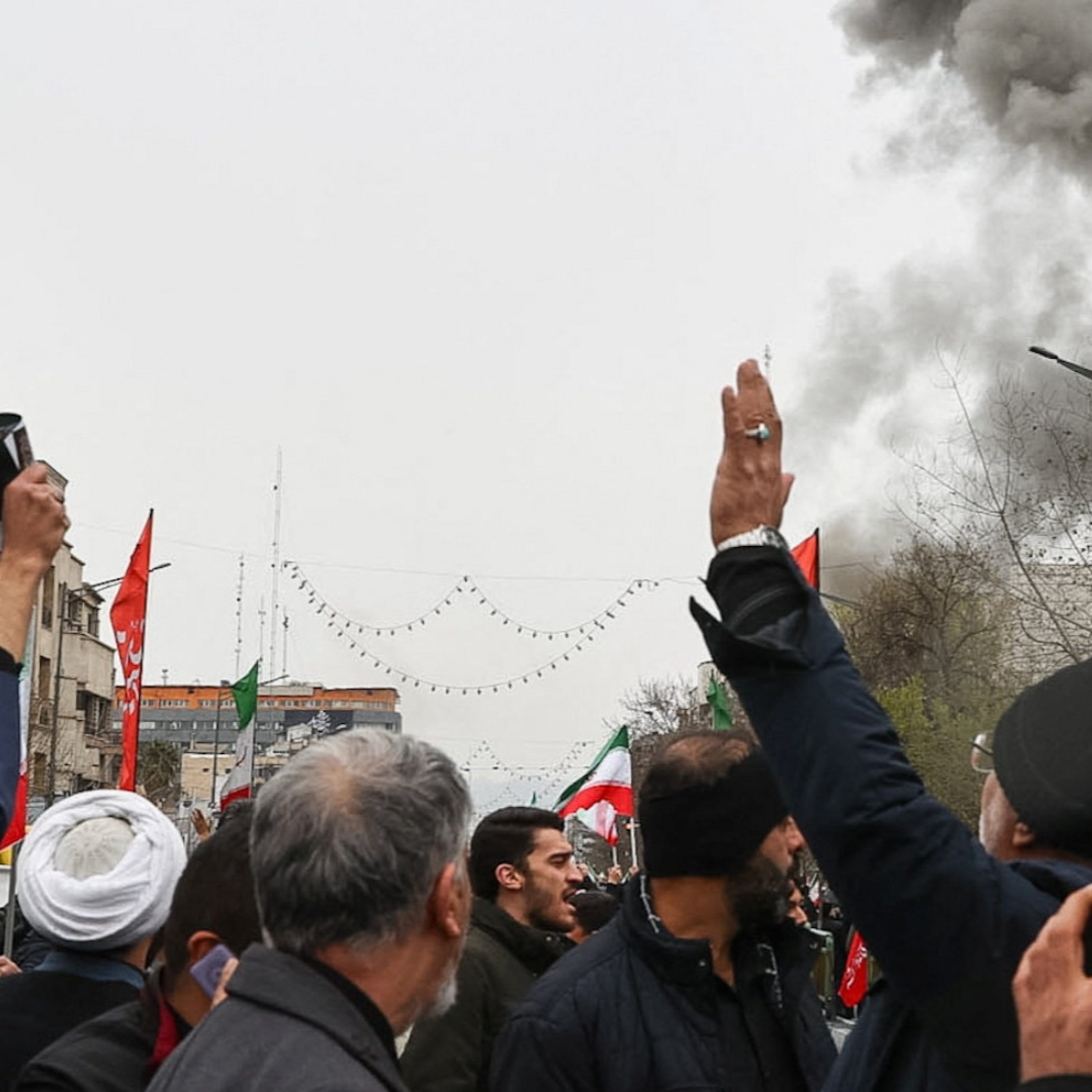
Global News Podcast
Highest daily strike total on Iran, says US
00:29:26
Defence secretary Hegseth says US is decimating Iran's military on "busiest day" of war
Loading summary
Transcript1 lines
- [00:00]
A
This BBC podcast is supported by ads outside the uk. If you work in university maintenance, Grainger considers you an MVP because your playbook ensures your arena is always ready for tip off. And Grainger is your trusted partner offering the products you need all in one place, from H VAC and plumbing supplies to lighting and more. And all delivered with plenty of time left on the clock so your team always gets the win. Call 1-800-GRAINGER visit grainger.com or just stop by Grainger for the ones who get it done. When you manage procurement for multiple facilities, every order matters, but when it's for a hospital system, they matter even more. Grainger gets it and knows there's no time for managing multiple suppliers and no room for shipping delays. That's why Grainger offers millions of products in fast, dependable delivery so you can keep your facility stocked, safe and running smoothly. Call 1-800-GRAINGER click granger.com or just stop by Granger for the ones who get it done. This is the Global News podcast from the BBC World Service. Hello, I'm Ankar Desai and at 16 hours GMT on Friday 13th March, these are our main stories. As the bombardment of Iran continues, the American Defense Secretary has said the US plans to to carry out more strikes today than on any other day so far. There's growing criticism in Europe of Washington's decision to ease sanctions on Russian oil in a bid to counter rising prices linked to the war with Iran. Also in this podcast Hi there, how are you today? Good. What's something you love to see? A unicorn. Unicorns are magical creatures. Calls for tighter regulation around children's toys powered by AI. And Fred Warburton, who's a visually impaired skier, described the conditions on his run earlier in the week as like a Slush Puppy. So it is causing some difficulties on the slopes. Concern as a lack of snow impacts this year's Winter Paralympics. As the war with Iran reaches the two week mark, the US says it and its ally Israel are carrying out their busiest day of missile strikes on the country, including the capital Tehran. The latest strikes coincide with a pro government rally marking Quds Day, the last Friday of Ramadan, during which thousands chanted Allahu Akbar and Death to America. Speaking at the Pentagon, the US Defense Secretary Pete Hegseth was was defiant. The United States is decimating the radical Iranian regime's military in a way the world has never seen before. Never before has a modern, capable military which Iran used to have been so quickly destroyed and made combat ineffective. Devastated, we said it would not be a fair fight. And it has not been. As I stated during our first press conference on day two. That was ten short days ago. The combination of the world's two most powerful air forces is unprecedented and unbeatable. Frederick Plaitjen is CNN's senior international correspondent who has just been to Tehran. One of the things that really stood out is that when you were in Tehran, even in the hotel that we stayed in, I would say there was never a time of more than two hours without hearing an airstrike. And a lot of them were big, they were heavy, some of them shook the walls. And then you could see those big plumes of smoke over the city. And. And I think one of the things that we felt when we were on the ground is that there was really no time and no place where you felt safe. We went to one strike site where the strike was less than 24 hours ago, and there. There was a lot of anger towards us. There were people still clearing the debris. There were people trying to salvage their belongings from a residential building. And there. There was definitely a lot of anger for us, sort of them feeling that we represented Western media and the west in general. And of course, being US media made it even more difficult. So, yeah, I mean, there's a lot of fear, I would say, right now amongst many people, and there's that feeling of never being able to calm down because there really isn't any place in the city right now that feels totally safe. There's no air raid sirens, there's no real bunkers, no real shelters. So that definitely makes it difficult. Fred, what seems to be happening now is a greater targeting of the kind of repressive abilities of the state, perhaps both the individuals and perhaps the fixed posts as well. Did you get any sense of how feasible that is when it comes to properly destroying the ability of the regime to carry on? I think it's certainly something that poses a major challenge. I mean, one of the things that stood out to us was the amount of security forces that were deployed on the ground. And these aren't people who are necessarily in uniform. You have that as well. You have checkpoints that pop up very quickly, heavily armed people searching, cars, cars, groups on motorcycles going around. But what you also have is a lot of people who mingle in the crowds, in plain clothes. And especially when you went to some of the larger events that were organized by the government, the amount of security forces that were on the ground there and that were really inside the crowd was huge. And it did stand out. The amount of security forces that they still have, the layers of security forces that they have, the amount of checkpoints that they can put up, the, the intelligence services that they have. It's a gigantic apparatus. And it certainly seemed to us as though that apparatus was still very much functioning and very much in control. Frederick Bleichen, speaking to Justin Webb. Israel is clearly hoping that the war provides an opportunity to permanently damage the armed group Hezbollah, which is based in Lebanon and attacks Israel from there. The cost for Lebanese civilians has been huge and is getting bigger. The the Lebanese authorities say Israel has killed more than 600 people and displaced more than 800,000 since the latest conflict began. And overnight, Israel told people in a new part of southern Lebanon to leave their homes. Klina Khatib is a Middle east analyst at Chatham House. What's her view of Israel's approach? This is a strategic campaign by Israel. They want to get rid of the threat of Hezbollah once and for all. And they're not going to stop until Hezbollah's military cap basically eradicated. And actually, when Hezbollah and Israel signed a ceasefire in November 2024, Hezbollah did not abide by the terms of the ceasefire. It continued to try to smuggle weapons into Lebanon. It continued to refurbish the weapons that had been damaged by Israel, and it continued to move its fighters inside Lebanon. And that's why Israel was striking these Hezbollah targets in where these activities were happening over almost a year and a half. And what is happening now is that Israel has accelerated the campaign that it was doing more or less gradually during that period of time. The Lebanese government wanted to implement the terms of the ceasefire fully and therefore called on Hezbollah to disarm. But Hezbollah, as I said, had been refusing. And that's why recently the Lebanese government took a further step, which ban all of Hezbollah's military activities. But Hezbollah is still not complying. So currently the Lebanese government has a rogue actor inside Lebanon. But the problem is the Lebanese government itself. The Lebanese state is not strong enough to be able to prevent Hezbollah from conducting these military activities. And so even though the government will not want Israel to be attacking all over Lebanon at the same time, they themselves do not have the capacity to be able to stop Hezbollah. So it's a very de facto scenario that we're seeing. Middle east analyst Lina Khatib. Well, despite the US claiming that Iran's military is being decimated, Iran has still been able to strike at targets in neighboring Gulf countries. As we heard from our correspondent in Dubai, Nick Bake, a number of countries in the Gulf say that they've still been subject to attack from the Iranians from across the water. I can tell you what happened here in Dubai. There was an alert early this morning around sort of 7ish. And what we saw was the drone trying to strike the financial district for a second time in two days. There was an interception, there was debris that fell, but the authorities are saying that no one was injured. And this was the same case as yesterday. But across the border to our east in Oman, two people were reported to have been killed by a drone attack there where there was debris again falling to the ground. Two people dying as a result of that. And Saudi Arabia saying that they stopped more than 20 drones today that were on their way to different parts of the country. That a time when the British Foreign Secretary, Yvette Cooper was making a visit there, showing solidarity with the Saudis, she said, and also the wider region. What's the position, Nick, of the Gulf countries towards the war at the moment? Because it feels as though they haven't retaliated in an aggressive manner just yet. You're absolutely right. I think they've been absorbing all that Iran has been throwing at them and of course worth pointing out that these are countries which have links with the United States, whether it's through commerce or in particular through hosting military bases or allowing the Americans access times to use their facilities. And what the Iranians have done is hit back at them. So far there hasn't been any explicit criticism from the Gulf states of a the Americans for starting this war and dragging them into it. But there certainly has been criticism for Iran saying that what they're doing is completely destabilizing the whole region. But they haven't gone one step further or many steps further in launching their own overt military operations. I think they're trying to keep their head down and hoping that this can sort of be stopped in some way without them having to escalate and start hitting out at Iran. Nick Beek reporting. A decision by the United States to temporarily lift sanctions on Russian oil exports has caused consternation among many of Washington's allies. The US Said the move was designed to bring down global oil prices, which have soared in reaction to Iran's decision to close the vital Strait of Hormuz to through which 20% of the world's oil passes. The lifting of sanctions has been criticized by Ukraine and has featured in President Zelensky's talks with his French counterpart. In Paris today, diplomatic correspondent James Landau is following developments from the Ukrainian capital of Kyiv. Their talks have been dominated by the war in the Middle east and the potential impact on the war in Ukraine. And very specifically, both leaders making it very, very clear that they opposed the US Decision to ease temporarily some sanctions on Russian oil sales. President Macron emphasized that the American decision, the waiver, was temporary and limited, but he said very explicitly there was no justification for lifting sanctions on Russia. As for President Zelensky, he made it very, very clear that this would have a negative impact on Ukraine, saying, you know, this one concession by the US would in his estimation, give Russia about $10 billion worth of revenue. And he said, quote, this certainly does not help peace. In terms of the U.S. proposals for new three way talks then, between the U.S. russia and Ukraine, how likely are these to go ahead in a meaningful way? Because Ukraine will not want to feel left out again and have their conflict put on the back burner, so to speak. Well, there are proposals for these talks to resume sometime in the next couple of weeks, but there's nothing definitive nailed down in the diary as yet. Occasionally dates get suggested and then they tend to slip. There was a meeting earlier this week between key Donald Trump officials in Miami with a key Russian official. But what was interesting about that was that there was very little briefing that came out of that meeting to get a sense of what was being discussed. I think, yes, there is a fear, a general fear here in Kyiv that the war in the Middle east is overshadowing efforts to find peace in this part of the world after Russia's invasion. But, but there's also just a fear that potentially American interest bandwidth could be squeezed and that might have an impact as well. But at the same time, those talks need to continue. But so far they've all been pretty technical and largely by analysts considered to be essentially performative because at the moment, most analysts conclude that Russia at the moment has no intention of ending its conflict without any kind of resolution apart from Ukraine's capitulation. And that's very, very unlikely to happen. James Landale, and you can hear more from James on our YouTube channel. Search for BBC News on YouTube and you'll find Global News Podcast in the podcast section. And there's a new interview out every weekday. So far, most polls have showed that broadly the majority of Americans do not support US Strikes on Iran. But clearly, as the war goes on and as the picture of the impact and consequences evolves, the so too will public opinion about the merits of Operation Epic Fury. The military action has already been given a bombastic name by the Trump administration, but the White House is also Trying to sell it to voters through social media. Videos that splice real footage of the war with clips from blockbuster action movies and video games. They've been viewed millions of times on platforms like TikTok and X. Wake up, daddy. Son. Welcome home, son. Strength and honor. Strength and honor. Why will you do without freedom? Maverick Simba. You can't conceive of what I'm capable of. Roger Stahl is professor of communication studies at the University of Georgia and director of the documentary Theaters of War. Leila Nathu asked him for his first impressions of those social media videos. They're a mixture of AI slop rah rah sizzle reels of missile strike footage with meme references to video games and Hollywood movies, one liners from various people ranging from Walter White to Superman to Iron man and Transformers. I mean, my initial reaction is this is the most stupid and profoundly juvenile thing that I can imagine coming from the White House itself, which has not happened before. We kind of expect this kind of thing to be floating around the Ethernet, but not coming from official sources. The White House does have form in terms of promoting their policies in this way. They did videos on the ice, immigration raids, didn't they, that tried to promote them in this way. Use popular music. It's clearly something they think is resonating with people in terms of a way to get their message out there. Yeah, the Department of Homeland Security pioneered this way of communicating with the public. Highly stylized stuff, often references to popular culture, the use of even colloquial language and even profanity. Highly bombastic, designed to make its way around the Internet as fast as possible with as much collateral damage in the information space as possible and generating as much chatter as possible as well. This is the product of Stephen Chung, who runs the White House Communications, and he is really good at this method that they're developing, which is, you know, to shock the conscience of the nation and to get as many views as possible. I mean, these things have really gotten a lot of attention. And I think that's the point. Consider that only 25% of Americans, and maybe that's ticking up a little bit initially at least, supported this conflict. So you've got just a fraction really of the mega base that is on board with this. The economy is tanking, gas prices are up, school children are being killed. They're spending a billion dollars a day. None of this looks great. And the White House is really backpedaling. And I think this is part of the strategy which is distract, distract, distract. Put out these videos as fast as possible. Get as much chatter going about the videos as I think the main strategy is to get people to take their eye off the ball, which is this disastrous policy. Professor Roger Starr from the University of Georgia in the US still to come, in this podcast, we hear from the two contenders in France looking to become the next mayor of Paris. We've come a long way. Pollution is done by 40% in 10 years. What the city needs is organization. It needs the right mix of transport, not chaos. When you manage procurement for multiple facilities, every order matters, but when it's for a hospital system, they matter even more. Grainger gets it and knows there's no time for managing multiple suppliers and no room for shipping delays. That's why Grainger offers millions of products in fast, dependable delivery so you can keep your facility stocked, safe and running smoothly. Call 1-800-GRAINGER Click grainger.com or just stop by Grainger for the ones who get it done. This is not the future we were promised. Look, held that up for a tagline for the show from the BBC. This is the Interface, the show that explores how tech is rewiring your week and your world. This isn't about quarterly earnings or about tech reviews. It's about what technology is actually doing to your work and your politics, your everyday life and all the bizarre ways people are using the Internet. Listen on BBC.com or wherever you get your podcasts. Researchers at Cambridge University in the UK are calling for tighter regulation of AI powered toys after conducting one of the first tests in the world to investigate how under fives interact with the tech. Here's an example of the kind of toy we're talking about. Maya, who's three, is testing the AI powered toy named Gabo. Hi there. How are you today? Good. What's something you love to see? A unicorn. Unicorns are magical creatures. If you could imagine riding on a unicorn, where would you go? That's okay. There are other, perhaps less impressive examples. Here's a toy's response, voiced by a producer, to a child saying, I love you. As a friendly reminder, please ensure interactions adhere to the guidelines provided. Let me know how you would like to proceed. And to a child saying, I'm sad, this is how an AI toy responded. Don't worry, I'm a happy little bot. Let's keep the fun going. What should we talk about next? I've been speaking to our technology editor, Zoe Kleinman. I began by asking her, what exactly are AI toys? Essentially, they're cuddly toys. So this one, Gabo, looks a bit Like a cuddly Nintendo Game Boy, if you remember those, and I'm sure toddlers don't. And inside is a sort of mini computer, if you like, that contains access to a chatbot. So you speak to it and the chatbot responds. As you heard there, it's designed to be very upbeat. The only thing it can do is talk to you. It doesn't have a screen and it doesn't move. And while it is programmed to try and encourage imaginative play, as you heard there, it is quite full on. I spent a bit of time with it, and within a couple of minutes I was sort of exhausted by having to think so hard about all of these very random questions it was throwing at me. But the point is that there really isn't a lot of research at the moment into how little children interact with AI, even though these toys are already on the market and they're aimed at children aged three and above. And what the researchers said they found was the parents were quite interested in its potential to help children develop their communication and language skills. But as you heard there, because the interactions were not always very natural, the got a bit confused and a bit frustrated by it in the end. So what the researchers are saying is that actually we need to look at these toys now. We need a bit of regulation around, you know, what is and is not helpful for children of that age in terms of the experience that they're getting from this toy. And they've also suggested that if parents want to buy them, that they keep a close eye on what their children are doing with them, how often they're using them, what they're saying to them and what it's saying back to them? Yeah, you touched upon it there as well. In terms of harms, what could they have beyond the frustration of not getting the response you want? And furthermore, are there any recommendations for what should be done about it? Under 5 is quite a critical developmental age for children in terms of how they're learning to interact with the world around them. And that includes adults. And so the idea is that obviously if you tell an adult, a parent, that you love them, you don't expect them to come back to you and say, you know, please stick within my guidelines. That's just not a natural response. And I suppose the concerns are that what it's teaching them at this crucial stage is not actually how humans interact with each other in the real world. And there are also some concerns. And again, this is what research needs to find out about, you know, how addictive these toys are. Would children choose to play with them rather than play with humans. What is the balance between having a toy that you like and having a toy that becomes something that's, you know, a little bit of an obsession? And I guess also a dilemma for the makers of the toys is this thing about affection. You can't really have AI telling it it loves you. But on the other hand, saying that to a four year old just means nothing does. It feels like a modern day version of the Tamagotchi, if you remember one of those. But yeah, yeah, it's as exhausting actually. The BBC's technology editor, Zoe Kleinman. France votes on Sunday in its six yearly city and town elections. And as ever, eyes are on the capital to see who will be the next mayor of Paris. The Socialists have led a left wing alliance for the past 25 years, during which perhaps their most eye catching achievement has been to bring down the level of car use in Paris. But will that be enough to see off the challenge? From the right, Hugh Schofield reports on what used to be Paris. Riverside Drive. A jazz band is playing in the late winter sun. People are out strolling. There are a few bikes and scooters. It's hard now to recall the time just a few years ago, in fact, when this was one of the city's main east west thoroughfares and clogged with traffic. The outgoing mayor Anidalgo's war on the car has produced some very visible results. A proliferation of bike lanes, the old rat runs that drivers used to take through the side streets, all closed off. For many Parisians, it's been a boon. The city is designed for people, not for cars. So I don't mind her making the city more walkable, even if it involves removing cars out of the roads. Before there were cars everywhere. Now we're walking on the roads. It's lovely. So calm. In the upcoming election for city mayor, the continuity candidate is an Hidalgo's former deputy, Emmanuel Gregoire. I caught up with him as he toured a poor area near the Paris ring road, hearing from locals about their continuing worries about pollution. We've come a long way. Pollution is done by 40% in 10 years, but it's still above norm set by the World Health Organization, especially in areas next to main roads. So the fight has to go on if we want to protect people's health. But of course we take great satisfaction from the revolution which we've led. The Socialists and their allies are pretty proud of their greening anti card achievements of recent years. But of course, in Paris, not everyone sees that in the same light. Leading the challenge from the right is this woman, Rashid Adati, here in a much commented upon social media video, out with the bin men collecting the rubbish and promising to make Paris cleaner. Rashida Daddy was Francisco as Culture minister until a couple of weeks ago. An outspoken right winger of North African origin, she's a well known figure in French politics. In her bid to be the next mayor of Paris, she's careful not to pose as the pro car candidate. She knows most people like the bikes. Her line is that the socialist anti car reforms have been ill thought out and punitive for businesses and families. The left wing Paris administration has set pedestrians against cyclists and cyclists against cars and cars against buses. But what the city needs is organization where everyone has their own lane. It needs the right mix of transport, not chaos. Rashida Rati has her own difficulties. She faces a trial for corruption in September, which doesn't help her campaign. But the Socialists have been in power now in Paris for a very long time. 25 years before that, the Conservatives held the city under Jacques Chirac for 24 years. Maybe the wheel is about to turn once again. Hugh Schofield reporting. NASA says repairs have put its Artemis lunar program back on track and the first crewed mission to the moon in more than half a century could blast off as soon as the beginning of next month. Artemis 2 will take four astronauts on what the space agency calls a lunar flyby. A launch date was set last month but was delayed by technical problems. More details from our science editor Rebecca Morrell. NASA's mega moon rocket has spent the last few weeks in the vehicle assembly building in Cape Canaveral in Florida. Engineers have been working to fix a helium leak which they say they've managed to repair. The 100 metre tall rocket will now be rolled back out to the launch pad next week. The earliest it can blast off is 1 April, but work needs to be successfully completed before NASA makes the final decision whether to go ahead with this date. This will be the first time the rocket has flown with astronauts on board and NASA has emphasized the risks involved with the moon mission. The chair of the Artemis mission management team said NASA were thinking about everything that could possibly go wrong and putting together controls to manage these risks. Next are the Winter Paralympics, but what are they without snow? Well, that is something that athletes in Italy are pondering because there has been no snowflake since the Games began a week ago and daytime temperatures in Celsius have reached double figures. Now it's starting to have an impact on Some of the events. So how warm has it been? The BBC. Sally Hurst is there. It has been very warm in Cortina, that's for sure. We haven't needed jackets every day. It's jumper weather today. There's been sort of a light sprinkling of snow in some places in the mountains over the week, but mainly no snow at all. This is a resort, though, where they're used to having these conditions in March. And the organizers of the Games point out that the conditions here aren't that dissimilar from those in Beijing four years ago or in Pyongyang before that. They do say, of course, that global warming, climate change is an issue that they have to consider going forward in the long term. But, yeah, we've spoken to some athletes, like Fred Warburton, for example. He's a visually impaired skier and he described the conditions on his run earlier in the week as like a Slush puppy. So it is causing some difficulties on the slopes. Earlier today, in the SIT ski competitions, 15 of the 37 athletes taking part crashed out, and some of them are very experienced skiers who you would have expected to have been able to complete the course. So the snowboard competition has been brought forward a day because of a forecast of rain. So, yes, it is causing some difficulties, but perhaps as to be expected in March. Sally Hurst in northern Italy. Now, hopefully you enjoy listening to the global news podcast, but what if it was actually made by AI? Well, a new podcast on the Epstein Files has been produced entirely in that way. Sean Farrington has been talking to the technology journalist James Ball, who's heard some of it. So is it any good? It is very good for a podcast that involves no humans, but very bad as a podcast. Overall, it starts out quite good because the early episodes have a bit of a structure and you've got this sort of novelty at first as well, where you realize, hey, this actually, if you're only half listening, it sounds fine. And then if you actually try and follow it, a lot of things are missing. There's not really good episode arcs. They introduce lots of ideas that aren't there. And when you start getting to episode 139 or so, it's just sprawling, it's just listing things. But can you envisage a world where those criticisms you have of it actually just a little bit more focus, using the technology that's out there to focus on those problems can end up with a more highly produced but still relatively low cost compared to having lots of humans involved. Podcast that actually would sort of be up there with the standards you'd expect of storytelling like that. So it's a drastic difference in effort. This thing took about 16 hours to code from the guy behind it, Adam Levi, and it's got 139 episodes. An eight episode narrative podcast would take a team of humans months. I think if you were getting into something where you think about the big hit podcasts, the serials of the world, that kind of thing, they really have very strong characters, very strong arcs, and it's often about meeting the characters in the middle of it. An AI podcast's never gonna give you that, so I think they could scratch an itch. I don't think they're gonna replace the human made ones. Do you know what you're listening to is actually in the files? Do you feel like it'? It was true. They've really tried to back it up. Each episode links to the relevant documents it's put in. The guy seems to be quite cautious as a journalist. If I was the person who put this out, I'd be terrified, because you are responsible for everything your AI podcast says and there's some quite rich people in there. So if it makes a mistake, he could be on the wrong side of a lawsuit. I think however careful you try to be in it. For an AI podcast, this strikes me as quite careful. It's never going to be as careful as something with editorial standards or with lawyers and so on. So I'm not sure how reliable it is, but the bits I've listened to were better than I expected. James Ball. And that's all from us for now. If you want to get in touch, you can email us@globalpodcastbc.co.uk and don't forget our sister podcast. It's called the Global Story, which goes in depth and beyond the headlines on one big story. This edition of the Global News Podcast was mixed by Darcy o' Brie and the producer was Niki Verico. The editor is Karen Martin and I'm Ankur Desai. Until next time, goodbye. This is not the future we were promised. Like, how about that for a tagline? For the show from the BBC, this is the Interface, the show that explores how tech is rewiring your week and your world. This isn't about quarterly earnings or about tech reviews. It's about what technology is actually doing to your work and your politics, your everyday life and all the bizarre ways people are using the Internet. Listen on BBC.com or wherever you get your podcasts.