← Global News Podcast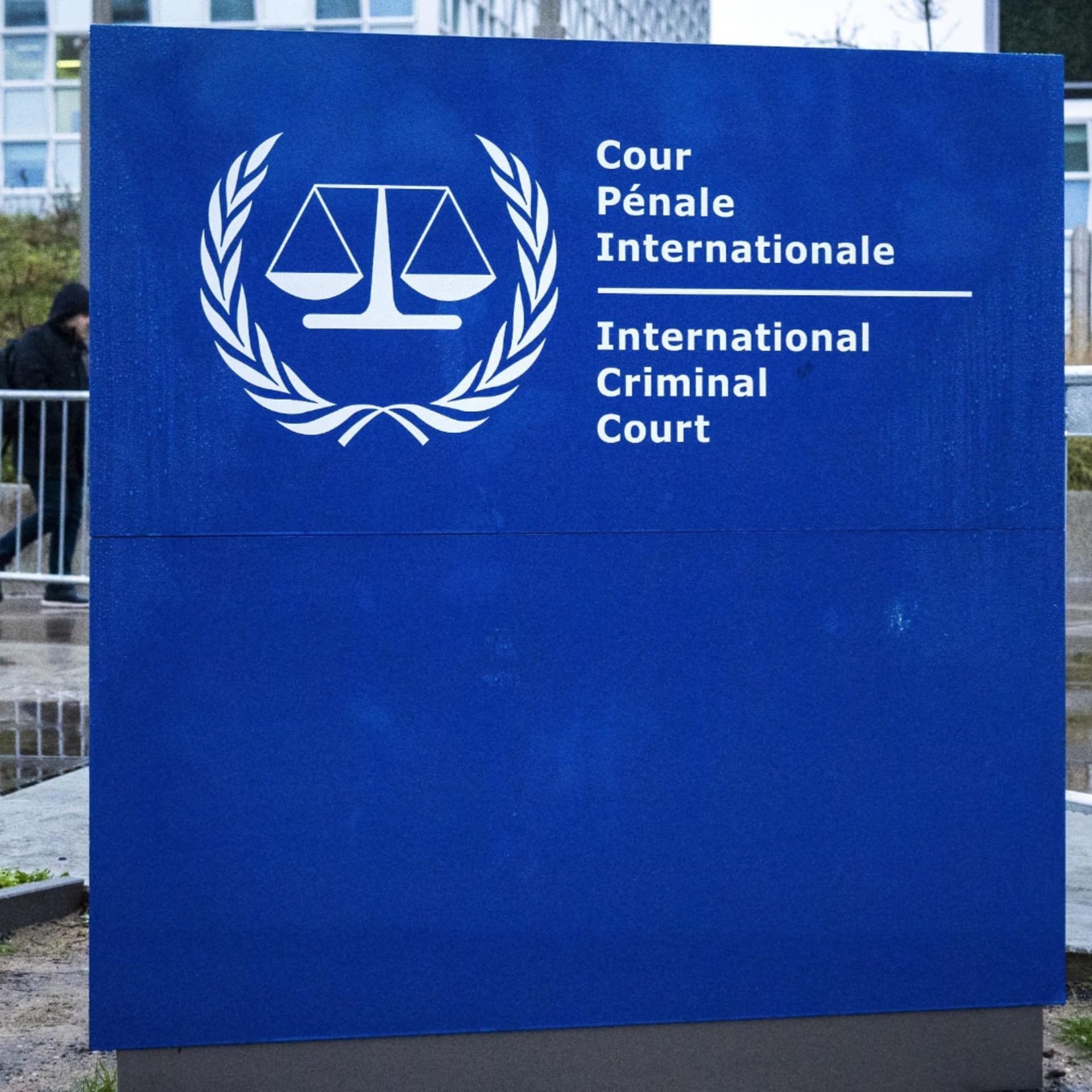
Global News Podcast
ICC judges hear charges against ex-Philippine leader
00:33:14
Rodrigo Duterte is accused of crimes against humanity during his bloody war on drugs
Loading summary
Transcript1 lines
- [00:00]
A
This BBC podcast is supported by ads outside the uk. This is the new Weight Watchers built for real life and real results no matter what mode you're in. Maddie went all in for her big day and lost 33 pounds. Emily lost 85 pounds and hit her goal while still living her life. Weight Watchers gave me the tools and I feel amazing. Join the millions of members and lose weight with the number one doctor recommended weight loss program. I I'm able to live my life and still hit my goals. Lose more@weightwatchers.com Weight Watchers now offers access to affordable GLP1s. Weight Watchers has everything I need from weight loss medications to nutrition support and help with my side effects. With our program, our members are losing more weight with expert nutrition and side effect support. Weight watchers prescribing GLP1 medications. It's been life changing. Better results, expert support, lose more weight, make it last. Get started today for as low as $25@weightwatchers.com this is the global news podcast from the BBC World Service. I'm Janak Jalil and at 16 hours GMT on Monday 23rd February. These are our main stories. The International Criminal Court is determining whether the former Philippine President Rodrigo Duterte should stand trial for crimes against humanity. The UN appeals for more humanitarian assistance to help 200,000 civilians fleeing violence in South Sudan. Australia's Prime Minister says he supports removing Andrew Mountbatten Windsor from the royal line of succession. Also in this podcast the best thing for our business if people love movies and television and the best way you love movies is to watch them at home, in the theaters, wherever you want to watch them. We talked to the boss of Netflix about the future of entertain. People in positions of power cannot escape the rule of law. Those were the words of the prosecutor at the International Criminal Court as a long awaited hearing began to determine whether the former Philippine President Rodrigo Duterte should face a full trial. The 80 year old is accused of crimes against humanity over an anti drugs crackdown which he oversaw while he was in office in which thousands of people were killed. Duterte has spent nearly a year in a Dutch detention center after being arrested in Manila and flown to the Hague. His decision not to attend the hearing has angered the relatives of those who died with dozens of protesters outside the ICC as the hearing began. We will be here in the icc. We'll be here every step of the way until we get justice, until the police chiefs are there, until. Until we see the changes that we want to see in the Philippines. But Mr. Duterte's lawyer says he maintains he's absolutely innocent and the charges against him are politically motivated. Howard Johnson, who was the BBC's correspondent in the Philippines at the time that these alleged crimes occurred, was at the Hague. I saw bodies on streets as a result of this drug war policy. I interviewed Rodrigo Duterte in 2017 and asked him about these so called extrajudicial killings. And he said to me in a very fiery exchange that he said that he wasn't responsible for the killings themselves. He said that ordering the killing of drug addicts didn't mean that he was culpable for the deaths that we were seeing on the streets. I met his right hand man, Senator Bongo, who crushed my business card in his hand. That was the reputation of the BBC in the country at the time. And we also had an exchange once between a lot of his supporters online after I made a documentary about Rodrigo Duterte in which I received hundreds of messages threatening all sorts of things like death threats following me on the streets. So this was a very threatening time to work in the country as a journalist. Howard Johnson, also at the Hague is our correspondent Anna Holligan who gave us this update shortly before we recorded this podcast. We have been hearing from the prosecution in court. They said that the killings weren't random or spontaneous, but part of a widespread and systematic attack against the civilian population. So this is all about Rodrigo Duterte's so called war on drugs. The prosecution have been outlining their case. They said that he was at the heart of a common plan to neutralize individuals thought to be involved in drugs. One of the first things he did after becoming mayor of Davao City, they said was set up the devoured death squads and instructed them to kill suspected drug users and dealers. Then when he was campaigning to become president, he said that he would carry out a similar policy, ordered the military to hunt down and kill drug criminals. And then as president, they said he rolled out this campaign nationwide. It was called Double Barrel and it was an effort to carry out extrajudicial killings that the prosecution said he wasn't prepared to give those suspected of committing crimes the same opportunity as Rodrigo Duterte, the former president of the Philippines has today in the Hague, which is to experience due process. So they've been outlining case. Right now his defense team are presenting their opening statements. Rodrigo Hart is not here. He has submitted a letter, I have a copy of it here to the judges saying that he is too tired, he's too old to take part in legal proceedings. He said he will forget within minutes. So that's part of the defense's argument that he's at 80 years old, suffering from dementia. But these claims that he's not able to follow the proceedings have been rejected by the judges here. They say he's fit enough for this, these hearings at least to go ahead. And the families of those who died during that so called drugs war. He's been called a coward by some of them and this is very frustrating for them because they say they've been waiting a long time for justice. Exactly. Years. And I spoke to one relative on the way in and she said that she has been waiting almost her entire life for this moment to see him before the judges. And in fact, that was one of the things mentioned by the victim's representative, that in refusing to appear in court or even via video link from his detention center not far from here, he has done them out of some access to justice. There was also a very graphic image shown this morning of one of the victims in his partner's arms dead after one of these alleged killings. So much more graphic testimony to come over the coming days here at the icc. Anna Holligan, Humanitarian groups in South Sudan say that intensified fighting between government and opposition groups has displaced hundreds of thousands of people, with many of them in dire need of medical care or food assistance. The renewed clashes between the South Sudanese army and forces loyal to the suspended First Vice President Riek Macha have prompted concerns that the world's youngest nation and one of its poorest is on the brink of sliding back into another full blown civil war. Macha is currently on trial in the capital Juba on charges of murder, treason and crimes against humanity, something he denies. The violence has severely affected the delivery of essential humanitarian assistance. Bol Rambang is a community organizer who also runs a local radio station. He sent the BBC this voice note on Sunday. At the moment, the humanitarian situation is extremely critical. There is no humanitarian presence in Yakwesh Buma, no food distribution, no mobile clinics, no nutrition services and no clean water supply. In the last 72 hours alone, 20 days are being confirmed, including cement children. The main causes are anger, exhaustion, untreated illness, infected wound and lack of self drinking water. Without immediate humanitarian intervention, mortality is expected to increase. The UN's humanitarian chief, Tom Fletcher has been visiting South Sudan from where he's been speaking to Rob Young. I was up in Chongle State and Upper Nile State as well and I met many of those displaced by conflict, people who fled their homes in the last few, few days and who are coming to us are nothing actually. You've got 6 million people hungry across South Sudan. You've got 7 in 10 people needing help right now and they're telling horrific stories. You know, I met a 70 year old grandmother who's having her limbs amputated because of bullet wounds. I held a child, an 18 month year old child with bullet wounds in his, in his legs as well. So you've got high hunger levels, you've got cholera, you've got immense amounts of misery and hardship and also immense amounts of sexual violence. And one trend recently is a real upsurge in violence against women and girls. When you saw those victims, did you get a sense that they were caught up in the violence or that perhaps they were being deliberately targeted? So it's very hard to tell. Many of them are injured as they're fleeing their homes, many of them are hit in airstrikes and so they have burn wounds. But the, you know, the wounds and of course these are civilians that I'm meeting. The wounds, them look quite methodical. You know, if someone is shot in both, in both their calves, you know, it's quite hard to do that by accident. So certainly in the, in the hospitals we're seeing evidence, I think of lots of deliberate targeting of civilians. And so, you know, we've got to be out there. What we find is that nearer the UN bases, people feel a bit safer, but ultimately they won't feel safe while this conflict is raging. You know, I'm meeting and met a lot of grandmothers who were carrying their grandchildren because their own kids had all been killed or abducted. So you've got tragedy after tragedy after tragedy. You've got people surviving, just eating the leaves from the trees and saying that they haven't eaten properly for days. It's truly grand. People are eating leaves from the trees. There is so little food. That's right, that's right. They've got these la lob trees they call them, and they get the leaves down and they, they boil them up and they, they showed me what that looks like, you know, virtually no nutritional value at all. So one of the things we're trying to do, and one of the things we've done in the last couple of days with this visit is to open up new access routes for our aid convoys, for our aid to get to these civilians in areas that we weren't able to reach even a week ago. So we're getting now to areas that weren't getting enough help and we're surging in the food and the medicine and the shelter, but it's just not enough because, you know, we're facing massive cuts and the needs here are just overwhelming. Sudan, just to the north, often is referred to by many humanitarian workers as a forgotten conflict. How do you characterize the conflict in South Sudan? Sudan and I visited Darfur twice in the last year to try to make it less of a forgotten conflict. You know, it's the epicenter of violence right now. Over 20 million people needing help. But the reality for South Sudan is it's the forgotten conflict. The forgotten conflict. At least Sudan is getting some Security Council attention. It's getting some attention from key member states, from world powers. I've just been in Washington for a pledging conference for Sudan, whereas South Sudan is getting, I'm afraid, none of that. The UN humanitarian chief, Tom Fletcher, speaking from South Sudan. The Australian Prime Minister, Anthony Albanese, has told Britain that his country would support any proposal to remove Andrew Mountbatten Windsor, the King's brother, from the line of royal succession. The UK government says it's considering passing a law to do this after Andrew's arrest last week, but it needs agreement from other Commonwealth countries where King Charles is head of state. The former Prince is also facing allegations from ex government officials that he charged British taxpayers for massages and excessive travel costs when he was Britain's trade envoy. Nick Johnson told us more about the significance of Australia's comments. I think they are extremely significant. I mean, in order for Andrew to be removed from the line of succession, it would have to become law in all 15 nations of which the King is sovereignty now outside of the uk. Australia is now the first to say it would support such a move, and it's done so very publicly. In that letter, Anthony Albanese described allegations against Andrew as grave and ones that Australians take very seriously. Here, though in the uk, we're unlikely to get a significant response from the UK government regarding Andrew's future while that police investigation is ongoing. And, of course, Andrew has consistently and strenuously denied any wrongdoing. And, Nick, tell us about these latest allegations from former government officials. Yeah, these are claims which have been made by two former civil servants who want to remain anonymous. They say that while Andrew was the UK's trade envoy, so that was between 2001 and 2011, they say he used taxpayer money to claim off expenses for things like massages, as well as what's been described as and unnecessary travel experiences and costs for his entourage. One former official actually said that staff were reluctant to challenge Andrew's expenses claims and that his trips were rubber stamped rather than given any scrutiny. Now, there's no suggestion that this behaviour was unlawful. We've put these claims to the former prince. He's always denied any wrongdoing in his links to Epstein, but also in his role as trade envoy. Nick Johnson. The first takeover battle for Warner Bros. Discovery has enough drama to make it onto the silver screen. But it could also have real repercussions for the future of cinema. The boss of Netflix has told the BBC that its bid for Warner is better than a rival one from Paramount, despite concerns about its impact on cinema going. Last December, Warner Brothers agreed to a takeover offer of $83 billion from Netflix for some of its assets. But Paramount there made a rival offer of 108 billion billion. Netflix CEO Ted Sarandos told the BBC that if his deal was successful, it would expand the entertainment industry. The reason why you would do a Netflix deal versus the spare mod deal, our deal is growth. We've been growing and growing and growing this business since we started. We've been growing. Like in the UK, we spent $6 billion on original programming in the UK since 2020, we have created 50,000 jobs in this economy. So in the. And the other model, in the Paramount model, it's the classic horizontal media mergers that are always bad for consumers, always bad for creators, because basically what they're just taking is two studios and collapsing them to one. There's five major studios left in Hollywood. If the Paramount deal were to go through, it would be four. Our business correspondent Theo Leggett told us what the aims of the rival entertainment giants were. It's all about clout in a changing media market, really. Paramount Skydance, to give it its full name, is after scale. It wants to be able to compete with the giants of the industry. So that is Netflix. It's also Disney. Warner Bros would give it access to 120 million streaming subscribers from their HBO Max or Max channel, as well as a number of more conventional pay TV channels. Netflix, meanwhile, wants to get access to original content so Warner Bros back catalog as well as the its studios so that it can boost its own movie offerings while preventing rivals from getting hold of them. Because with these kind of mergers, it's preventing your rivals from getting hold of things that's almost as important as having them yourself. And as you heard Ted Sarandos saying there, Netflix claims its deal would lead to a bigger business and Paramount would introduce cuts because these deals are slightly different as well. Netflix wants to buy the more Lucrative parts of Warner Brothers outfits. So the streaming services, the movie studios, that kind of thing. Whereas Paramount, Skydance wants the whole lot, including the conventional pay TV channels, which are seen as more of a declining business. And tell us about the concerns in particular with Netflix in terms of what it means for the future of cinema. Well, Netflix is, its origins are something you come home and you watch in the evenings on your television. What people want to see is some kind of commitment that there will still be movies that you go to the movie theater and see you go to the cinema. So that angle has been played up a bit by Paramount that it was moving away from its traditions. There's very much a denial that that's what's happening, that taking over the studios, for example, would be about producing more original movie content that could be screened first in movie theaters and that kind of thing. And Mrs. Sarandos was asked about in that interview about the intervention of President Trump for him to sack a Netflix board member. Well, yes, you have to remember this whole deal is immensely political. Paramount, Skydance, of course, is run by David Ellison, who's the son of the US Billionaire and Republican Party donor Larry Ellison, who's providing funding guarant for the deal. At one point, Jared Kushner, who's President Trump's son in law, was also involved, though his company has since recused itself. Now, what we saw here was President Trump taking to Truth Social, his own social media network, calling for Netflix to sack Susan Rice. Now, she's somebody who was very closely associated with the Obama administration. She was a diplomat. So he's called on Netflix to sack her because she's seen as somebody too democratic. Mr. Sarandos responded to this by saying, look, look, this is a business deal. It's not a political deal. And he said, President Tom, well, he likes to say things on social media. Theo Leggett. Still to come in this podcast, another team member brushed against a bone that was sticking out of the ground and comes up, what do you think this is? And it's the crest of this dinosaur. We knew we had a new species. The epic journey across the Sahara desert that unearthed birthed a new dinosaur species. This is the new Weight Watchers. It works for members like JoJo, who's learning simple, healthy habits. Sharia, who's making progress with meds, and Kim, who still gets to eat what she loves. For over 60 years, we've helped millions of members find what works for them. Now it's your turn. Watch your life open up. Watch your stories shift. Watch what you're capable of Watch it work get started today@weight watchers.com the new WeGovy pill is now available through Weight Watchers. Powerful GLP1 results in a simple pill at the lowest price available and with Weight Watchers you can get doctor support and personalized nutrition programs. See if you qualify@weightwatchers.com ad not reviewed or approved by Novo Nordisk. If you're the purchasing manager at a manufacturing plant, you know having a trusted partner makes all the difference. That's why hands down, you count on Grainger for auto reordering. With on time restocks, your team will have the cut resistant gloves they need at the start of their shift and you can end your day knowing they've got safety well in hand. Call 1-800-GRAINGER clickgrainger.com or just stop by Grainger for the ones who get it done. You know that goal you set at the start of the year? You can still do it whether you're committed to a thru hike with friends, lifting heavier or simply walking more. It's not too late to stick with it and make your future self proud. Especially with the all in One Nutrition Shake from Cachava because quality nutrition shouldn't be complicated. Just two scoops of Cachava's All In One nutrition shake and you've got 25 grams of protein, 6 grams of fibre, greens, adaptogens and so much more. Plus it actually tastes delicious. No fillers, no nonsense, just the good stuff your body craves. So instead of adding to your backstock of supplements that over promise and under deliver, simplify your progress with just two scoops of the highest quality ingredients. Stick with your wellness goals. Go to kachava.com and use code noose for 15% off. That's kachava.com and use Code Noose K A C H-A-V A.com Code News. Another round of talks aimed at ending the war in Ukraine could be held at the end of the week. That's according to President Volodymyr Zelenskyy's chief of staff. Speaking on the eve of the fourth anniversary of the Russian full scale invasion, Ukraine has been under sustained pressure from President Trump to agree to a deal. Our diplomatic correspondent Paul Adams is in Kiev and he spoke to us about the latest negotiations. We are in the middle of a kind of process at the moment. We've had several recent rounds of negotiations and we think, and the Ukrainians believe that it is likely that we will have another round, possibly as early as Thursday. Once again in Geneva, just As we will be seeing another round of talks involving the Americans and, and the Iranians as well on that completely separate issue. Once again, we're going to see both issues discussed more or less at the same time in the same place. This morning I went to see one of President Zelensky's negotiating team, Serhiy Kiselitsa. He is a former ambassador to the United nations, and he forms part of the negotiating team that is dealing with military matters. And he told me that they are making progress. Here's a flavor of what he had to say. We have in the last two meetings in Abu Dhabi and one meeting in Geneva, kind of an agreement, at least for 90% of the issues. We are not able to deal with about 10% of the issues because they are politically conditioned. And that 10% includes the things we're all very familiar with. The status of the remaining part of the Dombay statistics, the Zaporizhzhia nuclear power plant. Is that essentially what we're talking about? Exactly. Because you need to know where and how the line of contact and line of disengagement goes through the territory. And this line should be. Is already quite long one. Right. And also then you need to know if the sides pull out or they stay where where they stay and things like that. You talk to most Ukrainians and they say they never want to see another Russian in their lives. You are there in the room dealing with representatives of a leader who has tried very hard, at the cost of more than a million of his own men, to subjugate and defeat you. What is that like? I saw much worse, believe me. I spent five years in New York and I told myself, and I also told my staff, you know, don't let the enemy to poison you with their rhetorics, because if you are poisoned, then you are not operational. Donald Trump has put an enormous amount of public pressure on Ukraine. Do you feel that pressure from the Americans in the room? Yes, indeed. There is a lot of pressure on Ukraine. They say, stop the killings, find the compromise. So it's not that you are pressed to the wall by the Americans and they tell you, pull out. But they say we must find the solution. You must find the solution. But how much longer can it really go on? Surely the time has come to strike a deal, however painful and. And unsatisfactory that deal might be. Right. The degree of resilience and determination of the Ukrainian people is very high. Ukrainian army of 2026 is nothing compared to 2022. So there is no reason for us to surrender Ukrainian Negotiator Serhiy Kiselitsa, speaking to Paul Adams in Kyiv. As well as the hundreds of thousands of casualties in Ukraine over the last four years, the conflict has had dramatic consequences in Russia too. Our Russia editor, Steve Rosenberg, traveled to Lipitsk, halfway between Moscow and the Ukrainian border, to see the effect of the war on Russians in the town of Yelets. Walk down Orzhenikidzi street and you'll come to a butcher, a baker and an online shopping collection. Post point. Look up and you'll see a mural. It takes up an entire side of a nine story block of flats. It shows the faces of five Russian soldiers, local men killed fighting in Ukraine. The giant image hangs over this town like the war on Ukraine hangs over Russia. I noticed that passersby are not looking up at the picture. It's as if after four years, for people here, this war is no longer something extraordinary. Irina, who works at the bus station, stops to talk to me. She tells me that the husband of her friend has been killed fighting in Ukraine and her cousin's son and grandson. The Russian authorities do not publish casualty figures for this war, but conversations like this one point to huge battlefield losses. More and more Russians tell me about family, friends or friends of friends who've been wounded or killed in Ukraine. Irina sends aid packages to Russian soldiers on the front line. She doesn't criticise the war, but she is confused by it. In World War II, we knew what we were fighting for, Irina says. I'm not sure what we're fighting for now. Over the last four years, the Russian authorities have come up with all kinds of answers to that question. President Putin has spoken of denazifying Ukraine, demilitarizing it. Russian officials talked variously about defending Russian speakers there, reclaiming historical Russian land, about halting NATO expansion, and about protecting Russia itself from alleged Western plots to destroy it. Mixed messaging in an apartment block across town, it's proving difficult to and complicate it to deal with a leaking pipe in the lobby entrance. There's ice on the floor and on the walls, and the lifts stop working. Ivan Pavlovich complains to me about the water that's trickling down and about his utility bills that are going up. He concedes that life would be easier without a war on. But there's a war at if I were younger, I'd go and fight. Ivan declares the special military operation is excellent. It's just that prices keep rising, pensions go up, but then prices go up even more. So what do I gain? Nothing. In the lobby. The Cold War has begun. Someone is breaking up the ice and disposing of it outside. Not everyone in Russia joins the dots and connects their social and economic problems with a costly war on Ukraine. But many Russians do feel that life is getting harder, and few seem to believe it will get any easier anytime soon. That report by Steve Rosenberg and for more on this story, you can go onto YouTube, search for BBC News, click on the logo, then choose Podcasts and Global News Podcast. There's a new story available every weekday. Now, in our previous edition, we told you about the big winners from the BAFTA Film Awards, including a surprise win for the British actor Robert Aramayo. His film, I Swear, is about John Davidson, a campaigner for Tourette's syndrome, which can cause sudden, involuntary and repetitive movements or sounds known as tics. Mr. Davidson was in the audience and his shout could be heard several times during the ceremony. When two black actors, Delroy Lindo and Michael B. Jordan, went up on stage to present an award, the audience heard Mr. Davidson use a racial slur. The show's presenter, Alan Cumming, apologized. You may have heard some strong and offensive language tonight. If you have seen the film, I swear you will know that film is about the experience of a person with Tourette syndrome. Tourette syndrome is a disability and the tics you've heard tonight are involuntary, which means the person who has Tourette syndrome has no control over their language. We apologize if you were offended. Mr. Davidson left the ceremony partway through, reportedly of his own accord. Oscar winner Jamie Foxx posted that the slur was unacceptable and now the BBC has apologized for not editing out the highly offensive term despite the broadcast being on a two hour delay. Lauren Wyatt was diagnosed with Tourette's when she was 17 and shares her experience condition on social media. What's her perspective on what happened at the baftas? It is definitely a very difficult situation. People have every right to be hurt or upset by this tic. However you feel as a result of that word is valid, but it does not mean that there was malicious intent behind the tic. People with Tourette's do not get to choose our tics. Our tics do not represent our personal feelings or beliefs and I think that's really important to remember. A lot of people's kind of argument against this has been, well, if he said it as a tic, it must be in his vocabulary. My response to that would be that that word is in most people's vocabulary. Being in someone's vocabulary doesn't mean that they use the word it doesn't mean that they've ever said it. And with contextual copro tics, such as the racial slur tic that John had during the performance, you specifically say the worst thing you could say in a situation. Other examples could be saying I've got a bomb at an airport, using homophobic slurs in front of gay people, anything like that, shouting insults at people who aren't conventionally attractive. Like all of those words have the potential to cause harm and to hurt people, but that doesn't mean that there is intent behind it. Only around 15% of people with Tourette's have coprolalia, which is the word for the socially inappropriate tics, including swearing and slurs. And I am a part of that percentage percentage who experiences experiences those tics. I have said very hurtful things as my tics before. They have never once reflected my true feelings. I think that way people seem to think that our tics reveal what we really think, what we secretly want to say and that we use it. I often hear the word excuse. I'm using my Tourette's as an excuse to be homophobic, to be racist. Tourette's is not an excuse. We cannot control it. We can acknowledge the hurt that artics can cause other people, but we can't be held responsible for what we say. I personally, I will always apologise for the hurt that I've caused through my tics. I will always say I am very sorry that that happened. I will offer any support that I can to support the person that it might be said in the vicinity of. But there's nothing I can do to stop it. There is nothing I can do to change it. And I think that two things can exist at once. I think that Arctics can hurt people, but I think that also you've got to remember that this is involuntary, this does not reflect our personal belief. And punishing a touretic person for one of their tics would be like jailing an innocent man for someone else's crime. Lauren Wyatt Deep in the Sahara Desert, palaeontologists have made a spine tingling find a new species of dinosaur, a Spinosaurus with a long horn on its head. The expedition to the remote site in Niger was led by Dr. Paul Serino from the University of Chicago. His team team first discovered fossils at the site in 2019. But it wasn't until they returned with a larger mission in 2022 after the pandemic that they realized the bones belonged to a new species of Spinosaurus dating back about 95 million years. Dr. Serino talked us through his amazing discovery. I'd been to Niger a bunch, but there was one spot I wanted to get to. I found it. It in a 600 page monograph in French, a geologist who had described the heart of the Sahara. And in one line in this monograph in French, he said, I found a dagger shaped tooth. It looks like Carcharodontosaurus. Nothing more was said. There were no drawings, no photographs and the tooth was lost. But there was that line and I couldn't let it go. I tried to get there a couple times, but it was impossible. There were sand seas in between where I was. My chance came in 2019. We come back having found the site but exhausted it. Man walks into our camp through a couple languages. He says he can take us somewhere, but it's farther. So we followed him and he pulls up to this incredible fossil field. Back in the laboratory, those bones turned out to be the jaws of Spinosaurus. And it did look slightly new, but we weren't sure. And so we returned and it wasn't more than an hour when someone came running up to me and said, you got to come and see this. The snout is coming out of the ground. It's our skull. And then another hour or two when another team member brushed against a bone that was sticking out of the ground and comes up, what do you think this is? And it's the crest of this dinosaur. We knew we had a new species. This is often the part of the skull that really varies and there was absolutely no question about it. We had put together that skull from all new pieces, drawings of the bones that were destroyed, etc. And it's low and long like an alligator. But this one takes the cake. It's even longer. But then sweeping off the top of the skull is this crest. It looks like a scimitar. We call it a scimitar crested dinosaur. Our analysis of the dinosaur is something like a hell heron, something that waited and ambushed and would grab anything that came close, even if it was on land. It was 40ft long. It didn't care. It signaled its mates. It threatened its rivals with its crest and with its claws and jaws. And it was a poor swimmer and a non existent diver. Just like a blue heron, it was a stalking predator of the coastline. Dr. Paul Serino and that's all from us for now, but if you want to get in touch, you can always email us@globalpodcastbc.co.uk and don't forget our sister podcast, the Global Story, which goes in depth and beyond the headlines. On one big story, available wherever you get your podcasts. This edition of the Global News Podcast was mixed by Mike Campbell. The producer was Arian Kochi. The editor is Karen Martin. I'm Janak Jalil. Until next time. Goodbye. Foreign. You know that wellness goal you set at the start of the year? It's not too late to stick with it and make your future self proud. Especially with The all in One Nutrition Shake from Kachava with 25 grams of protein, 6 grams of fiber, greens, adaptogens and more. No fillers, no nonsense, just the highest quality ingredients. Audience, stick with your wellness goals. Go to kachava.com and use code NEWS for 15 off. That's K-A-H-A-V A.com code NEWS.