← Global News Podcast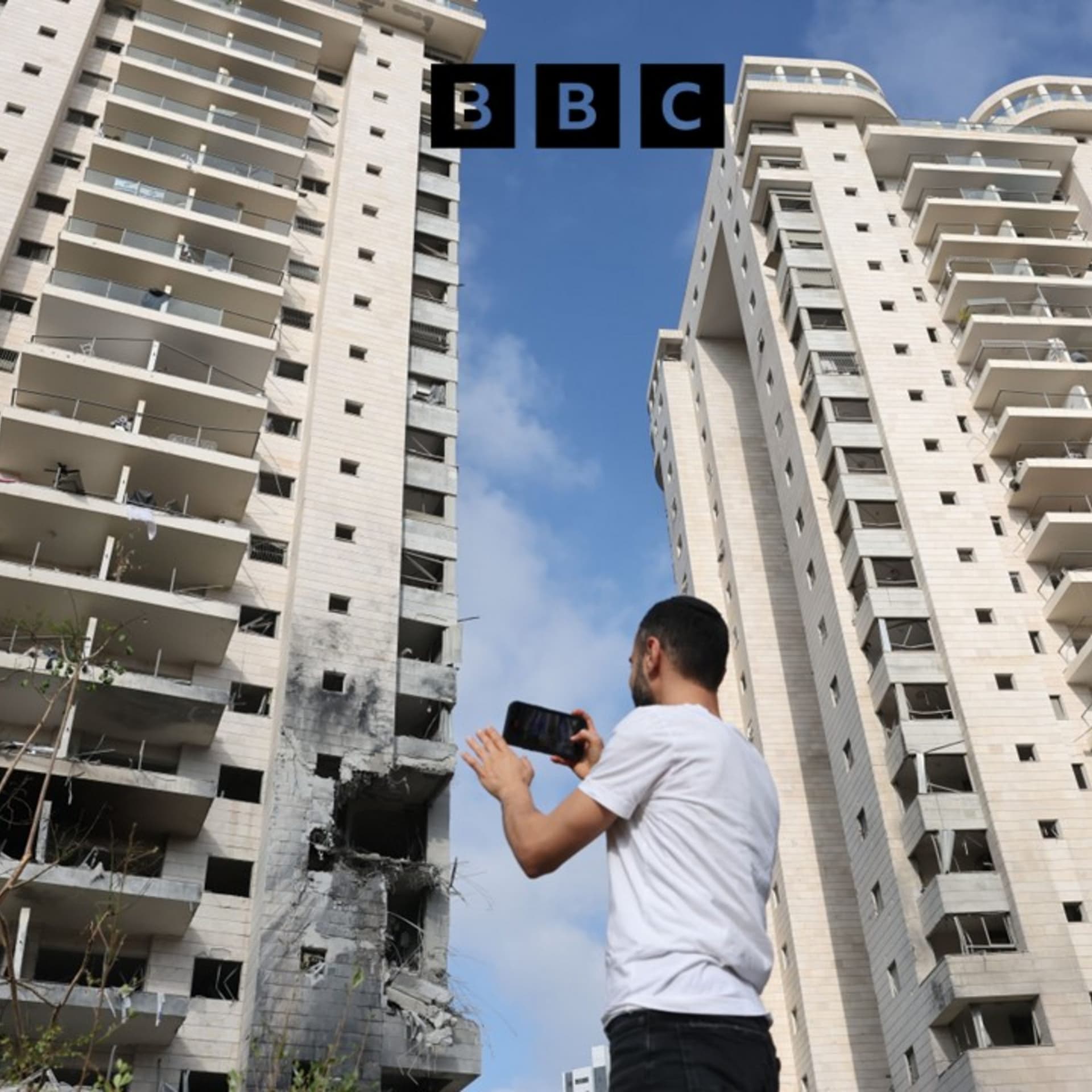
Global News Podcast
Iran and Israel exchange heavy strikes for fourth day
00:30:36
Israel says it has full control of the skies over Tehran
Loading summary
Transcript1 lines
- [00:00]
Julia McFarlane
This BBC podcast is supported by ads outside the uk. Welcome to paradise. The Platinum Cart's five times membership rewards points on flights got us here. Now let's make our trip next level Hottest restaurant booked with resi Unforgettable experiences event access Endless vibes Late hotel checkout yes please Platinum Card membership for a trip that's nothing less than iconic. Learn more at americanexpress.com exploring-platinum terms and points cap apply this is the Global News podcast from the BBC World Service. I'm Julia McFarlane and at 13 hours GMT on Monday 16 June, these are our main stories. Iranian missiles have hit central Israel and Haifa. With the crisis in its fourth day, the number of people killed in Israel rises to 24. Iran's health ministry says more than 200 have died in Israeli attacks since Friday. Meanwhile, the United nations atomic Watchdog has been holding an emergency meeting in Vienna. Also in this podcast in Germany, a Syrian doctor has been sentenced to life in prison for his role in torturing and killing opposition activists for years whilst serving under the Assad regime. And it's not just that she specialized in tech towards the end of her career and was Q she has been thinking deeply for a long time about how we prosper in the nexus between man and machine. For the first time in its history, a woman will lead Britain's Secret Intelligence Service MI6 Iran sent another barrage of missiles into Israel overnight, killing several people and wounding more than 100 in cities in the center and north of the country. Of the around 100 missiles fired overnight by Iran, the Israeli authorities said only seven made it through the so called Iron Dome and landed in the country. They also said that the military has managed to destroy more than a third of Iran's missile launches. A military spokesman said Israel now has full aerial operational control over the Iranian capital Tehran, four days after it began launching strikes on the country. Iran says more than 220 people have been killed so far. Our correspondent in Jerusalem, Sebastian Usher, described the impact of Iran's overnight strikes on Israel. I think it's fair to say it's been death and destruction on a scale that Israelis are very shocked and surprised by. I mean, people that we've been interviewing in the ruins of Homs have been saying that they didn't think that they would be targeted, that it would come this close to them. But I mean, pretty much both this morning and yesterday when we were in Bat Yam, which was also badly hit, people saying that they believe that this is necessary, this is what Israel must do and saying A line we heard from the Israeli Prime Minister Benjamin Netanyahu many times that Israel is on the front line of a conflict that actually involves the rest of the world. The latest we've heard of the figures are eight people killed in the overnight attacks. That brings to 24 the number of Israelis who've been killed since this started and more than 300 are still being treated in hospital. And Sebastian, what are the Israeli authorities saying about the attacks as well as their own strikes on Iran? Well, I mean, we've heard some very incendiary words from Israeli Defense Minister Israel Katz, but that's pretty much his stock in trade. He said earlier today that the people of Tehran would pay a heavy price for what's been happening. He then slightly rescinded that, clarifying it, saying that he didn't mean that Israel would actually attack civilians. As you were saying that we don't know the exact number of civilians who've so far been killed in Iran. We're not getting those figures, but looking at the footage that's coming out, one would imagine that that's quite high. That is in addition, of course, to the large number of top military officials, nuclear scientists, etcetera, that Israel's been assassinating throughout this. So Israel is essentially saying that it's continuing with that operation very intensely and it's to some extent downplaying the number of missiles that are coming here. Again, it said around 100 missiles were fired overnight from Iran and just a handful made it through the defense system. And this confrontation with Iran has been dominating the headlines. But just before coming on air, we heard that 20 Palestinians have been killed in Israeli fire whilst they were seeking aid in the south of Gaza. That's from the Civil Defense Agency. I was hearing slightly lower figures than that earlier. Two people killed specifically near the Netsurim Corridor in the center of Gaza, where one of these sites run by the Gaza Humanitarian foundation, opened briefly this morning. But it seems now that the rescue workers are saying that the 20 who had, who had been already been reported by the Health Ministry as being killed, were killed in connection with this. So it shows that those deadly incidents are continuing. The head of UNRWA has just said that he is very concerned that attention has switched to what's happening between Iran and Israel and what's happening in Gaza is being forgotten. Sebastian Usher, the BBC's Anna Foster is in Israel and has been speaking to some of the people who were caught up in the strikes over the weekend. She sent this report from the city of Batyam which was struck by A missile on Sunday. There are several buildings that have been hit here and some of them are low rise, just one story shops where the tiles are all shaken from the roof and the windows are smashed. And then there's one which is about two or three stories. The top floor is blackened. And then you can see again one of the residential buildings behind it. And it's charred, completely black, either from the missile itself or from some of the debris that was kicked up when this happened. My name is Aviva. We live two blocks from here. We heard a very loud, unusual noise and we knew it was a rocket that hit and they just targeted civilian neighborhoods. It's terrible. We don't know how it's going to end because it's not a fair game. You know, we target military, the nuclear bases. Are you in favour of that? And the reason I ask, I know, I understand the feeling of threat that you have from Iran, living in Israel. But when you look at what it's provoked in terms of retaliation and what it's happened to your neighborhood here, are you still supportive of that first strike that Benjamin Netanyahu chose to launch on Iran? It's choosing between life and death. Nuclear Iran is a death threat to us. We didn't start this conflict. We have every appreciation for the Iranian people. We love the Iranian people. It's the regime that is threatening us, not just themselves with the nuclear, if they have, God forbid, but all the proxies here, Hezbollah and Hamas. I know it's hard for British people, understand. And we are an island surrounded. These Shiite countries are out set to destroy Israel. This local school's been turned into a reception center for people who live in those buildings that were damaged. And what is happening, just squeezing through a crowd in the doorway, is that people are coming here because a lot of people were in the shelters when this happened. So they couldn't go back to their homes and actually get anything that they needed. Hi. Hi. You speak English? Yes. You do? My name is Naomi. Last night must have been scary. Yes. What happened? What do you remember? I remember that my house ruined. It was so sad. We lost our house. We came here to find. To stay in Ryokai. The street in Batya where the missile hit has not only been a scene of recovery, it has also become a political platform. Israel's Prime Minister Benjamin Netanyahu has been here. Israel's hard right. National Security Minister Itamar Ben GVIR has been here. They are using this location as a moment to try and make sure that they have got the Israeli Public on board with what has been a dangerous and provocative attack on Iran. What people are seeing here and now is the immediate consequence of that. Anna Foster in Batya for civilians in Iran, the last few days of fighting have been difficult and dangerous. There isn't the same sophisticated air defense system there that Israel has. And often strikes have caught people completely by surprise. Iran restricts access to the country for journalists, but the BBC's Persian service is in touch with people inside the country. Parham Gabadi has compiled this report. Explosions like this one have kept Iranians awake all night. Yesterday, Tehran was hit hard. Nearly all corners of the capital came under attack. In the north, a water pipeline was blown up, causing serious flooding. In the west, an oil depot caught fire, a blaze visible for miles. What began as strikes on military targets is now hitting infrastructure too. The oil storage was one such site. A woman I spoke to in Tehran describe the moment it happened. I heard three or four loud explosions. @ first I thought the attack was over, but then I drew the curtain and saw the oil depot on fire. We couldn't sleep all night because of the sound of explosions. Images of civilian casualties covered in blood wildly circulated online mirrored those seen recently in Beirut. A comparison the Israeli defense minister made in a post on his X account threatening Iran to share the same fate as Lebanon. Someone else sent me a video of their family trying to flee Tehran by car but stuck in bumper to bumper traffic because many others are doing the same same, those with extra space are offering ride shares to help others leave the city. Meanwhile, some people told me they've started stockpiling food. Uncertain how long this war may last. People are afraid. Those born after the 80s have only seen war in the news. Older generations remember the Iran Iraq war when Iraqi fighter jets bombed Tehran. Now those memories are resurfacing. Many Iranians complain that unlike Israelis, they have no sirens or shelters to protect them. Israel has publicly warned Iranians to stay away from military production sites. But the problem is most people don't know where those facilities are. Iranian military officials and nuclear scientists have been assassinated in their homes, many of their neighbors unaware of their real identities. Some Iranians blame their own government for dragging the country into this conflict over its nuclear ambitions, aspirations that have already cost them dearly. Through sanctions and international isolation. Iran has retaliated several times, launching a barrage of missiles towards Israel. But for ordinary Iranians, this escalation means just one more sleepless nights. Parham Gabadi and as we record this podcast, Iran says it has executed a man found guilty of Spying for Israel's intelligence agency known as Mossad. Ismail Fakri was arrested in 2023. Several other suspected Israeli spies have been arrested in Iran since Friday, according to Iranian state media, as Iran's nuclear sites have been subjected to attacks from Israel. The head of the UN's nuclear watchdog, the IAEA, has given an update on their condition, saying there has been critical damage as far as they can tell. Rafael Grossi said radiation levels outside Natanz and Fordo remained normal and urged all parties to exercise maximum restraint. Military escalation threatens lives, increases the chance of a radiological release with serious consequences for people and the environment and delays indispensable work towards a diplomatic solution for the long term assurance that Iran does not acquire nuclear weapons. I call on all parties to exercise maximum restraint to avoid further escalation. Our correspondent Bethany Bell is in Vienna where the IAEA has been meeting and gave us more details on what Mr. Grossi had found. He said that there had been this attack on a site at Natanz above ground. And he said there's no indication of an attack on the under underground parts of that site, but that the power supply there had been destroyed, which could have damaged the uranium enriching centrifuge machines there. Now this area is where Iran has been doing highly enriched uranium enriching uranium up to 60%, which is the concern that that could be turned into a nuclear weapon. Rafael Grossi has sought to reassure people, but how accurate can the IAEA be in assessing the situation? The IAEA has inspectors on the ground. It has. We heard from Mr. Grossi today. He acknowledged what he called the cooperation and information exchange with Iran about the situation on the ground. And also, you know, there's satellite information that the agency has access to. He talked about there had been four buildings damaged at another site at Isfahan, but no damage reported at Fordo, which is dug into a mountain. But he did warn again that a military escalation not only threatened lives, but it did increase the chances of a radiological release. And he said that he was willing to travel to Iran to try and assess the situation. And he said he was keeping in very close contact with the UN's nuclear inspectors in Iran. Bethany Bell in Vienna. Life imprisonment for crimes against humanity. That is the sentence handed down on Monday to a Syrian doctor living in Germany. Allah Musa was also found guilty of war crimes, torture and murder, all carried out against opponents of Syria's former dictator, Bashar Al Assad. He'd been living and practicing medicine in Germany for a Decade. Our Correspondent Damian McGuinness is in Berlin and told me more about the man. Allah Musa was accused of torturing patients while he was working as a doctor in two separate military hospitals, one in Damascus, one in Homs. They both had terrible reputations for being very violent places. This was 2011, 2012, and these were allegations are incredibly serious. He was arrested in 2020. He'd lived in Germany for quite a few years before, then came to Germany in 2015 with a visa as a doctor, worked as a doctor here in Germany for quite a few years before he was arrested. And now he's been found guilty of these accusations of torture, the results of which at least nine people were seriously injured and two people died. So this was a big trial because he has been seen as someone who escapes, assisted the brutal Assad regime during the Syrian civil war. And of course, as a result of many of the actions of people like this, so many people suffered and died. And this is why it's so important to look at how you can bring people to justice, even if it's years later. Damon, how did they find him? There are reports here that he was spotted by some witnesses in a TV documentary about Homs. And it seems that he was then tracked down by prosecutors who have been looking at a number of these different cases. But that's what's so interesting. In the German case, we have seen lots of different because there are so many Syrians living here. We have seen a number of cases where people have been spotted by either people who've seen people carried out tortures or even by the victims themselves. And again, it just, you know, does show that even if someone thinks they've left these crimes behind and they've gone to another country and they've set up another life like Allah Musa did. Do you know he worked as a doctor in Germany for quite a few years, that actually, if they've committed such horrendous crimes and these crimes against humanity, then in some cases they will be brought to justice. Damian McGuinness. Still to come, we hear from author Hanif Qureshi on building a new life after a freak accident. What I was doing was writing directly from my hospital bed about the experiences that were happening to me every day. Indian health officials have begun handing some relatives the bodies of their loved ones. Four days after the Ahmedabad plane disaster that killed more than 270 people, many more people are still waiting for bodies and the results of DNA testing. The Air India plane was carrying 242 people when it crashed shortly after Taking off in western India. The BBC's Davina Gupta reports from the city's main hospital. Give us some answers. No one is giving us answers. A desperate father confronting the hospital officials. He didn't want to share his name but told me his son was on the Air India flight which crashed last Thursday and he still hasn't received his body. Sitting in another corner of the hospital's courtyard, 60 year old Anil Patel breaks down. He tells me no one is left in his family now. Anil has been coming here every day since the crash hoping to receive the last remains of his son Harshit and daughter in law Pooja. He comes here at 9 each morning and sits in a makeshift tent till late at night and waits for more information. But identification of victims is dependent on DNA testing. When the plane crashed it caught fire which has charged many bodies beyond recognition. As you have seen in the various videos that there is a very huge flame that came out of the airplane. HP Sangbi is director of forensic lab carrying out these tests and that flame is having a very high temperature. This high temperature affect the DNA present into the various part of the body. Despite the challenge, authorities have made headway. By Sunday evening The DNA from 47 victims had been matched and at least 24 bodies had been returned to grieving families. I'm standing in front of a grey mortuary building where the bodies of all the victims of the crash are being held in a cold storage. There's a constant activity around here. Officials and medical workers are going in and out and just at the entry gate there are two ambulances that are slowly moving in. These ambulances are here to transport the bodies of victims who have now been formally identified and driving. One of these ambulances is to Shah Labor. My job is to transfer these bodies. They are taken out of a cold storage and placed carefully in a white coffin and then handed over to the family as grieving families try to find closure. Just a few kilometers outside the city I meet a woman who lived to tell a different story. My mind is completely just thinking one thing that what if I was on the same flight. 30 year old Bhumi Chauhan is a student in the UK who missed boarding the fateful flight by just 10 minutes. We were definitely going to reach there but somehow the traffic and in middle of the way we also stopped for some breakfast and somehow I just reached there 10 minutes late. I was reached there around 12:20. I straight go to the baggage check in counter and lady didn't let me do the check in. I was Literally requesting her then let me go. Let me go. I am the only one who left the left for boarded. So what was your immediate reaction when you got to know that that flight had actually crashed? I was completely blank. I was numb. My body was shivering full and the first picture was came in front of my face was my son and also my husband. I only thinking of both of them. I felt this is my rebirth. Davina Gupta reporting there. And earlier on Monday, an Air India flight bound for Delhi, also a 787 Dreamliner had to return to Hong Kong shortly after takeoff. Air India said it was due to a technical issue. It said the flight had landed safely and was undergoing checks as a matter of abundant precaution. A two day manhunt described as complex and dangerous has ended in the US state of Minnesota with the arrest of a 57 year old man in connection with the killing of the Democrat lawmaker Melissa Hortman and her husband. Police Chief Mark Brulee described the scale of the hunt. There's no question that this is the largest manhunt in the state's history. An alert police officer believed that he may have seen the individual running into the woods and that started a large scale perimeter that we set up and we started to deploy resources including the Brooklyn Park SWAT team and along with many other SWAT teams to contain an extremely large area. Knowing that this is a very dangerous individual and that search went on for many hours until ultimately we were able to locate him in the woods. The suspect, Vance Bolter is accused of posing as a police officer and shooting and killing the couple as well as shooting and wounding another Democratic lawmaker a few miles away. His bail is expected to be set in the millions of dollars. Our reporter Mike Wendling has been following this from Minnesota. He wore a mask, a Halloween sort of mask. There's been pictures that have been distributed that show him wearing this disguise. People in the area were told to beware and that if they were getting a knock on the door from a policeman who was by themselves to call 911 the emergency number to verify that that police person was actually a legitimate and not the suspect hiding behind another disguise. It's been a very tense and for a lot of people in this area, terrifying stretch of time. People are very worried and concerned about the larger implications of politically motivated assassination is what the authorities are calling it. We don't know for sure, but we do have a few clues. He had a list of more than Democratic politicians. He had pro life, anti abortion views and he also had flyers in A car that he abandoned, which seem to refer to anti Donald Trump rallies. I would stress that here in Minnesota, in the top north of the United States, the political culture is very open, it's very collegial. People have been saying we speak to people on the other side. This is not Washington. Where we are at each other's throats all the time is pretty remarkable. And it's stunned people in this state and in this city. Mike Wendling, the mayor of a Mexican town in the state of Oaxaca has been shot dead by unidentified gunman Lilia Gema Garcia Soto was in a local government meeting when armed men burst in and opened fire in the town hall. Will Grant reports there has been some speculation that their attackers were either masked or dressed in police uniforms, but neither version has been confirmed and the authorities are still investigating a possible motive. The state governor in Oaxaca, Solomon Jarracruz, condemned the killings, saying there can be no impunity in this case. He promised to work with the state attorney General's office to establish the facts of the murders and, as he put it, bring justice. However, the majority of these killings of local officials in Mexico go unpunished as local governments remain vulnerable to drug cartel intimidation and violence, especially in areas controlled by organized crime. Will Grant. Britain's Secret Intelligence Service MI6 is to be led by a woman for the first time in its more than 100 year history. Blaise Metrovelli will take over in the autumn as the chief of the organization who's known as Sea. She joined the service in 1999 and in her current role she is Q head of the crucial Technology and Innovation Division. The British Prime Minister, Sir Keir Starmer, said she would provide the excellent leadership needed to defend our country. Well, one person who knows how the new chief might approach the role is Sir Alex Younger, who's a former head of MI6. He gave his reaction to her appointment. I'm really pleased by this appointment. I think anyone who cares about the defence of our country should be too. And there are two reasons I think she got the job. The first is she is an incredibly experienced, credible, successful operational officer, a case officer. I've served with her. She is widely respected and as it happens, a Middle east and Middle east expert. So she can hit the ground running and she'll have a big entry and that's a good thing. But in some ways, the second reason is more important. There is a generational challenge to the leading human intelligence services in the world, which is how you operate in a digitally transparent world and getting through that Understanding how we exist in the nexus between man and machine is the key challenge now. It's not just that she specialized in tech towards the end of her career and was Q. She has been thinking deeply for a long time about how we prosper in the nexus between man and machine. She's got a plan and I think that she and she knows how to enact it. And that is the way MI6 remains at the cutting edge. Sir Alex Younger, the former head of MI6, speaking to the BBC. Finally, what is it like to be a writer who literally cannot write? In 2022, the author, novelist and screenwriter Hanif Qureshi fell over while in Rome. It left him paralyzed and utterly reliant on others. A freak accident that changed his life forever. Within days, he was dictating his thoughts about it for his family to post on social media, a mix of rage and relief. Those thoughts have been published now in a book called Shattered. He's been speaking to Sarah Montague about rebuilding his life, and she began by asking him about his recovery. I've been out of hospital for a year and a half now after spending one year in hospital. I have physiotherapy every single day now. It keeps me getting stronger every day. I am lucky insofar as all the other people I was in hospital with, none of them have been able to go back to work. I work every day, so I'm living a pretty full life, unlike most people who have such catastrophic accidents. Because your proximity to death, you thought you were taking your last breaths. Has it made you, in a way, more determined to write? I really want to carry on living. I don't want to give in. I don't want to fall into depression. I'm determined to carry on living to the best of my ability while I still have time. Your experiences, I mean, they must inform what you want to write about. You started, you were basically posting on social media so soon after the accident and posting about the experience of being so close to death. What I was doing was writing directly from my hospital bed about the experiences that were happening to me every day. So in that sense, Shattered My book is not really so much a memoir. It was more of a sort of dispatch from the frontline of a terrible catastrophe and the screenplay of it. What are you hoping for that? I mean, presumably you are still very directly involved and coordinating and saying what you want from it. I think one of the things I realized when I was thinking about all this recently was that of course, all of us are one step away from a catastrophic accident. You know, you may step out into the traffic later today, as many people I met in hospital had done. And your life will completely change. And of course, most of us at some point in our life will, you know, end up in our care home being looked after by other people. And you think, what the hell has happened to me? But of course, my experience is not so uncommon, which is why I like to write about it. Hanif Qureshi, author, novelist and screenwriter and that's all from us for now. But there will be a new edition of the Global News Podcast later. If you want to comment on this podcast or any of the topics covered in it, you can send us an email. The address is globalpodcastbc.co.uk. you can also find us on XBCWorldService. Use the hashtag globalnewspod. This edition was mixed by Volodymyr Musechka, produced by Tracy Gordon and Stephen Jennifer. The editor is Karen Martin. I'm Julia McFarlane. Until next time. Goodbye.