Loading summary
Transcript1 lines
- [00:00]
A
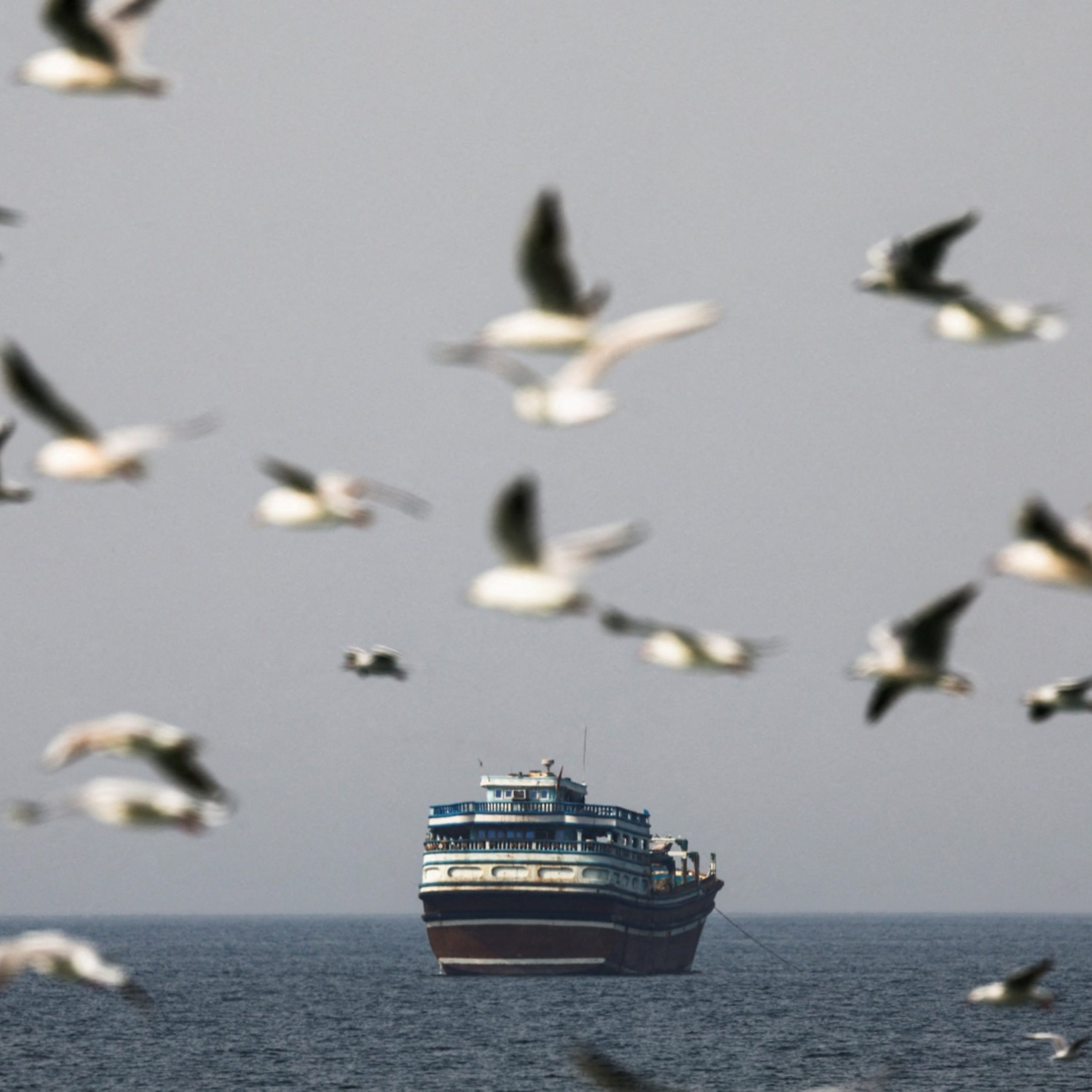
This BBC podcast is supported by ads outside the uk. If you're an H Vac technician and a call comes in, Grainger knows that you need a partner that helps you find the right product fast and hassle free. And you know that when the first problem of the day is a clanking blower motor, there's no need to break a sweat. With Grainger's easy to use website and product details, you're confident you'll soon have everything humming right along. Call 1-800-GRAINGER clickgranger.com or just stop by Granger for the ones who get it done. I'm Steve Rosenberg, the BBC's Russia editor in Our man in Moscow. I'll show you what it's like being a news correspondent in Russia as the Russian authorities wage war on Ukraine and try to silence dissent. The sound of war has reverberated around Ukraine for three years. Dramatic geopolitical upheaval alongside threats of intimidation and imprisonment. Our man in Moscow Watch for the subscription to BBC.com and the BBC app, visit BBC.com docs to learn more. This is the global news podcast from the BBC World Service. I'm Janet Jalil and in the early hours of Tuesday 3rd March, these are our main stories. On day four of the US and Israel's war on Iran, it widens its retaliatory attacks in the Gulf region with two of its drones hitting the US Embassy in Saudi Arabia. The Iranian Red Crescent says more than 550 people have been killed in the past three days of US and Israeli strikes. Tehran threatens to set fire to any ship trying to pass through the Strait of Hormuz, a crucial transit route for oil and gas. Also in this podcast, videos of the Clintons testimony to Congress about the late convicted sex offender Jeffrey Epstein are released as the former President says he did nothing. I swam around, I sat in the hot tub for five minutes or whatever it was and I got up and went to bed and then at asked us did you engage in any sexual activity with this person? Iran has broadened its retaliatory attacks on American targets in the Gulf region as the US Israeli strikes on Tehran and other Iranian sites enter their fourth day. The US Embassy in Riyadh was hit by two Iranian drones causing a fire to break out. Explosions were heard and clouds of smoke seen in Riyadh's diplomatic quarter. Qatar's Defense Ministry intercepted two ballistic missiles early on Tuesday. Oil and gas facilities have been hit as well as cities and airports. Washington has urged Americans in the Gulf to leave as soon as possible. Lebanon has also been dragged into the conflict as Israel continues to carry out strikes on Hezbollah targets. The US Secretary of State, Marco Rubio says that the US Launched its war in IR on Saturday as a preemptive measure because it knew that Israel was going to attack the Islamic Republic. It was abundantly clear that if Iran came under attack by anyone, they were going to respond and respond against the United States. If we stood and waited for that attack to come first before we hit them, we would suffer much higher casualties. And so the president made the very wise decision. We knew that there was going to be an Israeli action. We knew that that would precipitate an attack against American forces. And we knew that if we didn't preemptively go after them before they launched those attacks, we would suffer higher casualties and then we would all be here answering questions about why we knew that and didn't act. Mr. Rubio said the hardest hits on Iran were yet to come, but didn't specify a time frame. As other Trump officials sought to allay concerns that the US Was getting entangled in yet another lengthy Middle Eastern war, the vice president, J.D. vance, told Fox News that the conflict would not drag on for years. There's just no way that Donald Trump is going to allow this country to get into a multi year conflict with no clear end in sight and no clear objective. What is different about President Trump, and it's frankly different about both Republicans and Democrats of the past, is that he's not going to let his country go to war unless there's a clearly defined objective. He's defined that objective as Iran cannot have a nuclear weapon and has to commit long term to never trying to rebuild the nuclear capability. It's pretty clear, it's pretty simple and I think that means that we're not going to get into the problems that we've had with Iraq and Afghanistan. I got more on all this with our North America correspondent, David Willis, starting with that Iranian attack on the US Embassy in Riyadh. The Saudi Defense Department says it was able to intercept and destroy eight suspected Iranian drones. Two drones hit the US Embassy in the capital, Riyadh, causing a small fire, we're told some minor damage as well, but no injuries. Another target appears to have been the Prince Sultan Air Base to the south of Riyadh and the capital's diplomatic quarter as well, which houses various foreign missions. Now, President Trump told one of the cable news networks here that the United States would retaliate for this action quite soon. As he put it and this is all part of a series of Iranian missile and drone strikes on Gulf states that play host to US Bases. And such is the growing danger, indeed, as far as those countries are concerned, that the U.S. state Department has urged American citizens in more than a dozen countries in the region. Jeanette. To leave as soon as possible as concerns grow that this conflict is spreading. And Marco Rubio has come out with another reason for why the US Launched this war on Iran. Right now, we've heard about regime change, the nuclear program, concerns missiles. And now Mr. Rubio is saying that the US attacked Iran to stop Iran carrying out an attack because the US Knew Israel was planning to attack the Islamic Republic. Yes, it's a bit difficult to swallow, isn't it? Senior members of the Donald Trump administration have kept their own counsel since the bombing of Iran on Saturday. They had done so anyway, aside from some brief telephone interviews, the members of the White House press corps, Mr. Trump himself had confined his justification for the bombing campaign to two heavily scripted video messages. Well, today we heard from two of his key lieutenants, the US Defense Secretary, Pete Hegseth, and the Secretary of State, Marco Rubio, and they appeared to offer subtly different takes on aspects of the conflict from those of the president. As to the question of why now for these strikes on Iran, Marco Rubio told reporters that the US had taken the decision to strike Iran, as you say, Jeanette, after learning that Israel was planning to mount an attack of its own on Iran and knowing that the US would suffer much higher casualties from Iran's response, Mr. Rubio said that prompted the Trump administration to strike first, mount a sort of preemptive defense, if you like, in order to limit the damage to the United States. Now, that wasn't part of Donald Trump's narrative, and it is, as I say, a little difficult to swallow, given the close ties that exist between the United States and Israel. A lot of concern about how long this could go for. And J.D. vance, who has been notably silent for the past few days, has come out now saying that this isn't going to be a lengthy Middle Eastern war. Yes. Which is slightly at odds with what President Trump had to say today as well. President Trump has said that a big wave of attacks on Iran is imminent, and he said the operation was moving faster than expected, as he put it, but it was still likely to last four or five weeks or possibly longer. He refused to rule out the deployment of ground troops in Iran, as did the defense secretary, Peter Hegseth. And that's a move, of course, that brings with it considerably higher risk of service casualties. The number of American service members, by the way, killed in action in this conflict so far now stands at 6, with 18 said to have been seriously injured. Jeanette. David Willis. The Iranian Red Crescent says More than 550 people have been killed in US and Israeli strikes since Saturday. One of the deadliest was on a girl's primary school in Minab in southern Iran. Officials say more than 150 people, including children, died in that one incident. Mr. Rubio was asked by our correspondent Tom Bateman why the school came under attack. I've seen those reports. I don't have. I would refer you not because I'm not trying to answer your question, but I don't want to get it wrong. The Department of War would be investigating that if that was our strike. And I would refer your question to them and I'll make sure they're aware that you have that question. Are there indications this was an American missile? Well, clearly the United States would not deliberately target a school. Our objectives are missiles, both the ability to manufacture them and the ability to launch them. And the one way attract drones. That would be our focus and that's what we would be focused on. We would have no interest and frankly no incentive to target civilian infrastructure. Well, Mr. Trump is pressing ahead with his war on Iran, despite warnings that it could harm. The Republicans bid to hold on to both houses of Congress in this year's midterm elections. Given that Mr. Trump campaigned on a pledge to end US involvement in any more Middle Eastern wars, what do Americans make of his decision to attack Iran? Our North America correspondent, Anthony Zircher, spoke to some voters in Texas at a banquet hall here in Waco, Texas. Ken Paxton, a Republican running for Senate, is making his pitch to voters. The US Midterm elections are still eight months away, but Texans are heading to the polls on Tuesday to select their party candidates. It was a chance for me to ask local conservatives what they thought of America's military strikes on Iran. Yeah, I'm kind of glad he did it, you know, we'll have to wait and see how it turns out. I don't want to, you know, and I don't think Trump wants it. And I know most of the people I know we don't want to end up in a quagmire like we were in Afghanistan or even in Iraq, you know, and so they just, you know, hopefully they can. Hopefully, like he says, the people will step up and take over. It sounds like you see this as part of a bigger thing. This operation in Iran part of a bigger strategy that Donald Trump has? Yes. This is a much bigger perspective than just arms. And I think right now we recognize that we can't keep playing this game and kicking the can down the road as we have been in decades. I was an officer in the Marine Corps. I deployed to Afghanistan. I served in the Northern Helmand Province of Afghanistan. I grew up in the era of the war on terror and it directly affected me. Now I think that we're in a different era now. I don't think that this is a continuation of the war on terrorists, but yes, I've watched this very closely. I trust the President and Secretary of War Pete Hegseth's plan. What we've seen with this president is he is very deliberate and specific in launching targeted strikes against known high value targets, which is exactly what happened in Iran. And I trust that the President is not going to want to get us involved in a never ending ground war like what I had the opportunity to serve in as in Afghanistan. Americans in Texas speaking to Anthony Zircher. Well, Iran has made a new threat to ships trying to pass through the Strait of Hormuz, a vital shipping route through which a fifth of the world's oil passes. With traffic already almost at a standstill, an Iranian official has warned that his country's forces will set fire to any vessel that tries to sail through. I asked our business correspondent Nick Marsh whether this has caused a threat, further rise in the oil price. It didn't jump quite as much as it did yesterday. It's a couple of percent for Brent crude and about one and a half percent for wti. So, yes, increases still, though, in the price of oil. I think traders are just weighing up basically how long this conflict is going to go on for. How long the Strait of Hormuz remains impassable. It's just more uncertainty, it's more worry about, not so much the conflict itself, but how long this is going to go on for. And the Strait of Hormuz is now effectively closed. I mean, it's going to be very hard for any ship to go through after this threat from Iran to set fire to any vessels that try to. Yeah, Exactly. I mean, U.S. central Command says it's open, but I mean, in practice that's, that's really not true at all. You mentioned that senior Iranian Revolutionary Guard official saying that the country would set fire to any ships that try and cross the strait. We've already seen attacks on a handful of oil tankers already. So no shipping company in its Right mind would send anything through there, you know, whether that's oil, whether that's gas or any other kind of cargo ship. The longer that that goes on for, the longer that's going to have an impact on the world markets. Basically about a fifth of the world's entire oil supply goes through the Strait of Hormuz, taking off in the Middle east, especially to places like China. The longer that no oil goes through there, the more the price is going to increase because countries will have to look at alternative markets or alternative routes of getting oil out of the Middle East. And the longer that oil prices increase, then that means that manufacturing in places like China is going to go up in cost. And ultimately that will be reflected in how much we pay at the petrol pump and how much we pay for our goods in general. And stock markets no doubt will be alarmed by the fact that President Trump is saying that this could go on for a long time. Yeah, exactly. The word that I keep hearing from a lot of investors is duration. You know, markets can deal with a bit of disruption. They've been dealing with uncertainty geopolitically for several months, if not years now, to be quite honest with you. But this is a new level of uncertainty, you know, when it comes to something like oil, for example, the oil market has been oversupplied for a while. So it's not like the countries are going to run out of oil or businesses are going to run out of oil. It's just the uncertainty of it that's going to be pushing up prices and the logistics which are going to increase. I was just looking. The cost of hiring a supertanker to take oil from the Middle east to China has doubled since last week. It's now over $400,000 a day. So the longer things go on, the more we're going to see the cost of everything increasing. Nick Marsh still to come in this podcast, all the pigments were pigments that Rembrandt used in other paintings. The way the painting was constructed, the layers, different layers that was typical for Rembrandt. A long lost artwork by the Dutch master, Rembrandt is rediscovered. If you're an H Vac technician and a call comes in, Grainger knows that you need a partner that helps you find the right product fast and hassle free. And you know that when the first problem of the day is a clanking blower motor, there's no need to break a sweat. With Grainger's easy to use website and product details, you're confident you'll soon have Everything humming right along. Call 1-800-GRAINGER clickgrainger.com or just stop by Grainger for the ones who get it done. I'm Steve Rosenberg, the BBC's Russia editor in Our man in Moscow. I'll show you what it's like being a news correspondent in Russia. As the Russian authorities wage war on Ukraine and try to silence dissent. The sound of war has reverberated around Ukraine. Ukraine for three years. Dramatic geopolitical upheaval alongside threats of intimidation and imprisonment. Our man in Moscow. Watch with a subscription to BBC.com and the BBC app. Visit BBC.com docs to learn more. The U.S. congressional committee investigating the late convicted sex offender Jeffrey Epstein has released its closed evidence sessions with former President Bill Clinton and the former Secretary of State Hillary Clinton. The couple, who are questioned separately, both deny any wrongdoing or knowing about Epstein's crimes. These two videos combined are just over nine hours long. Here is some of the exchange between the former president and one of the committee members. Did you ever witness Mr. Epstein sexually abuse or assault young women or girls? No. Did you ever witness Mr. Epstein receive massages from young women or girls? Not that I recall. Did Mr. Epstein ever discuss sexual acts of any kind with you? No. Mr. President, with the benefit of hindsight, were there things you witnessed that could have suggested that Epstein was trafficking and sexually abusing young women and girls? I do not believe so. Our correspondent in New York, Neda Torfik, has been looking through the recordings for the former president Bill Clinton. It was such a wide range of questions. I mean, of course he was asked about those photographs of him that were in the latest Epstein files batch. And those were some of the most personal questions because in one of them, he's in a hot tub with a person whose face is redacted. And the committee asked about that photo. Now, Bill Clinton has always denied wrongdoing, and he said this was part of the trips that he took for his charitable work, that the Sultan of Brunei had invited them to this hotel, and he doesn't remember who was in the hot tub with him. And then he was asked if he had sex with that person, and he said no. So those were just some of the, you know, more probing questions he was asked. But he was also asked about things like how he met Jeffrey Epstein. He said it was actually his former treasury secretary, Larry Summers, who at the time was a president of Harvard, who connected them, introducing Epstein as a big donor who could offer him a plane to take him around for his charitable work. And in exchange, Epstein wanted to talk with Clinton about economics and politics. So it was interesting to see how this introduction was made. But Bill Clinton insisted that their brief acquaintance. It was a very brief acquaintance, he said. And also that President Trump and him spoke about Epstein once. And he said that President Trump told him he fell out with Epstein over a real estate deal. And he said he never got any sense that President Trump had done anything or knew about Epstein's crimes. And of course, also, President Trump is not accused of any wrongdoing. Yes. And Hillary Clinton was also questioned at length despite apparently never having met Epstein. Yeah, that's right. And we heard both her and the former president really criticize the committee for bringing her in when she told them that she had never met Epstein. And her deposition was far more feisty. You saw that she really thought this was all for political gain. And so she was firing back at the committee when she was interrupted by Republicans questioning her. You know, she said, you brought me here, I'm going to answer the questions. When she was asked, for example, what she thought about her husband's photos in the hot tub, she said, no, I'm not going to engage in this line of questioning. I'm here to answer the facts. And the facts for her were that she never met Epstein. And even when Ghislaine Maxwell went to Chelsea Clinton, her daughter's wedding, she said she was a guest of a guest. She doesn't even remember talking to her there. Nedatofic Ethiopia has unveiled its first unmanned police station. It's a fully digital space where citizens can report crimes without actually physically meeting an officer. The pilot project in Addis Ababa is part of Prime Minister Abiy Ahmed's push to modernize public services. But questions remain about access, trust, and whether technology can really improve everyday policing. Here's Daniel Dadzi. It's a quiet room. There's no front desk, no officer behind the counter, no paperwork. Instead, a row of tablets and phones sit inside partitioned booths, their screens glowing with instructions. It feels closer to a tech showroom than a police station. But here in Addis Ababa, residents can now report incidents digitally without face to face interaction. Here's the head of technology for Ethiopia's police service, Commander Demes. If somebody have any issue, he'll come here, he'll report directly. No police around here. Just he call to police officer to the center and he inform whatever what information that he have. Then immediately he respond if there is any issue. We have patrols around the station. We inform to them to support the report. For the report, the Project Project was launched by Prime Minister Abiy Ahmed as part of Ethiopia's wider push towards digital public services. Bringing the issue of crime into this agenda seems to shine a light on an issue Ethiopians had expressed concern about over the years. The state is betting on this model to make policing more efficient, but for this model to be adopted here in Addis, elsewhere in Ethiopia, and perhaps even be exported to other parts of the continent, they would need something that software cannot guarantee trust. According to the Digital 2026 Ethiopia report, roughly one in five Ethiopians were using the Internet by the end of 2025, even though the country had more than 93 million mobile connections. It's a gap that highlights how access to phones doesn't always translate into meaningful online use. Zelalem Opian is a tech policy analyst. He believes the digital literacy gap is being addressed. Digital literacy will continue being a challenge, but there are enough policy level frameworks as well as activities, especially within this Digital Ethiopia 2030 strategy to tackle skill based trainings as well as digital literacy trainings. For now, traditional police stations remain open alongside the new system, but officials are confident this quiet corner of Addis Ababa offers a glimpse of what policing could look like in a digital future. Daniel Dadsey reporting A masterpiece that hung unrecognised on the wall of a private home for decades has been confirmed to be a work by the Dutch artist Rembrandt. It's going on display at the Rijksmuseum in Amsterdam this week. As Abio Naboia explains, it was the museum's researchers who, after a two year examination, finally confirmed that a painting thought to be worth thousands is now worth millions. The newly uncovered vision of Zacharias in the Temple, painted in 1633, had disappeared from public view in the 1960s after it was purchased by a private collector. Its provenance as a Rembrandt had long divided art historians, with some believing that it had actually been painted by a lesser known artist, Yan Lee, whose early work closely resembled the Dutch masters. But two years ago, a relative of the private collector contacted the Rijksmuseum for help in determining its origin for restoration purposes. Researchers then concluded that it could only be the work of Rembrandt himself, who would have been just 27 years old when he painted it. The curator of 17th century Dutch art at the Rijksmuseum, Jonathan Bicker, explained the process. All the pigments were pigments that Rembrandt used in other paintings. The way the painting was constructed, the layers, different layers that was typical for Rembrandt. And then we went and made comparisons with other paintings by Rembrandt, and we used high resolution photography photographs of those other paintings. The masterpiece depicts the biblical story of Zacharias being visited by the angel Gabriel, who informs him that he will have a son, the future John the Baptist. Unlike his contemporaries, Rembrandt chose not to paint Gabriel as a visible figure. Instead, his presence is subtly suggested by a light streaming into the temple. As a stunned Zacharias looks on. The Rijksmuseum director Tako Dibitz described it as a beautiful example of Rembrandt's unique way of visualizing stories. Now let's return to our main story, the rapidly evolving conflict in the Middle East. The US And Israeli attacks on Iran have shown no sign of abating and Iran shows no sign of capitulating as it hits back at countries in the region. But let's step back for a moment and consider how we got here. To end this podcast, we'll hear some reflections from Rana Rahimpur, an Iranian British journalist, former BBC Persian presenter and reporter currently living in exile here in London. She told my colleague James Kumar Sami that it had always been a question of when, when, not if this war would happen. Since October 7th attack of Hamas on Israel, it was clear that Israel is going to change the Middle east forever. First it was Hamas, then it was Hezbollah, then it was Bashar Assad of Syria. And when Bashar Assad fell, it was clear to many of us that Iran is going to be next. Especially since last June we were waiting for this moment because we knew that Israel is not going to pack its bags and go home. I think we're looking at two different players and their own agendas. I think we have to look at President Trump from his rivalry with China point of view. His agenda is getting access to Iranian oil or at least stopping Iran from selling its discounted sanctioned oil to China. And at the same time, Israel wants an entire regime change and I think their stars align. So they found themselves on the same side. Rana, on that call that President Trump made on Saturday, at least, even if the messaging's changed a little bit in the last couple of days, what is your thoughts? Will the Iranian people rise up? I mean, are they in a position to Just now I was watching a video of a street in Tehran where armed police officers and plain clothes people were stopping cars of ordinary Iranian passengers and we could hear them being shot at. So in a country that has been basically under siege of its own army and its own Revolutionary Guards it's very difficult for the people to rise up. It's difficult to see how they will mobilize themselves. Only six weeks ago, thousands of them were murdered and massacred by the Islamic Republic. So it's very naive to think that people who are being bombed at and are being shot at by the regime itself will be brave enough, or I'd say mad enough to go on the streets and risk their lives for a future that is very, very unpredictable and unknown. At the moment, the only name that comes up that potentially can bring people some parts of the Iranian society together is Reza Pahlavi, son of the former shah. But I want to take you back to the beginning of looking at the history of U S Iran relations and how he will be perceived by the religious parts of the Iranian society as someone who's been brought back by the United States after an attack, a catastrophic attack that conducted by Israel and the United States. There's going to be a lot of resistance. Rana Rohimpo and that's all from us for now. If you want to get in touch, you can email us@globalpodcastbc.co.uk. this edition of the Global News Podcast was mixed by Abby Wiltshire. The producers were Carlo Conti and Siobhan Leahy. The editor is Karen Martin. I'm Janak Jalil. Until next time. Goodbye. I'm Steve Rosenberg, the BBC's Russia editor in Our man in Moscow. I'll show you what it's like being a news correspondent in Russia as the Russian authorities wage war on Ukraine and try to silence dissent. The sound of war has reverberated around Ukraine for three years. Dramatic geopolitical upheaval alongside threats of intimidation and imprisonment. Our man in Moscow. Watch with a subscription to BBC.com and the BBC app. Visit BBC.com docs to learn more.