Loading summary
Transcript1 lines
- [00:00]
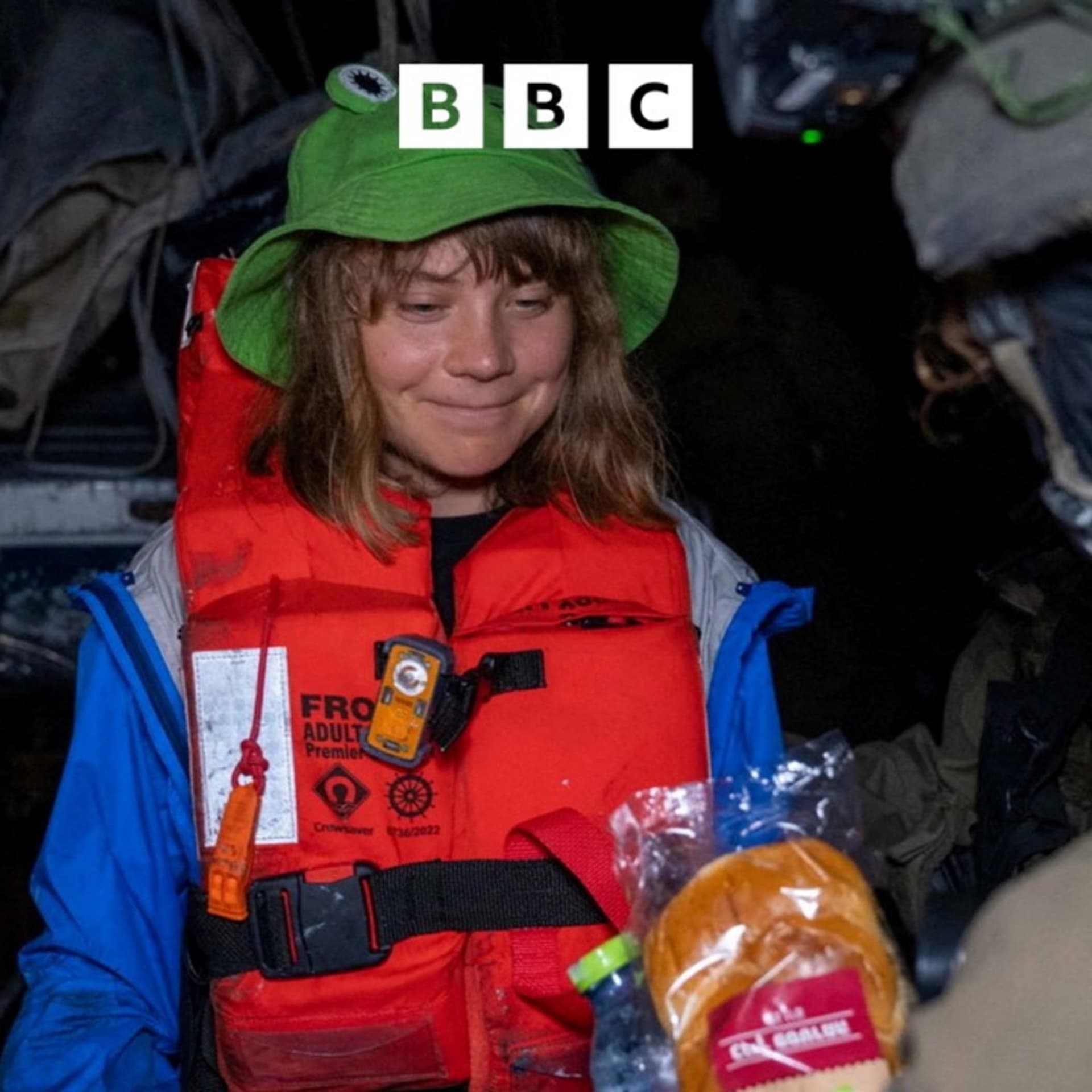
Alex Ritson
This BBC podcast is supported by ads outside the uk. Sonesta Travel Pass is the most rewarding way to travel. Sign up@sonesta.com for instant savings, bonus points and perks like early check in and late checkout, room upgrades and free stays. Choose from 1100 hotels across 13 brands and unlock their best rates. When you book with Sonesta Travel Pass here today, Rome tomorrow, join now@sonesta.com that's sonesta.com terms and conditions apply at Ameca. Insurance. We know it's more than just a car or a house. It's the four wheels that get you where you're going and the four walls that welcome you home. When you combine auto and home insurance with Amica, we'll help protect it all. And the more you cover, the more you can save. Amica Empathy is our best. This is the global news podcast from the BBC World Service. I'm Alex Ritson and at 13 hours GMT on Monday 9 June, these are our main stories. A vessel carrying 11 activists trying to break the aid blockade of Gaza has been intercepted by Israeli forces. The Governor of California says Donald Trump has been trying to manufacture a crisis Los Angeles by deploying the National Guard to deal with immigration protests. The UN Secretary General has urged delegates at a summit on the oceans not to allow the seabed to become a new wild west. Also in this podcast, we're going to see a dramatic increase in children's deaths. There wasn't any transition plan. Even medical trials were interrupted. I'll be as loud as I can be. Billionaire Bill Gates is giving away almost all of his vast fortune. But can it fill the gap left by shrinking international aid? It's been drama on the high seas off the coast of Gaza. There's a drone. There's a drone right above us lighting these lights. We are getting into position right now. This is. Take cover. Don't stick inside right now they're jamming our combs. They are doing this so that that we cannot get help. This was the scene moments before the Israeli military stopped and boarded the Medlean, a Gaza bound yacht carrying a token quantity of aid and a crew of human rights activists. The Israelis had called the voyage a publicity stunt. They circulated this footage of the moment. Their forces ordered what they'd called the selfie yacht to divert to a port in Israel. The maritime zone off the coast of Gaza is close to naval traffic as part of a legal naval blockade. If you wish to deliver humanitarian aid to the Gaza Strip, you are able to do so through the port of Ashdod via the established channels and distribution centers. Shortly before they were detained, the activists on board, including a member of the European Parliament, Rima Hassan, and the climate activist Greta Thunberg, posted pre recorded videos. My name is Greta Thunberg and I am from Sweden. If you see this video, we have been intercepted and kidnapped in international waters by the Israeli occupational forces or forces that support Israel. I urge all my friends, family and comrades to put pressure on the Swedish government to release me and the others as soon as possible. The Israeli Foreign Ministry said those on board the Medlean were unharmed and would be returned to their home countries. Our correspondent Hugo Beshega has been following developments from Jerusalem. The latest reports in Israeli media suggest that the boat has now arrived in the port of Ashdod in southern Israel. No one was hurt in this operation by Israeli forces to intercept this ship. The 12 crew members are now expected to be sent back to their home countries. I don't think we'll be hearing from any of them before they are deported and arrive in their countries. And I think the truth here is that nobody was expecting them to reach Gaza, which has been under a naval blockade imposed by Israel since 2007 when Hamas took control of the territory. So way before this war there have been efforts to breach this blockade, but all of them have been stopped by Israel. As you say, the Israeli government very critical of this voyage. What's the reaction been within Israel? Yeah, so there has been a lot of coverage of this latest mission. And after this boat was intercepted in international waters far from Gaza, the Israeli Foreign Ministry posted a message on social media describing this mission as a selfie yacht, said the show was over. The Israeli Defense Minister, who had described this mission as a propaganda for Hamas, said he had instructed the Israeli forces to screen to the flotilla's members footage of the hamas attacks on 7 October. So the government has been extremely critical of this mission, again saying it was a publicity stunt. Yeah, and that's a fair point, isn't it? This is going to change nothing. Well, I don't think the flotilla's goal was to act as a distributor of aid in Gaza. They've always said the mission was to raise awareness of the humanitarian crisis in Gaza. Yes, they were carrying a small amount of aid, including rice and baby formula. But I think this was a symbolic gesture rather than a meaningful delivery of aid. And we know that the humanitarian crisis in Gaza continues because of these restrictions that have been imposed by Israel on the delivery of aid. So I think you may argue that they have been relatively successful in their mission. They haven't reached Gaza, but they have had significant media coverage, including from us. Hugo Bochega. 1965. The height of the civil rights movement was the last time a US president went over the head of a state governor to deploy the National Guard. Until now. Donald Trump ordered 2,000 troops to California to deal with protests against his crackdown on undocumented migrants. Hundreds of protesters have clashed with police. Cars were set alight and missiles thrown, while officers used tear gas, stun grenades and rubber bullets. The Governor of California, Gavin Newsom, has accused President Trump of seeking to manufacture a crisis. The White House said Mr. Trump rightfully stepped in to restore law and order. North America. Correspondent John Sudworth reports now from Los Angeles. Once again, downtown Los Angeles echoed to the sound of tear gas and rubber bullets. At one point, protesters surged onto one of this city's busiest highways before the police eventually cleared the road, making a number of arrests as they did so. You're one of us. You're no different. I know you don't want to do this. A short distance away, protesters faced off with a line of National Guardsmen hurling abuse. What are you doing here? If you're a member of the National Guard, you should not be here. It is this that has turned what were localized protests into a major story. President Trump's protocol busting decision to send in the soldiers against the wishes of the state governor and the city's mayor, Karen Bass. When you tear parents and children apart and when you run armored caravans through our streets, you cause fear and you cause panic. And deploying federalized troops is a dangerous escalation. But we need to be real about this. This is about another agenda. It's not about public safety. There's clearly no plan and there is clearly no policy. Mr. Trump, though, speaking with the engines of Air Force One running in the background, insisted the National Guard are needed to keep the peace. Well, we're going to have troops everywhere. We're not going to let this happen to our country. We're not going to let our country be torn apart like it was under Biden. We'll be very, very strong in terms of law and order. It's about law and order. Step a block or two away from the protests, which are taking place in small, isolated pockets. Most of LA continues as normal in neighbourhoods like this one. Even the city's police say they don't need the outside help, which is why the deployment of the National Guard. And even more so, the Defence secretary, Pete Hegseth's, threat to send in the Marines is seen as so provocative by their opponents. And the protesters, many of whom are from the migrant community, they're arresting people that they don't have no criminal records. They just arrested me because they want to, you know what I mean? So I think it's not okay. We're here to work, you know, we have kids, we go through a lot just to come to work here, you know, and there's some people that they're working not, not even for the minimum wage, but they have to work. And what do you say when Donald Trump says, I have a mandate? I was elected on the promise of deporting people. He's not the boss, only God. The government says the immigration raids will continue. Only now, of course, they're taking place in the glare of the global media spotlight. To this administration and to its opponents, the scenes of protesters, the police in riot gear and the soldiers in fatigues on the streets of LA now serve two competing narratives and further fuel the division. Mr. Trump's critics say that's entirely the point. John Sudworth World leaders have gathered in the French city of Nice for the United Nations Ocean Conference, a five day summit aimed at tackling overfishing, pollution and climate change. Less than 3% of the world's oceans are currently protected from extractive activities, far short of the 30% target agreed by more than 200 countries to be agreed by 2030. Opening the proceedings, President Macron swore to defend the seas. He said the deep oceans are not for sale. Nor is Greenland, nor is Antarctica, nor are the high seas, nor are the fishing licenses for developing countries. We are talking, he said, about a common good and a shared responsibility, and he urged them, so let's get on with it. With a similar warning, UN Secretary General Antonio Guterres said the world's oceans must not be allowed to become a new wild West. It's an obvious nod to US President Trump's push to fast track US Exploration of international waters, including deep sea mining. I heard more from our climate and science correspondent Esme Stallard, who's in Nice. For the last decade, countries have been negotiating how to effectively share the resources in the deep sea. And the crucial one there is critical minerals, and we know that Trump is very interested in those. So they're very important for healthcare, defense, but also green technology. So about two months ago, back in April, Trump ripped up effectively the rule book or that negotiation and said he would start issuing permits for deep sea mining. So even though he's not here, I think he will be paying attention. And we saw the impact of that. Another negotiation recently, the International Maritime Organization, where the US Was not in attendance, but sent letters to every embassy asking them not to sign that or face repercussions. So just because his presence isn't here, we might still feel it. But how much can be achieved without the big players in terms of shipping us strangely isn't as important as you would think because actually it only flags about 0.5% of global ships. So actually there's other countries that are more important there in terms of deep sea mining. I put this question to some of the scientists that actually met before, before this conference that if the US Goes ahead with deep sea mining, what can other countries do about it? But what they said is if they were a company looking to apply for a permit, they probably it's probably not a good economic choice because other countries won't take their wares effectively. So on that issue, I think potentially progress could be made. But on the issue of climate change, of course, that is very difficult if the US Isn't willing to play ball. Esme Stalart According to the Ukrainian military, Russia has launched one of its biggest overnight barrages of missiles and drones since the start of President Putin's full scale invasion three years ago across the border. Ukraine's military managed to once again penetrate hundreds of kilometers into Russian airspace by carrying out a drone strike on an electronics factory. It's also hit an air base. Here's our Europe regional editor, Danny the biggest amount of drones, missiles and dummy drones of the entire war, so close to 5, 500. Now, most of those Ukraine said were either shot down or lost, but there have been a number of hits. An airfield in western Ukraine has been hit. The Russian Ministry of Defense, though, has come out just recently and said that its strike was on Dubno airfield in the Rivne region. It called it, and this was quite an ominous phrase. It said one of the retaliatory strikes to what it termed the terrorist attacks carried out by the Kyiv regime, as it refers to the strikes that Ukraine carried out on Russian military air bases recently. Russia also said it struck a number of factories producing weapons and ammunition bases. We haven't seen details of that, but it's clearly significant in terms of as an attack. What do we know about this strike on an electronics factory deep inside Russia? Well, that is a factory. We've seen video footage of the strikes, drone strikes, fires and explosions. The Ukrainian military says that that factory is used to produce navigation equipment for things like drones and guided aerial bombs. Again, an important strike. The attack occurred on the military base in the Nizhny Novgorod region. It says it believes two Russian fighter jets were hit in that attack. We haven't seen confirmation of that. But the important thing about that base, according to Ukraine, is that it's used for hypersonic missile attacks such as the one that we think hit the airbase in Rivne. And there's also been an attack. We don't know quite on what yet, but there's big black billowing smoke coming from a place in Kazan. As I say, we don't know yet what's been hit there. Very briefly, talk of a prisoner exchange today. Yes, the prisoners swap is underway. This follows the second round of direct talks in Istanbul. We don't know how many prisoners have been swapped yet, but the first group has been exchanged. We've had that. Both from the Russian Ministry of Defense, but also from President Zelensky. He's released photos of Ukrainian prisoners with shaven heads draped in Ukrainian flags being greeted at a site, we believe it's on the border with Belarus. And he said that there will be several stages of such swaps in the coming days. He said the process is very complicated. And of course, as part of those talks in Istanbul, they were also intending to swap the bodies of dead combatants. We don't know what the latest is on that yet. Danny Eberhardt, still to come, set in Seoul in the near future. And it's this unlikely romance between these two house helper robots thanks to one rainy day, the rainy day we met. From K Pop to K Drama, South Korea's cultural wave is unstoppable. And it's matching up Broadway. Find home wherever you roam at Sinesta? Es and Simply Suites. Stretch out and enjoy homelike amenities for however long you need. And when you're a Sonesta Travel Pass member, staying at Sinesta? Es and Simply Suites means earning points toward free nights, upgrades and more. Go to sonesta.com and book your stay and unlock their best rates with Sonesta Travel Pass. Here today, Rome tomorrow. Join now@sonesta.com Terms and conditions apply. Hi, I'm Cindy Crawford and I'm the founder of Meaningful Beauty. Well, I don't know about you, but like, I never liked being told, oh, wow, you look so good for your age. Like, why even bother saying that? Why don't you just say you look great at any age, every age. That's what Meaningful Beauty is all about. We create products that make you feel confident in your skin at the age you are now meaningful beauty, beautiful skin at every age. Learn more@meaningbeauty.com At Amica Insurance, we know it's more than just a car or a house. It's the four wheels that get you where you're going and the four walls that welcome you home. When you combine auto and home insurance with Amica, we'll help protect it all. And the more you cover, the more you can save Amica Empathy is our best policy. So you want to start a business? You might think you need a team of people and fancy tech skills, but you don't. You just need GoDaddy arrow. I'm Walton Goggins, and as an actor, I'm an expert in looking like I know what I'm doing even when I don't. And I like the sound of starting my own business. Walton Goggins goggle glasses. But I'm an actor. I don't know what I'm doing. I needed help. Godaddy Arrow uses AI to create everything you need to grow a business. It'll make you a unique logo, it'll create a custom website, it'll write social posts for you and even set you up with a social media calendar. I didn't even realize I needed a social media calendar. GoDaddy Arrow will take your idea. That sounds good. And make a business that looks like you know what you're doing. GoDaddy Arrow can get your business up and running in minutes. You know what that sounds like? It sounds like a plan. Get started@godaddy.com aero that's godaddy.com airo if you want to become an Italian citizen, you need to have been resident for 10 years before submitting an application today. Today, Italians are voting in a referendum on whether that residency requirement should be cut to just five years. Supporters say the change would help foreign workers, which Italy relies on, feel more integrated. But the government, led by the hard right, Prime Minister Giorgio Meloni, is urging Italians to boycott the referendum, even encouraging them to head to the beach instead of to the polls. Sarah Rainsford reports from Rome. I've come to a high school in Rome, and this is one of the polling stations for this referendum. A vote to decide how quickly you get to be Italian. Ticking yes on the yellow ballot paper would mean halving how long you need to be resident here before you can apply for citizenship. It's 10 years right now, officially, but it actually takes a lot longer than that. This referendum is about foreign nationals who come here legally to work in Italy. But like everything to do with immigration, Here is controversial. Hi. No, no problem. I met Sunny in a scruffy Roman park and we sat down to talk under the palm trees. Sonny Olumati. I was born in Italy. I'm 39 years old. I'm an activist dancer. Sonny has lived in Rome all his life. His parents are from Nigeria. But the country Sonny calls home doesn't recognize him as its own. He can't even vote in this referendum. In Italy, we are over 2 million without citizenship. And as you can listen, I am Italian. My blood is Nigerian. That is my roots. My citizenship is another thing. And I have to fight for this right. By the time Sonny's mum became became Italian, he was over 18 and he had to start his own application again from scratch. Two decades later, his file is pending. Not having the citizenship, I think is like being rejected from your country. It's a bad feeling to have. Just explain to me why you think it's so hard in Italy today. Racism. They don't want black immigration. That's not how the government portrays things. Last week, the Prime Minister, Giorgio Meloni, who's from the hard right of politics, told a TV show that Italy's citizenship law was already excellent. She said Italy naturalized more people than most countries in Europe. Many of those are Argentinians, though, with Italian roots. People who'll never even visit here. As to the rest, Meloni said, when it comes to cutting the time for getting citizenship, she was completely opposed. She also said she wouldn't even vote on social media. A young politician from the far Right League Party has also been telling Italians not to give a damn about this referendum. Go to the mountains, go to the sea, go anywhere, Federico Ferrari said, but don't go to vote. That is because turnout is critical, under 50% and this referendum won't be valid. Basically, there's a giant government led boycott. So what will Sunny Olumati do if this referendum fails? Even if the yes or not, we will stay here and we will think about the next step because we are here. We will live here, we will die here. So we have to start to talk about it and we have to start to talk about the place of our community in this country. That report from Sarah Rainsford. A month ago, trade tensions between the US And China, two of the world's biggest economies, were escalating rapidly. President Donald Trump raised tariffs on Chinese goods to over 100% and China responded with similar measures. However, both sides later agreed to ease some of those tariffs with a 90 day truce. Four days ago, Donald Trump and Chinese President Xi Jinping spoke by phone for the first time since Mr. Trump took office in January. And today, further talks with the aim of easing trade tensions are taking place in London between the US Treasury Secretary and, and China's Vice Premier. But significant differences remain, particularly over metals and computer chips. As I heard from our Beijing correspondent Stephen McDonnell, the reason rare earths and the software to make computer chips, the reason this has come up is because that's what these two superpowers have been arguing about over recent weeks. So after the agreement to have this sort of 90 day pause, they've nevertheless been throwing mud at one another. And, and after this phone call from Donald Trump and Xi Jinping, they've agreed to this meeting. And interestingly, just over the weekend, China has been issuing a few more licenses to sell rare earths to US Auto companies. That's crucial for them to be able to make their products. And it's seen as a bit of an olive branch from Beijing, a sign, you know, of good faith that they want to do this. And from the other side, what China wants is this access to, as I say, the software to make computer chips because they want to be able to be self reliant on this in the future, something that the US doesn't want them to be able to do. This is hurting both economies. But the differences are more than just economic, aren't they? Yeah, I mean, look, when it all comes down to it, if you're looking at the pain that this is causing both of them, if you were going to be logical about it, Donald Trump never would have started this sort of chaotic trade war in the first place. And as for China, well, you know, it's really hurting the Chinese economy too. But they're not going to give in to this pressure from Donald Trump, even though this trade war is hurting the Chinese economy, because they can't be seen to be doing that. And funnily enough, a lot of other governments around the world, I think while they haven't publicly supported Beijing in this, quite like the fact that there's been significant pushback on this disastrous tariff war brought on by Washington Stephen McDonnell With a net worth of $160 billion, the Microsoft Co Bill Gates is one of the richest people in the world. He expects his fortune to grow to $200 billion over the next two decades, but says he plans to give away 99% of it, largely to fund health and education projects across Africa. His pledge comes as global aid is under pressure, most notably after the US announced a 90% cut to international aid in February. Speaking to the BBC's Waihiga Mwara at the African Union headquarters In Addis Ababa, Mr. Gates warned that his philanthropy could be undermined as wealthier nations tighten the purse strings. The numbers are way too large for philanthropy to fill that gap. We're going to see a dramatic increase in children's deaths because we're not going to have those capacities. It was cut off at very quickly. There wasn't any transition plan. Even medical trials were interrupted. You know, you have drugs sitting in warehouses expiring. So it was an unexpected set of steps. I'll certainly encourage the US to restore some of that, but there'll be a need to prioritize. How bad do you think it will get if there aren't urgent interventions, if the aid isn't put back even to a certain percentage? Well, we started the turn of the century with about 10 million children dying every year. We've gotten that under 5 million. Ideally in the next four years we'd get it down to 4 million. But because of these aid cuts, be going back up, probably closer to 6 million. So in no way is it taking us back to where we were in the year 2000. But, you know, caring about people, wanting health systems that prevent pandemics that could go global or be much worse than Covid was, you know, I think there's a lot of reasons that I'll certainly make the case that aid, which is less than 1% of the government spending, that it makes a lot of sense. Are you willing to use your considerable influence to possibly seek audience with President Trump again, maybe ask him to consider a more gradual pullout from some of these programs, Gavi with vaccinations, for example, example. No, I'll make a strong case that the US should stay involved in Gavi, that it should be a leader on helping with polio eradication, that these HIV programs, some efficiencies can be gained. And so, you know, if we were more in the range of 20 or 30% reduction, you know, I think we could minimize the damage and we won't see a dramatic increase. In fact, with the new innovations, then we could continue the trend we've seen. So I'll be as loud as I can be. To quote the outgoing Africa Development bank president, he said, and I paraphrase that Africa's development will not come from aid. It will come from investment led growth. It's not an isolated thought. We've had many people question the necessity of aid in this day and age and whether aid breeds over reliance on aid money. You know, to build your company and does it shield African governments from accountability? So what are your thoughts on that? That that it's time for the African continent to shift more towards what investment led growth would do for it? Well, the way that aid works is that you accelerate the country's economic development and that's what you get to self sufficiency. Within the next 20 years, most African countries will graduate to self sufficiency for these very basic things. And so what we should care about is how does aid fit in to accelerate that? When you stop that baby from getting hiv, when you buy that bed net, when you figure out what is malnutrition and so the baby's brain fully develops, achieves its full potential, you're accelerating that path. For Africa to be largely middle income countries, aid plays a unique role. And anybody who says aid versus something else, you know that's a silly discussion. Bill Gates was speaking to Waihiga Mwara and for more, search for the interview wherever you get your BBC podcasts. It's been a year of turbulence in South Korea with former President Yoon Suk Yeol's failed declaration of martial law and the country's worst plane crash in decades. Even South Korea's once thriving film industry is feeling the chill winds that have swept through creative sectors worldwide. But on Sunday night in New York, the Broadway version of a South Korean sci fi musical, maybe Happy Ending, was the big winner at this year's Tony Theatre Awards. The Tony Award goes to maybe Happy Ending. Sweeping six categories, including Best musical, the Broadway production further cements South Korea's reputation as a cultural powerhouse. Why such wide appeal? I heard more from our correspondent in Seoul, Gene McKenzie. This musical is a collaboration between a South Korean playwright and lyricist and an American composer. So they are Hugh Pack and Will Aronson, and they actually met while studying at New York University and they've been writing musicals together ever since. So this is, I think, their third or their fourth. So Pak, the Korean, he writes the stories in Korean as plays and then Aronson turns them into these musical compositions. And with this musical, they actually wrote the Korean and the English versions together. It premiered here in Korea in Seoul in 2016, so nearly a decade ago. And it was playing quite small theatres really. And it wasn't until last autumn that even though they had this English written that it was finally turned into a Broadway musical. So on a scale really, that is much bigger than when it was being played first here, what's the story? Well, it's an unusual story, but it's a cute One. So it's set in Seoul in the near future and it's this unlikely romance between these two house helper robots and they become obsolete, so they're thrown away by their respective families and they end up in this apartment for expired robots where they all have to be plugged in and maintained. But they decide to go on this journey together to find one of their old owners before they sort of die their kind of robot deaths. And along the way they fall in love. And it brings up all of life's big questions. What is life? What is love? And I think that is one of the reasons that it's been so successful, because like so much of Korean content, it taps into these universal themes. Now, I actually have to admit that I haven't seen it, although I now desperately want to. But people here who have seen it have told me it's just so touching and moving. We tried waking up side by side and knew it was meant to be. How's this being received in South Korea, presumably? Great pride? Oh, absolutely. I mean, it's a huge achievement for Korea park, the writer. He's the first Korean to ever win a Tony. And you know, as you alluded to earlier, this win just continues. Korea's sort of worldwide cultural domination, really, that we've seen over the past five years in music, tv, film, literature. So you had the Oscar winning film Parasite, you had Squid Game, you had Hang Gang winning the Nobel Prize in literature just last year. And Koreans, yeah, as you say, they're absolutely thrilled. They've been celebrating on social media today. So one of them said this feels like a dream come true for the Korean wave. We met Gene McKenzie on the Tony Award winning musical maybe Happy Ending, bringing a maybe happy ending to this global news podcast. Because that's all from us for now. But there will be a new edition of the global news podcast later. If you want to comment on this podcast or the topics covered in it, you can send us an email. The address is globalpodcastbc.co.uk you can also find us on x@BBC worldservice. Use the hashtag globalnewspod. This edition was mixed by Daniela Varela Hernandez and the producers were Ella Bicknell and Peter Hiatus. The editor is Karen Martin. I'm Alex Ritson. Until next time. Goodbye packages by Expedia. You were made to be rechargeable. We were made to package flights, hotels and hammocks for less Expedia made to travel.