Loading summary
Transcript91 lines
- [00:00]
Oliver Conway
This BBC podcast is supported by ads outside the uk.
- [00:06]
Howie Mandel
Hey, it's Howie Mandel and I am inviting you to witness history as me and my How We Do It Gaming team take on Gilly the king and wallow. 2, 6 $7 million gaming in an epic Global Gaming League video game showdown. Four rounds, multiple games, one winner, plus a halftime performance by multi platinum artist Travy McCoy. Watch all the action and see who wins and advances to the championship match against Neo right now at Global Gaming. That's globalgamingleague.com Everybody Games.
- [00:36]
Grainger Advertiser
When you manage procurement for multiple facilities, every order matters. But when it's for a hospital system, they matter even more. Grainger gets it and knows there's no time for managing multiple suppliers and no room for shipping delays. That's why Grainger offers millions of products in fast, dependable delivery so you can keep your facility stocked, safe and running smoothly. Call 1-800-granger. Click granger.com or just stop by Granger for the ones who get it done.
- [01:08]
Oliver Conway
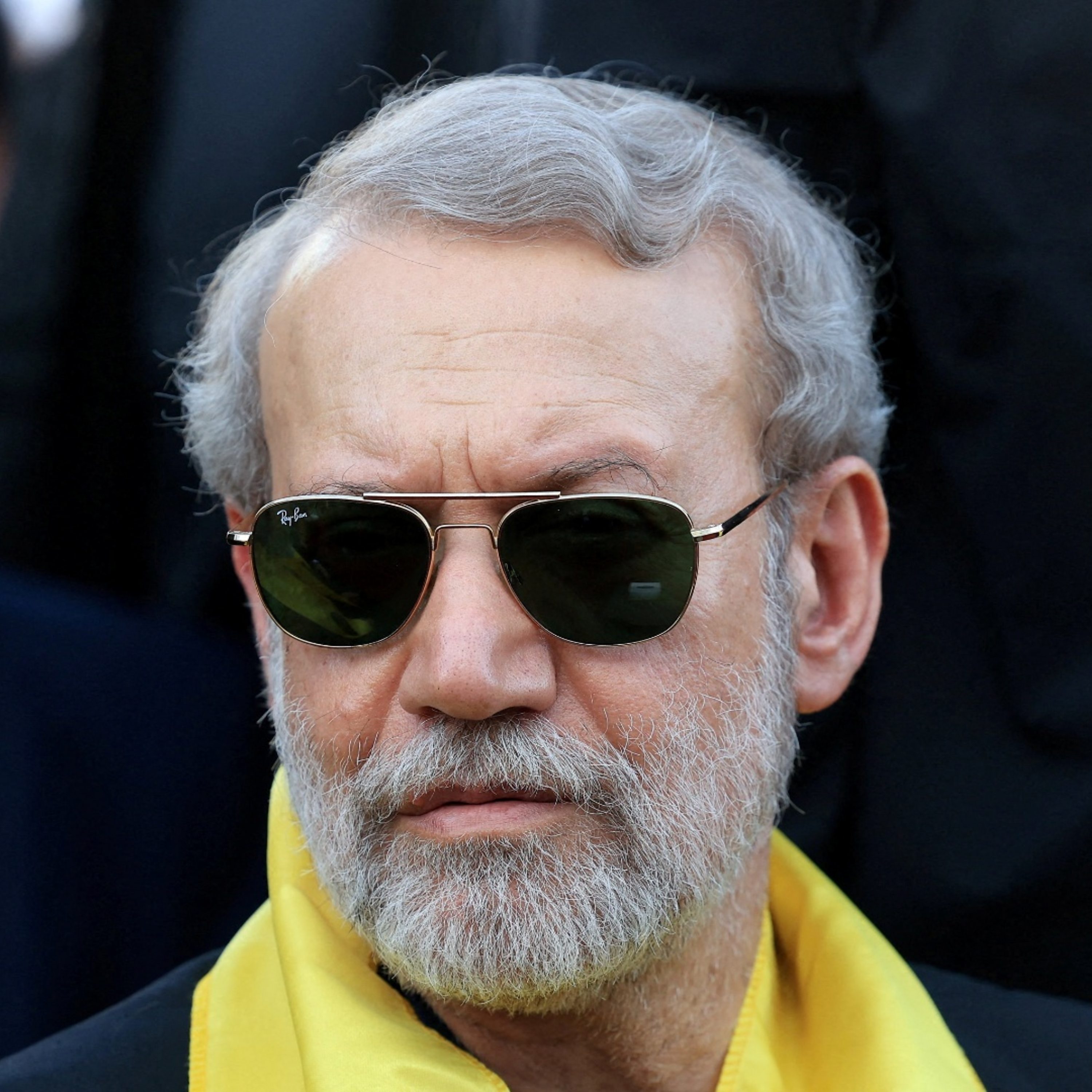
You're listening to the Global News Podcast from the BBC World Service. Hello, I'm Oliver Conway. We're recording this at 16 hours GMT on Tuesday 17th March. Israel says it's killed one of the most powerful figures in Iran. Ali Larijani, a top US Counterterrorism official, resigns over the war, saying Iran posed no imminent threat. And medical sources in Afghanistan say more than 100 bodies have been recovered after a Pakistani airstrike on a drug rehabilitation center. Also in the podcast, What we've learned from the earliest known recording of whalesong. After the Iranian Supreme Leader Ali Khamenei was killed at the start of the U. S Israeli offensive 17 days ago, Iran's powerful security chief Ali Larijani reportedly took over behind the scenes. Now, according to Israel, he has suffered the same fate as his former boss,
- [02:23]
Israeli Official / Narrator
Prime Minister Benjamin Netanyahu and I have instructed the IDF to continue to hunt the leadership of the terror and oppressive regime in Iran to cut off the head of the octopus and not let it grow. I was updated by the Chief of Staff that the Secretary of the National Security Council, Lari Jani, and the head of the Basij, the main oppression body of Iran, were eliminated overnight.
- [02:51]
Oliver Conway
The Israeli Defense Minister, Israel Katz, announcing the deaths of Ali Larijani and Holom Reza Soleimani, head of the IRGC's Volunteer Paramilitary Force, the Basij. Iran hasn't commented. Ali Larijani was one of the most powerful leaders left alive in Iran after more than two weeks of attacks. He was a former parliamentary speaker, IRGC commander and the country's nuclear negotiator. He reportedly tried and failed to get his brother chosen as the next supreme leader, but was said to be close to the man who did get the job, Mutjaba Khamenei. Ironically, Ali Larijani recently told President Trump to be careful not to be eliminated. As recently as Friday, he was seen walking defiantly through the streets of Tehran for the annual Al Quds Day march.
- [03:43]
Israeli Official / Narrator
The problem with Trump is that he's not intelligent enough to understand that Iran Iranians are a mature and strong and determined nation. The more pressure he exerts, the stronger our nation's willpower will become.
- [03:55]
Oliver Conway
Parham Gobardi from the BBC Persian Service told me that if his death is confirmed by Iran, it would be extremely significant.
- [04:03]
Parham Gobadi
He is one of the people who was left behind the scene that was seen as a person who was running the country. Because the supreme leader of the country, Ali Khamenei, has been killed on the first minute of the war when it broke out. His son, who has become the third supreme leader of Iran, his whereabouts is unknown, his health condition is unknown. Nobody knows if he's in a shape and form to be able to run the country or not. We know that few days ago, one Iran's member of Parliament said that there was an assassination attempt on his life not once, but twice. Once in a hospital, once on the first day of the war. However, Ali Larijani comes from a family that the entire family is extremely powerful. He was, as you mentioned, the speaker of Iranian parliament for 12 years. Before that he was the head of Iran's national tv. And before that he was also comes from Revolutionary Guard because Iran has two armies, one conventional regular army. The other one is the Revolutionary Guard that is very loyal to the Supreme Leader, extremely ideological. So he has come from that kind of background. Now in today's politics, he was seen as a bridge between the military, between the Revolutionary Guards and different faction of the powers. He was a conservative, but he was seen as a pragmatic conservative. However, his rhetoric changed tremendously after the war broke out. As you played one of his audios, he became more belligerent to the United States to also Donald Trump. Once, Even during the 12 Day War, he threatened to kill the head of International Energy Agency, implying that he would be killed because he said let the dust settle and we'll come after you. Because IAEA's report, Iranians believe that paved the way for the first round of the war with Israel. Regardless, he was a very important figure. And in today's Iran scene, there are not a lot of people who can run the country. So after he is killed, one of the very few people who has left is Mohammad Bograli Bof, the current speaker of the parliament. He after the 12 day war, he said that because so many commanders, Iranian commanders, Revolutionary Guards commanders were killed, he was the person in charge of the the military operations against Israel. So he was running the fight against the country. He is, I wouldn't be surprised if he's now leading the fight and also running the country because he also is a pilot and he also comes from Revolutionary Guards and he has a Revolutionary Guard background.
- [06:32]
Oliver Conway
Yeah. Talking of the Revolutionary Guards, they are basically in control of the streets in Iran along with the besieged militia, that volunteer group which works under them. And now the head of the Basij has also been killed.
- [06:45]
Parham Gobadi
That's correct. So Basij for your non Iranian audience, it's a para militia group that is a kind of sub branch of Revolutionary Guards. This is where they recruit the youth in the mosque. So in the mosques they have this Basij headquarters. Then the young people, they try to recruit the young people as young as 14 and 15. And we've received some reports that kids as young as 14 and 15, they're holding rifles on the streets to be able to exert their power and to show that they're still dominant in Iran.
- [07:15]
Oliver Conway
Parham Gobadi from the BBC Persian Service. And we have more on the reported death of Ali larijani on our YouTube channel. Search there for BBC News and you'll find the global news podcast in the podcast section. The conflict in Iran is not universally popular back in the US and has even been criticized by some of President Trump's strongest supporters. Now, a senior counterterrorism official there has resigned, saying he could not in good conscience back the war in Iran. Trump appointee Joe Kent, director of the US National Counterterrorism center, said Iran posed no imminent threat to the nation and he urged the president to reverse course. Our Washington correspondent Helena Humphrey spoke to Leila Nathu.
- [07:58]
Helena Humphrey
Joe Kent is the first senior Trump administration official to resign over the war in Iran. And what all of this is exposing is a split inside President Trump's own America first base. So if you want to know more about Mr. Kent ideologically, just to begin with, it's worth noting that along with being a high ranking official and a veteran, he also twice ran for Congress unsuccessfully as a Republican backing President Trump. So in this letter, which he posted on X Joe Kent said that Iran posed no imminent threat to the United States. He argued that this war was started under pressure from Israel and its allies in Washington. And he claimed that the president had been misled by what he called misinformation from Israeli officials and influential US Voices. He was quite blunt in that letter, which I've got in front of me, he says at one point that this was a lie. And so I think what all of this is highlighting is this growing unease within the America first wing of the Republican Party because many analysts will say that this is the exact kind of foreign entanglement that President Trump promised to avoid. I mean, you've got some others, more traditional Republicans who are supportive of confronting Iran. But certainly we're seeing this divide re emerge. I mean, he's not a marginal figure. He's a former Special Forces operative, a CIA officer really, embedded in counterterroris. And I think it's also worth noting that his wife was killed in a suicide bombing in Syria in 2019. So when he's talking about the cost of these wars, you know, I think that carries weight.
- [09:34]
Caroline Davis
Right.
- [09:34]
Leila Nathu
And he is the first senior official
- [09:37]
Helena Humphrey
to actually leave his job over this
- [09:39]
Leila Nathu
on a matter of principle and disagreement over this strategy.
- [09:43]
Helena Humphrey
Do you think that we could see
- [09:44]
Leila Nathu
more now, more figures in the Trump administration at least speaking out more forcefully against the war?
- [09:51]
Helena Humphrey
Indeed, Layla, that is what everybody will be watching for now. I think it's fair to say we haven't had comment yet publicly from the White House. But certainly, as you say, this resignation raises questions about internal dissent, whether others might follow. And I think it goes to the heart of President Trump's political identity as well, because as I'd mentioned, you know, he was campaigning against ending so called forever wars in the Middle East. And so if you've got a senior official resigning, saying that this war contradicts that, I think it's politically sensitive, especially as we head towards the midterm elections in November. And it will raise those kind of questions about whether we could see others in his wake.
- [10:30]
Oliver Conway
Helena Humphrey in Washington talking to Leila Nathu. Well, before Iran, the US Carried out a military operation against Venezuela, seizing the authoritarian president there, Nicolas Maduro, on 3 January. With his departure came a cautious hope for change among Venezuelans, though the rest of the Maduro regime is still in power. So how are things going now? Ione Wells has been to find out.
- [10:57]
Leila Nathu
I'm at the Central University of Venezuela in Caracas to hear from some students about what they hope for from the Future.
- [11:06]
Israeli Official / Narrator
I am a medicine student and 30 years old. A transition should happen in a peaceful, calm way. It wouldn't happen overnight.
- [11:19]
Leila Nathu
Today there's a meeting here of a new political movement in Venezuela called We Save Venezuela. It's a group of young people of different political persuasions getting together to discuss what the future of Venezuela might look like, possible opposition candidates, and how a transition might work.
- [11:37]
Venezuelan Interviewee
I feel intervention in any country isn't the best thing.
- [11:41]
Oliver Conway
But it was the firm hand Venezuela
- [11:43]
Venezuelan Interviewee
needed to move forward and be a
- [11:45]
Oliver Conway
free country with democracy, where everyone can
- [11:48]
Venezuelan Interviewee
raise their voice without fear of being arrested.
- [11:55]
Parham Gobadi
It's absurd that we as a country with the largest oil reserves in the world have these deficits.
- [12:01]
Howie Mandel
Yesterday I was without power for six
- [12:03]
Parham Gobadi
hours there in Maracai, the energy issue ends up paralyzing the economy and the
- [12:09]
Howie Mandel
progress of the country.
- [12:10]
Parham Gobadi
The real hope is of Venezuelans is that we can live in freedom and
- [12:14]
Howie Mandel
that our rights will be respected.
- [12:26]
Leila Nathu
There are still regular government rallies for Nicolas Maduro, with supporters demanding his release. But away from the main crowd, some young people told me they were public sector workers who were compelled to attend or risk penalties at work.
- [12:42]
Venezuelan Interviewee
I hope that the world knows everything they see on government media is false.
- [12:46]
Israeli Official / Narrator
It's all a lie.
- [12:48]
Leila Nathu
This 22 year old worker, Elena, whose voice and name we've changed, says last month public employees received a 150 bonus for attending pro Maduro marches on top of a $120 monthly salary. Friends who didn't go didn't get it.
- [13:03]
Venezuelan Interviewee
Le Economia continua Yual. The economy remains the same, the government remains the same. The fear of expressing yourself still exists because the figures that represent the most terror in government remain imposed.
- [13:18]
Leila Nathu
I asked how she felt about the idea of living in a democracy.
- [13:23]
Venezuelan Interviewee
I imagine it as a dream.
- [13:25]
Leila Nathu
Elena doesn't want to emigrate like the millions of Venezuelans who have fled the economic crisis. But others told me they no longer see a future for themselves here. One of them is Anna, whose name we've also changed. A 25 year old teacher from Maracaibo hoping to move to Spain. I don't know what it is like to be able to go on the street and don't feel like you could get killed at any point in time just because you posted the wrong thing in social media. I want to earn money and feel like I can live somewhere that actually has electricity. She grew up watching her mother cry when the family did not have enough money for the week and people looting shops in her hometown, Maracaibo, when power cuts lasted a week. She's lived through too many cycles of things getting better then worse again to believe things will be different just because Maduro is gone. It can be very lonely. Most of my friends had to flee the country to pursue something better. Not all young people are convinced by the US's intervention, but one thing I clearly heard that unites many young Venezuelans who have never lived through a change of political party is they want less polarization and corruption, with crucially, the freedom to speak without fear.
- [14:39]
Oliver Conway
Ione Wells reporting from Venezuela and still to come in this podcast.
- [14:46]
Israeli Official / Narrator
What's Wrong with That? Edmund Dorff all the best English and have foreign names. Much more convincing.
- [14:51]
Oliver Conway
I'm sorry, I just don't feel like an Edmund Doff. Charming we look back at the life of the spy thriller author Len Dayton, who's died age 97.
- [15:08]
Howie Mandel
Hey, it's Howie Mandel and I am inviting you to witness history as me and my Howie do It Gaming team take on Gilly the King and Wallow $267 million gaming in an epic Global Gaming League video game showdown. Four rounds, multiple games, one winner, plus a halftime performance by multi platinum artist Travy McCoy. Watch all the action and see who wins and advances the championship match against Neo right now@globalgamingleague.com that's globalgamingleague.com everybody games
- [15:38]
Grainger Advertiser
craving the coffee flavor you love, but without the caffeine, Cachava's got you covered with their newest coffee flavor. This all in One Nutrition shake delivers bold, authentic flavor crafted from premium decaffeinated Brazilian beans. Quality nutrition shouldn't be complicated. Just two scoops of Cachavas all in one nutrition shake and you've got 25 grams of protein, 6 grams of fiber, greens and so much more. Whether you're craving that coffee taste to kickstart your morning ritual or as a nutrient packed reward to round out your afternoon, Cachava keeps you fueled and satisfied wherever your day takes you. Plus, it actually tastes delicious. No fillers, no nonsense, just the good stuff your body craves. And for the times you feel like switching it up. You've got seven flavors to choose from, all with the highest quality ingredients. Treat yourself to the flavor and nutrition your body craves. Go to kachava.com and use code news. New customers get 15% off their first order. That's K A C-H-A-V-A.com code news hey,
- [16:39]
Howie Mandel
it's Howie Mandel and I am inviting you to witness history as me and my how we do it Gaming team take on Gilly the King Wallow 267's million dollars gaming in an epic global Gaming league video game showdown. Four rounds, multiple games, one winner plus a halftime performance by multi platinum artist Travy McCoy. Watch all the action and see who wins and advances to the championship match against Neo right now@globalgamingleague.com that's globalgamingleague.com everybody games.
- [17:08]
Israeli Official / Narrator
If you work in university maintenance, Grainger considers you an MVP because your playbook ensures your arena is always ready for
- [17:16]
Oliver Conway
tip off and Granger is your trusted
- [17:18]
Israeli Official / Narrator
partner offering the products you need all
- [17:21]
Oliver Conway
in one place from H VAC and plumbing supplies to lighting and more and
- [17:25]
Israeli Official / Narrator
all delivered with plenty of time left on the clock so your team always gets the win. Call 1-800-granger.
- [17:32]
Oliver Conway
Visit grainger.com or just stop by Granger
- [17:35]
Israeli Official / Narrator
for the ones who get it done.
- [17:43]
Oliver Conway
This is the global news Podcast Pakistan has long accused Afghanistan of harboring Pakistani militant groups, something the Taliban government denies. The ongoing conflict between the two former allies intensified in February when Pakistan launched new airstrikes on what it said were militant targets in Afghanistan. But now the Pakistani military is accused of hitting a drug rehabilitation center in Kabul. Video footage from the scene showed flashes of light, explosions and a giant plume of smoke. Shadafat Zaman from the Afghan Health Ministry says hundreds of people died.
- [18:24]
Parham Gobadi
Unfortunately we have more than 400 civilian casualties that they were targeted from the Pakistani military regime.
- [18:30]
Oliver Conway
It was a totally civilian area and
- [18:32]
Parham Gobadi
it was a health facility that they targeted. Unfortunately the Pakistani military regime, they're doing propaganda that we targeted the TTA or ttp. But the reality, in fact we have lots of media partners. They are witness that here we have totally civilian casualties in lots of them.
- [18:51]
Oliver Conway
They were health professionals and also medical staff and 400 plus were the killed people.
- [18:56]
Parham Gobadi
They were under the treatment in the hospital.
- [18:59]
Oliver Conway
The BBC's Yama Bariz in Kabul visited the scene about an hour after the fire broke out.
- [19:05]
Yama Bariz
We got to the hospital. It was a scene of total carnage. There were fire everywhere. There were bodies lying all over the place. There were debris. There were twisted iron rods from the building structure and there were paramedics, ambulances. I personally saw over 30 bodies being carried to the ambulances. Tens of ambulances were standing in a line there. We saw members of the families of these drug addicts outside the hospital. There were women crying. They wanted to to get some information about their loved ones. When we spoke to authorities there at that time, the authorities did not have any exact number about deaths and injured, but they estimated that it could be hundreds because 3,000 drug addicts were being treated in that facility. It's a huge rehabilitation facility. There are several blocks, but this bomb, which has landed on this building, had hit one block and that block was completely reduced to. And because, according to the officials, a lot of wood was used in the structure because it was sort of a makeshift rehabilitation structure. So that's why they said that the fire was burning and a complete distraction, a complete scene of total carnage.
- [20:37]
Oliver Conway
Yamat Baris in Kabul and sources at the Kabul Forensic Medicine Department have now told the BBC that more than 100 bodies have been recovered after the strike so far. Pakistan, meanwhile, has denied targeting the rehabilitation center, saying it only hits military sites. I spoke to the BBC's Caroline Davis in Islamabad.
- [20:58]
Caroline Davis
Very quickly on social media, we saw a response from the Ministry of Information in Pakistan saying that this was not the case, that they had been targeting military sites, as they refer to it, sites that can sort of facilitate militant activity as well. And since then, we have heard them really continue with that line. Mostly, we have still continued to hear from the Pakistan authorities labeling the Taliban's points, saying that they're talking about propaganda that has been their kind of consistent line of dissents. And I think that is something we've seen repeatedly in this conflict.
- [21:29]
Oliver Conway
Of course, Pakistan used to support the Taliban in Afghanistan. And why are they fighting now?
- [21:37]
Caroline Davis
There has been a rapid deterioration in the relationship between Afghanistan and the Afghan Taliban and Pakistan. As you say, in 2021, when the Afghan Taliban came to power and seized control in Kabul, there were people who were inside the Pakistan government who were saying that this would be a good thing for Pakistan. However, relatively quickly, Pakistan started to criticise and to say that the Afghan Taliban were allowing militants to be able to operate inside Afghanistan's borders that would then plan attacks, come across the border into Pakistan, carry those attacks out. They wanted to see the Afghan Taliban government doing more to stop those groups. And we saw a sort of a flurry of attempts at sort of diplomacy, lots of different meetings between the two sides, but ultimately the relationship really deteriorated. And in October last year, we saw major clashes on the border and attacks and missiles being fired as well. Again, there was a fragile ceasefire that was broken in February, and now there does not currently seem to be any suggestion of a ceasefire being anywhere on the table. We know that China has been attempted to try to do some form of back and forth speaking to both sides, but at the moment we've also heard from the Pakistan Prime Minister's spokesperson who said there is nothing to talk about, which doesn't suggest that there's a huge amount of scope for finding a middle ground at the moment.
- [22:58]
Oliver Conway
Caroline Davis in Islamabad. Now, why would an artificial intelligence firm want to hire a chemical weapons expert? The US Company Anthropic says it needs one to prevent what it calls catastrophic misuse of its software. In particular, it wants to make sure its AI tools tools can't be used to generate recipes for chemical weapons. Here's our technology editor, Zoe Kleinman.
- [23:21]
Venezuelan Interviewee
What Anthropic says it's trying to do is to make sure that its product is as safe as possible. So it's looking for, you know, a world leading expert in chemical weapons and, and dirty bombs. And what it, what it wants that person to do is to be able to spot anything that its system might generate that could result in the creation of a lethal weapon, you know, if prompted or sort of fooled being prompted to do it. And that's quite reassuring in a way, isn't it? Because you sort of think, you know, someone like you or me might not spot something that was in a, you know, a load of AI generated content that could be dangerous, whereas somebody with huge and very specific expertise is more likely to do that. But the counterargument to that, there are concerns from other experts that the fact is you're still giving these tools that information, aren't you? Even if you're telling them not to do it. Say for example, if I say to you, don't think about the color red, I'm still know, giving you the idea of the color red. That's very simplistic, but that, but some people are saying, well actually we shouldn't be handing over that information at all, especially as we know that this technology is evolving very rapidly and there's promises that it's going to become ever more independent and autonomous. You know, might there come a day when it knows all of this but it decides to overrule the instruction not to do it. So currently the human in the loop, that's what the tech companies call it, is very important in the industry in terms of how future proof that is. You know, it's really difficult to tell. I mean, Anthropic isn't the only company taking this approach. The firm OpenAI, which of course developed ChatGPT, has also advertised for a researcher in chemical and biological risk. And they're paying good money. OpenAI is offering over $400,000 for this position. So it does seem to be the approach that the industry is Going for to try to make these systems safe and Anthropic says it's also appointing experts in other subjects. Interesting. I spoke to a few people at the firm about this job advert when I first saw it and one of them said are you inquiring as a journalist or are you interested in the position? And I have to say no. I am definitely not someone who considers myself to be an expert in chemical weapons. But you know, they're obviously sort of casting the net wide.
- [25:34]
Oliver Conway
Our technology editor, Zoe Kleinman. One of the best selling authors of the 20th century, Len Dayton has died at the age of 97. Born into poverty in London, he also worked as an illustrator and wrote a number of historical books. He sold tens of millions of novels including the Ipcrest Findings, which was made into a successful film. Liiso Mazimba looks back at his life. Courtney, I am gonna cook you the best meal you've ever eaten.
- [26:01]
Israeli Official / Narrator
Michael Caine in the film of Len Dayton's the Ipcresphile A new kind of spy. Working class and Bolshy and a bit like his creator. Len Dayton was born in a workhouse, the child of domestic servants. The RAF trained him as a photographer. After art college he became an illustrator, then a food writer. He wrote three more books featuring his nameless hero called Harry Palmer in the films including Funeral in Berlin.
- [26:31]
Oliver Conway
Dorf.
- [26:32]
Israeli Official / Narrator
What's wrong with that?
- [26:34]
Oliver Conway
Edmund Dorff.
- [26:35]
Israeli Official / Narrator
All the best English and have foreign names. Much more convincing.
- [26:38]
Oliver Conway
I'm sorry, I just don't feel like an Edmund Dorff.
- [26:41]
Israeli Official / Narrator
Charming. He tried his hand at filmmaking himself, writing and co producing oh what a Lovely Walk. But he preferred writing books, especially about the second World War. Bomber was an account of an Allied bombing raid on Germany as seen from both sides. Some thought it anti war. He disagreed. Where does it say it's an anti war. I'm just saying it's an anti war book that the publishers have never said it's an anti war book. This just exists in your mind as an anti war book. What this is. It's a war book. Blood, Tears and Folly was a history of the war's early years. Like all his work, it was carefully researched. He felt he had something to prove to those who, unlike him, had degrees and expensive educations.
- [27:25]
Oliver Conway
Lizo Mazimba on Lendayton who has died at the age of 97. Marine scientists in the US have stumbled across what they believe to be the earliest recording of whale song on a disc in their archives. The recording from 1949 captures the sound of humpback whales off the coast of Bermuda. Researchers say it paints a picture of how whales communicated at a time when the oceans were much quieter. Here's what the microphones picked up almost 80 years ago. Peter Tyack is from the Woods Hole Oceanographic Institution in Massachusetts. He told Sean Lay how their researcher discovered the recordings recording.
- [28:09]
Peter Tyack
When she was reviewing data from early research cruises about a year ago, she discovered about 200 audio recordings from 1949 that had been recorded directly onto vinyl discs. And she was particularly curious about one whose liner note said fish noises on the side. And she sent this disc and two others to be digitized by a specialist. And as soon as she heard the digitized recording, she thought the sounds probably were more likely whales than fish. And then she contacted me and other bioacousticians to get a positive identification.
- [28:41]
Israeli Official / Narrator
And what's unusual about this is how far back these sounds were recorded.
- [28:46]
Peter Tyack
Yes, yes. This recording was made well before people knew what sounds different species of whales make. During World War II, people recorded sounds in ships and were able to hear unusual sounds that they thought were biological, but they had no idea what the source of sound was. So when they heard the sound, when they were recording from this cruise, they just recorded it because it was so unexpected and unusual.
- [29:12]
Israeli Official / Narrator
We're going to play a bit from the 1949 recording, and then, then we'll play something else, and you can perhaps draw out the contrast for us, if you would, Peter. So here's the recording that was digitized and recovered last year. Now, this is a more recent recording from the 2000 and tens. Now, the recording quality is, unsurprisingly better, but is there any other difference that you would draw our attention to?
- [29:47]
Peter Tyack
The ocean soundscape that the whales live in has changed quite a bit. There's a lot more ships for shipping, and as motorized ship ships move, they inject noise in the ocean that elevates the background. There also are new sources of sound. Sounds used to probe for oil and gas below the sea surface, new kinds of sounds used for sonar and for communication within the ocean. It also turns out that a warming ocean changes how sound propagates. So climate change is also causing changes in how sound from all of these different sources propagate through the ocean and change the sound that we hear anywhere. Listening in the ocean, is there any
- [30:25]
Israeli Official / Narrator
sense in which their communication has been affected by all this additional noise?
- [30:30]
Peter Tyack
Yes. The best case that we have for looking at how whales have changed their vocalizations when they have increasing amounts of low frequency shipping noise is right. Whales in the Atlantic have been recorded from the 1950s to today. And if you look at the frequency of the calls that right whales made in 1950 and compare them to 2000, they've basically switched from being basses to tenors. So the low frequency shipping noise caused them to increase the frequency of their calls about half an octave. It's hard for basses to shift to be tenors, so presumably, presumably in a quiet environment, they preferred the earlier frequencies, but they were able to shift to compensate for the noise.
- [31:13]
Oliver Conway
Marine scientist Peter Tayak and that's all from us for now. But the Global News podcast will be back very soon. This edition was mixed by Charlie Beringer and produced produced by Richard Hamilton. Our editor is Karen Martin. I'm Oliver Conway. Until next time. Goodbye. Bring incredible sound into every corner of
- [31:39]
Peter Tyack
your home with the new Whim Sound Smart speaker.
- [31:41]
Oliver Conway
Get high resolution audio with a 1.8-inch touchscreen, smart control and modern design in one powerful speaker for just 200. From quiet mornings to lively family gatherings, Wimsound makes every moment sound better and feel better too. Create a home filled with sound you love.
- [31:59]
Peter Tyack
Ready to upgrade your sound shop now
- [32:01]
Oliver Conway
at Amazon and search wimsound. That's wiim S O U N D.