Loading summary
Transcript57 lines
- [00:00]
Narrator/Host
This BBC podcast is supported by ads outside the uk
- [00:06]
Commercial Announcer
Tax season has arrived and doing taxes without the right help can feel overwhelming. Intuit TurboTax is here now to guide you through it with confidence. Match with a TurboTax full service expert who handles everything for you from start to finish. Your dedicated expert checks every single deduction and credit to help you get the best possible outcome so you can feel confident you're getting every dollar you deserve. And the best part? You'll see real time updates on your expert's progress right on your phone while you live your life. Plus you get unlimited expert help at no extra cost even on nights and weekends during tax season. Visit turbotax.com Only available with TurboTax Full Service Experts Real time updates only on iOS mobile app
- [00:47]
Narrator/Host
Introducing Home Care Plus, a new subscription service from Lowe's that helps make life easier by giving members a hand with home maintenance. Let Lowe's tackle the tasks you keep meaning to do, like electric dryer, vent cleaning, replacing hard to reach light bulbs and and more. Subscribe to Home Care plus for just 99 a year and consider your to do list done. Members get more at Lowe's. Available on select zip codes only. Cancel anytime. Non refundable fee. Product purchase required Terms and service restrictions apply. Details@lowe's.com Terms subject to change
- [01:17]
Paul Moss
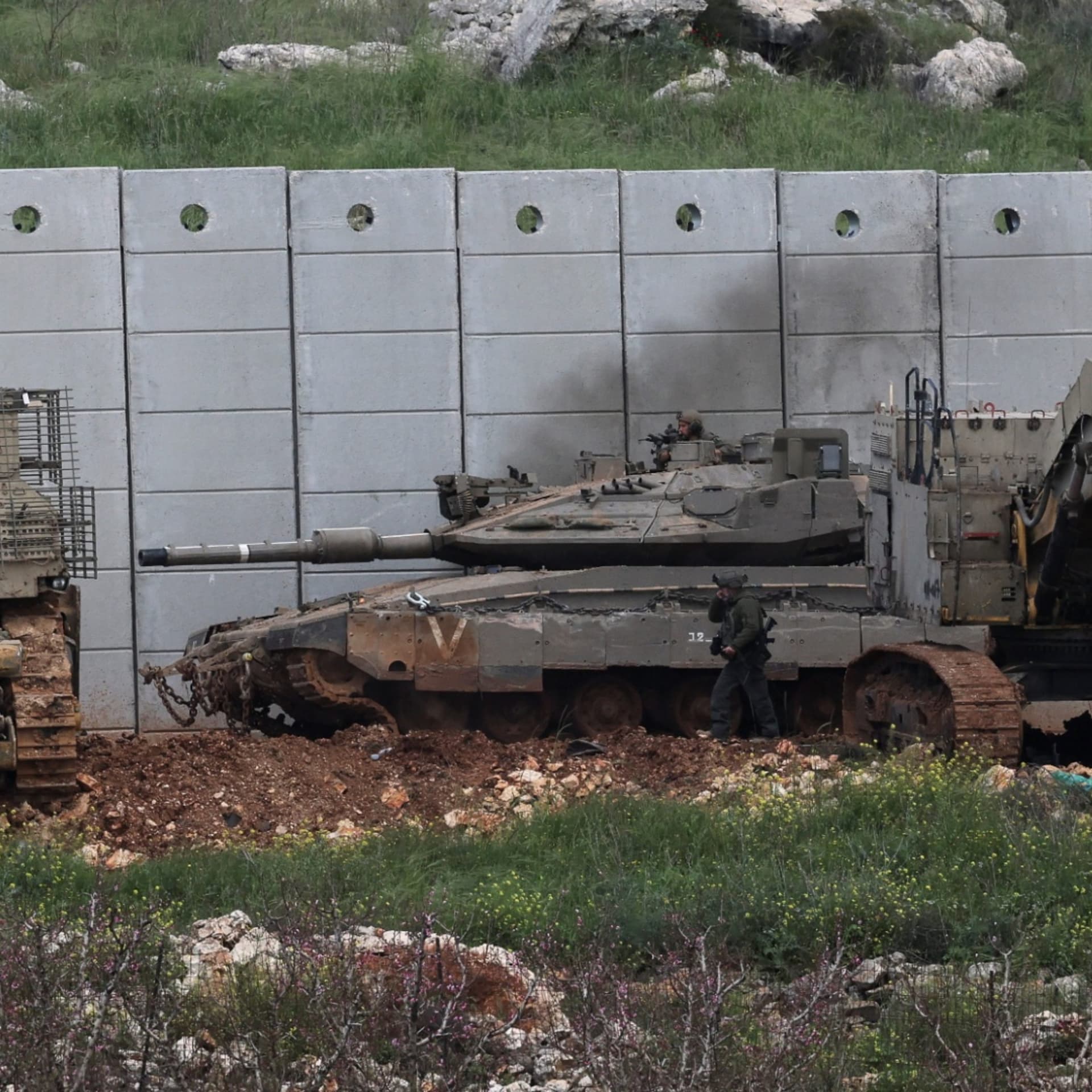
this is the Global News Podcast from the BBC World Service. I'm Paul Moss and in the early hours of Friday 10th April, these are our main stories. President Trump has said Iran better not be charging fees for ships to pass the Strait of Hormuz as a shaky ceasefire continues with Israel and Hezbollah continuing to exchange fire. What's prompted Benjamin Netanyahu to agree to peace talks? Did Donald Trump push him to the negotiating table? And why Cuba's missionary doctors abroad are being sent home? Also in this podcast, the lies linking
- [01:58]
Melania Trump
me with the disgraceful Jeffrey Epstein need to end today.
- [02:03]
Paul Moss
Why has Melania Trump suddenly denied having a relationship with Jeffrey Epstein? We begin with a ceasefire between the us, Israel and Iran, and the attacks which threaten to destabilize it. Fresh Israeli strikes have been reported across Lebanon despite international pleas for the country to be included in this week's ceasefire. Prime Minister Benjamin Netanyahu has agreed to talks between the two countries. The plan is for these to take place in Washington next week, but what are the chances of success given the ongoing bloodshed? Wednesday's attack saw Israel kill more than 300 people. The Israeli government insisted it was targeting Hezbollah, the Shia led militant group which has itself fired rockets across the border. But as always, many civilians also died. Mohammed lives near a building which he says was turned to rubble. This is crazy. There's children's toys, there's Winnie the Pooh, there's a piglet, you know, so it's terrible. It's terrible because these are war crimes, these are civilians. They're probably cooking, cleaning, and it's so sad to see what's happened in the immediate aftermath of this attack. Benjamin Netanyahu certainly didn't sound in the mood for talks. He described the airstrike on Lebanon as the greatest yet. And there were further exchanges of fire between Israel and Hezbollah on Thursday. And yet amidst the fighting, we then had this statement from the Israeli prime minister.
- [03:38]
Narrator/Host
In light of Lebanon's repeated requests to open direct negotiations with Israel, I instructed the Cabinet yesterday to start direct negotiations with Lebanon as soon as possible. The negotiations will focus on disarming Hezbollah and establishing peaceful relations between Israel and Lebanon.
- [03:55]
Paul Moss
So what happened in the meantime? Well, nobody can be sure, but it would certainly be an educated guess to suggest that the White House put pressure on Mr. Netanyahu to come to the negotiating table. Donald Trump and his administration have been touting their success in reaching that ceasefire with Iran. And the ceasefire was clearly threatened by the attack on Lebanon. And yet any peace deal between Israel and Lebanon is going to require the Lebanese government to rein in Hezbollah, something Israel has always demanded, but which our Middle east analyst Sebastian Ascher told me has never been achieved.
- [04:31]
Sebastian Ascher
The Lebanese government has been unable in any form over the years to take on Hezbollah because in doing that, in trying to disarm Hezbollah, it would lead to the collapse of what exists of a Lebanese state, potentially a full out civil war again. That's why it hasn't happened. Netanyahu knows that. Israel knows that. Anybody who has any understanding of a situation knows that. But it's in Netanyahu, Netanyahu's interests and the Israeli government's interest to kind of pretend that isn't so, that it's the Lebanese government who for some reason is holding out on trying to disarm Hezbollah. And it could have done. It just isn't the case. So if he's still putting the onus essentially on the Lebanese government to do that, that won't go anywhere. And the announcements that Mr. Netanyahu made that his Defense minister, Israel Katz, have made over the past week or two about their plans for Lebanon are extreme. Essentially occupying the south of Lebanon again, as they did between 1985 and 2000. The attacks they carried out on Wednesday were in Places that hadn't seen any kind of threat like that in the past month or so of this conflict, or even really back in 2024 when Israel launched its major campaign against Hezbollah then. So, you know, I'm not sure that this is really going to go that far, but it's a holding position, I guess, that Washington wants, because it doesn't want the talks that are due to take place in Islamabad with Iran to be overturned before they started. And Iran has reacted very, very negatively to this. You know, the Strait of Hormuz essentially saying that that's now going to remain closed. We've seen Hezbollah fire some missiles again into Israel. The whole thing could collapse. On this one issue.
- [06:19]
Paul Moss
The arguments continue about whether Lebanon was included in the ceasefire agreement that was reached between Iran and the United States and Israel. Some people will be scratching their heads at this and thinking, well, surely a major ceasefire agreement like this would be put into writing so that we could see very clearly whether Hezbollah and Lebanon were indeed included.
- [06:43]
Sebastian Ascher
I mean, I think there's two things. One, I don't think there really is, as such a ceasefire agreement at the moment. I mean, there is a ceasefire of some kind. That's place waiting for negotiations to begin on the two positions of a US And Iran, which as far as we know and can see at the moment, are still very far away from each other. As far as was Lebanon involved in this or not? I mean, from everything that Israel had been saying that Mr. Netanyahu had been saying, there was no sense that Lebanon was going to be included in this, it now may become the case, because the risks to that ceasefire being sustained and building into an actual resolution to this crisis that President Trump is facing, you know, as a political crisis that the Iranian leadership is facing, as an existential crisis, you know, that has to be resolved. And if Israel's ambitions to try and obliterate Hezbollah, which they've tried before and they've failed before, whether that interferes with that, then that will be taken into account. And, you know, Washington will try to ensure that it doesn't interfere. I don't think that will Prevent Israel and Mr. Netanyahu continuing with their offensive against Hezbollah at some point, with some great intensity later, but they may suspend it for now in order to give these talks a chance.
- [08:09]
Paul Moss
Sebastian Asha. Well, so much for the peace between Israel and Hezbollah. What of the attempt to end the wider hostilities between Iran, the US And Israel? Passage through the Strait of Hormuz has, as we there, become one of the main bones of contention between them. Indeed, New bones of contention have arisen since the conflict broke out, with Iran suggesting it could charge ships to pass through this crucial waterway. Donald Trump warned that they'd better not. But as the wrangling goes on, the strait remains closed to almost all shipping. Here's our diplomatic correspondent, Caroline Hawley.
- [08:45]
Caroline Hawley
Before Israel and the US launched their war on Iran, 130 to 140 ships would pass through the Strait of Hormuz every day. Now it's become for Tehran both a weapon and a source of leverage. Iran's powerful IRGC has published a map with a big circle just north of Oman labelled Area of Danger, where mines are said to have been laid. Ships are being instructed instead to sail much closer to Iran's shores. The country's Deputy Foreign Minister, Saeed Khatibzadeh, says tankers and ships need to coordinate with its military.
- [09:18]
Luis Fajardo
This Strait of Hormuz is purely in Iran's territorial water. Oman and Iran. It is not international water. Definitely we are going to provide security for safe passage and it is going to happen after United States actually withdraw this aggression.
- [09:34]
Caroline Hawley
Since the war began, only vessels from countries deemed friendly to Iran have been allowed to transit the crucial waterway after negotiating safe passage. Opening up the shipping lanes was supposed to have been part of the ceasefire, but only a trickle of vessels has passed through the strait since then. Iran now wants to impose a toll for using it. Niels Haupt of the shipping firm Hapag Lloyd was asked if companies would pay.
- [09:59]
Paul Moss
If there's no other alternative, you probably would need to, right? But if this means that for the coming years, there will be a fee for the Strait of Hormuz of millions, which is double or triple the price of crossing the Panama Canal or the Suez Canal, you know, that would be quite ridiculous for the entire industry.
- [10:20]
Caroline Hawley
Already, Iran's stranglehold on the Strait of Hormuz has come at an enormous cost to the global economy. Shipping companies, world leaders and consumers all have a stake in what happens next.
- [10:32]
Paul Moss
Caroline Hawley. And we have more on this on our YouTube channel. Search for BBC News on YouTube and you'll find the Global News podcast in the podcast section. There's a new story available every weekday. Now, as we've been hearing, the ceasefire in the Gulf was meant to reopen the Strait of Hormuz. But analysis of shipping data by the BBC suggests just nine vessels have passed through the strait since the ceasefire was announced. And this has affected countries in Asia more than anywhere else. 90% of the oil and gas passing through the strait is bound for Asia, much of it for China, of course. But another country badly hit is Thailand. People there have been told to cut back on energy use. And Thailand's farmers are particularly feeling the effects from the rising cost of fuel.
- [11:21]
Thai Farmer
I want the whole country to stop growing rice so the government has no rice to eat. And then they could feel the hardship. The hardship is indescribable. You're ready to harvest rice, so you load a container onto your truck to buy fuel. But no one sold fuel to you. I waited for three days to buy fuel so that I can harvest my paddy field. On the fourth day, I protested at the gas station until they finally sold fuel to us. And what was the result? Our rice became too dry and too brittle. We could only sell at a discount because they claimed the rice was too dry. Why didn't they ask the reason? We didn't harvest earlier. We didn't harvest because we couldn't get fuel.
- [12:06]
Narrator/Host
What would be left for us? The government announced that they will help with this and that, but no aid came. I've never seen it. I only hear words that they will help.
- [12:18]
Thai Farmer
We don't burn rice straw. We plant other crops. After we harvest rice, we do everything. But we have never received any support or help from the government. Now fuel is available, but the price has gone up so much that we can't afford it anymore. If you ask whether there's fuel to be bought, it is available, but we don't have the money to buy it because when we sold our rice, the money we got back was not enough.
- [12:48]
Narrator/Host
Whatever the government tells us to do, we follow. All growing rice now will lead to a loss. So I find odd jobs making hundred to 200 baht a day just to get by. For now, if we do farming and lose money, what's the point in doing it? Why keep doing it? Our expenses don't decrease, only our income keeps dropping.
- [13:08]
Paul Moss
The voices of farmers in Thailand now an awful lot of high profile people have found themselves in the firing line over their alleged links to Jeffrey Epstein, Bill Gates, Bill Clinton, Britain's one time Prince, Andrew, Mountbatten Windsor. They all denied any wrongdoing. But one person who's rarely been linked with the late sex offender outside of the wilder fringes of the Internet is Melania Trump. So it came, to say the least, as a surprise when on Thursday afternoon, local time, the first lady came out with this.
- [13:41]
Melania Trump
To be clear, I never had a relationship with Epstein or his accomplice, Maxwell.
- [13:50]
Caroline Hawley
I'm not a witness or a name
- [13:53]
Melania Trump
witness in connection with any of Epstein's crimes. My name has never appeared in court documents, depositions, victim statements or FBI in interviews surrounding the Epstein matter. I have never had any knowledge of Epstein abuse of his victims.
- [14:18]
Paul Moss
Ms. Trump's statement was all the more surprising given that she's rarely spoken about anything. Indeed, apart from her appearance in the carefully curated documentary released earlier this year, Ms. Trump has been one of the least prominent first ladies of modern times. But then, that may already have been changing. As Mary Jordan explains, she's the author of a book called the Art of Her Deal, the Untold Story of Melania Trump.
- [14:44]
Caroline Hawley
I've watched her now over seven or eight years, and her independence is growing by the minute. When she just did her big documentary, her movie, she barely mentioned her husband. She every time she has an interview, which is very infrequently, she talks about being independent. So I'm not surprised at all. I think she was boiling over and she said very little about her husband. I think she's just sick of being dragged online about this.
- [15:13]
Paul Moss
Well, our North America correspondent Simi Jolo Oso is in Washington and told me more.
- [15:19]
Melania Trump
The topic of her statement was a total surprise. There was no indication from the White House that it would be on Epstein, and it's still unclear what prompted it. It's particularly surprising because no one at the White House brings up Epstein voluntarily. It's considered, I think my colleague put it, as a politically toxic topic for administration. But there were rumors on social media linking her to Jeffrey Epstein, and they had been swirling for a while, even though they weren't hugely widespread. It wasn't in the traditional press. But there is speculation that perhaps a big story is about to break and this is the White House sort of getting their denial out there first.
- [15:57]
Paul Moss
Has there been any reaction from Washington, from anyone else?
- [16:00]
Melania Trump
Yeah, there has been. There's been a lot of surprise here, even amongst the press, including, like Fox News, which is a favorite of President Trump's, and also amongst lawmakers. We've heard from members of the Congress that are part of the committee investigating Epstein's crimes. One congressman said that they agreed with the first lady's call for a public hearing with the survivors of Jeffrey Epstein. But another congressman said it should be the government, the Department of Justice, speaking to Epstein survivors for their testimonies and not Congress, and also said that there should be more prosecutions.
- [16:34]
Paul Moss
Now, there have been reports that Donald Trump didn't actually know that his wife was going to make this statement. I mean, is that possible? And if so, I suppose I wonder what it tells us.
- [16:45]
Melania Trump
Yeah. So that report comes from one journalist from a media outlet called msnow. She said that she spoke to President Trump on the phone and that he told her he didn't know anything about the first lady's statement beforehand. That is indeed possible. It could be down to something simple as them having separate communications teams. We know Melania Trump has at times maintained a more independent public posture than typical political spouses. This could reflect a decision to speak on her own terms, strategically, to protect herself, especially on a topic that she knows Donald Trump is not a fan of. And this is kind of her way of keeping him distanced from that topic of Jeffrey Epstein. Also, what President Trump is describing as him not knowing about it could just mean that he wasn't directly involved in the details of the statement and how it was put out, not that he wasn't aware at all that she would speak about it.
- [17:39]
Paul Moss
Simi Joloso still to come in this podcast, A Wake up call from Conservationists.
- [18:00]
Commercial Announcer
Hey, it's Ryan Seacrest for Albertsons and Safeway. Take care of yourself this spring with great savings on all your favorite wellness brands. Now through April 28th. Save $5 when you buy three or more participating wellness items. Shop in store or online for products like centrum, silver, nexium, 24 hour, tums ultra strength or Smoothies tablets and Flonase spray. And save $5 when you buy three or more. Get these deals before they're gone. Offer ends April 28th. Restrictions apply. Offers may vary. Visit albertsons or safeway.com for more details.
- [18:31]
Grammarly Advertiser
Work moves fast. From emails and reports to proposals and updates, you're expected to think clearly, write confidently, and get it right the first time and every message count. That's where Grammarly comes in. It gives you everything you need to think, write and finish in one place or anywhere you type and text. You'll never have to switch tools or tabs. Grammarly's AI agents are built for how you work and where you work so you can find the right words, adjust your tone and predict how your message might land before you hit send. Your ideas will get a boost while still sounding natural, credible and just the way you want. For nearly 17 years, Grammarly has been the standard for responsible AI. It's the premier writing tool that 93% of users trust to get more work done. In a world of generic AI don't sound like everyone else. With Grammarly, you never will. Download Grammarly for free@Grammarly.com that's Grammarly.com this
- [19:31]
Grainger Advertiser
is the story of the one as a maintenance tech at a university. He knows ordering from multiple suppliers takes time away from keeping their arena up and running. That's why he counts on Grainger to get everything he needs, from lighting and H vac parts to plumbing supplies, all in one place. And with fast, dependable delivery, he's stocked and ready for the next tip off. Call 1-800-GRAINGER Click grainger.com or just stop by Grainger for the ones who get it done.
- [20:02]
Commercial Announcer
Welcome to the Interface, the show that decodes the tech that's rewiring your weekly and your world. On this week's episode, we'll look at the way that algorithms could change how much you're paying for your groceries, how even astronauts have issues with Microsoft Outlook, and whether the next trend in tech is less tech. Listen on BBC.com or wherever you get your podcasts.
- [20:33]
Paul Moss
If I were to ask you what Cuba's main export was, you might suggest sugar, rum, or perhaps the country's famous cigars. But another response would be to suggest that it's doctors. Cuba has, for more than half a century, sent medics abroad, partly as a way of earning cash for the country, but also to help build good international relations. Now, though, it seems this era of Dr. Diplomacy may be coming to an end, several countries have canceled the program, and Cuba is blaming the United States. As I heard from Luis Fajardo, a Latin America analyst at the BBC's monitoring
- [21:08]
Luis Fajardo
service, the foreign minister of Cuba, Bruno Rodriguez, is saying that the US Government is applying pressure on several countries, mostly in the Western Hemisphere, in Latin America, saying that good relations with the Trump administration would require them to move away from this program of Cuban doctors being sent to their countries. Cuba, according to some reports, has something like 24,000 medical professionals working abroad, many of them in the Western Hemisphere in countries like Venezuela and many others. And several countries recently have said that they are moving away from this scheme. Countries like Guatemala, like Honduras.
- [21:47]
Paul Moss
Now, I gather that Washington has hit back at Cuba's claim, and they're suggesting that the Cuban doctors who work abroad may not be doing so entirely willingly.
- [21:58]
Luis Fajardo
There's strong evidence that the government of Cuba keeps most of the money that it gets from the countries that receive this doctor. So it's not like the doctors are receiving the money directly when they go overseas to perform those duties. Usually it's through government schemes in which the Cuban doctors get a relatively small portion of that money. However, others argue that it is still in some cases, a good deal for Cuban doctors who move there because they managed to save at least some money. Still, the US government is saying that this is something similar to forced labor. And this is part of the argument that they are using against the continuity of this program.
- [22:42]
Paul Moss
Now we know that Cuba is already in desperate economic straits because of a tightening US Embargo. Presumably, if it does lose the income from these doctors, that leaves the country in further economic trouble and also further isolated.
- [22:57]
Luis Fajardo
Certainly the Cuban doctors program is the main source of foreign revenue for Cuba. There's hundreds of millions of dollars coming to Cuba via this program. And this also adds to a very, very dire situation, as you described, in which the US has been undercutting a lot of conditions that the Cuban government needs to survive economically. It is also a bad political situation because Cuba was getting and has been obtaining through all these years a lot of political goodwill from this program sending doctors to developing countries that did not have access to these doctors. So the fact that they might be losing access to this way of exerting influence throughout this program is also certainly a reason for political concern for the Cuban government right now.
- [23:45]
Paul Moss
Luis Fajardo. When he was elected Pope, much was made of Leo XIV's earlier work in some of the poorer countries of the world. He spent 20 years in Peru, but also visited Kenya, Nigeria and the Democratic Republic of Congo. And the Pope is now turning his attention once again to Africa, setting off this Monday for a tour which will take him to four countries, Angola, Cameroon and Equatorial guinea, and also Algeria. Algeria is of course, a majority Muslim country, but the Pope has special reason to call there, as our correspondent Nomsa Maseko reports.
- [24:27]
Nomsa Maseko
Outside Algiers. Basilica of Our lady of Africa Workmen are busy preparing for the Pope's visit, putting a fresh coat of paint on lamp posts and monuments. Algeria is a country with only a tiny Catholic community, but a towering place in Christian history. It's the birthplace of St. Augustine, whose legacy is woven deeply into the Pope's own Augustinian order. This will be the first papal visit to Algeria since independence in 1962. The theme of the three day visit is the Muslim greeting Assalamualaikum, peace be upon you. To demonstrate the Vatican's message of unity. And that's what Marwa Melki, a resident of Algiers, is hoping for.
- [25:19]
Melania Trump
It's so nice. It helps strengthen the ties between the two religions which share a common history, especially in North Africa and particularly in Algeria.
- [25:32]
Nomsa Maseko
The Pope will be visiting the Basilica of Our lady of Africa during his three day visits. It's known as a place of pilgrimage for both Christians and Muslims. An inscription outside says, our lady of Africa, pray for us and for the Muslims. Father Peter Clavier Ko is the rector.
- [25:58]
Paul Moss
What I'm expecting from the Pope is a man who will once again encourage us in our faith and in our mission to build a new world, a world where there is peace and where people live together in harmony.
- [26:13]
Nomsa Maseko
As a sign of his commitment to interfaith dialogue, the Pope will also visit the Great Mosque of Algiers in Cameroon. Anticipation is mixed with some unease. The Pope plans to travel to Bamenda, the heart of the Anglophone separatist conflict of. In a predominantly Francophone nation, security will be tight. But church leaders hope his presence might help push both sides towards dialogue and that the visit will indeed be what the Vatican is calling a pilgrimage of peace.
- [26:51]
Caroline Hawley
I am hoping that when the Pope comes, everyone will be at peace and drop their weapons and anger.
- [27:00]
Nomsa Maseko
The third country on the tour is Angola, which has one of the largest Catholic populations in Africa, estimated to be around 15 million. And finally, equatorial guinea, also a majority Christian country. The Pope is coming to Africa with a simple peace, unity and dialogue. And the sense of anticipation is unmistakable as the four countries prepare for this historic moment.
- [27:31]
Paul Moss
Nomsurt Maseku reporting. And we end this podcast on a distinctive sound from the natural world. Well, that is, should you not know, the song of the emperor penguin, but one that could soon be a swan song. As conservationists are warning that climate change is pushing emperor penguins towards extinction. The International Union for Conservation of Nature now says loss of sea ice and shrinking food availability have caused their populations and those of Antarctic fur seals to plummet. Martin Harper is chief executive of Birdlife International, which coordinated the new assessment. He spoke about it to Tim Franks.
- [28:16]
Narrator/Host
Very few of us have a chance to see them in the wild, but most of us have seen them on television. Of course, they are iconic species. They're actually the largest of the 18 species of penguin. They reach up to about 1.2 meters, about 4ft. They're the heaviest. And of course, you recognize them through the black and white feathers they have and of course the sort of the golden yellow areas around their ears. But sadly, yesterday we've released an assessment to say that we've upgraded their extinction risk to endangered. And so it's a really big moment for us to say. It's a wake up call for everyone to say, unless we change course now and tackle climate change, then we are going to be losing species like the emperor penguin. Do you have an assessment for what the population is now and how fast it's falling? Yeah, so the best estimates we have, and this is based on loads of scientists from the IUCN penguin specialist groups who do the monitoring, both in the field at the colonies, but also through remote sensing. And we reckon there's about 256,000 breeding pairs. So there's still a decent number, but our estimate is over a 10 year period that we lost about 10% of the population. And our projection is based on reduction in available habitat. And essentially we're talking about intact coastal sea ice around Antarctica that we could lose up to 50% of the population by the 2000-80s. Right. I mean, clearly one thing that we need to do is to tackle man made climate change in the shorter, more immediate term. Is there anything, do you think that can be done to try and help protect emperor penguins? Well, we obviously need to double down on efforts and that means countries around the world committing to their greenhouse gas emission reduction targets. But actually there is an opportunity next month. So there is a treaty which governs the environmental protection around the Antarctic, the Antarctic Treaty, and they will be meeting in Hiroshima next month in May. And we are calling for the parties to that treaty to recognize Emperor penguin as a specially protected species and that will provide greater obligations on governments to protect emperor penguin and indeed prevent their disturbance. And in the end, that hopefully will put a spotlight on the real challenges wildlife on the Antarctic Circle is facing.
- [30:37]
Paul Moss
Martin Harper of Birdlife International on the risks faced by Emperor penguins. And that's all from us for now. If you want to get in touch, you can email us at Global Global podcast@BBC.co.uk you can also find us on X@BBC WorldService. Use the hashtag GlobalNewspod. And don't forget our sister podcast, the Global Story, which goes in depth and beyond the headlines on one big story. This edition of the Global News Podcast was mixed by Abby Wiltshire. The producer was Charles Sanctuary. The editor is Karen Martin. I'm Paul Moss. Until next time. Goodbye.
- [31:24]
Grainger Advertiser
This is the story of the 1. As a maintenance tech at a university, he knows ordering from multiple suppliers takes time away from keeping their arena up and running. That's why he counts on Granger to get everything he needs, from lighting and H Vac parts to plumbing supplies, all in one place place. And with fast, dependable delivery, he's stocked and ready for the next tip off. Call 1-800-granger. Click granger.com or just stop by Granger for the ones who get it done.