← Global News Podcast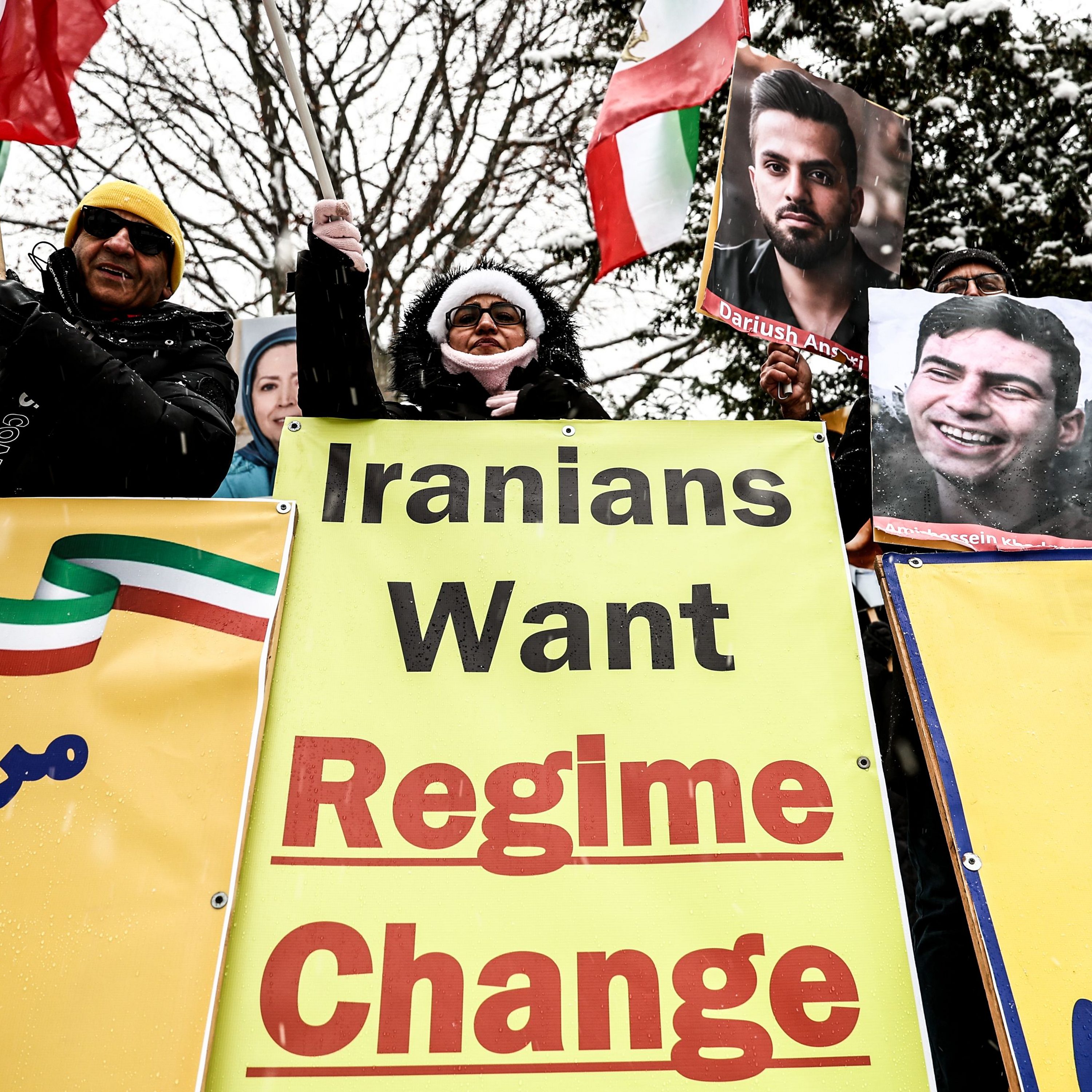
Global News Podcast
Largest anti-government protests in Iran since 2009
00:28:02
Reports of clashes as Iranians take to the streets across the country
Loading summary
Transcript1 lines
- [00:00]
A
This BBC podcast is supported by ads outside the uk. If you're the purchasing manager at a manufacturing plant, you know having a trusted partner makes all the difference. That's why hands down, you count on Grainger for auto reordering with On Time Restocks, your team will have the cut resistant gloves they need at the start of their shift and you can end your day knowing they've got safety well in hand. Call 1-800-GRAINGER Click grainger.com or just stop by Grainger for the ones who get it done. If you're the purchasing manager at a manufacturing plant, you know having a trusted partner makes all the difference. That's why hands down, you count on Grainger for auto reordering. With on time Restocks, your team will have the cut resistant gloves they need at the start of their shift and you can end your day knowing they've got safety well in hand. Call 1-800-granger click grainger.com or just stop by Grainger for the ones who get it done. This is the Global News podcast from the BBC World Service. I'm Keith Adams and at 04:30 GMT on Friday the 9th of January January, these are our main stories. Iranians are taking to the streets in the biggest anti government protests in years. The government in Venezuela says it's begun releasing political prisoners in order to promote peace. Colombia's president tells the BBC he believes there is a real threat of US military action against his country. Also in this podcast, Star Trek. Like sick bays, we maybe need doctors on the staff, surgeons, robotics at surgery, all those sorts of things. As NASA prepares to evacuate the sick crew member from the International Space Station, we'll ask how to keep a growing number of space travelers healthy. Tens of thousands of protesters have taken to the streets of Iran in the country's biggest demonstration for years. The rallies began nearly two weeks ago with shopkeepers railing against a sharp fall in the value of the Iranian currency against against the dollar. But protesters are now calling for the removal of Iran's supreme leader, Ayatollah Khamenei. At least 40 demonstrators and five security personnel have been killed and President Trump has threatened to strike Iran very hard if the authorities continue to kill those demonstrating. Our World affairs correspondent Caroline Hawley has more details. In towns and cities across Iran, protesters have taken over the streets, tens of thousands of them in extraordinary scenes posted on social media. For days there's been unrest in Iran sparked by an economic crisis. But what's happening now? The numbers involved is on an altogether different scale. Here in Mashad, Iran's holiest city. They're trying to destroy CCTV cameras used by the Iranian regime for surveillance. And the chants are calling for an end to the Islamic Republic. Many are also calling for the restoration of the monarchy, which was overthrown back in 1979. In the capital, Tehran, huge crowds, apparently galvanized by calls from Reza Pahlavi, son of the late shah. These are the largest protests there been since millions turned out to object to elections in 2009 that they saw as rigged. One young woman who'd been out on the streets tonight told me the size of the demonstration was unbelievable. And then, scared, she asked me to delete our online conversation. Human rights groups have accused the security forces of using excessive force. As the protests spread nationwide, with more and more people from all walks of life getting involved, it points to the widespread nature of anger, frustration and grievances across Iranian society. I think the protests are adding to a cycle of protests that make clear that change is coming one way or another. No one knows exactly where all this leads. Now Donald Trump has again warned Iran it will be hit hard if people are killed. Soon after these pictures emerged, the regime imposed a near total Internet blackout, cutting Iranians off from each other and the outside world. Caroline H. Reporting. I asked GR Gol from the BBC's Persian service if this feels like a turning point for Iran. It is certainly the most sustainable and wide ranging analyst we have seen in many years and that alone makes it significant. But what we have seen in Tehran and the footages we have obtained and also unless eyewitnesses before the regime cut off the Internet totally were telling us, in so many different neighborhoods in Tehran, tens of thousands of people have poured into the street chanting slogans against the Iran's supreme leader, Ayatollah Ali Khamenei, targeting him directly, holding him responsible for the current conditions of the country. I think in the past most of the mass protests were outside Tehran and I think this time around it is also in Tehran. And if people in Tehran come out in masses, it will encourage the rest of the country and it could be a turning point. Iranian human rights groups say more than 40 people have been killed. BBC Persian has talked to the family of 21 of them and confirmed their identities. When the protest started seemed to be about money, the economy, inflation, stuff like that. But it's changed, hasn't it? The US Led sanction has crippled the economy. The value of Iranian currency Riols has sharply fallen against US dollar and this has created an unsustainable situation for so many people. Many People are struggling to make ends meet, but also many people are unhappy about social restrictions and deep anger at political unaccountability. Corruption on highest level among the officials and also their families. I think they combination of so many different reasons people are coming to the street. It feels many of them have little to lose. Gr gol from the BBC's Persian service. Protests have been spreading in the United States over the fatal shooting of a woman by a federal immigration agent on Wednesday. Thousands of people marched through the streets of Minneapolis close to where Renee Goode, an American citizen, was shot, chanting slogans against immigration enforcement or ice. These residents were vocal in their opposition. I am showing that my discomfort with ICE being here and calling senators and mayors and telling them how I feel and stuff like that. I feel like that's just one way that I can show my support. They need to get out. There wasn't a problem in our state until they showed up. Something's got to be done. And you know, I don't think violence is the answer, but things have to change. The Trump administration does not like Minneapolis because Minneapolis stands up to the Trump administration. And so their presence is really to just incite more chaos, incite fear. Hundreds of people also gathered at demonstrations in New York and Philadelphia. The incident has sharpened the already intense political divide across the U.S. officials have offered different accounts of her killing, with the Trump administration claiming the ICE agent was acting in self defense, while local officials say the woman posed no danger. Here's the vice president, J.D. vance. There's a part of me that feels very, very sad for this woman. Not just because she lost her life, but because I think she is a victim of left wing ideology. What young mother shows up and decides they're going to throw their car in front of ICE officers who are enforcing legitimate law? You've got to be a little brainwashed to get to that point. Officials in the U.S. state of Minnesota say the FBI has cut them out of the investigation into the incident and that the inquiry be neither transparent nor fair without the involvement of local law enforcement officials. But the Homeland Security Secretary, Christy Noem, said they had no jurisdiction over the case. State Governor Tim Waltz said the people in the Trump administration had already passed judgment. They have determined the character of a 37 year old mom that they didn't even know, don't know. They've determined that the actions are done. I don't know. I've not used inflammatory terms of what happened. I've asked us to find the answers. The only way we find the answers is a thorough investigation. By nonpartisan professionals. Well, during his election campaign, President Trump promised the largest deportation program in American history, and he placed ICE at the center of his immigration policies. The agency has deported hundreds of thousands of people in recent months, but critics say that it's acting as. As a paramilitary organization. So how do the American public feel about what's going on? That's a question I put to our North America editor, Sarah Smith. Well, if you look at recent polling that was conducted before this incident in Minnesota, you'll see that most people do generally support Donald Trump's immigration policies, his desire to stop illegal immigrants coming across the border and to deport undocumented migrants who are living in the United States States. But over recent months, when we have been seeing more ICE agents moving into different cities and using quite aggressive tactics there, more and more people have been concerned about the method in which this is being conducted, and most recently, more than half of people saying that they are really worried about how this policy is being carried out. But there are no signs from the administration that they are going to change their tactics in any way as a result of what's happened in Minneapolis. They're already sending more agents into the that city and are very unlikely to back down from the kind of harsh enforcement tactics that they have been using up until now. So it seems that they don't feel that this is damaging the popularity of the Trump administration. No, because you hear from administration officials that they are absolutely certain of the rightness of their policy, but also of their interpretation about what happened. In this particular incident in Minneapolis, almost immediately after it happened, and people had had a chance to see, see the videos on social media, administration officials were doubling down on their interpretation that Renee Goode caused her own death, they say, by trying to ram an ICE agent with her car. They're convinced that that's what happened. And all day today, they've been becoming very combative about this. The vice president, J.D. vance, came to the White House briefing room to speak to reporters, and he was insisting not only that what happened in Minneapolis was an attack on law and order itself. According to him, he was calling Renee Goode, without any evidence, a deranged leftist, he said, and claiming that she was part of a network of activists who were trying to incite violence against law enforcement officers. So, if anything, what's been seen by the Trump administration officials redoubles their certainty that they need to carry on with the immigration enforcement tactics that they've been using up until now. But on the other side, in this very, very divided country, other People have looked at the video footage, come to completely opposite conclusions about what has happened, are deeply worried about the way in which the ICE agents behaved. The Minnesota governor, Tim Walsh, who is a Democrat, of course, he's saying that administration officials are absolutely lying about what happened on the streets there and that he doesn't even believe that a federal investigation, when it looks into this, will have a fair outcome. And I have to say, everybody in this entrenched debate came to their conclusions very, very quickly. Quickly after seeing some video footage and before the opportunity had come for any sort of investigation to be done, people have decided that they know what happened and are very much sticking to the entrenched positions that they've taken. Sarah Smith in Washington. NASA has confirmed that it's preparing to bring the crew of the International Space Station home early because one of them has a medical issue. The US Agency said the astronaut was in a stable condition, but gave no further details on the grounds of privacy. Space journalist Richard Hollinam says such events are a reality. When human beings are in space, going into space is risky. Further away we go from Earth is risky. And these things do need to be thought about. We do maybe need Star Trek like sickbays. We maybe need doctors on the staff, surgeons, robotic surgery, all those sorts of things. So what's it like looking after your health in space? Clayton Anderson spent 152 days on board the ISS back in 2007. He spoke to the Beast, BBC's Evan Davis. We were fortunate enough on my five months that we had Oleg Kotov, who was a medical doctor on board. We never needed his services for the most part, but I was trained to take blood, I was trained to pull a tooth, several basic medical things. Although if I were to have been called upon to do some of those things, I would have told the crew member that I was working on that, hey, it's possible you're going to die because, I mean, I'm not a doctor and you know, you maybe practice those skills three or four times and then you don't think about those skills for a long time until you get to space and maybe have to use them. And so that's a concern for me. For long duration missions to the moon or to Mars, do we need a doctor on board? I mean, an appendix attack, if it's not dealt with, can be fatal and it can happen out of the blue to some extent. And you do just think, is it just a matter of time before something like that hits someone? You're not only up there for two days it's months up there before somebody has an episode of that kind. Not a. An infectious disease, not a virus, a cardiac episode, for example. These are all terrifying, I would have thought. Yeah. If you think about this, as Elon Musk and Jeff Bezos and all these people begin to send more and more folks into outer space, many of those people are not medically cleared. Like astronauts. We're looked at every which way to Sunday. And when we fly into space, there's a pretty good chance that we're going to be very, very healthy when we go. But if we think about commercial spaceflight, all those other things that you mentioned become more possible, more prevalent. And how do you deal with those things when you have them? For example, if there was a situation where you would need to provide fluids intravenously to an astronaut and then decide that they need to come home, what do you do about that person's spacesuit? How do you get them into the vehicle? I mean, there's lots of issues that, to my knowledge, we haven't really thought about. Yeah. And how long does it take in an emergency to bring a crew or a crew member home from the space station? What's the quickest they could do that? Get them into a hospital on Earth? From 400km up there? It would be a variable answer. Depending on when you undocked and where you targeted landing, it could be hours. But if it were an emergency situation where you couldn't exactly predict where you're going to land, such that you'd have people waiting for you there, it could be a harrowing situation. Those are things that NASA's pretty good about thinking about and planning for. But as we get into this new time of commercial space flight, it kind of opens that window of the things we need to think about and prepare for. We've talked, Clayton, about physical conditions. Do you worry about mental health episodes in a place like the space shuttle, where someone needs to come out? Is that something that is often talked about? It's not often talked about. It's happened before. On a shuttle mission, there was a situation which then led to astronauts like me having to put a padlock on the hatch in the mid deck so that it couldn't be opened without purposeful operations. And if you think about humans traveling together in a small, confined space, you know, I don't know how small small is or how large a spaceship traveling to Mars would be, but you're putting people in a can for six to nine months to get to a planet where they can't even see Earth anymore. The psychological aspects of this are critical to me. You have the issue of depression, you have the issue of sexual tension. You have these medical issues, right? If you have a medical situation, do you have a little room where the tools and the table and the things are available for you? We haven't gotten that far yet, and those are going to be critical things if we're going to become, as Elon Musk says, an interplanetary species. That was the former astronaut Clayton Anderson. Still to come in this podcast, many of the best ideas have been generated during periods of fallowness and boredom. So I feel like mindfulness has had a rebrand and it was boredom's turn. Why Boredom is a Good Thing. If you're an H VAC technician and a call comes in, Grainger knows that you need a partner that helps you find the right product fast and hassle free. And you know that when the first problem of the day is a clanking blower motor, there's no need to break a sweat. With Grainger's easy to use website and product details, you're confident you'll soon have everything humming right along. Call 1-800-GRAINGER, click granger.com or just stop by Granger for the ones who get it done. This is the global news podcast. Venezuela's interim government has released a number of political prisoners. Calling it a goodwill gesture. It was announced by the President of the National Assembly, Jorge Rodriguez. The Bolivarian government, together with state institutions, has decided to release a significant number of Venezuelan and foreign nationals. These releases are taking place as we speak. Consider this gesture by the government with its broad intention to seek peace as the contribution we must all make to ensure that our republic continues its peaceful life and pursuit of prosperity. The release of the prisoners comes just days after U.S. forces seized the former president Nicolas Maduro and declared that the US Administration was now in charge of Venezuela. Norberto Paredes from BBC Mundo was outside the prison in Caracas. President Trump said that he had ordered the closure of this prison and today we see this action. So I think this move suggests that Jesse Rodriguez, the acting president of Venezuela, might be indeed cooperating with President Trump. We can see some intelligence forces coming out of the prison. So people in Venezuela don't know what's actually happening, don't know who is actually leading. Will Grant is our Central America and Caribbean correspondent. It's been one of Washington's demands for a long time. Really any time there's heightened repression in Venezuela, particularly around contested elections, around protests around those same elections. Washington has urged the Venezuelan government to release political prisoners. Of course, Mr. Rodriguez said it was a sort of unilateral step by the Venezuelan government, but the suspicion is that of course, this comes under pressure from Washington. We don't know the identities or the numbers of those who are currently being released, but NGOs in Venezuela believe 1,011 people have been detained over the years because of their political leaning. There is a very notorious, very well known detention center and alleged torture center in Caracas called El Ecoide. And one human rights group, amid rumors and information, unverified information at this stage that it is currently being shut down, said, look, there are other centers in the country. You know, they want to see a genuine change after Nicolas Maduro has been removed from office by the Americans. Will Grant reporting Meanwhile, Colombia's President Gustavo Petro has told the BBC he believes there is a real threat of US Military action against his country after the strikes on Venezuela and the seizing of Nicolas Maduro. President Trump has said a military operation in Colombia sounds good to me. Our South America correspondent, Ione Wells sent this report from the Colombian capital, Bogota. These two world leaders have long been adversaries, frequently trading insults and threats on social Media. Since the U.S. s military operation in Venezuela last Saturday, Donald Trump has suggested several times that Colombia is also in his sight rights, telling President Petro in ruder language to essentially watch his back. I asked Mr. Petro how seriously he was taking these threats and if he was afraid for his own security. I do believe it's a real threat and the prospect of removing it depends on the ongoing conversations. Colombia has already experienced military violence from the United States, most recently in Panama at the beginning of the 20th. Today, Panama is not part of Colombia. Mr. Trump, as he did with Nicolas Maduro, has accused Mr. Petro of being personally involved in trafficking cocaine, which he strongly denied, saying that it had always been proven that he was not involved in that. His critics have accused him of failing to tackle cocaine production, which has hit record highs in recent years. Ione Wells in Bogota now put down your phones. It's no secret that there's been growing anxiety about what social media or always being online is doing to our brains. But could one way of giving our often overworked and overstimulated minds a break be boredom? It's become recent trend on social media with people filming themselves doing absolutely nothing, otherwise called raw dogging. So what are the advantages of boredom and how does it change the way your brain works? Sarah Montague spoke to Helen Russell, an author who recently wrote a piece entitled the Quiet Rebellion of doing nothing. And Dr. Sandy Mann, a senior psychology lecturer at the University of Lancashire here in England, who wrote a book called the Science of the Upside and Downside of Downtime. First up is Helen. Having the privilege of being raised before the Internet in 1980 meant that I was quite familiar with boredom. But like many of us with social media and with constant distractions, I had become a little alienated from it. And then I had three children and the constant refrain of I'm bored was driving me slightly up the wall. So I began to look into the advantages of boredom and saw that there are many, and actually many of the best ideas have been generated during periods of fallowness and boredom. So I feel like mindfulness has had a rebrand and it was boredom's turn. I think there is much to be said for staring at a wall or staring out of the window. And all of my school reports would accuse me of daydreaming. I now feel a sense of pride over and my children. If they are allowed to be bored, then that's when the magic happens. That's when they create things or famously get along, which is rare but beautiful. Okay, Dr. Sandy Mann, tell us what is going on when we are bored. I've done all the research which backs up everything that Helen has been saying. It's that lack of stimulation that leads us to search. And if you imagine you're kind of like a search engine, constantly search stimulation and when we're not getting it, we're just looking more and more and that can lead us to negative things. So the things that we do to try and unbore ourselves can be harmful. So when we are bored we can get that stimulation by being more creative because creativity is a very stimulating process. And that's why there can be advantages to boredom because it leads us to go into our own brains to look for that stimulation rather than getting in externally. And Helen, have you experienced that idea of something? You would think, I know that wouldn't have happened if, if I hadn't actually just been sort of letting my mind wander. Absolutely. I tend to write non fiction but I've just finished my second novel and none of that would have happened had I filled the idle moments. Can you train yourself to be good at boredom? I think so and I think that's what Helen's been referring to. Just spending that time or more time in downtime. I actually did an experiment around my university of Central Lancashire where we got people off the street to a sensory deprived room without any phones, with nothing to look at. Soundproof and we wanted to see what would happen to them. And those that agreed to do it reported that at the start they found it really stressful, really frustrating. They were agitated, they couldn't stand it, and some of them kind of begged to be let out. But those of them that managed to get through that kind of pain threshold found that they became actually relaxed and they got into it and they came out feeling that it was like a warm bath or a bit of respite. So it's training yourself to just be in the moment. What Helen called mindfulness, but not needing constant levels of stimulation. I think rather than feeling, we have to pre product productive all the time. So giving ourselves a bit of a break is always helpful, I think. Helen Russell and Dr. Sandy Mann speaking to Sarah Montague about the hidden virtues of boredom. Finally, a name to remember. In the space of just eight months, the British pop singer Sky Newman has had a meteoric rise. She's toured with Ed Sheeran and Lewis Capaldi, made her Glastonbury debut, and she scored her first top 10 single. Now she adds another accolade to her collection by winning the BBC's Sound of 2026, which predicts the year's biggest new stars. Our music correspondent Mark Savage went to meet her. Sky Newman burst onto the charts with her debut single last April. Within a month, she was drawing huge festival crowds. So it was like a very quick journey to everyone else, but not to me. I've been doing music my whole life. First show I done, I was about six and I sung in school and that was just magical. And it's when I really realized that this is what I want to do. Do you remember what you sang? I sung True Colors. Cindy Lauper. What a song. Lose your big notes. Did my little voice manage to do it at the time? I don't know how. Sky's biggest hit to date is Family Matters, a song that details her tough upbringing, surrounded by drugs and violence on a London council estate. I wrote that song from the perspective of someone who comes from a broken background. And I think there's a lot more of it than people realize. A lot of people have children not really understanding how big it is. And a lot of people have children without knowing themselves first and without fixing their issues. And they think that they don't have love elsewhere in their life, so they're going to get it from a child. But you're then just passing your pain and trauma onto them and it doesn't fix it. To be the one that takes you home. Her Stark and confessional songs have won a legion of fans, among them Elton John. I'm talking to Sky Newman, who's our guest on the Rocket Hour this week. Thank you. You are something else. And you're such a good songwriter at such an early age. It's just insanity when I think about it. Really. It means everything because these are voices that I heard in my home growing up. It made me feel proud of myself, which is not something I always feel to have people who I respect and look up to so much be so kind and welcoming because they don't have to be. Did Elton John give you any glasses tips? No, but I was really sad because I went on the interview and I didn't wear my glasses and I was at myself. Don't worry, I'll have them next time. And it's not just famous friends. A panel of 170 music experts have named Sky Newman the most promising new act of the year. Here's the moment she found out you are the winner of Radio on sound of 2026. Make some noise for Sky Newman. She's the winner everybod. The signed off list has previously tipped the likes of Adele, Sam Smith and Dua Lipa for success. Now Sky Newman joins their ranks, setting her up for a huge 2026. Well, that report by Mark Savage and Sky Newman beat two American rivals, Somber and Geese, as well as the British rapper Jim Legacy for that coveted sound of 2026 title. And that's all from us for now. But there will be a new edition of the Global News podcast later. If you want to comment on this podcast or the topics covered in it, you can send us an email. The address is globalpodcastbc.co.uk this edition was mixed by Xabi Hullah Kourouche and the producer was Rebecca Wood. The editor is Karen Martin. I'm Keith Adams. Until next time. Goodbye.