Loading summary
Transcript90 lines
- [00:00]
Megan McCardell
This BBC podcast is supported by ads outside the UK.
- [00:06]
Jonah Jaleel
Has the news been getting you down?
- [00:08]
Megan McCardell
I'm Megan McCardell and I'm here to help. I'm the host of a new show
- [00:11]
Jonah Jaleel
from Washington Post Opinion called Reasonably Optimistic
- [00:15]
Megan McCardell
and it's an antidote to the pessimism that's riddling America right now.
- [00:19]
Jonah Jaleel
Every Wednesday I'm going to talk to people who see a path forward.
- [00:23]
Megan McCardell
It does seem to me that there is some awakening of a desire to act together to solve problems where they are. You know, I am a believer in America and it's worth fighting for. Join me Wednesdays on YouTube or wherever you get your podcasts.
- [00:36]
Bleacher Report Advertiser
The Bleacher Report app is your destination for sports right now. The NBA is heating up, March Madness is here, and MLB is almost back. Every day there's a new headline, a new highlight, a new moment you've got to see for yourself. That's why I stay locked in with the Bleacher Report app. For me, it's about staying connected to my sports. I can follow the teams I care about, get real time scores and breaking news and highlights all in one place. Download the Bleacher Report app today so you never miss a moment.
- [01:08]
Jonah Jaleel
This is the Global News podcast from the BBC World Service. I'm Janak Jalil and at 16 hours GMT, these are our main stories. Energy prices have surged after strikes on key gas facilities in Qatar and Iran as the Middle east war continues to escalate. The US Defense Secretary Pete Hegseth insists that the US Is on track in the war as he criticizes allies and parts of the media. We hear how in the middle of the conflict, the Iranian regime is still executing people who took part in protests earlier this year. Also in this podcast, President Tinubu becomes the first Nigerian leader to make a state visit to the UK in nearly four decades.
- [01:55]
Daniel Bowalla
It's a long time coming, but I think that the king chose the right time. Virtually every fabric of our national life is all linked to the United Kingdom,
- [02:06]
Jonah Jaleel
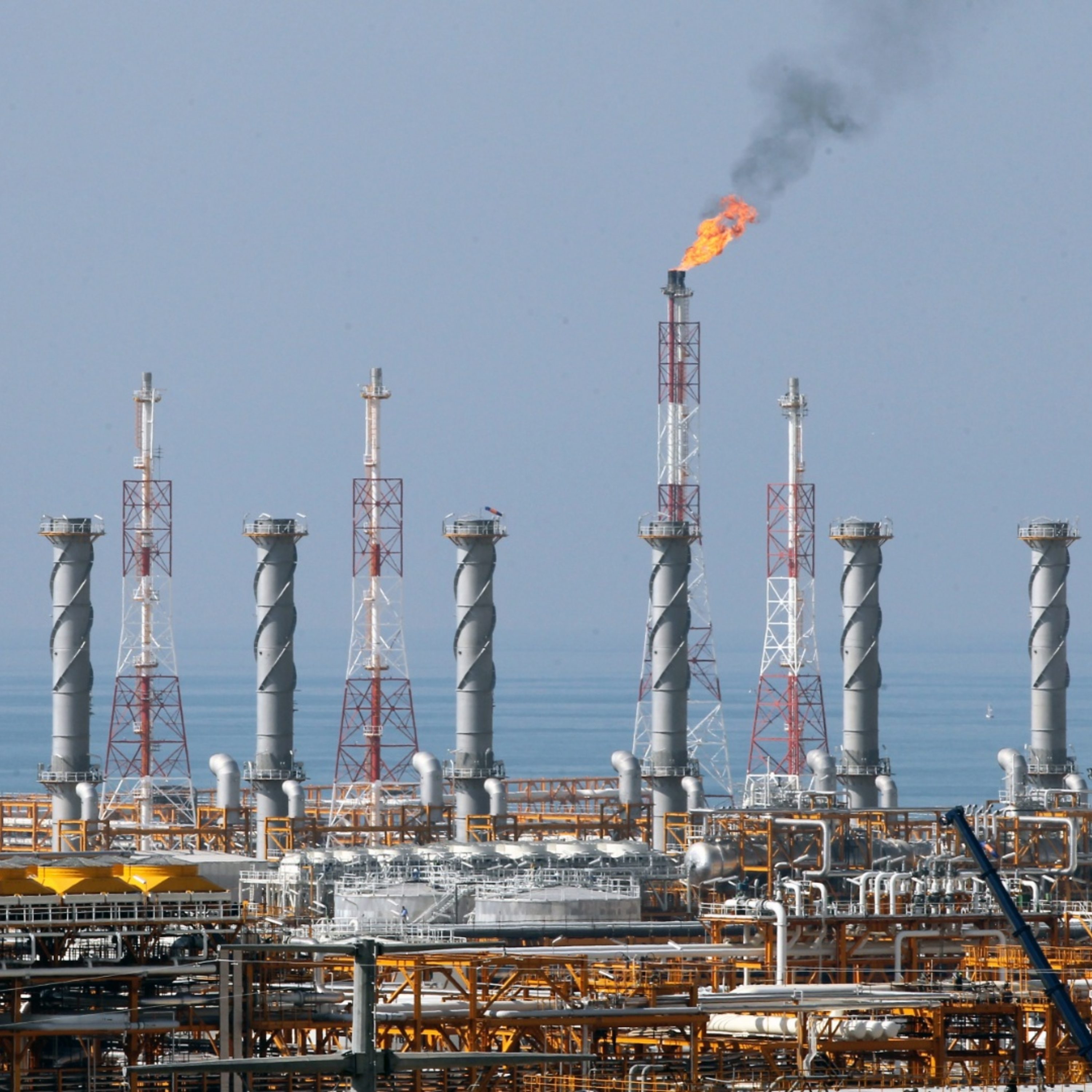
but what was on the menu at the state banquet? The war in the Middle east has escalated dramatically. The price of oil and natural gas has soared and stock markets have fallen after tit for tat attacks on crucial energy sites in Iran and Qatar. This latest escalation Escalation began when Israel attacked Iran's South PAS gas field on Wednesday. Iran then retaliated by hitting a crucial energy complex in Qatar at Raslafan, an attack that could severely disrupt future gas supplies if the plant is badly damaged. Qatar's Prime Minister Mohammed bin Abdurrahman Al Thani condemned the attack at Raslafan.
- [02:50]
Theo Leggett
Unfortunately, this sabotage act only indicates an aggression policy and lack of responsibility and very dangerous escalation by the Iranians against the state of Qatar. This attack will have huge repercussions on oil or energy supplies around the world.
- [03:09]
Jonah Jaleel
President Trump took to social media to warn that the US would blow up Iran's south pause field if Tehran carried out any further attacks on Qatar's energy facilities. But Iran has continued to carry out strikes on energy facilities across the Gulf. Special Speaking to the BBC, Hossam Zaki, the Assistant Secretary General of the Arab league, urged the U.S. to do more to de escalate the conflict.
- [03:34]
Daniel Bowalla
This is madness. What is going on is pure madness. Someone has got to stop it and we cannot think of anyone better than the US President to stop this whole war.
- [03:48]
Jonah Jaleel
Our business correspondent Theo Leggett explained why these latest strikes are having such a big impact on energy prices.
- [03:56]
Theo Leggett
One, the fact that these oil facilities and gas facilities now no longer seem to be out of bounds and also the physical effects of the attack. So if we look at the attack on the Raslafan facility in Qatar, that facility accounts for about a fifth of the world's liquefied natural gas. Under normal circumstances, the gas is produced from the ground. It's liquefied, refrigerated and then placed aboard ships for transport, mainly to East Asia. Now, the plant had suspended production a couple of weeks ago because the ships simply couldn't get out and storage facilities on site were full. But you still had the prospect of it being reopened relatively quickly. It would have taken several weeks, but if there had been a ceasefire, the plant could be up and running relatively quickly. The problem now is that according to Catta Energy, which runs the plant, it suffered extensive damage and in particular the liquefaction plant has suffered extensive damage. We don't know how extensive, but that's what's been said in the statement so far. Now that raises the prospect of that the plant could be out of action for an extended period. So we're talking months, possibly even over a year. We don't know. And that's what markets have been reacting to this morning. That is why the price of gas in European trading so far today spiked more than 25%, is currently still up more than 20%. It's uncertainty and fears of an extended choke on supplies.
- [05:19]
Jonah Jaleel
And let's say this worst case scenario was to happen, that this goes on for months and months. What could the impact on countries be? Which countries are likely to be hardest hit.
- [05:28]
Theo Leggett
Well, it means higher energy prices all round, and particularly for countries in terms of gas. You know, a lot of the gas that's produced in Qatar is exported to the Far east, to East Asia. Now that gas has to be replaced, which means there would be more competition for supplies from the United States, which would kind of create a competition for those supplies between Europe and East Asia. And that pushes up prices in terms of crude oil, which, let's not forget, have also been going up remarkably. You know, crude oil was trading. Brent crude was trading at $72 a barrel before the conflict. It's now up to $114 a barrel. That cost filters through into a huge number of things. So motor transport, so anything that's transported becomes more expensive, manufactured goods become more expensive. And the most vulnerable countries are the ones which are heavily reliant on energy imports, but which do not have any production themselves. And it's often poorer countries which are very heavily reliant on this kind of stuff.
- [06:27]
Jonah Jaleel
Theo Leggett, and we have more on this on our YouTube channel. Search for BBC News on YouTube and you'll find global news podcasts in the podcast section. There's a new story available every weekday. Well, nearly three weeks into this war, the US Defense Secretary, Pete Hegseth has given his latest press briefing on what's happening in Iran. He insisted that the conflict was on track, and he lashed out at traditional US Allies and the media.
- [06:56]
Pete Hegseth
The world, the Middle east, our ungrateful allies in Europe, even segments of our own press should be saying one thing to President Trump. Thank you. Thank you for the courage to stop this terror state from holding the world hostage with missiles while building or attempting to build a nuclear bomb. Thank you for doing the work of the free world.
- [07:23]
Jonah Jaleel
Mr. Hegseth was also asked by a journalist in that news conference about a report that the Pentagon had asked the White House for $200 billion in additional funds for the war. This was his response.
- [07:36]
Pete Hegseth
As far as $200 billion, I think that number could move. Obviously, it takes money to kill bad guys. So we're going back to Congress and folks there to ensure that we're properly funded for what's been done, for what we may have to do in the future, ensure that our ammunition is everything's refilled. And not just refilled, but above and beyond. I mean, President Trump, as he said, rebuilt the military in his first term, didn't think he'd use it as dynamically in his second, but he had. So thank goodness he did that. And an investment like this is meant to say, hey, we'll replace anything that was spent. And now that we're reviving our defense industrial base and rebuilding the arsenal of freedom and cutting deals like our great deputy secretaries here is doing long lead times on exquisite munitions, we're going to be refilled faster than anyone imagined.
- [08:25]
Jonah Jaleel
Well, Julia Manchester is a White House correspondent at the Hill and she watched the US Defense secretary's briefing.
- [08:31]
Julia Manchester
We heard Pete Hegseth essentially backing President Trump and you know, his statement, you know, to be honest, I don't think he went. The big news, I think from an American perspective out of that press conference was the $250 billion the Pentagon is planning on asking Congress for in this war. And you know, Pete Hegseth not really giving a definitive answer as to when the war will be ending, but Pete Hagseth predictably backing and echoing President Trump on that statement about the gas field. The Pentagon is asking for $200 billion in terms of how easy it will get be to get through Congress. It seems that Speaker Mike Johnson, a Republican, is on board. He said yesterday that Iran supplemental funding is needed. However, we know that Mike Johnson has a very, very narrow Republican majority and it doesn't seem like Democrats want to play ball on this. So you have a number, number of fiscal hawks and Republicans who, you know, are somewhat critical of the president's war in Iran. So the big question is, can Mike John unite his conference to vote for this funding?
- [09:47]
Jonah Jaleel
The Hill's White House correspondent, Julia Manchester. Well, President Trump also claimed on social Media that the U.S. wasn't informed about Israel's attack on Iran's South Pas gas field. This is reportedly being disputed by Israeli officials who are quoted as saying it was coordinated with the U.S. this is just the latest indication that America and Israel may not be on the same page when it comes to the war on Iran. On Tuesday, the U.S. s top counterterrorism official, Joe Kent, resigned, saying that his country had gone to war because of pressure from Israel. This was a reason for the war that was also given by the US Secretary of State Marco Rubio before he hastily withdrew it. Our North America correspondent, Gary o' Donoghue has this assessment.
- [10:37]
Daniel Bowalla
Israel has always seen this war or seemed to see this war as about its existence. This is an existential threat that it's talked about for a long time in the region and has wanted help from the Americans to have this threat dealt with over years. And of course, Donald Trump has talked about Iran repeatedly over the years but stopped short in his first term of taking that action. He's crossed that line, if you like, with the attacks last year and now this war this year. But we are starting to see, I think, some differences and in particular we're starting to see some differences over the kinds of targets that, that are being chosen. And this extraordinary post that the President made in the last few hours where he's drawn attention to the targeting of a gas field by Israel, an Iranian gas field. He says the Americans knew nothing about this strike and he said it won't happen again. And I think that's where you're starting to see some of the differences between what the Americans want and what Israel wants out of this conflict. But the President is also, I think, indicating here that he wants to maintain control over sort of nature of this war and its direction because he has his own domestic concerns, particularly about things like the price of gasoline, which has risen hugely. He's also facing some criticisms from part of his own support base over this war who never wanted a conflict with Iran in the first place. So the pressures on him are also from home as well as from the international community. I think you'll see a huge attempt, public attempt to remain in some kind of lockstep over their war aims. America is Israel's most important partner, of course, and America regards itself as, you know, as being Israel's greatest partner in the, in the region. So you will, I think, see some sort of emphasis on trying to make that work in the longer run. They may want different things and that could create huge tensions, I think, with the way this war is conducted, in particular how it ends and when it ends. And that's a question that's repeatedly being asked here. What is the end game here? How does it look when this is over?
- [12:52]
Jonah Jaleel
Gary o' Donoghue Even as the Iranian regime continues to fight the war on many fronts, it's also going after Iranians who were involved in the nationwide anti government protests that erupted at the start of the year. They only ended after the security forces killed thousands, possibly tens of thousands of demonstrators, machine gunning some of them on the streets. Now Tehran has executed several protesters. Baran Abbasi from BBC Persian told us
- [13:21]
Baran Abbasi
more repression inside Iran has intensified massively since the start of the war. Three people have been executed just today over protest in January and yesterday a Swedish Iranian national was executed. And there have been concerns about, about the situation of those arrested during protests because the regime is accusing them of collaborating with the enemy during the war. And dozens of people are at risk of being executed. Hundreds of people have been arrested over the past few days, accused of sending videos of sites that have been damaged in the bombings or dead bombings themselves, sending them to international media. And the government has warned them that the militia on the streets, their fingers are on the trigger and they are ready to kill if they see any signs of an uprising or protest against the regime. The situation in the prisons are very difficult. Many prisoners now don't have access to food or medicine because prison guards have left and the attack on the south paused. Gas field has really changed the support of the people inside of the country, those who supported the killing of the officials who had a hand in the crackdown on protesters. But this gas field is usually for domestic consumption, for electricity and gas inside of the country. 70% of the production in south part goes to the people's homes. And the Iranians were already suffering from frequent electricity and gas shortages. And this is going to even make it worse.
- [15:07]
Jonah Jaleel
Baran Abbasi. The Iran war has had all kinds of unforeseen, horrific consequences. In the Israeli occupied West bank, falling rocket fragments tore through a beauty salon, killing three women. A fourth woman, who was six months pregnant, died later in hospital. They were all at the salon getting ready for the start of Eid al Fitr, the day of celebration that marks the end of the Muslim holy month of Ramadan. Around a dozen other people were wounded. The authorities couldn't confirm if the shrapnel came from an Iranian missile or an Israeli interceptor used to shoot it down. Our Middle east correspondent, Yolande Nell, visited the site.
- [15:48]
Yolande Nell
This is where women had come ahead of the Eid al Fitr holiday to get their nails fixed, to look their best just at the end of Ramadan when an Iranian missile struck. The women who were killed here are the first Palestinians in the occupied west bank to have been killed as a direct result of the Iran war. And locals in the village of Betawah told us that a bomb or part of a bomb landed here. It then ricocheted off. You can see all the damage on the door, and it's really upsetting inside. There's a lot of blood, there's nail extensions on the floor, cosmetics, things like that. Right now, people are just trying to clear up. But what people have been telling us is that because there are no warning sirens in the Palestinian areas, in the same way that you get in the Israeli settlements nearby, they don't have any advance alerts of these bombs coming, and they don't have protected shelters to go to either. The women here told us that there was a group of women, about a dozen of them who were injured, who were just here gathered on the steps and they were waiting to have their nails done too.
- [16:57]
Jonah Jaleel
Yoland Nail still to come in this podcast, a study finds that designer doodle dogs are more more difficult to deal with than traditional breeds.
- [17:09]
Viv Smith
She's been on medication since September, gone. Trying just to keep her calm and be a bit more sedate. She's not as needy. It is working with her, but how long do you medicate a dog for? Like, I. I just don't know.
- [17:29]
Bleacher Report Advertiser
Finding a hoodie that lasts through the season can be tough. The American Giant Classic Full Zip hoodie is made to last a lifetime, so you can count on it year after year. Every American Giant piece is made in America and designed to last. No exceptions. The result is durable clothing that become part of your life. Snag the hoodie that will bring you comfort for life. The American giant classic full zip save 20% off your first order at american-giant.com when you use code staple20 at checkout. The Bleacher Report app is your destination for sports right now. The NBA is heating up, March Madness is here, and MLB is almost back. Every day there's a new headline, a new highlight, a new moment you've got to see for yourself. That's why I stay locked in with the Bleacher Report app. For me, it's about staying connected to my sports. I can follow the teams I care about, get real time scores, breaking news and highlights all in one place. Download the Bleacher Report app today so you never miss a moment.
- [18:30]
Jonah Jaleel
Has the news been getting you down?
- [18:31]
Megan McCardell
I'm Megan McCardell and I'm here to help. I'm the host of a new show
- [18:35]
Jonah Jaleel
from Washington Post Opinion called Reasonably Optimistic
- [18:38]
Megan McCardell
and it's an antidote to the pessimism that's riddling America right now.
- [18:42]
Jonah Jaleel
Every Wednesday, I'm going to talk to people who see a path forward.
- [18:46]
Megan McCardell
It does seem to me that there is some awakening of a desire to act together to solve problems where they are. You know, I am a believer in America and it's worth fighting for. Join me Wednesdays on YouTube or wherever you get your podcasts bring incredible sound into every corner of your home with the new Whimsound Smart Speaker. Get high resolution Audio with a 1.8-inch touchscreen, smart control and modern design in one powerful speaker for just $299. From Quiet Mornings to lively family gatherings, Whimsound makes every moment sound better and feel better too. Create a home filled with smart sound you love. Ready to upgrade your sound? Shop now at Amazon and search Whim Sound. That's W I I M S O U n D.
- [19:33]
Jonah Jaleel
You're listening to the Global News podcast. Indonesia's richest man, Michael Bambang Hatonu has died. He was 86. The billionaire was the co owner of the tobacco giant Jarum and was also a successful bridge player. Bernadette Keogh reports.
- [19:49]
Bernadette Keogh
Michael Hartono built a vast business empire with his brother. He turned a company founded by their father into a major producer of clove cigarettes. Known locally as Kretec, it became one of Indonesia's largest conglomerates with interests in technology, consumer goods and crucially, banking, which they moved into after the Asian financial crisis in the late 1990s. He was a philanthropist and also had another passion in life, playing bridge, proudly representing Indonesia in the 2018 Asian Games and helping the national team to secure a bronze medal. Unlike many tycoons, Hartono rarely spoke to the media or appeared in public, preferring to work quietly behind the scenes.
- [20:32]
Jonah Jaleel
Benedikt Keogh In South Africa, water shortages are causing misery for millions of people. The problem is mainly down to poorly maintained infrastructure. But there's a darker side to the issue. The so called water mafia. Criminal gangs have infiltrated the water industry, snapping up water tankers to supply communities that have no running water, charging people for water that should be free, and even reportedly sabotaging regular supplies in order to boost their illegal business. The BBC's Africa correspondent Mahony Jones sent this report from Johannesburg.
- [21:12]
Mahony Jones
A large group of protesters are waving placards and banging empty plastic bottles. They're in northern Johannesburg, a part of town known for its plush, leafy suburbs. But after years of intermittent water shortages, they say they're fed up. Some have had no running water for over a month.
- [21:29]
Jonah Jaleel
Our pipes have been bone dry and
- [21:31]
Megan McCardell
no water coming through at all.
- [21:32]
Jonah Jaleel
It's not very healthy because everyone can get sick. According to the constitution, it's our right to have water.
- [21:39]
Bernadette Keogh
I am here today because it is an absolute disgrace.
- [21:44]
Jonah Jaleel
We are reduced to begging and protesting for water.
- [21:48]
Mahony Jones
A few years ago here in Johannesburg, South Africa's economic hub, electricity shortages known as load shedding were disrupting the lives of ordinary South Africans and businesses. That's now been replaced by water shortages, which some say are worse because of how essential water is for good health. And Johannesburg isn't the only area that's affected.
- [22:11]
Megan McCardell
This is what is happening in Hamas. Grand there's no water.
- [22:15]
Mahony Jones
People are striving for water. Teppo lives in harmanskraal more than 100 km north of Johannesburg.
- [22:22]
Megan McCardell
Water is part of grocer now. We buy it at the shop and unless the water tanks comes, yes, the water tanks, we get it for free, but otherwise nothing for free. It's a problem. It takes my humanity away. It breaks my heart.
- [22:37]
Mahony Jones
The residents of Harmanskraal have had no reliable access to clean water for over a decade. On and off, the municipality has resorted to paying for tankers to deliver water to residents. It's meant to be free, but that's not always the case. As Eric tells me, with another truck,
- [22:53]
Megan McCardell
you see another truck, there's criminals everywhere. Some drivers, they sell us, they sell wood. And then they say, when you say you want water, they say you must buy. We are just giving up. We don't do nothing because of those criminals, because everything here is money. When we have no money, you can't do nothing.
- [23:18]
Mahony Jones
Campaigners say a long standing lack of investment in infrastructure is worsened by criminal gangs called water mafias. Dr. Ferial Adam is the executive director of Watercan, a non profit that works to safeguard South Africa's water resources.
- [23:32]
Bernadette Keogh
The water mafia are people that get tenders to do work for the municipality and then either they don't have the expertise or once they get hold of a tender to provide alternative supply of water, they don't want the tender to end so they would damage and vandalize infrastructure so that they can continue working. And then you also have the ones that are charging people for water where they shouldn't be.
- [23:59]
Mahony Jones
How do these criminal gangs, how do they impact ordinary people's lives?
- [24:02]
Bernadette Keogh
It creates fear because this is now your supply of water. They're afraid to come out and say the kind of things that are happening because then they won't get water. They feel as if the mafia won't go to their streets anymore.
- [24:18]
Mahony Jones
In Harman's Kraal, water tankers are filling up. We contacted the local authority to ask how they're tackling the issue, but got no reply. Last year, President Cyril Ramaphosa urged law enforcement and local government to put an end to criminal gangs running water tankers. But for residents here, that end can't come soon enough.
- [24:39]
Jonah Jaleel
That report by Miami Jones, King Charles and Queen Camilla have given a lavish welcome to the Nigerian president. At the start of the first state visit to the UK by a Nigerian leader in nearly four decades, President Bola Ahmed Tinubu, who is Muslim, and his wife, who is Christian, were guests of honour at a state banquet also attended by Prince William and his wife Kate. On Wednesday Night, the King spoke of the country's shared values while delivering a speech at Windsor Castle.
- [25:09]
Daniel Bowalla
The friendship between our two countries, Mr. President, is a partnership of equals that has brought us both enormous benefits. It has been described to me as a deeply. A spiritual connection beyond churches and mosques, a deep bond through which we have
- [25:30]
Megan McCardell
strengthened our shared security, ensured our economies
- [25:35]
Daniel Bowalla
are more prosperous, and empowered each other to believe in a more hopeful future.
- [25:42]
Jonah Jaleel
Daniel Bowalla is a special advisor to the Nigerian President. Rob Young asked him first what was on the menu at the state banquet.
- [25:55]
Daniel Bowalla
I should rather say the menu is to have a lot in common, shared value, shared interest, virtually every fabric of our national life. Whether you look at the civil service structure, you look at the legal system, you look at the military setup, the security, it's all linked to the United Kingdom.
- [26:14]
Theo Leggett
And the king spoke a bit in
- [26:16]
Jonah Jaleel
Yoruba, is that right?
- [26:16]
Megan McCardell
How did he do?
- [26:17]
Theo Leggett
Can you give him a rating out of 10?
- [26:18]
Daniel Bowalla
No, I think I'll give him 9.5. He did very, very well. I think that this is the right time because it's a long time coming, but I think that the King chose the right time.
- [26:29]
Megan McCardell
A huge and growing economy. Some might argue why it took 37 years for there to be another state visit.
- [26:35]
Daniel Bowalla
I wonder as well. I wonder as well, because I think the closest country outside of Africa to Nigeria is the United Kingdom. The United Kingdom is considered as an elder brother. So anybody who is coming out of Nigeria to anywhere in the world, it is believed that the first point, of course, should be the United Kingdom. In the speech of the President, he talked about the health care system in the United Kingdom, how Nigerians are playing a very good role in the nhs. He talked about sports too, and mentioned specific number of people who are British, but Nigerians as well. And that goes to show the kind of link that we have.
- [27:08]
Jonah Jaleel
That was Daniel Bowala, a special advisor to Nigeria's President Bola Tinubu. And just in case you were interested, the menu at the banquet included soft boiled quail egg tartlets, fillets of turbot lobs, mousse wrapped in spinach and a beurre blanc sauce. And for dessert, there was iced blackcurrant souffle. And a mocktail was created for the occasion using a West African beverage, with the king wishing President Dinubu Ramadan Mubarak to mark the end of the holy Muslim month of fasting. Now, doodle dogs have become an increasingly popular choice for pet owners in recent years. We're talking about cockapoos, carvapoos, and Labradoodles, so called designer crossbreeds. It's commonly believed that these cute looking canines are easier to train and better behaved than other dogs. But new research from the Royal Veterinary College here in the uk, shared exclusively with the BBC, has revealed that the opposite is true. As Emily Unia reports, Viv Smith got
- [28:13]
Bernadette Keogh
Dolly a smooth coated cockapoo in 2021 after her previous boxer dogs died.
- [28:19]
Viv Smith
Decided I'd get something smaller, something more manageable, something the family could hike, help look after, enjoy the look of. I just thought, oh yeah, beautiful. This is going to be manageable. And they come with less illnesses.
- [28:31]
Bernadette Keogh
But Dolly's behavior is a lot more challenging than Viv was prepared for.
- [28:35]
Viv Smith
She has a lot of fear, a lot of uncertainties. She's not very trusting. I know if someone of the dog comes past, she's going to pound, she's going to growl, she's going to bear our teeth and I'm aware of like how, but it was going to be. So her anxieties have just overtook the family, really. I haven't really got a lot of choices of where we can go with her.
- [28:55]
Bernadette Keogh
Viv went to the vet to get advice about how to make life with Dolly safer.
- [28:59]
Viv Smith
She's been on medication since September, gone. Trying just to keep her calm and be a bit more sedate. She's not as needy. It is working with her. But how long do you medicate a dog for? Like, I just don't know.
- [29:11]
Bernadette Keogh
Researchers at the Royal Veterinary College asked more than 9,000 dog owners, including those with cockapoos, cavapoos and labradoodles, about their behaviour. They compared it to their purebred parents and discovered that the doodle dogs differed in just over half of the 24 behavioural areas compared. Where there were differences, the doodle breed's behaviours were more undesirable. In 8 out of 10 cases, the most common issues were fear of loud noises, separation anxiety, aggression and problems with training. Dr. Irina Packer is the lead author of the study. Some of the behaviours that we're seeing
- [29:46]
Megan McCardell
that are worse or more commonly or severely exhibited in these breeds aren't the kind of behaviours that we want to ignore.
- [29:53]
Bernadette Keogh
They're not benign, you know, they're dogs
- [29:55]
Megan McCardell
fundamentally, even if they look super cute. And although we've seen this absolute wave
- [30:00]
Yolande Nell
of popularity, we really need people to
- [30:02]
Bernadette Keogh
stop and think, go beyond how they
- [30:05]
Megan McCardell
look or what people might think about them and try and use more solid evidence.
- [30:10]
Bernadette Keogh
But breeders of this type of dog are keen to point out that what really matters is where and how owners source their pets. Carol Watson Todd is a co director of the Cockapoo Club of Great Britain, which promotes responsible breeding. If you go to a responsible, ethical breeder, they will dispel myths. They will talk to you about the requirement for training your puppy. They will try to help match you to that puppy. And it's not about just the puppy. It goes right back to the mother and the father. Because the mother and the father, if they have traits that are undesirable in those parent breeds, they should not be bred with. For Viv, an experienced dog owner who did her research, the learning curve has been steep. Now she says she'd make a different choice.
- [31:01]
Viv Smith
I love ideally, but I don't think I would do it again.
- [31:04]
Jonah Jaleel
Definitely not dog owner Viv Smith. Ending that report by Emily Ounia and that's all from us for now. If you want to get in touch, you can email us@globalpodcastbc.co.uk and don't forget our sister podcast, the Global Story, which goes in depth and beyond the headlines on one big story. This edition of the Global News Podcast was mixed by Simon Nunn. The producers were Siobhan Leahy and Chantal Hartle. The editor is Karen Martin. I'm Jonah Jaleel. Until next time. Goodbye.
- [31:45]
Bleacher Report Advertiser
The Bleacher Report app is your destination for sports right now. The NBA is heating up, March Madness is here and MLB is almost back. Every day there's a new a new headline, a new highlight, a new moment you've got to see for yourself. That's why I stay locked in with the Bleacher Report app. For me, it's about staying connected to my sports. I can follow the teams I care about, get real time scores, breaking news and highlights all in one place. Download the Bleacher Report app today so you never miss a moment.