← Global News Podcast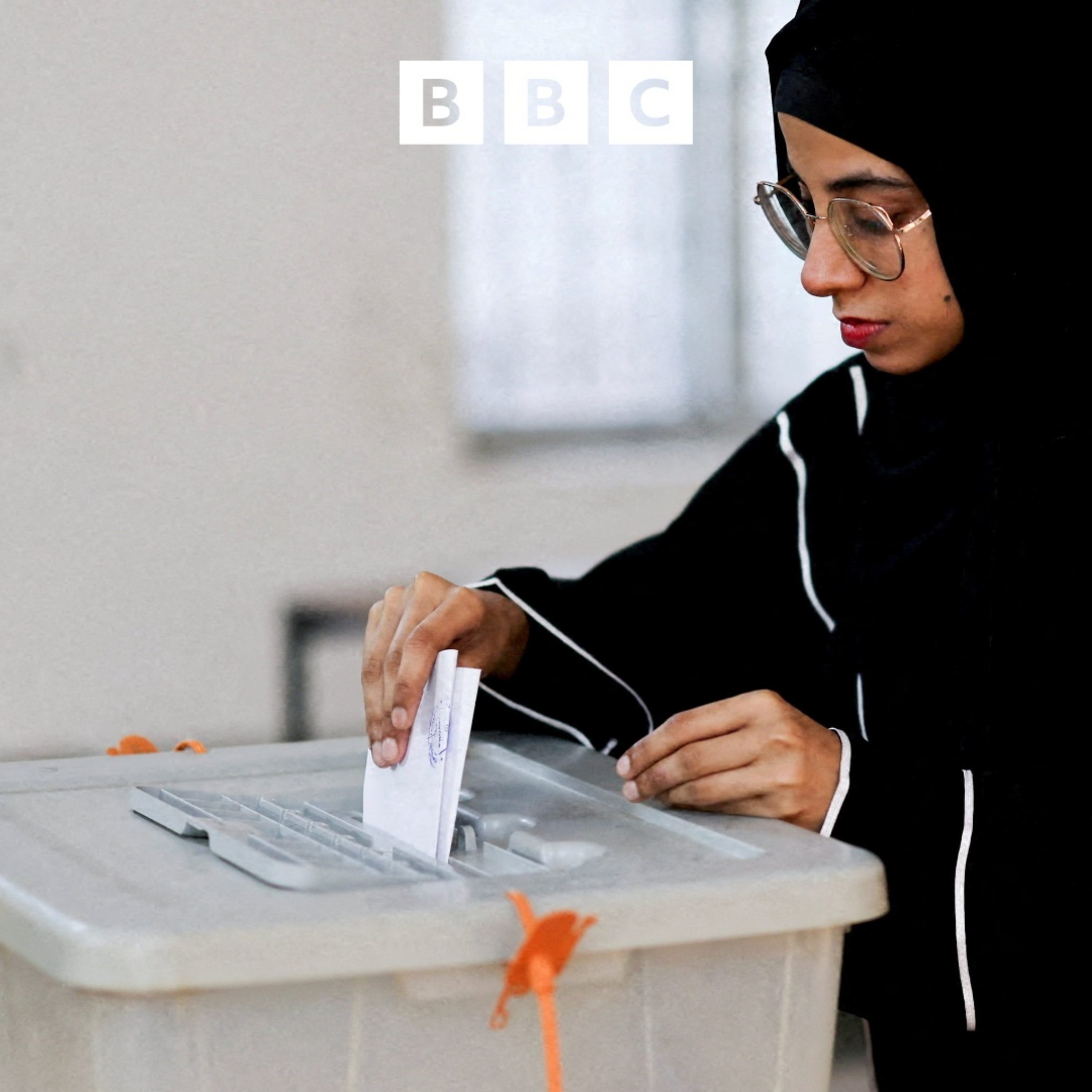
Global News Podcast
Polls open in first Bangladesh election since uprising
00:28:07
Voters to choose new national government and decide on constitutional reforms
Loading summary
Transcript90 lines
- [00:00]
Alex Ritson
This BBC podcast is supported by ads outside the uk. This message comes from Schwab. At Schwab, how you invest is your choice, not theirs. That's why when it comes to managing your wealth, Schwab gives you more choices. You can invest and trade on your own. Plus get advice and more comprehensive wealth solutions to help meet your unique needs. With award winning service, low costs and transparent advice, you can manage your wealth your way at Schwab. Visit schwab.com to learn more.
- [00:34]
Azadeh Mushiri
If you're an H Vac technician and.
- [00:36]
Srishti Gangdev
A call comes in, Grainger knows that you need a partner that helps you find the right product fast and hassle free. And you know that when the first problem of the day is a clanking blower motor, there's no need to break a sweat. With Grainger's easy to use website and product details, you're confident you'll soon have everything humming right along.
- [00:55]
Azadeh Mushiri
Call 1-800-GRAINGER clickgrainger.com or just stop by.
- [00:59]
Srishti Gangdev
Granger for the ones who get it done.
- [01:05]
Alex Ritson
This is the Global News podcast from the BBC World Service. I'm Alex Ritson and in the early hours of Thursday 12th February, these are our main stories. Voting is underway in Bangladesh in the first election since the uprising in 2024 that toppled long serving Prime Minister Sheikh Hasina. President Trump tells Israel's Benjamin Netanyahu that he'd prefer to do a deal on Iran's nuclear program than take further military action. Meanwhile in Iran, the President apologises for government failings on the 47th anniversary of the Islamic revolution. Also in this podcast, Bird watchers are flocking to the Canadian city of Montreal after what's believed to be the first recorded sighting of a European robin in Canada. We start in Bangladesh, where voting is underway in what's perhaps the most important election to take place there for many years. This is the first national poll since the country's former premier Sheikha Cena was was deposed in 2024 after several months of violent unrest. Since then, Bangladesh has been run by a caretaker government headed by the Nobel Prize winner Muhammad Yunus. He says he'll step down after the vote. More than 50 political parties are hoping to win a share of the 350 parliamentary seats being contested. The party of Sheikh Hasina, the Awami League, has been banned from contesting the election. So who are the the main contenders? Our correspondent in Dhaka is Azadeh Mushiri.
- [02:56]
Azadeh Mushiri
There are several main parties that are contesting here. One of them is the Bangladesh Nationalist Party, or the bnp. I'm actually at a polling booth in Dhaka where Tariq Rahman, the leader of the bnp, is expected to turn up and vote here, perhaps even say a few words. So there are a lot of BNP supporters around me with red and green caps. And there's also a lot of media as well as security forces, evidence that the interim government is trying to make sure that the day goes by smoothly. The BNP having been in government before, they are an older, established party, as is Jamati Islami, an Islamist party that is also contesting the elections today. Both of these parties, while being older established parties, have faced politically motivated arrests in the past, have had a very difficult time during Sheikh Hasina's rule with the bnp, in fact, boycotting the last elections because of that. Right now, there's a lot of excitement and a lot of optimism from the people at this particular polling group.
- [03:56]
Alex Ritson
Yeah, it is the first election since the ousting of Sheikh Hasina. Give us a sense of how important.
- [04:03]
Azadeh Mushiri
That is for many people we've spoken to in the past few weeks. They feel this is a day they never thought they'd see. These are people who say they either have never voted or haven't voted in nearly a decade. Even the ones who have been to polling booths in the last few years say it's the first time that they feel their vote will count. But that feeling that they have is very different to what other parts of the country feel. We've been to areas that are a WAMI League strongholds where supporters of the party of the former government are based. They do not feel that these are free and fair elections as such, certainly not inclusive ones, given that their party has been banned from even contesting.
- [04:46]
Alex Ritson
And so the Army League banned what other constitutional reforms are being voted on.
- [04:51]
Azadeh Mushiri
That's a good point, because not only are people voting for a new government, there is also a referendum on the July National Charter constitutional amendment that would, if voted yes, put through various reforms. And those are are ones that are designed to essentially put in place different checks and balances in Bangladesh. Remember, this is a country that has just emerged from years of authoritarian rule. And so some of the powers that they're trying to reform, some of the different constitutional aspects of Bangladesh include checks on term limits for the prime minister. They want to empower the presidency and other institutions, for example, to make sure that there's a check on power. They also want to strengthen the independence of the judiciary, essentially put a lot of different reforms in place that can.
- [05:40]
Alex Ritson
Ensure the past isn't repeated Azadeh Mishiri Indaka, the Israeli Prime Minister. Benjamin Netanyahu has held talks with Donald Trump at the White House as the US Continues to seek a deal with Iran over its nuclear program. Israel wants any agreement to include curbs on Iran's missiles and other security threats. Iran has suggested it is ready to limit its nuclear program in return for sanctions relief, but has rejected other demands. Our correspondent in Washington, Tom Bateman, spoke to Oliver Conway.
- [06:14]
Tom Bateman
This was a very long meeting and a very short statement at the end of it. And unusually, there hasn't been the kind of photo opportunity moments and the cameras allowed into the Oval Office. This was all kept pretty low profile, which is rare for meetings between these two leaders. And Mr. Trump saying the end of the meeting that he says, quote, there was nothing definitive reached other than that I insisted that negotiations with Iran continue to see whether or not a deal can be consummated, he says, and then basically goes on to say he'd rather have a deal, but if not, we'll have to see what happens. And there is the sort of not explicitly stated threat, but of military action. So it seems to me that what we had here was Mr. Trump pursuing his desire to try and do a deal with The Iranians and Mr. Netanyahu pressing hard for that to be a much more expansive deal that is not just about ending nuclear enrichment, but is around restricting Iran's ballistic missile capabilities, stopping its support for proxy militias in the region. And Mr. Trump appearing to want to press ahead with the diplomatic track at the moment, albeit one that holds a gun to the heads of the Iranians because he has this aircraft carrier strike group currently in the Arabian Sea close to Iran.
- [07:26]
Alex Ritson
The word I insisted sounds like there might have been a bit of an argument over that. I mean, will Israel be able to get what it wants?
- [07:34]
Tom Bateman
Ultimately, you know, they have a bumpy relationship, these two, but ultimately, this is a deep military relationship between the US And Israel. It's not unhealthy, helpful to President Trump. You know, this is coercive diplomacy to try and get what he wants from the Iranians, that America's key ally in the region is being very belligerent and that the threat of military action remains there. I think the question is whether or not after the conflict between Israel and Iran last year, which President Trump ultimately joined, the Israelis would be prepared to go ahead once again on their own without American blessing, if the Americans were still pursuing some kind of diplomatic action. I think that's extremely unlikely. But I think differences between these Two, Ultimately, over whether diplomacy can work has the potential to escalate tensions more in the region in what is a very unstable and unpredictable moment.
- [08:27]
Alex Ritson
Tom Bateman. Rallies have taken place across Iran to mark the 47th anniversary of the Islamic Revolution. In a speech to crowds, President Massoud Peseschkian denounced Iran's enemies, but also apologized for the government failings. Our chief international correspond, Lis Doucet is in Tehran and reporting on condition that none of her material is used on the BBC's Persian service. This is a restriction that applies to all international media organizations operating inside the country.
- [09:03]
Vanessa Mann
Death to America. It's long been the signature slogan of Iran's Islamic revolution. Its most loyal backers surged through the main artery in the heart of Tehran along a route nearly three miles long. The same scene played out across the country. It's a political reply to the protesters who filled streets and squares nationwide last month, calling for change. This young woman told me what the Islamic Revolution means to her.
- [09:34]
Azadeh Mushiri
To me and all Iranians, the revolution.
- [09:36]
Helena Humphrey
Means a revival of life.
- [09:38]
Srishti Gangdev
I mean, the Islamic Revolution revived us.
- [09:42]
Alex Ritson
A new life was blown into our.
- [09:43]
Helena Humphrey
Society and country and the rest of the world.
- [09:47]
Vanessa Mann
At Azadi, or Freedom Square, Iran's President Masoud Pezeshkian accused the US and Europe of inciting the recent protests. He called riots. But he had conciliatory words for Iranians who had gone on strike or taken to the streets, calling for an end to an economic crisis causing huge suffering.
- [10:11]
Alex Ritson
I apologize to our noble people for our shortcomings. We in the government are making every effort with all our strength to resolve all these problems.
- [10:22]
Vanessa Mann
A public holiday was also a moment for families to forget their daily woes for a while. But a revolution nearly a half century old now faces its biggest test. Multiple crises at home and the risk of military confrontation with America if a surge in diplomacy fails.
- [10:42]
Alex Ritson
Lyse Doucet. Bird watchers are flocking to the Canadian city of Montreal after what's believed to be the first recorded sighting of a European robin in Canada. This is the sound of the European robin. This is not to be confused with the sound of an American robin, a totally different bird with an orange breast, not a red one. Here's the American one. But how did this European robin end up in Canada? Maggie McPherson is an evolutionary ecologist at Trent University in Ontario. She spoke to Evan Davis.
- [11:28]
Maggie McPherson
This European robin was discovered by a birder who heard a slightly different call in her neighborhood in Montreal, Quebec, and then was able to eventually see the bird and identify it as the European robin. It's doing great. It's eating, it's chirping, and lots of people are getting to see it.
- [11:44]
Tom Bateman
Are these meant to be social birds? Is that bird okay on its own?
- [11:48]
Maggie McPherson
Oh, that's a good question. I think it is. Ok. On its own. European robins can be a little aggressive against other European robins, and so it does seem to be doing all right. Yeah.
- [11:59]
Tom Bateman
Got your own robins. Tell us about the difference between yours and the European robins.
- [12:03]
Maggie McPherson
Our American robins are much larger and they are a thrush and they are closely related to your blackbirds. And the European robin is actually a type of flycatcher. They're from two different families of birds.
- [12:15]
Tom Bateman
So now we need to work out how did this robin get from Europe to the North American continent.
- [12:23]
Maggie McPherson
How did it indeed? So there's no way of knowing for sure. But because this is an adult bird, based on its plumage, we think that when it was migrating, it got close to the coast in the UK and got swept up in a storm and then was lost at sea. And found refuge, this resourceful robin on a ship that was heading across the Atlantic and then made port in Montreal. That's a common way that lost birds out at sea get to make it. They find some kind of man made structure they can take a rest on. And that's how we think it must have gotten to our side of the Atlantic. I've heard that it possibly could have been a cargo ship. Not a people ship, not a cruise ship.
- [13:01]
Tom Bateman
Yeah, that's right.
- [13:02]
Maggie McPherson
Yeah. Not a kusha.
- [13:04]
Tom Bateman
What's going to happen to that robin? It'll just live its days out in, in Montreal now. It's not going to get back to Europe, presumably.
- [13:11]
Maggie McPherson
That's right. It's really unlikely for the bird to make it back to Europe. And so what happens with vagrant birds like the European robin that we have in Montreal is they just tend to disappear at some point. So these birds can live up to eight years and we hope we get to keep seeing it for a lot longer.
- [13:26]
Alex Ritson
Evolutionary ecologist Maggie McPherson. Still to come in this podcast, the ultimate I haven't done my homework excuse. Sorry. I'm competing in the Olympics.
- [13:40]
Madeleine Skeezas
I'm always kind of mostly focused on my skating when I'm away, but there's that little like 10% that's making sure I don't, I don't miss something. And this time, this time I dropped the ball a bit.
- [13:58]
Grainger Advertiser
If you're the purchasing manager at a manufacturing plant, you know, having a trusted partner makes all the difference. That's why hands down you count on Grainger for auto reordering with on time restocks, your team will have the cut resistant gloves they need at the start of their shift and you can end your day knowing they've got safety well in hand. Call 1-800-granger. Click granger.com or just stop by Grainger for the ones who get it done. If you're the purchasing manager at a manufacturing plant, you know having a trusted partner makes all the difference. That's why hands down, you count on Grainger for auto reordering. With on time restocks, your team will have the cut resistant gloves they need at the start of their shift and you can end your day knowing they got safety well in hand. Call 1-800-GRAINGER Click grainger.com or just stop by Grainger for the ones who get it done. If you're the purchasing manager at a manufacturing plant, you know having a trusted partner makes all the difference. That's why hands down, you count on Grainger for auto reordering with on time restocks, your team will have the cut resistant gloves they need at the start of their shift and you can end your day knowing they've got safety well in hand. Call 1-800-GRAINGER click granger.com or just stop by Grainger for the ones who get it done.
- [15:27]
Madeleine Skeezas
Dreaming of buying your first car or a new home?
- [15:30]
Alex Ritson
Knowing your FICO score is the first.
- [15:32]
Madeleine Skeezas
Step in making it real. With MyFico, you can check your score for free and it won't hurt your credit.
- [15:38]
Alex Ritson
You'll get your FICO score, full credit reports and real time alerts all in one simple app. Your credit score is more than just numbers.
- [15:45]
Madeleine Skeezas
It's the key to building the future you've been working toward.
- [15:49]
Alex Ritson
Visit myfico.com free or download the MyFico app and take the mystery out of your FICO score. This is the global news podcast Less than a year after 11 people died in a car ramming attack in the city of Vancouver, Canadians are dealing with another mass killing which also happened in the western province of British Columbia. Most of those who died on Tuesday were at a school in the remote mountain community of Tumbler Ridge. Police have named the person suspected of killing 8 people as 18 year old Jesse von Roetseller. The shootings not only happened at a school, but also at the suspect's family home. Vanessa Mann from the Royal Canadian Mounted Police have spoken about the victims.
- [16:41]
Vanessa Mann
So for the deceased victims, the school.
- [16:43]
Srishti Gangdev
Included a 39 year old female educator, three 12 year old female students, two male students ages 12 and 13. And then the two additional victims were a 39 year old female and an 11 year old male that were located deceased at the local residence.
- [17:01]
Alex Ritson
The police said that Jesse von Rootseller was a student at the school but left four years ago and the suspect on more than one occasion had been apprehended under mental health laws for an assessment. Duane MacDonald, also from the RCMP, gave further details. I will say this, we identified the.
- [17:20]
Grainger Advertiser
Suspect as they chose to be identified.
- [17:22]
Alex Ritson
In public and in social media.
- [17:23]
Grainger Advertiser
I can say that Jesse was born.
- [17:25]
Alex Ritson
As a biological male who approximately the.
- [17:29]
Grainger Advertiser
Information that I have, approximately six years.
- [17:31]
Alex Ritson
Ago, began to transition to female and.
- [17:33]
Grainger Advertiser
Identified as female both socially and publicly.
- [17:38]
Alex Ritson
Srushti Gangdev, a reporter with 1130 NEWS radio in Vancouver, has been covering the story.
- [17:45]
Srishti Gangdev
The first crime scene happened at the house where the suspect's mother and stepbrother apparently killed there. And then the scene moved over to the school, which is where police were called over. And apparently RCMP officers responded within two minutes of receiving that call and the suspect actually opened fire at the officers as they approached. They then found the suspect dead at the scene from apparently self inflicted wounds. We do know now the type of firearms that police believe was involved in this. There were two guns involved, a long gun and a modified handgun. And I think the other really important piece of information that we learned here was that the suspect had a history of mental health concerns, a history of interactions with police related to mental health concerns. Police had been called to the family home a number of times in the past. The suspect had been apprehended under BC's Mental Health act and taken to hospital for assessment. Under that act and another time police actually seized firearms under the criminal code from the house and I believe they were later returned to the home.
- [18:55]
Alex Ritson
And the suspect went to school in this area?
- [18:59]
Srishti Gangdev
Well, yes, elementary school and I think one or two years of high school and then apparently dropped out of school four years ago. So I guess at the age of 13 or 14. So they hadn't actually had any connection to the high school in several years.
- [19:14]
Alex Ritson
School shootings, of course, sadly all too common in the United States. But this is one of the worst events of its kind ever in Canada.
- [19:22]
Srishti Gangdev
It is, I think by my count it's one of the deadliest ever in Canadian history, both for school shootings and mass shootings in general. This just doesn't, it doesn't happen here. We don't have the same kind of really, I would say, inflammatory environment that I think you see south of the border sometimes. And also, you have to consider how small this community is. It's 2,400 people. That was the only high school in the entire town. And it's just not the kind of place where you could ever expect something like this to happen here in B.C. we're utterly shocked. We just. We're not used to this. And same across Canada, we've been hearing kind of an outpouring of condolences and support from across the country and indeed from across the world as well.
- [20:12]
Alex Ritson
And in terms of firearms rules, events like this always cause an outcry in the United States, in Canada. Is this a talking point?
- [20:20]
Srishti Gangdev
It's not in the same way that it is south of the border, we have gun laws that are quite a bit stricter than in the United States. Guns are allowed with licenses, but they are usually just hunting rifles. We do know that the victim actually had a firearm license a few years ago. Not clear whether that firearm license was active at this point. Again, whether those were lawfully owned. And in that part of B.C. where we're talking about very, very north and very rural, I want to be clear that hunting is quite a commonplace hobby. It's a part of life. And hunting rifles are something that are quite common in that part of Canada.
- [21:03]
Alex Ritson
Srishti Gangdev, a reporter in Vancouver. There have been some fiery exchanges in the United States Congress where members of the House Judiciary Committee put a series of questions to the Attorney General, Pam Bondi, about the release of docum relating to the sex offender Jeffrey Epstein. There's a suspicion that the details of rich and powerful men who were associated with the dead financier were redacted in the latest batch of Epstein material. And concern because names, addresses and photographs of some of his victims were published. In one exchange, Pramila Jayapal, a Democratic congresswoman, wanted Ms. Bondi to apologize to Epstein's survivors, who were in the room listening to the debate. Attorney General Bondi, you apologize to the survivors in your opening statement for what they went through at the hands of Jeffrey Epstein. Will you turn to them now and apologize for what your Department of Justice has put them through with the absolutely unacceptable release of the Epstein files and their information. Congresswoman Jayapal didn't like the sound of the Attorney General's answer, so she again asked for an apology, leading to an intervention from the committee chairman, an argument, and finally a searing comment for Ms. Bondi. Turn to them and apologize for what your Department of Justice has said. Members get to ask the questions, the witness get to answer in the way they want to Answer the attorney General. That's not accurate, Mr. Chairman, because she doesn't like the answer. So, Mr. Chairman, why I have asked, didn't she asked Merrick Garland this, reclaiming my time get in the gutter for her theatrics? The BBC's Helena Humphrey was listening to the heated back and forth. Did we learn anything new?
- [23:04]
Helena Humphrey
I think overall, what we saw from the attorney General was that she was either evasive in answering questions or those exchanges became explosive. So, for example, frequently you would see the attorney General try to pivot to speak about what she sees as success from the Trump administration and the Department of Justice with a record on cracking down on immigration, driving down crime rates, or those conversations would simply become explosive. You heard some of those exchanges there. We did start the hearing by seeing what was a potentially powerful moment from the Democratic Congresswoman, Jaya Powell. She asked the survivors who were in the chamber to stand up, to stand up behind the Attorney General. And then she called on Ms. Bondi to apologize to them for not having met with them in person. And essentially what we saw is it descended into a fiery exchange and Ms. Bondi didn't apologize and she dismissed this all as theatrical. That said, she did say sorry and apologized for what they had endured at the hands of Jeffrey Epstein. A similar tone, I think it's fair to say, with Jeffrey Nadler, the Democratic congressman. He had asked that very pointed question with the release of these Epstein files, had there been alleged co conspirators indicted? She refused to answer the question. They ended up shouting at each other. And then we saw one Democratic copy, Congresswoman Becca Balin, actually storm out of the chamber. Now, she had been repeatedly asking the Attorney General about the Commerce Secretary, Howard Lutnick, if they had followed up with further questioning of him since he had admitted that he had met with Jeffrey Epstein on several occasions, including after the conviction of Epstein for soliciting a minor for sex. And ultimately that became so heated that she stormed out of the chamber. One thing that we did hear from the Attorney General was that the names of survivors who were included in the latest tranche of those documents would be retroactively redacted. But I think for many of the survivors who came to the Hill today, for many of the survivors around the world, that will be cold comfort because they know that their names, addresses, identities, the trauma that they went through. In some cases, nude photographs have been put out there, whilst there are redactions for alleged co conspirators and essentially very powerful men whose names remain concealed.
- [25:29]
Alex Ritson
Helena Humphrey, new figures suggest China's carbon dioxide emissions fell in 2025, the first full year to show such a decline. The analysis for the website Carbon Brief say the reduction is modest, just 0.3%. But campaigners say it raises hopes that emissions from the world's biggest polluter might be peaking ahead of schedule. Here's our climate editor Justin Rowlatt. This is not a dramatic breakthrough, but it means emissions from the world's manufacturing hub and second largest economy have now been flat or falling for almost two years. Carbon Briefs figures show a finely balanced picture. Emissions dropped across major sectors including transport, power, cement and metals, but rose in the chemical industry. China also added more coal and gas fired power capacity last year than in any year for a decade. The plants are intended to act as backup when wind and solar generation falls short, but are evidence that fossil fuels remain a key part of the country's energy system. Justin Rowlatt it has to be One of the Great Homework Excuses Madeleine Skeezas emailed her university professor saying, I am a student in your sociology course and I'm wondering if I could get a short extension on this week's reflection. I was competing in the Olympic Games yesterday and thought the reflection was due on Sunday, not Friday. She's a Canadian figure skater and she's 22. Her professor gave her the extension. She posted the exchange on social media and it went viral. Tim Franks spoke to Madeleine Skeezas. He asked her about the moment she realized the assignment was due.
- [27:15]
Madeleine Skeezas
My plan had been to do this assignment in between my two competition days. I competed on Friday and then I competed again on Sunday. So my initial plan was to do it on Saturday morning. And then when I went to do it, I realized the deadline had passed and it was locked.
- [27:31]
Tim Franks
My goodness. And this was what this was in your sociology class? What was it that you had to do?
- [27:36]
Madeleine Skeezas
It was a 300 word reflection about Canadian cities and the integration of immigrants. So it was really basic. It was not a big deal assignment, but I decided I might as well just ask if they'd reopen it.
- [27:48]
Tim Franks
You then posted it after your Prof. Sent you an email back to say, I had absolutely no idea that you were competing in the Winter Games.
- [27:58]
Madeleine Skeezas
You know, I figured I could complete most of the stuff from Milan, so it didn't occur to me that I should mention it. For what it's worth, I didn't mention it to any of my professors at my last Olympics either. I just kind of did the work and called it a day.
- [28:12]
Tim Franks
And you've been sort of very polite about, about this. But it must be quite difficult to hold the two things together. I mean, you are competing at the highest level and to do that whilst at the same time just having half an eye on what your demands are back home. That must be tough.
- [28:32]
Madeleine Skeezas
It's definitely been a challenge. This term has actually been the easiest in a while in the sense that, that I'm only taking electives. I'm going to graduate in May. So this term has been easier than some of them, but some of them have been really, really challenging. But yeah, I'm always mostly focused on my skating when I'm away. But there's that little like 10% that's making sure I don't. I don't miss something. And this time, this time I dropped the ball a bit.
- [28:54]
Tim Franks
And when you're back home, I mean, how many hours a day or how many hours a week are you having to train? Because that must be extremely demanding as well.
- [29:03]
Madeleine Skeezas
I train about 25 hours a week.
- [29:04]
Tim Franks
Good grief.
- [29:05]
Madeleine Skeezas
So fitting in the school around it is always tough. I always am grateful when my professors have recorded lectures because otherwise it just becomes really hard.
- [29:13]
Tim Franks
Are you glad that you have told yourself, look, I am going to do both. Even though it's going to be incredibly.
- [29:20]
Madeleine Skeezas
Demanding on me, I'm really happy I've done both. I truly believe if you don't start university, it's going to. You'll never finish. So I knew coming out of high school that I needed to start and that was important to me. And it's definitely been a challenge. It's taken an extra year for me to graduate, but I'm going to graduate with a lot of my friends in the spring.
- [29:38]
Tim Franks
Yeah. Well, I've been asking you all about your work at McMaster University, but I mean, I have to ask you how you're enjoying the games. I mean, you're doing extremely well.
- [29:47]
Madeleine Skeezas
I am having so much fun. My first games was during COVID in Beijing, so this has been such a fun experience. My family is here. I'm really excited for my individual event next week. I'm hoping to ski personal best programs, so. So it's just been such a great time so far. I had a great time in the team event and I'm just trying to really live the experience as much as I can.
- [30:07]
Tim Franks
And can I just ask, you said that the assignment was locked because he'd missed the deadline. Have you been given a new deadline for the assignment?
- [30:14]
Madeleine Skeezas
I completed it this morning.
- [30:16]
Tim Franks
Oh, indeed.
- [30:16]
Madeleine Skeezas
So it's done now? Yeah.
- [30:18]
Tim Franks
Well, you must be pleased. You must be pleased.
- [30:22]
Madeleine Skeezas
I'm very pleased. I have the midterm on Thursday, so busy, busy once again. But after that I'm done.
- [30:28]
Alex Ritson
Canadian Winter Olympian Madeleine Skizas speaking to Tim Franks. And that's all from us for now. If you want to get in touch, you can email us@globalpodcastbc.co.uk. you can also find us on X@ BBC World Service. Use the GlobalNewspod. And don't forget our sister podcast, the Global Story, which goes in depth and beyond the headlines on one big story, available wherever you get your podcasts. This edition of the Global News Podcast was mixed by Chris Kuzaris and the producer was Pete Ross. The editor is Karen Martin. I'm Alex Ritson. Until next time. Goodbye.
- [31:21]
Grainger Advertiser
If you're the purchasing manager at a manufacturing plant, you know having a trusted partner makes all the difference. That's why, hands down, you count on Grainger for auto reordering. With on time restocks, your team will have the cut resistant gloves they need at the start of their shift and you can end your day knowing they've got safety well in hand. Call 1-800-GRAINGER click granger.com or just stop by Grainger for the ones who get it done.