← Global News Podcast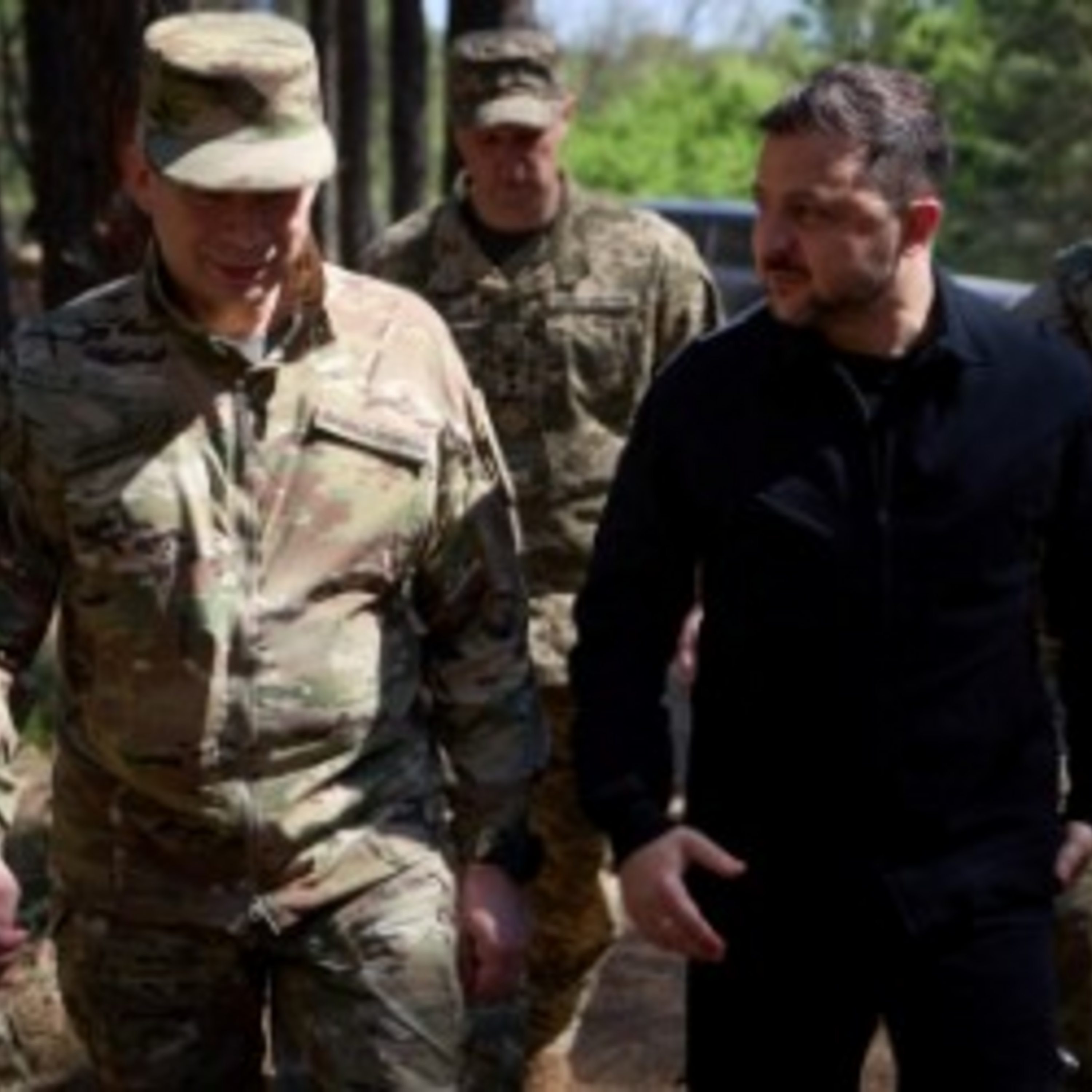
Global News Podcast
Russia and Ukraine begin short ceasefire
00:31:13
Donald Trump says a three-day truce between Russia and Ukraine was agreed at his request
Loading summary
Transcript70 lines
- [00:00]
A
This BBC podcast is supported by ads outside the UK.
- [00:06]
B
Today's episode is sponsored by NerdWallet's Smart Money podcast. Ever Google a money question and end up 12 tabs deep with 12 different answers? This podcast is your shortcut back to clarity. NerdWallet's Smart Money podcast breaks down financial decisions with a team of trusted journalists. They explain the why behind decisions like investing, home buying and choosing credit cards. With clear research backed insights. No jargon, no misinformation. Make your next financial move with confidence. Follow NerdWallet's Smart Money podcast on your favorite podcast app. Choiceology, an original podcast from Charles Schwab is a show about the psychology and economics behind our decisions. Join host Katie Milkman, an award winning behavioral scientist and author of the best selling book how to Change as she shares true stories from Nobel laureates, authors, athletes and everyday people about why we make the choices we do and how to make better ones to help avoid costly mistakes. Listen to Choiceologywab.com podcast or wherever you listen.
- [01:15]
C
This is the Global News Podcast from the BBC World Service. I'm Will Chalk and in the early hours of Saturday 9th May, these are our main stories. A three day cease ceasefire has come into effect between Ukraine and Russia. They've also each agreed to exchange 1,000 prisoners of war. Britain's Prime Minister Keir Starmer is under renewed pressure after his governing Labour Party was battered in English local elections and suffered a historic defeat in Wales. And the Pentagon has begun releasing what it says are never before seen files on UFOs. Also in this podcast, Mexico's school children are told they're getting an extra 40 days off this summer as their country hosts the World Cup. But is the President about to shatter that dream?
- [02:05]
A
And thank you for your wisdom, your kindness, your dedication, and for reminding us always of the wonder of the world we call home.
- [02:15]
C
A royal message for the naturalist David Attenborough on his hundredth birthday. There is for now a ceasefire between Russia and Ukraine. President Donald Trump said he had personally requested the temporary truce. He said it would include what he called a suspension of all kinetic activity and a prisoner exchange.
- [02:38]
D
I asked and President Putin agreed. President Zelensky agreed both readily. And we have a little period of time where they're not going to be killing people and that's very good. And they also agreed to give a thousand on each side 1,000 prisoners back. So they're going to be transferring almost immediately a thousand prisoners from each side. That's very good.
- [03:03]
C
Russia, Ukraine but even if President Trump got The deal over the line, the ceasefire to mark the anniversary of the Soviet Union's victory over Nazi Germany was something both sides had already announced and and then accused each other of breaking. Our global affairs reporter Paul Moss told me more.
- [03:20]
E
Every year, Russia holds celebrations in May to mark victory in World War II. And it's normally a huge event. I mean, this dates back to the old days of the Soviet Union, with soldiers marching, the latest weapons displayed. They put missiles, ICBMs on parade with leaders from all around the world watching. This year, though, Russia says it's needed to scale back the commemorations because it's scared of them being attacked. Now, Sinik suggested that was just an excuse. In fact, Russia is running rather short of men and arms and needed all of them for the fighting and couldn't spare them for parade. But then Ukraine's President Zelensky did actually seem, perhaps to threaten to attack the festivities. He said he didn't recommend any foreign leaders show up for that event. Now, bear in mind, Ukraine has had some success recently getting its drones and missiles past Russia's defences. Only this week, they hit a building in Moscow. So Russia clearly took this threat very seriously and its response was to threaten a massive airstrike on Kyiv if there was any disruption.
- [04:20]
C
And now we've got this truce that originally separately suggested by Ukraine and Russia. But it's Donald Trump, isn't it, who's taking credit for this ceasefire we've got now?
- [04:30]
E
He is taking credit, yes, but it's a suggestion that was made by both countries before. I mean, bear in mind, it was the Soviet Union which fought Germany in World War II, a country which back then included Russia and Ukraine together, and Ukraine lost about 8 million people in that war, maybe more. It is their joint victory being celebrated, a reminder that they were once fighting together against a common enemy. So you would think they could get this agreement made. And indeed, as you say, Donald Trump's claiming credit for it. He said he persuaded the two leaders to agree a ceasefire as part of ongoing negotiations to end the conflict, and persuaded them to swap a thousand prisoners of war as well.
- [05:10]
C
Well, given, as you say, there are vested interests on both sides, do you think then that this truce will actually hold?
- [05:16]
E
That is the big question. Previous truces have not. They've seen the fighting continue with both sides blaming the other for breaking the truce. We'll have to see. But, of course, the sad truth is that even if this ceasefire does hold through the festivities, it is only temporary. The conflict seems very likely to resume straight afterwards. This is A conflict which has already killed hundreds of thousands of people on both sides and shows every sign of killing many thousands more.
- [05:42]
C
Paul Moss, Historic shift. Heavy defeat and a bloodbath. Some of the words the newspapers here in the UK are using to describe local election results in England and devolved Parliament results in Scotland and Wales. But given these elections don't actually have any bearing on the national Parliament and a general election isn't due for three years, is the drama warranted? Reform UK supporters would say yes. The right wing populist party, which has only existed in its current form since 2021, has made huge gains. The governing Labour Party has seen huge losses, including the end of its 27 year rule in Wales. Reform's education spokesperson, Suella Braverman says it bodes well for the party's leader, Nigel Farage. I do think that there is a very high chance of Nigel becoming Prime Minister. I very much hope that he will become Prime Minister. I think the next general election will be the most crucial in my lifetime because the choice will be very, very binary. It will either be a left wing coalition to take us into deeper poverty, open borders and humiliation on the world stage, or the chance to start the recovery. So is the current Prime Minister, Keir Starmer, now finished as Labour leader? I asked our UK political correspondent, Rob Watson.
- [07:04]
F
I think the view inside the governing Labour Party is that Keir Starmer has been finished for some time. Even before these disastrous election results, there's been a view that his position is unrecoverable in the longer term because he's so unpopular within the party, but also in the country. So then the question is always, well, if he's not going to lead Labour into the next general election in 2029, when does he go? So there is a question as to whether these disastrous results will bring that moment forward a bit. And the answer is that it's hard to. There doesn't seem to be any precipitate move against him right now, although of course there have been calls for his resignation. But there is a sense that maybe the party will wait because the problem holding them back from moving against Keir Starmer is who would you put in his place? I mean, if the Labour Party could unite around a single candidate, I think Keir Starmer would be gone much sooner rather than later.
- [07:59]
C
And it's not too dramatic to say, is it, that these results also have implications for potentially the future of the uk, because great results for pro independence parties in Wales and Scotland.
- [08:09]
F
That is true. I mean, it doesn't necessarily mean that there's going to be demands from another referendum in Scotland or a referendum in Wales. But I think what is undisputable is that you now have in Northern Ireland as well. The largest parties are parties that their dreams go to a life beyond the United Kingdom. So not necessarily that independence is around the corner, but perhaps questions about devolution, revolution, about more powers and if you like, the overall constitutional settlement. And to that extent, yes, absolutely. Victories for the Scottish National Party and for Plaid Cymru, the Welsh Nationalist Party, are likely to place strains on the union.
- [08:49]
C
And of course, with any local elections, it's always a bit of a funny one because the view is always towards the implications for the next general election. So looking in your crystal ball then, Rob, what are the implications for the next general election?
- [09:03]
F
So I think you just can't overstate the importance of the results that we've been looking at. I mean, they really do seem to represent a crumbling of the old order. And what I mean by that is the domination by Conservatives and Labour of Britain's political system, both at a local level but at a national level for the last hundred years. Now people might say, well, is that a flash in the pan? Perhaps Conservative and Labour will come back and that the populists of the Green and Reform and others will somehow slip back. But I think that that may be wishful thinking on behalf of the big parties because the forces that are driving the success of the smaller parties and which are damaging Labour and Conservative look unlikely to go away. Because those forces, and you see them in other developed countries, voter anger at the system, a lack of trust in politicians, anger at the stagnation in living standards and the growth forecasts in Britain are pretty dismal. A sense that nothing works properly anymore. What you might call cultural and identity concerns. So that's things like immigration and social cohesion and a widespread sense that people just don't have much control over their lives. And that has led to anger against the established parties who've been running this country for the last hundred years, labor and Conservative, just as you've seen that in other developed countries. And it seems immensely unlikely that those forces, if you like, are going to be addressed in the next three years. So, absolutely, we could, at the next general election in 2029, be seeing a fragmentation of British politics, British politics looking more like the politics of other contin European countries, with multi parties and all sorts of scrambling for power at the end of it.
- [10:43]
C
All right, so say you're in the headquarters of the Labour Party, right? Now then, what can they do? Or is there anything they can do to slow that and to turn that around?
- [10:54]
F
So I think the view inside number 10 is that the only way to do it at this point is by delivering, by somehow showing that people's lives are going to get better, do feel better, and to try and put aside division. But of course, there are ideological disputes within the Labour Party. Some would like to see it move even further to the left with more government spending, with higher taxes on the wealthy. The real problem confronting labor, and this would apply even if Keir Starmer is replaced by somebody else, is that essentially the kind of hand that any new leader would be dealt with is a tough one. Britain is a country with low growth, with high levels of debt, high levels of taxation and high levels of social dissatisfaction. So whoever took over as leader, it's pretty much a poison challenge. And one other thing that I just add into the mix, there was one poll before these elections which suggested that 67% of British people think this is a country heading in the wrong direction. So this is an unhappy and angry country. And whether you're in power or wanting to get power, that is a tough crowd to please.
- [12:00]
C
Rob Watson, let's move on to US Politics, because a month ago, voters in Virginia chose to redraw the state electoral map, a move the Democratic Party hoped would help them win more seats in Congress. Now, though, Virginia's Supreme Court has overturned that vote, saying the way the motion ended up on the ballot broke the rules and the old map has now been restored. All this is playing out ahead of crucial midterm elections in November. Our North America correspondent, Anthony Zircher, has been following this one and spoke to my colleague Carl Nasman.
- [12:34]
G
They decided this on a procedural issue, essentially to amend the Virginia state constitution the way they had to in order to allow this change in congressional districts. The legislature had to vote on the measure before last year's election and then after that election, and then it would have to be passed by the voters in Virginia. And what the Supreme Court of Virginia said was that that first vote was too close to Election Day. It happened while early voting was going on. And so the million plus people who voted in the election didn't have a chance to cast their ballots, understanding that that was what the state legislature did. So it was all about the process by which this was brought to effect. In terms of the impact now on the upcoming midterm elections, how big of a ruling do you think this is going to be? It's going to be a big ruling because it's going to result probably in democrats holding about 4 less seats than they were hoping for. The the way they redrew these maps, it gave Democrats a majority in 10 of Virginia's 11 congressional districts. Right now they only hold six of the 11 districts. Now, they may be able to pick some up later this year because some of those districts are closely contentious. But if it's a close election, if the majority in the House is determined by two or three seats, then this could be the difference. It is definitely a setback for Democrats who are hoping that this would be a good counter to the redistricting that Republicans have already done in states like Texas and Ohio and North Carolina. What happens next? Because there are other Republican states that are looking to fall in line here. Follow the example of, like you mentioned, Texas and, you know, redraw their voting maps to give Republicans an advantage heading into those crucial midterm elections. Yeah, we're not done yet. Just last week, Florida redrew their maps. Probably going to give Republicans a handful of economics extra seats there. But there was a Supreme Court decision just last week on the Voting Rights act that has opened the door for a lot of Southern states to redraw their maps. The court said that states do not have to have protected districts for majority black voters that would reflect the populations of those states at large. And so now you're seeing Tennessee already redraw their lines in order to net an additional Republican seat. You can see places like Alabama and South Carolina and Georgia take similar steps. So just about two weeks ago, it looked like this was all going to be awash with California and Virginia on one side and Texas and maybe Florida and a handful of other Republican states on the other side. It was going to balance out. But what we're seeing now with that Supreme Court decision and the defeat in Virginia is that Republicans are in a position where they could tilt the playing field towards them by maybe even as much as a dozen seats. This still is going to be a tough election for Republicans in November. They're still going against political headwinds. But if this is close, then this is going to really help Republicans maybe eke out another small majority in the House. But a small majority is still a majority. And if Democrats were in control of the House, they would be launching investigations of Donald Trump and ramping up oversight and blocking his legislative agenda. So the stakes here are very high.
- [15:43]
C
Anthony Zircher, we are sticking in the US for this next story because as we speak, a dedicated group of believers will be pouring in great detail over some newly released government files. They're to do with something that has fascinated Americans and people around the world as well for decades, sightings of unidentified flying objects, more commonly known as UFOs. They include files from the FBI, the Department of State and the US space agency NASA, with some dating back to the 1940s. President Trump directed the Pentagon to release the documents because of what he called tremendous interest. Valerie Sanderson got more details from our correspondent John Sudworth.
- [16:25]
H
The first thing to say is this makes fascinating reading and viewing for anybody who logs onto this website. It's all been put in the public domain, 162 files in total. Some of them are still images, many of them taken from US military aircraft, where they've seen something that they can't quite explain. Perhaps they're tracking it or whatever, and they've taken still images. Some of it is video evidence, again, showing strange objects that the camera operators, the pilots, have seen whilst on missions, all in various parts of the world. Some of them show sort of little bright lights moving erratically across water or across land as the aircraft try to move with them. Others show things very difficult to describe. All of this has been put in the public domain because President Trump said back in February that he wanted to do more. He called for the release of all and any information relating to UFOs, or as the Pentagon calls them nowadays, UAPs, unidentified anomalous phenomena. But it's important to say, of course, the point about all of this is these are all unresolved. There may be other explanations for what we're looking at. It's just that the Pentagon hasn't been able to pin those down.
- [17:36]
C
So, Dom, what stands out to you,
- [17:38]
H
Some really intriguing detail in some of this information, for example, being made public for the first time, is the debrief of the Apollo 11 astronauts back in 1969, in which they talk very openly. In this long transcript that's been published about seeing weird objects, Neil Armstrong describes one as being shaped like an open suitcase. You've got Buzz Aldrin on that transcript talking about these tiny bright lights that he says he can see that appear he to kind of penetrate the spacecraft, seem to be coming through the walls of the spacecraft. And what's really interesting is it sort of unfolds as a kind of a conversation. He's speaking to Neil Armstrong. And Neil Armstrong says that for the first few days, when Buzz Aldrin mentions this phenomenon, he can't see it. But on the last day, Buzz Aldrin's so convincing that Neil Armstrong sits there and looks for them and then he says yes, he too can see them.
- [18:30]
C
Will more batches like this be made public?
- [18:33]
H
They will. So again, important to say this isn't the first time we've had the release of these kinds of files. Some have been public under previous administrations, but President Trump said back in February that he was going to do more clearly a concerted push to put some of this evidence into the public domain. They are redacted. They've been stripped of things that might identify, for example, some of the camera operators or pilots. They're obviously going through them carefully. But yes, we are told more will be released.
- [19:01]
C
John Subworth and you can find those documents? I've just been looking myself actually on the US Defence Department website war.gov UFO it is quite addictive though, so don't blame us if you're still there in a few hours. Time still to come in this podcast, Thousands take part in the Palestine Marathon in Bethlehem after a three year hiatus because of the Gaza war.
- [19:40]
I
If data management is slowing down your business, you need the Intuit erp. If one entity is here and one here and one here and one here, you need the Intuit erp. If scaling your business feels like start starting, starting, starting, starting over, you need the Intuit erp. Intuit Enterprise Suite is the AI native ERP solution that consolidates, migrates and automates all in one place. Learn more@intuit.com ERP struggling to see up close?
- [20:12]
J
Make it visible with Fizz. Viz is a once daily prescription eye drop to treat blurry near vision for up to 10 hours. The most common side effects that may be experienced while using biz include eye irritation, temporary dimmer, dark vision, headaches and eye redness. Talk to an eye doctor to learn if you're right for you. Learn more@viz.com today. Every dollar counts. Make yours go further with AARP for just $15 for your first year. With automatic renewal, an AARP membership, benefits and savings you can use right away. You can also access trusted resources and tools to help you stay healthy, protect your money and plan ahead. And with a second free membership for someone in your household, you'll receive AARP benefits for two. Go to aarp.orgiheart to join today.
- [20:56]
C
They say everything happens for a reason, but I suspect everything happens for a reason.
- [21:02]
I
Like this. Commercial break did you need 15 seconds
- [21:04]
C
away from music or 15 seconds to eat a Reese's?
- [21:07]
I
Perhaps it's true.
- [21:09]
C
Everything happens for a Reese's. This is the global news podcast. Reports from Saudi Arabia say the country prohibited the United States from using its airspace and bases to launch operations. For its brief bid to reopen the Strait of Hormuz. Washington is understood to have retained access to its allies airspace for other uses. Earlier this week, President Trump announced a pause in his two day old Project Freedom to guide ships through the Strait. US Media reports now say Crown Prince Mohammed bin Salman, the de facto Saudi leader, talked directly to Mr. Trump and refused to allow US forces to draw Saudi Arabia into the operation. So how much damage has been done to the Saudi US Relationship? Michael Ratney is a former American ambassador to Saudi Arabia. He spoke to the BBC's Paul Henley.
- [22:02]
I
I think it's stressed to be sure the Trump launched the war along with Israel without consulting the Saudis or anyone else in the Gulf either about its objectives or its timeline or whatever role they would play. And he started the war without making clear to them whether or not the United States would offer them protection. So I think it started out despite the fact that obviously the Saudis have no love for the Iranians. It started out with a certain amount of tension.
- [22:29]
D
How big a mistake was it to launch Operation Freedom which depended on Saudi airspace, without even consulting Saudi?
- [22:37]
I
Yeah, assuming that's the case that they didn't even consult Saudi at all, and I'm not sure that's the case, but assuming it is, it would be kind of a bad mistake. They, they depend on retaining the support of the Saudis for a lot of things in the military space, whether or not it's directly involved with combat operations with Iran or not. We have a large military deployment there and really need their cooperation. I think when they're antagonized and when they're nervous and when they're not totally sure what we're up to or where we're going with this, I think it just drives that distrust a bit further.
- [23:13]
D
The war has caused quite a lot of antagonism, hasn't it, among the Gulf states?
- [23:17]
I
Yeah, I mean, I think they're confounded. On the one hand, none of them have any love for Iran and would love to see a different sort of regime there. On the other hand, I think a lot of them knew that a war like this would be much harder than Trump imagined it would be and they worry that they're going to be left with a worse situation. The Iranian regime, if not intact, at least still in place, and all of their ability to stoke mayhem in the region, missiles, support for proxies, plus it's not clear what's going to happen with the Strait of Hormuz So I think this was sort of nearly the worst case scenario for them, which is you launch a war, the Iranians launch reprisals that affect Saudi and other Gulf countries and they're left with a worse situation.
- [23:58]
D
Has it changed the way that Gulf states see it? Having US Military bases on their soil, they were seen as there for protection. Perhaps they're seen as a liability now.
- [24:11]
I
Yeah, that's a tough issue. I think obviously the United States can be imperfect partners, as are many of our partners. At the end of the day though, the alternative partners for the Gulf, you know, if you think about folks that they might have reached out to, whether it's Pakistan or China or others, at the end of the day those countries aren't really going to come and defend Saudi or the Gulf at all in the event of a conflict with Iran. So they have uncertainty now with the United States, but I think at least they have greater clarity and a longer standing relationship, at least in the area of defense than they do with any other country. I expect going forward they're not going to, as we would say, throw the baby out with the bathwater. I think they'll want to retain a strong relationship with the United States, but I expect they'll also be reaching out to other potential partners as well.
- [24:58]
D
So you don't see long term damage to U S Saudi relations.
- [25:03]
I
I see once the dust settles on this war and it's we don't know when that's going to happen, I think there'll be a moment where they're all reflecting on the nature of the relationship with the U.S. i think there is probably some additional distrust. I don't know whether that's going to be specific to the Trump administration or to the US in general. I do think they're going to want to retain the relationship, but they're going to want to look for other possibilities as well.
- [25:28]
C
Michael Ratney from the Washington based Center for Strategic and International Studies. Thousands of runners have returned to the west bank city of Bethlehem for the first Palestine Marathon in three years. Restrictions over the Gaza war meant the 2024 and 2025 events were cancelled. What's more, this year's marathon was held in conjunction with a 5k race inside Gaza as the fragile ceasefire there continues to hold. Wera Davis reports.
- [26:03]
D
This is the heart of Bethlehem. We're in Manger Square and this is the 2026 Palestine Marathon. It's the first time they've been able to hold this event for three years because of travel restrictions because of the Gaza war. So There's a huge amount of excitement here. Thousands of runners in the marathon, the half marathon, and in the 10k. But even the route of the marathon itself is predicated, is constrained by the Israeli separation barrier. They have to run several maps in order to complete the full marathon. But I've been speaking to some of the runners and some of the organizers. You see, I'm a smile. They come from everywhere to run Palestine Marathon. Etidal Ismail is the director of the Palestine Marathon, and she's particularly proud that this event has been able to take place today. This is the focus in our rights to move, our right to freedom of movement. Other people, it's easy to move from city to another city to travel. But in Palestine, we have this right. This is a very special marathon for me. I ran here 13 years ago in the first edition. Ahmed Taher is the favorite male Palestinian runner in this race. And for him, it's an emotional moment to be able to run on his own terms. So this is a very important day. Not for me only, but for all of us. It's a celebration. It's us representing and telling our story to the world, the story about our right to movement. In Eddie Maret, they talk about hitting the wall, getting through the barrier. But in the Palestine Marathon, it's not just a psychological wall, a psychological barrier, there's a physical wall as well, because the huge concrete Israeli separation barrier is very much part of this course. And here we are at the halfway point, runners coming around this sharp bend, and behind them, the huge concrete barrier separates Palestine and Bethlehem from Israel.
- [28:22]
J
It weighs really heavily on all of our hearts.
- [28:25]
D
Reem Ali is originally from the Palestinian territories, but she now lives in the US and has come back here especially for this event with her husband. She eventually came second in the women's race.
- [28:36]
J
Just means so much to us to be able to do what we love and to move and to show that regardless of what. What's there, that we can still have fun. We don't have to have barriers to kind of control us, in a sense.
- [28:53]
D
Here at the crowded finish line in Bethlehem's Manger Square, there are families because there's a family race. There's a 10K. And the key feature of this event is that it coincides with a 5k in Gaza. Now, it's the first time there's been a big social and sporting event there since the start of the devastating war between Hamas and Israel. And of course, the Palestinian economy has been hit hard in recent years, and we haven't seen this many visitors Here in Bethlehem, a town so dependent on tourism for a long time.
- [29:32]
C
Wera Davis reporting from Bethlehem. It sounds like a dream for most school children. Not only is your country hosting the football World cup, but even better, you get an extra 40 days off school because of it. And that dream looked as if it was becoming a reality in Mexico after an announcement on Thursday from the Education Secretary. But now the President has thrown the plan into doubt, saying actually no final decision has been taken, as Will Grant reports from Mexico. From a parent's perspective, it might not have been such a welcome idea anyway.
- [30:06]
A
No offence to spending time with one's kids, but this was probably the last decision that any parent in Mexico wanted to hear. Earlier this week, the Education Minister, Mario Delgado, announced that schools would be out early. In fact, a month early. No more classes from 5 June. He gave two reasons for the decision. The first is an unseasonal heat wave in Mexico, but the second was to stop so many cars circulating on the road during the FIFA World Cup. And that reason has infuriated parents. Many Mexicans are already angry about hosting the competition over sky high ticket prices and oversaturated public transport. And now this. One parents group described the decision as a grave error. Millions of families are now facing a decision about how to best juggle their time between extra childcare and work.
- [30:59]
K
I don't know what I'm going to
- [31:01]
C
do because I need to see patients,
- [31:03]
K
but I need to see my children too.
- [31:05]
C
And this is going to be very
- [31:07]
K
complicated for all the women in this country that need to work, to bring food and dress and everything to their children.
- [31:17]
J
This is really going to affect us. We're working mothers and work every day. We don't have educational activities or things to entertain them at home and we can't be with them the whole time. We need to work now.
- [31:28]
A
President Claudia Sheinbaum has been dragged into the debate. At her morning press briefing, she said the announcement by the Education Ministry wasn't a final decision and that the school year hadn't been fully defined. Still, people are saying that's not what it sounded like from the Education Minister and are wondering why the World cup should impact their kids.
- [31:48]
C
Educations will grant reporting from Mexico. Finally getting to 100 years old is a major cause for celebration. And the naturalist David Attenborough, who's reached that milestone, has been attending a concert in his honour at London's Royal Albert Hall. It featured music from some of his best known programs and a message from King Charles. Our Culture editor, Katie Razzle was there too.
- [32:15]
K
Sitting in the royal box, the 100-year-old was celebrating with a night of orchestral music and performances from musicians who've collaborated on his programs. Bastille Segur Ross. There were highlights From Sir David's 70 years of broadcasting, including his famous encounter with mountain gorillas. And for the world's best loved nature presenter, a message from the King.
- [32:39]
C
I wish you a very happy 100th birthday.
- [32:46]
K
In a special film tribute. After an attempt to deliver the King's birthday card is thwarted, it's appropriately left to a relay of furry friends to ensure His Majesty's letter reaches Sir David. The Prince of Wales was there to celebrate Sir David's profound influence.
- [33:02]
A
Thank you for your wisdom, your kindness, your dedication, and for reminding us always
- [33:09]
C
of the wonder of the world we call home.
- [33:12]
A
A very happy 100th birthday.
- [33:13]
K
The evening ended with a standing ovation that brought a smiling Sir David to his feet. And the centenarian who is seen as the voice of nature was treated to 5,000 rapturous voices belting out Happy birthday.
- [33:29]
C
Katie Razzle reporting. And that's all from us for now. If you want to get in touch, you can email us at@globalpodcastbc.co.uk don't forget our sister podcast, the Global Story, which goes in depth and beyond the headlines on one big story. This edition of the Global News podcast was mixed by Ben Andrews and the producer was Nikki Verico. The editor is Karen Martin and I'm Will Chalk. Until next time, goodbye.
- [34:06]
J
This summer, don't squeeze in. Spread out. Find homes big enough for your whole guest list on vrbo. That's vacation rentals done. Right, book your stay now.