← Global News Podcast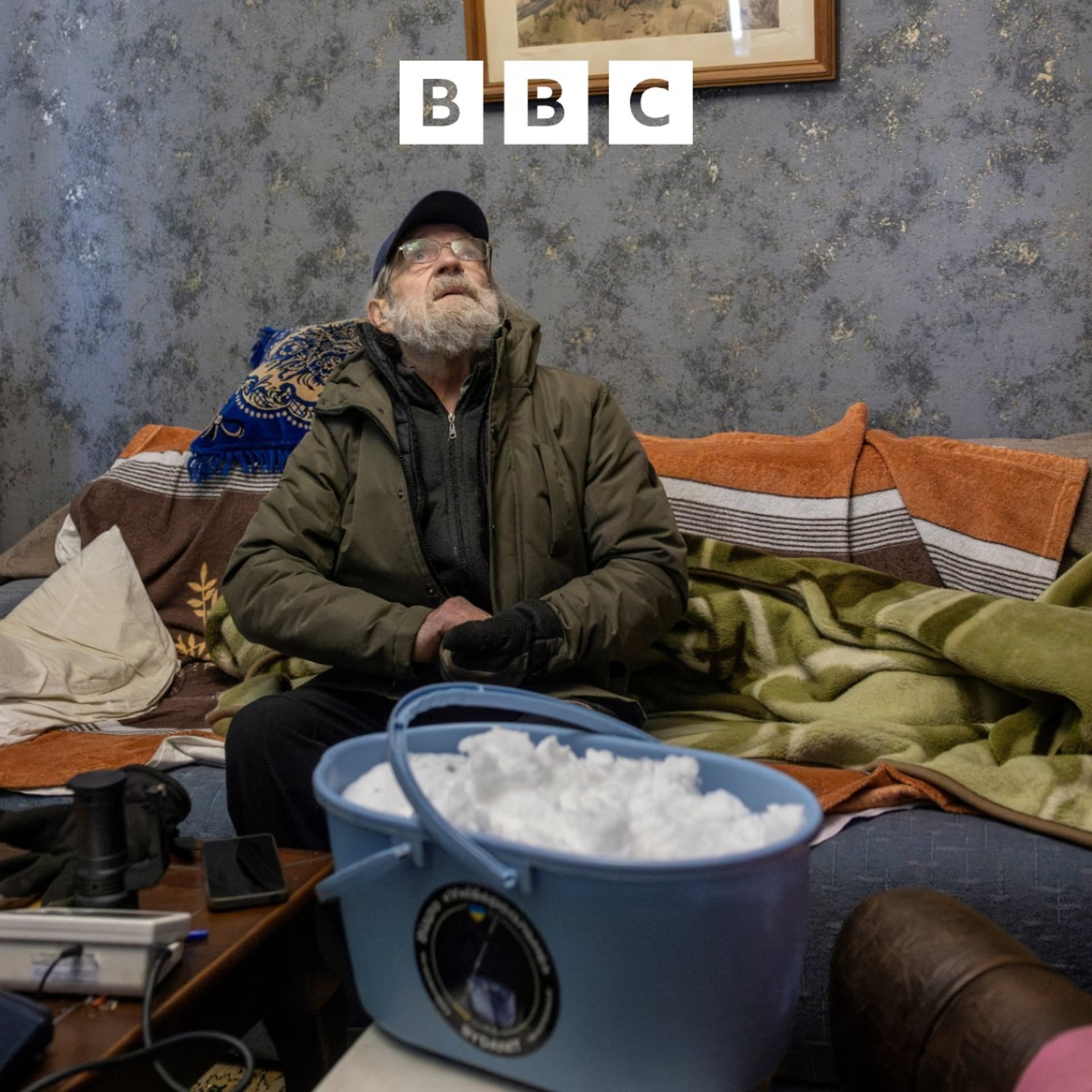
Global News Podcast
Russia to pause attacks on Ukraine as temperatures plummet
00:28:08
President Trump says Russia won't strike Ukrainian cities for a week
Loading summary
Transcript1 lines
- [00:00]
A
This BBC podcast is supported by ads outside the uk. This message comes from Schwab at Schwab. How you invest is your choice, not theirs. That's why when it comes to managing your wealth, Schwab gives you more choices. You can invest and trade on your own. Plus get advice and more comprehensive wealth solutions to help meet your unique needs. With award winning service, low costs and transparent advice, you can manage your wealth your way at Schwab. Visit schwab.com to learn more. Los ave que necesecitas pinturas e calidad ahusta tu pre su puesto porreso miembros de Milos pro rewards ahora and painte porciento encompras de pinturas T intensi primers cuando el gasto annual encompras calificadas empinturas alcanza tres mil dolares aprobecha oy marcas como Valspar Cabot y pro Block and Logs. This is the global News podcast from the BBC World Service. I'm on Criticai and in the early hours of Friday 30th January, these are our main stories. Volodymyr Zelensky has welcomed an attempt by President Trump to get Russia to pause attacks on Ukraine for a week, but because of the extreme cold weather. But the Kremlin hasn't commented. Venezuela's national assembly has voted to open the oil sector to foreign investment, one of the Trump administration's key demands after it ousted Nicolas Maduro. Also in this podcast, polar bears in Norway have changed their diets, eating more reindeer. They are eating more bird eggs. They are likely eating more walruses because there are a lot more walruses around. We found out why those polar bears are becoming fatter and healthier because of it, and why some parts of Germany are being offered free lunches. The only catch is you eat nothing but potatoes. In recent weeks, Russia has been exploiting Ukraine's harsh winter to pummel energy infrastructure across the country. Repeated strikes have plunged millions into the dark and the freezing cold in their own homes. Some people are even pitching tents inside their flats and heating bricks as makeshift radiators in an effort just to keep warm. But according to President Trump, there's a potential brief reprieve on the cards because of the cold, extreme cold. They have the same that we do. I personally asked President Putin not to fire on Kiev and the cities and towns for a week and he agreed to do that. And I have to tell you, it was very nice. A lot of people Said, don't waste the call. You're not going to get that. And he did it, and we're very happy that they did it. Abdul Jaleel Abdurasulov is in Kyiv. Russia has been relentlessly targeting Ukraine's energy infrastructure. For weeks and months. They've been targeting power stations and substations. And as a result, just a week ago, about 6,000 buildings in Kyiv alone had no power or heating. And currently that figure is about 500, because emergency responders are working around the clock to restore those facilities and restore the services that they provide. And currently this stress is exacerbated by the weather because the temperature is forecast to drop early next week. And a lot of people are already living in Florence, where the temperature is about zero degrees. And as a result of that, some residents in Kyiv are forced to move their families to another place where they can have some heating at least. And President Zelenskyy has said that he hopes that this deal, this agreement would be implemented. But that's the thing. A lot of Ukrainians are very skeptical about this agreement. So how much of a breakthrough is this deal? It's a question I put to our chief North America correspondent, Gary o'. Donohue. Well, I was trying to think, and I can't really remember anything significant in sort of military terms that Vladimir Putin has ever sort of given ground on that. He's always sort of pursued the military angle, whatever is happening diplomatically, for example. So last weekend is a prime case. There were these trilateral talks in the gulf between the U.S. ukraine and Russia. And Russia hit Ukraine cities, Kyiv included, very, very hard, into Saturday morning last week. And so this would, I think, if it plays out, be something significant. It's worth saying it's only a week. It's only seven days if it happens. But clearly the president thinks he got some ground on this. He said he made a personal appeal. He said the Russian president agreed. And his response was that was, quote, very nice. How crucial is this relationship between President Trump and Vladimir Putin? Because why would Vladimir Putin go along with something like, I think the Kremlin has become very good at knowing or noticing when the focus or the pressure is on it, rather than on Ukrainians. And as we know, President Trump, his focus does flip back and forth in terms of who he blames more for this war. And Ukraine has felt that heat at various times very intensively. But in the last kind of week or so, Ukrainians, maybe even longer, the Ukrainians have been very serious, positive about the sort of progress that's been made on the discussions with Steve Witkoff, the envoy, you know, saying that they're pretty much there on security guarantees on a post conflict business deal, energy deal, that sort of thing. Territories are still, is still the issue, of course, and it always was and maybe always will be. But they've been very careful to go out of their way to praise the process that the Americans have been engaged in. And I think, you know, perhaps Moscow feels that heat a little bit and this is a way of maybe relieving a little bit of that pressure. I mean, there will be a big test this weekend because certainly in Ukraine, the temperatures are due to go down to minus 20 and even further Celsius. And there's an expectation that Russia would use that opportunity to hit energy infrastructure again. I mean, more than the current thousands of apartment blocks that are already without light and heat. People very, very cold, some dangerously cold. And there was certainly an expectation that Russia might use this weekend to, to make it even worse. So we'll see what happens. But that may be a test coming up in the next few days. Gary o' Donoghue in Washington. Venezuela's parliament has passed a new bill that will roll back decades of tight state control over the country's oil sector. Jorge Rodriguez, the president of the national assembly, announced the news, saying, I congratulate the people of Venezuela. Only good things will come after suffering and we must build together and as one now. The overhaul comes, of course, after the U.S. s successful seizure of the country's president, Nicolas Maduro and subsequent demands for the oil industry to be open to large scale foreign investment. While Donald Trump's actions have certainly been divisive, they could be good news for people in Venezuela's decaying oil heartland. BBC Mundo's and Roberto Paredes went to meet some of them in the country's first and most productive oil area. Maracaibo is the oil heartland of the country, with the largest Puma reserves in the world. This city is not what it used to be. The colonial style buildings, brightly painted in tropical colors have faded and cracked. The streets are full of potholes and very quiet. Marcaibo used to be the wealthy heart of Venezuela's old boom, but decades of mismanagement had hit it hard. Now it feels like a symbol of a country that has declined. People here are desperate for the political stability and the investment to bring Maracaibo back to life. Getting ready for a trip out on the city's lake, These fishermen are being hit by both the economic downturn and the pollution caused by the Decaying oil industry. Carlos used to be able to pull in big catches. It's getting worse Every day. I see it getting worse and worse. Despite the removal of his president by Donald Trump, he's ready for American investment and the oil to start flowing once more. It would create jobs and our children wouldn't have to work in the fishing industry anymore. In a nearby neighborhood, 93 year old Jose is talking about his old job at the state owned oil company. He's keen to show us a special edition Dodge car he bought in the boom years of the 1970s. But like many of the homes here, it's now a faded reminder of how things used to be. Everything has changed. In the past, things were easier. We had more comforts. The streets in this area could be straight out of a 1960s American suburb. International oil companies, many with US links, built whole neighborhoods for the workers. But today, many of these houses stand empty and some have been looted. Analysts say it could take tens of billions of dollars and potentially a decade to restore Venezuela's oil output to what it once was. There is still uncertainty over the US's long term plans. Juan Romero is a local member of parliament for the governing Socialist Party. He says there is still anger over the US sanctions and military action that have hit the country. Look at what we Venezuelans are suffering. The events of January 3rd were a physical act of aggression. But the attacks haven't stopped since President Trump announced the start of a firm blockade on the country. There's a lot of theatricality and little reality. Truths are mixed with lies. Venezuela has just passed a new law giving foreign companies far greater access to its oil industry. This has been a key demand of the Trump White House. But for many people here, unlocking the country's vast oil wealth still feels a long way off. Roberto Paredes with that report. It's three years since the ruling Taliban in Afghanistan implemented an informal ban on birth control services for women. Soon after this ban was imposed, doctors and clinics reported that their supplies of contraceptives were dwindling. And now research by women journalists working undercover in seven Afghan provinces has revealed some of the impacts on women in rural areas. Their report has been published jointly by the British Guardian newspaper and Zaan Times, which is a multimedia outlet run by Afghan women. Rebecca Kesby spoke to the managing editor of Zaan Times, Khadija Haideri. Women had with nine pregnancies or with 12 children. You know they are also not allowed to use contraceptives. There is not just Taliban, there is also the husbands in laws, families, culture, There are everything against women in Afghanistan, especially to the women who are forced by the families to give birth. Son, boy. So there's cultural pressure as well then. And what is the impact on women? Yes, impact was so dangerous or so risky. Like we interviewed a woman called Parwona. She had nine children with six miscarriages during off a few years. Like there was no clinics, no any treatment, no any medicine, no support from the family, from in laws or from the husband. And now she has a kind of mental, like she couldn't recognize her own children too. Just to be clear, it's sort of very traumatic, isn't it, to go through that many pregnancies and especially miscarriages? Yes, there is a lot of pressures on women. And you can imagine a woman with 12 pregnancies and she lived in Herat. She says she had many sons and her husband wanted a daughter. This is something unusual in Afghanistan. And she said, you know, the 13th time of the pregnancy she had a bad surgery and doctors told her that another pregnancy, it will be so dangerous. But her husband forced her to have another one and she survived. But there is a lot of pain after giving birth a daughter. Presumably the situation is worse in the rural areas, but I mean, are there any parts, maybe in bigger cities where there are a few more options open to women? When we talk about the culture, it covers all Afghanistan, but in cities there is some private clinics too. And in private clinics there is some survivors the women can find, like they can treat their miscarriages or they can have birth in the clinics. But the rural place, they are really killing their women. Khadijah Hayderi Scientists say polar bears living in the Norwegian Arctic are getting fatter, despite warnings of the decline in sea ice has made it harder for them to hunt for food. A study of hundreds of bears carried out over 30 years has found that on average, they have more fat reserves than they did in the early 1990s. Our science correspondent Victoria Gill has been finding out what they've been eating. With water repellent fur, huge slightly webbed paws that are adapted for grip on the ice, polar bears are the ultimate Arctic predators. There's long been concern about the effect that melting ice was having on their ability to hunt seals, their staple diet. But in the Norwegian archipelago of Svalbard, something surprising has happened. The bears there have gained weight. It is the opposite of what I would have predicted. That's Dr. Jon Arsch from the Norwegian Polar Institute. Over almost 30 years, he and his colleagues studied the body condition of 770 Svalbard polar bears and found that since the early 1990s, the animals have got fatter, significantly fatter. And for a polar bear, fatter means healthier. Rising temperatures, though, mean that there are now 100 more ice free days per year in Svalbard than when this study began. That's 100 days when there's no frozen platform from which to hunt seals. So the bears are now hunting on the land, eating more reindeer, they are eating more bird eggs, they are likely eating more walruses because there are a lot more walruses around. And why are there more walruses around? Walruses were hunted almost to extinction in Svalbard. They started to recover, they were protected. So then suddenly the population have increased a lot. This unexpected good news, scientists say, is temporary. As sea ice recedes, more bears may have to travel further between their hunting ground up valuable fat reserves for energy. There's a polar bear under a tundra buggy right now. He's very curious about us. Oh my word. When we joined polar bear researchers in Canada recently, we saw a very different impact of climate change. Loss of ice here in the Hudson Bay, where there are no good alternative prey sources is linked to a decline in the polar bear population. And across the Arctic, there are at least 20 different sub populations of polar bears, each shaped by its environment. And the cl all of them have evolved to hunt on the ice in Svalbard. At least for now, though, polar bears are finding new ways to survive. Victoria Gill reporting. Still to come in this podcast. You know, they're my brothers, they're my friends, first and foremost. We became housemates, we were living together, so yeah, it's a shame. Former boxing world champion Anthony Joshua speaks on camera for the first time after the car accident in Nigeria that killed two of his closest friends. If you're the purchasing manager at a manufacturing plant, you know having a trusted partner makes all the difference. That's why hands down, you count on Grainger for auto reordering. With on time restocks, your team will have the cut resistant gloves they need at the start of their shift and you can end your day knowing they've got safety well in hand. Call 1-800-GRAINGER Click grainger.com or just stop by Grainger for the ones who get it done. If you're an H Vac technician and a call comes in, Grainger knows that you need a partner that helps you find the right product fast and hassle free. And you know that when the first problem of the day is a clanking blower, motor, there's no need to break a sweat. With Grainger's easy to use website and product details, you're confident you'll soon have everything humming right along. Call 1-800-GRAINGER Click grainger.com or just stop by Grainger for the ones who get it done. If you're an H Vac technician and a call comes in, Grainger knows that you need a partner that helps you find the right product fast and hassle free. And you know that when the first problem of the day is a clanking blower motor, there's no need to break a sweat. With Grainger's easy to use website and product details, you're confident you'll soon have everything humming right along. Call 1-800-GRAINGER click granger.com or just stop by Grainger for the ones who get it done. Well, the holidays have come and gone once again, but if you've forgotten to get that special someone in your life a gift, well, Mint Mobile is extending their holiday offer of half off unlimited wireless. So here's the idea. You get it now, you call it an early present for next year. What do you have to lose? Give it a try@mintmobile.com Switch limited time 50% off regular price for new customers. Upfront payment required 45 for 3 months, $90 for 6 months or 180 for 12 month plan taxes and fees. Extra speeds may slow after 50 gigabytes per month when network is busy. See Terms. This is the Global news podcast. Tensions between Tehran and Washington remain high as an armada of US Warships, as President Trump puts it, advances towards Iran. It's been three weeks since the Internet in Iran was shut down by the government during the mass protests against the regime in which thousands of demonstrators were killed. Although it's now become intermittently available, most of the country's 92 million population cannot access it, leaving many Iranians across the globe constantly fearful for the safety of their loved ones. Raya Khansara has spoken to some of them. I'm actually fighting a war without being in one and I'm sitting at home. I haven't been able to work. I don't know when I'm sleeping, when I'm waking up. I have these nightmares about people that I know I feel like a zombie. Mandana Karimi is talking to me over zoom from her home in Mumbai, India. She left her family in Iran 21 years ago, disillusioned by life under the regime and desperate for freedom. But the deadly crackdown on protests has now left her fearing for the safety of her family. Before the blackout, how often were you speaking? I used to get a picture of, hey, listen, we are here, we miss you. Or like a voice note that, hey, we're doing this or we're doing that. Many Iranians rely on encrypted messaging apps like WhatsApp and Telegram to communicate with people inside and outside the country without the prying ears of the authorities. But the nationwide Internet shutdown imposed on 8 January became a kill switch, cutting off tens of millions of people from social media and the world. Some Iranians have circumvented the digital blackout by using Starlink satellite technology, or VPNs, to connect to the Internet. But experts say even that number is very low. Phone lines, which are regularly tapped, were also cut off. They've since been reinstated, but the connection is patchy. Unfortunately, I cannot just pick up my phone right now and call my mom. It doesn't matter how much we try, it's not going through. She has to call me. And usually the conversation is between like three minutes to four minutes. What was the last thing that she said to you? One of the family members who have lost their children and they haven't found a body, she said, listen, I'm not going to call you because, you know, there is just a lot of screaming, there's a lot of crying. And she said, we are okay. We've just come to give a visit because they haven't been able to find the bodies. According to U. S based human rights activist News agency, nearly 6,000 people have been killed since the unrest began. They are yet to confirm the reported deaths of another 17,000 people. Azam Jingravi, who lives in Canada, says six members of her family were killed during the protests. When my mother started to tell me what happened, I started to cry. I was worried about my brother and I wanted to talk with all of them. I was worried about all of my family, especially a person that died. He had two children and my heart was broken. Like Mandina, she has only been able to speak to her family on the phone on a couple of occasions in short bursts. The last time she told me, she got depression. She couldn't talk, she couldn't sleep during night. She said, always think about the young people that they killed. And she said, imagine one of them was my children. Iranians across the globe have told me similar accounts. Everyone knows someone who has died. And like Azim and Mundana, they continue to live in fear, separated and silenced by a digital wall that shows no sign of breaking. Reha Kansara reporting. Ten days after arguably the biggest payday in his career, after knocking out YouTuber Jake Paul live on Netflix, British boxer Anthony Joshua was mourning two of his closest friends, Sinigami and Latif Latz Ayodele were killed in a car crash in Nigeria. The former heavyweight champion of the world was also in the car, but came away with minor injuries. Now, we've heard him speak about it for the first time since it happened. Will Chalk has been watching the video and told me more. As you say, Ankur, AJ very much on a high when this happened. You know, huge payday. And yes, this fight against Jake Paul was seen by many in the boxing community as a bit of a joke. But, you know, he'd avoided embarrassment in it. And there was lots of talk about where his career was going from there. But then a few days later, just after Christmas, there's this crash. He was in a car near Lagos with his two friends, and they were also his business partners, too. So Sinogami was his strength and conditioning coach and Latz Ayedele was his personal trainer. They were both pronounced dead at the scene. Whilst those now famous images appeared online of clearly shaken Anthony Joshua being pulled out of the wreckage. So this has all come from a new video on Anthony Joshua's YouTube channel where he looks straight into the camera and he talks openly and seemingly off the cuff as well, for about six minutes now. It's not as you might maybe expect. It's not particularly somber in much of it. He's laughing and smiling, you know, sharing memories of his friends. But there is a point where he quite suddenly gets overwhelmed. You know, they're my brothers. They're my friends, first and foremost. Then we became business partners. We became hustlers. We became lieutenants, we became generals. We became everything. We became housemates. We were living together. Do you know what I mean? We. Yeah. So, yeah, we. Yeah, it's a shame. Now, elsewhere in the video, he thanks the fans who sent him love and prayers from around the world and also says that when his time comes, he'll take comfort in knowing he's got two brothers on the other side, is the way he phrases it. Does he mention the future at all? Well, he talks a lot about how his friends will be remembered and also his plans to support their families. The mission must go on. I understand my duty. I understand, like, what they wanted to do for their families. So what my goal is, is to continue to help them achieve their goals, even though they may not be here in the physical when I pray at night, when I pray in the morning, I know spiritually they're going to aid me through because it's not just physical strength that will get me through. It's going to take a lot, a lot of strength from the higher power. So I'm going to definitely be saying my prayers and I want to help them fulfill their dreams for their families now. In many ways, talking about AJ's career, you know, might seem secondary in all of this, given what's happened, but it will be what a lot of fans will be thinking of. Now, he doesn't reference it directly in the video, but he also doesn't come across like a man who's thinking of quitting anything. He's composed, calm and focused like we've seen him so many times before. Earlier this month, he posted a video of himself in the gym that had the caption mental strength Therapy. His promoter, Eddie Hearn, has also said he thinks AJ will return to the ring when the time is right. The newsrooms will chalk reporting. Now, as the saying goes, there's no such thing as a free lunch. But for a week in certain parts of Germany, in free lunches are an option. That's as long as you eat nothing but potatoes. A bumper crop means millions of potatoes are being given away. A Berlin correspondent, Jessica Parker, has been keeping her eyes peeled and told Celia Hatton more. This has come from an agricultural firm here in East Germany that ended up essentially because there's been a bumper harvest in Germany of potatoes, of just having too many spuds and not quite knowing what to do with them. And the guys running that firm have teamed up with a Berlin newspaper, another local organization as well, and decided to try and distribute some of these potatoes rather than chuck them away. These kind of spud hot spots have been set up where people supposedly can go along. They look on this map on a website and pick up some free potatoes. I must say, though, it's not like you walk through the streets of Berlin, as I've been doing today, and potatoes are rolling down the street. I mean, you have to go looking for them. And I went to one of these spots where supposedly they might be, and there weren't any. And I asked a local woman had she seen any, and she looked at me like I was a little bit mad. But that being said, certainly some Berliners have been enjoying a free potato and there's all this discussion about the best potato recipes in town. So any sense of just how many potatoes are going to be handed out, like, a lot, a lot. So the weight I'm told of potatoes that they have is around 4 million kilos, and you get around 8 to 10 potatoes per kilo. This is what I was told by the farmer. So people maybe at home can do the maths there, or if you're very good at maths, you can do that for me. That being said, not all of those have gone out. I think about an eighth, I was told, have been distributed so far because they're actually beginning to run out of funds a little bit to get them to the capital. But worth mentioning, though, I mean, there's a farmer's union that's not very happy about this. They were already seeing a bit of a squeeze on their profits. And now as well, seeing these free potatoes, they called it a disgusting PR stunt. The Brandenburg Farmers Association. I spoke to the farmer who kind of taken charge of doing all of this. He was saying, well, we see it as a good neighborhood initiative and that maybe people will be leaving pasta in the shelves and eating potatoes instead and perhaps have done a favor to potato growers. But Germany is the kind of EU's potato growing capital. It's a very popular staple food here. So I think that's one of the reasons why this story has tickled people as well. Jessica Parker reporting. Now, it was a case of the show must go on at the Royal Opera House here in London on Tuesday when the leading man, French tenor Roberto Alanya, became ill. The theatre's head of music had to stand in to play Prince Khalaf in Giacomo Piccini's Tirando. That's a big deal because it's a notoriously difficult opera singing role. But as ARC Arts correspondent David Silliter reports, not all of the audience were impressed. Nessen Dormer sung by Roberto Alania. For many, it's the moment of Puccini's Turandot, which explains the disquiet in some of the audience of the Royal Opera House when it was announced that Act 3 would not begin with the famous aria. Roberto Olania had suddenly been taken ill and in his place, with the Royal Opera's head of music, Richard Hetherington, who's a conductor and pianist rather than a singer. Skipping the vocal theatrics of Nessen Dormer, he picked up the rest of Callaf's role wearing chinos and trainers from a position just off stage, while Tatiana Coelho, whose normal job is being in charge of dance notation, popped on the unknown prince's costume and did the stage performance and the ending. Puccini died before completing Turandot and it was decided to keep it to his original, rather more abrupt ending. The Royal Opera House has promised a 50% refund to the audience and there's been praise for Richard Hetherington's unexpected debut as a tenor. David Sillitoe with that report. And that's all from us for now. If you want to get in touch, you can email us at@globalpodcastbc.co.uk and you can also find us on X@ BBC World Service. Use the hashtag globalnewspod. And don't forget our sister podcast, the Global Story, which goes in depth and beyond the headlines on one big story that's available wherever you get your podcasts from. This edition of the Global News Podcast was mixed by Callum McLean and the producer was Rebecca Wood. The editor is Karen Martin and I'm Ankar Desai. Until next time. Goodbye. This is the story of the One as an H Vac technician, he and his digital multimeter are in high demand. So when a noisy office H Vac turns out to be a failing blower motor, he doesn't break a sweat. With Grainger's easy to use website and product information. He selects the product he needs to keep everything humming right along. Call 1-800-GRAINGER clickranger.com or just stop by Grainger for the ones who get it done.