← Global News Podcast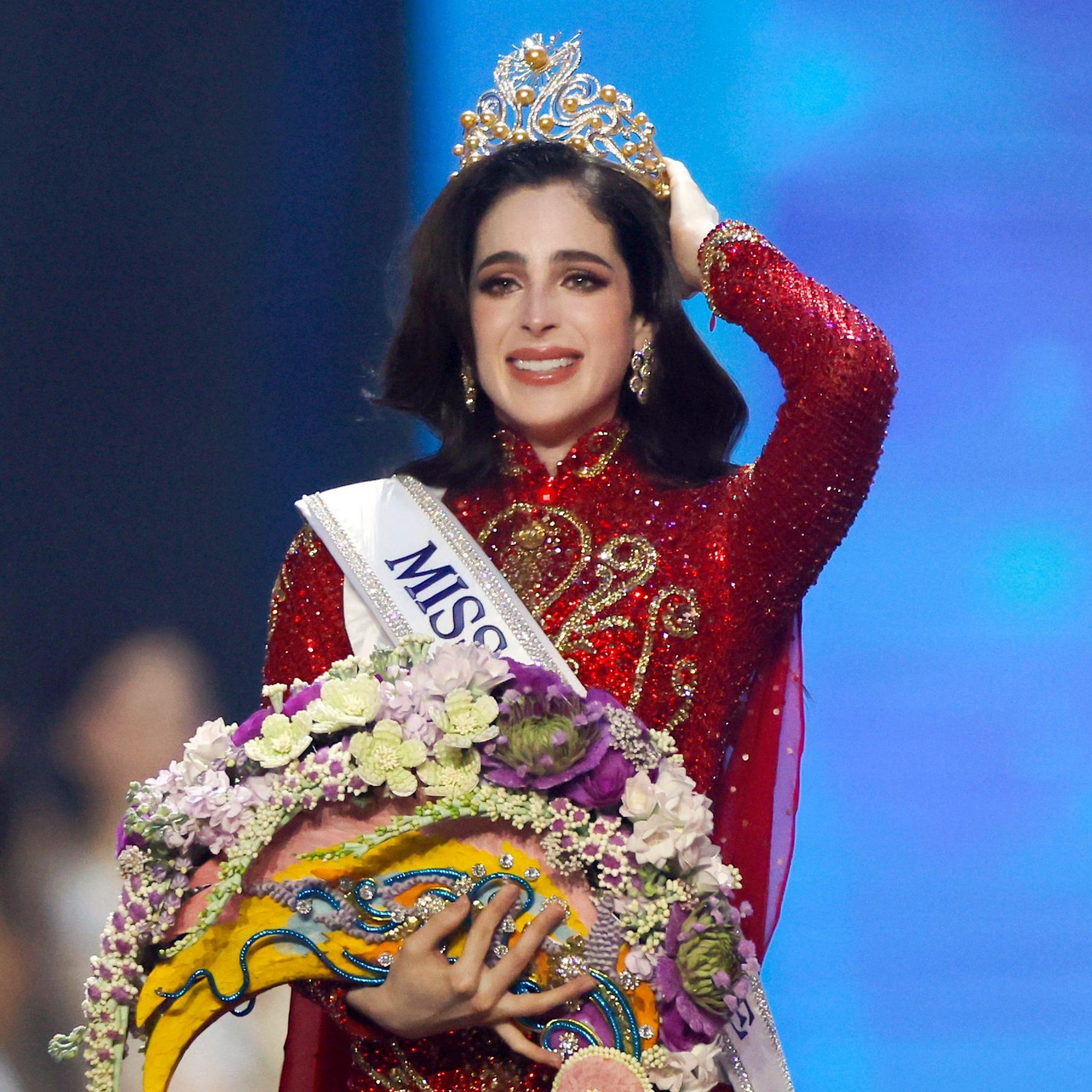
Global News Podcast
The Global Story: The international drama of Miss Universe
00:27:06
Miss Universe 2025 has been chaotic and scandalous - but will it win back viewers?
Loading summary
Transcript120 lines
- [00:00]
Tristan Redmond
This BBC podcast is supported by ads outside the uk.
- [00:06]
Land.com Advertiser
You ever feel that deep pull to the land to know it? To build something that lasts, that itch for your own wild country? What ain't just a daydream in 2025, it matters more than ever. Whether you're a lifelong hunter or just starting out, dreaming of land to explore, to leave something real. Or there is a trailhead where you can start. It's called land.com the biggest online network for rural property. Find the right agent and explore everything from timber tracks to ranches. Get the tools you need to buy that dream generational property. Stop dreaming about it and head to land.com. it's your place to find your open space.
- [00:44]
Ulta Beauty Advertiser
Hear that? It's holiday cheer arriving at Ulta Beauty with gifts for everyone on your list. Treat them to fan favorite gift sets from Charlotte Tilbury and Peach and Lily. Go all out with timeless fragrances from ysl, Ariana Grande and Carolina Herrera. And you can never go wrong with an Ulta Beauty gift card. Head to Ulta Beauty for gifts that make the holidays brighter and even more beautiful. Ulta Beauty gifting happens here.
- [01:15]
Asma Khalid
Hey there. I'm Asma Khalid.
- [01:17]
Tristan Redmond
And I'm Tristan Redmond, and we're here with a bonus episode for you from the Global Story podcast.
- [01:22]
Asma Khalid
The world order is shifting. Old alliances are fraying and new ones are emerging. Some of this turbulence can be traced to decisions made in the United States. But the US Isn't just a cause of the upheaval. Its politics are also a symptom of it.
- [01:39]
Tristan Redmond
Every day we focus on one story looking at how America and the world shape each other.
- [01:44]
Asma Khalid
So we hope you enjoy this episode. And to find more of our show, just search for the Global Story where.
- [01:51]
Tristan Redmond
Wherever you get your BBC podcasts, beauty pageants are back. Or at least they're trying to be. If eyeballs on social media are the metric, then pageants are a hit again. There's been all sorts of action in recent weeks.
- [02:08]
Miss Mexico Contestant
Hola E. Hola.
- [02:11]
Tristan Redmond
It started off with a woman called Ignacia Fernandez, who won Miss World chili after she sang death metal at the pageant while wearing a ball gown. Then at Miss Universe last week in Thailand, things got un poko loco.
- [02:31]
William Lee Adams
A scandal hit.
- [02:32]
Land.com Advertiser
Pageant drama.
- [02:33]
Miss Mexico Contestant
What's happened now?
- [02:34]
William Lee Adams
The pageant world has gone into absolute meltdown in recent days.
- [02:37]
Land.com Advertiser
The pageant drama that came full circle for the new Miss Universe.
- [02:41]
Tristan Redmond
Okay, hold onto your hats, folks. I'm going to run you through this really quickly.
- [02:45]
William Lee Adams
That's Miss Jamaica Dr. Gabrielle Henry tumbling down.
- [02:48]
Tristan Redmond
Miss Jamaica got Stretched out after she fell off the stage. Miss Israel may or may not have given Miss Palestine a sassy Look. And then Ms. Israel says she got death threats. Contestants staged a mass walkout at the Miss Universe competition. So what's going on? Some of the contestants stormed out of a meeting and it was livestreamed to the world. Miss Estonia resigned. Miss Cote d' Ivoire resigned. There were allegations of pageant fixing and favouritism, which the organizers strongly deny. Suddenly, Miss Universe was everywhere, which is odd because beauty pageants seem to many of us like a relic of a bygone era. So, from the BBC, I'm Tristan Redmond in London, and this is the global story on today's episode, how Miss Universe came roaring back and why. Maybe we should look at beauty pageants with fresh eyes. Friends, beauty pageants are no place for a middle aged man like me to be hanging around. So out of respect for these fine institutions, I'm going to hand over today to my co. Co host, Asma.
- [04:02]
Asma Khalid
And are we recording? We are already recording, it looks like, since I entered the room. Wonderful.
- [04:06]
Tristan Redmond
And to our Superb guest, the BBC's William Lee Adams.
- [04:11]
William Lee Adams
So my day job is I work at the BBC. I currently present a business program called Marketplace Morning Report. But outside of work, I sort of love pop culture.
- [04:20]
Tristan Redmond
Now, we've told you before that the BBC's reach is wide, but what you didn't know is that on staff we have an expert on the Miss Universe pageant, and that's William.
- [04:29]
William Lee Adams
I run a Eurovision blog. I had a guest appearance in Will Ferrell's Netflix movie Shout out to Him. And I love pageants. Yeah, that's huge.
- [04:37]
Asma Khalid
You had a guest appearance in Will Ferrell's movie.
- [04:40]
William Lee Adams
It's very short blink and you miss me, but your boy is there.
- [04:43]
Asma Khalid
Gosh.
- [04:43]
Tristan Redmond
So with that, I'm gonna ask Asma and William to take it away.
- [04:47]
Asma Khalid
Well, William, we have you on the show today to talk about the Miss Universe pageant, which just wrapped up the other day. And so, full disclosure, I grew up watching Miss Universe. My sisters and I would kind of rate our favorites. We loved the outfits, we loved the fashion of it all. And then it kind of just fell off my radar. And I haven't thought about Miss Universe in a really, really long time. I sort of thought it was dead or just kind of operating on the fringe, but apparently not because I started seeing a lot about it this year on social media.
- [05:19]
William Lee Adams
Honestly. You know, I know it's warm in Thailand, but you would have thought it was snow in press releases. I was Updating the Miss Universe website every. Every hour, every day.
- [05:27]
Asma Khalid
So, William, it sounds like you grew up watching pageants. When did you develop an interest in pageantry?
- [05:34]
William Lee Adams
You know what it is? My mother's Vietnamese, and I grew up in a really homogenous small town. And for me, Miss Universe was like this gateway to the world. You saw people from Asia, you saw people from Southeast Asia. And it wasn't the stereotypes, you know, that we were used to in mainstream depictions. They were glamorous. They were owning the stage. They were powerful. It was just very aspirational, I guess, is the word I'm looking for. And I'm obviously not a woman, and I would not, you know, ever be Miss usa, but it was more the sense of, you know, my community. I can see someone of Asian descent, and I can be proud of her.
- [06:09]
Asma Khalid
Yeah, I mean, I would say this. My family's South Asian, and there have been many winners of Miss Universe, many stars from Miss India who went on to become Bollywood stars. It was this avenue into stardom.
- [06:22]
William Lee Adams
That is a great point, because we often look at this from a Western point of view. And, yes, ratings in the west have declined. But the fact is, in other countries, this is one of the few opportunities where they can compete on the same stage with these very rich nations and beat them.
- [06:37]
Asma Khalid
Okay, so for the uninitiated, the unfamiliar, can you give us just a summary of what the Miss Universe pageant entails?
- [06:46]
William Lee Adams
Sure. So the Miss Universe pageant brings together women from all over the world. These women win their national pageant, and then they go to the host city. This year, it was in Bangkok, in Thailand, and they first compete in a series of preliminary events that are not on television. We're talking swimsuit, preliminary interview, and evening gown. And then the judges tabulate their scores. I should say there were 130 contestants this year. So it's a lot of interviews, bathing suits, and dresses to evaluate. And then the night of the live show, they're narrowed down, and they have a final question, and the Queen of the Universe has chosen.
- [07:20]
Asma Khalid
When would you say was the peak of Miss Universe popularity?
- [07:24]
William Lee Adams
Ooh. It's a really good question. I want to say from the late 90s until the teens, about 2015. Donald Trump's final year owning the pageant. Back then, of course, we had fewer entertainment options. Social media was not as omnipresent. People weren't walking down the street watching random videos on their phones. We sort of had this terrestrial TV mindset. And this was one of the big events of the year because there are very few Cultural events where everyone around the world can tune in at the same time watching the same show across borders.
- [07:56]
Asma Khalid
William, I've heard you mention Donald Trump. He was the longtime co owner of the Miss Universe organization. Can you give us a sense of how he, his involvement in this all shaped the competition?
- [08:12]
William Lee Adams
I think it's fair to say that he really pushed it commercially. He positioned it as something truly glamorous. It was part of this era of American excess. Toward the end of every show, they would introduce Donald Trump before the winner was announced, and they would cut to a clip showing all the prizes that the winning contestant would receive. And it always had jewelry from big brands like Mickey Moto. It was all about money and aspiration, and it really sold. You know, it was really primetime television. But at the same time, there's a dark side to that. In the run up to the 2016 presidential election, at least two contestants from Miss USA 2001 said that they had been harassed by Donald Trump, that he had entered their changing room dressing rooms without permission. He strenuously denied this for the record, and also any allegations of sexual misconduct. Another example that's gotten a lot of attention is the winner of Miss Universe in 1996. This is when Donald Trump first came into power at the pageant. She was from Venezuela, Alicia Machado, and essentially she gained a lot of weight. After she won the crown, Donald Trump staged a press conference at a gym, and he said, I'm going to make her lose weight. She later told journalists, mainstream journalists, that she felt traumatized by the whole experience. Now, she also claimed that he called her Miss Housekeeping.
- [09:34]
Miss Mexico Contestant
She called me, like, Miss Biggie, Miss.
- [09:37]
William Lee Adams
Housekeeping, a reference to the fact that she's of Latin descent. Donald Trump called you Miss Piggy?
- [09:43]
Miss Mexico Contestant
Yes, Miss Piggy, Miss Housekeeping.
- [09:45]
William Lee Adams
He, of course, denied that. But what we do know, and what is publicly available, is that he was encouraging her to lose weight publicly.
- [09:52]
Asma Khalid
So it sounds like you're saying the glitzy, glamorous days of Miss Universe's popularity were largely under the leadership of Donald Trump. We don't hear as much about the pageant these days. Let's talk about this year's pageant. I wasn't really paying attention to anything at all related to the pageant, but then I started to see stories that kind of piqued my curiosity. And it seems like what's going on with this year's competition centers around two main characters. And the two main characters in this story are actually men. So walk us through that. Who are these two men?
- [10:32]
William Lee Adams
Yeah, this is really interesting. These are two men from opposite sides of the world with different visions of what pageants are and how they can thrive. So, on the one hand, you have a Mexican businessman named Raul Rocha Cantu. He's the president of the Miss Universe organization, which owns and operates the pageant globally. He bought a 50% stake in the company last year for $16 million dollars. So he's on the one side. On the other side, you have a Thai entrepreneur named Nawat Itzaragrasil, and he spent at least $2 million buying the franchise rights for Miss Thailand Universe. So that means he gets to run the pageant in Thailand for the next 25 years. Now, Raul, he's more of a traditional businessman, and he's a fan of traditional pageants and the ways that they make money. So you broadcast a pageant, you. You sell sponsorship, you can franchise it to local countries, you can sell tickets to the events. That's how the model works in Latin America and indeed how Miss Universe has typically run. And, you know, he views the women, these queens, as ambassadors. You know, their mission is to be out there representing the brand. Now, Nawat, he's less traditional, much more TikTok. So he actually founded a pageant in Thailand in 2013. It's called Miss Grand International, and it's smaller, but in that pageant, it's all about selling. So if you're competing, you need to be out there pushing products, selling things. He thinks that in this digital age, you need to be omnipresent on social media, in people's feeds, and you need to be selling not just yourself, but also beauty products, collagen, to help us make some money.
- [12:13]
Asma Khalid
So let's get into the drama of this year. The first big flashpoint that caught my attention was this video that was circulating online of a disagreement that sparked between Nawat, who's the Thai entrepreneur who has been hosting the women on the ground, and the Miss Mexico contestant. What was that about?
- [12:37]
William Lee Adams
Well, as part of his push to keep Miss Universe relevant in his eyes, Nawat had insisted that the contestants promote Thailand and they promote the sponsors. And he was checking their social media to make sure that they were doing this. So at the sashing ceremony, this is where the women receive their sashes that say, you know, Miss Pakistan or Miss Australia.
- [12:59]
Asma Khalid
Oh, which country you are. Okay, okay.
- [13:01]
William Lee Adams
It's a big moment. But during this event, which of course, Nawalt was live streaming on the Miss Thailand Universe Facebook page, he decides to call out Miss Mexico.
- [13:11]
Miss Mexico Contestant
Okay, Mexico, where are you? My question is, you can post or not. You can work to promote Thailand or.
- [13:21]
William Lee Adams
Not and say you're not pushing Thailand as much as you should. And I find that offensive.
- [13:27]
Miss Mexico Contestant
It's not polite. It's not good. I didn't give you opportunity to talk. Please. I still talking.
- [13:35]
William Lee Adams
Listen.
- [13:36]
Miss Mexico Contestant
I still keep talking to everybody. Why you stand up to talk to me?
- [13:40]
William Lee Adams
This was very, very awkward. At a celebratory event, if you follow.
- [13:45]
Miss Mexico Contestant
The order from your national director, you are dumb, man.
- [13:50]
William Lee Adams
It's a little unclear about what he said. She claims he called her a dummy. He said, I called you damaged.
- [13:58]
Miss Mexico Contestant
I didn't say dumb head, you are dumbass. I said damage. You are damaged. I said damaged, not dumb head.
- [14:07]
William Lee Adams
And he said, I've got a question. Can you promote Thailand or not? Yes or no? And before she could even answer, he called security and had her escorted out of the room. You are not respecting me as a woman.
- [14:18]
Miss Mexico Contestant
Why you stand up.
- [14:20]
William Lee Adams
Security. So then dozens of her fellow contestants stood up.
- [14:26]
HelloFresh Advertiser
Then in solidarity, a mass exodus, the live stream still running.
- [14:33]
William Lee Adams
The reigning Miss Universe from Denmark stood.
- [14:35]
Asma Khalid
Up to trash another girl is beyond disrespectful.
- [14:40]
William Lee Adams
She said to trash another girl. It's beyond disrespectful. And it's nothing I've ever done.
- [14:46]
Asma Khalid
That's why I'm taking my coat and.
- [14:48]
Miss Mexico Contestant
I'm going, oh, my God.
- [14:49]
William Lee Adams
Oh, my God.
- [14:49]
Asma Khalid
Oh my God.
- [14:50]
William Lee Adams
That's why I'm taking my coat and I'm going.
- [14:55]
Asma Khalid
Wow, some intense drama. And that was just at the very beginning, William. This story goes on. Okay, so how did Miss Universe respond to all of that?
- [15:05]
William Lee Adams
Well, in its mission statement, the Miss Universe organization says that it strives to, quote, create and provide a safe space for women to share their stories and drive impact. And yet you have this viral incident. So Raul, he was still in Mexico at the time. He filmed a video which he's the co owner of.
- [15:21]
Asma Khalid
This all correct?
- [15:22]
William Lee Adams
Exactly. He puts a video up on the Miss Universe Instagram and says, I will not allow the values of respect and dignity of women to be violated. And he added, nawat, stop. And he promised to limit Nawat's role in the pageant moving forward.
- [15:41]
Asma Khalid
And what did Nawat do or say after this all?
- [15:45]
William Lee Adams
So he posted a series of videos on social media, as he loves to do. And in one video, it was the evening of the drama and he was very teary and he said, I'm a human.
- [15:54]
Miss Mexico Contestant
I am the human. Sometimes I cannot control. I have not intended to harm anyone.
- [16:05]
William Lee Adams
And he was standing in front of contestants. Actually, Miss Mexico was not among them. He said, quote, I had not intended to harm anyone because I respect all of you.
- [16:15]
Miss Mexico Contestant
I am so sorry it happened.
- [16:17]
Asma Khalid
Okay, so there's that viral moment. There are tears. You see some of the contestants walk out of the room. A lot of disagreements, frankly, about the role of these women in this competition and the ways in which to prove that it is still relevant in 2025. And then the day before the final competition, I hear that two of the judges say they're stepping down. What was that about?
- [16:42]
William Lee Adams
Yeah, that's right. The first judge was the Lebanese French musician Omar Harfouche. Incidentally, Pope Francis had awarded him the title Pilgrim of Peace for making peace between cultures through music. So I think O Omar was carrying that banner with him. After all this drama happened. He alleged that the top 30 had been decided before the pageant. That a different. Yeah, this is what he claims.
- [17:06]
Asma Khalid
William, that's huge.
- [17:07]
William Lee Adams
It is huge.
- [17:08]
Asma Khalid
He is alleging that this competition is rigged.
- [17:12]
William Lee Adams
Absolutely. And then we had another resignation. This was from a French football star, Claude Mechele. He said he was pulling out, but he cited unforeseen personal reasons. He did not elaborate.
- [17:26]
Asma Khalid
This allegation that the top contestants had already been chosen. What did Miss Universe say in response to that?
- [17:33]
William Lee Adams
Yeah, so they said this was one giant misunderstanding. They run a social impact initiative. It's called beyond the Crown. It's completely separate from the main competition we see on tv. It's all about sort of philanthropy and encouraging women to be out there in the world having a social impact. And they say that that's what this other judging was about. They said that there was no wrongdoing, there was no alternate or impromptu jury for the main event. So essentially, they said that Judge Omar had misunderstood what was happening.
- [18:05]
Asma Khalid
Okay, any other stories stand out to you from this year's pageant?
- [18:08]
William Lee Adams
Yeah. So I want to point to a social media scandal in brackets between Miss Palestine and Miss Israel. Now, a video was uploaded by, we believe, pageant bloggers. It's unclear where it first surfaced, but it showed the contestants at a preliminary event standing on stage in their evening gowns, looking beautiful. And in one video, it sort of zooms in on Miss Israel and the contestants around her. And the caption and the text would suggest she was scowling. And indeed, she is making a strange face. Miss Palestine was in the row in front of her. So people said, oh, she's scowling at Miss Palestine. She doesn't want her here. They were sort of imbuing this clip with kind of tensions from the real world. Now, Miss Israel then went on social media and said, I'm receiving death threats. People are saying horrible, vile things I will not repeat on this podcast. And she uploaded the exact same moment from a different angle. And it's zoomed out and you see many contestants are making that face. It is not an evil shady look, it's just model face. It's Zoolander. It's trying to be sultry, but when it's devoid of context, it can be read in a different way. I would argue that Ms. Nicaragua, she was the one given the shadiest face. But again, it wasn't directed at anyone. She was just modeling. And it just shows you how this day and age, when you have more videos being pumped out, when you have more clips coming out, there's more to misinterpret.
- [19:34]
Asma Khalid
You mentioned the way that some of these moments are perceived when they're shared on social media. And I will say, to me, this kind of gets at what you were saying is the major tiff between these two men trying to control the future of this pageant. And that is, how do you keep this competition relevant in an era of social media? Because a lot of this drama felt like it was made for Instagram. Right. Let's talk about Ms. Norway. She was wearing, what was it? A salmon outfit.
- [20:03]
William Lee Adams
Norway.
- [20:06]
Ulta Beauty Advertiser
This salmon inspired gown mirrors both the delegates movements as a baton twirler and the essence of Norway's leading export.
- [20:16]
William Lee Adams
This was incredible. For the national costume contest, she walked out in a salmon cape. It popped open, there was orange row. And the MC said this River Runner.
- [20:27]
Ulta Beauty Advertiser
Is a stunner Norway.
- [20:30]
William Lee Adams
And it went viral.
- [20:32]
Asma Khalid
That's how you play the game, William. It's like the. These moments seem made for social media.
- [20:37]
William Lee Adams
Absolutely. And you know, the dark side of all this is that a snippet never tells the full story. And so it just leads to this avalanche of perceived insult and slight when maybe it's not even there.
- [20:59]
Land.com Advertiser
You ever feel that deep pull to the land to know it, to build something that lasts, that itch for your own wild country? Country? Well, it ain't just a daydream. In 2025, it matters more than ever. Whether you're a lifelong hunter or just starting out, dreaming of land to explore, to leave something real. Or there is a trailhead where you can start. It's called land.com, the biggest online network for rural property. Find the right agent and explore everything from timber tracks to ranches. Get the tools you need to buy that dream generational property. Stop dreaming about it and head to land.com. it's your place to Find your open space.
- [21:38]
Ulta Beauty Advertiser
Ulta Beauty Cyber Monday is here. Take 30% off your favorite brands. Yes, the entire brand like Tarte, Clinique, Benefit Cosmetics and Estee Lauder. But hurry. These Cyber Monday deals end December 1st. Head to Ulta.com or the Ulta Beauty app today. Ulta Beauty gifting happens here.
- [22:06]
Knix Advertiser
The wait is over. The NYX Black Friday sale is on now@Knix.com shop early and save up to 60% off site wide. Plus all kinds of limited time daily deals from the number one leak proof brand in North America. Don't miss your chance to save big on innovative intimates like leak proof underwear, wireless bras, shapewear and more. Everything is on sale. Millions have made the switch to NYX's revolutionary period underwear and there's never been a better time for you to try them too. During the Black Friday sale, save up to 60% on super comfy machine washable and stylish leak proof undies. Plus shop the best deals of the year on NYX's best selling assortment of wireless bras. Don't miss this chance to stock up on your NYX favorites or try something new during the NYX Black Friday event. That's knix.com the sale ends December 2nd and sizes will sell out. Go to nyx.com that's knix.com It's 5:23pm.
- [23:09]
HelloFresh Advertiser
One of your kids is asking for a snack. Another is building a fort out of your clean laundry and you're staring at a half empty fridge and thinking what are we even going to eat tonight? Or you could just hello fresh it with over 80 recipes to choose from every week, including kid friendly ones. Even for picky eaters, you'll get fresh ingredients and easy step by step recipes delivered right to your door. No last minute grocery runs.
- [23:33]
Asma Khalid
No.
- [23:34]
HelloFresh Advertiser
What do we even have? Fridge staring. And the best part? You're in total control. Skip a week, pause anytime, pick what works for you. It's dinner on your terms. The kids can even help you cook. Yeah, it's gonna be messy, but somehow they tend to eat the vegetables they made themselves. Try Hellofresh today and get 50% off the first box with free shipping. Go to HelloFresh CA and use promo code Dinner50. That's HelloFresh CA promo code Dinner HelloFresh CA HelloFresh Canada's number one meal kit delivery service.
- [24:09]
Asma Khalid
Let's talk about what happened in the end here. This year at the pageant in Thailand, the final results come in and the winner was Miss Universe is Mexico. It was Miss Mexico that was the woman who was being yelled at in that viral video here. That kind of sparked a lot of our curiosity in this year's pageant. What do you make of that?
- [24:33]
William Lee Adams
Well, almost instantly, the conspiracy theory started to flow. Some pageant fans said, of course she won. The Miss Universe organization has to paper over the drama. Claudia Sheinbaum, the president of Mexico, had said that Miss Mexico, you know, was a symbol of resilience, of empowerment. Nawat himself chimed in on social media.
- [24:53]
Asma Khalid
The Thai entrepreneur who had yelled at her in that video. Yes.
- [24:57]
William Lee Adams
On his social media accounts, he wrote, quote, a billion words that cannot be said. And then he also told reporters this is a direct quote. As for the outcome, we leave it to the viewers at home to judge. People everywhere can make their own assessment. Usually you congratulate the winner. You say, well done. That's amazing, people. Pageant fans have also found photos of Miss Mexico with Raul, the Mexican businessman. But of course, it is very likely she met him because she's Miss Mexico and he runs the Miss Universe organization out of Mexico. So people are just, you know, I don't think for optics, it's good that Miss Mexico and Miss Thailand were both at the top because this battle is between a businessman in Mexico and a businessman in Thailand. At the end of the day, only the judges, only the owners know what really went down. I just hope that Miss Mexico can wear the crown with pride.
- [25:49]
Asma Khalid
So we haven't actually talked about who the women are who are competing in this pageant.
- [25:53]
William Lee Adams
Who.
- [25:53]
Asma Khalid
Who are these women, really?
- [25:55]
William Lee Adams
These women come from all walks of life. You know, one of my favorite stories is Miss Universe 2018. The contestant that year from Vietnam, she is from a Vietnamese ethnic minority called the Raid People R A D E, very little visibility. And in her community, girls, you know, teens are married off. They don't receive an education. And she left. She said, no way. I'm going to the big city. I'm going to, you know, get an education in finance. She later competed on Vietnam's Next Top Model. She finds herself at the Miss Universe pageant. You know, Vietnam had very little success in this pageant prior to her. And here she was an ethnic minority in her own country, representing a country that's not done well, and she made the top five. But all of this to say, it's not just models. It's not just people in bathing suits. I do think that the mainstreaming of the pageants in the 90s and 2000s led to this sort of the stereotype of the beauty queen. You had movies like Miss Congeniality, which played on these tropes that these women are uneducated, these women are shallow. Kind of glossing over the fact that typically at these pageants, you will be interviewed. You are going to have to speak. I think a really good example and one I often cite with friends is Ms. Botswana 1999. Impula Kwelahobe. She was the first black African to win Miss Universe, and she did it on Botswana's debut. This was at a time that Botswana had one of the world's highest prevalence rates of HIV. It was around 30%. And she goes to the pageant, she wins, she goes back home, the president welcomes her in the national stadium. And since then, she's continued to advocate for taking care of HIV patients across her country, but also Africa. She spoke at the United Nations. You know, not a household name in the West. No. But in her home country, the people who chose her to begin with, she is someone, we assume, oh, you're Miss Universe, but I've never heard of you. That's not why these women do that necessarily. They do it so they can be spokespeople, so they can advocate for issues and causes that are important to them. I just think there's a lot of judgment, often misinformed, about who these women are.
- [28:09]
Asma Khalid
I'm just really, really interested in the idea that. Look, as we were talking about this story idea, and I even talk about Miss Universe with friends here in the US I think that there's an element in which this pageant, all pageants seem a bit anachronistic to people here in 2025 in the US they look at women strutting around in swimsuits, being judged oftentimes by men who are the judges, and wondering, well, what is the point of this? And who is this for? And it sounds like you're saying, well, this pageant remains enormously popular in other parts of the world. I wonder, too, what is its popular relevance here in the U.S. mm, that's a great question.
- [28:51]
William Lee Adams
I'm first gonna answer this from the gay perspective. You know, so many pageant fans are gay men. When you look at websites run about pageants, behind them is often a gay man. And I have many friends who are involved in these types of websites, and they always tell me, the reason I love pageants is because it's showing what women can be. They're often pushed down in mainstream society. But on that stage, everyone is watching them. They are in control. They have power. The crown becomes armor. This woman has arrived. And I think a lot of gay people who live on the margins feel you know, on the extremes, it's their way to come forward. They say, I can be like her. Similar to RuPaul's Drag Race. It's all about transformation. It's taking the person from the street and making them that powerful, confident drag queen.
- [29:38]
Asma Khalid
You know, we were talking earlier about this year's pageant being a sort of battle between this Thai entrepreneur, Nawat, and this Mexican businessman, Raul. And it seems like they have two very different visions of what this pageant is supposed to be. And so if indeed this is a battle over those two competing visions, whose vision would you say is winning?
- [30:02]
William Lee Adams
Based on the media commentary, based on all the headlines, I'd say at the moment they're both losing. The fact is, the pageant looks like a dumpster fire. Having competition within your own organization isn't going to help. I think that both of them are right, actually. Raul understands that the only way pageant queens will remain relevant is if they do champion empowerment and if these women are ambassadors for causes that will have an impact in the real world. I think Nawat is right that the pageant has more competition now from social media. So he is also right. I do think there is a middle ground. But in this contest where two men are competing for power and influence, so often the way with everything they need to communicate, they need to figure out how they can blend their visions to keep the pageant profitable, relevant and empowering.
- [30:58]
Asma Khalid
William, thank you so much for joining us on the show. We really appreciate it.
- [31:02]
William Lee Adams
Thanks so much for having me.
- [31:05]
Tristan Redmond
That was William Lee Adams, senior journalist at the BBC in London. That's it for the global story for today. This episode was produced by Zandra Ellen and Hannah Moore. It was edited by James Shield and mixed by Travis Evans. I'm Tristan Redman and my co host is Asma Khalid. Thanks for listening. See you tomorrow. Cheerio.
- [31:37]
Asma Khalid
Life tests homes, certainteed roofing and siding. Make sure they're ready so you're built for stormy seasons Built for what's next Built for this certain teed Built for this.