← Global News Podcast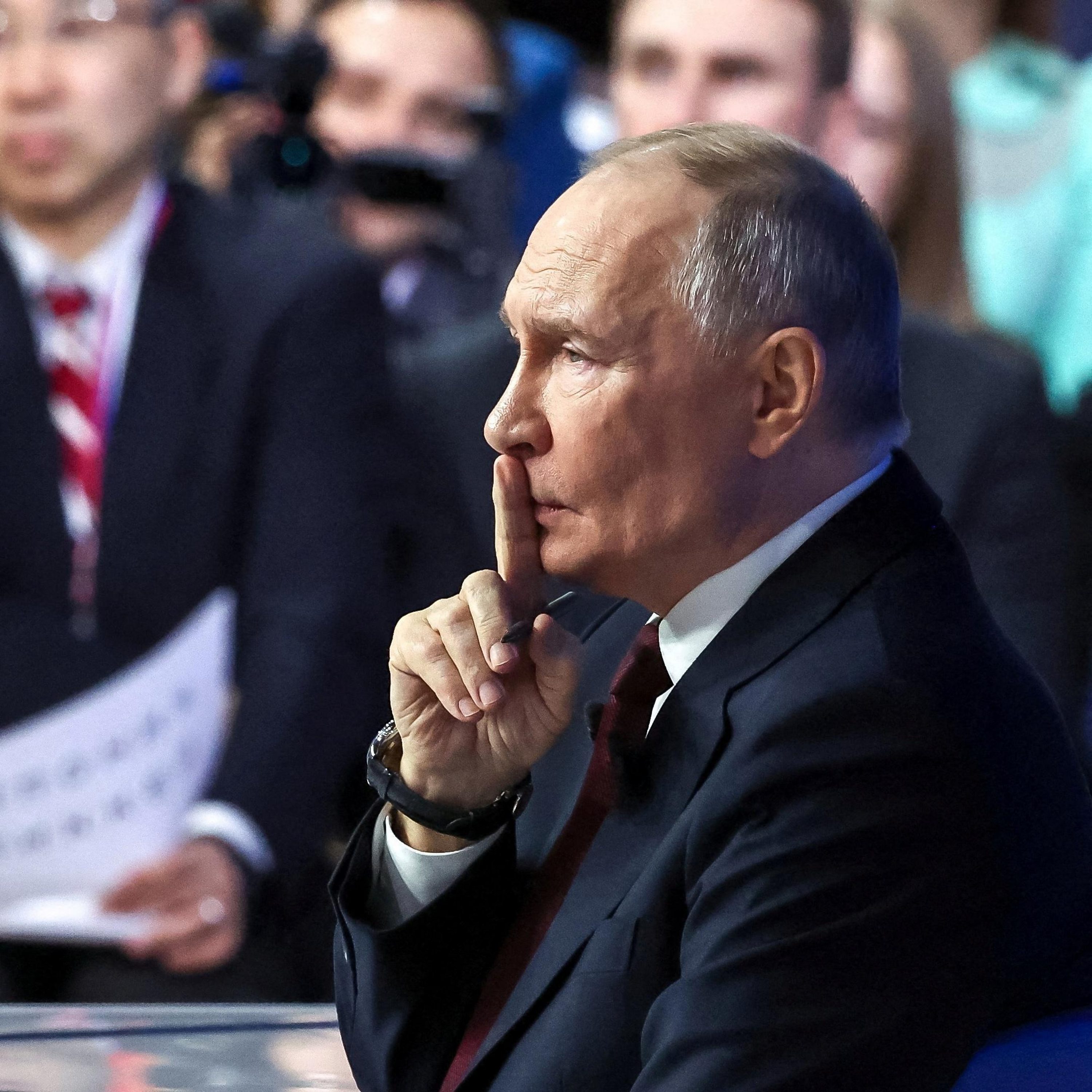
Global News Podcast
The Global Story:The tightrope of reporting in Putin’s Russia
00:27:38
The full-scale invasion of Ukraine in 2022 led to an intense crackdown on dissent
Loading summary
Transcript69 lines
- [00:00]
Steve Rosenberg
This BBC podcast is supported by ads outside the uk.
- [00:06]
Emirates Advertiser
When you fly Emirates on business, you can relax from the start. You get a complimentary chauffeur driven transfer from your door to the airport. Then when you land, your chauffeur will be ready to take you wherever you want to go. It's exclusive for Emirates first and business class travellers. And with world class service in the Emirates lounge and exceptional comfort on board, it's just a better way to do business. Book now on emirates.com if you're an
- [00:33]
Grainger Advertiser
H Vac technician and a call comes in, Grainger knows that you need a partner that helps you find the right product fast and hassle free. And you know that when the first problem of the day is a clanking blower motor, there's no need to break a sweat. With Grainger's easy to use website and product details, you're confident you'll soon have everything humming right along. Call 1-800-GRAINGER clickgrainger.com or just stop by Granger for the ones who get it done.
- [01:04]
Asma Khalid
Hey there. I'm Asma Khalid.
- [01:06]
Tristan Redman
And I'm Tristan Redman. And we're here with a bonus episode for you from the Global Story podcast.
- [01:11]
Asma Khalid
The world order is shifting. Old alliances are fraying and new ones are emerging. Some of this turbulence can be traced to decisions made in the United States. But the US isn't just a cause of the upheaval. Its politics are also a symptom of it.
- [01:28]
Tristan Redman
Every day we focus on one story looking at how America and the world shape each other.
- [01:33]
Asma Khalid
So we hope you enjoy this episode and to find more of our show, just search for the Global Story wherever you get your BBC podcasts.
- [01:43]
Tristan Redman
It's hard being the BBC's man in Moscow.
- [01:45]
Steve Rosenberg
You are shaping their perception and the perception that Russia is guilty. That's what you are doing.
- [01:51]
Tristan Redman
You get accused of things, even by government spokespeople and this is propaganda.
- [01:56]
Steve Rosenberg
I'm sorry, I'm sorry to say this, you are a piece of propaganda.
- [02:02]
Tristan Redman
Steve Rosenberg's been reporting from Russia for more than 25 years. He's one of only a handful of Western journalists left in Moscow.
- [02:11]
Steve Rosenberg
Sometimes it gets quite personal as we
- [02:14]
Tristan Redman
reach four years since the full scale invasion of Ukraine, there's been an intensified crackdown on freedom of speech and dissent. Russia's now ranked in the bottom 10 countries on the World Press Freedom Index. It's especially difficult when Vladimir Putin knows who you are and says that you're being paid to attack him. From the BBC, I'm Tristan Redmond in London. And today on the global story, the tightrope of reporting in Russia. Hello, hello, hello, hello, hello, hello, hello.
- [03:12]
Steve Rosenberg
One, two, three. One, two, three.
- [03:14]
Tristan Redman
Hello, Steve, it's great to have you with us. Thank you for joining us.
- [03:18]
Steve Rosenberg
Thank you. It's nice to be back with you. I'm Steve Rosenberg. I'm the BBC's Russia editor, based in Moscow and covering news in the world's largest country.
- [03:30]
Tristan Redman
Well, Steve, you are one of the only Western journalists left in Russia these days. And in your recent writing and reporting, you've been looking back at your time in Russia and what it means to still be there today. I'm endlessly fascinated by all things Russia and the. The experience of being a foreigner in, in a place like Moscow. How hard has it been, Steve, watching so many of your journalistic colleagues in other news organizations being forced to leave Moscow in the last few years?
- [04:07]
Steve Rosenberg
The first thing to say is I'm not the only Western journalist left here in Moscow, there are still quite a few of us, not nearly as many as there used to be. A lot of media organizations, Western media organizations pulled out after the full scale Russian invasion of Ukraine in 2022. And I took the decision that I wanted to stay because I thought it was important as long as it was safe to do so. And of course that's a big question and I'm constantly assessing and reassessing the safety. But I thought I wanted a stay because I'm fascinated by Russia. I have been for decades. And I want to see how this very dramatic story ends. So it was a personal decision, but I totally respect the decisions taken by those colleagues who left Russia after the start of the war.
- [05:03]
Tristan Redman
Well, we want to understand, Steve, how things have changed, the experience of being in Moscow over the whole arc of your career there. So let's start at the very beginning. Do you remember when you first became interested in Russia?
- [05:18]
Steve Rosenberg
Yes, I do, actually. It was a long time ago. I had more hair. And in those days it was in 1980. And I was 12. And BBC television broadcast its first and I think only ever Russian language course on television. And I sat there, transfixed.
- [05:41]
Emirates Advertiser
The Russian Alphabet. Over 260 million people know it quite well. And by the time we get to program five in this series, you will too.
- [05:55]
Steve Rosenberg
There was something about the Russian language which was enchanting. The sounds of the letters.
- [06:02]
Emirates Advertiser
These letters together make the Russian version of ussr. Ssser. Ssser.
- [06:10]
Steve Rosenberg
And I watched this language course religiously every week and got really interested in the language and the country. And at that time, the Soviet Union was a very closed place. And then a few years later, Mikhail Gorbachev came to power in the ussr and this mysterious, very closed superpower began to open up to the world. And it was on our television screens every day, virtually in the news. So when it came to going to university, I thought, well, I want to study Russian. So I finished university in 1991, got a job in Moscow teaching English. Four months later, the Soviet Union fell apart. That was it. Within the last hour, President Gorbachev has resigned. Boris Yeltsin is now in full control. No more ussr. It said USSR on my visa, but there was no country, the ussr. The hammer and sickle was hastily taken away. In its place, the Russian flag was hoisted over what is now no longer the Soviet Union, but the Commonwealth of Independent States. And obviously there was lots of news at the time. And I decided I wanted to work in broadcasting. That was my dream. And I managed to get a job with CBS News. And my goodness, the 1990s, it was a chaotic decade. Millions of Russians fell into poverty when the economic reforms began and you had this sort of switch from the state controlled economy of Communism to wild capitalism, basically. So it was a difficult year for many people. But on the other hand, the thing I remember Most about the 1990s was this sense of hope that finally east and west could put behind them the Cold War era confrontation.
- [08:15]
Tristan Redman
Well, how were you received as a Westerner at this particular moment?
- [08:18]
Steve Rosenberg
Very warmly, I think it was 1997. I got a call saying, would you like to go on Russian TV's premier comedy show? It was called the White Parrot Club. Basically it involved various Russian celebrities sitting around every week telling each other jokes.
- [08:39]
Grainger Advertiser
Steve Rosenberg.
- [08:41]
Steve Rosenberg
And this was a special edition devoted to British humor. Very often the White Parrot Club was filmed in a pub and there was a white parrot, I think, called Arkasha in a cage. And apparently I've heard that they used to let Arasha out from time to time and he used to fly around the pub or the bar, landing on alcohol and drinking some of these drinks. So the symbol of Russia is the double headed eagle. But my first experience of a bird in Russia was a tipsy parrot called Arkasha, the white paraglass. Anyway, so we're sitting around in this Moscow bar and the president of the White Parrot Club, who was a huge star, called Yuri Nikulin, he was a famous clown in the Soviet Union. He ran the Moscow Circus. A big film star. He told the story of his World War II adventures and how Britain and the Soviet Union had been on the same side. And it really felt as if we were on the same side, right? And we were going to walk off into the sunset together, the west and Russia, and be friends forevermore. And they asked me to sing a song. So I sat down on the piano and I played this kind of British classic. Daisy, Daisy, Daisy.
- [10:11]
Tristan Redman
Why did you pick that song?
- [10:12]
Steve Rosenberg
It was the first song that came to mind. But actually thinking back to it, I think was quite appropriate because there's a line in the song. You'll look sweet upon the seat of a bicycle made for two. And that's how I felt at the time. I did feel as if Britain and Russia were on this bicycle made for two and we were going to be going in the same direction. And it was the start of a great new world. And it just didn't work out.
- [10:48]
Tristan Redman
As you say, it hasn't quite worked out as many people might have hoped or expected in the 1990s. Do you remember the moment when you had a sense for the first time that things might change, I think when
- [11:04]
Steve Rosenberg
Vladimir Putin took over? So I joined the BBC Moscow bureau in 1997 as a producer. But in 1999, this is new Year's Eve, the bureau was empty. I was the only one in the office at that moment in the morning, and suddenly there was breaking news. Boris Yeltsin had resigned. Huge news, right? And I was the only one around. So I had to muggins here, do the first dispatch, radio dispatch on this breaking news. So sort of sweating profusely, I. I managed to stumble through my first kind of national BBC dispatch. Boris Yeltsin always said he would see out his full term in office. Today he told Russians he'd changed his mind. So in a sense, my career as a reporter began the same day as. As Vladimir Putin's career as president. Vladimir Putin, who was Prime Minister, had become acting president and was elected president a few months later. Clearly, he was a very different kind of president from Boris Yeltsin. Boris Yeltsin had a thick skin. There were TV channels in Russia that criticized him and he didn't care. He didn't close them down. Also, he was not from the KGB or the. The fsb, now the Russian Security Service. He was a party apparatchik. Communist Party apparatchik, originally Vladimir Putin. His background was security services. He was a much younger leader. And he came into power at a very difficult time for Russia. There'd been a banking crisis. Many Russians were craving stability. And Putin came into power and said, look, okay, I'm going to restore order. But it was clear pretty quickly that restoring order meant restoring the power of the center, the power of the Kremlin. And anyone who resisted that, clearly the Kremlin was going to ensure that you couldn't defeat the Kremlin. And that's what happened. But I think it's probably wrong to say, looking back at those years, it's wrong to say that everything changed when Putin came in, because the seeds of what's happening now were sown, I think, in the 1990s.
- [13:40]
Tristan Redman
You've said that the invasion of Ukraine By Russia in February 2022 was a turning point. How quickly did things actually change on the ground for you as a working journalist?
- [13:55]
Steve Rosenberg
Things changed pretty quickly, I'd say, in the days after the full scale Russian invasion of Ukraine, the Russian authorities passed a series of laws, repressive laws, designed to punish dissent and to silence criticism of the authorities and of the war. And I remember that our bosses in London were obviously concerned about the implications of this legislation for us. And so they asked us to pause broadcasting just for a few days while the lawyers in London could study the legislation. And that felt very, very strange with such dramatic events swirling around us. We went silent. And yeah, that was, that was quite frustrating. I remember at that moment, the piano actually was my savior. So I sat at the piano a lot for those three days and I wrote a piece of music that tried to express how I felt at that moment. This sort of sense of, of isolation, really.
- [15:33]
Tristan Redman
Did you, did you feel, though, that that moment might have been the end of the road for you in Russia?
- [15:39]
Steve Rosenberg
We had no idea what was going to happen, I mean, from hour to hour. And that sense of uncertainty was quite difficult to deal with. And a lot of the contributors who used to speak to us, give interviews to the BBC, stopped doing so. The other big difference was we used to have a really big bustling bureau. There were dozens of staff members who work for BBC, Russians of broadcasting in Russian to a Russian audience on the BBC Russian website. But after the full scale invasion of Ukraine, BBC Russian took the decision to leave Moscow because they were very much on the front line, leaving us the small number of English language news gatherings. And yeah, suddenly our big bustling newsroom became a very quiet ghost townie newsroom.
- [16:49]
Tristan Redman
What's the experience like of being out and about, actually gathering news? What are the obstacles that you come up against?
- [16:58]
Steve Rosenberg
When we go out of Moscow, go to the regions, quite often you get the feeling that there is people following you. This chap has been hanging around us for a good 10 minutes or so clearly filming us. I think that's not new. That's been the case for some time now. And I wouldn't say I feel intimidated by it. You just note that it's happening. Oh, off he goes. As soon as I start talking about it. That's what it is at the moment. That's, that's what life is like. And you kind of, it's not surprising anymore.
- [17:32]
Tristan Redman
How difficult is it to get the truth of a story out and get to the heart of what people in Russia are actually thinking when there are so many restrictions on the, on how the press operate?
- [17:43]
Steve Rosenberg
There would be no point, I think, in me being here if I couldn't report on what's happening. I think it's still possible to do that. I wouldn't ask people on the streets, do you support the war? Are you against the war? Because that could get people into trouble. However, there are masses of questions that you can ask people to get a sense of the mood on the streets. From the conversations I've had in villages and towns and cities, I think it's pretty clear that many Russians are tired of this war. More and more Russians are feeling it in terms of they know people who've either been killed fighting in Ukraine or been injured. And also people feeling the economic consequences of four years of sanctions which are now really kicking in.
- [18:50]
Grainger Advertiser
If you're the purchasing manager at a manufacturing plant, you know having a trusted partner makes all the difference. That's why hands down, you count on Grainger for auto reordering. With on time restocks, your team will have the cut resistant gloves they need at the start of their shift and you can end your day knowing they've got safety well in hand. Call 1-800-GRAINGER Click grainger.com or just stop by Grainger for the ones who get it done.
- [19:20]
If you're an H VAC technician and a call comes in, Grainger knows that you need a partner that helps you find the right product fast and hassle free. And you know that when the first problem of the day is a clanking blower motor, there's no need to break a sweat. With Grainger's easy to use website and product details, you're confident you'll soon have everything humming right along. Call 1-800-GRAINGER clickgrainger.com or just stop by Grainger for the ones who get it done.
- [19:49]
Interface Podcast Host
If there was a big red button that would just demolish the Internet, I would smash that button with my forehead.
- [19:57]
Interface Podcast Narrator
From the BBC, this is, is the interface the show that explores how tech is rewiring your week and your world.
- [20:03]
Asma Khalid
This isn't about quarterly earnings or about tech reviews.
- [20:07]
Interface Podcast Narrator
It's about what technology is actually doing to your work, your politics, your everyday
- [20:12]
Interface Podcast Host
life, and all the bizarre ways people are using the Internet.
- [20:17]
Interface Podcast Narrator
Listen on BBC.com or wherever you get your podcasts.
- [20:25]
Tristan Redman
Well, Steve, once a year, famously, you get to ask Vladimir Putin a question at his end of year press conference. And a few months ago, actually we spoke just before you were going to the end of 2025. 1 I'm really curious to know what that experience is like. I mean, how do you judge how to phrase things and how hard to push?
- [20:48]
Steve Rosenberg
Well, for a start, I mean, I don't take that for granted and there's no guarantee that I get a question, but I see it as a huge responsibility because if you get a question to Vladimir Putin, you want to make it count. You don't want to ask a kind of a puff question. Some of the questions that Vladimir Putin has been asked include, do you have a dream, Mr. President? And are you a happy person? So in the days leading up to a Putin press conference, I kind of shut myself off and I scribble down questions and then rewrite them. We keep rewriting them, think about every word in them. Where I can say war, where I can't say war. You have to think so hard about the phrasing of a question and practice it. Steve Rosenberg, BBC News so, yeah, in December 2025, I was lucky. I got a question and yeah, I asked Vladimir Putin how did he see the future of Russia? Were there going to be more special military operations? Was he going to continue to cut off the mobile Internet for people? That's happening a lot here. Was that the hunt for enemies, internal enemies and external enemies going to continue? Were critics of the authorities going to be prosecuted like they are now? So I packed a lot into it and I said, you know, basically power is in your hands in this country. So what, what kind of future are you going to build for your, for your country? And yeah, he replied, a 9 and a half minute reply. And even though obviously one question at a press conference is not as good as an interview, you can still find out quite a lot about the Russian president. I think from one response at a press conference. He was clearly fueled by resentment of the West. That comes through time and time again when he responds, he believes in his mind that Russia has been duped. Russia has been deceived by the west for years. He believes Western leaders broke promises to Russia and This is fueling, to a large extent, his actions. He comes across as confident. He believes that he's got the edge now, that he's got the initiative on the battlefield. Now, whether he's right or not is another matter. But he is focused on the war. He's animated when talking about the war. He's energized when talking about the war. And actually looking at him at that press conference and generally when he makes speeches, it's hard to imagine Vladimir Putin as a peacetime leader again. And then after the press conference, it's not over because then, because I asked a question. Lots of Russian television crews then come up to you and start sort of bombarding you with questions. What did you think of the President's argument? Are you satisfied with the president's answer and that kind of thing?
- [24:35]
Tristan Redman
You work, Steve, under incredibly challenging and dangerous conditions in Moscow. Why do you think you've been able to stay there for so long?
- [24:45]
Steve Rosenberg
I would like to think that there's some modicum of respect. They know that I'm someone who for many years has devoted my life to Russia, to reporting Russia, but I don't know. So I know that it could end at any moment. But I'm just walking this tightrope. It does feel like I'm on this tightrope whenever I go in front of the camera or the microphone, because I want to report honestly what's happening. But I'm well aware that down below there's a minefield. I don't want to fall off the tightrope and hit a mine. So I try and tell the story as I see it, as calmly as I can. Really.
- [25:33]
Tristan Redman
One of the things you said earlier really struck me is that you want to see how the story ends. I wonder if you could say more about what you mean by that.
- [25:46]
Steve Rosenberg
I'm probably kidding myself, because probably this story is going to go on and on and on like a Tolstoy novel. You keep turning the pages, and it never seems to end. But I am fascinated by Russia and what's going to happen next. Vladimir Putin's been in power for 25 years as president or prime minister. The whole system in this country is built around him. What happens after Vladimir Putin? No one knows that there's no obvious successor. The one thing that Russian history teaches us is that things change. Russia changes, and change can happen very fast and that things can swing. I think one of the things I've learned about Russia is that this is a country very much of extremes, right? Very cold winters, very hot summers, a Country that can swing from communism to wild capitalism to another kind of authoritarianism. A country where if you switch on Russian state television today, there'll be TV hosts and commentators pouring out this sort of anti Western rhetoric. A few months ago, one of the most famous TV show hosts in Russia said that I walk around looking like a defecating squirrel. He called me an enemy of Russia. And yet the next day I was out on the street and several Muscovites came up to me. They recognized me, they shook my hand, they said nice things about my reporting and they took selfies with me. It's this country of extremes, almost like the Russian national symbol, right? The double headed eagle. One head is sort of growling and calling you names and the other head is saying nicer things to me. So a country of extremes. And the last four years have tested my love for the country to its very extremes. But I remain fascinated by the place. I hope I'll be able to continue to follow what's happening because I think it's important to chart what's happening. It does feel as if I'm living inside this history book which is being written before my very eyes. And, you know, I'd like to know how, how the book is going to end.
- [28:37]
Tristan Redman
Well, Steve, I'm going to give you my own double headed eagle. On the one hand, I do not think you look like a defecating squirrel. But on the other hand, I do respect the imagery of the phrase. It's very inventive as a, as an insult.
- [28:53]
Steve Rosenberg
There are worse animals to be compared to. At least, you know, squirrels are quite cute with bushy tails. So I always look for the positives and there's one I cling on to, that positive. There we are.
- [29:04]
Tristan Redman
Keep clinging onto the positive, Steve.
- [29:06]
Steve Rosenberg
Absolutely.
- [29:07]
Tristan Redman
Thank you so much.
- [29:09]
Steve Rosenberg
Bye now.
- [29:14]
Tristan Redman
That was Steve Rosenberg, the BBC's Russia editor. We also spoke to Steve back on the 19th of February of September. He told us all about his deep love of the Eurovision Song Contest and why President Putin has created his own rival competition. You can find that episode in our feed. And if you want to catch up on the latest news from around the world, then look for our sister show, the global news podcast, wherever you listen. And for listeners outside the usa, you can watch Steve's film Our man in Inside Putin's Russia on the BBC News YouTube channel. And that's it for this episode of the global story. Today's show was produced by Sam Chandarasak. It was edited by Bridget Harney and mixed by Travis Evans, our senior news editor. Is China Collins. And I'm Tristan Redman. Thanks for listening. See you tomorrow. Cheerio.
- [30:21]
Interface Podcast Host
If there was a big red button that would just demolish the Internet, I would smash that button with my forehead.
- [30:28]
Interface Podcast Narrator
From the BBC, this is the Interface, the show that explores how tech is rewiring your week and your world.
- [30:35]
Asma Khalid
This isn't about quarterly earnings or about tech reviews.
- [30:38]
Interface Podcast Narrator
It's about what technology is actually doing to your work, your politics, your everyday
- [30:44]
Interface Podcast Host
life, and all the bizarre ways people are using the Internet.
- [30:48]
Interface Podcast Narrator
Listen on BBC.com or wherever you get your podcasts.