← Global News Podcast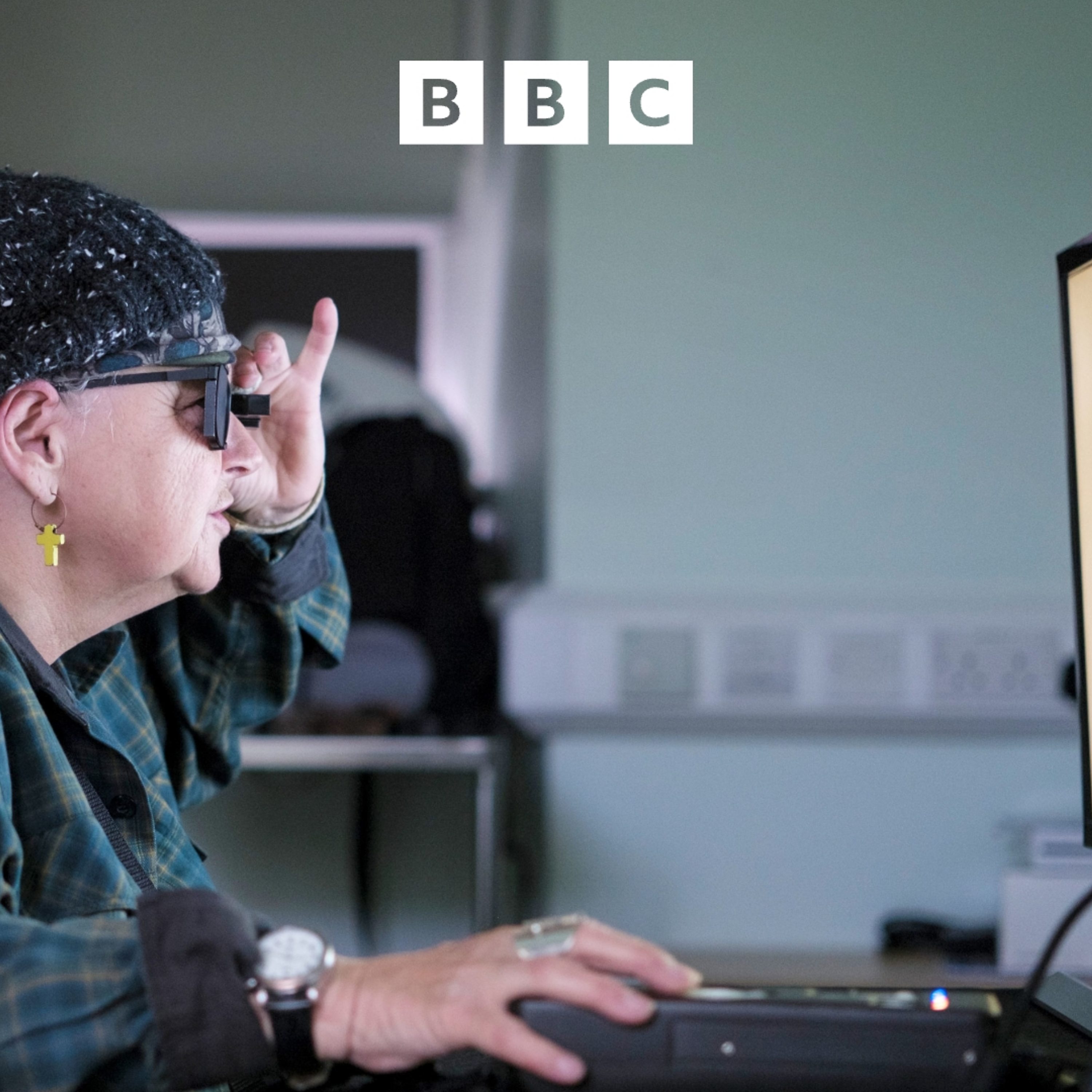
Global News Podcast
The Happy Pod: 'I'm blind but I can read a book again'
00:26:59
Doctors have used microchips to help blind patients regain the ability to read
Loading summary
Transcript85 lines
- [00:00]
BBC Announcer
This BBC podcast is supported by ads outside the uk. At the BBC, we go further so you see clearer. Through frontline reporting, global stories and local insights, we bring you closer to the world's news as it happens. And it starts with a subscription to BBC.com giving you unlimited articles and videos, ad free podcasts and the BBC News channel streaming live 24. 7. Subscribe to trusted independent journalism from the BBC. Find out more@BBC.com Join.
- [00:38]
Janak Jalil
This is the Happy Pod from the BBC World Service. I'm Janak Jalil and in this edition.
- [00:49]
Sheila Irwin
I could have cried when I looked because I haven't seen letters for so long. And then I lit up the word. It was overwhelming.
- [00:57]
Janak Jalil
We learn about the implants allowing blind patients to read again. The woman who played the clarinet while she was having surgery on her brain for Parkinson's disease.
- [01:06]
Denise Bacon
Before I had the operation, I could only swim about one stroke. So I had got to the point where it was really difficult to move and it's just completely changed my life.
- [01:17]
Interviewer (possibly Harry Bly or Sarah Montague)
Plus, we owe them. We have to cherish and conserve them because nowadays it's all machines. We have to conserve Thai buffaloes as much as we can.
- [01:29]
Janak Jalil
Redefining water buffaloes as beauty queens.
- [01:33]
Craig Campbell
And she stood there for. It was probably only 10 seconds, but it felt like about 10 minutes. We had this standoff. It was just a tableau.
- [01:45]
Janak Jalil
The dog that squared up to a bear. Find out who won. We begin with a medical breakthrough. A new piece of technology that's helped blind patients regain the ability to read. Doctors at Moorfields Eye Hospital here in London used microchips implanted at the back of the eyes in five patients. The results of this international trial have been described and as astounding. The happy pods. Harry Bly spoke to the BBC's medical editor, Fergus Walsh.
- [02:20]
Interviewer (possibly Harry Bly or Sarah Montague)
So it's a 2 millimeter by 2 millimeter chip which is as thin as a human hair, which is implanted behind the retina of patients. The way it works is the patient puts on a rather clunky pair of spectacles and they have a tiny camera which projects via infrared the image of what the person's looking at onto the chip. The chip then sends that signal to a little computer and then it enhances it and that then goes via the optic nerve to the brain. And the patients have to learn how to interpret those images. It's not like suddenly you switch it on and I can read again. It takes them months of really hard work. But it's an extraordinary technology. And Fergus, you spoke to one of the patients who's had this implant fitted? Sheila Irwin. What was the process like for her? Yeah, Sheila's a lovely character. When I met her, it was a really joyous experience because it's so lovely to report on technology which is producing positive effects. Obviously these patients, when they go into this, they don't know whether it's going to work. They have to undergo surgery to have the implant. But she's the absolute star of this European trial. Of 32 patients fitted with the implant who were followed up For a year, 27 were able to read again using their central vision. And on average that equated to an improvement, about 25 letters or five lines on an eye chart. But Sheila could read every. Every Lyra Nightchart. You know, when I met Sheila, she was coming down the corridor with her white cane. She cannot see, but when she sits and puts these glasses on, she can read a book. How extraordinary. And tell me about her reaction to being able to read all of these letters on the chart. I met Sheila at Moorfield's Eye Hospital in London and talk to her about the technology she was wearing, the glasses she was reading and asked her, you know, what difference it had made to her life.
- [04:37]
Sheila Irwin
Amazing. One happy bunny. I could have cried when I looked because I haven't seen letters for so long. And then I lit up a word and it was overwhelming.
- [04:48]
Interviewer (possibly Harry Bly or Sarah Montague)
It's really made a tangible difference to your life, a big difference.
- [04:51]
Sheila Irwin
And tiling. I'll read the post, read books, do crosswords. Turukyo.
- [04:58]
Interviewer (possibly Harry Bly or Sarah Montague)
Did you ever imagine that you'd be able to read a book again?
- [05:01]
Sheila Irwin
Never.
- [05:02]
Interviewer (possibly Harry Bly or Sarah Montague)
She punched the air when she did was great. She loves it. And the important thing to point out is a couple of things it's not. This technology isn't perfect. She can't wear it walking around. The vision it gives is a very narrow beam of vision. It's basically one word at a time. What she said she does is that she rush her chores at home, then she sits down, puts the glasses on, opens her post, does Sudoku and reads again. And she was an avid bookworm. And this is the two things that really made her cry was when she had to give up driving and then when she couldn't read again. So with patients who've lost their sight, it's those two things that are often really the big things. So to tackle one of those and give them vision where they can read, I think it's. The surgeon said it's really practical, potentially life changing for these patients. Fergus, you've covered a huge variety of medical stories over the years, including throughout the COVID pandemic. But this must be nice for you, as the BBC's medical editor, to cover a story that offers hope to so many people. It really is. And when I do get to do stories where patients really benefit, I mean, the ultimate goal is that they go from sick to cured. I mean, that doesn't happen very often, but I think we'd all take this. I mean, it's work in progress. It's not the end of the story on this use of implants, but it is lovely to be able to report where you can see the sheer joy from people like Sheila Fergus Walsh there.
- [06:47]
Janak Jalil
Speaking to Harry Bly, and from one medical marvel to another. Take a look. Listen to this. That's Denise Bacon playing the clarinet. Denise has Parkinson's disease and underwent a procedure called deep brain stimulation, A four hour operation where electrodes are placed on her brain. Denise had played clarinet for a local band but had to stop due to her Parkinson's. Not only was she awake for the procedure, Denise played her clarinet throughout and that allowed the surgeon to fine tune the position of the electrodes deep inside her brain until she was able to play her beloved musical instrument just like she used to. My colleague Sarah Montague spoke to Denise about what she felt during the surgery.
- [07:45]
Denise Bacon
I think I was quite amazed that I could get a note out of the clarinet lying in that position and on those conditions. And then I was just really pleased to see that my fingers moved faster and the sound got stronger and better, even though it was only stimulating one side at a time.
- [08:02]
Interviewer (possibly Harry Bly or Sarah Montague)
And you couldn't feel anything in your brain?
- [08:05]
Denise Bacon
No, nothing. Well, I kind of, I don't know, I think a sort of sensation or maybe just the sound of kind of scratching or something. But no, not really. And I didn't, didn't know all the things that were being done.
- [08:17]
Interviewer (possibly Harry Bly or Sarah Montague)
And now. What has the effect of that been now?
- [08:20]
Denise Bacon
Well, just huge in that I can walk normally, I'm not freezing all the time. I can swim, which I love. Before I had the operation, I could only swim about one stroke. So I had got to the point where it was really difficult to move and it's just completely changed my life.
- [08:40]
Interviewer (possibly Harry Bly or Sarah Montague)
And you can play the clarinet as you weren't able to before.
- [08:44]
Denise Bacon
I can't play it as well as before yet because I'm still going through programming of the device, so they have to turn the electricity up slowly and hasn't yet got to the level that it was in theatre. But I do find that each time I try to play the clarinet, it gets a bit easier.
- [09:01]
Janak Jalil
Professor Kiomar Ashkan performed the surgery on Denise. He also spoke to Sarah.
- [09:06]
Professor Kiomar Ashkan / Philippe Amtislavsky
Yeah, Deep brain stimulation is a highly effective surgical tool. We have to improve there a range of symptoms in a number of different conditions, including movement disorders. One of the most frequent encountered movement disorders in our practice is, as you say, is Parkinson's disease. Parkinson's disease has got a whole spectrum of symptoms, but the most dominant ones, from motor point of view are stiffness of the muscles, slowness of the movements and problems with tremor, which translates into issues with walking, balance, coordination, ability to do daily activities and as such, and the brain stimulation as a surgical technique is able to help those symptoms quite considerably by maybe 60, 70% sometimes, sometimes 80%. So it can make a real difference to patients, quality of life in those who have really are failing to respond to medical treatment and tablets.
- [10:01]
Interviewer (possibly Harry Bly or Sarah Montague)
Okay, so it is, you're effectively external stimulation, you're stimulating the parts of the brain.
- [10:08]
Professor Kiomar Ashkan / Philippe Amtislavsky
Yeah, I mean the whole brain works on the basis of electricity. I mean, we are electric beings. What happens in these movement disorders is that because of some lack of chemicals, et cetera, those electrical patterns and networks become obsessed, set right. What we are trying to do is to correct those or bring them in line as far as possible by introducing external electrode stimulation.
- [10:31]
Interviewer (possibly Harry Bly or Sarah Montague)
So it is an extraordinary video to watch her playing the clarinet as, I mean, it's sort of discreetly done so you can see you behind, we can see her and playing better and worse. Presumably, as you're applying electrodes in different places. What were you doing at the time?
- [10:48]
Professor Kiomar Ashkan / Philippe Amtislavsky
So obviously I was in charge of the head part of the Stennis and surgery. So beyond the transparent drapes, you will see me on the top end and what I'm doing at various steps of the surgery. So opening the skin with the first part, drilling a tiny hole in the skull, then passing the electrode, which is this very fine wire, 1.27 millimeter in diameter, all the way down to the target that we are aiming to stimulate. We move the electrode to the vicinity of the target that we have chosen based on the mri and then we send test electricity. And on the body part, my neurology colleagues and clinical specialists are examining the knees real time and give me feedback so I can optimize the position of the electrodes. So millimeter by millimeter, based on their findings, assessing her movement, her stiffness of the muscles, tremor, and in Dennis's particular case, her clarinet playing, the real time feedback would allow me to, you know, fine tuned the position of the electrode until I hit the sweet spot where she had improvement in all those functions, including her ability to play the clarinet.
- [11:53]
Interviewer (possibly Harry Bly or Sarah Montague)
Now, obviously, she can play. She can play the clarinet. And it was something she wanted to be able to do again.
- [11:59]
Mother Maria Theresa
Could it.
- [11:59]
Interviewer (possibly Harry Bly or Sarah Montague)
Could it apply to something else? I don't know. Somebody's. Some other ability.
- [12:04]
Professor Kiomar Ashkan / Philippe Amtislavsky
100%. I mean, medicine is moving towards providing personalized care. It's all about personalized care. And that's why as part of my old. All my surgeries. But I'm doing a brain tumor operation, Parkinson's operation, spine operation. I try and set goals with the patient, a shared decision making. It is setting the goals. What is that patient wants from the operation. And based on that, I can tailor my surgery towards that. So we are both. The patient is happy, and I'm also happy because I've met the patient's demands and requests.
- [12:32]
Interviewer (possibly Harry Bly or Sarah Montague)
Okay, so it could be doing something else. They could be doing. I don't know whether it's speaking, singing, or some other puzzle.
- [12:38]
Professor Kiomar Ashkan / Philippe Amtislavsky
Absolutely, both in this. I mean, when we do awake surgery, whether it's for tumors or for Parkinson's or movement disorders, that's what we. We're assessing different types of functions. That's why the patient is awake, so we can evaluate are we able to normalize those functions for the patient.
- [12:53]
Janak Jalil
And that was Professor Kiomar Ashkan. Think of beauty contests, and you probably wouldn't associate them with water buffalo, But a number of the large beasts have been reimagined as beauty queens by people in Thailand hoping to improve their image. And for good reason. As Stephanie Prentice reports.
- [13:15]
Stephanie Prentice
The crowd are ready, and the contestants are in formation with colorful rope around their necks and through their noses. Not your classic beauty contest, but this lineup in Chonburi, Thailand, is about to showcase its skills. It's the talent segment, and given that water buffalo aren't renowned for singing, dancing, or playing instruments, it's time for a race. The buffaloes compete in six categories from super junior size to behemoth. And judges score them on things like horn size, hoof condition, and overall physique. With the chief of the local district, Somsat Sawati Monkel, saying potential beauty queens are available, evaluated from a young age.
- [14:07]
Professor Kiomar Ashkan / Philippe Amtislavsky
After they're born up to one year old, we see if they're tall and have wide gaps between their legs, what do their faces look like? Are they healthy in general?
- [14:18]
Stephanie Prentice
And while this is, it also isn't an exercise in buffalo beauty standards. The point, according to organizers, is to raise the profile of the Thai buffaloes as they're needed less and less as farm animals due to modern techniques. And the national buffalo population has been in steep decline since farming was mechanized. Successive Thai governments have taken action and even created a Thai Buffalo Conservation Day. But local authorities say the pageants are needed to create interest in them as show animals to celebrate their role in Thai culture and to encourage farmers to keep them. Ongart Prasurjit is Chonburi City's mayor.
- [15:04]
Interviewer (possibly Harry Bly or Sarah Montague)
We've used buffaloes to plow our fields and harvest rice for us to eat. So we owe them. We have to cherish and conserve them because nowadays it's all machines. We have to conserve Thai buffaloes as much as we can.
- [15:21]
Stephanie Prentice
And life on the buffalo beauty pageant circuit, it really isn't bad. The contenders are bathed daily and fed a special vitamin infused diet, as well as being cheered on by crowds of excited fans as they thunder past wearing crowns of flowers.
- [15:42]
Janak Jalil
And that was Stephanie Prentice reporting. Still to come on the happy pod, replacing polystyrene boxes that keep fish fresh by using mushrooms.
- [15:58]
Sheila Irwin
We're not using any chemicals or any bounding material. It's the mushroom itself that's creating this and turning it into a board instead of just a mush. That's so cool.
- [16:18]
BBC Announcer
At the BBC we go further so you see clearer. Through frontline reporting, global stories and local insights, we bring you closer to the world's news as it happens. And it starts with a subscription to BBC.com giving you unlimited articles and videos ad free podcasts and the BBC News channel, streaming live 24. 7. Subscribe to trusted independent journalism from the BBC. Find out more@BBC.com Join.
- [16:52]
Janak Jalil
All roads, they say, lead to Rome. Well, that was the case for a Spanish nun whose order usually doesn't allow anyone to venture beyond the walls of their convent. But not only did Mother Maria Theresa go to Rome, she also managed to get an audience with Pope Leo just after he was elected. Oliver Berlaar went to meet her and she told him all about it.
- [17:19]
Oliver Berlau
Tucked away between the hills of the Maestrat in eastern Spain, between olive groves and almond trees, lies the picturesque village of Sant Mateo. There's a convent here behind whose walls 10 nuns live a life of prayer and contemplation. Normally, as the prioress, Mother Maria Theresa tells me, they don't leave the convent at all.
- [17:48]
Mother Maria Theresa
We are in a convent of contemplative Augustine nuns. We live under a strict form of religious enclosure sanctioned by the Pope, and we dedicate ourselves exclusively to prayer, study and work. We only leave the convent for justified reasons, such as health problems or outside studies.
- [18:06]
Oliver Berlau
But she herself did go out, and not just for a walk around San Mateo or a short trip down to the coast, but for a journey to Rome.
- [18:18]
Mother Maria Theresa
I'm a member of the Commission for the Renewal of the Constitutions of the Order, and after more than two years work, we had a meeting in Rome. And it was by pure chance that it coincided with the beginning of Pope Leo's pontificate.
- [18:30]
Oliver Berlau
Once in Rome, Mother Maria Theresa and other members of the order thought it was a good idea to ask for an audience with the new Pope.
- [18:42]
Mother Maria Theresa
He is our brother, he belongs to the same order as we do. And as the Vicar General of our order is a personal friend of his, we asked him if he could arrange an audience for the day after the start of the pontificate. It was a bit difficult at first. He said that it was impossible. But in the end we got it.
- [18:58]
Oliver Berlau
It was all very sudden, she tells me. Late at night, they were told that the next day Pope Leo would see them.
- [19:08]
Mother Maria Theresa
It was a wonderful moment. We were very excited. We even missed our flight back because the audience was at 12 and that was just the departure time, so we had to buy new tickets. But it was really worth it. He approached us as if he were just one of us, very humble, very pleased to see us. He said he was very glad that he didn't have to prepare a special speech for that meeting and that he could just talk normally. He took my hands and I told him that we were all aware of his great responsibility, but that he wasn't carrying that burden on his own, that we were all with him and that he is in our prayers.
- [19:45]
Oliver Berlau
A few weeks before that meeting, the prioress had had an accident which meant that she could only move with the help of a wheelchair or on crutches. This, she jokes, may be why her sisters back here in San Mateo weren't too jealous that she could meet Pope Leo in Rome.
- [20:09]
Janak Jalil
Oliver Berlau reporting. For decades, Alaska's fishing crews, like those around the world, have relied on polystyrene boxes to to keep their catch cold and fresh. But the search for greener, less polluting alternatives has led to a rather unlikely option. Mushrooms. Researchers have found a way to produce biodegradable storage boxes and even to build insulation using a native fungus. Anna Holligan has been finding out more.
- [20:40]
Sheila Irwin
We're taking you on a little mushroom picking expedition in the woods just outside a university lab that's turning dead trees and fungus into insulation that could one day blow plastic foam. Also Known as polystyrene right off the.
- [20:58]
Professor Kiomar Ashkan / Philippe Amtislavsky
Shelves, Mushrooms have been used for hundreds and thousands of years in the Arctic.
- [21:02]
Sheila Irwin
That's Professor Philippe Amtislavsky from the University of Alaska.
- [21:07]
Professor Kiomar Ashkan / Philippe Amtislavsky
Here is one. It has a very fancy Latin name famous for mentarios. It is very common across the Arctic world and subarctic. If you knock on it, the sound is very similar to what we got from Styrofoam.
- [21:20]
Sheila Irwin
So how on earth do you turn mushrooms or mycelium, the root like structure of a fungus, into insulation? Alexandra Ravello is on a mission to stop plastics choking our oceans. What we do in the lab is mix, like wood fiber, like wood pulp and cardboard, and you use a foaming apparatus. So then that foam can get inoculated with mushroom. And then you'll put it in an incubator in a pan, and then you'll let it grow in that incubator for about five days. And you'll have a solid board that can be used as insulation material. We're not using any chemicals or any bounding material. It's the mushroom itself that's creating this and turning it into a board instead of just a mush. That's so cool. So it's designed to replace the polystyrene containers that keep the fish chilled while they're transported around the world. And bonus, if this mushroom insulation ends up in our ocean, sea creatures won't choke on it. In fact, apparently, they can actually eat it. Is this one of the boxes we have here on the table?
- [22:28]
Craig Campbell
Yeah.
- [22:28]
Sheila Irwin
This is amazing. So it's, it feels almost like a very soft emery board. It's a really unusual material. It's. It feels really solid.
- [22:39]
Professor Kiomar Ashkan / Philippe Amtislavsky
It's very light sport caught fish like salmon, Halibut.
- [22:44]
Sheila Irwin
Down at Kodiak Harbor, Chris Senito from Wild Source is pushing this revolutionary mycelium cooler to the ultimate test. Alaska's unforgiving fishing industry. Industry.
- [22:56]
Craig Campbell
The shipping is very expensive on a.
- [22:58]
Professor Kiomar Ashkan / Philippe Amtislavsky
A box. Just a pound difference is real dollars.
- [23:02]
Interviewer (possibly Harry Bly or Sarah Montague)
So.
- [23:02]
Sheila Irwin
So the benefit of Styrofoam is that it's lightweight and durable, but the disadvantage.
- [23:07]
Professor Kiomar Ashkan / Philippe Amtislavsky
Is that it's not biodegradable. That's right. There's a real need for an alternative.
- [23:14]
Sheila Irwin
Mycelium is already outperforming some conventional foams in fire resistance, sustainability, and durability. Alex, there's not really an end to the potential here then. I feel like my personal dream is, yes, for Styrofoam and plastic products to leave our everyday use, but also to inspire all the brilliant minds that are out there that There are solutions in nature. There are alternatives. We don't have to just stay within what we know is bad for us. We can, yeah, we can reinvent our modern existence with solutions that exist in nature.
- [23:59]
Janak Jalil
That was marine biologist Alexandra Ravello. Ending that report by Anna Holligan. For people fixing the world, which you can find wherever you get your BBC podcasts. Let's turn now to the story of a three way standoff between a man, a bear and a dog. It's what happened to 71 year old Craig Campbell when he went hiking with his Doberman called Knight in Canada last year. I won't tell you the ending. I'll leave that to Craig himself who's been speaking to our reporter. We'll talk.
- [24:29]
Craig Campbell
I try to walk in the wild every single day. So I was out on this one trail and something caught my eye. Through the bush I could see the silhouettes of a mother bear and two sub adult cubs. Sub adult cubs are large cub probably in second, possibly even third year. So they're about the size of a, of a regular black bear. And as I stood there, just suddenly the bear charged. She came flying out of the bush at a high rate of speed. I kept my eyes on the bear. I realized I'm not going to get the bear spray out in time before this thing is on me. And then I saw my Doberman had raced towards the bear and leaped directly in front of the thing, causing it to rear up. I hadn't moved since the charge of the bear because, well, I was trying to keep my wits about me, which was a little difficult as I was absolutely terrified. The dog crouched directly below the bear. She stood there for. It was probably only 10 seconds, but it felt like about 10 minutes. We had this standoff. It was just a tableau. There was me, the dog and the bear and we all simply stood there. Finally, the bear dropped and turned and scampered back into the bush. At which point I was saying to myself over and over and over, I'm going to live. I'm going to live.
- [26:12]
Oliver Berlau
Wow.
- [26:13]
Craig Campbell
That's the end of that story.
- [26:15]
Interviewer (possibly Harry Bly or Sarah Montague)
I mean it's quite some story. And how did you feel to have your dog step in like that? How did that make you feel?
- [26:22]
Craig Campbell
I truly realized what a fabulous, fabulous dog I had. 99.9% of all dogs will simply run from any kind of a bear.
- [26:35]
Interviewer (possibly Harry Bly or Sarah Montague)
What was the treat that waited for him when you got back home?
- [26:39]
Craig Campbell
I think I gave him one extra piece of chicken, raw chicken. I was a little chintzy on. I was a little chintzy on the treats. Everybody asked me, did I go out and buy steaks for the dog? No, no, nothing like, oh, well, look.
- [26:58]
Interviewer (possibly Harry Bly or Sarah Montague)
We should end on really a bit of a public service announcement because as.
- [27:02]
BBC Announcer
I understand it, in most actual bear.
- [27:04]
Interviewer (possibly Harry Bly or Sarah Montague)
Attacks, the dogs usually make it worse. So this just over emphasizes just how lucky you were on that day.
- [27:10]
Craig Campbell
Oh, Will, I was completely lucky. For me to have Knight reverse this, it was something else. I mean, I came to understand just what a tremendous dog Night actually is.
- [27:24]
Janak Jalil
That was Craig Campbell speaking to Will Chalk. And Knight has since been recognized with a national award and a year's supply of dog treats. And that's all from the Happy Pod for now. We'd love to hear from you about any memorable walks you've had with or without a dog or a bear. As ever, the address is global google podcast@BBC.co.uk and you can now watch some of our interviews on YouTube. Just search for the Happy Pod. This edition was mixed by Jack Wilfan. The producers were Holly Gibbs and Harry Bly. The editor is Karen Martin. I'm Janak Jalil. Until next time. Goodbye.
- [28:14]
BBC Announcer
At the BBC we go further so you see clearer With a subscription to BBC.com, you get unlimited articles and videos, hundreds of ad free podcasts and the BBC News Channel streaming live 24. 7 from less than a dollar a week for your first year. Read, watch and listen to trusted independent journalism and storytelling. It all starts with a subscription to BBC.com find out more at BBC.com unlimited.