← Global News Podcast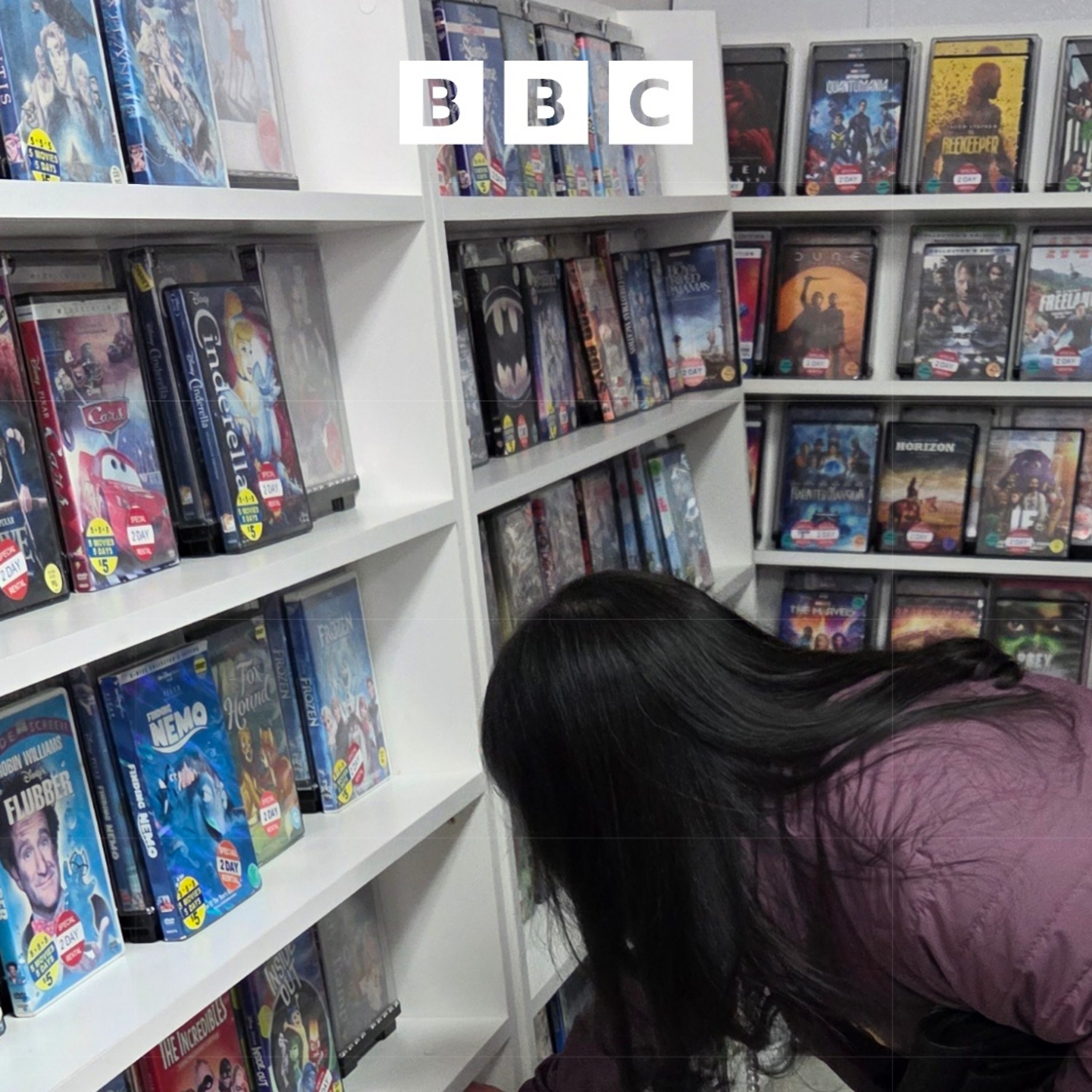
Global News Podcast
The Happy Pod: Our best stories of 2025
00:34:03
A round-up of the happiest stories from the past year
Loading summary
Transcript1 lines
- [00:00]
A
This BBC podcast is supported by ads outside the uk. Your pet is your bestie, your therapist, your perfect match. It's easy to love them. It's easy to protect them too with pet insurance coverage from Pets Best because it's all fun and games until they chew on something they shouldn't and you get a vet bill to match. With perfect timing, Pets Best helps protect your furry friend and your budget from this imperfect world. Get up to 90% cash back on eligible vet bills from less than a dollar a day. Pets Best has plans to cover accidents, injuries and more, from puppies and kittens to seniors. Find your Perfect match plan and get a quote@petsbest.com Pet insurance products offered and administered by Pets Best Insurance Services LLC are underwritten by American Pet Insurance Company or Independence American Insurance Company for terms and conditions, visit www.petsbest.com. policy products are underwritten by American Pet Insurance Company, Independence American Insurance Company or Ms. Transverse Insurance Company and administered by Pets Best Insurance Services LLC. $1.00 a day premium based on 2024 average new policyholder data for accident and illness plans. Pets 10 looking for a fantasy that will keep you up all night? From Blood and Ash isn't just a story. It's the beginning of an obsession. From Blood and Ash launches you into a world where forbidden desire collides with deadly secrets and every choice could ignite a war. Expect heart pounding romance, fierce battles, and a heroine who refuses to be caged. If you crave danger, passion and twists you'll never see coming, start the journey today. Grab from Blood and Ash, available in print, ebook and audiobook. And enter a series you'll never to leave. You're listening to the Happy Pod best stories of 2025. I'm Harry Bly. And I'm Holly Gibbs. And for our last edition of 2025, we're looking back at some of our favorite stories from the past year, including I was just doing it to help a mother out. You know, I thought what if the shoes were on the other foot? And I thought, you know, I can help this one person out make their life a little bit easier. The man who created a video rental corner in his convenience store for his most loyal customer. You don't know where the story's going to take you and it's always surprising and it's always beautiful. And this project has been really about like just untapping that extraordinary story that everyone has. We spoke to Will, who went around asking strangers if they would like a cup of tea. Also, the survivors of the Nagasaki Atomic Bomb told us why we should strive for peace. Plus here now we really have a bright light on the horizon. We have a new test that could really be a game changer. The blood test, which could detect ovarian cancer in its early stages. The woman who climbed up Table Mountain 64 times after she nearly died falling from it. And Logie, the litter picking Labrador who's taken the Internet by storm. Let's start in the small American town of Pocatello in Idaho with a story about kindness. Dave Craning ran the last video rental store in town and almost every day for decades was visited by Christina, who has down syndrome. He knew it was an important part of Christina's routine. So when he had to close the store, Dave was determined to keep a pocket of it open, especially for her. I spoke to Dave and to Christina's mother, Tony. It's part of just, you know, the fabric of her life. It's woven in. I mean, I have a cabinet full of videos, the same movies that she goes and rents. So it's going to rent the movies that she loves. Since the mid-2000s, as streaming services became mainstream, most stores have closed. And last year, Christina's favourite video store began to struggle. Dave Craning is the store owner. Yard costs were going up, but the revenue was going down. And it just kind of got to a point where I just felt that just maintaining the video store wasn't feasible. Well, he let it go on, you know, the loss of revenue because of her. So then it happened. The hammer came down and it was like, oh, no. But when it came time to close the video store, Dave came up with a solution to create Christina's corner in the neighboring convenience store, which he also owns. So I thought, well, I could build just this version of this corner of the store that looks like the video store, put her favorite movies in there. It was like having a prison sentence lifted. I think she'll be able to do it as long as he's the owner. Truthfully, when I did this, you know, I was just doing something nice for just a customer that's been loyal just for decades. You know, I was just doing it to help a mother out. You know, I thought, what if the shoes were on the other foot? And I thought, you know, I can help this one person out, make their life a little bit easier. I went to thank him and no words came. I just burst into tears. So about a week or two later I saw him and I said, promise not to cry. And I, you know, I thanked him, man, with words. You know, it just when they treat people like my daughter, I mean, they see them as a human and they're willing to go the extra mile, you know? Yeah, there are a lot of good people and kind people, but they don't understand disabilities. They're afraid when they see people with disabilities. So when somebody steps out like that, it's now there's a special place for them in heaven, you know. You know, people are always saying it's everything to me, so I didn't want to use that phrase, but really it is, it's everything. Christina's mother, Tony and Dave CRANING how do you feel about talking to strangers? Most people here in London tend to avoid it, but back in March, I spoke to a man who goes around parks in the city offering people he's never met a cup of tea. Excuse me, I don't suppose you'd like a cup of tea, would you? Why are you, are you inviting me? I'm a filmmaker. 28 year old will Shears chats to them about their lives and posts the videos on social media in a project he's calling A Mug of Life. He told me he was inspired by being given tea on a beach in Morocco. One day I just got out of my flat and I went to the local park and I said to someone, I was like, excuse me, would you like a cup of tea? And the first person I went up to said, yeah. And I was petrified at the start. Is anyone actually going to say yes to this? The majority of times I go up and say, do you want a cup of tea? People say, yeah. And you don't know where the story is going to take you. And it's always surprising and it's always beautiful. And this project has been really about like just untapping that extraordinary story that everyone has. And you get these amazing stories by just asking them something so simple as, would you like a cup of tea? Is that what you would encourage other people to go out and do? I have never felt better. And like, yeah, we obviously we need to be cautious about talking to strangers. But I do think we've built this world where we're like, we think it's weird to go and talk to a stranger or when a stranger tries to start talking to you, go, oh. And your guard goes up. Like, that's certainly for me, the nice thing about this project is it's made me realize that actually when you do go up and ask someone and you start talking, you feel so much better and it's just so good for Your mental health. I've loved it. And on the reaction from social media and people that have watched your videos, has that surprised you that millions of people have watched it and millions of people are enjoying it? I have been blown away, Holly, by the response, by how many people have watched it. People from all around the world, all parts of the globe, and the messages that come in with so much positivity about how it's helped them with their day to day life. It's amazing to know that people watching it, it's inspiring other people, it's making people feel better. And the way to describe how I feel afterwards sometimes is like honored. I couldn't recommend it enough. If there was one life lesson that you could sum up that you have learned throughout this project, what would it be? I think it's this. It's been don't put barriers up. And I think that that would be my one bit of advice is like just strip any barriers that are stopping you from doing that thing you wanted to do in your life. Because when you open your door and you get out the house that day and you start it, then you're going to feel so much better. Will Shears In November we were in Germany for the One Young World Summit in Munich. Among those sharing ideas on how to change the world were survivors of the atomic bombs dropped on Japan by the US during the Second World War. Shigemitsu Tanaka was just four years old at the time and lived close to Nagasaki where the second bomb fell. The only aim of nuclear weapons is extinction and they are evil. That's why they cannot coexist with humans. We shouldn't use them at all. And all the world has to raise their voices to abolish them. Suzuka Nakamura is a third generation Hibokusha, a term that refers to people affected by the bombings of Hiroshima and Nagasaki. At the age of 25, she is determined to encourage peace across the world. I guess it's very simple. Listening a lot of stories of Hibakusha, I started to think why people made nuclear weapons and how can we abolish them. I started my career as a peace activist and I met more Hipaku Shah working hard for this issue and I was very moved. When we want to start making action if we are all alone, the pressure is so huge. But with friends around you, we can share our thoughts or ideas. Innovation doesn't happen only in one person. I guess there should be a lot of people around there. When I do these kind of activities, I always have anger because looking around the world. When I see those leaders talking about using nuclear weapons so easily, I always remember about the Hibakusha who suffered a lot from nuclear weapons and I can't imagine how scary they are. Like maybe the nuclear weapons might be used again. And now we are sharing the same fear. But at the same time, I also have hope because there is many people willing for peace. Every year, more than 300,000 women are diagnosed with ovarian cancer and it's often not detected until it's in the later stages, leading to low survival rates. But in September, we heard from researchers in the US and the UK who created a new blood test that detects the disease in its early stages in around 90% of cases. It allows for earlier treatment and improves the chances of survival. As Professor Emma Crosby from the University of Manchester and Dr. Kian Bayback from the University of Colorado explained, we know that if we can find this cancer earlier, that the survival goes up to about 80 to 90% here. Now we really have a bright light on the horizon. We have a new test that could really be a game changer. I've been contacted by numerous patients, their family members, people who are having symptoms, who are very keen to have access to this new test, and people whose loved ones have been diagnosed with ovarian cancer in the past. And we're just really delighted to see the progress that's being made in this area. We have jumped leaps ahead in technology. Our patients that are enrolled in the prospective trial that's going on now are very excited that they may not have to suffer. So we unfortunately do manage patients who have got ovarian cancer and perhaps it's been diagnosed at a late stage, people who are essentially devastated by this new diagnosis and have to go through very challenging treatment. So to actually be involved in a research study that can help to diagnose people at a much earlier stage where their chance of cure is greater, the chance that they will live and see their children grow up is absolutely fantastic. It's essentially why we became doctors and researchers, is to see these exciting research ideas being put into practice and actually making a difference for our patients. Next to a remarkable story of recovery and endurance from one of our listeners. In September 2023, Tania Morkul fell 18 meters down a ravine with while hiking on Table Mountain in Cape Town with her niece. She was 64 at the time and sustained numerous life threatening injuries. But inspired by stories she had heard here on the Happy Pod, Tania vowed to return to her beloved mountain and in May completed 64 climbs in 64 days, she told Holly all about the help she received from a nurse who happened to be hiking nearby. When she fell, she woke me up, and I just felt somebody stroking my hair. And she said, you're a strong person. You're going to survive. And that was the message that was encoded into me right from the beginning. Even when the rescue teams arrived, she said, this woman is strong. She'll survive. As I was airlifted, I remembered a story just a few months before on the Happy Pod, actually, of these people in Pakistan that were dangling in a. In a cable car. And I remembered so clearly their voices and this incredible rescue operation. And I felt so held by that. My Happy Pod has been. Every Saturday, I go for my walk with my dogs and I listen to it. And I've had so many of these stories that actually sustained me as well when I was in hospital. Well, we are totally honored to have played any part in your recovery. Do you hope that sharing your story might do the same to someone who might find themselves in a similar situation to you when they've just had a really bad accident? Yes. You know, I spent three weeks on a ventilator in hospital. I just needed to push through this time. And I often thought of people that had actually pushed through. You know, this is the thing. I remember the very start distinctly as well. Somebody who dived into a dam, and he knew he was paralyzed from the spine down. He said to himself on the way, I will never say why me? And I decided to make that my mantra. I will never say why me? And that is the advice I give to absolutely everyone. And no matter how severe your injuries, you can get up and you can fight back. I had to often trust in the people around me. And I remember my trauma surgeon one day came to me, said, you're going to climb the mountain again. I can't believe that I will, but if you think so, I would absolutely, you know, love to do that. That day, it just turned for me. And now you have climbed Table Mountain 64 times in 64 days. Oh, my goodness, yes. I got these incredible physios. I said to them, I have the dream to do the mountain 64 times, to actually give back to the people who saved my life. And they said, of course, and if you want us to, we'll come up the mountain with you. We're going to train you for this. And I couldn't believe that I am now inspiring other people for me to be on this, on the Happy Pod. I cannot tell you how incredible, because you've been my inspiration and now I can inspire other people. The thing that's extremely important to me is to understand that you are so much stronger than you think you are. You have to surround yourself with positive people and never give up. Back in August, we heard about an unlikely social media star helping to clean up our oceans. Logie collects bottles, cans and other rubbish from the waters around the southwest of England. The twist? Logie is a dog, a four year old black Labrador. His owner, James Westgate, told us why he decided to hone Logie's natural retrieval instincts towards litter picking. We live near the sea and we're probably down swimming twice a day, once a day, and usually there's litter in the sea. As an ecologist, seeing it in the sea was really making me feel unhappy knowing the damage it can cause. And Logie can swim really well, he can retrieve really well. So why doesn't he just go and get it? And then I take it away, put it in the bin and recycling. As soon as he sees a bit of litter, he just lights up. He is so driven to go and get that piece of litter. Sometimes I have to be like, okay, chill dude. Because he'll go for things like traffic cones which are like the size of him, really heavy, like 10 kilogram traffic cones. But him going down, especially onto the beach, he will just see something from really far away and he will just go for it. I think if people see a dog who's really happy and picking up litter, they want to watch it. And it's a really fun thing to do. And I'm hoping in the background of people's consciousness they're going to realize that, wow, that's actually horrible that all this litter is in the sea. Maybe I won't chuck it away or chuck it outside. Maybe if I can just impact one or two people, just to think twice about chucking a piece of litter down on the floor, it might end up in the sea, you know, that kind of thing. The whole beauty of me and Logi's relationship is we're doing something that makes us both happy. He's down at the water and he's loving life. He's retrieving bottles and he's like, yeah, let's go, let's go and get another one. Let's go and get a traffic cone. That Chris rapper got my name on it. But I am incredibly happy because I see him having fun. I also get to clean up the environment. I call it a match made in heaven. James Westgate. And if you want to see logie. You can do so on the BBC World Service Instagram account. Coming up in this podcast, we continue to reflect on our happiest stories of 2025, including It's Amazing what Deborah's Found and It means so much to my family. And I guess Deb means a lot to our family now too, because she's gone to the effort to bring it home and and extract the letter out of the bottle, the letters that made their way back home 109 years later. If you've been in business for at least six months and have a decent credit score, you could get business funding in as little as 20. But you don't have to spend a ton of time going from lender to lender to find the best match for your small business. Drive your business forward with Lendio. Just let Lendio do it for you. At Lendio, we've built a marketplace of over 75 lenders and funding partners who know what you need and can get it to you quickly. See what your business can qualify for in just a few minutes@lendio.com that's lendio lindio.com Men today are measurably weaker than men 30 years ago. Grip strength, bone density, muscle mass, all declining. We don't move like we used to. Your grandfather lifted and carried. All day long. You sit at a desk, then try to make up for it with a 45 minute workout. But here's what military trainers have used for load bearing during normal activity. Research shows it can burn an extra 400 calories daily. The Wolf Tactical Weighted Vest True fit engineering means it locks to your core without flopping around and risking injury. Turn your morning walk, your chores, your entire day into functional strength training. Go to wolftactical.com to see more. That's wolftactical.com your pet is your bestie, your therapist, your perfect match. It's easy to love them. It's easy to protect them too, with pet insurance coverage from Pets Best because it's all fun and games until they chew on something they shouldn't and you get a vet bill to match. With perfect timing, Pets Best helps protect your furry friend and your budget from this imperfect world. Get up to 90% cash back on eligible vet bills from less than a dollar a day. Pets Best has plans to cover accidents, injuries and more, from puppies and kittens to seniors. Find your perfect match plan and get a quote@petsbest.com Pet insurance products offered and administered by Pets Best Insurance Services, LLC are underwritten by American Pet Insurance Company or Independence American Insurance Company for terms and conditions, visit www.petsbest.com. policy products are underwritten by American Pet Insurance Company, Independence American Insurance Company or Ms. Transverse Insurance Company and administered by Pets Best Insurance Services LLC. $1.00 a day premium based on 2024 average new policyholder data for accident and illness plans. Pets age 0 to 10 AI agents are everywhere, automating tasks and making decisions at machine speed. But agents make mistakes. Just one rogue agent can do big damage before you even notice. Rubrik Agent Cloud is the only platform that helps you monitor agents, set guardrails and rewind mistakes so you can unleash agents, not risk. Accelerate your AI transformation@rubrik.com that's R U V R I K.com. Welcome back. We've heard about a number of medical breakthroughs in 2025, including the first ever treatment for the devastating brain condition Huntington's. This inherited disease is caused by an altered gene and resembles a combination of dementia, Parkinson's and motor neurone disease. In September, scientists announced they had found a way to slow its progression by 75%. That means the decline people would have experienced in a year would take four years, instead extending lives and improving their quality of life. Deborah Goodman's father, grandfather, two brothers and aunt all had the disease. I actually feel quite emotional because people with Huntington's disease are desperate for some kind of treatment that works. So I just want to thank Sarah and her team because they're so desperate for this treatment. I'm really, really, really pleased to hear about it. I was told the only way to stamp out the disease was not to have children. I chose not to because I didn't want a child of mine to go through what I went through. The breakthrough raises the prospect that younger people who have the Huntingdon's gene could be treated to prevent the disease from being triggered and developing. Like 30 year old Jack May Davies. It does make the future seem a little bit brighter, but it's definitely going to help, you know, definitely going to help with knowing that I have got more time here than perhaps I first thought. Professor Sarah Tabrizi led the research team at University College London. I've been working in Huntington's disease for nearly 30 years and for the first time, these data, which show a 75% slowing, is to me the most clear data. That this gene therapy slows and modifies the progression. Once someone has symptoms of the disease, the time from symptom to death is between 10 and 20 years. So a 75% slowing is going to keep people in work longer functioning, longer delaying symptoms of disability. This is truly a game changing result for the community that we work with and the patients and families. I am absolutely passionate about getting this treatment to as many people as we possibly can. Professor Sarah Tabrizi to Tokyo now where one small cafe has become famous for far more than its cake and coffee. The Orange Day Cafe is a monthly pop up created to give people with dementia a place to volunteer. Our correspondent Shaima Khalil went along. My name Morita Toshiomi. 87 year old Morita san has been living with dementia for years. He's one of the volunteers at the Orange Day Cafe where the Cafe of Mistaken Orders as it's now famously known. Morita San welcomes customers wearing an orange apron, a black and white headband and a charming smile. This monthly pop up gives people with dementia a chance to volunteer and connect with the community for a few hours. You can see just how much Morita San enjoys it. It's fun and lively here when there are many customers. I'm excited when I see people enjoying their drinks and when they start chatting to me. Mix ups can happen of course, but it's all part of the experience and all taken in good humor. Morita san is supported by another younger volunteer. The menus and tables have been color coded to make it easier for the elderly waiters to take the orders. We have six tables here so we put the six colors of the flowers on each table. Akiko Kanna is the founder of the pop up Cafe. It started with my father Gaddy Mencio. People want to draw a line person who is not disabled and abled. I don't like that. And everybody needs a place to be needed. I think they need identity. They need a place to be himself or herself. It's been just over a year since Morita san started started working here. His wife Masako comes with him every time. When I say that your Orange day shift is approaching, he replies when? What time? He's looking forward to it. Japan has increasingly turned to technology, especially robots to help tackle its dementia crisis. But in this tiny cafe, it's the human connection that makes the real difference. Memories may slip here, but hope, humor and dignity are still very much on the menu. Back in April we heard about a remarkable rodent that had saved thousands of human lives by detecting tuberculosis. Tests that are done by clinics in Tanzania and Ethiopia aren't always 100% accurate. So samples which come up negative are routinely double checked by rats because of their incredible sense of smell. Carolina, a giant African pouched rat Successfully detected more than 3,000 cases over her seven year long career, saving many thousands of other people from being infected by the highly contagious disease Fidelis Galli. And the team at the Apopo Centre in Dar es Salaam where Carolina worked gave her a special send off. Carolina is an excellent animal. Carolina like to be cuddled, you know, she's very, very calm, she's very excited. When taking her to work, she sniffed 208,235 patient samples. It was very special. So we prepared banana and avocado and she was, she was very happy. It was a party, you know, we prepared a cake, some drinks. So we enjoyed that day. She's resting, just eating and sweeping, exercising, that's all, you know. So she was saving life. She saved the life. She saved a lot of lives. To Western Australia now and the discovery of some very old messages in a bottle. Deborah Brown's daughter Felicity found the bottle while cleaning up rubbish on Wharton Beach. Inside were handwritten letters from two Australian soldiers who served in the first World War. Private Malcolm Neville and Private William Harvey. After searching for relatives online, Deborah found Herbie Neville, Malcolm's great nephew. I spoke to Deborah and Herbie and started by asking them what the letter addressed to Malcolm's mother said. You have no idea what it felt like to read that. And I get quite teary. His letters were so well maintained. And it says, dear mother, having a real good time. Food is real good so far with the exception of one meal which we buried at sea accompanied by a mountain organ band. The dear old Ballarat, which is the ship is heaving and rolling, but we are as happy as Larry, your loving son Malcolm. It just tore at our heartstrings. And then more and more through that same day when we discovered that he had died the year a year after. And how does it feel giving Herbie's family part of their history? Oh, that is just incredible. And they've all been calling me and sending me messages and Herbie's going to come all the way across the Australia. He's going to come and visit us. It's amazing what Deborah found and it means so much to my family. And I guess Deb means a lot to our family now too because she's gone to the effort to bring it home and, and extract the letter out of the bottle. How did you feel when you heard what the letter had said? I was in disbelief. And when I rang the other members of all our family, they were in disbelief too. I think they were in shock. What an amazing thing. And it's unbelievable. They are so grateful that they received that letter and it's quite moving actually to know that he's reached out to his mother. He was happy. What would you say to Deborah and her family for finding this letter and reaching out to you? I think they're the most amazing people I've probably ever come across. And almost in tears now, but yeah, it makes me cry a lot too. Herbie. Yep, that's unreal. And we thought we'd end this review on a musical note. The American folk duo Kathy Fink and Marcy Marxa and Chao Bob Tien, a musician from Beijing, released an album From China to Appalachia fusing traditional Chinese music and folk from the Appalachian Mountains. The trio told me all about how their music came together. I first time played an old time tune. I found the scale is quite similar to some kind of a Chinese pentatonic scale. Chow has now had the opportunity to learn a lot of Appalachian tunes. Then she suggested Call and Response. And so my first line of Belle of Lexington goes. And then Shell wanted to respond to that. Then we'll play it all together. Let's play the A part together. One, two, three. I imagine you've learned a lot from each other, both in terms of music and technique, but also language. And Kathy and Marcy, it was lovely to hear you joining Ciao Bob in singing in Mandarin in the White Snake song. I feel like that's more of bringing us together for the things we have in common as opposed to picking apart the things that we don't. We are all hoping from this fusion to sending some messages to the world, to the US side, to the Chinese side, to let them know even though we're different, but we are doing the same thing. We are doing one thing together and we can create a beautiful new thing and send it to the world. I spoke to Kathy, Marty and Ciao Bob again this week about their recent time on the road and hopes for the year ahead. For all of our shows in November and December, we've been raising money for food banks. Lines at food banks and soup kitchens got a little bit longer and so we donated about $7,500 directly to food banks in all the cities that we performed in. You know, the positivity that we hope to bring to 2026 is continuing to use our music to, number one, lift people up, but number two, use our music as a vehicle for having some of the difficult conversations. And we want to use our music as a way to bring people into the same room who come from different places, maybe even have different positions on things, but can have a, a peaceful and important dialogue where we're really listening. And I think one of the things that happens with this mashup of music that we create is that people listen deeply to it. Now we need to listen deeply to each other. And instead of saying things like, you're wrong, saying things like, let me try to understand that better and let me tell you how I feel. And hopefully the music will be a vehicle to help that happen. What is it about music that keeps you positive and playing together especially it gives us a way to just focus on the music, focus on each other, focus on our playing and focus on the audience and everything else goes away. How about you, Chell? Those comments really made my days and I love people to express themselves. See how our music connect them and how our music really act like an antidote, like healing powers to make people's life brighter and see how cultures blend to each other very well. We've had audience members come up to us who have never heard us before and said things like, I didn't know how much I needed this. And that makes us incredibly happy. It feels very important to us to put that message out, which is why it's double delightful to have our second time on the Happy Pot. And let's end this edition with Kathy, Marcy and Chao Bob playing their rendition of the Chinese lullaby Nan Niwan, Wind where the Sun. And that's all from the Happy Pod for this year. If you have a story you think we should cover in 2026, we'd love to hear from you. As ever, the address is Global podcast@BBC.co.uk. this edition was produced by Rachel Bulkley. The editor is Karen Martin. I'm Harry Bly. And I'm Holly Gibson. Until next time. Goodbye to me. How deep Unlike how far. From bird to tree come to me from bird to tree all that I hear and see 91 comes back to me. At the BBC we go further so you see clearer. With a subscription to BBC.com you get unlimited articles and videos ad free podcasts. The BBC News channel streaming live 24. 7 plus hundreds of acclaimed documentaries from less than a dollar a week for your first year. Read, watch and listen to trusted independent journalism and storytelling. It all starts with a subscription to BBC.com find out more@BBC.com unlimited.