← Global News Podcast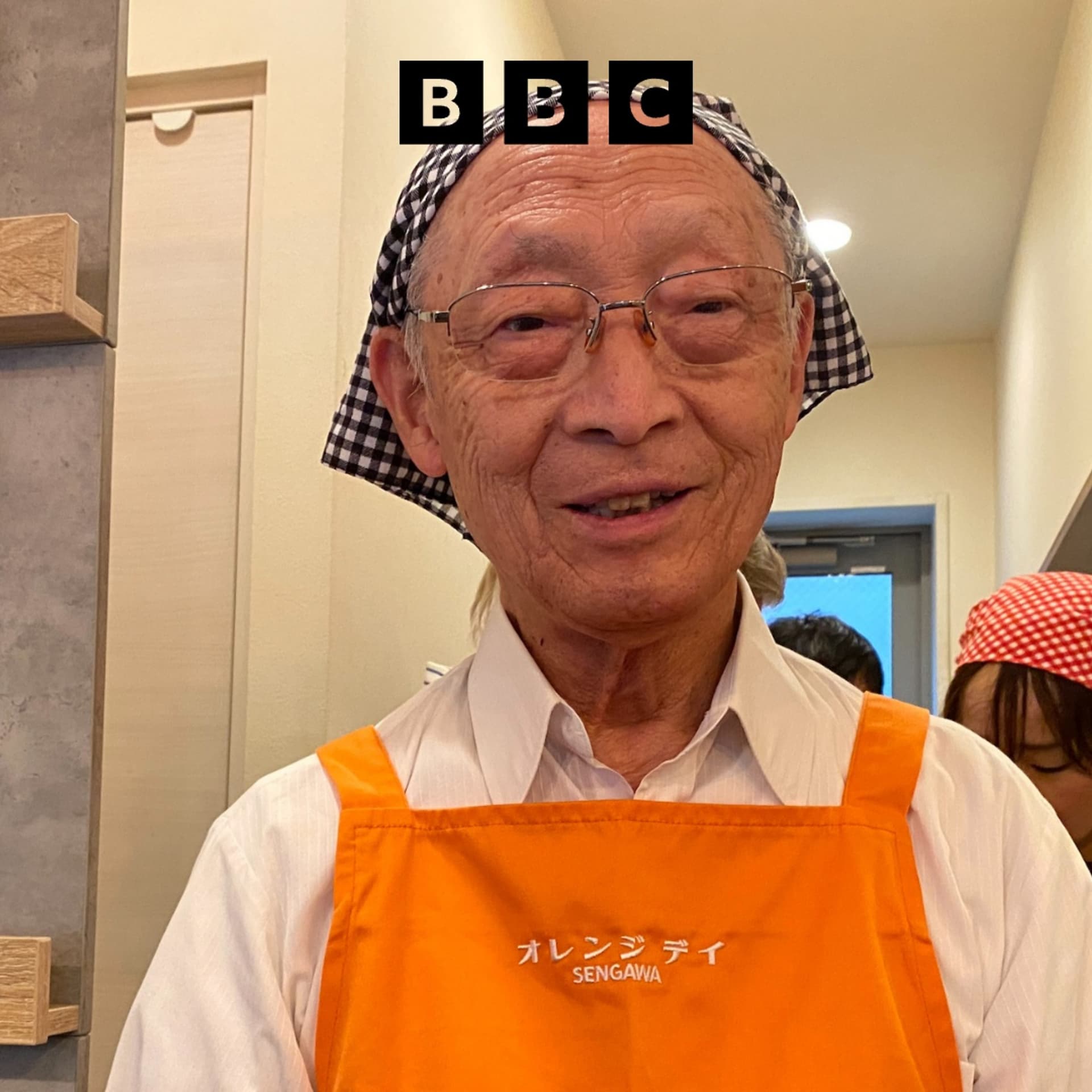
Global News Podcast
The Happy Pod: The cafe where mistakes are expected
00:28:06
A pop-up cafe in Tokyo is giving people with dementia a place to volunteer
Loading summary
Transcript1 lines
- [00:00]
A
This BBC podcast is supported by ads outside the UK. Homes.com knows having the right agent can make or break your home search. That's why they provide home shoppers with an agent directory that gives you a detailed look at each agent's experience, like the number of closed sales in a specific neighborhood, average price range and more. It lets you easily connect with all the agents in the area you're searching so you can find the right agent with the right experience and ultimately the right home for you. Homes.com, we've done your homework. This message comes from Greenlight. Ready to start talking to your kids about financial literacy? Meet Greenlight, the debit card and money app that teaches kids and teens how to earn, save, spend wisely and invest with your guardrails in place. With Greenlight, you can send money to kids quickly, set up chores automate allowance, and keep an eye on what your kids are spending with real time notifications. Join millions of parents and kids building healthy financial habits together on Greenlight. Get started risk free@greenlight.com iheart this is the Happy Pod from the BBC World Service. I'm Joanna Keane and in this edition everybody needs a place to be needed. Since they need identity, they need a place. They need a place to be himself or herself. The cafe in Tokyo that allows people with dementia to volunteer as servers. It's not a day goes by where I don't think about that fact and forever indebted to the both of them and thankfully I get to tell them and and thank them every day. Give Paulie a big hug. We meet the man whose life was saved by his dog. Plus I can't compare that level of happiness to anything that I have ever felt. Like the amount of emotion and just going from a place where you thought that you were never going to grow up. The groundbreaking gene therapy which has helped people with previously incurable blood cancers. The school in Kenya set up for dyslexic children and a camp for women in India who are going through divorce, trekking up the mountains or sitting by the beach, listening to each other and playing games together, dancing together and also listening to music together. We start in Tokyo where one small cafe has become famous for far more than its cakes and coffee. At Orange Day Cafe. Muddled orders, long pauses and gentle confusion aren't mistakes, they're the point. The monthly pop up was created to give people living with dementia a place to volunteer and one of its best known helpers is Toshio Morita, an octogenarian living with dementia who's become something of a local celebrity. Our correspondent Shaima Khalil went to meet him and to see how a simple cup of coffee can turn into an act of community. Once a month, this small cafe in Sengawa, western Tokyo turns into something different. There's still delicious cakes, coffee and tea of course, but the mood and the purpose of this place change my name. Morita Toshiomi. 87 year old Morita San has been living with dementia for years. He's one of the volunteers at the Orange Day Cafe, or the Cafe of Mistaken Orders as it's now famously known. Morita San welcomes customers wearing an orange apron, a black and white headband and a charming smile. This monthly pop up gives people with dementia a chance to volunteer and connect with the community for a few hours. You can see just how much Morita san enjoys it. It's fun and lively here when there are many customers. I'm excited when I see people enjoying their drinks and when they start chatting to me. Mix ups can happen of course, but it's all part of the experience and all taken in good humor. Morita san is supported by another younger volunteer. The menus and tables have been color coded to make it easier for the elderly waiters to take the orders. We have a six table here, so we put the six colors of the flowers on each table. Akiko Kanna is the founder of the pop up cafe. It started with my father got dementia. I think it was five years ago and he couldn't renew his driving license. He was so shocked about that. But he was trying to get something to work. He tried to get work. One of Akiko's friends mentioned the cafe idea, but the initiative was delayed because of the COVID pandemic. By the time it took off, her father's dementia got worse and he couldn't take part. Still, Akiko tells me this has been a gratifying experience for her and the elderly volunteers. People want to draw a line person who is not disabled and abled. I don't like that. And everybody needs a place to be needed. I think they need identity, they need a place. They need a place to be himself or herself. I didn't want my dad to work here and I didn't want to feel needed here. Johanna Rivera is an exchange student from the Philippines. She studies nutrition and mental health and has heard about the cafe through social media. I freed up my schedule to visit today since they only open once a month and I wanted to see how they operate. And I was really curious about the process of ordering with the Staff what was it like interacting with Morita san? We encountered a little bit of difficulty because I'm not fluent in Japanese, so it was more of an issue with me. He was very patient in. It's been just over a year since Morita san started working here. His wife, Masako, comes with him every time. She does everything she can to keep him active, even if he sometimes complains about his exercise classes. But the cafe, she tells me, is different. When I say that your orange day's shift is approaching, he replies, when? What time? He's looking forward to it. I wonder, though, if he can still do this, especially with his dementia symptoms progressing. With an aging and shrinking population, Japan faces a major dementia challenge. The Ministry of Health estimates that more than 5 million people will be affected by dementia by 2030. By 2060, one in three elderly Japanese people is expected to struggle with cognitive decline. And in a country where many of the elderly live alone, isolation only makes things worse. Japan has increasingly turned to technology, especially robots, to help tackle its dementia crisis. But in this tiny cafe, it's the human connection that makes the real difference. Memories may slip here, but hope, humour and dignity are still very much on the menu. Shaima Khalil. Anyone who has a pet dog will say they're a huge part of the family. But for one man in Northern Ireland, his. His golden retriever saved his life. Hannah and Adam Cook were asleep upstairs when Hannah was woken by their dog Polly barking. She found her 37 year old husband. Adam was breathing strangely next to her and then he stopped breathing completely. Adam had suffered a cardiac arrest but survived thanks to Hannah's CPR and the help of an ambulance. Now Polly has been honoured as a CPR hero by the charity the British Heart Foundation. Hannah and Adam spoke to the happy pods Vanessa Heaney and started by explaining what happened that night in March 2024. We went to bed as normal on a Monday night and I woke up at 1am to Polly Barking below me. So I just jumped up and sort of tried to work out what was going on and he was completely unresponsive. So I rang an ambulance and the ambulance man then talked me through what I needed to do in terms of getting him out of the bed and getting them onto the floor and starting cpr. And then the ambulance came about seven or eight minutes later. Really amazing, Hannah. How did Polly know that something was wrong? I understand she wasn't even the same room as you guys when you were sleeping. No, she doesn't sleep with us, but she sleeps below us. Which is the utility room. And where we live in Northern Ireland, it's extremely quiet. And, Hannah, you kept Adam alive till the ambulance came. If it wasn't for Polly and you, Adam, you wouldn't be here now. That's correct. That is completely correct. And it's not a day goes by where I don't think about that fact. And forever indebted to the both of them. And thankfully, I get to tell them and. And thank them every day. Give Paulie a big hug. Give Hannah a big hug. And, yeah, it's just very grateful for. For everything they've done for me. Your story is really extraordinary, and most of our listeners would never have experienced anything like this, but many of us listening to this interview, and I know myself, I have a dog. I have a black lab, and I feel really surgically attached to her. How does it feel to know that you have that special connection and that you. You were here because she saved your life? Well, it's an amazing feeling. And I don't know. I just think dogs are equal to humans. I don't know why people would keep a dog outside in the cold. I think they should be in the house, and they're part of the family. Like, you know, the dogs are domesticated because we need them, and humans need dogs, and, you know, they're part of the family. And I think that Paulie should always be allowed on the sofa, even though. Even though Hal doesn't like it. And does that mean that she gets the treats whenever she wants them? Yeah. We were just chatting about this last night because we were looking at her and we were thinking, she's pulling a little weight here. We have to stop the treats. This is because recently, because of the British Heart Foundation Awards last week and stuff, she was getting a lot of traits, and so she probably needs to cut back about the traits. And, Hannah, how would you say things have changed between all of you as a family since this happened? We're very much the same. That we're a close family and we're very connected, but we're different in the way that we just try to make every day count if we can. Like, life is stressful and life's hard, but we have. We have a. A gift that other people don't have, that we're able to reflect that Adam was able to be saved. So we got chance. And we have to realize that when we're stressed or we're angry or, you know, we're upset, we have something else that makes us put it all back into perspective. How Proud were you when Polly got her CPR Heart award? We were so proud. She couldn't come over to London. We would. Would have loved her to, but it was too much for her. She's the country dog, and she wouldn't have managed it very well. We're so proud of her. And she had her own we award ceremony at home the Friday beforehand, and that was lovely. And that was in our favorite place. We went for a walk. We had Fargo McKinney there, and he presented her with the medal. He's the head of the British Heart foundation in Northern Ireland. And did she know that she was a good girl that day? Oh, yeah. She loves it. She loves all the attention. He wasn't too happy when she jumped up on his nice coat, though, a couple times. But I know she's Angie sort of kind of forgive her for that. Hannah and Adam Cook speaking to Vanessa Heaney. A revolutionary gene therapy has successfully treated patients with aggressive and previously incurable blood cancers. It was developed by scientists at Great Ormond Street Hospital in London, along with colleagues from University College London. Three years ago, at the age of 13, Alyssa Tapley was the first person in the world to receive the treatment. Now she's 16 and cancer free. Alyssa, her mum Kiona, and dog Holly spoke to my colleague Justin Webb. When I was first diagnosed, I was actually sedated, so I knew later than everyone else, kind of. Which, you know, when I first found out, I don't think I really processed it. It's not really a thing that you think that you accept within, like, a day or two of finding out the news. I can understand that. People will definitely understand that. But a shock nonetheless, as it sunk in that you had something that was very, very serious and you knew that. Yeah, yeah. Was really hard. I think, you know, when I started not being able to go home as much and I started spending a lot more time in hospital, it definitely got a lot harder than, you know. So they say to you, look, we've got this gene therapy trial. We're going to put you on it. You can be the first person, and you did it. How soon did you realize that it was working, Lissa? Yeah, I was in Great Ormond Street Hospital for four months, and I think we found out three and a half months in that I was cancer free. And I just remember it. I can't compare that level of happiness to anything that I have ever felt, like the amount of emotion and just going from a place where you thought that you were never gonna grow up and you were never gonna Have a future to live to somewhere where there are endless opportunities and there's so many possibilities and just being able to have the knowledge that you're gonna be able to see your brother again and see your friends and the rest of your family. It's. And I can see your mum, Kiona. She's in the same studio as you, looking on as you say those things. It must have been that same thing for you, Kiona, at that moment. Yeah, I mean, I think when she first was diagnosed, we thought, oh, she's gonna take the normal route and, you know, she's gonna have chemo and it's gonna be really tough, but we're sort of gonna get through it. And then when we found out all the other treatment wasn't working, and we actually got to the point where they were talking, you know, they said, we're not looking to cure the leukemia now, we're just looking to keep her comfortable. And you go from a place where you've got absolutely no hope whatsoever. And although it was in Great Ormond street and we knew she was taking part in this trial, you've had such negative news. Part of you really wants to make it work, but then also a part of you thinks, you know, if it works, it's a miracle. And at that point, it's quite difficult to sort of believe in miracles after everything you've been through. And when they first told us it was, you just couldn't quite believe it. You were just waiting for them to turn around and say, no, actually, you know, we've got it wrong. Or it's not, because it just completely sort of came out of the blue. It was such a long shot that it was going to work that when it actually did. Yeah, it's just unbelievable. It's. And. And part of the celebration, because we do need to get to Holly, because I can see. I've got. I can see you inside the studio and I can see the occasional wagging tail. But, Alyssa, you wanted a dog, didn't you? Basically, all the way through, but you couldn't because your immunosuppressed. I mean, Holly is the. Just the perfect example of everything that's gone right for you now, I guess. Definitely. So when we first got Holly, it was after my first failed bone marrow transplant. Well, my first bone marrow transplant. And it was at this point where it was like I had wanted a dog for so long. And, you know, I. We. We had even like, brought all the staff in the hospital together to try and persuade my mum and dad to get me a dog. So when it didn't work, it was, it was one of the things where it was like, this is, this is what Alyssa has wanted for so long, so we need to get her a dog, which is how we ended up with Holly. But then after the trial and I came back home and I was cured. She, she definitely helped with my physiotherapy. Alyssa Tapley, speaking to Justin Webb. Coming up in this podcast, I was playing piano every day. The best part of it is I was finally feeling thin, finally feeling like people were actually watching me and appreciating who I was. The homeless man who turned his life around after learning to play the piano. Homes.com knows having the right agent can make or break your home search. That's why they provide home shoppers with an agent directory that gives you a detailed look at each agent's experience, like the number of closed sales in a specific neighborhood, average price range, and more. It lets you easily connect with all the agents in the area you're searching so you can find the right agent with the right experience and ultimately the right home for you. Homes.com, we've done your homework. If you're searching for a gift that creates lasting memories, the Story Dream Machine is a wonderful choice. It's perfect for birthdays, milestones, or holidays, and each machine comes with three enchanting stories to start the journey. There's even a White Noise Nightlight mode, making it a cozy companion for bedtime. Want to make it even more special? Add story collections sold separately and share the tales you cherished from your own childhood. It's a heartfelt way to connect across generations and spark imagination. Get your little one the gift to make their bedtime magical with enchanting stories and even a white Noise nightlight mode to keep them cozy while they sleep. The Story Dream Machine is perfect for birthdays, milestones, or holidays, and each comes with three stories with more story collections available to share your favorite tales to make it even more special. Sold separately, you'll find the Story Dream Machine at Walmart, Target, Amazon, Costco, and LittleTikes.com bring story time to life with the Story Dream Machine this message comes from Greenlight. Ready to start talking to your kids about financial literacy? Meet Greenlight, the debit card and money app that teaches kids and teens how to earn, save, spend wisely, and invest with your guardrails in place. With Greenlight, you can send money to kids quickly, set up chores, automate allowance, and keep an eye on what your kids are spending with real time notifications Join millions of parents and kids building healthy financial habits together on Greenlight. Get started risk free@greenlight.com iheart owning a home is full of surprises. Some wonderful, some not so much. And when something breaks, it can feel like the whole day unravels. That's why HomeServe exists for as little as $4.99 a month. You'll always have someone to a trusted professional ready to help, bringing peace of mind to four and a half million homeowners nationwide. For plans starting at just 499amonth, go to homeserve.com that's homeserve.com not available everywhere. Most plans range between 499 to $11.99 a month. Your first year terms apply on covered repairs. Welcome back to the Happy Pod. Dyslexia is a learning difficulty which is believed to affect around 10% of people globally. Though for countries in Africa, data is harder to find. It makes it tough for individuals to read, write or spell, not because they're unintelligent, but because they think in a different way. In Kenya, the Rare Gem talent school has been set up specifically to teach dyslexic children. Our reporter Michael Kaloki went to the school about an hour's drive from Nairobi. Hello. Welcome to my school, the rare gym talent schools for dyslexic students. At first glance, with the children enjoying their morning break, it looks just like any other school. Scores of children dressed in their school uniform are running around an open yard next to the main school block, which is a one story building made up of classrooms and some dormitories. The school has 210 students aged from 6 to 19 years, learning the same subjects as in other schools, including reading, writing, maths and science. But the teaching here is very different, focusing on how the children learn using visual resources and practical lessons. Teacher Dorothy invited me into her class here. You have to teach differently. Even the teaching strategies and methods, they are very different, different from other schools. We use the hands on materials, hands on activities, visuals like videos. Because dyslexic learners or learners with their different learning abilities, they learn well with materials and play. And we use visuals mostly. We use materials like the flashcards, we use the counters. We use other materials that the learners are able to see, not just writing, they have to see what you mean. Now I see a number of materials you have here at your teacher's table. Could you describe to me what these materials are next to us? Okay. The materials on my table right now I was using in my last class that I did today. So as you can see, these blocks are very colored, right? I have to use beautiful materials. So this one, I use them for madame, for counting. As a teacher, would you say there are many schools like this in Kenya or is it rare? It's very rare. I have not seen any other school like this in Kenya. But I hope there will be many schools like this in Kenya because we have many learners in Kenya who are going through dyslexia silently. Classes are smaller than usual with about 17 children per class. This is paid for in part by parents and in part by charitable donations. By the time the children finish their schooling, they'll take the same national examinations as any other child in Kenya. It just might take them slightly longer to get there. The school also focuses on vocational and technical training aimed at the world of work, including art and design, dressmaking, hairdressing and beauty, and agricultural skills. One of the eldest students, 19 year old Peter Kimani, took me on a short tour. Where is your classroom, Peter? My classroom is just here. Oh, next to us here. Okay, can we just peek in and see what's going on? They are learning. Let me see what they are learning. They are learning chemistry. What do you think about chemistry? Chemistry is a bit tough, but we are fighting through it. Peter, when did you enroll here at the school? I joined the school when I was a little boy, 10, 11 years. The school is a bit good. School teachers here at this school, they teach us according to your speed, not like the other teachers are teaching according to their system and time. So before you came here, you were in another school. How was it there? Life was a bit tough. Teachers are beating me because I was not doing assignments. Students are bullying me because I. I didn't know how to read and write and I didn't know I had dyslexia. And how is it for you now? Now when I read, I do not see like the words if they're upside down, I see if they are clear. Michael Kaloki reporting. And for more stories like this, just search for people fixing the world. Wherever you get your BBC podcasts, wherever you are in the world, divorce is ranked as one of life's most stressful events. And in countries like India, there's the added judgment associated with breakups. But one woman decided to change all that by offering a lifeline to women who felt alone. She started a divorce camp to bring women together for support, encouragement and yes, even joy. Our reporter Sumedha Pal travel to Kerala to find out more. In India, divorce is something or a separation is Something which is still a very taboo topic. And a lot of women who are going through separation, who are going through divorces, they don't really have a space where they can be a part of community, where they can find friendships or a sense of belonging. So we went to Kerala, which is the southernmost state in India. It is one of the luscious green states in the country. It has beaches, it has mountains, and it's absolutely stunning. And in Kerala, we met Rafia. Rafia is a 31 year old woman and she was in a long marriage for about 10 years. And at the end of that marriage, she realized that she wanted to not be a part of that marriage anymore. And while she made a very difficult decision to separate from her partner, she found herself quite isolated and alienated, like several other women in this country. And she felt this need to travel, to connect with similar women who are undergoing similar experiences in similar circumstances. And she started an Instagram account. So that's where her journey really started. And in these hills of Kerala, in this stunning background, she felt that she could bring this community of women together where they would not feel so judged. She has sort of managed to bring together over 100 such women. And she's conducted over 10 camps, not just in Kerala, across the country and also beyond in the uae. Now they start off with this bus journey where they try to get to know each other. And once they're in the camp, they spend the 48 hours with each other, playing games, trekking up the mountains or sitting by the beach, listening to each other and playing games together, dancing together, and also listening to music together. A lot of the women who I met in this camp were actually traveling for the first time, because to travel solo is again, something which is not a very common activity that women do in India. So just to travel for leisure and just to travel to see things and just to be able to sing songs and dance and not feel like they have to take care of anything. They came there as strangers, and to be able to do these activities together was purely an act of joy and freedom for them. So when they came, they were strangers, but they left with a sense of friendship and a sense of deep community. Our reporter Sumedha pal, Francois Pieron became homeless after moving to London from France in 2014. On his first night in the UK, he had his wallet and passport stolen and spent the next few years finding comfort in a piano that stands in St. Pancras railway station. He learned to play there. And now Francois is living in a safe home, has set up his own business and is working on his own music. He's also become the face of a new campaign by the charity Crisis about homelessness in Britain. Francois has been speaking to the BBC. Hi, I'm Francois. I'm 30 years old. I was on the street for five years. When I came to England, I was 17 and I started to play piano on the simpongras piano, which quickly became my second home. Coming to St. Pankras, repeating basically repeatedly playing piano. I've been able to get out of the, you know, homelessness cycle by playing and playing and playing from day to night. Was also getting support on the side by corporate organization, but ultimately the piano was the one that been supporting me from, you know, all of that. I was playing piano every day. The best part of it is like I was finally feeling thin, finally feeling like people were actually watching me and appreciating who I was. I wasn't an outcast anymore. I was somebody that could actually give joy, give love. There's countless stories of people coming to me, telling me how much they enjoyed my thing. And just being on the street and receiving this level of love was massive. I would say that letting yourself die is, you know, one of the massive things. While being homeless. Just don't care anymore. No one cares about me. So, yeah, piano. I've been able to buy time with it the right way. Now I'm studying construction management. I have my own place. I'm still dreaming of being a pianist, but I'm in a much more better position thanks to Crisis, the piano and the people around. My advice for anyone that's, you know, homeless right now is to move. You know, life is movement just. I know it's hard, but like, keep on moving, keep on going out there, keep on trying to find help. There's organizations that are here for you to help you get back up on your feet. And also you deserve it. You deserve to do something with yourself. You're not alone. Everyone can. Everyone can succeed. And you will. Merry Christmas, Francois pieron. And that's all from the Happy Pod for now. We'd love to hear from you. As ever, the address is globalpodcastbc.co.uk this edition was mixed by Sharmini Ashton Griffiths and the producer was Holly Gibbs. The editor is Karen Martin. I'm Joanna Keane. Until next time. Goodbye. Starting a business can be overwhelming. You're juggling multiple roles, designer, marketer, logistics manager, all while bringing your vision to life. But for millions of businesses, Shopify is the ultimate partner. Shopify is the commerce platform behind millions of businesses around the world and 10% of all e commerce in the US from household names like Mattel and Gymshark to brands just getting started. Build a stunning online store with Shopify's ready to use templates, boost content with AI powered product descriptions, page headlines, and enhance photography. Marketing is easy with built in tools for email and social media campaigns. Plus, Shopify simplifies everything from inventory to shipping and returns. If you're ready to sell, you're ready for Shopify. Turn your big business idea into With Shopify on your side, sign up for your $1 per month trial today at shopify.com try go to shopify.com try shopify.com try.