Loading summary
Transcript81 lines
- [00:00]
Celia Hatton
This BBC podcast is supported by ads outside the uk.
- [00:06]
Tara Davis Woodhull
Hey, this is US Olympic Gold medalist Tara Davis Woodhull.
- [00:09]
Celia Hatton
And I'm US Paralympic Gold medalist Hunter Woodhull.
- [00:12]
Sarah Rainsford
As athletes, our lives are about having.
- [00:14]
Celia Hatton
A clear path and a team that.
- [00:16]
Jonathan Head
You can absolutely trust. So when it came to getting the best mortgage, we chose PennyMac.
- [00:20]
Tara Davis Woodhull
PennyMac is proud to be the official.
- [00:22]
Jonathan Head
Mortgage provider of Team USA and you learn more at pennymac.com PennyMac Loan Services, LLC equal housing lender NMLS ID 35953 licensed by the Department of and Innovation under the California Residential Mortgage Lending Act. Conditions and restrictions may apply. You see it instantly. It's Coldwater Creek, the mark of exceptional workmanship and signature touches inspired by a Mountain west heritage. Distinctive styles created from quality fabrics, silhouettes perfected with just the right drape. Feel good fits offering ease of movement and thoughtful details to elevate your look for a wardrobe you can count on season after season. Visit coldwatercreek.com Shop the new spring collection at 20% off $75 or more with code iheart20 this is the Global News podcast from the BBC World Service. I'm Celia Hatton and at 1600 GMT on Friday 6th February, a top Russian general has been shot in Moscow. Vladimir Alexei has played a significant role in the war on Ukraine and Russia says Kyiv's responsible for the attack on his life. Meanwhile, a Ukrainian soldier who is believed to have died in the war has returned home Alive. More than 30 people have been killed in a suspected suicide bombing at a Shia mosque in Pakistan's capital, Islamabad. Also in this podcast, it's the last day of election campaigning in Thailand. Our correspondent tells us why the country's Progressive Party is ahead in the polls. But that might not be enough.
- [01:55]
Sarah Rainsford
They think by dissolving our parties, by.
- [01:58]
Rubal Nagi
Banning our leaders from politics, would make us smaller.
- [02:03]
Celia Hatton
In fact, we are getting bigger.
- [02:09]
Jonathan Head
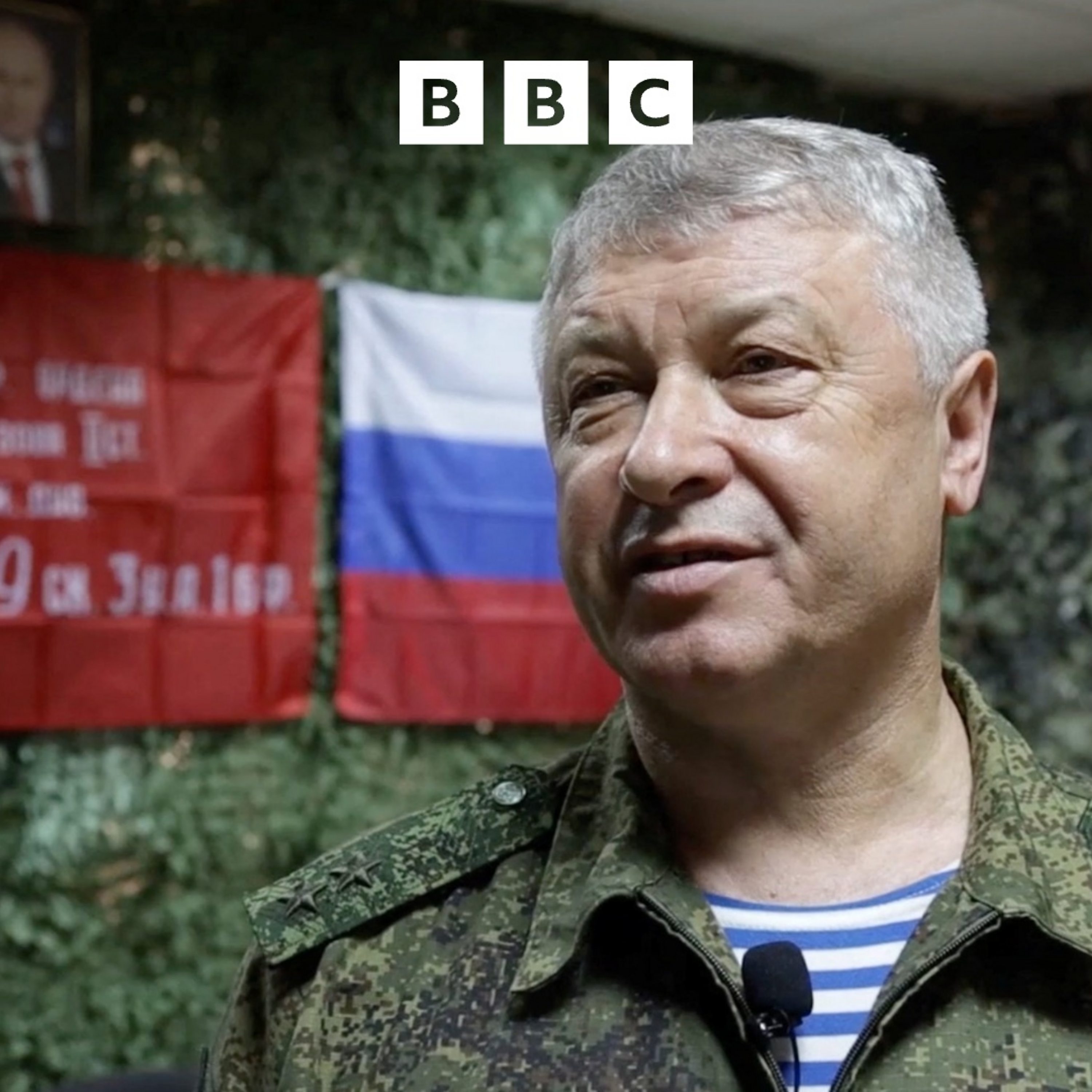
Let's begin in Moscow, where a top Russian general, Vladimir Alekseyev, has been rushed to hospital after being shot several times. There have been a string of attacks on Russian military officials since Moscow's full scale invasion of Ukraine almost four years ago. This shooting took place in an apartment apartment building in this city's suburbs. Vladimir Alexei is the top military official to be targeted so far. He's a senior figure with Russia's military intelligence agency, the gru. Alexei has played a significant role during the war in Ukraine. Back in 2022, he took part in talks with Kiev during the Russian siege of Mariupol. A year later, he was dispatched to negotiate with the head of the Wagner mercenary group after its soldiers triggered an unsuccessful uprising. Russia's government. Christo Grozev is head of investigations at the news website the Insider and a specialist on the Russian military and intelligence services. My colleague Tim Frank spoke with him and asked him what we know about General Alekseyev.
- [03:15]
Christo Grozev
He's probably as far as high as anyone can go in the Russian military intelligence structure, and the loss of a general like him will be felt profoundly. He's what you might call the chief operating officer of the gru, the feared Russian military intelligence. And he survived several of his own commanders, and as such, he's seen by many as probably the most influential person in the organization, more importantly even than its commander, Igor Kostyakov. Over the last 10 years that I've been following his career, he has been involved with absolutely every significant operation that we know of, starting from trying to extricate and destroy the evidence of the shooting down of MH17 in 2014. He personally never felt the need to not get his hands dirty in operations. He smoked, juggled the book, the weapon that shot down MH17, the airliner back in 2014. He accompanied the team that shot it down and tried to hide the evidence. He was also involved with the actual operation of the annexation of Crimea. Later, he was sanctioned over his personal involvement in supervising the poisoning of Sergei Skripal and his daughter and the murder of Don Sturges that was the result of that operation. More recently, he was directly involved in probably the most trusted architect of the invasion of Ukraine. Before the invasion started, he was tasked with organizing several quasi private military companies of the like of the period, Wagner, so that they have the capacity to invade Ukraine. So literally, he's been across the board on all of his operations.
- [04:49]
Celia Hatton
You mentioned that he may even be more influential than the man who's normally his boss, General Igor Kostyakov, who's of course leading the Russian delegation at these negotiations with Ukraine. Ukraine hasn't said anything about this attempted assassination, but what influence do you think that might have on those talks?
- [05:07]
Christo Grozev
Well, first of all, he was probably the top target of Ukrainian intelligence services for years, not only because he was so significant in the invasion, but also partly because he himself is Ukrainian born and he's considered somewhat of a traitor in Ukraine proper. He did create a lot of powerful enemies within Russia as well, partly with his own criticism of the course of the military operation back in 2023. You may remember he was the person tasked with negotiation of the surrender of Ye Prigozhin during his ill fated attempt to take on the Kremlin in June 23. But he was seen cracking jokes and laughing in the sidelines with Prigozhin on the day of the attack on the Kremlin itself. So he was always seen as somebody who is not completely to be trusted. Now, since that failure of him to align himself with the Kremlin completely during the attempted coup, he was sent to the front line and for the last year and a half he almost never returned to Moscow. He did return a couple of weeks ago and that's the result, the attack on him. I do believe it's most likely Ukrainian operation, but I don't exclude completely the possibility that it may be also a domestic operation.
- [06:13]
Jonathan Head
Kristo Grozev, head of investigations at the news website the Insider and a specialist on the Russian military and intelligence services. Well, Russia and Ukraine carried out a rare exchange of prisoners of war and civilians on Thursday after two days of peace talks in Abu Dhabi. In total, more than 300 individuals were exchanged. It was joyous news for the relatives of those allowed to go home, particularly for one Ukrainian family. Here's the moment. One soldier's mother, who thought he had died, heard from her son on the phone. Some emotional moments. In Ukrainian the mother says, Nazochik my dear son, I've been waiting for you for so long. My golden child. It's so great. I love you so much. Our Europe correspondent, Sarah Rainsford has been following the story.
- [07:09]
Sarah Rainsford
This is an extraordinary story and a very, very rare moment of, of happiness and joy, I guess, in four years of all out war here. And it's the story of Nazar, who went to fight in 2022, but went missing in action. And his family at first thought that he'd been captured and taken to Russia. In fact, they even got a phone call from someone in Russian saying that they had the man and that he would be okay. But then in 2023, the family having given DNA for testing of any soldiers remains that would be found, they got a call and they were told that there was a body that had been identified in a morgue using DNA as the body of Nazar. So Nazar's family buried Nazar in 2023. And it was only in 2024 that they got word, in fact, that he was in prison in Russia and he was actually alive. So after two years, after burying this man in the local village cemetery next to his father in the family plot, actually a released soldier let them know that they believed that they'd met Nazar in prison that he was alive, he was okay, but there was absolutely no contact with him. Russian prisons and the authorities in Russia do not give the Ukrainian families chance to talk to the prisoners of war. So basically, it was only when this exchange happened that the family actually got to speak to Nazar for the first time, got confirmation he was alive. And of course, that. That ultimate good news, the fact that he had come home to Ukraine, they still haven't been reunited in person. It was just a phone call so far. There's a lot of rehab to go through for him after four years in a Russian jail and of course, coming to terms with the information that is. Family not only thought he was dead, but buried what they thought was his body.
- [08:52]
Jonathan Head
Well, I gotta say, even the sound of that phone call gave me goosebumps. I mean, we heard the reaction from the family. What's been the wider reaction in Ukraine?
- [09:00]
Sarah Rainsford
I mean, to be honest, I think they'd be sharing, sharing that joy. And it's a video that's, you know, obviously zipped around the Internet. Everybody's watching it, everybody's commenting on it. It is so rare that there are happy moments in this war. And this is one that's just so extraordinary. There are so many families here whose sons, wives, husbands, people who were fighting in the war have gone missing in action. And people are many families. I've met them over my time here. Many people are hoping that those people are prisoners of war, but they don't know, in fact, whether they've been killed. So there's this massive doubt for so many families who wait for that, that moment that tells them one way or the other. So for this family, it's. It's amazingly good news. But of course, there's a body that was buried in the village cemetery, and that is a soldier whose own family have no idea where they are. And that soldier still has to be identified properly. So, you know, joy for one family, but there's going to be, obviously, grief for another one to come.
- [09:56]
Jonathan Head
Sarah Rainsford in Kiev to New Zealand now. The country's deputy prime minister has been booed after saying that colonization had a positive effect on the country's indigenous people, the Maoris. David Seymour has said he's unfazed by the reaction to his comments which he made in a speech on Thursday marking Waitangi Day. It commemorates the first treaty with the Maori population. Then, a day later, during a dawn prayer service, David Seymour was relentlessly heckled. Bernadette Kehoe tells us more.
- [10:37]
Professor Christina Reith
Indians gather at events in New Zealand to celebrate the country's National Day. It marks the first signing of New Zealand's Treaty of Waitangi between the British Crown and Maori chiefs in 1840, and is an annual gathering that also gives indigenous tribes a chance to air grievances. The current backdrop is increased tensions as the government pursues policies considered by some to be anti Maori. New Zealand's Deputy Prime Minister, David Seymour, who has Maori ancestry, has been accused of trying to take back rights from the indigenous community. This is what he said in his speech.
- [11:14]
Celia Hatton
I'm always amazed by the myopic drone that colonisation and everything that's happened in our country is all bad. The truth is that very few things are completely good or completely bad.
- [11:28]
Professor Christina Reith
His comments provoked an immediate reaction the next day during a dawn prayer service. When he started to address the crowd, dozens of people started booing and shouting for him to stop. With one blowing into a conch shell.
- [11:42]
Celia Hatton
There will be so many joys up and down this country and maybe, just maybe, with respect for each person and their right to speak their mind and make the most of their time on earth, we will all get along just fine. Those silent majority up and down this country who are getting a little tired of some of these antics, thank you very much and God bless.
- [12:09]
Professor Christina Reith
A church leader implored the crowd to stop. Mr. Seymour dismissed the protest, saying the hecklers were Muppets shouting in the dark. But the incident is a reminder that a day to commemorate a shared history can also bring divisions and grievances out into the open.
- [12:26]
Jonathan Head
Bernadette Keough. Researchers at Oxford University say cholesterol lowering drugs called statins, used by millions around the world, may be far safer than previously thought. The results in the Lancet journal come from trials involving more than 120,000 people. They suggest statins do not cause the majority of the possible side effects listed on pacs, including weight gain and impotence. The lead author of the study is Professor Christina Reith. She's been speaking to Justin Webb.
- [12:59]
Professor Christina Reith
What we found was that the vast majority of medical issues are listed as potential side effects in statin packaging do not actually have a causal link with statins. So this includes seeing no increase in problems like memory loss, depression, sleep disturbance, erectile dysfunction, nausea, headache and many, many more. And this is really reassuring because this really gives us confidence to see that the benefits of statins and significantly reducing heart attacks and strokes, which are serious, potentially devastating conditions, that these benefits substantially outweigh any risks.
- [13:35]
Sarah Rainsford
I mean, the risk, I suppose, is that someone reads that stuff and I remember I've been on statins for a decade more, actually. And I can remember originally thinking that I did have some of the side effects. And then actually, as time went by, thinking, you know what? I don't think I do, really. Aching legs were one of the things I was told about when I was first put on them. In other words, the risk is that people read this stuff in the package and then believe that they've got these things or that these things that they have got are linked to the statins and they're not.
- [14:04]
Professor Christina Reith
Indeed. I mean, you have to weigh up the risk of not taking them versus these very small risks we identified. And I agree with you. When patients look at leaflets, it can be quite alarming. It's a wonder in many ways, people do take things. Of course, people may develop some symptoms while they're in statins because these things go on all the time. But what we've been able to do robustly with our data set is really work out how much more common, if at all, more common these things are.
- [14:29]
Sarah Rainsford
So we need to change the leaflets, don't we?
- [14:31]
Professor Christina Reith
Well, I think they should open up a discussion with regulators and indeed, other sources of health information. Lots of people have been reluctant to start taking statins or stop taking them because they've been concerned or confused. And we really hope our research adds clarity to that. I don't see my job as to tell people to take statins or not. I see it as to help produce the most reliable evidence. And I really hope our study, which is the most robust to date, has will, you know, enable people to do that and make those choices. Because statins really do reduce heart attacks, and stroke can be devastating if you have them, if they don't kill you outright.
- [15:04]
Jonathan Head
Professor Christina Reith. Still to come in this podcast.
- [15:10]
Rubal Nagi
When I painted my first mural on the wall, I had around 15, 18 students standing behind me. When I did the second one, they were like double. And when I did the third one, there were 200 children.
- [15:19]
Jonathan Head
We meet a teacher in India who's been awarded a $1 million.
- [15:27]
Celia Hatton
Foreign.
- [15:31]
Jonathan Head
This is the global news podcast. Now the latest on a potentially crucial set of talks, negotiations between the United States and Iran, which could avert or maybe just delay armed conflict between the two. The two sides met in Oman, with the US Special envoy Steve Witkoff and Iran's foreign Minister, Abbas Arakchee taking part. The indirect talks have now ended. Iran's foreign minister said the discussions were a very good start, but that negotiators must now speak with their leaders. Mr. Rauchi added that both Tehran and Washington officials have agreed to proceed with negotiations. A lot is at stake and these meetings come amid a continued American naval buildup near Iran. Donald Trump has repeatedly threatened to bomb Iran if it does not reach a deal over its nuclear program. And he's also vowed to attack if Tehran continues its crackdown on anti government protesters. Thousands have already been killed. Our reporter Nafiseh Khanovar from BBC World Service is in Oman's capital, Muscat, where the talks took place. She joined us from there.
- [16:39]
Tara Davis Woodhull
For now, the negotiation has finished and both sides has said they are willing for more rounds of talks. What really has been discussed, we are not clear about that. Everything that has come out based on unknown sources probably mainly have been speculation and part of both sides attempt to kind of control the narrative. But we don't know that what exactly has been discussed.
- [17:10]
Sarah Rainsford
Nafisa, I know you've been around the many capitals in the Middle east in recent weeks.
- [17:17]
Celia Hatton
Was there any sort of representation for the Arab states?
- [17:20]
Sarah Rainsford
We know that the Americans are in close contact with the Israelis, but what.
- [17:24]
Celia Hatton
About the interests of the Arab states.
- [17:25]
Sarah Rainsford
And who is representing that?
- [17:27]
Tara Davis Woodhull
It was expected, for example, here it was expected that maybe Qatar's prime minister will join this meeting. He was so vocal, saying that this round of negotiation should consider all regional countries first, their role and also their concerns. So Turkey also was trying to set up a meeting before Muscat and inviting all these regional countries. But from Baghdad to Beirut to here in Muscat, regional countries are worried, are worried about escalation because of their own benefits and because they are worried that such escalation between the US And Iran this time might be different and might affect entire region. And Mr. Khamenei, Iran's supreme leader, recently has threatened that this time, and it was for the first time that he used this sentence saying that this time if Iran was attacked, the war would be a regional war. And somehow this was a message to not only the regional country but also for pro Iran armed groups that it was the first time that Iran's supreme leader sent such a message. All these things has made regional countries so worried that they want for now de escalation. It doesn't mean that if the time comes and if, for example, Mr. Trump decides to go for war, these countries wouldn't really work with the US because they are hosting the US Troops, they are hosting the US Military and they have close relationship with the US Nafisa.
- [19:24]
Jonathan Head
Conavard, who was speaking to Christian Fraser for more on this story, you can go on YouTube, search for BBC News, click on the logo, then choose Podcasts and Global News Podcast. There's a new story available every weekday. To Pakistan now, where at least 31 people have been killed and dozens wounded in an explosion at a Shia mosque in the country's capital, Islamabad. The motives behind the attack are not clear, but violence towards the country's Shia minority has increased in recent years. Our Pakistan correspondent, Caroline Davies gave us this report.
- [20:01]
Sarah Rainsford
This explosion happened around lunchtime during Friday prayers, which means that the mosque would.
- [20:06]
Tara Davis Woodhull
Have been packed full of worshippers.
- [20:08]
Sarah Rainsford
We've been able to speak over the phone to one eyewitness, a caretaker from for the mosque. He was outside the building at the time. He told us that he heard gunfire, then ran towards the mosque and by.
- [20:18]
Professor Christina Reith
The time he reached it, the explosion had already happened.
- [20:22]
Sarah Rainsford
The head of the PIMS hospital has told us that the explosion was huge.
- [20:25]
Professor Christina Reith
And that they have continued to see.
- [20:27]
Sarah Rainsford
More injured come in throughout the course of the afternoon. We understand that there are several people that are in critical conditions and you.
- [20:34]
Professor Christina Reith
Can see the true extent of this.
- [20:35]
Sarah Rainsford
Explosion by seeing how quickly the number.
- [20:38]
Professor Christina Reith
Number killed and injured has risen throughout.
- [20:41]
Sarah Rainsford
The course of the last few hours. We've also heard from Pakistan's Prime Minister, Shabazz Sharif, who has talked about an investigation into finding out who is responsible for this.
- [20:51]
Jonathan Head
Caroline Davies in Pakistan To Thailand now. And opinion polls leading the Thai general election happening this Sunday point to the same thing. The People's Party, which is popular with young people pushing for change, will once again come out on top, possibly with even more seats than in 20. They embody the hopes of millions of ties who want profound reform within the system. And yet Thailand's conservative establishment has shown time and again that it will not tolerate a progressive, reformist government. The People's Party has been dissolved twice before by the notoriously conservative Constitutional Court. And the party's most charismatic candidates have been banned from politics for 10 years. If the People's Party wins, everyone expects the same to happen again. Jonathan Head has more.
- [21:49]
Celia Hatton
In the northeastern city of Nakonrachitsima, an excited crowd cheers a row of candidates from the People's Party. Center stage is a slightly gawky young man being mobbed by the crowd. This is Natapong Run Panyawa, who at just 38 years old is the most popular candidate to be the next Prime Minister of Thailand. We're leaving the old politics behind, he says. We need a politics of hope. If the polls are to be believed, the People's Party, with its promises of sweeping Reform will win the most seats in this election. But we have been here before.
- [22:34]
Christo Grozev
People have been through enough of last decades.
- [22:38]
Celia Hatton
Today is a new day. That was Peter Limja Renrat, leader of what was then called the Move Forward Party, speaking after their shock election victory three years ago. Despite winning more seats than any other party, Move Forward was blocked from forming a government and eventually dissolved, its leaders banned from politics because they had dared to suggest amending the draconian Royal Defamation Law, under which hundreds of young activists had been jailed. So today, the party's candidates, like Mackie, focus on more bread and butter issues. These are nearly all economic. ARM is 28 and about to lose his job. The printer factory where he works is closing down, a pattern repeated across Thailand these days as manufacturing moves to lower cost locations like Vietnam. I only have basic education, he told us. His prospects of finding another job are bleak. The status quo is very powerful in Thailand and resistant to change. This is Prime Minister Anutin Chow Wirakun at a rally of his Thai Pride Party. He's the current standard bearer for conservative ties and hopes to beat the People's Party with a mix of patriotism and populist giveaways. I will defend Thai soil with my life, he thunders. He's making much of his tough stand against neighboring Cambodia in the recent border clashes and his support for the Thai army, an institution which has often overthrown democracy here. But there are many other ways to block reformist parties from taking power, in particular the Constitutional Court, which has dismissed five sitting prime ministers, dissolved dozens of parties and banned hundreds of politicians, nearly all of them opponents of the status quo. Sripan Ngwan Sawatdi is a political scientist from Chulalongkorn University.
- [24:38]
Sarah Rainsford
We have continued elections sometimes interrupted by the coup d'.
- [24:42]
Celia Hatton
Etat, and that is what everyone expects will happen if the People's Party wins again. I asked the movement's founder, Tanatonjen Rungruangkit, how he felt about that.
- [24:54]
Sarah Rainsford
They think by dissolving our parties, by.
- [24:58]
Rubal Nagi
Banning our leaders from politics, would make us smaller. In fact, we are getting bigger.
- [25:05]
Celia Hatton
But if the past is any guide, what ties won't see is a government committed to the kinds of changes its aging society and stagnating economy need. Or if by chance, that does happen, few think it would last very long.
- [25:21]
Jonathan Head
Jonathan Head we end with the work of Rubal Nagi, an Indian artist and teacher who transforms neglected and broken walls into large scale interactive murals. She set up more than 800 learning centres across India in places where children have never attended school. Her work is so inspiring that she's just been awarded a one million dollar global teacher prize. Rubel Nagy has been telling James Koppnell more about what she does.
- [25:52]
Rubal Nagi
You know, when I started, almost two decades ago, when I painted my first mural on the wall, I had around 15, 18 students standing behind me. When I did the second one, they were like double. And when I did the third one, there were 200 children just standing and watching at the wall. What is she doing? And then they could relate to it. It's out of curiosity that they were standing behind me, just looking at me, that what is teacher doing? Art has been that beautiful medium. You know, art is so versatile. Creativity is so great that it breaks that barriers and helps you connect to children and to people also very easily. We always say, let's play, make learning fun. Because when you're learning something and having fun, that it does is something you're never going to forget.
- [26:35]
Celia Hatton
And if we talk about murals, what you call these living walls of learning, what would I see if I saw one of them? What kind of things are painted on them?
- [26:45]
Rubal Nagi
We pick different topics. Sometimes we talk about landscapes, we talk about climate change, then we talk about save the girl child, then we address save water. So all our walls are very creative. So every time, you know, a child looks at a piece of art on the wall, there is something to think and ask the teacher that, what is this? It's not just an ordinary forest. Which forest is that? It's not just an ordinary building. Which building is that? Is that the Taj Mahal? Or is it the Queen Victoria's museum? Or is it another iconic place in the country? And even the places which are across the globe? So that is where it becomes interactive, it becomes a living textbook for them.
- [27:23]
Celia Hatton
And there must have been so many examples of helping children over the years. Is there one in particular that stays with you? A life transformed, I must tell you.
- [27:32]
Rubal Nagi
One child drew an entire paper, black with a small little hole. And I asked him, what was this? And he said, this was the home I lived for many years. And there was no light. It was a dark room. Only light I could see was this hole in my wall. And, you know, I would wait for my mother to come back and he cried. And he said, today, I have drawn this in your art workshop. I feel very happy. Ma', am, can you take me back to school? I want to study and I want to look after my mother because I don't have a father. So I have many stories like that. But because we are talking about art education here. So art is that one medium that makes you express freely and I have seen children how they have transformed with creativity and fun learning.
- [28:16]
Celia Hatton
Well, congratulations again on the prize. Do you know yet how you're going to spend the prize money?
- [28:20]
Rubal Nagi
Thank you so much. Yes, of course. We are looking at skill and computer centers coming up in Kashmir very soon. That's something I always wanted to do on a larger scale. So I guess the dream will come true now and we'll have many more children and many more women learning and getting educated there.
- [28:38]
Jonathan Head
Some good news from Indian teacher Rubal Nagi and that's all from us for now. If you want to get in touch, you can email us@globalpodcastbc co.uk you can also find us on X@ BBC World Service. Use the hashtag globalnewspod. And don't forget our sister podcast, the Global Story, which goes in depth and beyond the headlines on one big story. Available wherever you get your podcasts. This edition of the Global News Podcast was mixed by Davy Evans. The editor is Karen Martin. I'm Celia Hatton. Until next time. Goodbye.
- [29:26]
Celia Hatton
If you're the purchasing manager at a manufacturing plant, you know having a trusted.
- [29:30]
Jonathan Head
Partner makes all the difference.
- [29:32]
Christo Grozev
That's why hands down, you count on.
- [29:34]
Jonathan Head
Grainger for auto reordering.
- [29:36]
Celia Hatton
With on time restocks, your team will have the cut resistant gloves they need at the start of their shift and.
- [29:42]
Jonathan Head
You can end your day knowing they've.
- [29:44]
Sarah Rainsford
Got safety well in hand.
- [29:46]
Celia Hatton
Call 1-800-GRAINGER click granger.com or just stop by Grainger for the ones who get it done.