← Global News Podcast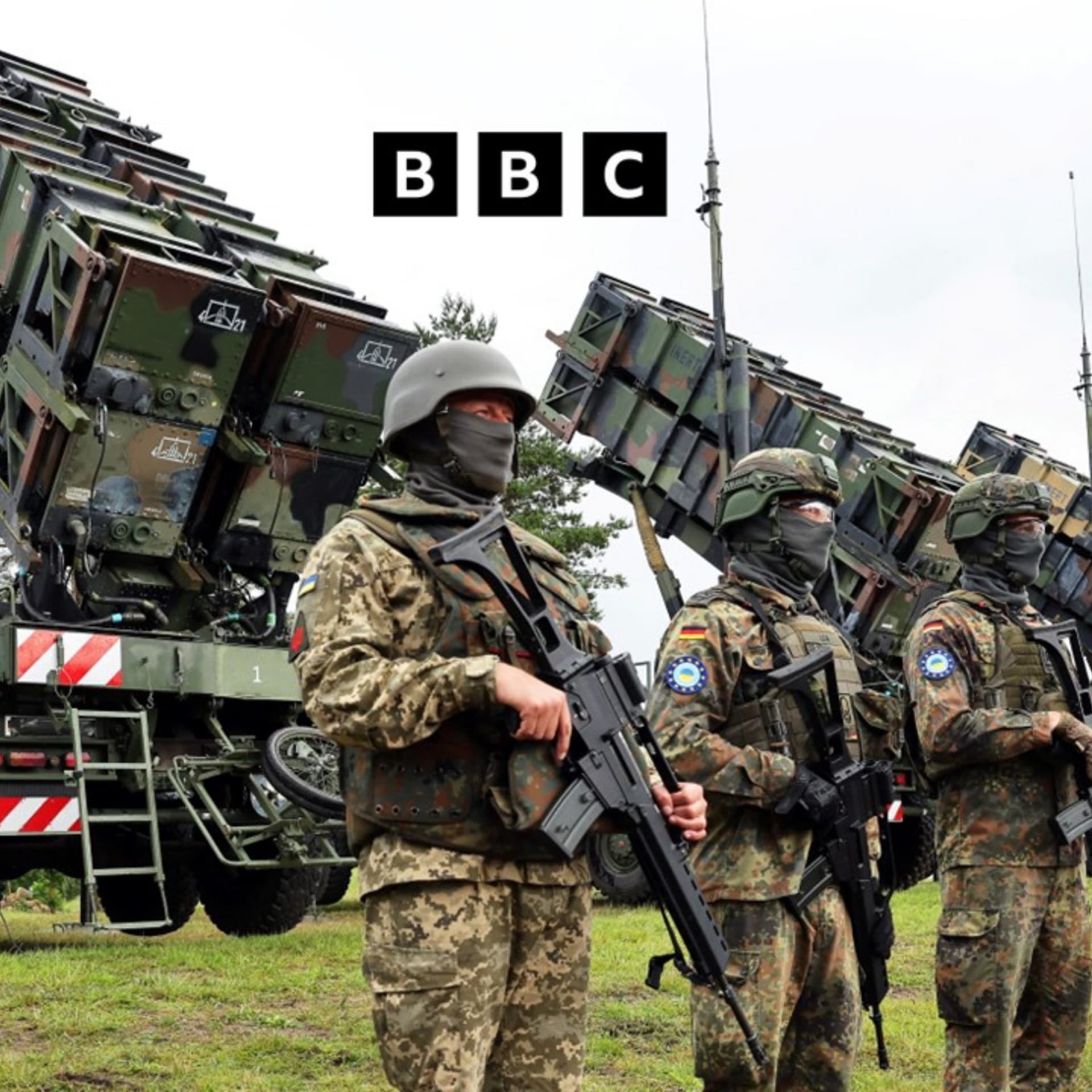
Global News Podcast
Trump blocks Ukraine weapons deliveries
00:34:24
Ukraine says suspension in US military aid could "encourage" Russia
Loading summary
Transcript109 lines
- [00:00]
Alex Ritson
This is the global news podcast from the BBC World Service. I'm Alex Ritson and at 13 hours GMT on Wednesday 2nd July, these are our main stories. A blow to Ukraine. The Foreign Ministry invites a US Diplomat for talks after a decision by the White House to suspend vital weapons shipments. President Trump says Israel has agreed on the conditions for a 60 day ceasefire in Gaza and tells Hamas to accept the deal. The elderly Tibetan spiritual leader, the Dalai Lama says he's in charge of the process of choosing his successor, but China doesn't agree. Also in this podcast, in these cases.
- [00:44]
Richard Hamilton
Kilowatts actually approached people and stopped directly in front of them and then dropped the food and waited for their responses.
- [00:54]
Alex Ritson
Would you take a snack from a killer whale? Let's start in Ukraine, where Kyiv has summoned a US Diplomat over a decision to suspend weapons shipments. On Tuesday, the White House confirmed that some US Deliveries had been put on pause over concerns that US Stockpiles are too low. The US hasn't said which weapons would be affected or the scale of the rollback, but it's believed to include Patriot air defense missiles and artillery shells. Ukraine been urgently requesting more Patriots to protect its cities from Russian attack. Russia has welcomed the news, saying it would bring the war closer to an end. Kyiv has warned any delays will only embolden Moscow. Here's the reaction from one Ukrainian mp, Fedier Venice.
- [01:48]
Fedier Venice
This decision is certainly very unpleasant for us.
- [01:50]
Alex Ritson
It's painful and against the background of.
- [01:52]
Fedier Venice
The terrorist attacks which Russia commits against Ukraine, against peaceful towns, cities, villages, citizens of Ukraine that die almost every day from such terrorist attacks, it's a very unpleasant situation.
- [02:04]
Alex Ritson
I asked our diplomatic correspondent Paul Adams, who's in Kyiv, how serious this was for Ukraine.
- [02:11]
Paul Adams
The need for increased air defenses has been an absolutely constant refrain from Ukrainian officials throughout this war. And if you look at the sheer number of aerial attacks mounted by Russia in recent months with increasing use of drones, I mean, sometimes hundreds and hundreds of drones in a single night, along with ballistic and cruise missiles, those numbers have been increasing dramatically with these large scale attacks on Ukrainian cities. And so the need for air defenses is as acute as it has ever been. When Donald Trump met President Zelensky at the NATO summit a week ago, the two discussed this. And indeed afterwards, Donald Trump said that he was going to try and see if the US could make more Patriot interceptor missiles available. It's not clear whether that is going to happen because even though the details of this pause by the Pentagon have not really been fleshed out, it is thought that Patriot missiles will be among those weapons systems affected. So that is going to be a source of major concern because defending Ukraine's skies is a constant preoccupation.
- [03:28]
Alex Ritson
Presumably this is going to be music to the ears of President Putin.
- [03:31]
Paul Adams
Well, if it lasts, then it will be an indication that Ukraine's skies are a bit more open than perhaps they have been recently. I mean, the Ukrainians are very good at combating the various threats. The F16 has proved itself very capable of shooting down ballistic and cruise missiles. And when you look at the daily tally of, of projectiles fired at Ukraine, a significant proportion of those are brought down by elements of Ukraine's air defences. So anything that reduces the effectiveness of that and this could have an effect fairly quickly. So obviously anything that has an impact on that reduces Ukraine's ability to defend itself, we will be extremely welcome in Moscow.
- [04:21]
Alex Ritson
And what is the latest on the fighting, Paul?
- [04:23]
Paul Adams
Well, in the east, it remains, you know, a very, very slow, grinding process. I mean, Russia's forces do continue to make progress, but it is glacial progress and it is progress that is still being made at enormous cost in terms of Russian manpower and military equipment lost. So that kind of, that situation hasn't really changed a whole lot. The air war, if you like, is perhaps the most, one of the most important elements of this because not only are the Russians attacking Ukraine night after night, but Ukraine is also mounting its own extremely effective aerial attacks deep into Russia. And indeed, there was almost hardly a day goes past without news of some long range Ukrainian drone attack targeting, you know, Russian weapons factories, oil depots, sometimes hundreds, even thousands of kilometers from Ukraine's borders.
- [05:23]
Alex Ritson
And we'll have more on the war in Ukraine later in this podcast. The Israeli Foreign Minister, Gideon Saar has said no effort should be spared to free the last remaining hostages held by Hamas in Gaza captured during its assault on Southern Israel in October 2023. Speaking in Lithuania, he insisted that Israel was serious about a potential ceasefire to free the captives.
- [05:48]
Paul Adams
Israel did not seek this war. Hamas started it and is responsible also for its continuation in Gaza. We are serious in our will to reach a hostage deal and a ceasefire. This war can end any day if Hamas releases our hostages and lays down its arms.
- [06:06]
Alex Ritson
President Trump has said Israel had agreed in his words to the necessary conditions for a 60 day ceasefire in Gaza and called on Hamas to reciprocate on the ground, though the Israelis appear to be ratcheting up the pressure, carrying out fresh airstrikes across the territory and ordering thousands of civilians to relocate ahead of possible fresh military action. Rachel Cummings of Save the Children International is in Deir El Bala in central Gaza.
- [06:34]
Rachel Cummings
The situation here is desperate.
- [06:37]
Alex Ritson
There will always be hope in Gaza.
- [06:39]
Wirra Davis
For a pause in hostilities, a ceasefire.
- [06:42]
Rachel Cummings
But people are desperately in survival mode. They're trying to find food, water, during.
- [06:47]
Alex Ritson
A very live and kinetic conflict with constant bombardments and these evacuation notices coming. I've been speaking to our correspondent in Jerusalem, Wirra Davis, who says there's still huge uncertainty about any possible ceasefire, let alone any longer term plan for peace.
- [07:05]
Wirra Davis
We just don't know what is going to happen and how Gaza would be run after the war ends. Most European, most international countries would accept that the Palestinian Authority must be involved somehow. But the key thing first, of course, is there has to be a peace agreement. The fighting has to end. We don't know the details of what Mr. Trump has agreed with Israeli negotiators. But this 60 day ceasefire, as attractive as it may sound, it isn't, of course, a formal end to the war. And that is the one thing that the Palestinian negotiators, that's the one thing that Hamas will want if they're going to sign the ceasefire agreement. That's always been one of their main sticking points, the reasons that they haven't been to agree with the Israelis on a long term truce in the past. So I think there's a lot to discuss in the short term before we get to the long term future of Gaza.
- [07:54]
Alex Ritson
Yeah. And Donald Trump has used his social media megaphone to warn Hamas that things will only get worse if they reject this peace deal. But even that remains highly problematic.
- [08:06]
Wirra Davis
Yeah, look, Donald Trump has made it clear even to the Israelis that he's tired of this war, 21 months of war. It's not what he campaigned on to get into office. Not going to help him secure his Nobel Peace Prize. So, you know, I think he's been twisting everybody's arm behind their backs, particularly Benjamin Netanyahu. But let's not fool ourselves. No. The Americans have been very much on the side of the Israelis throughout this conflict, ever since October 7th. And Israel's right to respond to that, of course, America providing most of Israel's arms that have been raining down on Gaza over the last period. But Donald Trump clearly wants an end to the war. He will have spoken now to Israeli negotiators, negotiators who've been in Washington this week. Those details now will be passed on to the Hamas negotiators, probably via Qatar. And it's the response of Hamas to that where everybody's waiting for and of course, the details and we simply don't know the details yet.
- [09:01]
Alex Ritson
Wirra Davis in Jerusalem, the exiled spiritual head of Tibetan Buddhists, the Dalai Lama, has confirmed that he will have a successor after his death, chosen by the foundation he set up and ending years of uncertainty and over what would happen next. The decision puts him at odds with China's government, which says it alone would choose the successor. China, which annexed Tibet in the 1950s, regards him as a separatist. Lobsang Sangay, the former president of the Tibetan government in exile, knows the Dalai Lama well. He says the Chinese government has no right to do so.
- [09:39]
Paul Adams
They have no legitimacy and credibility in.
- [09:42]
Alex Ritson
Selecting the next Dalai Lama because Communist Party of China is an atheist organization. They have criticized Dalai Lama for his.
- [09:52]
Paul Adams
Entire life and they have destroyed 99%.
- [09:54]
Alex Ritson
Of monasteries and nunneries.
- [09:56]
Paul Adams
99.9% monks and nuns were disrobed.
- [09:59]
Alex Ritson
75% of ancient artifacts of Tibet were completely destroyed under communist rule.
- [10:05]
Wirra Davis
So they have no legitimacy and credibility.
- [10:07]
Alex Ritson
In choosing the next dilemma. I got more details about the long awaited announcement from our South Asia correspondent, Samira Hussein, who's in Dharamsala, where the Dalai Lama lives in exile.
- [10:21]
Samira Hussein
Well, it was certainly very much anticipated. You know, we had heard from the Dalai Lama more than a decade ago that when he turns 90 years old, he would provide a succession plan. Now, there has been a lot of speculation in terms of what that plan would look like, whether he would buck tradition and perhaps do away with the entire institution of Dalai Lamas, or if he would select someone who is older rather than going with tradition and selecting someone that is usually three to four years old and is then groomed into the position. But he made it clear that he is going to keep with the tradition that has been ongoing for centuries and that the Dalai Lama, and it is the council of Dalai Lamas that will be selecting this next leader. Now what's really interesting though is in this statement that was prerecorded, the Dalai Lama made it very clear that it is only the Dalai Lama's federation or foundation rather, that can make the choice for a new spiritual leader. Really trying, really rejecting any claims that China may have. And that was then followed up by his counsel who then said that they actually strongly condemn any idea or any notion that the People's Republic of China could unilaterally appoint any, any future Dalai Lama for its own political gain.
- [11:47]
Alex Ritson
China's going to be furious, isn't it?
- [11:50]
Samira Hussein
And it has already come out swinging. China has already said that it strongly rejects the, the Claims that are made by the Dalai Lama. And his counsel may have said that if there is a new Dalai Lama, it has to be someone that is selected within China and it has to have the approval of the Chinese government.
- [12:08]
Alex Ritson
And there is speculation that the successor will come from somewhere else entirely.
- [12:14]
Samira Hussein
It is one of the things that the Dalai Lama has said in the past is that, you know, the next Dalai Lama will be born free. Well, Tibet is still under China's control, so the possibility is that in fact it will be born outside of Tibet.
- [12:29]
Alex Ritson
Samira Hussain in Dharamsala in northern India. Tackling gangs of people smugglers who help migrants cross from France to the UK in small boats has long been a political sticking point, with the current British government promising to, as it puts it, smash the gangs. However, its own figures Show A record 20,000 people successfully made the journey in the first six months of this year. A year on year rise of nearly 50%. Our correspondent James Waterhouse has been investigating and found the people smugglers are thriving.
- [13:08]
James Waterhouse
The inhabitants of this makeshift camp north of Calais are used to urgency. This morning it's to receive a hot lunch of bread and pasta from local volunteers. These people from Eritrea, Iraq, Kuwait, Iran are part of a larger game of cat and mouse between local police you see them and the gangs who've promised to get them to the UK for thousands of pounds. It's not so easy to pick out the people smugglers, but there's an air of organization here. The camp will likely be demolished by the authorities, but relocating is a part of life here. Next to the main canal in central Calais is this camp. It's surrounded by a rocky terrain and litter. It's partially emptied because of a successful crossing last night. Mohammed here was on that boat but had to jump off to rescue his children who were struggling in the water.
- [14:09]
Alex Ritson
Syria is totally destroyed. Our country is destroyed. There is no life, no houses, no water, no electricity, nothing. It's not possible to have a future there. Syria is dead.
- [14:21]
James Waterhouse
Immigration laws are tightening across Europe. The UK is no different, but is still seen as the last chance of a better life. It's why, with no outward fear, migrants fill local buses to locations close to the beach. They then get instructions of where to hide and wait for their boat.
- [14:41]
Richard Hamilton
My name is Amit, I came from.
- [14:43]
James Waterhouse
How many times have you tried to.
- [14:44]
Richard Hamilton
Cross to the UK until now? This is seven times.
- [14:47]
James Waterhouse
Why has it failed for seven occasions?
- [14:51]
Richard Hamilton
Sometimes from the police, sometimes for take too much people. So some, some of them succeed, some of them come back.
- [14:59]
James Waterhouse
So you're Going now to hopefully get a boat.
- [15:01]
Alex Ritson
Yeah.
- [15:01]
Rachel Cummings
Thank you very much, guys.
- [15:02]
Alex Ritson
Have a good day.
- [15:03]
James Waterhouse
Thank you. He's just moving away where a load of men are cramming into a chartered bus. It says Bulon Sur Mer, which is on the coast. So let's see where they're going to go. As we tried to catch up, we realize a local patrol car had the same idea. And it goes down very badly with Ahmed, who makes it clear he doesn't want to speak with us anymore. So the guys have asked us to stop following them. They thought we had tipped off the police. We had not. But you notice a definite mood shift. And when you trawl this part of the northern French shoreline, you realize that it's not just about those who successfully cross into the uk, but the vast majority who repeatedly try and fail. And clearly there is a motivation, a drive to reach the opportunities as they see it across the English Channel and to escape the horrors left behind at the home. With the arrival of this clear dawn and high tide at around 4am is an opportunity for the migrants to make the final stage of their journey across the Channel to the uk. We've seen police higher up by the sand dunes patrolling. It's where people tend to hide before dashing to meet a boat that might been collecting them out at sea. And it's once they are there that the police on this side tend to leave them be. We see two small boats inch out into the vast English Channel. This is just a part of the record number of asylum claims the UK is seeing. But the crossings have long been a symbol of what's seen as a struggle with illegal immigration. There is talk of tougher sentences for gangs, sending some migrants back to France and giving police here more powers. But the numbers of those making this final leg of a long journey will likely keep rising before any fall.
- [17:08]
Alex Ritson
James Waterhouse. The jury in the sex trafficking trial of the rap star Sean Diddy Combs has reached a verdict on most of the charges against him. But at the time of recording this podcast, they're still deadlocked on the most serious count of racketeering conspiracy. The judge in New York has asked them to resume their deliberations. Sean Combs has denied all the charges against him. Our reporter Madeleine Halpert was in court as the judge received the note from the jury and she spoke to the BBC's Nomia Iqbal.
- [17:42]
Madeleine Halpert
The mood in the court was really tense. We weren't sure what the note was. We never know before the judge actually reads it out loud. But soon we could tell something's up here because Combs was seated in his chair. He had a really stressed expression on his face and his lawyer started to huddle around him, like touching his shoulder. His children who weren't there this morning, were suddenly seated behind him. So we could tell something serious seems to be happening here, even if we weren't expecting a verdict necessarily.
- [18:05]
Alex Ritson
So we have a partial verdict on four of the charges, but we don't know what that verdict is yet. Right, right.
- [18:10]
Madeleine Halpert
We don't know what the verdict is. We know that they've reached an agreement on counts two, three, four and five. And count one, they seem to not be able to reach an agreement on because some people, people have unswayable opinions.
- [18:21]
Alex Ritson
And so they've been sent out to continue. Well, they've gone home for the night. Just to remind that charge, racketeering, conspiracy, that's a really complicated charge. Even when you look at the verdict sheet, there's so many different parts to it.
- [18:32]
Madeleine Halpert
It is the most complicated charge and also the most serious charge. He faces life in prison, potentially if he's convicted of it. So it makes sense that this is the charge that the jurors are taking the longest time to kind of go over. It's a huge, hugely complicated charge that, and it's difficult for the average person to understand.
- [18:47]
Alex Ritson
And I also want to mention Madeleine's been covering this case for seven weeks. We're in the eighth week now. It's the final phase. Can you just sum up what it's been like?
- [18:55]
Madeleine Halpert
It's definitely mayhem, I would say I've covered several court cases, but this is like nothing we've seen before. The characters inside and outside of the courtroom, lots of influencers, supporters of Diddy. We've just seen a massive amount of activity inside the courtroom like we've never seen before.
- [19:10]
Alex Ritson
Madeleine Halpert and Nomir Iqbal outside court in New York. Still to come in this podcast, corporations and big organisations are pulling funding, some of these being American organisations or international.
- [19:26]
Paul Adams
Organisations who have lost their DEI budgets.
- [19:28]
Alex Ritson
What is the future for Pride celebrations in a Donald Trump world? To Australia, where a four year inquiry in the state of Victoria has found that European settlers committed genocide against its indigenous peoples. Celia Hatton has the details.
- [19:55]
Samira Hussein
Eleven British ships arrived in Australia in 1788, marking the beginning of European colonization and the oppression of indigenous peoples who now make up just 4% of the population. Australia's first truth telling commission said mass killings, disease, sexual violence, child removal and forced assimilation had led to the near complete destruction of indigenous communities. In Victoria, the report said current economic gaps and barriers to first people's prosperity were direct legacies of colonialism and state sanctioned exclusion.
- [20:35]
Alex Ritson
Celia Hatton. Superstars of women's football are in Switzerland for the much anticipated Euro 2025 tournament. The opening game is between Finland and Iceland. England will be defending their 2022 title but Spain, the current world champions, are the favourites. The organizers are hoping that the global increase in popularity in the women's game will get more people watching. The BBC's Casey Smith says excitement is building.
- [21:05]
Fedier Venice
From what I gather from, from the journalists that have been out and about so far is that it's. Yeah, it's certainly going to be this festival atmosphere. It's going to be fun. They have fan zones, they want it to be incredibly inclusive. And I think there's a real hope that they've watched what happens in the Netherlands in 2017. They watch what happened to England and the boom of football popularity after the win three years ago. They want something similar and actually if you look at it, incredibly impressive. They've sold out 22 of the 31 matches so far. They've sol more tickets than went in Euro 2022. The prize money has gone up 156% since three years ago. Still, you know, a shadow of what the men's Euros was last year. 331 million for the men's last year, this time 41 million for the women's. But all moving in the right direction and there's certainly some real excitement. Switzerland, there is a real chance for them if they can bring something together, if they can use the, the host atmosphere and the party atmosphere of all their fans behind them potentially could get out of the groups for the first time and that really positive for the tournament. The way that the new Nations League has been structured over the last few years means that these teams actually play each other a lot more often and consistently than we saw in previous tournaments. So what it does give us is quite a good form guide as to how this might go. And if you look at 2025, I think you've got to be looking at Germany with, with a serious threat. The finalists last time had a shocker at the World Cup a couple of years ago but they got a change in manager. They are a free flowing type of team. Olympic bronze medalist from last summer in Paris. I think the Netherlands and France as well. That is why we're calling it the Group of Death.
- [22:44]
Alex Ritson
Katie Smith medics in Ukraine say shrapnel wounds now make up 80% of battlefield trauma, with many on the front line suffering near fatal injuries from fragments of bombs or other devices. But a new magnetic device made in Ukraine is changing the face of frontline medicine. Designed to extract fragments from wounds quickly and safely. It's now being distributed to hospitals and frontline medics across the country. As Anastasia Grebanova reports.
- [23:20]
Paul Adams
I can feel something here. I can feel a fragment.
- [23:27]
David Knott
Veteran war medic David Knott is holding a large pink artificial heart.
- [23:31]
Paul Adams
The heart looks to be completely normal.
- [23:35]
David Knott
Inside the heart. He has placed a metal fragment in this heart, which he's trying to remove.
- [23:40]
Paul Adams
And to try and open the heart, to try and find the fragment would be extremely difficult.
- [23:45]
David Knott
Fragment and shrapnel wounds are extremely difficult to treat. David is demonstrating a new tool.
- [23:52]
Paul Adams
If you run the magnet over the surface, suddenly you'll feel something pulling. I can feel it getting a bit stronger in this area here where it's found a fragment. And I can see what will happen. It will actually pull the fragment out of the. Just shows how it can find the fragment in the heart.
- [24:16]
David Knott
It was used on Ukrainian servicemen, said he. We meet him in Lviv, western Ukraine, and he shows me a small rusty piece of metal with dried blood still visible on it.
- [24:29]
Alex Ritson
This fragment grazed my kidney, pierced my lung and my heart. I didn't even realize what it was.
- [24:38]
David Knott
This sharp fragment nearly killed him. We traveled to Dnipro in southern Ukraine to speak to the doctors who operated on Serhii to find out more about how they used the device. Serhiy Maximenko shows us the video of the surgery.
- [24:58]
Paul Adams
I just make a small incision, insert.
- [25:01]
Alex Ritson
The extractor and it pulls the shrapnel out.
- [25:08]
Paul Adams
Magnetic extractors made life so much easier.
- [25:11]
Alex Ritson
As we don't need to cut the heart precisely.
- [25:15]
David Knott
This concept isn't new. Magnets were used for removing metal from wounds as far back as the Crimean war in the 1850s. But inventor Oleg Bykov and his team have modernized the technology.
- [25:34]
Alex Ritson
Our devices are unique because they enable medics to extract fragments from limbs and tissues, even in the trenches, not just in hospitals.
- [25:45]
David Knott
He shows us a pile of rusty shrapnel, some as big and as sharp as a shark tooth. All had been removed by the magnetic extractors, which, despite their popularity, have not been officially certified.
- [26:02]
Alex Ritson
We have around six different factories involved. This is all run by businesses, ordinary Ukrainians and volunteers. We receive no state support.
- [26:12]
David Knott
The Ukrainian Health Ministry told us that while the country is at war, certification can be overlooked. David Knott agrees.
- [26:22]
Paul Adams
Sometimes in war, it's not really necessary. You only do the things which is important to save lives. And you can forget the certification.
- [26:33]
Alex Ritson
Anastasia Gribanova with that report. Is the golden era of funding for Pride events from major corporations coming to an end? UK Pride events say they're facing a critical funding crisis with 75% seeing a decline in corporate sponsorships this year. The drop is being attributed to the trickle down impact of Donald Trump's slashing of diversity, equality and inclusion policies in the us. So what does this mean for the events which celebrate LGBTQ communities? Here's the BBC's Elizabeth Hodson.
- [27:11]
Rachel Cummings
The second Trump administration has brought with it a rollback of diversity, equity and inclusion policies as well as rest of rights for trans and gender non conforming people. The political and policy climate has led to some big names cutting funding for Pride initiatives and parades. And not just in the us. Tim Noblett is Director of Marketing at Pride in London, the UK's biggest pride event.
- [27:36]
Alex Ritson
So what we've seen here, both directly in Pride in London, but also at a wider UK level, is that corporations and big organisations are pulling funding, some of these being American organisations or international organisations who have lost their DEI bud. And I think there's also been an opportunity for some organisations to use this cultural shift to step away.
- [27:58]
Rachel Cummings
There's long been a concern that big names have used Pride sponsorship and the rainbow symbol in general as a quick way to sell products to the LGBTQ community. Kerry Nicholson, who identifies as non binary, is chief operating officer at marketing consultancy Brand Champions.
- [28:16]
Samira Hussein
You can't just put a rainbow on something and expect it to sell and expect the LGBTQ community to feel like you're supporting them.
- [28:25]
Fedier Venice
You almost need to go back to.
- [28:26]
Samira Hussein
Basics, look at what's going on internally. Do you have good employee resource groups.
- [28:31]
Fedier Venice
That support the LGBT community? Do you really need to start there.
- [28:35]
Samira Hussein
Before you start going out to the world?
- [28:37]
Rachel Cummings
If you're a big company sponsoring a Pride event, will your dollars actually translate into extra sales? Dr. Matt Johnson, a professor of marketing and psychology at Holt International Business School in Boston and isn't sure.
- [28:50]
Richard Hamilton
Certainly members of that specific consumer group may be more likely to buy from a brand that openly espouses those values. But consumers tend to be very, very habitual with their spending. They tend to be very price sensitive, especially in times of inflation. Yeah, of course, we like in the abstract sense a company that maybe espouses certain values, but we also love a deal.
- [29:12]
Rachel Cummings
Despite the wider challenges, there are companies that are still keen to get involved in Pride events. Hugo Remy is the boss of PridePay, a finance app launching later this year. It's the new lead sponsor of Pride in London. And Remy has a very pragmatic approach to corporate funding in general.
- [29:29]
Richard Hamilton
Even the best public initiative will fail without proper funding, you know, and everything in our life costs money right now. I'm bisexual myself. I feel free and secured in the gay. I can talk about this in my home country. I still can't. I always try to be honest with myself, first of all, and with other people. I know that when you have an opportunity to change something, you should use this opportunity.
- [29:49]
Rachel Cummings
So while some corporations have stepped back from contributing to events, others are relishing the opportunity and representation Pride presents.
- [29:58]
Alex Ritson
Elizabeth Hodgson. Killer whales, as the name suggests, have a fierce reputation as predators, and in recent years as being fond of trying to sink boats in the med. But a new study has found that orcas seem to have a softer side and offer to share their food with humans. Researchers from Canada, New Zealand and Mexico recorded more than 30 instances over two decades where the whales offered up prey like seabirds and jellyfish as a tasty snack. Richard Hamilton spoke to the lead author, Jared Towers, from Bay Cetology, a marine biology research team in western Canada.
- [30:40]
Richard Hamilton
It began for me personally in 2015 when a killer whale offered me a dead bird. And in 2018, a different killer whale offered my colleagues and I a dead harbor seal. And through conversations with other colleagues, I started to find out that killer whales in different parts of the world, including California, Argentina, New Zealand, Mexico, Norway, had also engaged in this kind of behavior with a wide variety of prey species, from different kinds of fish to marine mammals, including sea otter and gray whale to even sea turtle in one case. Killer whales are well known for being curious. And sometimes they'll kill a prey item and they'll swim past a boat or a person with it and show people their prey. But in these cases, killer whales actually approached people and stopped directly in front of them and then dropped the food and waited for their responses. And that's the difference, really, rather than just killing something and showing a person what they have. These cases were very deliberate.
- [31:45]
Alex Ritson
And the key question then is, what do you think they were trying to do?
- [31:49]
Richard Hamilton
Well, I think prey sharing is really foundational to the evolution of killer whales, just like it is for us. You know, it's probably the reason that they've evolved to be so clever and they're very social animals. And so I think prey sharing is just a way to practice learned cultural behavior for killer whales while also engaging in interspecies exploration, in this case, investigating the capacity of of humans to engage in reciprocity.
- [32:17]
Alex Ritson
So is it almost like a film, like a sort of, you know, aliens coming to Earth and offering us something instead of, you know, turning up with guns?
- [32:26]
Richard Hamilton
You know, it's a really good way to make that comparison because we are a species of completely different biomes, and we're both very advanced in our cognitive abilities. Yeah, perhaps us being on the water is very alien to killer whales, and these cases may represent instances of them trying to investigate more about who we are. Killer whales and people have been known to form relationships in the wild. An example of that is whaling In Australia about 100 years ago, where killer whales would lead whalers, two whales, people would kill them and then let the killer whales feed on the tongues before hauling the rest of the carcass back to shore. And this relationship went on for decades. So interactions could result in. In relationship forming if there were benefits to both parties.
- [33:17]
Alex Ritson
So do you think this changes how we view killer whales?
- [33:22]
Richard Hamilton
It definitely does. A lot of people realize that killer whales are very evolved to begin with, but this really spells it out and provides just another example of exactly how alike we are in some cases.
- [33:36]
Alex Ritson
Marine biologist Jared Towers. And that's all from us. Us for now, but there'll be a new edition of the Global News Podcast later. If you want to comment on this podcast or the topics covered in it, you can send us an email. The address is globalpodcastbc.co.uk. you can also find us on XBCWorldService. Use the hashtag globalnewspot. This edition was mixed by Davyth Evans, and the producers were Stephanie Prentice. This and Muzaffar Shakir. The editor is Karen Martin. I'm Alex Ritson. Until next time. Goodbye.