Loading summary
Transcript102 lines
- [00:00]
BBC Podcast Announcer
This BBC podcast is supported by ads outside the uk.
- [00:06]
Charles Schwab Advertiser
Investing with Schwab is like spending a Saturday at a great farmer's market. You can fill your reusable tote with a bit of everything. Maybe you go for some free range self directed investing or perhaps you pick up a few farm fresh trades while you peruse. You can even get help from a dedicated advisor. That's full service wealth management. Mix, match and change your mind whenever you want because at Schwab you can invest your way no matter your goals or appetite. For investing, Schwab has everything you need all in one place. Visit schwab.com to learn more.
- [00:37]
Pocket Hose Advertiser
This podcast is sponsored by Pocket Hose I'm a mom and a homeowner, so I feel like I'm always outside using a hose for something and I used to go through a new hose every year because of kinks and tangles. I'm definitely not gentle with my hose. I drag it across the driveway around the yard and I just wanted something that's easy and durable. That's why the Pocket Hose Ballistic has honestly been such a great upgrade for me. It's super lightweight, easy to manage and easy to store. You turn the water on and it grows and when you turn the water off it shrinks back down to pocket size. And I love that it's reinforced with a liquid crystal polymer used in bulletproof vests so it feels really tough and long lasting. For a limited time when you purchase a new Pocket Hose Ballistic, you'll get a free 360 degree rotating pocket pivot and a free thumb drive nozz. Go to pockethose.com podcast that's pockethose.com podcast for your two free gifts with purchase. Pockethose.com podcast.
- [01:38]
Chris Barrow
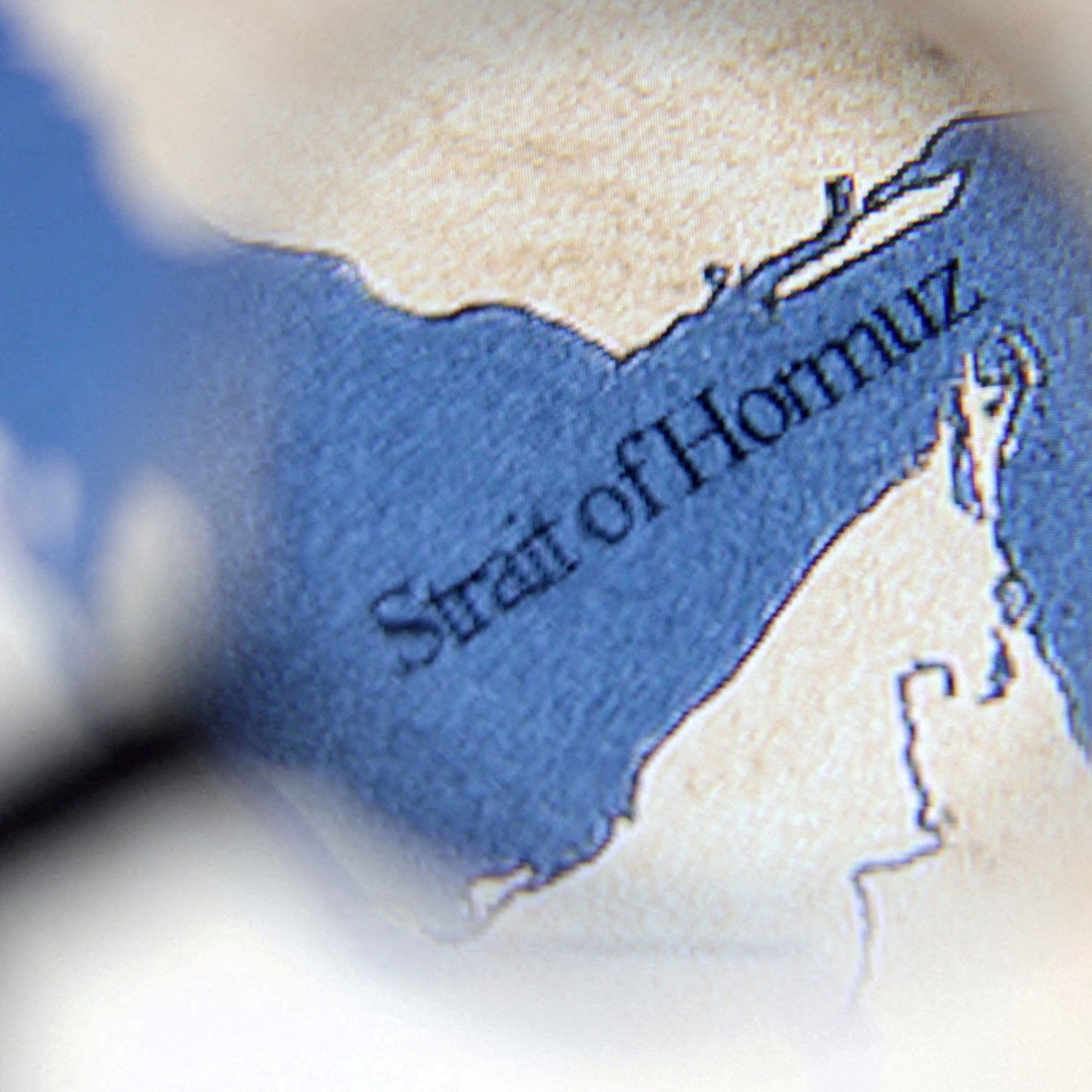
This is the Global News Podcast from the BBC World Service. I'm Chris Barrow and in the early hours of Sunday, 22nd March, these are our main stories. President Donald Trump has threatened to attack Iran's power plants if Tehran doesn't reopen the Strait of Hormuz within 48 hours. In Israel, medical officials say at least 100 people have been injured after Iranian missiles hit two southern towns, one near a key nuclear facility. And the man who led the investigation into Russian interference in the 2016 US election, Robert Mueller, has died. Also in this podcast, Campari Compared to
- [02:18]
Jonathan Marcus
other drinks, Campari is one long holiday.
- [02:23]
Chris Barrow
The price of one of the ingredients of a Negroni cocktail has soared, but that's not necessarily good news for those who produce it. President Donald Trump has threatened to attack Iran's power plants if Tehran doesn't reopen the Strait of Hormuz within 48 hours. We'll have more in a moment on why the US hasn't already done the job itself. But first to Israel.
- [02:54]
Wendy Urquhart
Whoa, whoa, whoa.
- [02:58]
Chris Barrow
That was an Iranian missile attack on the southern town of Dimona, which is close to a nuclear facility. This resident described what he saw.
- [03:08]
Jonathan Marcus
I just dropped off my mum here
- [03:10]
Owen Bennett Jones
at my grandmother's and I was about to turn round and I saw an explosion, a fireball that fell.
- [03:16]
Jonathan Marcus
My brother in law and I ran
- [03:18]
Owen Bennett Jones
inside and began to evacuate people to an ambulance.
- [03:21]
Jonathan Marcus
Then the emergency services arrived.
- [03:24]
Chris Barrow
Israeli officials say more than 100 people were injured in the attack on Dimona and another town in southern Israel. Iran, which earlier launched an unsuccessful attack on a US UK joint military base on the Indian Ocean island of Diego Garcia, says the strikes on Israel were a direct response to a US Israeli strike against its own nuclear facility in Natanz. I asked the defense analyst Jonathan Marcus how concerning these attacks on energy infrastructure are.
- [03:51]
Jonathan Marcus
There are echoes here of what we saw in the war in Ukraine with an important Ukrainian nuclear site seized by the Russians. The area around it often a target for attacks. Operating nuclear reactors are a very great concern in terms of the damage that would ensue if there was a serious strike against them. Clearly the Iranians, one assumes in attacking the Dabona area know exactly what's there. It's no secret Today anybody with Google Earth can find things on their home computer. We believe the Russians are giving a significant amount of intelligence to the Iranians as well. So they're sending a riposte to Israel. I think it is deeply concerning.
- [04:36]
Chris Barrow
The question is could Iran have these longer range weapons and perhaps more accurate and more longer range than we perhaps thought they had originally had?
- [04:45]
Jonathan Marcus
The Iranians have a number of missile systems that experts in the west have estimated have ranges of up to around 2000 or so kilometers. It's been thought that certainly one of these systems, if it was given a much less heavy warhead, would have a substantially greater range. It's quite possible it's this system that was fired towards Diego Garcia. Now that's something around the 4,000 kilometer mark. Of course that would, doesn't want to be alarmist, potentially bring some major European cities into the range of Iranian missiles.
- [05:20]
Chris Barrow
Do we have a sense of how much firepower Iran is likely to have left? Because the US has said that they estimate, I think it's around 77% of the capability has been degraded or is no longer available.
- [05:33]
Jonathan Marcus
The honest answer is we simply don't know. The Iranians have shown a remarkable robustness under a really very intense attack from US And Israeli air power. And they don't need to be able to launch hundreds of missiles every day. If they can spread a small number of missiles around targeting Israel, as they have done in the south of the country, near Dimona, where the Israeli nuclear reactor is, if they can hit targets in the Gulf, if they can try and attack targets at much longer range, like Diego Garcia, they are keeping up the pressure, the tension, the strain, for example, on Israeli society. The fears and concerns of the United States Gulf allies and indeed the long range attacks could potentially worry America's European partners. So in a sense, the Iranian arsenal is clearly hugely depleted. The Americans claim great successes, but even with a relatively small remaining arsenal, the Iranians can keep up the pressure from their end.
- [06:37]
Chris Barrow
In your assessment of this conflict so far, does any one side seem to have the upper hand, or does this have the hallmarks of a conflict like the Ukrainian one, which could be dragged out for perhaps many years to come?
- [06:51]
Jonathan Marcus
Well, I don't think it's going to be dragged out for many years to come. I think it could potentially go on for some considerable time longer. The chief of the Israeli military has suggested that the war is roughly at its halfway point. That would suggest it could go on for three or four more weeks.
- [07:06]
Emma Salisbury
Perhaps.
- [07:06]
Jonathan Marcus
The difficulty we have here is that not only do the Israelis and the Americans have sort of different perceptions as to exactly what, what the war is about and what they want to achieve, but in a sense, neither of them have a very clear sense of the end state, you know, short of Iranian capitulation and the handing over by Iran of what nuclear materials it holds and so on. It's not entirely clear what the Americans want. In one sense, they want regime change, but nobody seriously thinks that is going to happen in Iran anytime soon. Of course, we're dealing with mercurial and unpredictable American president. Mr. Trump could announce tomorrow morning that Iran has ceased to exist and that the war is over. It's not a joke. He could say something that extraordinary. I think it would be very difficult for the Israelis to continue if Washington decided to call a halt. But quite when that moment will be and what exactly the circumstances will be are unclear. And of course, the other crucial question is, well, the Americans might say they're going to stop. Will Iran stop? Will it release its chokehold on the Straits of Hormuz, for example, and allow energy supplies to keep moving? Again, so many questions as ever, and at the moment, very few clear answers.
- [08:25]
Chris Barrow
Jonathan Marcus. Mr. Trump's request for help clearing the Strait of Hormuz was an implicit acknowledgement that the US doesn't have the resources it needs to de mine the crucial waterway by itself. Emma Salisbury is from the Foreign Policy Research Institute. She's been speaking to my colleague, Owen Bennett Jones.
- [08:43]
Emma Salisbury
The United States had really good minesweeping capability during most of the Cold War. So its capabilities were really strong throughout most of the Cold War. Once the Cold War ended, us, along with a lot of other countries, dialed down its defence spending, drew down lots of its capabilities, and minesweeping was one of those. So the capability atrophied steadily until about 2006. And that is when the United States got rid of mine warf command, which was the centralized point for all of their mine warfare capabilities. So those capabilities got sort of split up and lived off into different parts of the US Navy, which meant that they weren't being centrally organized and they didn't have a champion in the budget process. So that meant wire warfare capabilities still existed, but they just weren't as good as they were prior to that period.
- [09:37]
Owen Bennett Jones
Right. So that was 2006, when this mine war command was basically abolished and split up. So that turns out to be a pretty disastrous decision, probably. So why was that taken?
- [09:48]
Emma Salisbury
It was taken under the guise of integrating mine warfare across the Navy. But what actually happened was it was marginalized. So it was really the end of a long process of atrophy that has really kind of cemented the fact that those capabilities have not been able to be built up again, because there isn't that centralization. That hasn't been a huge problem up until now, because the United States has been relying on mine capabilities of its NATO allies. So mine warfare capabilities, minesweeping and so on, are really good in uk, Germany, the Netherlands, Belgium, Scandinavian countries. And the US was always thinking, if it were going to be fighting a war where it would need those capabilities, it would be alongside NATO allies.
- [10:35]
Owen Bennett Jones
So that's why President Trump asked for help from his allies, because they were relying on their allies to have this capacity.
- [10:41]
Emma Salisbury
That's exactly it. The US is now in a war where it is not fighting as part of NATO. So there is no expectation of NATO capabilities being brought to bear, which is why President Trump has had to ask, and that's why all of those countries also have the ability to say no, because this is not a NATO conflict, this is a US and Israeli conflict.
- [11:01]
Owen Bennett Jones
So can you explain to us what the American capacity is now? You know they're obviously rushing resources to the strait. Have they got enough to clear it?
- [11:09]
Emma Salisbury
The short answer is, no, they don't. There was a class of minesweeping ships. Four of those have been decommissioned very, very recently, and the other four are based in Japan in Cesar, so they are not in theater at the moment. The capability, slightly newer than that, is on the literal combat ship, which is a modular ship, so it can be configured to different missions. So there is a mine capability that can be put onto those ships.
- [11:37]
Chris Barrow
Emma Salisbury. Now, Robert Muller, who led the investigation into whether Russia interfered in the 2016 election, brought Donald Trump to the presidency, has died. He was 81 and had been suffering from Parkinson's disease. His investigation did not conclude that Mr. Trump had committed a crime, but neither did it exonerate him. Daniel Lippman, who's the White House and Washington reporter at Politico, has been speaking to my colleague Rajini Vaijanathan about Robert Mueller and the fallout from that investigation.
- [12:06]
Daniel Lippman
For several years, this investigation dogged Trump's administration. It was kind of like a cloud over everything they did, and it did have some accomplishments. It got the conviction of Paul Manafort, Trump's former campaign manager, Michael Flynn, the former national security adviser for Trump, and Roger Stone, a close Trump ally. But it never got Trump. And a lot of Democrats feel like Mueller took too long and did not actually do a good job when testifying about this hearing about this whole inquiry on Capitol Hill.
- [12:43]
Rajini Vaijanathan
Let's talk about the response from President Trump. It's unsurprising, but it's less than dignified in the wake of someone's death. It says, robert Mueller just died. Good. I'm glad he's dead. He can no longer hurt innocent people. Signed, President Donald J. Trump. I mean, Daniel, that doesn't surprise me. Doesn't surprise you, I'm sure, as well. But of course, it gives you a sense of. Of the enmity between the two men.
- [13:09]
Daniel Lippman
Yeah, it's pretty unprecedential for most presidents. But Trump is not one to have an artificial grief and sympathy at this man's death or other political opponents. Trump has done that in the past as well. And so I think we should remember that Mueller was not just defined by that investigation he did of Russian interference in the election. He rebuilt the FBI after 911 because it was more of a law enforcement bureau. It was not focused on foreign threats. They couldn't even talk to the CIA most of the time because of laws against spying on Americans. But the Mueller investigation into that Russian interference really defines Mueller's legacy. And a lot of liberals were trying to they were thinking Mueller was going to get the Putin giving messages to Trump, trying to put him into power, being his puppet. And that was not the case.
- [14:06]
Chris Barrow
Daniel Lippman Now, Campari is the main ingredient in a Negroni cocktail, and although it's made from a number of other things, the spicy herbal flavour of the oil that comes from the cascarilla bark is definitely a key part of the recipe. Now, the trees grow on a handful of islands in the Bahamas, and because there's not much of it available, global demand for the oil has soared in the past three years and the price has tripled. Well, that's offered residents of the remote Aklins island an economic lifeline, but it's causing problems too. As Wendy Urquhart reports, Campari compared to other drinks, Campari is one long holiday.
- [14:46]
Wendy Urquhart
Campari was invented in 1860 and it's grown in popularity the world over ever since. Its use in a variety of cocktails has made one of the key ingredients, cascarilla oil, extremely popular. Harvesting cascarilla has also provided a vital source of income for residents of Acklands island in the Bahamas. For that reason, three years ago Philip Williamson spearheaded the creation of the Acklands Island Cooperative Society.
- [15:16]
Chris Barrow
If there's one thing we have to
- [15:18]
Philip Williamson
do right from the outset is we
- [15:20]
Chris Barrow
have to look at sustainability, because the minute the price start going up, you
- [15:25]
Wendy Urquhart
have more cutting of the bark. It's hoped that by prioritising sustainable harvesting practices such as cutting the bark without damaging the plant, finding new ways to cultivate cascarilla in greenhouses, and bringing in new modern equipment to extract the oil, the Bahamas will be able to plant more trees. Because the fact is, right now stock is extremely limited. And Kirk Cunningham from the Bahamas Forestry Unit is worried because that's driving up the price, which means more people want to get their hands on it.
- [15:59]
Chris Barrow
A lot more persons are now getting cash grill and a lot more persons are now going out to harvest gas grill. And that being the case, sooner or later we're going to run out of the local stock.
- [16:09]
Wendy Urquhart
The Bahama Pine Islands Project, which is funded by the Global Environment Facility and the un is also aiming to boost Casca guerrilla profits by producing perfume and soap from the oil, which will not only bring more money to Ackland's island, it will boost exports, and that means more work for local people.
- [16:30]
Chris Barrow
Cheers to Wendy Urquhart for that report and still to come in this podcast.
- [16:36]
BTS Fans / Interviewees
As an Asian American myself, growing up was really tough, not seeing anyone on the mainstream media who looked like me and then now. Wow. To have have someone on the big stage actually like looks like me is so wonderful.
- [16:46]
Chris Barrow
K Pop sensations BTS returned to the stage after a four year break for military service.
- [16:59]
Philip Williamson
The Bleacher Report app is your destination for sports right now. The NBA is heating up, March Madness is here and MLB is almost back. Every day there's a new a new headline, a new highlight, a new moment you've got to see for yourself. That's why I stay locked in with the Bleacher Report app. For me, it's about staying connected to my sports. I can follow the teams I care about, get real time scores, breaking news and highlights all in one place. Download the Bleacher Report app today so you never miss a moment.
- [17:28]
Charles Schwab Advertiser
Puerto Rico is having a moment of global attention. Behind it are decades of execution, preparation and business momentum. Global companies manufacture, innovate and scale here with confidence, not culture or business. Culture and business. Puerto Rico. It's not what's next, it's where. Visit investpr.org business Ever wonder why we make the choices we do and how to make smarter ones? Introducing choiceology, an original podcast from Charles Schwab Join Wharton Professor Katie Milkman, an award winning behavioral scientist and author of the best selling book how to Change, as she shares true stories from Nobel laureates, authors, athletes and everyday people about why we do the things we do and how to make better choices to help avoid costly mistakes. Each episode covers the latest research in behavioral science and dives into themes like the power of self control, shaping your mindset for success, navigating new beginnings and why starting over can feel so hard. Listen to Choiceologywab.com podcast or wherever you listen. Today's episode is sponsored by NerdWallet's Smart Money podcast. Ever Google a money question and end up 12 tabs deep with 12 different answers? This podcast is your shortcut back to clarity. NerdWallet's Smart Money podcast breaks down financial decisions with a team of trusted journalists. They explain the why behind decisions like investing, home buying and choosing credit cards. With clear research backed insights. No jargon, no misinformation. Make your next financial move with confidence. Follow NerdWallet's Smart Money podcast on your favorite podcast, Applied
- [19:26]
Chris Barrow
this is the global news podcast. Hundreds of millions of Muslims around the world are celebrating Eid al Fatar to mark the end of Ramadan, the holy month of fasting. But in Australia, celebrations have been more restrained than usual following the massacre of 15 people celebrating the Jewish festival of Hanukkah last year in Bondi, the Australian Prime Minister said the alleged gunmen were motivated by Islamic State ideology. According to the Islamophobia Register Australia, reports of anti Muslim hate have tripled since the attack. Our Australia correspondent, Katie Watson reports.
- [20:01]
Katie Watson
I've come to Western Sydney, a neighbourhood called Lakamba, which has a really big Muslim population. They've shut off the main road. In front of the mosque there are hundreds of trestle tables and every so often there are buffet stations. On one side are the women's tables, on the other the men's and there are families, young, old, everybody here, they're waiting patiently for sunset. Evening prayer begins and the queues form for Iftar, a mighty feast of falafel for two shots, chicken and rice to end the day's fasting. Despite the family friendly vibe here, a police surveillance trailer parked in the road, complete with 360 cameras on tall poles, also speaks to the fear in the community. After being on the receiving end of several threats, the mosque requested extra police presence throughout Ramadan. They've employed private security too.
- [21:05]
Jamel Kiir
We are going through very challenging times at the moment for the Muslim community and Australia in general.
- [21:10]
Katie Watson
Jamel Kiir is the secretary of the Lebanese Muslim association, the mosque's custodians.
- [21:15]
Jamel Kiir
If ever there was a need for communities to come together and break bread, I would say this year is more than ever.
- [21:21]
Katie Watson
Reports of anti Islam hate incidents have risen more than 600% since October 7, 2023, when Hamas attacked Israel. The shooting in Bondi in December, perpetrated by gunmen who were, according to to police, inspired by Islamic State ideology, has also provoked more attacks.
- [21:41]
Chris Barrow
A lot of my brothers and sisters
- [21:42]
Jake Kwon
come here and we are get together
- [21:44]
Chris Barrow
and take the iftar here.
- [21:45]
Katie Watson
Moshejimin Shaquille is a doctor from Bangladesh. He's studying a master's in public health in Sydney. After the shooting, his job as a support worker got that much harder.
- [21:56]
Chris Barrow
Someone told me, are you a Muslim? You say, I'm Muslim. So after the Bondi attack, someone of people thought the Muslims are the terrorists.
- [22:04]
Wendy Urquhart
We're in a situation now in Australia. We can either go down one path and we will reap the rewards of our tough stance against Islam.
- [22:15]
Katie Watson
Political rhetoric right now also makes it harder for the community. Earlier this month, Pauline Hanson, an Australian senator and leader of populist anti immigration party One Nation, made comments questioning whether there were good Muslims.
- [22:29]
BTS Fans / Interviewees
How can you tell me there are good Muslims?
- [22:31]
Wendy Urquhart
If jihad is ever called and people must understand this, go and research, go and understand about this.
- [22:38]
Katie Watson
She was CENSURED by the Federal Senate and she's only partially apologized for the incident. Community leaders say that politicians like Hanson have legitimized racism. Jamelle Kiah Again, we're talking about women
- [22:50]
Jamel Kiir
being spat on in the street. We're talking about women whose scarves are being pulled off. Our Facebook post used to have five to ten comments. We're getting a thousand plus comments of the most bigoted, vile, racist comments because people feel empowered, emboldened, because people like Pauline Hanson have enabled this sort of racism to be rampant and normal. The fear that I have is Pauline Hanson and her dog whistling has such an effect on the labor and Liberal Party that they are too scared to take the defence of the the Muslim community because it's political suicide for them. So we're left to fend for ourselves.
- [23:28]
Katie Watson
That fear and frustration was clear on Friday when Prime Minister Anthony Albanese visited Lakemba Mosque to mark the end of Ramadan, facing booing and heckling by some in the community. Australia prides itself as a migrant nation, multiculturalism essentially part of its identity. But it's a concept that's now lost on many in the Muslim community. Dr. Zuhir Gabsi is Senior Lecturer in Arabic and Islamic Studies at Deakin University.
- [23:57]
Chris Barrow
Multiculturalism is a politician word, right? I call it weasel word, a word that you know has a shell but
- [24:03]
Guy Delaunay
there is no meaning in it.
- [24:05]
Chris Barrow
Multi Christian in Australia is good when you share a meal, right? But when you apply for a job you looked at as you, you are a migrant.
- [24:12]
Katie Watson
Bondi's anti Semitic attack in December laid bare the cracks in Australia's ideal of diversity. Rising Islamophobia also a symptom of hostile divisions in a country that saw itself as different, indeed more fortunate than the rest of the world.
- [24:28]
Chris Barrow
Katie Watson with that report. Cuba has suffered its second nationwide power cut in less than a week. The island's energy infrastructure struggles to deal with the fuel blockade imposed by the Trump administration. Cuba's energy Ministry said the power grid had experienced a total collapse and that work had begun to restore supply. At the same time, campaigners delivering humanitarian aid have started arriving in Cuba as part of efforts to mitigate the effects of the blockade. David Adler is lead organizer of the convoy to Cuba.
- [24:58]
David Adler
No family, no person, no grandmother, child is safe from its consequences. One of the main issues, for example, is how electricity in its absence affects schools. We're talking about a critical shutdown from access to education, which is of course considered by the UN to be a fundamental right. Another is the issue of food. The siege is effectively Creating a famine for the Cuban people. Many of the markets here are empty and a third, of course, is access to medicine. So many of the delegates here have been visiting the hospitals where they're dropping their medicines and finding that the shelves are empty, that the criminal effects of this blockade are to deprive people of life saving medicines and as to say nothing of the consequences of the total blackouts which affect people on pacemakers and dialysis matters of life and death.
- [25:48]
Chris Barrow
Our correspondent Will Grant, who's in Havana, told Will Chalk more about the aid convoy.
- [25:53]
BBC Podcast Announcer
It's called the Nuestra America convoy, named after an essay by the Cuban poet and independence hero Jose Marti. But it has run into difficult weather. It's been a difficult few days in terms of the weather and the sea conditions around Cuba the past week. So as far as we know, the authorities simply said it's suspended for now, but it will be making it to the island eventually. And I mean, from the outside, it's quite hard to imagine what everyday life is like. You are in Havana. Can you shed some light for us? Well, I mean, obviously this convoy is bringing with it 20 tons of things, including solar panels, emergency food packs, medicines and things which will be welcomed. But I think the main thing that it brings that matters to people is a sense of solidarity, that they're not on their own and that is welcome too. But of course, 20 tons is nothing compared to the need on the island. What people need are huge amounts of emergency aid. The humanitarian crisis is reaching extremely dire levels. And beyond humanitarian assistance, what Cuba needs most of all is oil. The one thing that can't get in and which the Trump administration is blocking from getting in and says that it intends to continue to do so. Now, more than a convoy of left wing activists, I think Cubans have had their eyes on different ships. One was a Russian flagged oil tanker with 730,000 barrels of oil coming this direction and another one was a Hong Kong flagship. We hear that the Hong Kong flagship has been turned away to Trinidad. And of course there are fears that the Russian ship won't make it through. But that is what Cubans most want, the lights to come back on and the lights to stay back on.
- [27:38]
Chris Barrow
Will Grant in Havana. Slovenians are heading to the polls today for parliamentary elections. The centre left Prime Minister Robert Golob is looking for a second term in office, but he faces strong opposition from the right wing SDS and its leader, Yanes Youngcia. He's an ally of Hungary's Viktor Orban and a fan of the US President Donald Trump. As our Balkans correspondent Guy Delaunay reports, the run up to the polls has been bad tempered and full of controversy.
- [28:06]
Guy Delaunay
In Slovenia, the protests usually come after the elections. This time they arrived ahead of polling day. The people at this gathering in the capital Ljubljana carried placards denigrating the right wing opposition leader Yanes Jancha and his ss. They were angry about the release of COVID recordings of people close to the center left government. In particular, they were furious about allegations that the SDS had engaged a private Israeli intelligence agency to dig up dirt on Prime Minister Robert Gollob and his governing centre left Freedom Movement.
- [28:43]
BTS Fans / Interviewees
I don't think the people like the interference into our sovereignty and into independence
- [28:51]
Guy Delaunay
is a prominent figure in the Freedom Movement and the speaker of Slovenia's National Assembly.
- [28:57]
Katie Watson
I'm talking about the recordings.
- [28:58]
BTS Fans / Interviewees
I'm talking about the brutal campaign that we have been faced with in this election. I believe that this is probably the most brutal campaign ever.
- [29:09]
Guy Delaunay
But the SDS party insists that it isn't important how the COVID recordings were obtained if they show that Slovenia's current leaders are corrupt. Tony Kaiser is the SDS foreign policy spokesperson. We are being confronted with the biggest scandal in the last 35 years, basically discovering that this country is being captured by the systemic corruption. And this is not only worrying, it's basically putting everything on the decision where we will go from here, if not nothing else. The two main parties are singing very different tunes. The SDS has even co opted the humble accordion into its campaign. A ubiquitous poster shows a winsome child clutching the instrument with the slogan Vote SDS so your grandson will still sing Slovenian songs. On the other hand, the Freedom Movement's billboards simply read let's go forward. They say the SDS wants to drag Slovenia backwards. But both leaders face a struggle to win over their doubters. Jana Zyancha's three previous divisive stints as Prime Minister have turned many voters off. But news presenter Igor Bergant says that Robert Golub has also alienated many people.
- [30:26]
Igor Bergant
Apparently he got scared of reform. A lot of people got angry because of that. The tension span in Slovenia is quite limited, so people get annoyed.
- [30:36]
Guy Delaunay
If Slovenia wakes up next Monday morning and it looks like Yanis Jancza is in position to become Prime Minister for a fourth time, what will that mean for the country?
- [30:46]
Igor Bergant
He's leader of a democratic party, but he's quite authoritarian. He's been very close to Viktor Orban. What he doesn't like is his free media, which he says is too far left leaning he doesn't like NGOs. He's got a completely different position towards Israel and Mr. Trump compared to the present government.
- [31:11]
Guy Delaunay
Plenty of other parties have been drumming up support at promotional stands in Ljubljana's historical centre. A total of 18 candidate lists are running. So even though the main battles between Golob and Jancia, smaller parties will still play a big role after polls close on Sunday evening.
- [31:29]
Chris Barrow
Guy Delawney reporting Now, if you're a K pop fan, then the last 24 hours will have been pretty intense. That's because the hugely popular boy band BTS have returned to the stage after taking a four year break to do their mandatory national military service. The band put on a free concert in the heart of the South Korean capital Seoul to mark their return and hundreds of thousands of fans turned up to welcome them back. Our correspondent Jake Kwon was at the venue.
- [31:59]
Jake Kwon
The papers here in Seoul dubbed it the Return of the Kings. When the seven men in their shiny costumes burst forth on the stage that looked like the triumphal arch, it was the moment the fans had waited for nearly four years. The concert drew tens of thousands of the band's dedicated fans called Army. Many of them had come from overseas all the way to Seoul's central Gwanghwamun Square.
- [32:24]
BTS Fans / Interviewees
I'm Veronica. I'm Amanda.
- [32:26]
Igor Bergant
And where are you from?
- [32:27]
BTS Fans / Interviewees
I'm from Texas. I'm from Hawaii.
- [32:30]
David Adler
Okay.
- [32:30]
Jake Kwon
So what brings you to Korea today?
- [32:32]
BTS Fans / Interviewees
Bts of course.
- [32:33]
Chris Barrow
BTS is everything for us.
- [32:36]
Jake Kwon
What is the appeal of the BTS for me?
- [32:38]
BTS Fans / Interviewees
It's so wonderful seeing Asian presence in mainstream media. I'm actually adopted as an Asian American myself. Growing up with really tough not seeing anyone on the mainstream media who looked like me and then now, wow. To have someone on the big stage actually looks like me is so wonderful.
- [32:57]
Jake Kwon
The music was a mix of their latest tracks and crowd pleasing hits like Dynamite and Butter. There was the singing, the dancing, the light sticks, everything one can hope in a K pop concert. This is already rare honor. The last time Seoul opened one of its public square for a K pop act it was 14 years ago when Psy's Gangnam Style became the worldwide phenomenon. And since then BTS has become something bigger than just a seven men in a band. They have reached the top of the Billboard chart, spoke at the UN and the White House and they've really become the face of South Korea's soft power success. Their music music had not only sold albums, but the idea of Korea itself. Emer had moved to Korea from Ireland after she became a fan during the pandemic.
- [33:48]
Guy Delaunay
I have so many Korean friends and
- [33:50]
BTS Fans / Interviewees
I love learning about Korean culture. I'm studying Korean BTS gave me the first idea that Korea is such an interesting, fun place. And now that I came to live here, it's so true. And I really love being here.
- [34:03]
Jake Kwon
It's a turn of fortune most Koreans couldn't have imagined. Even 10 years ago. Though South Korea became an economic powerhouse, its people had always imagined their culture somewhat lacking. If there were any doubts in the minds of Korean people that their art or culture is lesser than that of the west today, it's certainly gone. The band will follow it up with a world tour starting next month. It is expected to rake in around a billion dollars in revenue. But as we've seen today, the band's contribution to South Korea goes far beyond money.
- [34:38]
Chris Barrow
And that was Jake Kwon. That's all from us for now. If you'd like to get in touch though, do email global podcastbc.co.uk you can also find us on X@BBC World Service. Use the hashtag globalnewspod. And don't forget our sister podcast, the Global Story that goes in depth and beyond the headlines on one Big Story. This edition of the Global News Podcast was mixed by Stephen Bailey and produced by Paul Day and Wendy Urquhart. The editor is Karen Martin. I'm Chris Barrow and until next time, goodbye.
- [35:16]
Philip Williamson
The Global Gaming League is presented by Atlas Earth, the fun cashback app. Hey, it's Howie Mandel and I am inviting you to witness history as me and my How We Do It Gaming team take on Gilly the King and Wallow $267 million gaming in an epic Global Gaming League video game showdown. Plus a halftime performance by multi platinum artist Travy McCoy. Watch all the action and see who wins and advances to the championship match right now@globalgamingleague.com that's globalgamingleague.com in partnership with Level Up Expo.