← Global News Podcast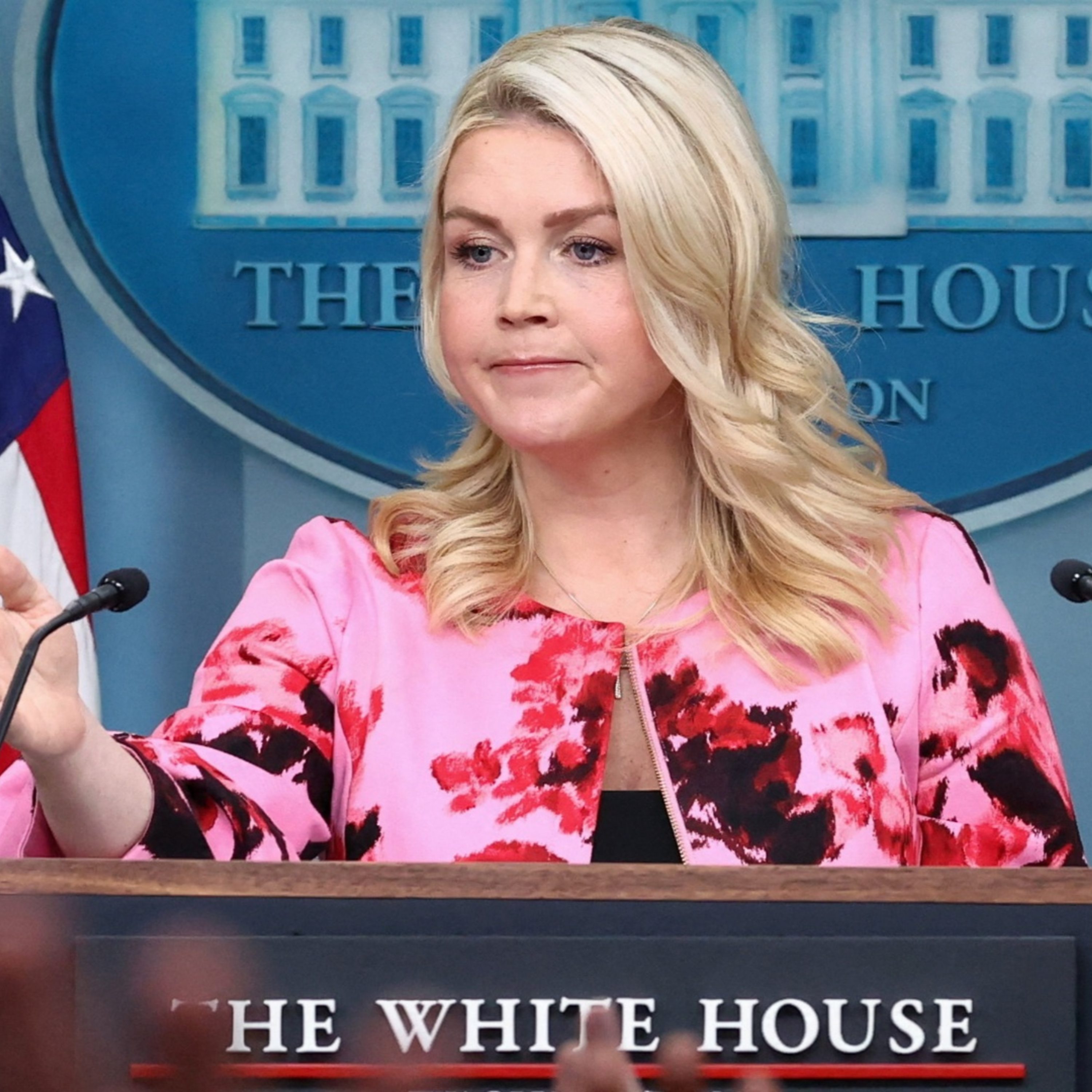
Global News Podcast
US downplays suggestions it could commit war crimes in Iran
00:28:29
Trump has threatened to wipe out civilian infrastructure unless Iran agrees to a deal
Loading summary
Transcript66 lines
- [00:00]
Alex Ritson
This BBC podcast is supported by ads outside the uk.
- [00:06]
Charles Schwab Advertiser
Investing with Schwab is like spending a Saturday at a great farmer's market. You can fill your reusable tote with a bit of everything. Maybe you go for some free range self directed investing or perhaps you pick up a few farm fresh trades while you peruse. You can even get help from a dedicated advisor. That's full service wealth management. Mix, match and change your mind whenever you want. Because at Schwab you can invest your way no matter your goals or appetite for investing. Schwab has everything you need all in one place. Visit schwab.com to learn more. Momentum doesn't appear overnight. It's built, refined, repeated. Puerto Rico understands momentum as companies rethink supply chains and reshore operations. They're choosing a location that already delivers life saving medicines, advanced manufacturing and global scale innovation. As a US jurisdiction operating under federal law with competitive tax incentives designed for long term investment. Companies don't just relocate here, they scale here. Not culture or business. Culture and business Puerto Rico. It's not what's next, it's where. Visit investpr.org business
- [01:19]
Alex Ritson
this is the Global News podcast from the BBC World Service. I'm Alex Ritson and in the early hours of Tuesday, 31st March, these are our main stories. President Donald Trump threatens to destroy Iran's energy infrastructure and desalination plants unless Tehran makes a deal. The United Nations Security Council will hold an emergency meeting later today after two more U.N. peacekeepers were killed in southern Lebanon and Israel's parliament passes a new law imposing the death penalty on Palestinians convicted of fatal attacks on Israel. Also in this podcast, months later we
- [02:03]
Lucy Williamson
heard in the news that premature infants had died in Al Shifa Hospital. I would look at the photos trying to feel as a mother whether this could be my child or not.
- [02:14]
Alex Ritson
Premature Palestinian babies evacuated from Gaza finally return home. President Trump has been reading Iran the riot act since the start of the war, issuing threats to the Islamic Republic on an almost daily basis. Mr. Trump's latest warning to Tehran was to make a deal to end the conflict or he would order the US Military to destroy all of Iran's oil wells, electricity generating plants and Hag island, the country's critical hub for exporting its oil. He went further, raising the possibility of making water a weapon of war by including desalination plants on his list, which a journalist read out during a press conference at the White house. Caroline Levitt, Mr. Trump's press secretary, was asked why her boss was threatening Iranian civilian infrastructure, which if attacked could constitute a war crime.
- [03:11]
Caroline Levitt
The president has made it quite clear to the Iranian regime at this moment in time, as evidenced by the statement that you just read, that their best move is to make a deal or else. The United States armed forces has capabilities beyond their wildest imagination, and the president is not afraid to use them. That's not what I said, Garrett. And you're saying the word potential for a reason, because I'm sure some experts are telling you that in your ear to try to ask me that question. Of course, this administration and the United States Armed Forces will always act within the confines of the law. But with respect to achieving the full objectives of Operation Epic Fury, President Trump is going to move forward unabated, and he expects the Iranian regime to make a deal with the administration.
- [03:53]
Alex Ritson
Iran said it had received US Peace proposals via intermediaries, but these were unrealistic, illogical and excessive. Though President Trump wants a deal for ending the war by the beginning of next week, Israel's Prime Minister Benjamin Netanyahu has said he didn't want to put a schedule on the timeline for finishing the conflict. He told US Television that more than half of Israel's military aims had been achieved since the start of the war more than four weeks ago. I've been speaking to our North America correspondent, Peter Bose.
- [04:27]
Peter Bowes
Iran doesn't appear to be backing down or showing any signs of coming on board as far as the US Demands are concerned. From it, it's really hard to quantify any effect that the president's strategy is having. Indeed, it is difficult to define what the president's strategy is. He claims to be in serious discussions with a new and more reasonable Iranian regime. But Donald Trump vacillates constantly. One moment he's making, as you suggest, increased threats against Iran, the other suggesting that talks are going well. And we're still not clear that actual talks are taking place, as opposed to an exchange of messages through intermediaries, which seems the most, but not direct contact.
- [05:07]
Alex Ritson
Is there a strong appetite in the White House to put, as they call it, boots on the ground?
- [05:13]
Peter Bowes
Well, there's no indication that the White House wants a ground war, but it is, I think, deliberately keeping that option on the table, as it has since the start of the war at the end of last month. Officials have been quite careful to talk about all options, which is a familiar phrasing of the various scenarios that could unfold, I think, designed to be maintain pressure on Tehran. In fact, if I were to attempt to define what the strategy is, it would be one of maximum pressure without Full commitment. So keeping military options visible. And we're watching the buildup of U.S. military personnel in the Gulf, but relying on air power, deterrence, negotiation, whatever that is taking to avoid the political and human costs of boots on the ground.
- [05:59]
Alex Ritson
President Trump is set next Monday as his deadline for a deal. How much pressure is he under at home to finish this war?
- [06:08]
Peter Bowes
I think he's under significant domestic pressure and it is growing every day. There's certainly economic pressure, rising oil and fuel prices linked to the disruption in the Middle East. They're certainly feeding domestic concern. Public opinion is broadly against the war continuing. There was an opinion poll published towards the end of last week which Suggested that around 61% of Americans disapprove of Mr. Trump's handling of the conflict. Only about 37% approving. Separate polling has suggested that a majority of voters, about 54%, oppose the military action altogether. And I think most significantly, 6 in 10 say that the strikes have already gone too far.
- [06:50]
Alex Ritson
Peter Bowes, an emergency meeting of the United Nations Security Council will be held on Tuesday after two more peacekeepers with the UN's UNIFIL force were killed in southern Lebanon. It's there. Israeli forces have been fighting the Iranian backed group Hezbollah. Our Beirut correspondent Lena Sinjab sent this update.
- [07:12]
Lena Sinjab
This is probably the deadliest time of this war in Lebanon. UNIFIL has come to announce two of its peacekeepers have been killed. They haven't confirmed how this happened or who's the source of the the killing. The Lebanese army though said one soldier have been killed and many others injured in an Israeli strike on a checkpoint south of the city of Tyre. This comes after, you know, escalation, more airstrikes in the south of the capital, Beirut, and in the south of the country over the weekend. Three journalists have been killed. More than seven paramedics have been also killed, totaling the number of paramedics and being killed in this war to 52. The Israeli Prime Minister, Benjamin Netanyahu said that they are expanding their ground operation in the south of Lebanon. They've already taken control of nearly 10% of Lebanon's territory. To the south of Litany River. There are talks that they are reaching even further north of Litany River. This is an area that is home to hundreds of thousands, many of whom have fled their areas and their villages. The total number of displaced people have reached over 1.2 million scattered around the country, with no idea when they are going to go back to their homes. But the problem is in the south that there are still almost 150,000 civilians who are still trapped with no way to reach north of the country after Israeli bombed the infrastructure, cutting out, you know, roots and bridges and fuel station. The Lebanese have lived an occupation, an Israeli occupation since 1982 for 18 years. And now they fear that they're living the situation again, especially that at the time Hezbollah is determined to continue firing rockets into northern Israel with no response to any mediation for talks, for negotiations, for a way to de escalate the tension.
- [09:10]
Alex Ritson
Lena Sinjab. Myanmar has been hit harder than most by the fuel shortages caused by the war in Iran. Once an oil exporter, it now relies on imports for 90% of its oil and refined petroleum. The military government tried restricting motorists to driving on alternate days based on the number plates, but has now introduced a rationing system using barcodes, which means drivers can use less than one tank of petrol a week. Our Southeast Asia correspondent, Jonathan Head filed this report from Yangon.
- [09:44]
F35 Pilot
Endless queues of cars, taxis, minibuses and motorbikes can be seen outside pretty much every petrol station in Myanmar. They start forming early in the morning, long before the fuel supplies arrive. Some of these people have waited more than two hours to get to this point. And even when they reach the pumps, they're subject to strict rationing, just 35 liters a week for most private cars. The increasing cost is putting a huge strain on a population already struggling with an economy that has collapsed thanks to the ongoing civil war. And their only alternative to getting fuel here is to use the black market, where fuel costs more than 10 times as much as it does here now. To respond to this, some people are turning to Chinese made EVs. But even that's not a solution in Myanmar. Because electricity supplies here are so erratic, many households rely on generators for which they can no longer get the fuel needed to power them.
- [10:45]
Alex Ritson
Jonathan Head in Yangon. Members of the Israeli Parliament or Knesset, have voted to pass a new law imposing the death penalty on Palestinians convicted of fatal attacks on Israel. Although the death penalty has long been legal in Israel, only two people have been executed in in the country's history. European nations including France and Germany say the legislation risks undermining Israel's democratic principles. Our Middle east analyst Sebastian Usher reports
- [11:17]
Sebastian Usher
this has been on the cards for a long time. We just had the second and third final readings in the Knesset. It passed relatively smoothly, relatively easily. It's essentially a law that will mean that Palestinians in the occupied west bank and in the part of Gaza that is under Israeli control, will, once they've been convicted of carrying out A deadly attack, an attack essentially on the State of Israel. By default, they will be executed within 90 days. They'll be executed by hanging. This is in military courts and as it stands, there isn't an appeal. This is something that's been pushed through very much by the hard right. National Security Minister Itamar Ben gvir. It's a real victory for him to get this through. It has been attacked within Israel by rights groups and outside European government. Others have expressed their deep concern that it's discriminatory because, though it doesn't explicitly say that this is only for Palestinians, because of the way that it's phrased, the way that it's couched, there's the faintest shadow of a chance that a Jewish extremist also convicted of a killing would not face a death penalty.
- [12:42]
Alex Ritson
Sebastian Asher in Jerusalem. During Israel's war in Gaza, 31 newborn babies were evacuated for medical treatment when the IDF attacked Al Shifa Hospital, claiming Hamas was using it as a base. Two and a half years later, with a fragile ceasefire in place and the Rafah crossing partially open, some of those Palestinian children have now returned to Gaza and been reunited with their families. Our correspondent Lucy Williamson reports.
- [13:15]
Lucy Williamson
It was the other battle at Shifa Hospital. Dozens of premature babies born into war, dependent on a waning system of life support, power cuts as deadly as gunfire. The evacuations were hurried convoys through an active combat zone. In the chaos of displacement, links to some parents were lost. One of those babies was Sundus Al Kurd's daughter, Bisan. Months later, we heard in the news that premature infants had died in Al Shifa Hospital. I would look at the photos, trying to feel, as a mother, whether this could be my child or not. I lived for nearly a year between despair and hope that my daughter might still be alive. Today, eight of those children came home, a small triumph of Gaza's fragile ceasefire deal. The chaos at Nasser Hospital, for once a sign of excitement. Bisan was one of those who returned today, the baby in an incubator, now a toddler in bright pink glasses. Her first battle for survival won. She could still face another. Six months into this ceasefire, Gaza's future is uncertain, stuck in limbo between war and peace with Israel's new wars in Lebanon and Iran, attention has drained away from Gaza. But the lessons it holds are more relevant than ever about the challenge of leveraging military might into peace.
- [14:53]
Alex Ritson
Lucy Williamson, still to come in this podcast.
- [14:59]
Arnold Schwarzenegger
I'm almost 79 years old, so 40 years ago I said, I'll be back. Now I say, oh, my bag.
- [15:07]
Alex Ritson
The Hollywood actor Arnold Schwarzenegger receives an honorary doctorate.
- [15:20]
Arnold Schwarzenegger
The Bleacher Report app is your destination for sports right now. The NBA is heating up, March Madness is here, and MLB is almost back. Every day there's a new headline, a new highlight, a new moment you've got to see for yourself. That's why I stay locked in with the Bleacher Report app. For me, it's about staying connected to my sports. I can follow the teams I care about, get real time, scores, breaking news and highlights all in one place. Download the Bleacher Report app today so you never miss a moment. Tired of juggling sales tools or spending hours on prospecting just to book a few meetings? Meet Apollo, the go to market platform for finding leads, connecting with buyers and closing deals all in one place. Apollo gives you access to over 210 million contacts and AI that handles all your busywork finding leads, drafting emails and even prioritizing your day. So stop paying for five different sales tools when one does it all. Visit Apollo I.O. and sign up free today.
- [16:18]
Charles Schwab Advertiser
Ever wonder why we make the choices we do and how to make smarter ones? Introducing Choiceology, an original podcast from Charles Schwab Join Wharton Professor Katie Milkman, an award winning behavioral scientist and author of the best selling book how to Change, as she shares true stories from Nobel laureates, authors, athletes and everyday people about why we do the things we do and how to make better choices to help avoid costly mistakes. Each episode covers the latest research in behavioral science and dives into themes like the power of self control, shaping your mindset for success, navigating new beginnings and why starting over can feel so hard. Listen to Choiceologywab.com podcast or wherever you listen.
- [17:10]
Arnold Schwarzenegger
The Global Gaming League is presented by Atlas Earth, the fun cashback app. Hey, it's Howie Mandel and I am inviting you to witness history as me and my Howie Do It Gaming team take on Gilly the King and Wallow $267 million gaming in an epic Global Gaming League video game show down plus a halftime performance by multi platinum artist Travy McCoy. Watch all the action and see who wins and advances to the championship match right now@globalgamingleague.com that's globalgamingleague.com in partnership with Level Up Expo.
- [17:44]
Alex Ritson
This is the Global News Podcast. British jets have been flying defensive missions over Cyprus, Jordan, Qatar and Bahrain ever since the US And Israel began their bombing campaign against Iran. The They've clocked up more than 1,000 hours of flying and have already shot down several Drones. Our defence correspondent Jonathan Beale joined the crew of an RAF refueling tanker on a mission from RAF Akrotiri in Cyprus.
- [18:20]
Jonathan Beale
A Typhoon jet rips through the night sky above RAF Akritira. Inside this, Followed by the heavier rumble of a Voyager refueling tanker, which we've joined on a mission to hunt down Iranian drones. Soon, the shimmering lights of Cyprus fade into the distance and for the crew in the Voyager, signs of a war sign.
- [18:52]
Simon Atkinson
Over in that direction, you've got the
- [18:54]
Alex Ritson
Israel Lebanon coast, so quite often you can see either incoming missiles from Iran or the Israeli response going up to that as well.
- [19:02]
Jonathan Beale
So we just saw a flash of orange there. That could have been a missile going up or going down potentially.
- [19:07]
Alex Ritson
Yep. We are steady in the turn. Roger.
- [19:12]
Jonathan Beale
Proof Iran is still a threat after a month of heavy US and Israeli bombing.
- [19:18]
Alex Ritson
Yeah, we're safe here. We're safe here. That's. It's, it's very much targeted at that, that area as opposed to the Isle of Cyprus. Yeah, it might, it might be. It might be the Iron Dome from Israel or something else. So we don't necessarily know that. There's just a lot of kinetic things happening in the area at the moment.
- [19:38]
Jonathan Beale
The typhoon and an F35 refuel several times from the. This petrol station in the sky after looking for targets. This time, they find none. But British jets have shot down several drones on the ground. An F35 pilot explains it's no easy task with the drones flying low and slow.
- [20:07]
F35 Pilot
There are lots of risks, as you might expect, as operating a fast jet
- [20:13]
Alex Ritson
is a dangerous business, let alone if
- [20:15]
F35 Pilot
you're trying to do targeting close to
- [20:17]
Alex Ritson
the surface of the land or the
- [20:19]
F35 Pilot
sea and integrate with a lot of other assets in what might be a complicated scenario that's evolving very rapidly.
- [20:29]
Jonathan Beale
Akrotiri's defences were bolstered before the war started, but there have been reinforcements after a drone hit the base, including helicopters carrying air defence missiles in addition to the armored vehicles fitted with the same. I asked Major General Tom Buick, the commander of British Forces Cyprus, whether it's enough to deter Iran from trying to carry out any future attack.
- [20:58]
Alex Ritson
All I say is that the amount of capability that we have got deployed out here means that I am as sure as I can be that we're in a good place.
- [21:06]
Jonathan Beale
You do not think this base will be attacked again by.
- [21:09]
Alex Ritson
It could easily be attacked again. So I'm not saying it's been attacked once, so I'd be a fool to say it's not going to be attacked again. What I'm saying is that given the amount of warning out there and the air defence assets we've got in place, we're as well protected as we can be. Visual. I think we've got you on TCAS at the moment, 8,000ft below 20 miles. We're going to start a left hand turn for you.
- [21:28]
Jonathan Beale
British jets have been flying these defensive missions for a month now. But when and how this war ends is out of their hands. This could become another enduring commitment for an already stretched British armed forces.
- [21:46]
Alex Ritson
Jonathan Beale. Some of the world's biggest social media companies are being investigated by the Australian Internet regulator over suspected breaches of its new social media ban for under 16s. The government and campaigners said the changes were crucial in order to protect children from harmful content and addictive algorithms. The BBC's Simon Atkinson told me more.
- [22:11]
Simon Atkinson
This is the first report from the regulator since the social media ban was instigated in December. And in it, the country's safety commissioner, who's basically in charge of this, said they had significant concerns about the compliance facilities. Five of the platforms covered by the law, Facebook, Instagram, Snapchat, TikTok and YouTube, so basically all the big ones, and it's identified what it's calling poor practices across those companies. So some of those are basically around the way that children are effectively getting round the ban, round the restrictions. So that includes companies giving children who'd at some point said they were under 16, giving them the chance to show that they are in fact over 16, allowing children to repeatedly try the same age assurance methods again and again until they get the result they're after to kind of convince the system that they are 16 and also not providing effective ways for parents and others to report those under 16s who still had access to social media. So the regulator says it's going to gather evidence now of those breaches and move into enforcement mode. The powers it has basically are fines and they're fairly minuscule compared to the profit of these tech giants. They work out about $33 million. And of course because these are, these are predominantly US owned firms, but this is, this is law in Australia, so it only has regulation and jurisdiction over under sixteens accessing the platforms here in Australia.
- [23:32]
Alex Ritson
Any response from those social media giants?
- [23:36]
Simon Atkinson
Yeah, I've contacted all of those which the regulator has had concerns about today. TikTok had nothing to add at this point. I'm still waiting to hear from Google, which of course owns YouTube, Meta, the owner of Facebook and Instagram. It did respond. It said it wanted to stress that although there were a list of these poor practices, not all of them applied to Meta. It said it was committed to complying with the law and also effectively said, look, it's actually very hard to determine accurately when someone is 16 or not that there's a margin of error. And it wants more of the emphasis to be put on the operators of the absence of stores to determine before these apps are downloaded. And Snap. They've also applied the owner of Snapchat, it said it's locked 450,000 accounts since the ban and continue to lock more every day. It also alluded to it being difficult. It said, you know, this is a new and untested law and that improvements to preventing underage users from having Snapchat accounts is going to take time to kind of perfect.
- [24:33]
Alex Ritson
Simon Atkinson in Queensland. It's a voice that is famous for instilling fear. Hasta la vista, baby. That was, of course, Arnold Schwarzenegger, who's now offering inspiration to students in Belfast. The actor, bodybuilder and former governor of California has been awarded an honorary doctorate by Ulster University. Our Ireland correspondent Chris Page was at the ceremony.
- [25:04]
Arnold Schwarzenegger
Ulster University, please welcome our very special guest, Arnold Schwarzenegger.
- [25:10]
Chris Page
Students held up signs saying Hasta la vista, Ulster as the movie icon arrived in Belfast city centre. Arnold Schwarzenegger said it was six decades since he first visited Northern Ireland for a bodybuilding exhibition. He described his nervousness when the host asked him to say a few words for the audience. He'd never spoken in public before. Since then, he's won Mr. Universe, been awarded numerous movie prizes and been elected governor of California. After he received his honorary degree, Dr. Schwarzenegger was asked for life lessons for young people studying at Ulster University. He used an illustration from weight training to make his point.
- [25:50]
Arnold Schwarzenegger
If I do the exercise and it's easy, no bicep will grow. But when they train with heavier weight and I struggle, then it will grow. And that's the way it is in life. Most important thing is work, work, work. There is no shortcut.
- [26:08]
Chris Page
He said he still had ambitions, though hinted he was feeling some of the aches of aging.
- [26:14]
Arnold Schwarzenegger
I'm almost 79 years old, so 40 years ago I said, I'll be back. Now I say, oh my God.
- [26:23]
Chris Page
His parting message was ignore the naysayers who tell you that your ambitions aren't possible. Dr. Schwarzenegger's advice was to be relentless, like the Terminator.
- [26:35]
Alex Ritson
Chris Page reporting. Ever since the COVID 19 pandemic, governments around the world have been tackling the issue of economic inactivity. The Relatively high number of people who are eligible for work but not employed or actively looking for a job. But what prompts a disgruntled employee to quit? Anthony Klotz is a London based American academic who foresaw that the pandemic would lead to what he called a great resignation of workers across the United States. He spoke to my colleague James Kumarasamy about the various jolts that can lead to people quitting their jobs.
- [27:15]
Anthony Klotz
A jolt is an event that makes us stop and rethink our relationship with work. And so you can imagine these often come from outside of work as well. So when we have a health scare, or perhaps a family member does, or even when we hear about tragic news on the other side of the world, and we think to ourselves, you know, these important things are going on in the world, and here's what I'm doing in my job. And then finally, I don't want to be completely negative. There's positive jolts as well. So even the positive events in our life, such as having a first child, getting married, or even reaching a big birthday, can cause us to take a step back and think, is this what I want to be doing with my life?
- [27:52]
Alex Ritson
And are these jolts things that, you know, you might want to try and fight against, be aware of?
- [27:59]
Anthony Klotz
Absolutely. I mean, they're more common than we'd think. And so if we went around responding dramatically to every jolt we had, I think that would be a pretty hectic and disorganized way of working and living. And so I think ideally, when these jolts happen, if you can really do nothing until the emotion subsides and then try to figure out the cause of the jolt, what is this really telling us? Why am I questioning my job, my relationship with work right now, and what options do I have for responding to it? So even though the book is partly about quitting, often for most of our careers, quitting isn't an option for us when we experience these jolts. So what are the other options we have?
- [28:41]
Alex Ritson
Well, I'd like to ask you. I mean, you came up with this phrase, the great resignation, I think, what was it? May 2021. As you know, the pandemic was in full swing. Why were you so certain then that people would quit their jobs afterwards?
- [28:56]
Anthony Klotz
Well, it had to do mostly with jolts, and then a little bit about the economy as well. And so over the course of the pandemic, people experienced a number of different jolts. So the way that many people worked changed. The place where many people work changed from in person to remote and then back again. And during the pandemic, I mean, look, it was a health scare for a lot of us and a lot of people were sitting and thinking, if I make it through this, I'm going to change things. And all of these jolts were happening against the backdrop of a really slow economy that was shut down for the pandemic. And so you had this backlog really of jolts causing quitting in the economy. And coming out of the pandemic, the economy opened up pretty quickly, which was fairly rare, and unleashed these jolts on the labor market.
- [29:47]
Alex Ritson
That was Anthony Klotz, author of Jolted why We Quit, when to Stay and why It Matters. Celine Dion has announced that she will return to the stage in the autumn, four years after she was diagnosed with a rare medical condition. The Canadian pop star, who's 58, will perform 10 shows in Paris. It's also her birthday and she said this announcement was the best gift of her life. On Monday night, the multiple award winning singer's return to the stage was marked by the Eiffel Tower lighting up with the message je suis pret or I am ready. Our music correspondent Mark Savage reports on her long awaited return.
- [30:30]
Mark Savage
This is the news that Celine Dion's fans have been waiting for. She will come back for 10 nights in Paris this September and October, playing to more than 400,000 fans. It's six years since she last played a concert, and in that time she's been diagnosed with an incredibly rare neurological condition called stiff person syndrome. It affects the muscles, including the vocal cords, and that has left her for a long time unable to sing. And when it was at its worst, it affected her mobility as well. But she's had years of intensive training, physical therapy and medicine in order to be able to make her comeback. She said in a video message to her fans tonight that she would even be able to dance when she's back on stage. Now, demand for those tickets is going to be incredibly high. You can register on her website, but they don't go on sale until next month.
- [31:24]
Alex Ritson
Mark Savage reporting on Celine Dion's remarkable music comeback. And that's all from us for now. If you want to get in touch, you can email us@globalpodcastbc.co.uk you can also find us on X@BBC World Service. Use the hashtag Global Newspod. And don't forget our sister podcast, the Global Story, which goes in depth and beyond the headlines on one big story. This edition of the Global News Podcast was mixed by Holly Smith and produced by Ira Khan. The editor is Karen Martin. I'm Alex Ritson. Until next time. Goodbye.
- [32:17]
Arnold Schwarzenegger
The Bleacher Report app is your destination for sports right now. The NBA is heating up, March Madness is here, and MLB is almost back. Every day there's a new headline, a new highlight, a new moment you've got to see for yourself. That's why I stay locked in with the Bleacher Report app. For me, it's about staying connected to my sports. I can follow the teams I care about, get real time sports scores, breaking news and highlights all in one place. Download the Bleacher Report app today so you never miss a moment.