← Gloss Angeles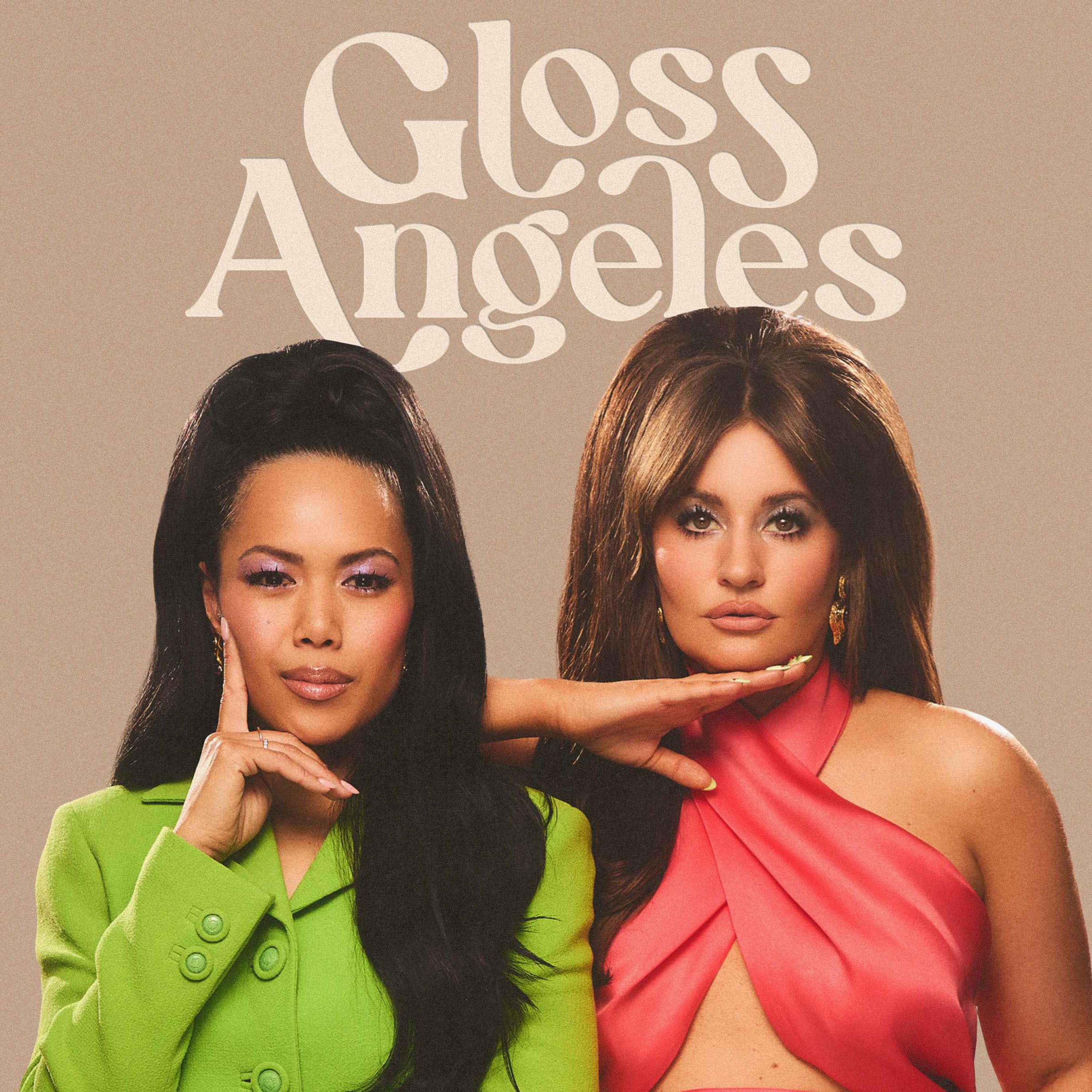
Gloss Angeles
The Lipstick Lesbians Talk Shade Matching, Talc and Tariffs, Pluus More Behind-the-Scenes in Beauty
01:08:59
Loading summary
Transcript469 lines
- [00:00]
Alexis
Hey, prime members, are you tired of ads interfering with your favorite podcasts?
- [00:04]
Christina
Good news.
- [00:05]
Alexis
With Amazon Music, you have access to the largest catalog of ad free top podcasts included with your prime membership. To start listening, download the Amazon music app for free or go to Amazon.com ad free podcasts. That's Amazon.com ad freepodcasts to catch up on the latest episodes without the ads. G L A M Los Angeles.
- [00:35]
Kirby
Hi, Kirby.
- [00:36]
Sarah
Hi, Sarah. Welcome to Los Angeles. I'm not even going to do an intro like you've seen the title of ep, like, here. We are so excited.
- [00:51]
Alexis
The lipstick lesbians are here in the flesh.
- [00:54]
Sarah
Christina and Alexis, thank you both so much for being here.
- [00:56]
Christina
Thank you.
- [00:57]
Alexis
I feel like today's a special edition Valentine's episode.
- [00:59]
Sarah
I know. We're filming this on Valentine's. And you have this beautiful, like, rose.
- [01:04]
Alexis
I was very inspired.
- [01:05]
Sarah
You're very sexy. Actually, we're seeing collarbones.
- [01:08]
Alexis
I get invited into my sexy era.
- [01:12]
Sarah
Oh, my gosh.
- [01:13]
Christina
Wait Almost for it. Not me. Not you.
- [01:17]
Sarah
No, not me.
- [01:18]
Alexis
But you're here for. No, no, no.
- [01:19]
Christina
Just.
- [01:20]
Kirby
We need to talk about the hair.
- [01:22]
Alexis
That's the all the year invitation of the sexy era.
- [01:25]
Sarah
I mean, I feel like both of you just look so sleek, so put together.
- [01:30]
Alexis
Both.
- [01:30]
Sarah
You're in your sexy era.
- [01:32]
Alexis
Yes.
- [01:32]
Christina
Thank you.
- [01:33]
Alexis
Not about me, babe.
- [01:36]
Sarah
No, no, she knows. I'm actually. Can I ask you about this? You're like, I was forced into my sexy area, but I feel like I've entered, like, my more feminine era in the past, like, age.
- [01:44]
Alexis
I love this.
- [01:45]
Christina
It's interesting you're leading with that feminine. Yeah. Because I feel like with our content, not to get into our content, but I feel like, you know, a lot of people that reach out, it's really about, like, the healing of the feminine, too.
- [01:55]
Kirby
Yes.
- [01:56]
Christina
And I think that there's, like, this era of just, like, rejoicing and reclaiming the feminine happening 100%, and I think we're a part of that. Really fascinating.
- [02:04]
Kirby
Absolutely.
- [02:05]
Sarah
I totally agree. I mean, if you're watching this, I'm wearing fur. I'm really trying to, like, enter this feminine because I feel like we have to be so strong for so many different people, so many different things going on in our lives, and we're able to just. I mean, when I'm with my girlfriends, I'm able to just kind of, like, let go. When I'm talking about beauty, I don't feel like I have to have this, like, guard up. You just kind of let. Let go and enjoy it.
- [02:29]
Kirby
Yes, but there's power in femininity.
- [02:31]
Christina
Yeah, that's exactly right.
- [02:34]
Sarah
Okay, we just want to quickly get in. So we have these two separate questions because everyone's like product formulators, product developers. Product. But you are the product developer.
- [02:44]
Alexis
Yes.
- [02:45]
Sarah
You are Alexis.
- [02:47]
Alexis
No, no, I know.
- [02:48]
Christina
For confused.
- [02:50]
Sarah
Yes. For those that are not watching, Alexis, product developer and Christina, educator and like digital extraordinaire. You understand digital education, what people want to see and how people consume content.
- [03:02]
Christina
Yes.
- [03:03]
Sarah
Not to, like, take it all the way back, but, like, how did you guys figure out that this was gonna work?
- [03:07]
Christina
Oh, gosh.
- [03:09]
Alexis
That is taking it all the way back. But it dovetails really beautifully into this. A little bit of hiding, as I call it. And I was hiding behind clients of mine as a consultant. Hiding behind a little bit perhaps of just lowering my volume as a person. A lot of the reclamation of the femininity and the skin. And I keep talking about. I was kind of pushed into this sexy era by Chris McMillan and our stylist, Sally Lindley. She's Sally Lindley. Shout out to Sally Lindley. She's been yelling at me for two months. I need to see skin on camera. Alexis. Skin, skin, skin.
- [03:44]
Christina
I'm here for it.
- [03:45]
Alexis
I'm here for it.
- [03:46]
Kirby
Oh, absolutely.
- [03:47]
Alexis
She's right. She's right. And it's a reclamation. To go back to our beginning, I started on a retail sales floor. So my beginnings were at the age of 19. I worked for Nars Kazi Cosmetics retail. And specifically what stuck out to me as a 19 year old, and we're going back to 2006, is that not one woman ever came into the sales floor. Came up to the. At the time we were, you know, the bay and sat down in my chair and ever had anything nice to say about herself when she looked in the mirror. And this is a story that fast forward, you know, at that time, it was almost, you know, it was 2014. My first date with a woman ever. Who is the woman that's sitting next to me, who is now my wife.
- [04:28]
Sarah
Oh, my God.
- [04:30]
Christina
It's crazy, right?
- [04:31]
Alexis
I'm literally pitching her on starting a beauty brand and that telling her, mind you, I had just been let go of my first job ever in corporate beauty. But I'm pitching her that I'm gonna start a brand one day. And the brand was, in many ways, just for me, the dream to start a beauty brand. But it was also about being an entrepreneur and it was also about power and it was also about all the things that we're talking. We're gonna be talking about today.
- [04:56]
Christina
Well, mind you, also, like, when she was pitching me this brand, she was talking about cosmetics and breaking them down and where they're made and the manufacturing side. And I've never heard anyone talk about beauty that way. But I'm also wasn't traditionally a beauty girly. Even now I'm like, I'm not a beauty girly, But I guess I am.
- [05:10]
Sarah
You totally are.
- [05:11]
Christina
But it was really interesting because I even remember talking to my therapist about it at times. Like, I met this girl. She's really into beauty, but it's not like a makeup artist, which was great for makeup artists, but it was just deeper. It was like this love and passion and the way, you know, the cosmetics formulation, breaking it down. And she was like, she's intellectual. I was like, yes, she's intellectual.
- [05:30]
Kirby
So how did you guys meet?
- [05:31]
Alexis
Tinder.
- [05:32]
Christina
Tinder. Shout out to Tinder. It's the Tinder gods.
- [05:34]
Alexis
Wow.
- [05:35]
Kirby
Who sent the first message?
- [05:37]
Alexis
I did. It was about two to three weeks after I moved the NAJ over to liking men and women. And I had a series of events that led up to this big, mega moment. Because a part of reclaiming your feminine and a part of actually loving your feminine is also, for me, it was this beauty renaissance of how do I be a lesbian who loves makeup as much as I do? I actually cut my hair really short.
- [06:02]
Christina
Yeah. When I met her, she had one.
- [06:03]
Alexis
Point shorter than it is in this moment. And up until, you know, five days ago, my hair was a lot longer because I was letting it grow.
- [06:10]
Christina
Also, you didn't wear lipstick on the first date.
- [06:13]
Alexis
I was very, very confused about the. The stereotypes placed on lesbian women. And I thought at that time, and this is my mid-20s, that I had to embody a certain aesthetic to be a lesbian. So this is a path of self discovery. And a lot of that self discovery is what leads to what you see today, which are we don't. We're not necessarily outwardly discussing lesbianism, but we are just being authentically ourselves in.
- [06:40]
Christina
The nature of the always remind you that we're lesbian because our handles the lipstick lesbians. But it's not about being gay.
- [06:45]
Alexis
No. It's about reclaiming really just who you want to be as a human and understanding who you are as a human. And a lot of the journey of the decade plus that Christine and I have been together, we've had the luxury in our relationship to explore each other, but we've also had the luxury to give each other space and time to explore Ourselves through careers. We've lived, like, seven lives at this point being together. So it wasn't ever a situation where we knew we were going to make it, especially in social media. But we did really believe in ourselves. So that first date, five years later, we were in a slightly more comfortable, established position in our careers. And Christina kind of looked at me. This is around 2018.
- [07:30]
Christina
It was the Women's March.
- [07:31]
Alexis
It was the Women's March 2017, 2018 era. At the time, I was working at a strategic Shiseido. I had reached the pinnacle of my goal at the time, which was to. Because I started with nars, I wanted to work for NARS corporate instead. I ended up as close as you could be at Shiseido, the parent company of nars, the Makeup center of Excellence. And it was. It worked out even better for. For me. But ultimately, Christina was like, you're so ready. You've. You stacked the. The experiences in a way that take the plunge. I have the health insurance. Let's become domestic partners. Go become a consultant. Let's do the brand. Let's go. And it was her education lens. One night, many things for us happened over beautiful Nebbiolos and Barolos at an Italian restaurant, ironically. And you were discussing something that one of your students challenged you with.
- [08:24]
Christina
Yeah. Cause I was an English teacher at the time, and we were talking about the story of Adam and Eve. I don't even remember how, but I will never forget Lukensen and him challenging me. And we were drinking about it over wine that night, and it was like, wait, what if that's the story of our lipstick company? What if we ask questions like, well, what if Adam took a bite out of the apple first? How would life be different? And that was the catalyst to our four lipsticks that we did manufactured in Italy with some great suppliers that Alexis had relationships with.
- [08:48]
Alexis
Yeah.
- [08:49]
Christina
And 2019, it was reverse of femme, power of beauty. Talk about empowering the feminine was always the mission.
- [08:55]
Sarah
Yes.
- [08:56]
Christina
Right. And female empowerment. And that was our launch of our brand. It was.
- [08:59]
Alexis
And it was all about asking questions. And we had this. This beautiful goal of affirming, you know, all the folks that were attracted to our brand, whether you were non binary, whether you were queer, whether you were a woman, whether you just wanted to reclaim one part of yourself or rewrite a part of yourself. We wanted to invite you to do that with our brand. And the irony is that in 2019, we had kicked off in terms of a launch slow to start a little bit, but we started building up more and more traction. We ended up, six months into the launch, finding ourselves on Good Morning America.
- [09:32]
Christina
Robin Roberts, who outed me on live tv.
- [09:33]
Alexis
Literally.
- [09:34]
Christina
Hilarious. I don't even think she knows this.
- [09:36]
Alexis
No, I don't think Robert Robin Roberts knows. That's so funny. I had surprised Christina with a proposal two days or one day before, I think Good Morning America. And it was World Pride that year in New York. I had at the time asked if I could propose to her at the Wing. Rip Wing.
- [09:53]
Sarah
Wow.
- [09:54]
Alexis
And we did it in Flatiron, like in Audrey Gelman's church, as we called it. And we had this beautiful surprise engagement party at the wing on the rooftop.
- [10:04]
Christina
In Flatiron before Good Morning America. And then on Good Morning America, she's like, oh, and congratulations on the engagement. I'm like, yeah.
- [10:10]
Alexis
And it was. It was peak girl boss era. It was Sophia Amoruso.
- [10:15]
Christina
And we got a large check by her. And Sophia Maru saw on tv. It was amazing.
- [10:19]
Alexis
It was when she launched, that was.
- [10:20]
Kirby
Such like a moment.
- [10:22]
Christina
2019.
- [10:23]
Kirby
Oh my gosh.
- [10:23]
Christina
Yes. It was a summer.
- [10:24]
Alexis
That's how far back we've been in the entrepreneurship game.
- [10:27]
Christina
Yeah. And it was right before. We all know what happened right in 2020. So we were on like this ascent with our beauty brand and then 2020 and we sold lipsticks that weren't transfer proof and boom. All of a sudden it was like, whoa.
- [10:38]
Alexis
Everything came kind of screeching.
- [10:40]
Christina
We didn't have any money left to really do anything because we completely self funded our brand. And it's not something I would recommend. If you're listening, don't self fund your beauty brand. Right.
- [10:49]
Kirby
Wait, why?
- [10:50]
Sarah
Why?
- [10:50]
Kirby
Because I feel like we. We have so many founders on the pod and some would argue that you should.
- [10:55]
Christina
Oh my God. I mean, why?
- [10:57]
Kirby
Why not?
- [10:58]
Christina
I guess they'll do it in the way we did it. To clarify, I think it's because we believed in ourselves so much, we just kept on pouring money into it over and over and over again. And I think we had an understanding. It would cost a lot of money, but it got to the point where obviously, like a cataclysmic thing such as Covid, like no one could anticipate that. And that being said, I know a lot of beauty brands also flourished, especially skincare. You know, the maintenance of the website, the fulfillment centers, the developing new products, the photo shoots, digital marketing, social media, paid advertising. I think to do a beauty brand correctly, just to launch, I think you would need at least a million dollars.
- [11:36]
Alexis
Minimum.
- [11:36]
Christina
Minimum.
- [11:36]
Alexis
I would say, basically.
- [11:37]
Christina
And if you have that and you're comfortable doing that, then, yes, go ahead and do that. But I would. My suggestion would be get some traction first. Don't just do it like what we did. No one knew who we were.
- [11:49]
Alexis
Right.
- [11:49]
Christina
We just really believed in ourselves so much. And I believed in Alexis and the way that she spoke about beauty. Because on that first date, what I identified and why I brought up the intellectual piece of my therapist is that I knew that she had a literacy of beauty that was so deep and that could help so many people. And that's what we invested in. Right.
- [12:07]
Alexis
It was very much mental health oriented.
- [12:10]
Christina
Right. But, you know, a mission along the way, finding the right people. I mean, off the podcast, I can tell you guys so many stories. Oh, my God, that f. The server, you know, just wanting money to milk founders and, you know, really didn't come through with the promises that they said they would deliver on. Right. So it's just. It's really tough out there, and it's hard to discern who's going to do the job right for you. And I think there's a lot of people just doing money grabs for founders, and it's really hard to find the right team, especially when you're bootstrapped. And I think when you have investment, it's easier to make these decisions and to move swiftly than when you have your own money.
- [12:47]
Alexis
Also, they come from a world of having done this before. They have networks, they have people in place. We've learned all this. And I shared this, actually at the makeup show with someone who came up to us. She was really worried about taking on investment. I said, okay, it could be angel investment. It doesn't have to be institutional capital. And she said, won't I lose creative freedom? I said, well, sometimes your budget restricts creative freedom in the same way a theoretical investor would. At least the investor is putting. It's like putting bumpers on to play bowling. So bumpers are a safety net. There's no shame in bumpers.
- [13:23]
Sarah
And also, there's a chance that it could go your way.
- [13:25]
Christina
Correct.
- [13:26]
Sarah
If you don't have the budget yourself, then there's no chance. There's no chance.
- [13:30]
Christina
Right, exactly. And, you know, I'm coming from a place of. We literally almost hit bankruptcy. Oh, my gosh.
- [13:36]
Alexis
Six months after our wedding.
- [13:37]
Christina
Really close. I mean, it was to the point where right before you went viral, you were calling bankruptcy lawyers.
- [13:42]
Alexis
Oh, yeah. And we like to be really transparent about it.
- [13:44]
Christina
We were very transparent about this because we believed in ourselves so much that we poured all of our money into this. But like, that's a really silly decision, you know, and also, like, we're older, we want to start a family. And I remember in September 2023, right before we went viral, I was thinking to myself, like, how are we going to do this? Like, we just got married. We were literally calling bankruptcy lawyers. Like, I don't know, like this brand literally took us out. Like we were going to have to.
- [14:09]
Alexis
Close the brand, which is really devastating. When you poured, you know, it was so devastating and your life into it.
- [14:15]
Christina
Look, I think the quality of being a founder is being relentless and we are totally relentless. You know, again, when we went into store that day, I mean, it's a crazy story. You also like got let go of your job and then lost half your hearing. And then we went viral, which is just absolutely insane.
- [14:30]
Alexis
All within a period of like, wedding is July, and then bankruptcy lawyer conversations start in September. By December, an opportunity that I had with a client that I'd been working with for five years was supposed to be a full time position. It just kept getting pushed, pushed, pushed until it became a non existent opportunity. So literally within two days of each other hearing loss. First I'm still trying to figure out what it was that created the hearing loss, and then I'm literally walking out to go to like a doctor's appointment and I get a call abruptly one day. And that was the end of a five year relationship, but also of what I thought was my big next opportunity that I had been waiting for. And this is another lesson. You never sit and wait for anyone else's dream. And you never sit and wait. And you never, ever listen to promises that might be unfulfillable. Not even because the person has ill intentions, because they don't know.
- [15:25]
Christina
But I also think, to be fair, that you were holding onto that opportunity because you were comfortable hiding behind someone else's shadow.
- [15:31]
Alexis
So there's fear.
- [15:32]
Christina
Something to acknowledge too.
- [15:33]
Alexis
There is. There was me hiding. There was me hiding parts of myself. There was me terrified to step out of a shadow and take risks. Especially because our brand wasn't the success that I imagined or hoped it would be. Yes, there was shame in that. There was shame in facing bankruptcy. There was shame in failing my wife, who was looking at me like, so what do we do now? And I was like, that's a great question.
- [15:58]
Christina
Scary time. It was a really scary time.
- [16:00]
Alexis
And this is where I would say, like, I think of Gary Vee often because Gary Vee, man.
- [16:06]
Christina
Gary Vee, man. Yeah, I can't wait to meet this man.
- [16:11]
Alexis
The only man that matters in our world.
- [16:13]
Christina
Yeah, yeah.
- [16:14]
Sarah
No, it's gonna be a tornado when the three of you get together.
- [16:19]
Alexis
But realistically, that's like Gary Vee.
- [16:21]
Christina
Yeah.
- [16:21]
Alexis
The summer we got married, that really. I think that for Christina, she finished her PhD and she replaced all that energy and time that she spent studying. She replaced it with Gary's lessons and she got me hooked too. We ended up going to one of his conferences before our wedding. VCon. The first or the second Beacon, I think it was. Yeah, no, the first. It was the first. Right. So it gave me buy in to social media, that conference. His conference. Cause before I was. I. I literally despised social media. I never opened TikTok. I resented it. I perceived it in the wrong way.
- [17:00]
Christina
Well, it's because she used to watch Influencers and she used to scream at her phone and she used to be like, how. Why give me more? You're not explaining it.
- [17:07]
Alexis
You know, it would make me so.
- [17:09]
Christina
But then I would turn around and say to her, I was like, so you do it?
- [17:11]
Alexis
Yeah. So she would say. And then that would piss me off even more because I didn't know how to.
- [17:17]
Sarah
Hiding.
- [17:17]
Alexis
You're used to being behind the scenes.
- [17:19]
Sarah
Exactly. In the shadow. So you're like. But I. It's also the fear of being perceived.
- [17:24]
Christina
Yeah. You know, putting yourself out there.
- [17:26]
Sarah
I don't want to put words in your mouth.
- [17:27]
Alexis
No, absolutely. And then how do you even. How do you give away. You're literally, legally, contractually not allowed to disclose any of what you do as a product developer. And every single product developer that works at a strategic or any major mainstream brand that people love, they're not allowed really to disclose anything. So it puts you at this. You're afraid to lose your job. And you will get, you know, you will get called out in a way too. Like things I'm sure are shifting since our. And we will definitely talk about that a little bit.
- [18:01]
Sarah
I definitely think things are shifting.
- [18:03]
Christina
And I just want to say one thing about the fempire because you brought up a good point about why. I think what our mistake was with Fempower and doing a lot of reflection is that we didn't fail fast.
- [18:11]
Alexis
Correct.
- [18:12]
Christina
And I think that's what a lot of founders, you know, to the advice of like, yeah, you could bootstrap your brand but just fail quickly. Because what we did is that we held onto something for so long and poured so much money into something that.
- [18:24]
Alexis
Like we had to fail seven ways, not one.
- [18:27]
Christina
The Truth is, is that the minute we let go, like, don't give up. But maybe don't give up looks a little differently. Maybe it's not. Don't give up on the same idea. If something's not working, acknowledge it's not working and then move to something else. Right. And try something else. Because the second that we let go of the idea of femme power, that we were going to close it, that fine, we don't have the funds for it anymore. We need to figure out, maybe you need to get another job.
- [18:49]
Alexis
I was looking at full time jobs.
- [18:50]
Christina
And then she's talking about a product that's not our own and we go viral. And then all of a sudden the lipstick lesbians. Right, Lesbians that own lipstick. Because we started the handle. Because I wanted to get ourselves out there as the founders of this company. Took completely new meaning. Right? So we still didn't give up, but it looked a little different. And that's the advice for founders, really, that want to start and do something on their own. Like, you could do it, but like, be mindful because it's your own money. Like, it can get expensive really quickly and it can go detrimental really fast. Like, what we did was not necessarily smart because you may not go viral. Right. But again, it may look different.
- [19:22]
Sarah
You know, I just have to say, and I'm gonna, this is a bold statement. This is the best conversation we've had on this podcast. It's 27 minutes in. I wish we had four hours. This is going to be one of our best, if not best episodes.
- [19:37]
Christina
Yeah.
- [19:37]
Sarah
And obviously you guys know what you're doing. You're used to being on camera, you're used to talking, you're used to educating. You're thinking about the listener. I'm sure our listeners are like, oh, my God, I'm taking notes right now. But I am so fulfilled. I'm just sitting back like, tell me more, tell me more.
- [19:52]
Kirby
But there's like so many reasons why we love you guys. And the fact that, like the thing that you said when you were like, we were watching these influencers and you wanted to like scream at them, that's like one of the main reasons why we started this podcast.
- [20:02]
Christina
Oh, really?
- [20:03]
Kirby
Because as journalists and, you know, beauty reporters, you know, we're trained to test a product a certain way, Fact check, fact check. You know, interview the founders, the product developers, you know, tell the story behind it. And there was so much of that not happening. And so we were like, we need to do.
- [20:20]
Christina
And even to educate.
- [20:22]
Sarah
Yeah. Just going back to how do you properly test some of these? Pro. I remember, and I've mentioned this before on the podcast, but Tati Westbrook tried the Dyson Airwrap and she didn't try it properly and she said it was shit. And I'm like, I'm screaming at my you. I'm like, do I make a troll account at this point? To be like, you're using it wrong. Like, what is going on?
- [20:41]
Kirby
You can make a whole podcast episode of us just saying, user error. We talk about it all the time.
- [20:46]
Alexis
It's a huge problem.
- [20:47]
Sarah
It's our buzzword.
- [20:48]
Alexis
It's a lapse of education.
- [20:50]
Christina
Right.
- [20:50]
Alexis
And it starts at the brand level, but it. And then it just trickles into the influencer marketing space. And we've talked about this and it's.
- [20:59]
Christina
There's gaps that exist in the industry that caused this as well. It's like, you know, and I think, you know, a lot of the times it's the philosophy of the brand. Like, sometimes you'll have a marketing that's separate from the product development department, and, you know, sometimes they'll be the same. Right. So, like, what is the philosophy of the brand and what is the outcome of that product? And then, you know, on our side, what's really interesting for you, right, is that you were a part of those product development teams at the company, but now you're on the influencer side. But we're still in, like, the B2B space still. But we get the briefs from the company and it's so clear when the briefs are not communicated to the people that are making the formulations. Oh, yeah, right. And vice versa. And then, like, there's a lot of times that we'll take partnerships with brands and we won't follow the brief at all. And we'll teach the marketing teams more about the product than the brief hat including the influencer.
- [21:43]
Alexis
Especially if they're influencer marketers and not product marketers.
- [21:46]
Sarah
100%. And I also think that, you know, Sarah and I both make content as well.
- [21:50]
Alexis
Right.
- [21:50]
Sarah
And we do sponsored content. But a, we have to try the products first.
- [21:54]
Alexis
Absolutely.
- [21:55]
Sarah
So many influencers are not. So many content creators are not. And they really aren't in that space. I can't tell you how many different reviews of products in the last month that I've seen where people are trying something and saying that it's terrible or didn't work. And I'm like, that is not how this product is supposed to work.
- [22:10]
Alexis
Right, Right.
- [22:10]
Sarah
And it really is an education thing.
- [22:12]
Kirby
They don't read the brief at all.
- [22:15]
Sarah
Right. And then also, I think Sarah and I, too, to y'all's point also, we have the wherewithal where we're going. Why are they marketing it this way?
- [22:23]
Christina
Right.
- [22:24]
Sarah
This is weird. This doesn't make any sense.
- [22:26]
Alexis
Right.
- [22:26]
Sarah
And maybe it's actually better if we do it this way. Now it's up to the brand. If they really. It's kind of like, take it or leave. This is how we're going to talk about this product, because we feel like this is the most beneficial. It's not on brand for us. For us to say any of these things that you guys are really trying to. Sometimes they get ahead of themselves with the messaging. They're like, this message has to be out there. And you're like, but that's not gonna resonate with people. And that's not actually how this product is gonna work the best.
- [22:51]
Alexis
Right?
- [22:52]
Sarah
Right. Okay, we're hitting 30 minutes. I wanna make sure we get through some of these listener questions because literally, they will kill us if we don't at least get to a few of them. We're gonna kick things off with Emily Buckland. Okay. She says, why do some products, actual colors look different in the packaging than when applied?
- [23:08]
Alexis
That was a great question.
- [23:09]
Sarah
For example, do certain types of glass, frosted or et cetera, make the color of the foundation appear different than once it looks like pumped out? Or like Kirby's example of the rare contour. Why can a color change so much once applied?
- [23:23]
Kirby
We have to talk about that product.
- [23:24]
Sarah
I've been talking a lot. I do love this rare beauty contour. I think it's a beautiful product. However, I use it as a bronzer because even though it looks cool toned, when I put it on my face, even when I dab it on my face, when I blend it out, it turns warm.
- [23:35]
Kirby
What was the intention behind that? For the. For the brand?
- [23:38]
Alexis
So first. First and foremost, anytime you see something frosted, usually it's an indication that when the brand did something called compatibility testing, which means it's basically the brand testing the marriage of the package and the bulk, that they would have seen perhaps some aesthetic kind of unsexiness that they want to soften, and the frost softens the aesthetic unsexiness.
- [24:02]
Sarah
Okay.
- [24:02]
Alexis
When you see clear glass, it's because the brand wants you to see the shade. And typically. Right. Even if it's clear plastic, especially when you think about mass market, that's their best way to sell a product. Because there's no testers in the United States, we know in other countries there are, but in the US if it's in clear, it's so that the user can see the color. The mass tone is what we call that. Now, anytime you introduce a silicone or a volatile material into a type of base, you're immediately going to see what we call a mass tone and dry down variation. So literally, as a product developer, you need to assess the mass tone and the tone at dry down. Because I can't tell you how many projects I've worked on where you're literally ping ponging back and forth with a chemist. Right. And this is happening especially during the time of the pandemic over email and videos where you're evaluating the shade, what it is wet. But that shade is totally different when it dries. So when you think back to fenty, and a lot of consumers know this as oxidation. Yes. If you were to ask a chemist, is oxidation real, they know that as a consumer facing word, it's not really oxidizing per se. The color is drying and it's drying to a finished tone. And the reason for that is the raw materials, again, silicones and volatiles, which are typically very present inside of liquid foundations in the case of a liquid formula like Rare's Contour. So how did we get to market with that? I have a philosophy. I don't know the product development team. This is my personal opinion, but I've studied the ingredient listing I've looked at. The most successful blush at Sephora right now is Rare Beauties. As of the time of this recording, they took that wildly successful formula base and they infused a little bit more of what we would consider like a film former or film forming polymer. And that is what's going to give the contour. And I'm using air quotes. For those that don't love calling it a contour, let's call it a brontour.
- [26:06]
Sarah
That's cute.
- [26:07]
Alexis
The brontour definitely has that difference on dry down because it has more performance than the blush. And that is a technical explanation as to why the formula is drying down a little differently. We made an entire piece of content about this. And I literally showcased one side of my face specifically with the shift. And then I took basic blue pigment from the makeup Forever Flash palette, my vintage palette. And I showcased how we can turn something like this to be cool toned. So it's not that you can't have this formula, the Rare formula, be cool toned. It's that think back to the philosophy of the Rare beauty brand. It's about accessible beauty. It's about easy to use beauty. If I were to blindfold myself, I can blend that product onto my face.
- [26:56]
Sarah
Totally.
- [26:56]
Alexis
So do we think about the end user and the consumer? I would love personally for Rare Beauty to panel test their community as to whether or not they prefer the warmth that it dries down to or they don't. And that, to me, is what's not happening in beauty right now.
- [27:13]
Sarah
Yes. Okay.
- [27:13]
Alexis
Brands are not having the conversation with the end user. The products are going to the Internet. And it's like the Internet's having its way with it.
- [27:22]
Christina
I feel like it's like that. What is that? That hive mentality too. Right. There's gonna be a. A big message that's understood about this contour. Right. And then that's it.
- [27:31]
Alexis
Right.
- [27:31]
Christina
But it's the education that needs to.
- [27:33]
Alexis
The education is missing, in a sense that this goes to market. Right. And then the product can become grossly misunderstood really fast.
- [27:40]
Christina
Yes.
- [27:41]
Alexis
But the question is, does that hurt the brand or help the brand? That's the real question.
- [27:46]
Sarah
Yeah.
- [27:46]
Alexis
And did more people. And this goes back to lashgate. Cause lashgate. For me personally, that was the first. That was the first. The first time I participated in a viral movement where rampant virality took over and it blew my mind. I sat back, I watched, I listened.
- [28:08]
Christina
It was also month one of our.
- [28:09]
Alexis
It was month one. So I was not in a position of power at all, nor did I necessarily feel the need to go onto a platform and kind of call somebody out or call anybody out for that matter.
- [28:21]
Sarah
You both do a great job of making sure that you.
- [28:24]
Kirby
Yeah, you really do.
- [28:25]
Alexis
It's about. It's the intention. And I believe. And this goes back to even a quick note on how hard I do believe it is to be an influencer, because I will validate if every single career I've had in this industry, this is the hardest I've ever worked in my life.
- [28:40]
Sarah
Totally.
- [28:41]
Alexis
Specifically, there's so much that's out of our control. And the truth is when I reflect on the influencers, I reflect on who is going to teach them these things. How. There is no. There is no handbook. We're in the infancy of the influencer era. So I'm not even blaming the influencer. And after two years and a few months, I blame more so the brands for lacking to educate the content creators and then letting the Internet have its way. Because specifically, what's happening is again, these are hitting the market. The Internet's having its way. But again, is it hurting or Helping the brand. We don't know. We don't know what's happening over at Rare. Again, we don't know. We do know that, that L'Oreal probably sold more mascaras because of Lash Gate than they would have had there not been a scandal. We know that.
- [29:29]
Sarah
I went and bought it.
- [29:30]
Alexis
I went and bought it and I said I was new.
- [29:33]
Sarah
I'm not gonna wait for pr. I need to have it now.
- [29:35]
Alexis
And we're gonna have it and we're gonna buy it and we need to have the conversation. But what is the resolution?
- [29:41]
Kirby
Yeah.
- [29:42]
Alexis
Have we learned anything?
- [29:43]
Sarah
Totally.
- [29:44]
Alexis
Has the brand learned anything? Have we shifted the industry or are we feeding TikTok in a way, and YouTube and Instagram in a way that's putting money in advertisers pockets or these platforms pockets or these parent companies. I don't even know who owns what. You know, in the TikTok world, it's confusing to me. In Meta's pockets. Right. In Google's pockets. And great, let's let everyone get paid. But really like at the human level, does that 13 year old girl or boy or human going to buy the rare beauty contour, do they know what the hell they're doing and do they know if it's good or bad? And more importantly, do they know if it's for them?
- [30:23]
Sarah
Right, right.
- [30:24]
Kirby
So does that frustrate you at all as a product developer and an influencer?
- [30:29]
Alexis
Yes, it does, because we should all be endeavoring to decipher this market for the user. And you could do that through art. You could do that through the way you apply it. You could do that through jokes. You could do that. Like Christina Kirkman makes comedy, she makes beauty comedic. And I love it. I love watching it. It's fun. Everybody brings their art to the platform. Bring your art, bring your community and at least give a point of view, whether it's your skin tone, your application technique, your hack, your personality. But don't just jump on a viral movement or a viral moment for the sake of virality, which is very much what a lot of influencers have to do.
- [31:09]
Sarah
Are you in my head? Literally, I just went on a rant about this because I'm like.
- [31:14]
Alexis
And we're influencers, right? Yes, we're allowed to say this.
- [31:16]
Christina
I guess Alexis doesn't love that word.
- [31:17]
Sarah
But no, I don't either, either. But I do have respect. Like I call myself a content creator. I have a lot of respect for people who do call themselves influencers who are able to sell. If you can sell a product and a lot of it, that is a trait that is valuable. So I have a lot of respect for it. But I do have problems when I see people jumping on a bandwagon to do something just because it's viral at the moment and it'll get them. Engagement. That's a personal vendetta I have against people.
- [31:47]
Alexis
Me too.
- [31:47]
Sarah
I don't like it. It feels not altruistic to like the common good of the community. I think this situation with Rare, people love Rare's products.
- [31:58]
Alexis
Yeah.
- [31:58]
Sarah
And even though I don't see it as a. I still use a contour. Even when I use that product, I still love that product. I'm still using it every day.
- [32:07]
Alexis
That's great.
- [32:07]
Sarah
It's still easy for me to apply to my face. And I guarantee you the 13 year old going into Sephora is just like, I want to look bronze. I think that Rare Beauty has one. So maybe their messaging about it being a contour has been like lost in the sauce now, but people are still probably buying it and using it without with it goes back to like the intended use. Like they're not using it the way it's supposed to be.
- [32:29]
Christina
I think there's definitely a lack of education around that launch though.
- [32:32]
Sarah
Yeah, for sure.
- [32:33]
Christina
Totally.
- [32:34]
Sarah
Totally.
- [32:34]
Kirby
Do you think it's just because we need to move on to the next? Because it's just they're like brands need to get product out quickly so they don't miss the opportunity.
- [32:42]
Alexis
It's systemic. It's systemic and it's very much so multifaceted and it's so much deeper than we even have the time to like delve into. But it always at the end of the day is gonna boil down to the industry and commerce. This is a commerce driven market. Right. Sephora, Ulta, Amazon, Walmart, these are the players of the game. Who's doing the best right now? Right. Who's doing the best brick and mortar? Who's doing the best online? And then these platforms are feeding those retailers and then it's a game again. Who has mastered it and when they're in the number one slot and for how long they're in the number one slot. That is the question and that is the ever evolving game. And at the end of the day, do the consumers care about that? I don't know. What I do know is that every person that's in our DMs wants help.
- [33:34]
Sarah
Yes.
- [33:35]
Alexis
So that's what we're gonna provide to the best of our ability.
- [33:37]
Christina
And lots of questions.
- [33:38]
Alexis
Right. Okay.
- [33:40]
Kirby
Speaking of next Question from Mallory Gendron. Why did replacing talc with mica ruin capital? Ruin certain blushes? Looking at you, NARS and tart. But other blushes formulated without talc performed just fine. Was it a rush job on their parts, or does mica have a terrible color payoff compared to talc?
- [33:59]
Sarah
Okay, wait, hold on. I just want to say I like the new NARS formulation, but I have seen people say that, oh, this was patchy. I don't like it as much, but when they launched it, I'm like, all in.
- [34:11]
Kirby
Do you think it's just because people are used to the original version, the old version?
- [34:14]
Sarah
I don't know. Okay, so what are your thoughts?
- [34:17]
Christina
This is a you question.
- [34:18]
Kirby
Who cares about that?
- [34:19]
Christina
What are you gonna say?
- [34:21]
Alexis
I'm laughing. So we were.
- [34:23]
Christina
You were a Nars girly too? You work for Nars for 8 years.
- [34:25]
Alexis
I worked for Nars for 8 years. I know that formula. The original blush formula. That and the original bronzer formula is probably better than most, I would say. So it's really important to understand that when we're talking about powder, you have to understand the fundamentals of powder in terms of the raws. The raw materials. They're all primarily for the base. White. And I mean really, really white. Oh, really? So mica is really, really. It's actually a little dirty looking. It's almost yellow, cream, beige. But there are. When you go to the supermarket and when you're ready to buy ketchup or salad dressing, how many options from brands do you have? Is Heinz the best ketchup? Is it Hunt's or. I don't even know the other brands. So let's call it tomato sauce. Cause at least there's. I can think of 10 of those types of brands. Totally. They all have tomatoes. Some of them are all Italian tomatoes. Some of them are not. Blah, blah, blah. The point is, you can choose 50 different micas, you can go to 50 different raw material suppliers. There will be a variance in the tone of your mica based on what vendor you're buying it from. There's also a category of mica called synthetic mica. Not only does mica vary in its color, which impacts the base, which impacts the payoff, which impacts everything. The texture, the sensoriality. You also have to consider the level of pearl. So synthetic micas sometimes come with a level of pearl that the. The traditional talc certainly does not have. So it's never a simple, okay, nars. And why does nars have to take talc out of their blush? It is A brand decision. But talc is being primarily phased out because of the number of lawsuits that brands have been under, primarily led by JJ having to do some crazy payout. So brands have a little bit of fear inside of them now. So they're taking out talc as a precautionary measure. But Huda Beauty's Easy Bake still has talc in it. A lot of products on the market doesn't.
- [36:21]
Sarah
Charlotte's.
- [36:21]
Alexis
I was gonna say Charlotte still has talc. And talc works really well at absorbing oil, at being smooth and as an opacifying agent. They used to use talc in lipsticks to make it more opaque, like bullet, classic bullets. So you remove talc and most importantly, talc was cheap, but the stable. Right. Like a reliable boyfriend, girlfriend, partner. So now we have to not just remove talc, one single ingredient and replace it with one single ingredient. You need to restructure your whole entire recipe. Like tomato sauce. One brand may be more liquid, one other brand may be more thick. If you're doing diced tomatoes versus crushed tomatoes and you're making a sauce, you have to adjust the viscosity. If it's going to be a cream sauce or if it's going to have body and texture, same situation, they need to make adjustments that are going to then reflect how does the product, product pickup, how does it lay down, how opaque, how much opacity does it have? Right. And they can't just swap one thing out. They need to rebalance the whole thing. And the worst part for every brand is that it's going to cost more in 99% of instances. So it's a balancing act, it's a cost of goods exercise. Because the last thing you would want is for a better powder to come out, but for them to have to charge you $5 more. And in many cases, the cost of goods that they have to rectify or recover will be a number. Like they have to incur the cost of goods, meaning that it went up more, it became more expensive, and they have to not charge you more. So it's a game. It goes back to the money and ultimately like to me again, I do, I think they, I think they did a great job with the NARS blush. I would have wanted to see them push it and go a little further into maybe a next generation powder. Some of what we're seeing hit the market soon, if not already. But NARS made a very strategic decision. Powder Blush Orgasm, namely built their business totally. They can't take their number one selling product and make it unrecognizable and appease the consumer and still be like, it's a really tall order is what I have to say. And I don't envy the product developer that reformulated that blush, personally. Totally.
- [38:33]
Sarah
That's a great explanation. Thank you for that. Okay, this is from Susan Deborah. Which product or formulas are the most challenging to get right? And which do you feel brands have not been able to nail down yet?
- [38:47]
Christina
Wow.
- [38:49]
Alexis
Christina actually is a little product developer. And I'm laughing because we're fresh off the makeup show.
- [38:54]
Christina
I know we just got off the makeup show. Makeup in la.
- [38:56]
Alexis
But that's a really good question.
- [38:57]
Christina
I think I know what you're gonna say, but I'm not sure.
- [38:58]
Alexis
Yeah.
- [38:58]
Christina
But it might be your favorite category to develop complexion. Yeah. Yeah. Okay.
- [39:02]
Alexis
I thought so. Mascara and complexion are the two hardest. I'd say mascara is the hardest because you have to marry not just two elements. When I say two elements, I mean a package and a formula. And then the gesture of that, you have to marry the package where the bulk sits. You have to marry the wiper. The wiper has to have the right size hole. Then you have to marry the brush and make sure that enough product is released when you. You pull it through a wiper. And then simultaneously, you're worrying about the variable that is even harder than skin in some instances, which are people's hair types, eyelashes. So those elements all put together make for a really, really, really hard development.
- [39:46]
Sarah
And it's super personal and individualized.
- [39:49]
Alexis
Very.
- [39:49]
Sarah
Then you have complexion, which I think that you did an excellent video when the youthphoria drama all went down. I really appreciated that video. I still see people in comments or in my Instagram DMs going, why can't I find a foundation that actually matches my skin tone? Like, to this day, it's 2025. Have we not figured this out? Because, for instance, I love Fenty products, but I still cannot find an exact shade.
- [40:18]
Alexis
A little too red.
- [40:19]
Sarah
Yes.
- [40:20]
Alexis
A little warm for you.
- [40:21]
Sarah
Yes. It leans too warm for me. And that's traditionally my problem. If I go cooler, it can look, like, muddy. Yes. And it makes me look, like, decrepit. You know, like I corpse or like I'm, you know, auditioning for the Jersey Shore. No shade to Snooki or jwoww.
- [40:40]
Christina
So what's your favorite foundation?
- [40:42]
Sarah
So right now, I basically, I love the right now.
- [40:45]
Alexis
I'm a right now girl.
- [40:46]
Sarah
So I have my tried and true favorites. I use Armani luminous silk.
- [40:49]
Christina
Okay.
- [40:50]
Sarah
Okay.
- [40:50]
Alexis
You're classic.
- [40:51]
Sarah
I'm a very classic girl. But then I love the Valentino. Well, now they're reformulating it.
- [40:57]
Alexis
Cause it's D5, cyclopentis, loxane, probably the original.
- [41:00]
Sarah
Okay.
- [41:01]
Alexis
So they have to.
- [41:01]
Sarah
That's another towel. You're giving me some intel that I did not have. I just was like bawling that they got rid of it, that they're reformulating. I use their concealers now, so usually I will go and do my foundation on the perimeter of my face, which is not what makeup artists tell you to do. And then I do the concealer everywhere else and then blend it together based on that and then kind of just like zhuzh my neck and stuff. But I don't ever feel like I get an exact shade match period, ever.
- [41:25]
Alexis
It's hard.
- [41:27]
Sarah
Do you too? Have you. I mean, surely you guys have found an exact shade match or you still have to zhuzh sometimes.
- [41:32]
Christina
I have, like, she always shade matches me. I'm good.
- [41:37]
Sarah
I'm good, babes. I'm taken care of.
- [41:39]
Christina
Yeah.
- [41:40]
Alexis
So the biggest, the funniest thing about foundation is that people don't realize that predominantly 90% of what's on the market, maybe 85, depending on who we're talking about. Outside of the L'Oreal group, for example. And by group, I mean all the brands they own specifically use four pigments when they're developing. It's yellow, red, black, white. That's it. It's the big secret. And this is, when you reflect on that, you also have to know what those, the shades of those colorants like are. Right. It's not a sunshine yellow, it's a, you know, Grey Poupon.
- [42:14]
Sarah
Yeah, yeah, okay.
- [42:15]
Alexis
It's a little dirty. And the reds also have variances. And specifically going back to what we said earlier, when you're including the silicones and the volatiles to help things dry down and to help things wear longer, it's gonna adjust the shade. Doesn't matter who you are, doesn't matter what level of wizardry and Hogwarts chemistry beauty you've achieved. This is a physically impossible task. We are also something I wanna put in everyone's mindset is that we're becoming more blended as a society. More ethnicities are becoming cross pollinated, for lack of a better word. And as such, where we have more skin tone now, skin tone options for human skin than we've ever had before in history, we also have more beauty brands than we've ever had before in history, and yet we still have these holes.
- [43:05]
Christina
And this is Research that was actually presented to you in science back, by the way.
- [43:08]
Alexis
Oh, yeah, right.
- [43:09]
Christina
Yeah.
- [43:09]
Alexis
And it's also logical. And if you understand society and population growth and how people are blending in terms of their families, you'll understand this. And you look at, like, a perfect example of this is like, someone who did this in the hair care category. She had a blended family. Mindy Knight Heritage Blended family Blended hair care. Seven different shampoo bottles. Right. Suddenly we have this new age style texture of hair that never existed before in our culture, and it necessitated a new development of hair care. So we are at a point, an inflection point, where AI needs to advance enough and Korea is starting this for sure. You can go and get your custom shade of laneige matched. Right. For cushion foundation.
- [43:55]
Sarah
Yes, yes.
- [43:56]
Alexis
But it's really, really complex. Pun intended. Right. So there will be a time in, I believe, our history, in our future, rather that all of us will be able to walk into a store, have some photograph taken of our skin and have a custom blend of foundation come that actually is our skin tone. Yes. There have been brands that have tried to do this. Yes.
- [44:18]
Kirby
Lancome.
- [44:18]
Sarah
Yeah, the Lancome. That was the only time I ever got it.
- [44:21]
Alexis
Lancome. Yes. There's Prescriptives back in the day tried to do a version of this, like, circa, like early 2000s, late 90s RIP. Prescriptives. They were once owned by Estee Lauder. They were like, you know, an indie of their time.
- [44:35]
Sarah
Yes, totally.
- [44:36]
Alexis
So. Because I'm sure some people may not know what Prescriptives is, sadly, we do.
- [44:40]
Sarah
Name Topham quite a bit on this podcast, though. I will say we love them.
- [44:44]
Alexis
Everything is going to get better. Technology is going to evolve. It's really an invitation for you to explore and it's why we need the content creators to be as diverse as they are and to speak and to try new products. But I will say that, like, ultimately, you buying a base like Haus Labs, double zero or triple zero, it's going to allow you to blend things out, especially if you're struggling in the lighter category.
- [45:10]
Sarah
I do love House Labs. I will say that I think they have done a beautiful job and I tip my hat. We both tip our hat to them for that rebrand because, oh, my gosh, yeah, it went.
- [45:19]
Alexis
Elevating this to this.
- [45:21]
Christina
Yes.
- [45:21]
Sarah
And Saratano is amazing. We love her.
- [45:24]
Christina
Incredible.
- [45:24]
Kirby
So, yeah, besides that, is there a brand that you think does, like, an exceptional shade range?
- [45:30]
Alexis
I mean, I bring up House Labs because they've done an exceptional job.
- [45:34]
Christina
Also, we need to shout out Gloria Ryu because she's a product.
- [45:36]
Alexis
She's the product developer who leads innovation.
- [45:37]
Christina
Yeah, she.
- [45:38]
Alexis
She does an incredible job. And she is. She's one of the best product developers in the industry of our time right now.
- [45:43]
Kirby
And behind the scenes, I will say, when they launched that product, it was really difficult for us to figure out.
- [45:50]
Sarah
What shades we were because their color wheeled. It felt backwards in a way.
- [45:54]
Christina
It's different.
- [45:54]
Alexis
And that's the problem. And I read it and I see it as the. And I see the colors and I see the shade families and I see, you know, I see it all very differently. So I respect and understand that it's not as easy and there's a lot of options and the more options you have, the harder it is. What I want to invite everyone to do is find their foundation shade and whatever it is, whatever they use, count inside the shade range. If it's a 40 shade range, if it's a. Where do you stand in your existing foundation that you own? Are you 15 in? Are you 20 in? Are you 40 in? Are you 50 in? Where you live inside a brand's range, understand that the brands are oftentimes benchmarking other brands, especially if you're buying things that have been launched within the last two, three, four years. So if you are 15 deep in a certain range that's 40, chances are you're going to be within three shades of that at other brands. Start there. I love that. Navigate undertone, of course, but primarily your shade family, how you find that? It's the numbers. This is how brands develop. Yes. Then you're going to be inside a family. You're either fair, light, medium, medium, deep, deep, or dark, typically. And there's some variation of that at every brand because this is the. It's almost like someone at some point, it was probably. L'Oreal developed this framework for how to market foundations in these shade families, especially as we went from 12 to 50 or 40 and bam. So. But the shade navigation is numerical. The counting is easy to start within three shades of that. And then if you have no idea what your undertone is, buy neutral. If you've tried a foundation in the cool family before and you look dead, then you're not cool. Yeah, it's that easy. Forget about the veins. Yes, there's relevancy. Yes, it's real. If you want it to be super simple, it's like, go to the store, swatch a cool swatch, a warm. Blend it in, you're gonna know one is gonna Disappear better than the other. Whatever. Disappeared better. That's your family of undertone.
- [47:55]
Sarah
Totally.
- [47:56]
Alexis
And it might be different for the next brand. Cause brands have different bases and different bases yield different colors and different dry downs like we talked about.
- [48:03]
Kirby
This is from Kristy Roy. This is a topic that I feel like we have been nonstop talking about and hearing. It's been in our DMs and in our slack. How are tariffs affecting the development process? What does it take to produce something new and innovative? How much does it cost? How long does it take before production starts? Like, how. How are tariffs going to affect this whole process?
- [48:24]
Christina
You know, before you take that question, I just want to say I think it's so interesting that this tariff conversation is happening. The thing that made us go viral was turning the bottle around and having Alexis guess where something is made.
- [48:35]
Sarah
Yes.
- [48:35]
Christina
And we're the ones that really were the catalyst to people really turning their products around and being like, oh, it's made in Italy, it's made in Korea, and then asking questions about what these mean and being able to explain it.
- [48:45]
Kirby
Yeah.
- [48:45]
Christina
So I think. And you know, just coming off the makeup show, where you're seeing all these vendors from all around the world present their products to the brands that are going to then buy these products and modify and then launch. You see the Korean manufacturers, Italian manufacturers, USA manufacturers. And to me, it's just really interesting that the tariff conversation is having this impact specifically in the usa. Because your answer to me, from what you told me the other day about the way it's gonna impact Made in USA blew my mind.
- [49:10]
Alexis
Yeah, it's interesting. There are strategic ways, Right. That brands can navigate the tariff, meaning the tariff involves China specifically. It's gonna impact a huge part of how people do businesses, especially if their production ends in China. So, like, the vast majority of packaging is made in China. Even companies that have, you know, assembly lines in the usa, some companies have assembly lines in the Dominican Republic. Really, brands that are made in China are gonna be impacted the most. Because if you take a Chinese package, and by that I mean a package that was made and produced in China, and you ship it to an Italian contract manufacturer, and they fill that package with the Italian bulk and they put a label on it that then says.
- [49:59]
Christina
Made in Italy, which happens all the.
- [50:01]
Alexis
Time, this is what happens.
- [50:02]
Christina
This is the way it works.
- [50:03]
Alexis
You bypass a tariff in that way. But if you are a brand who was made in PRC and you had imported goods, excuse me, imported of both globally imported materials, you could have imported all of your raw materials from Japan and Korea and had your assembly done in China because assembly is, is 90% of the time cheapest in China, which.
- [50:25]
Christina
Happens all the time too.
- [50:27]
Alexis
So Korea is also a great example of people having better assembly costs. So when you break down a formula, it's called a bomb, like a bill of materials. Bill of materials is like you going to the supermarket and buying all your ingredients for Thanksgiving dinner. You still have to drive those ingredients from Whole foods or Air1 or wherever you're buying your ingredients to your house. So you have to pay for gas, you have to pay for a portion of your car payment to get your goods to the house. Then you need to buy pots and pans and yada yada to cook the meal. So you go from your bill of material, then it's. And I'm by no means an operations person, I'm giving you a wide overview. But specifically you then have to think about there's line items for everything. You literally your price of your product is impacted by how many people are on the assembly line assembling your goods. So for example, there are vendors right now that we visited in Italy in November that have insane robots automating. They even have robots automating how they pull the raw materials from the shelves so you have less humans operating the system, which is going to bring your assembly cost down compared to an assembly line that's driven by humans. So you have to understand when I say there's a line item that comes with a price, that all impacts your overarching cost of goods, your raw materials impact your cost of goods, the choices you make on your raws, which mica are you putting in? Then it's who and what factory is assembling. Do they have robots or people? Do they have streamlined operations or are they a ha mess Basically then, and this is again loose overviews for you. But it's all, it all boils down to like all of these facets and ultimately again, things that are, for example, if you were shipping your package from China to the USA and the product, you still have to get the product through the U.S. that's the tariff problem. And from what I've understood, the tariff's gone from 25% to potentially 35%. So what this means in very short answer, it's going to cost more money to produce. It's either going to cost brands more money to find the loopholes, it's going to cost brands money in time to figure out the rules. It's going to cost brands time and just time. Because clearly There's a reason this has been implemented, and it's not to make everyone's lives harder, but it's to bring production to other parts of the world.
- [53:02]
Christina
But the thing with the USA thing is because the packaging is made in China, it's got to come through. Specifically Made in USA is going. I mean. Yeah, yes, all around, but specifically me in usa, I think. And we forecast is probably not going to be as popular.
- [53:16]
Alexis
Right, right.
- [53:16]
Christina
Because. And it's like the adverse effect that's wanted by this administration. We want to bring production to the usa, but most packaging with cosmetics was made in China. So it's going to deter people potentially. Yeah, potentially.
- [53:28]
Alexis
And they're going to be looking for. And this goes back to. It's going to cost them time and money to source and team people to source packaging made in the usa, which is way more expensive. And the consumer's gonna feel that too. So this is. And again, there's not one human in the world that has every single one of these answers, because a lot of these rules are still being written. But we're in a really unique position where that uncertainty, that fear, that concern, money, money, money, money, money. It's gonna cost more money, more time, it's gonna delay products coming to market. It just is.
- [54:01]
Sarah
Carlene Del Rio, how is it that all brands come out with similar formulas from season to season? We love this question because we get asked a lot. For instance, one brand will come out with a jelly lip, and then there'll be like 20 other brands that come out with jelly lips or a similar product practically at the same time. How do they all know? Does a lab come up with the new formula and sell it to the highest bidder? Does this kind of relate to the makeup show? In a way, yes. Okay.
- [54:28]
Christina
Partially, I would say, partially relates to the makeup show, for sure.
- [54:30]
Alexis
Yeah.
- [54:31]
Christina
Right. Because you're seeing, right, in these makeup shows, there's these manufacturers from all over the world, world, and they're presenting the new formulas and their latest innovations. And you have brand founders and product development teams that are walking these shows and swatching these formulas and trying to pick up what's going to be the thing that represents our brand. And obviously, they take that formula and they modify it. So it's possible that you may have two brands picking up the same thing. But then again, remember, even though these individual manufacturers are presenting their things, they're all kind of competing, right. And so they're listening to what the customers are saying and what they've seen at the shows, and then they're developing newness, too. So there's like manufacturers competing with each other with these latest formulations. But I think it has more to do with the retailers. The more I've. I've immersed myself.
- [55:13]
Alexis
20, 25. Yep. Because if you walk into any contract manufacturer's office today and you ask the head of innovation at that contract manufacturer what Sephora and Ulta want, they know because they get all the briefs. They're called. It's like the blueprint of a house. The briefs for the formulas from all the brands. So they will see 50 briefs for the same thing. And why are 50 briefs coming in from the same thing? Because Sephora has to merchandise a really cute. Or Ulta has to merchandise a really cute end cap featuring five new setting powders. Right. We all know. And I could probably recite to you what all the. What the little entry. When you walk in, the little. You know how they. It's merchandising. Right. They want to be cute and they want to make sure they have new names at the. When you walk into the store. And they want to be on theme. So they know for years ahead and they know the life cycles. And they're also trying to, in many ways, create this virality around a category. And we saw this with Blush better than we've ever seen it. There was a 600% increase, I think, in the Blush category last year, something obscene and really like, how much Blush can one own? That's a question I genuinely have. But it created such virality and such fomo and it became. It's guerrilla marketing, but it's like guerrilla retailing. And it's scary and it creates stagnation. And I think we're stuck. And I think we're being. We really are being led by the retailers and it's affecting and impacting innovation. And then you mush in the mashup of the confusion of virality and influencer marketing and the state of the industry is. Is it's at a tipping point and it's up to the experts to really be bold and brave and do something crazy and wild and different to shift the market.
- [57:04]
Kirby
I'm like, give me a high five.
- [57:06]
Sarah
We've been saying this, we've been saying.
- [57:08]
Alexis
And we're working on it.
- [57:09]
Christina
We're working on something.
- [57:11]
Kirby
Yeah.
- [57:11]
Sarah
It's interesting when the Givenchy powder drama happened last year. So many dramas last year. But when that happened, I mean, I was heartbroken. But I remember I went in to buy the last stock of the original powder from Sephora and I Remember talking to a cast member and going, man, it just really sucks that they're doing this. And I knew why they were doing it, but then the cast member just offered up and said, yeah, well, you know, we.
- [57:34]
Alexis
You're gonna have like seven new setting powders coming this year.
- [57:37]
Sarah
Yes. And our entire campaign, we have this campaign that's gonna go in the window of talc free powders. So I think that's why a lot. And I go, thank you. Popped on the podcast. Start talking about it. Everyone's like, what the hell? But it really. We talk about this a lot. They really are driving a lot more. And when it goes back to the talc thing too, obviously the JJ lawsuit, like a huge reason why they just don't want to even touch that. They're like, we'd rather get rid of it. But I do think a lot of it is the Sephora's and the Ultas, these big retailers, driving this conversation. And then also the consumers, because they have heard these things and they freak out. Even though there were studies done last year on products that contained talc that had no asbestos even remotely close to it. Like, we read them out aloud on this podcast. So they're good, but the consumer still hears talc and they immediately say, that's bad. That's going to kill me, give me cancer, whatever. And then that drives the conversation. And then maybe Sephora goes, okay, we just need to like, take it out.
- [58:40]
Alexis
Yeah, we had a conversation yesterday. It was hilarious. With a vendor.
- [58:44]
Christina
Love that. Water based. I was literally just thinking that. Yeah.
- [58:48]
Alexis
And these. So you think about the whole supply and demand of beauty and the manufacturing. So they're doing research, market research. They're hiring trend forecasting agencies. They have their own trend forecasting agencies inside these hubs, most of these suppliers. And in this instance, we're having this conversation with a supplier and we were sharing about misinformation online. How many infographics have you seen where it says water based and silicone based?
- [59:12]
Sarah
Oh, my God, I cannot.
- [59:13]
Christina
It's ridiculous.
- [59:13]
Alexis
And then not. Not cross pollinating the based product. And then the silicone based. First of all, it's not water based. It's either a water and oil or an oil and water emulsion. That's first of all. And second of all, that's not real. That's misinformation that has gone viral that has been perpetuated by exactly the problem we talked about at the beginning of the show. And ultimately, they, as a supplier, saw such an uptick in search for water base that they thought it was in fact a trend.
- [59:42]
Christina
Yeah.
- [59:43]
Alexis
So now they're having to decipher between accidental viral misinformation. They are literally having two chances. They were telling us this. And they have to now navigate what the consumer is searching for and why.
- [59:57]
Christina
Are they searching for it.
- [59:58]
Alexis
Why are they searching for it? Which also leads to SEO, which also leads to the spates of the world. And we love spate, but consumers don't. They know to search for niacinamide because they finally just learned how to spell it.
- [60:09]
Christina
Right.
- [60:09]
Alexis
And I know this question came in. So everything's gonna have niacinamide because the data is showing that consumers are looking for niacinamide because they've been told niacina is the only thing that's going to help their dark spots. So now they're trained to go buy niacinamide in, you know, every single product. And now niacinamide is in your foundation, it's in your highlighter, it's in your skincare. It's everywhere.
- [60:29]
Sarah
And now I can't use Easy Blur, which I was like, that's lighting.
- [60:33]
Kirby
That's my current babe.
- [60:34]
Sarah
Dang it.
- [60:34]
Alexis
Right?
- [60:35]
Sarah
Bummer.
- [60:35]
Alexis
And there's nothing wrong with niacinamide and there's nothing wrong with SEO. But the technology is shifting the landscape of consumers behaviors.
- [60:44]
Christina
Yeah.
- [60:44]
Alexis
And it's creating data sets that are not. You're the researcher, babe. What do we call it? Qualitative versus quantitative.
- [60:52]
Sarah
Yes.
- [60:53]
Alexis
No one's doing the qualitative research. They're doing the quantitative. And it's flawed, Right?
- [60:57]
Christina
Exactly.
- [60:58]
Sarah
And they don't have these experts that are able to decipher that. They don't have the right people deciphering that.
- [61:03]
Christina
But what's also interesting is the ability for people to go viral with the misinformation too. That's like, I think there's so many people that do the water and silicone thing because they think. Think they're helping people or. I don't know. I don't even know if they know they're perpetuating misuse.
- [61:17]
Alexis
They have no idea.
- [61:17]
Sarah
But they don't know what they don't know. Exactly. That's the thing a lot of cosmetic chemists get upset about is that people are like, oh, well, I read a study and they didn't realize there was only one study and it was flawed and they didn't read it properly.
- [61:27]
Kirby
And also, do they know how to read a study?
- [61:29]
Christina
Exactly.
- [61:30]
Sarah
Like, they are not educated enough to even understand what this study even is saying.
- [61:34]
Alexis
But you Know what's interesting too in that respect, and this goes back to. There's not one person in the world that's an expert in, in the context of that will, that will have all the answers.
- [61:44]
Christina
Right? It's true.
- [61:44]
Alexis
So this is really important to share. So for us it was really challenging to come on platform and almost see people, you know, you're going in kind of. The chemists, I feel, took this role. They felt that they had to take on the role of like, kind of like the teacher. Right. And like let's, let's discipline the guardians, let's discipline you all. But that is also a challenging role because it creates divisiveness, polarization, it creates these extremes. Nothing's black and white, you heard, I'm going on and on and on and I'm grazing the surface of the level of the nuance.
- [62:19]
Christina
There's so much nuance.
- [62:20]
Alexis
And what it's done is it's now for me, chemists who are constricted to 90 seconds or a minute on TikTok or 45 seconds, they're not even able to articulate the nuance. So they're like, we gotta leave the nuance out.
- [62:32]
Christina
Science is always evolving too.
- [62:33]
Alexis
Right.
- [62:34]
Christina
That's the problem.
- [62:35]
Alexis
So they're delivering this accurate information to the extent that they know. And again, not everyone has all the answers, myself included, but they're delivering it in a consolidated little 45 minute window. And they're then in this positionality that now you've implanted in the mind of the consumer that it's that black and white, right. That there is no nuance.
- [62:56]
Sarah
And then people take that because they don't know what they don't know. They're looking to somebody else for this information. So then they just apply it to everything else.
- [63:03]
Christina
Exactly.
- [63:03]
Sarah
And that's how misinformation, I mean, that's why we're in the state. State we're in in this country, to be completely honest.
- [63:08]
Christina
I think it's always about reminding people of the nuance.
- [63:11]
Sarah
Right.
- [63:11]
Christina
And that, I think that doesn't happen enough in beauty industry if you teach people.
- [63:15]
Alexis
And like realistically, this is why we decided to birth the first endeavor, right. Content creators. Typically the first thing that they do after year two or three or four, depending on how successful and viral they are, is some type of a merch drop or some type of a collab. Right, right. That would not be very on brand for the lipstick lesbians, would it?
- [63:34]
Sarah
But I would take merch.
- [63:35]
Christina
Yeah.
- [63:36]
Alexis
Queen crowns or whatever.
- [63:37]
Sarah
I know we're not There, Perfect.
- [63:40]
Christina
So.
- [63:41]
Alexis
But we are, you know, we wanted to give the thing that we felt number one, that we heard our audience ask for more than anything. There was two things really. They asked for a podcast and a masterclass. So we built a lab first because we felt a lab would be more fruitful. And this is the let's Learn about beauty or Learning lab or Lipstick Lesbian. Andrew Lac Espacias. It's all of those things.
- [64:03]
Kirby
Super cute.
- [64:03]
Alexis
And that is. It's eight hours of footage. Every single product format and every single product category. Live evaluation demonstrations. A framework that Christina developed with her doctorate around how to differentiates.
- [64:19]
Christina
If you're a makeup artist, if you're someone in the industry, if you're a beauty enthusiast, or if you're just a consumer who's just starting out. This course is for everybody.
- [64:25]
Alexis
Like, it's that differentiated and it's that nuanced. And the point is, I'm gonna tell you the answer. The bullseye of the framework is, is it worth the money? Does it work?
- [64:36]
Christina
Yeah. And, you know, going back to the black and white, you know, like, I know some content creators do, like, is it approved? Right. And that's part of this issue. Right.
- [64:43]
Alexis
Which is fun. And it's fun and it's personal. And I have no problem with that because it's.
- [64:48]
Christina
As long as you go through the nuance, right. And explain who it's for. And I think that's where a lot of people really appreciate the content that we put out. Because, like, through the explanation, it's just like Alexis will tell you whether or not she likes the product personally, but she'll also take you on the journey on who it's for while she's doing that. Right? Exactly.
- [65:01]
Sarah
Correct.
- [65:02]
Alexis
You have to decide if it's worth the money because your budget is different. You have to learn how to evaluate. And this is why we built literal, objective evaluation scales. There's a 200 page handbook that comes with this course. Go nuts. Listing the ingredients out what ingredients are driving what claim. Like, this is the most incredible product development course. And I can say this because I, I went to FIT and did the cosmetics and fragrance marketing program that has ever existed. And it was birthed from every pain point I've ever had in the 20 years I've been doing this with Christine.
- [65:34]
Sarah
Sorry.
- [65:35]
Kirby
And I sighed because. Because I was like, it's just so good to hear someone say this.
- [65:39]
Sarah
No, no. This is amazing. Is it available now in like two weeks?
- [65:44]
Christina
At the end of the month?
- [65:45]
Sarah
Glams. We're going to make sure that we link it.
- [65:47]
Alexis
You can wait list in this moment, but let's learn about beauty.com. okay.
- [65:50]
Sarah
Let's learn about beauty.com. we'll make sure that we link it. And so everybody can go. We are definitely going to 100%.
- [65:56]
Kirby
I'm going to bring my popcorn.
- [65:57]
Alexis
Yes.
- [65:57]
Kirby
Okay. In a minute.
- [66:00]
Alexis
In one minute.
- [66:01]
Kirby
Can you guys tell us what your current favorite beauty products are? Top of mind. What do you, like, have?
- [66:07]
Alexis
Half of them are from vendors at this second, but yeah, I know, it's so true.
- [66:10]
Christina
It's like they're unreleased. It's all stuff that we're trying. I do love the nars light reflecting. It's actually the foundation we both wore for our wedding. I always like that it's such a good one. What am I using for lips recently?
- [66:22]
Sarah
Or even brands that you think are really just doing a great job?
- [66:25]
Alexis
Look, for me, there's brands I go to because I've connected with the founder. It's another thing we do. We do like beauty heroes. Like, there's Danessa. Myricks is one of the. She's a light warrior. Danessa's a light warrior. She brings category makers to market.
- [66:38]
Christina
Yes.
- [66:38]
Alexis
Haus Labs, the head of product development, is a hero. She's a hero of mine. So those formulas are just. They're magic and they're science driven and they're pushing the industry forward. So each brand, for me, there's a connection. And for Christina, like, it's funny, she has her favorites based on me explaining them to her. And she has her own favorites. Charlotte Tilbury is one of the most incredible hybrids of makeup artist, founder, entrepreneur, product developer I've ever met. It's just like. But Pat McGrath is also equally as iconic in her lane. Her lane's a little different than Charlotte's. Cause they're different artistically. So, like, when I think about mass brands, Milani brings the most accessible, like, luxurious products to market. For users that can't go to Sephora or Ulta necessarily. Well, they're sold at Ulta. I mean, the other side of Ulta.
- [67:23]
Christina
Yes.
- [67:25]
Sarah
The separation of Ulta skincare.
- [67:26]
Alexis
Right. Beekman, 1802. Love the Beekman men. I feel their energy when I'm using their products. The story is beautiful. There's beautiful. Just again, it's energetic. It's about the intention that these founders have for me. And, you know, it would be remiss of me not to Guillauma, too.
- [67:43]
Christina
He's amazing.
- [67:44]
Alexis
Guillaume was like a Scottish fairy.
- [67:47]
Sarah
Yes, yes.
- [67:48]
Alexis
And like, we Can't. We're gonna close out with where we started. We're not gonna do this podcast and not mention, like one of my all time favorite beauty brands, which has been a favorite of mine since launch. Makeup by Mario.
- [68:00]
Sarah
Yes.
- [68:00]
Alexis
I mean, come on. That's why we're here.
- [68:02]
Sarah
We love him.
- [68:03]
Kirby
We love him.
- [68:04]
Sarah
We love him so much.
- [68:04]
Alexis
So a light warrior.
- [68:06]
Kirby
Yes.
- [68:06]
Sarah
And he is just an incredible artist in general. Love so many of his products.
- [68:10]
Kirby
I use many of them today.
- [68:11]
Sarah
I was gonna say, have you guys met Alicia and Vic from Mob.
- [68:14]
Christina
No, no, no.
- [68:15]
Alexis
People keep telling saying this.
- [68:18]
Christina
Please have to meet them.
- [68:19]
Sarah
We love them dearly. I'm going to see them next week. They are incredible and they really are. I just. The community they they've built and how they produce their products based on their community. I think that you guys would. So you're going to love them.
- [68:31]
Kirby
Okay, thank you so much.
- [68:34]
Sarah
We had three of them.
- [68:35]
Alexis
We'll do a part two.
- [68:36]
Kirby
We're going to do a part two. We have to like have.
- [68:38]
Sarah
Wait, where are you, where are you guys based?
- [68:40]
Alexis
You live in New York.
- [68:41]
Sarah
Okay. Okay. So when we come for our New York visit, we'll do Los Angeles in New York and we'll have you guys.
- [68:46]
Christina
And we'll do part two. Let's do it.
- [68:47]
Sarah
This was so informative, not just for our listeners, but for us too. I learned so much. I literally could have just been like, push these two mics towards you guys as well and just been like, run the show.
- [68:58]
Kirby
And honestly, like hearing you and then watching your videos, I always feel like validation.
- [69:02]
Sarah
Yes.
- [69:02]
Kirby
Like if you like a product that I like.
- [69:05]
Alexis
Yes.
- [69:06]
Sarah
Otherwise, we did it. We did it.
- [69:08]
Alexis
We did it.
- [69:09]
Christina
Well, thank you for having us.
- [69:12]
Sarah
Y'all know where to find them, but we're going to link everything in our show notes and on our website and all of the things. Please go support them. They are amazing women and we adore them.
- [69:31]
Kirby
Worried about what ingredients are hiding in your groceries? Let us take the guesswork out. We're Thrive Market, the online grocery store with the highest quality standards in the industry. Strict 1000 plus ingredients. So you can trust that you'll only find the best high quality, organic and sustainable brands all free of the junk, with savings up to 30% off and fast carbon neutral shipping. You get top trusted groceries at your door and you can stop worrying about.
- [69:55]
Alexis
What your kids get their hands on.
- [69:56]
Kirby
Start shopping@thrivemarket.com podcast for 30% off your first order and a free gift.