← Great Company with Jamie Laing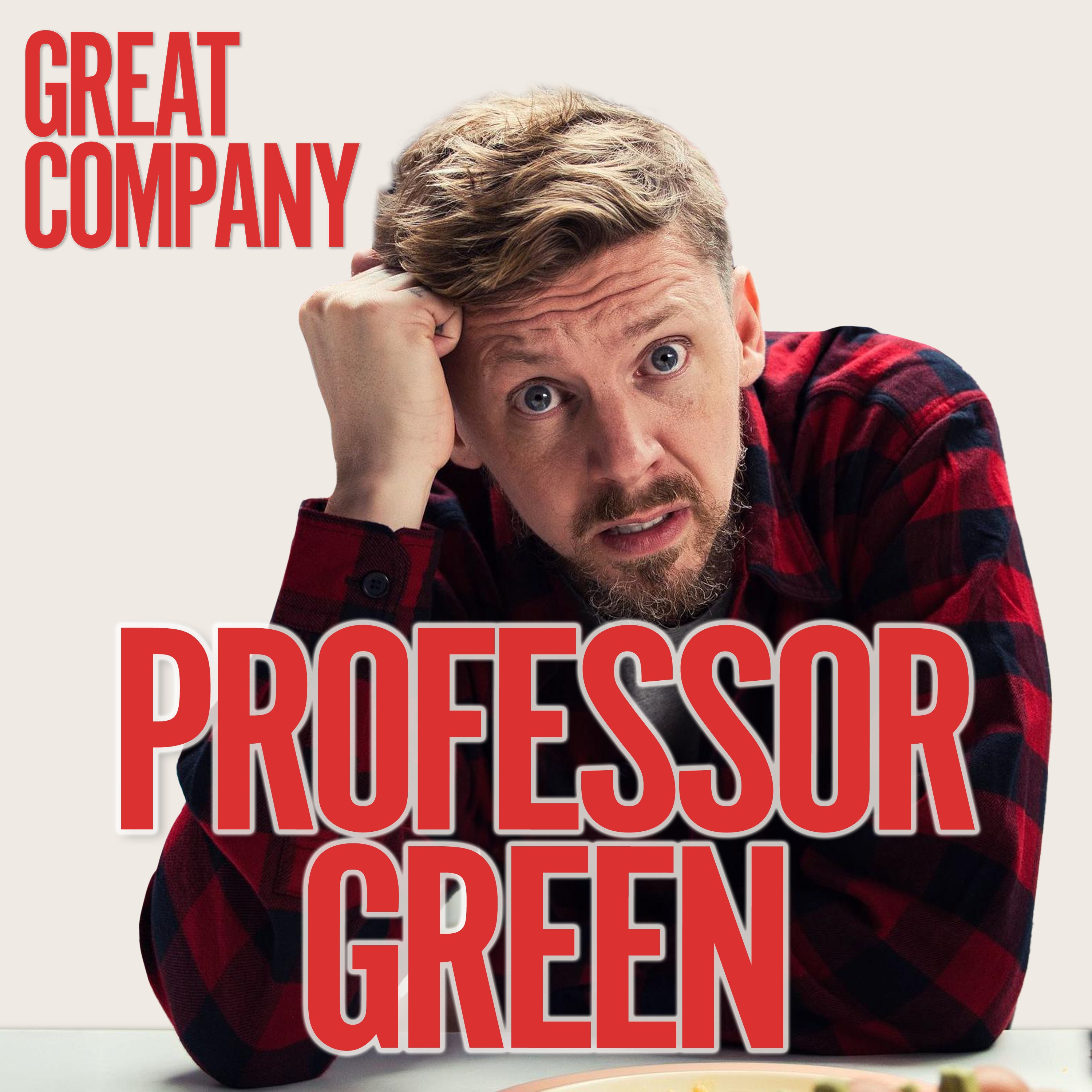
Great Company with Jamie Laing
PROFESSOR GREEN: Diagnosed With Autism Age 40 & Why Working Class Men Are Lost
01:17:21
Loading summary
Transcript433 lines
- [00:00]
Jemima
Coming up in this episode of Great Company.
- [00:03]
Jamie Laing
Was there ever a time where you felt that maybe you wouldn't be here?
- [00:06]
Stephen Manderson (Professor Green)
Yeah, loads. Really? I felt uncomfortable for a huge part of my life having to do all these things which I felt like I should have been grateful for, but not feeling very comfortable doing them.
- [00:17]
Jamie Laing
Wow, what a juxtaposition. It's like a constant battle.
- [00:20]
Stephen Manderson (Professor Green)
I'm not going to cry on this podcast. Jamie. Not here for that. I'm Stephen Manderson, better known to some as Professor Green. And they forced me to say this. I am in Great company. A singer and mental health campaigner.
- [00:32]
Jamie Laing
Another UK legend, Professor Green, this is Millie McIntosh, who is on the show. Who is your ex wife?
- [00:38]
Stephen Manderson (Professor Green)
The second and third page of the Daily Mail the day after we got married was East End drug dealer marries Quality Street Heiress.
- [00:45]
Jamie Laing
That's mad. Do you think there's a correlation between having your boy and then figuring out yourself as well?
- [00:50]
Stephen Manderson (Professor Green)
Yeah, massively. It was the most significant kick up the backside, really, I've ever had. Yeah. You know, he'll just go, dad, I really don't want you to die. And I'm like, okay, keep it together, Keep it together.
- [01:02]
Jamie Laing
Stephen, can we talk about your dad?
- [01:03]
Stephen Manderson (Professor Green)
It's really unusual for my dad and his two brothers to have taken their own lives because it's not a decision that many of us are capable of. And this is the thing with grief. It changes shape. It never disappears. I will forever be sad about my dad having passed. It was the absence that he couldn't be there to help or to aid. And I couldn't talk to him and get a response from him. And I would love for him to meet Mike.
- [01:25]
Jamie Laing
You know, if your dad was here.
- [01:26]
Stephen Manderson (Professor Green)
Yeah.
- [01:27]
Jamie Laing
What's the one question you would ask him?
- [01:33]
Darina (Quo co-founder)
Hi, I'm Darina, co founder of Quo. You might know us as OpenPhone. My dad is a business owner and growing up, he always kept his ringtone super loud so he'd never miss a customer call. That stuck with me. When we started Quo, our mission was to help businesses not just stay in touch, but but make every customer feel valued. No matter when they might call. Quo gives your team business phone numbers to call and text on your phone or computer. Your calls, messages and contacts live in one workspace so your team can stay fully aligned and reply faster. And with our AI agent answering 24. Seven, you'll really never miss a customer. Over 90,000 businesses use quo. Get 20% off@quo.com tech. That's quo.com tech. And we can port your Existing numbers over for free. Quo no missed calls, no missed customers.
- [02:28]
Stephen Manderson (Professor Green)
Did I talk too much?
- [02:30]
Jamie Laing
Did I just let it go? Thank you so much.
- [02:34]
BetterHelp Ad Voice
Take a breath. You're not alone. Counseling helps you sort through the noise with qualified professionals. Get matched with a therapist online based on your unique needs, and get help with everyday struggles like anxiety or managing tough emotions. Visit betterhelp.com randompodcast for 10% off your first month of online therapy. And let life feel better.
- [02:57]
Jamie Laing
Hello, everyone. We're Jamie and Sophie. You may remember us from Newlyweds and.
- [03:01]
Sophie
Then Newlyweds, but now, guys, okay, things are about to get even wilder as we take on our biggest adventure yet.
- [03:07]
BetterHelp Ad Voice
Becoming parents.
- [03:09]
Jamie Laing
Yeah, that's right. Newlyweds is now Nearly Parents. And we're bringing you the same honest, heartwarming takes on our journey to parenthood. I guess.
- [03:18]
Sophie
Join us as we find out what it really means to become a family while trying not to kill each other.
- [03:23]
Jamie Laing
Get ready for Nearly Parents, your favorite new podcast. Hello, everyone. My name is Jamie Laing, and this is Great Company. Well, hello, Jemima.
- [03:43]
Jemima
Hello, Jamie Lang.
- [03:44]
Jamie Laing
How are you?
- [03:44]
Jemima
I'm very well. How are you?
- [03:46]
Jamie Laing
Okay, so we have Professor Green.
- [03:48]
Jemima
Don't know how he is.
- [03:49]
Jamie Laing
Yeah, I'm great, actually. I'm really, really. I think I'm just excited for today's episode. That's why I jumped straight into things. Yeah, I'm really, really excited for it.
- [03:59]
Jemima
Speaking of which.
- [04:01]
Jamie Laing
What?
- [04:01]
Jemima
Well, we've been having a think at our production end. We just want to get into the episodes.
- [04:06]
Jamie Laing
Yes, that's very true.
- [04:07]
Jemima
I think it's time for me to not be here.
- [04:09]
Jamie Laing
Jemima has decided, as the producer of Great Company, what we would always do. If you're new to this show and you haven't listened to the episodes before, Jemima, as the producer, has always been with me at the start, where we talk about things, we've had conversations about the guest and what we think and what we like and what we enj. But you, as producer, have got your producing hat on. You decided actually someone listening to this right now. We just want to get into the content quicker.
- [04:30]
Jemima
I think we've just got to get going. I think people know the show and I think, you know, we see the name. We just want to know. We want to get into it. We've also started putting the trailer at the top. Yes, we have the episode, so people already know what's coming. So we've got a little intro. It just feels bish bang bosh.
- [04:46]
Jamie Laing
So is this the last. So this is the last Time. We're going to hear you on the podcast for a bit.
- [04:51]
Jemima
Yeah, I think so for the time being. But if you guys do have questions about how we run things, because this was originally one of the things that we talk about, and like, this episode in particular is quite an interesting one because we interrupted our kind of schedule because we just thought it was such an amazing episode. So we've kind of rearranged things to make sure it comes out. And if. If people are still interested in those types of things, please do keep emailing us because we do love reading all those things. And, you know, Great Company is a live show. We're always trying things out, always changing things. So if you have feedback and questions and things, do keep sending it. And we're going to try this out for a little bit.
- [05:25]
Jamie Laing
Yeah, we are. So on that note, we're going to get into the conversation with Professor Green, but before I start, I do want to say that we do have some conversations around some sensitive topics, and I want to warn everyone before we start about that. There's a lot of things. So we really hope you enjoy it. We really hope you like this episode. One thing I asked before we start, if you haven't subscribed to our show, it takes one second. It does us absolute wonders. It's completely free, so if you like the content, please subscribe. Okay.
- [05:55]
Stephen Manderson (Professor Green)
You ready for this?
- [05:56]
Jamie Laing
I am. Enjoy this episode of Great Company with Professor Green.
- [06:02]
Stephen Manderson (Professor Green)
Hello, I'm Stephen Manderson, better known to some as Professor Green. And they forced me to say this. I am in great company.
- [06:12]
Jamie Laing
I sent you a message last night because my neck was really sore.
- [06:15]
Stephen Manderson (Professor Green)
Yeah. And.
- [06:18]
Jamie Laing
I didn't think I was gonna make this, but I made it. So I just want you to just validate the fact that. Can you say you feel sorry for me, that you just. My neck, you know, all those things.
- [06:29]
Stephen Manderson (Professor Green)
I empathize. Yes. Thank you so much. Psychopathy is not something I suffer from. It looks really. And I've had something similar. I said to you upstairs when it happened to me, I thought I was having a stroke. It was grim. It was like this tendon or something I'd never felt in my neck. And I couldn't move. And it was like almost whomping. Like a dubstep base. And I was. Yeah, I felt stuck.
- [06:51]
Jamie Laing
And then the.
- [06:52]
Stephen Manderson (Professor Green)
How are you?
- [06:53]
Jamie Laing
It's. Apart from that, great. But that was sore. But then last yesterday when it kicked in. So. Sophie, my wife, is eight months pregnant.
- [07:00]
Stephen Manderson (Professor Green)
Yeah, I've seen. Congratulations.
- [07:01]
Jamie Laing
Thanks very much, man.
- [07:02]
Stephen Manderson (Professor Green)
And I used to Hate children. Well, I didn't. I was scared of them.
- [07:06]
Jamie Laing
Like, we're going to get into this. But. But she. There was no sympathy. Like, zero.
- [07:12]
Stephen Manderson (Professor Green)
Are you kidding me, mate? I'm pregnant.
- [07:13]
Jamie Laing
That's exactly. That's exactly what. That's exactly what happened. And I was like, get used, man. I was like, where's the sympathy? I'm like, are you kidding me? Like, it's this. And I was like. She was like, look at me, I'm eight months pregnant. There is like, you're not gonna get anything out of me. And I was like, please help me. And were you on the floor, dude? The only sympathy I got was from you in the email. And I just read it over and over again and I was like, okay, I feel much better now, thank God. I want to ask you a big question. There's this idea of, like, sort of toxic masculinity, right. And I found. And I want to hear your thoughts on this is that when I was dealing with anxiety, crippling anxiety, right? What was hard for me is I didn't really. I didn't have a reason. There was no reason. I didn't know why I was feeling it. And that for me was really. And I really want to tread carefully here. You came from your father not being around, committing suicide, to mum being sick, all these things. There's a lot of reason there in a way, for you to feel a certain way. I had a lovely upbringing. I had loving parents, I had money, I was privileged. I went to a supposedly good school, I had friends. But yet. So I felt like a fraud. And that was what I would have made.
- [08:42]
Stephen Manderson (Professor Green)
But surely that made it even more difficult, you know, I was saying to you about becoming successful and then feeling the guilt around, like, oh, my God, I'm not happy necessarily all the time, nor should anyone be. That's not a realistic aim. Yeah, but that's. Surely that contributed to just making things worse. You shouldn't diminish what you feel because of something that you presume you. You don't deserve to feel or shouldn't because someone has it worse than you. It's all relative. So your experience is your own experience. You have. You can't step into my shoes. We can discuss things. We can talk now about life in the way that we are and we can develop some sort of understanding. But one of my powers didn't know what anxiety was until his parents separated and then he. Because he just used to go, put yourself together, you know, and fine. I actually needed to, in that moment, like there's so much talk around. You know, that's really unhelpful language. You know, I disagree. I think at times we have to man up in the same way that sometimes women have to woman up. There are things we have to puff our chest out.
- [09:33]
Jamie Laing
Resilience is important 100%, but don't be.
- [09:36]
Stephen Manderson (Professor Green)
Ignorant to things that you're not addressing. And I just. There's a book called the Middle Passage by James Hollis, and he talks about angst, anger, anxiety, angina. They're all born of the same word. Right. And they all relate to what he suggests is yourself screaming your authentic self, saying, hey, your life is not aligned with anything that's conducive to you attending to what you actually could or should or want to do. Really. And at that point in life, would you say there were things going on that you didn't really enjoy, but that felt necessary?
- [10:14]
Jamie Laing
100%. Yeah. And also I was doing a television show where I was completely out of control and everything was eligible for me and I didn't really know my place in life. And it's going back to work.
- [10:22]
Stephen Manderson (Professor Green)
I've got not in my stomach just hearing that. I never thought about it in that way.
- [10:25]
Jamie Laing
But, you know, we. You were. You were also amongst that sort of thing and saw. You saw what that did to people and you were, you know.
- [10:35]
Stephen Manderson (Professor Green)
You know, I saw it. I saw it, you know, in my home.
- [10:37]
Jamie Laing
Exactly.
- [10:37]
Stephen Manderson (Professor Green)
It was that level of attention, like when Millie and I started seeing each other, that, that just. I mean, it just. Things changed so significantly. And what people don't realize is because we were spoken about so often, and I very rarely did this, but, you know, like comments on news sites, it would just be like, oh, here they are again. But we don't ask for that. Those pap shots are not set up. They're invasive. We don't talk about ourselves anywhere near or our relationship anywhere near what we're spoken about, you know, however much we're asked. But this thing has grown into its own thing. And the pressure that came from that, it just made it. It made it impossible in. In hindsight to have, I guess, like a really, truly authentic relationship and also undiagnosed neurodivergence between both of us. We had a conversation about this recently and it was quite.
- [11:35]
Jamie Laing
Did you.
- [11:36]
Stephen Manderson (Professor Green)
Yeah, and it was quite like. It makes sense, doesn't it? Like, you know, it was. It kind of makes sense.
- [11:43]
Jamie Laing
Can I ask, though, because this is Millie McIntosh, who is on the show, who is your ex wife.
- [11:48]
Stephen Manderson (Professor Green)
Yeah.
- [11:50]
Jamie Laing
When. Because it was What I think looking from outside in, right, The. The reason why it was so attractive to everyone to press because it felt like the boy from Hackney and the girl from Chelsea.
- [12:03]
Stephen Manderson (Professor Green)
Well, the. The first two. The second and third page of the Daily Mail the day after we got married was East End Drug dealer marries Quality street heiress. Which. Do you know what there is. I've sold we. And she's. I mean, it's. You know, it's like many, many generations. But, yeah, there's probably some inheritance somewhere along the way. Right. But like, I mean, when we met and this is. I don't say this as a. Like in any way to be offensive. Like, Millie was working. She was doing Made in Chelsea, but she was working at Space and K. Right. So, like, it. I was already at a point in my career which, you know, was. Allowed us to meet, I guess because, you know, we weren't in similar worlds. We were very, very separate. And there was something so. Like, she's beautiful, man. Like, she's. You know, there is something so. And I stand by this. I don't want to sit here and speak at all. There isn' a bit of, like. There's no resentment in me. She is gorgeous. We were not good for each other at that time. We were for a point. And then, you know, I think things that we didn't understand were happening and it was way more than we could have ever.
- [13:14]
Jamie Laing
And I suppose, man, I spoke. By the way, beautifully put, man. I spoke to a guy called Alan de Botton, who's this, like, amazing.
- [13:20]
Stephen Manderson (Professor Green)
He's incredible.
- [13:22]
Jamie Laing
Something amazing that he said to me once, right. Which I really struck me is that I said, what gives you the best chance of staying together? The statistics show that marriages break up and it's over 50%. And all these. And that's only counting the people who.
- [13:33]
Stephen Manderson (Professor Green)
Actually divorce people break up in the home.
- [13:35]
Jamie Laing
Yeah. You know what I. Exactly right. And he said, if you realize that you're two broken souls trying to figure out life, then you have a good chance of survival. And I think what happens is, especially when you're younger maybe with you and Millie, two broken souls who are hoping one other is probably gonna heal them.
- [13:59]
Stephen Manderson (Professor Green)
Yeah. Extrinsic. See, back to that thing of looking.
- [14:03]
Jamie Laing
For something is gonna unit.
- [14:04]
Stephen Manderson (Professor Green)
It's gonna be. But it's gonna be out there. I'm not gonna be able to do this on my own. And it's not in here. It's something there. Happiness is something I'm pointing at and it's out there. I make you right yeah.
- [14:14]
Jamie Laing
But when.
- [14:15]
Stephen Manderson (Professor Green)
And I imagine we both felt that at that point and it wasn't happening. And therefore there was probably building resentment from that. God, I'm thinking about this more than I maybe ever have. Yeah. But made. You know, it was challenging like most relationships are.
- [14:29]
Jamie Laing
But is it.
- [14:29]
Stephen Manderson (Professor Green)
There's so much else in the mix as well.
- [14:31]
Jamie Laing
But was it tricky because, you know, you were making music that was like top of charts and it was like killing it and like. Like all these different things. And then your. Your relationship is also. It's like that. That feels to me, in my world, in my existence at that time, that feels very attractive as well. It's like, oh, my God, this is exciting. This is exciting. That feels exciting. Was there a sense of excitement around. And then my second question is, is that. I think my parents got divorced when I was 8 and I found that very tricky. Looking back at it now, I actually go, brave of my dad.
- [15:09]
Stephen Manderson (Professor Green)
Yeah.
- [15:11]
Jamie Laing
Perhaps to do it, because he'd already come from one divorce.
- [15:15]
Stephen Manderson (Professor Green)
Wow.
- [15:16]
Jamie Laing
So then he was in a second divorce and everyone's all his friends. It's not even the public eye. But he didn't like, oh, it's kind of a brave thing to do when you guys go through your separation. How hard is it to make that decision?
- [15:29]
Stephen Manderson (Professor Green)
It was really tough. And if there wasn't that pressure, we. We may have never got married. Is the truth. Very nearly didn't happen. And yeah, it was. But, you know, I remember having a conversation with my two best mates, Lewis and Felix, and, you know, am I getting cold feet? What's going on here? And one of them said, yes, one of them said, no, I won't put him in it. Cause it's not their responsibility. But I didn't, you know, I made my own decision. And I. And we made our decision and we didn't get married for the wrong reasons. You know, we loved each other. It was intoxicating. It was. It was probably. There was probably an element of trauma bonding. The thing is about the body, right, Is it gets used to a feeling and it doesn't really matter whether it's positive or negative. It's probably more stimulating if it's negative. And if you have that over prolonged periods, you need more and more of it to feel alive. And I think that leads a lot of us to. To. To finding ourselves in situations which are not necessarily for, you know, the better of our lives. Because it's what we're accustomed to. And it takes a lot to get to a place of going. Okay, well, I had A significant part in that 50% at least, because there were two of us in a situation and it didn't work out. But hopefully we can both go forward and find, you know, happiness and belonging and be grounded and regulated.
- [17:02]
Jamie Laing
Do you think? I think this happens so many times, man, where we get to a position, a job, relationship, marriage, and we think, well, everyone's looking at us, so we're gonna have to do this. And it takes a lot of strength to kind of go, this isn't right. I'm not gonna do it. Actually, wait, hang on a second. This isn't that. I reckon so many people again listening right now are going, yeah, I wish I'd said no.
- [17:32]
Stephen Manderson (Professor Green)
Tied the knot yesterday.
- [17:33]
Jamie Laing
Ah, yeah.
- [17:34]
Stephen Manderson (Professor Green)
Looking for an almond now.
- [17:35]
Darina (Quo co-founder)
Yeah.
- [17:35]
Stephen Manderson (Professor Green)
Based off our conversation. No, but it's that, you know, there's, you know, unless I guess, in. In more sort of day to day situations, we will choose familiar hell. Right? It's that, you know, we don't know what's on the other side of change and therefore we will choose what we know best. And if what we know is noise, we'll choose noise. If what we know is suffering, we'll choose a way to suffer. But you know, we also. Even in that you're handing that over to someone else when the responsibility in that situation is. Is yours.
- [18:06]
Jamie Laing
I mean, one of the things you also have, and you sort of spoke about is the scar you have in your neck, which is where someone on.
- [18:13]
Stephen Manderson (Professor Green)
The other side now as well. Down there. I've got one there and I've got one all the way across my stomach. And different reasons that these were all surgical. I was professionally shanked, but.
- [18:25]
Jamie Laing
Man. Because someone stabbed you in the neck with a bottle.
- [18:29]
Stephen Manderson (Professor Green)
Yes. Yeah, yeah. He accused me of barging someone. The person, he said our barge never said anything because I said excuse me in a loud club and he didn't hear me. So I put an open hand on his back and said, excuse me, please, and move behind. You know, I'm. You've seen me enough to know how I carry myself. 100 and yeah, it just, it descended and it just, you know, I. Yeah, yeah. Didn't need to go there. It didn't. It the arc of, you know, just how quick it went from nothing to. To nearly taking my life, which would have took both of our lives. It was just so unwarranted. It had no. There was no history to it. I never got stabbed on no g shit. No block shit, no road shit. It happened really randomly and I wish for both of us it Didn't.
- [19:14]
Jamie Laing
Isn't it crazy how I think how one moment can change life really quickly? That sliding door moment?
- [19:21]
Stephen Manderson (Professor Green)
Yeah, yeah.
- [19:22]
Jamie Laing
One decision, one moment.
- [19:23]
Stephen Manderson (Professor Green)
There was a kid on the very same night who sadly on Amherst Road passed away, got stabbed in the neck on the same night and Hackney, and he passed away. And how many other lives altered, changed, maimed, ruined, destroyed because of it. It's really. And the thing is, as well, like, you know, outside of psychotic behavior, there's a place where it happens. And so when you see campaigns around zombie knives and stuff, I agree, they shouldn't. People should not have access to tools like that. But most people are stabbed with kitchen knives. You're not going to get rid of kitchen knives. There's an, you know, there's areas and there's a kind of socioeconomic background where this happens. And the problem we're dealing with is poverty. You know, Skinny man talks about it on his, on his album. Brilliant album. Best UK rap album ever. The council state mind, you know, the science of social deprivation, this, this is understood. And we're not tackling poverty, so we're not going to tackle knife crime. Where I would argue it's being perpetuated at the moment with.
- [20:24]
Jamie Laing
So what would you do? Big question.
- [20:27]
Stephen Manderson (Professor Green)
Speculate, you know, front end the spending. We know what it costs when someone ends up in prison. We know what it costs when someone's.
- [20:33]
Jamie Laing
Life'S £60,000 a year.
- [20:35]
Stephen Manderson (Professor Green)
Right. And we know. So I mean, you could probably halve that and give someone a wage. Not that people should just be given, but if you improve someone's. If you improve someone's opportunity, you improve outcomes. If you. So from a completely capitalist, selfish point of view, but let's improve opportunity because if we improve opportunity, we improve outcomes. If we improve outcomes, we improve the labor force because more people go into the labor force. What happens then? Well, more people have money to spend, so what happens? We grow the economy. There's a lot of reason to improve opportunity. And, and then from a human point of view, I grew up with fuck all point of view. Yeah, you improve the quality of someone's life and we only have one and it's really short, isn't it? God, that's the first time I've nearly cried this whole episode. Because it is immediate. I go to my son and I'm like, how much time have I got? Like, my head just goes. But you improve, you improve people's quality of life. And that should be where we start. But sadly, you know, I think that the more selfish aspect of how it can benefit the economy is probably more attractive to people who can possibly make a difference. I don't know why there has to be such disparity. I don't know who it aids.
- [21:47]
Jamie Laing
Do you think in the working class community, typically men, there's a lot of men who are lost?
- [21:53]
Stephen Manderson (Professor Green)
Yeah, massively. Massively. There's a really terrifying book, Boys and Men, by Richard Reeves, and he talks about the effect of men becoming less marriageable, men becoming unmarriageable. So therefore women looking at them as just an extra mouth to feed and thinking they can do everything themselves and the impact that that has on them raising boys and wow, that's not villainizing women, by the way, but just, just what's happening. And then men being at much greater risk. This is. I can't repeat all of this verbatim. I need to go back and read the book another six times. But men being at much greater risk of mortality if they're not in a relationship. So the, the women offered most independence by way of success are most likely to marry, which, you know, like, there's so much fucking division, man. We're not even, you know, against patriarchy together. It's just, well, if women are doing better, it must be at the cost of men, you know what I mean? Like, let's feed that to men, you know, in the same way that people are encouraged to be angry at immigrants because they're the problem, right? Despite you having much more in common with them than you ever will your middle or upper class counterparts, they're the problem. It's all of this division which is encouraged and relied upon that stops any significant change from ever happening. Because there's no unity between us. How do we ever unify and make substantial change when we're not all pulling in the same direction?
- [23:17]
Jamie Laing
So how do we stop them versus us?
- [23:20]
Stephen Manderson (Professor Green)
Oh, we try and work together. I always say, fix your home. Genuinely, I just think there's, you know, my son hopefully will grow up with ideas of how to do this better than I've ever had the ability to. And I just think if we all start from there, but we have to educate ourselves. You know, we can't just look at, we need to save boys, we need to help men. It's not necessarily a woman's job to do that, but collectively, we all have responsibility with each other because where we are, for better or worse, we are all in this together, people. There's a lot of people who are angry with the situations they find themselves in, and some of that anger is Just, you know, I'm not here to diminish that anger. But it's then leveraged by people who benefit further from further division. And you look at reform and it's just. I find that, that side of things really scary.
- [24:09]
Jamie Laing
Like, can I ask, man, because you, you.
- [24:12]
Stephen Manderson (Professor Green)
All the British flags going up. I went through Basildon the other day going, what in the Brexit is going on here? And it's a sad use of something which, you know, soldiers coming home from war gave a real good feeling of. I'm okay, I've made it back. It's not that anymore. There's, you know, people talk of being patriots and a lot of people not knowing their own history.
- [24:30]
Jamie Laing
It's a lot of people consuming conversations that we're stuck in our mic, in our own algorithms. And so we're being. We're being taught by our own algorithms rather than the wider algorithm, which we need to see.
- [24:46]
Stephen Manderson (Professor Green)
And then therefore. And there's also not much safe space for conversation because you have to sit and talk with people that you're not aligned with and that you don't agree with. But the art of disagreeing agreeably is forgotten. And you can't.
- [24:59]
Jamie Laing
You've got to win now. You've got to win rather than going again. Alan Bottan says, my favorite thing, the thing that turns me on is when someone goes, oh, that's interesting. Oh, I haven't thought of it that way. Oh, maybe you're right.
- [25:08]
Stephen Manderson (Professor Green)
We've lost that without the need to be right, though.
- [25:11]
Jamie Laing
Yes, without the need to be right.
- [25:12]
Stephen Manderson (Professor Green)
Yeah.
- [25:12]
Jamie Laing
But you know what I mean, we, we. We feel like we all, we all have a voice because of social media, so we all become lawyers or dictators, and we have to say, this is what we think. And you've got to believe. And if you don't believe it, then.
- [25:22]
Stephen Manderson (Professor Green)
And it's so people can't. And I think there's also the, the other thing that comes with phones and, you know, I'm guilty of spending too long on it, but is the distraction from what we feel and being able to just swipe from what we don't like feeling? So if we read something that challenges us and that prompts a feeling, see you later, man.
- [25:39]
Jamie Laing
You speak so. You speak so clearly from a place of such personal growth, but then go.
- [25:46]
Stephen Manderson (Professor Green)
And spend two hours scrolling on my phone. Yeah, but I just want to be. I just want to be absolute. I am not everything I've spoken about. I'm still very much victim. Not victim of. That's handing over Accountability. Sorry, bad language. I'm still very guilty of.
- [25:58]
Jamie Laing
Yes, but you're still.
- [26:00]
Stephen Manderson (Professor Green)
I'm trying. You're trying, James, man.
- [26:03]
Jamie Laing
And that's the most brilliant thing. Right, but what's the most important thing you've learned?
- [26:08]
Stephen Manderson (Professor Green)
Try. Yeah, it's really easy to sit with, you know, it sounds crazy, doesn't it? Because it's not easy to sit with ill feeling or the feeling of I could do more or I should have done different. You can't. You know, you can't. Unless you go down the rabbit hole of quantum physics. You know, you can't impact anything that's already happened, but you can take that and try and do something different going forwards. And that's really, really hard because especially, you know, 40, you've got a life of experience and it's really easy to just continue without making conscious effort. But it has to be conscious and it has to be effort to do something different. So, yeah, try, fail, try again. Do something different. Actively force yourself to do something different.
- [26:57]
Jamie Laing
Can we talk about your dad?
- [26:58]
Stephen Manderson (Professor Green)
Yeah.
- [26:59]
Jamie Laing
I got a, I got a picture.
- [27:02]
Stephen Manderson (Professor Green)
Of you that I look so much more like my mum's side of the family. It's so like. I saw. So he had two other sons, Jason and Gary. Yeah. And Jason came to a show of mine recently and we hadn't seen each other in years. I looked out into the crowd, I knew he was coming and I was like, looking at my dad. I look way more like my mum's side of the family, man.
- [27:24]
Jamie Laing
Look how cute this is. You the most adorable kid I've ever seen in my entire life. That's amazing. I can't, I'm in that process now where I, I can't even. If I talk too much about my baby, I get.
- [27:39]
Stephen Manderson (Professor Green)
Oh, yeah, yeah. It just gets so much better, man. I wrote, you're cry so much more, but like the best way.
- [27:45]
Jamie Laing
My, my friend Ollie Proudlock, who, who you've met and things that he, he is. His emotions, I've never seen it with. His emotions are like up to his eyeballs. Like, any time you say anything, it clicks on.
- [27:56]
Stephen Manderson (Professor Green)
That's also sleep deprivation.
- [27:57]
Jamie Laing
Yeah, I'm sure it is. I'm sure it is, but it's. I, I, I wrote something for, for Sophie the other day and I basically said, I said at the end, I said, good's gonna move. I said, I can't wait to meet you, little one. And that now I haven't even met this kid.
- [28:15]
Stephen Manderson (Professor Green)
I had words for him that were a little bit harsher before. He was born. We were told that we miscarried. We had a really fragile pregnancy, and it was during COVID and we were told that we miscarried. So we went home. I was crying in a car park. I wasn't allowed to go through with her. And the nurse, which was a mistake on her part, said, I've got someone who's miscarrying here. May her partner come through. And they said, no, but she had told us that we were. And then it was confirmed on the other side.
- [28:44]
Jamie Laing
At what week, can I ask?
- [28:46]
Stephen Manderson (Professor Green)
We were about four and a half, five months. It was late. So it was like. It was at the part where you're in. And you also realized that you don't want a kid. You want selfishly that kid. And then. So we went home. We cried all night, went back to the hospital the next day. I was allowed in. At this point, they did the ultrasound because they wouldn't do it during the night. And the little was bogling in the womb. And we were like, honestly, you want to talk about tears, mate? But way more happy tears. Honestly, I've cried so many. You know, there's been some difficult times, but I've cried way more happy tears since having a kid. And I just said to him, listen, I don't know what age it will be, but you will be grounded for doing that enough. But it continued that emotions, man. Going from.
- [29:33]
Jamie Laing
From losing.
- [29:35]
Stephen Manderson (Professor Green)
Yeah. To finding out that he was all right. It was thankfully quite a quick turnaround. But like it.
- [29:41]
Jamie Laing
Because at that point, you have to. Yeah. You're dealing with your own emotions.
- [29:45]
Stephen Manderson (Professor Green)
Yeah.
- [29:45]
Jamie Laing
But knowing you're focusing so much on your partners.
- [29:48]
Stephen Manderson (Professor Green)
And I couldn't. And I couldn't tell her that everything was going to be all right. You know, it's a situation where you can't. And sometimes things aren't. And that's. That's a God teaching kids that. He's already, like, he says, oh, man. Like, kids. I understand why I used to be petrified of him because they will just say things, but when you have this connection to one is. Is. You know, he'll just put, dad, I really don't want you to die. And I'm like, okay, keep it together. Keep it together, Stephen. Okay, well, we don't have to think about that yet. And hopefully not for a long time. You're like, how. You're. Honestly, you're presented with so many situations that you haven't got a blooming clue how to respond to. Like, you are thinking on your feet. There is no amount of Reading that can prepare you for every question someone.
- [30:37]
Jamie Laing
Says it's like your heart just like running around the place.
- [30:39]
Stephen Manderson (Professor Green)
Oh, mate, that's a great explanation.
- [30:41]
Jamie Laing
It's like, start getting your heart.
- [30:43]
Stephen Manderson (Professor Green)
Yeah.
- [30:43]
Jamie Laing
And then putting it on the road and letting it run around in the.
- [30:45]
Stephen Manderson (Professor Green)
Body of a bipolar narcissist. Because they go through completely. So until they're seven, they're completely egocentric. So it's not like negative narcissism. I'm not sure there's such thing as positive narcissism, but it's, you know, they're completely egocentric. So everything in the world happens in relation to him, and he can't see himself anything or anything that happens outside of that. And therefore, he puts himself in the middle of everything. So I'm really conscious of trying to keep him in the middle of real situations, but safe situations, you know, everyone's like, I want my kid to be happy. Happiness is great. Content is way better. And, you know, emotionally regulated, as far as their abilities allow is, is probably more important. Cool.
- [31:29]
Jamie Laing
Do you think there's a correlation between having your boy and then figuring out yourself as well?
- [31:33]
Stephen Manderson (Professor Green)
Yeah, massively. I mean, I was on that journey before, or I thought I was, but, I mean, it was the most significant kick up the backside I really, I've ever had. Yeah, man.
- [31:44]
Jamie Laing
I, I, I, I read an article where it said that the birth of your son brought up feelings of your dad.
- [31:52]
Stephen Manderson (Professor Green)
Yeah.
- [31:53]
Jamie Laing
Can you explain that to me?
- [31:54]
Stephen Manderson (Professor Green)
Yeah. I wanted to go and see my dad. I wanted to, you know, immediately. I'm, I'm grieving her. And this is where I talk, you know, when I said about rumination, it was also just in, you know, living in the past. If I think about things that happened then and I feel the feelings that I felt by way of those things, I'm in the past.
- [32:12]
Jamie Laing
Yeah.
- [32:12]
Stephen Manderson (Professor Green)
I'm not present. That's not fair to my son. But there was a grieving that took place. And this is the thing with grief. It changes shape. It never disappears. I will forever be sad about my dad having passed. And when I got married to Millie, you know, I looked out, my dad couldn't be there. That's awful. It feels horrendous, you know, and not being able to go to my dad, but also having not had him in a way that gave me example of what to do. When you're in a situation, you think like, oh, my God, we're walking out the hospital. And the only thing that was required for us to leave the hospital with this life that We've got to protect, care for and look after and nurture is a car seat for the car. Where's the book? Yeah, but it's that absence, you know, it was the absence that was difficult and the absence that had, you know, had taken place while he was alive, in the absence that it was more permanent in his death and that he couldn't be there to help or to aid. And I couldn't. I couldn't talk to him and get a response from him. And I would love for him to meet Mike, you know, and he'd be a young grandfather.
- [33:18]
Jamie Laing
Can I ask you a big question?
- [33:20]
Stephen Manderson (Professor Green)
Yeah.
- [33:21]
Jamie Laing
If you could, if your dad was here.
- [33:23]
Stephen Manderson (Professor Green)
Yeah.
- [33:24]
Jamie Laing
What's the one question you would ask him?
- [33:36]
Stephen Manderson (Professor Green)
What was it that hurt so much? Yeah, because I. I feel like, you know, people make that decision in. In isolation, hence why so many, especially male, because we're more impulsive and I guess by way of testosterone, more violent. We choose more violent methods. And therefore three out of four male suicides are successful, three out of four suicide attempts are female, but three out of four successful suicides are a male. And in that moment, no one can ask that question, you know, what is it that hurts so much? And it's really sad to think that people make a decision that generally affords them some sort of relief. Relief, yeah. Or feigned elation, happiness, control. You know, like I've established control over my life again. But what I'm going to do in this moment with the control that I have is end it, because that's the only way that I can put into what I'm feeling. And that's really. That's awful, man.
- [34:43]
Jamie Laing
Yeah, it's Jess. I can't even imagine.
- [34:45]
Stephen Manderson (Professor Green)
Yeah, it's the. It's so. It just presents so many. Excuse me. So many questions. You're like. And they can't be answered. So you have to quite quickly let go of that, best you can. Because.
- [34:57]
Jamie Laing
Because I think the question I want to ask is that, you know, you. You spoke, and you put that so beautifully, by the way, about, like, how, you know, men in. In a weird. In a sort of such a sadistic way.
- [35:07]
Stephen Manderson (Professor Green)
You.
- [35:08]
Jamie Laing
You spoke about it so beautifully. And because of the stats, because of the nature of it, because of it is the biggest killer for men under 49, I think.
- [35:17]
Stephen Manderson (Professor Green)
49.
- [35:18]
Jamie Laing
Now I think it's 49. Right.
- [35:19]
Stephen Manderson (Professor Green)
Well, statistically, I understand things are getting worse. I was with Simon Gunning, the CEO of Calm, recently, and Ricky Hatton, man.
- [35:25]
Jamie Laing
He was an ambassador for CALM as well, like you and I.
- [35:27]
Stephen Manderson (Professor Green)
Man, it's. It's really, really telling of times, I think. And, you know, people, there's so much discussion around masculinities. And I say masculinities because there are varying, you know, many varying types of masculinity. But I feel like there's such a distinct lack of connection with self. And it's not to diminish nor discredit the hugely negative and oppressive impact of patriarchy on women, but we don't discuss the impact of patriarchy on. Especially the working class man who has gone through detachment from self, detachment from family, detachment. You know, those are the really significant impacts of patriarchy on men, or the most significant, I would suggest then, or say. And I think that's really telling in a sense of disconnect, of lack of purpose.
- [36:23]
Jamie Laing
I think it's a lot of his lack of purpose. And I think there's so many things I want to pack here, because the first thing I want to say is that again, someone listening right now is probably listening because they're going. I want Stephen to help me through the grief that I'm going through because they're maybe in the same similar situation. How do you get through something like that? Because I heard that you had to go and identify your father's body.
- [36:50]
Stephen Manderson (Professor Green)
Yeah, well, I was at the hospital and his. Reluctant to call them family, but, you know, his family, his, you know, the. The three children who weren't born his. But took his name and his partner wouldn't. Wouldn't walk in. And Theresa, the woman who owned the shops, he used to manage this. And that was gonna. Was gonna. I was just. I couldn't. I'm like, how can you let. Why was. I don't know. It wasn't easy, man. It wasn't. It wasn't. But I just. I. I found it very difficult to understand. My, My. My brain went, this doesn't make sense. Absolutely not. How dare anyone that isn't actual fat. You know, like, it just. How can you not? You're here. And so I just walked in and it was tough. It's just like, you know, the last thing I said to him as well is, if I see you again, I'll knock you out. Which I wouldn't have. I would have just cried and thrown my arms around him. Oh, mate, it was grim. It was gen. Like, you know, he's bruised. He. It was so. And it's like. But still very young, still very handsome, still, you know, still a reminder of the ever so charming and gorgeous human. And when I unpack that for the BBC documentary.
- [38:05]
Jamie Laing
Amazing documentary, man. And anyone who hasn't gone watch it. Have you never watched this?
- [38:09]
Stephen Manderson (Professor Green)
No, I will have to with my son one day.
- [38:11]
Jamie Laing
You got to, man.
- [38:12]
Stephen Manderson (Professor Green)
Yeah, but that, that will be the time I, I struggled to. And also life was, was, you know, during the making of that documentary. It was. There was a lot going on outside of it. Things weren't great in a few places. A few parts of my personal life as well as that contributing to all the difficulty because it was really hard. It was really, really hard living through that and existing in that. And then the documentaries beyond that, which weren't as personal, but they were situations that I'd seen friends encounter or that I'd been through as well. Childhood poverty or hidden homeless. There was nothing pink or fluffy. That four years of documentaries was really difficult because my feelings are quite sticky. They, you know, my empathy isn't broken. If anything, it's the opposite. I over empathize and those things stick. And when they're things that you can't change or alter, it's quite. That was a really difficult four years for me and there was a lot of residue from investigating those situations.
- [39:21]
BetterHelp Ad Voice
You know how everything's a subscription now. Music, movies, even socks. I swear of it.
- [39:26]
Stephen Manderson (Professor Green)
To continue this ad, please upgrade to premium plus platinum. What?
- [39:30]
BetterHelp Ad Voice
No. Anyway, Blue Apron.
- [39:31]
Stephen Manderson (Professor Green)
This is a pay per listen ad. Please confirm your billing.
- [39:33]
BetterHelp Ad Voice
Oh, that's annoying. At least with the new Blue Apron, there's no subscription needed. Get delicious meals delivered without the weekly plan.
- [39:40]
Stephen Manderson (Professor Green)
Wait, no subscription?
- [39:41]
BetterHelp Ad Voice
Keep the flavor, ditch the subscription. Get 20% off your first two orders with with code APRON20 Terms and conditions apply. Visit BlueApron.com terms for more.
- [39:51]
Stephen Manderson (Professor Green)
Did I talk too much?
- [39:53]
Jamie Laing
Can't I just let it go? Thank you so much.
- [40:00]
BetterHelp Ad Voice
Take a breath. You're not alone. Let's talk about what's going on. Counseling helps you sort through the noise with qualified professionals and online therapy makes it convenient. See if it's for you. Visit betterhelp.com random podcast for 10% off your first month of online therapy and let life feel better.
- [40:21]
Jamie Laing
Hello, everyone. We're Jamie and Sophie. You may remember us from Newlyweds and then Newlyweds.
- [40:26]
Sophie
But now, guys, things are about to get even wilder as we take on our biggest adventure yet.
- [40:32]
Stephen Manderson (Professor Green)
Becoming parents.
- [40:33]
Jamie Laing
Yeah, that's right. Newlyweds is now nearly parents. And we're bring you the same honest, heartwarming takes on our journey to parenthood. I guess.
- [40:43]
Sophie
Join us as we find out what it really means to become a family while trying not to kill each other.
- [40:48]
Jamie Laing
Get ready for Nearly Parents, your favorite new podcast.
- [40:56]
Stephen Manderson (Professor Green)
Do I am.
- [40:58]
Jamie Laing
When you walked in the room. Right. I do this quite awkward thing where like I, I, I clap and I start clapping. I start clapping.
- [41:06]
Stephen Manderson (Professor Green)
That was weird.
- [41:07]
Jamie Laing
And, and what I've noticed feels quite uncomfortable where that happens.
- [41:12]
Stephen Manderson (Professor Green)
But you enjoy, but you enjoy discomfort if you're in control of it. So like awkwardness. If I'm in control of awkwardness, I'm completely okay with it at the moment. A stand up comedian is having a bad time.
- [41:24]
Jamie Laing
You feel bad about it.
- [41:25]
Stephen Manderson (Professor Green)
Well, I don't feel bad for them. I feel bad for me immediately and can't escape. I feel like I want to hide in my belly button. That's generally my, when I, when I get, when I get awkward or there's awkwardness that I'm out of control of, not in control of, I am, I want to hide. I think there's like a kind of, not a disconnect but a misfire between what I feel and my ability to articulate. Not necessarily articulate. I think I've, I've, over time found a way to do that, especially through music. But I think my face doesn't necessarily align with what I'm feeling at times. So I can get bad news and I will. You know, I used to laugh when I was shouted out at school. I definitely didn't think the situation was funny and it definitely didn't help things, but it's just like, well, that's awkward. Someone's losing their temper, they've lost control. And I would also think that. Which is quite a lot for a young kid. Yeah, that's understand and establish. But yeah, I don't know, I feel less like making all of the effort that I used to, to suppress all that because that was quite draining.
- [42:20]
Jamie Laing
What do you mean? So you found it exhausting to try and hide things that you were feeling and now you express or you show or you, you put out what you're feeling rather than trying to cover those up.
- [42:32]
Stephen Manderson (Professor Green)
Yeah, way more than I used to. I went through an assessment for autism after an assessment for adhd and wow, I was like, it was answering those questions. So like when I was a kid, I used to count words. People would say, and I'm tense my left bicep and explain that more to me. What do you mean? So I, I had a tick. So you would, if you were talking to me. When I was a kid, I used to count words and I would tense my bicep for every word you were saying. It was Just something that. It kind of. It, I guess it for me was calming in a situation that I found quite overstimulating. I didn't have those words or understanding then. And because I was thought of as bright, I wasn't exceptional, but I was thought of as bright. Despite the fact that I was never in school, the focus seemed to be on, well, when he's here, he's great. It wasn't, well, why is he not at school for all of this time? You know, I saw a psychiatrist when I was a kid, and everything was. Was handed over to my not having my dad around, you know, my mom and dad not bringing me up, and therefore I was anxious. I was also born with an issue in my digestive tract and was operated on it six weeks. So it was always, is it physiological? Is it psychological? It was both at different times, but everything was handed over to me not having my dad because I loved him to bits, and I still do, and I don't have him now, but I'm not going to cry. This podcast, Jamie, not here for that. I don't want to live in my once misery.
- [43:53]
Jamie Laing
Oh, man.
- [43:53]
Stephen Manderson (Professor Green)
No, but it's. It's important. People do have the power to do that, and so do I, and I could miss him, but I don't have to be sad every day now. So everything being handed over to that situation when I was a kid means that there was stuff that wasn't really assessed properly, you know, because there was relative trauma, and that was easy to see. There were things that were probably a little bit. That required a little bit more investigation that were there that weren't assessed until, you know, I was 40, 41.
- [44:22]
Jamie Laing
I remember the first ever therapist I ever went to. Right. Yeah, they. And I was feeling so anxious, and this was the sort of time that we knew each other, you know, there was a lot. There's a lot going on.
- [44:35]
Stephen Manderson (Professor Green)
There was a lot.
- [44:35]
Jamie Laing
There's a lot going on there, man. And we're going to get into that. Hey, whatever. What is. What is wrong with it? But I remember the. I was feeling so anxious, man. And. And I went into the therapist and the therapist said to me, so tell me about your childhood. And I went, okay. Well, they went, do your parents argue a lot? And I went, I don't think so. And therapist went, you know, sometimes you block things out, I reckon. And they were trying to pin it on something. And I remember leaving it going like, this feels like a simple answer to, like, a quite a complicated situation that I'm going through. It's a lot of different things. And like you're saying is maybe they were trying to put it onto something rather than looking a bit deeper under the surface about actually what was going on, is that fair to say?
- [45:22]
Stephen Manderson (Professor Green)
Yeah, but then I think I learned quite early to disguise things and hide things and, you know, I was, I was, I was always called shy. I think I would argue I was considered.
- [45:33]
Jamie Laing
Were you, were you a happy kid?
- [45:35]
Stephen Manderson (Professor Green)
Yeah. Yes and no. I, I felt a lot that I didn't understand. And even throughout adulthood and, you know, talking to therapy, something I've really had to come to terms with is that there's people in my family who, who either because they're not here or because they're not that way inclined, there's people that I won't be able to have conversations I wish I could have with, not for lack of trying, but like, you know, my nan grew up in rash during rations. She was post war. My great grandmother, who brought me up pretty much Till I was 13, lived through two world wars in Hackney, used to tell me where was bombed, you know, what got flattened during the Blitz. And she passed away when I was 13, at an age when I just started to want to ask the interesting questions and could really take all of that on. And, you know, my nan, I think people are, it kind of winds me up a bit when people are like, oh, I just wish my parents would go and see a therapist and it's all there. It's not their fault. They were people doing what they had to do and we weren't there for their, you know, we weren't presented with the choices they had to make. And if my nan went to therapy, you know, hypothetically, oh, that would have been great. She would have had, you know, such a better understanding of herself and may have been able to, you know, to, to unpick things that she's definitely not dealt with. But if she did that, she would have had to have come undone. Now, she raised three kids single handedly, then looked after her mum and me at a time when she could have been building a life for herself. But she was, she was, you know, her life has largely been in service of other people and that's what makes her happy. And I'm eternally grateful for that because, you know, there was a chance I could have ended up in care had she not have. And I just think it's really rich for people to sit around going, I've got the luxury of therapy and I can afford to come undone and put myself back together. And therefore My parents just should go and do the same thing. Well, if my nan done that, I probably wouldn't have had the joy of being brought up by her. So I'm quite happy that perhaps she didn't.
- [47:34]
Jamie Laing
What was your nan like?
- [47:36]
Stephen Manderson (Professor Green)
She was tough, but kind. Her love language definitely came in the shape of buying things, which was tough because we didn't have much money. So therefore there was, you know, debt and stress around money, and I saw a lot of that, but didn't really put two and two together until I was at an age where I could practically buy things for myself. But she gave me such a good example as far as work ethic, but also by way of her work ethic, I learned that working hard doesn't equate necessarily to having anything because she would work three jobs a day. She used to get up.
- [48:08]
Jamie Laing
Wow.
- [48:09]
Stephen Manderson (Professor Green)
She used to get up at 4am, was picked up by a governor, went to the Strand to clean banks. I went with her sometimes. Couldn't go to school much. Then she would come home if I went to school, she would take me. If I didn't, she didn't have too much time to really fuss around whether I did or didn't, because she had to go to work and would go and do a day job at Percy Ingle in Stamford Hill, and then she would clean houses for people in the Jewish community in Stamford Hill. Wow. So, you know, it was. There was, you know, there was stress in my household, and it's understandable. Right. That's a lot of energy and so not much reward.
- [48:44]
Jamie Laing
When you didn't go to school. What do you. Why did your nan not say you got to go to school?
- [48:47]
Stephen Manderson (Professor Green)
She really, really sympathized with my situation. And, you know, through part of a conversation we have had, she feels like it was purely owing to the anxiety around. If I went to school, perhaps my nan or my great grandmother or both of them would disappear and I'd have no one because my dad would be in and out my life and he wouldn't be around for. And there's probably some truth in that, but there's a huge amount of. Even in adulthood, with all the therapy that I've done, there's a huge amount of discomfort around social situations.
- [49:26]
Jamie Laing
So explain that to me.
- [49:27]
Stephen Manderson (Professor Green)
Busy rooms and people say, but you're on. You know, you're. You're. You know, you've got huge crowds when you perform. And. Yeah, but I don't have many people on stage. It's just me. And at the moment, Tommy, Jules, you know, I'M touring with DJ vocalist Tommy Jules, who's brilliant. But it's just us on stage, so I don't have to be in that crowd. Like, I said to my Pat, I went for a lunch the other day with a load of my friends. Some of us had our kids, some don't have kids yet. And. And I just. I mentioned something about. Because I'm not drunk in nearly 15 months.
- [49:55]
Jamie Laing
Congrats, man.
- [49:56]
Stephen Manderson (Professor Green)
Thank you. It's great, innit?
- [49:57]
Jamie Laing
Yeah, it's way better.
- [49:58]
Stephen Manderson (Professor Green)
It's so much better. I want to get onto that. Yeah, we're good. We're edging towards it, but. And I said to my mate, like, I can't be here much longer. And he's like, oh, the first two pints are always a bit awkward. And I'm like, so you get it too, because you're explaining the very same thing. It's uncomfortable to be in this environment unless you're drunk. And I had a rule that. So I had this, like, consciousness. This is true for many things throughout my life. I had a saying, a rule, which was never a rule. I broke it constantly. And it was, if I have to have a drink to be where I am or with who I'm with, or both, then I will leave. And I never left. I had the drink, I made the call, I took everyone back to my kitchen. Like, I didn't re. Like. I guess there was like a sort of conscious but not integrated understanding of. Of how uncomfortable I found those situations. And I think there was a lot of my brain that allowed me to be brilliant in the studio. That really aided my success in music and my ability to see things a little bit differently or to make, you know, to have a different approach to things. But the flip side of it was when I became successful was having to do all these things which I felt like I should be. Should have been grateful for, but not feeling very comfortable doing them. And periodically.
- [51:18]
Jamie Laing
What a juxtaposition. It's like a constant battle, but you.
- [51:21]
Stephen Manderson (Professor Green)
Don'T want to feel. You also don't want to seen. You don't want to be seen to be ungrateful. I struggle with people who are successful complaining, but that's removal of authenticity, because it doesn't matter how. I can't imagine it matters. I don't think there's an amount of money where you don't have good or bad days, good and bad days. It's just. It just is what it is.
- [51:43]
Jamie Laing
That's interesting, what you're talking about. When your nan, or great nan, Felt sorry for you. Is that. That fear of abandonment? Right. That's what you were feeling?
- [51:53]
Stephen Manderson (Professor Green)
Well, that's what they presumed and I imagine that to be true. But it was a lot about. I just didn't like the part of school which was the. The worry of being there.
- [52:07]
Jamie Laing
Yeah.
- [52:08]
Stephen Manderson (Professor Green)
Amongst a classroom full of people. The noise, the. The unpredictability that. You know, when I did the assessment for adhd, I just started laughing. I was like, oh, no, this is. I'm in no way unique. This is just textbook, like. And it was. I was just shocked at how much became visible because all the work I've done around mental health and especially around men's mental health. Yeah. I've never looked at ADHD or autism, so I didn't. Because they're not psychiatric conditions. You can have mental health issues owing to especially undiagnosed or mismanaged adhd. I think. I know I have. But they're not mental health conditions, they're differences. It's a difference in wiring with the.
- [52:54]
Jamie Laing
Autism which we mentioned before, what was the diagnosis afterwards?
- [52:58]
Stephen Manderson (Professor Green)
Level one. So I would have had support throughout my childhood. Wow. Had they of know.
- [53:01]
Jamie Laing
And how does that. How does that sort of. How does that come out? What does that. What does that mean?
- [53:08]
Stephen Manderson (Professor Green)
So there was a few. I mean, it was a really lengthy process and I was really lucky that my uncle was a very present part of my upbringing, because I was trying to ask my nan over 80 questions for just one of the forms and she just kept going, no, you were fine, you were normal, you were fine. You know, that generational thing, just, just, just literally just ignore, ignore, ignore. Must carry on.
- [53:28]
Jamie Laing
Yeah.
- [53:29]
Stephen Manderson (Professor Green)
Keep calm and carry on.
- [53:30]
Jamie Laing
Yeah, completely.
- [53:31]
Stephen Manderson (Professor Green)
Yeah. It's funny, that saying is funny because I look back and I'm like, that was not calm. That was not calm.
- [53:39]
Jamie Laing
So you. Because I know with the. I rested adhd, which was interesting and. But it wasn't as many questions.
- [53:46]
Stephen Manderson (Professor Green)
But with.
- [53:46]
Jamie Laing
I know with autism, it's like a lengthy, lengthy process.
- [53:50]
Stephen Manderson (Professor Green)
Yeah.
- [53:50]
Jamie Laing
That really goes into so many different things.
- [53:53]
Stephen Manderson (Professor Green)
I mean, it was, you know, like the, the tick that I used to have that. That there's things that I do, especially in the privacy of my own home, where I will, you know, make noises or discuss things out loud, which I just. There's many things that I didn't think to be anything unusual, but I'd never discussed with anyone. I was wet until I was 12. I wasn't dry through the night until I was like 12. Things that I just didn't think had any Correlation to, you know, me being. Or. Because I never understood autism. I never thought to look at it because I didn't. And also, you can't diagnose yourself. You know, I had that eight.
- [54:30]
Jamie Laing
I used to wet the bed till I was eight.
- [54:31]
Stephen Manderson (Professor Green)
Yeah. I've never said that out loud. Not there's ever been a reason to. But I don't feel uncomfortable about these things anymore. But there was a lot of. I felt uncomfortable for a huge part of my life. Not. Not just, you know, those are things that you don't need to bring into conversation, but I felt really uncomfortable for huge parts of my life.
- [54:52]
Jamie Laing
For how long, Simi, would you say?
- [54:53]
Stephen Manderson (Professor Green)
Ah, man, 40 years.
- [54:55]
Jamie Laing
Really?
- [54:55]
Stephen Manderson (Professor Green)
I don't think, like, listen, the diagnosis didn't make everything okay, but it gave me such an understanding and really prompted a level of. Of intrinsic focus. Like, let's. Okay. Instead of looking at everything that happens to you, look at what happens here, what starts here, what's my place in things? And, you know, if I wanted to go through the last 40 years of life, I'd waste the next 40. Wow. So I kind of look back and went, okay, cool. Make peace. How do we improve life going forwards? How do I create a life with support in the places I need it? Because I think, you know, we find our tribe. Right. Yeah. So I think what I've done and what I'm sure a lot of people have done is instead of building support in the places you need it, you have to know that first. But you kind of align with people who probably need support in similar places, and that's not always helpful.
- [55:54]
Jamie Laing
Lots of people are open about adhd, and some people wear it as a sort of badge of honor sometimes because it kind of represents being a bit mad and a bit crazy and energetic. But actually, real ADHD is a real nightmare. And I'm sure a lot of people, you know, do quite like the diagnosis. A lot of people aren't open as much with autism because it doesn't seem as a fun, neurodivergent kind of.
- [56:26]
Stephen Manderson (Professor Green)
No. And at a greater level, it, you know, the impact it has on children and families is huge. So it's not like a. You know, and I think that there's. There's so much that you see around ADHD being a superpower.
- [56:42]
Jamie Laing
Yes.
- [56:43]
Stephen Manderson (Professor Green)
What about. And to paraphrase Charlie Sheen, like, suicide binges, the fact that I could just keep going and felt normal because drugs were having the converse effect on me, but I'd never discussed what they did to me with anyone else who had the normal effect. Yeah. You know, like. And the fact that I could have died how many times? You know, through drinking or doing drugs and not having an off switch, you know, what about the rumination that I've suffered my entire life? Negative cyclical thoughts that have exhausted me and made me incredibly unhappy, that have made life incredibly difficult. That I took, you know, methylphenidate for the first time and went, okay, I can still hear my voice in my head, and it's mine, but it's calm, and I can think about what I choose to. For the first time ever, I'm not stuck in this cycle of, you know, a thought that enters and then won't leave.
- [57:35]
Jamie Laing
What's methylphenol?
- [57:36]
Stephen Manderson (Professor Green)
Methylphenidate is Ritalin. So it's a medication that I'm prescribed for my adhd. And there's, you know, there's. There's fors and against. For everything. Sure. Right now, where I am in life, it is the right thing for me. It's not the right thing for everyone. It's probably not the right thing for anyone all the time, but it gave me the ability to create distance between the me that had ruminated my whole life and the me that doesn't.
- [58:03]
Jamie Laing
When was the first time you took it?
- [58:04]
Stephen Manderson (Professor Green)
I think it was January this year.
- [58:06]
Jamie Laing
Wow, man.
- [58:06]
Stephen Manderson (Professor Green)
Yeah.
- [58:07]
Jamie Laing
Nervous to take it.
- [58:08]
Stephen Manderson (Professor Green)
Yeah. Because you kind of don't want it. Which is funny, considering all the things I've willingly taken, I opted into taking before. Yeah. There's always a meme. There's of a lady at a festival, a white lady with dreadlocks, and it's like, takes acid from strangers, won't drink cow's milk.
- [58:24]
Jamie Laing
Yeah. It's just mad. So just talk me through that. The ruminating thoughts that you had. Because I know people listening right now, especially to you, Z man. And what I'm just loving about this conversation is, like, so many things you're saying. I'm going, oh, my God. Oh, my God.
- [58:39]
Stephen Manderson (Professor Green)
Yeah.
- [58:40]
Jamie Laing
And I know people listening are going to be thinking, oh, my God, the same thing. The ruminating thoughts, what were they? Like, what were those negative pattern that you were awful?
- [58:46]
Stephen Manderson (Professor Green)
And it would often be when my head hit the pillow. No distraction. No, no. No distraction, healthy or otherwise. No noise, no task. No. And just like, what are the 10 things I don't want to talk think about? And they would just all enter my head at the same time and just replay over and over and over and over. And it would always be like, if I ever daydreamed as a kid, I Used to skate. Right. And this might feel like a weird analogy, but, for example, I would imagine trying to trick and I would always fall at the end of it. It was just. There was never positive outcome. It was dread. And so any worry I had there would never be and like a positive outcome. And when you.
- [59:20]
Jamie Laing
When you wire your brain that way.
- [59:21]
Stephen Manderson (Professor Green)
Exactly. So me unlearning that now would be almost like talking. Therapy was not very useful for me up until this point because I couldn't escape what was so hard wired. It's probably why psychedelics are so beneficial in therapeutic settings, because they create neuroplasticity which undo some of that hard wiring. Again, this is really layman's.
- [59:43]
Jamie Laing
No, but give it to us.
- [59:44]
Stephen Manderson (Professor Green)
I understand it and I haven't done this yet, but I find the idea of it quite interesting because it creates neuroplasticity which allows you to. It doesn't do the work for you, but if you're doing the work alongside something like that, I imagine it can be hugely, hugely beneficial and there's really good outcomes being shown from it.
- [60:04]
Jamie Laing
Can I ask you a big question? The idea of nature and nurture.
- [60:09]
Stephen Manderson (Professor Green)
Yeah.
- [60:11]
Darina (Quo co-founder)
You.
- [60:11]
Jamie Laing
You grew up in Hackney.
- [60:13]
Stephen Manderson (Professor Green)
Yeah. You.
- [60:14]
Jamie Laing
Your great grandmother dies when you're 13.
- [60:17]
Stephen Manderson (Professor Green)
Yeah.
- [60:17]
Jamie Laing
You're then brought up by your. Your grandmother, Nanny Pat.
- [60:21]
Stephen Manderson (Professor Green)
Right? Yeah.
- [60:22]
Jamie Laing
And then Your mum is 16 when she has you.
- [60:25]
Stephen Manderson (Professor Green)
Yeah.
- [60:26]
Jamie Laing
She can't really look after you because she's too young.
- [60:28]
Stephen Manderson (Professor Green)
No.
- [60:29]
Jamie Laing
Your dad is in and out of your life. How much of that wiring in your head, that negative thinking, the way that you are, your natural sort of 40 years you have been, is down to nature or is down to nurture?
- [60:42]
Stephen Manderson (Professor Green)
I think both. I think entirely both. Environmental impact can't be discredited or discounted. But knocking the 40 aspects you take on of your personality by way of your parents, I don't think, you know, it's. It's definitely both. And that's kind of like, you know, when you look at epigenetics, the. The expressions that your genes make are informed by your environment.
- [61:04]
Jamie Laing
Yeah.
- [61:05]
Stephen Manderson (Professor Green)
It's why you can have two people with the, you know, twins who both respond to things completely differently. Yeah. And, you know, that's down to a combination of nature and nurture, but a connection that people often forget about is the one with self.
- [61:24]
Jamie Laing
100%. 100%.
- [61:25]
Stephen Manderson (Professor Green)
And that's that.
- [61:26]
Jamie Laing
Totally. And. Yeah, exactly.
- [61:27]
Stephen Manderson (Professor Green)
I'm learning as an adult and I feel like I want to expedite because I've got, you know, a very soon to be adult in My care, my four and a half year old son. And it's been like, honestly, I learned so much by parenting him because, you know, the things you explained about my mum not being old enough to look after me, my dad being and out of my life, my great grandmother passing me being brought up by my nan, they were strangely, they were all positives as well as, you know, negatives. Negatives. I didn't have, you know, I didn't grow up in the 2.4 children household that I was made to feel at a time like I should have, or perhaps just made myself feel like I should have because I looked around and, you know, that was more normal or people were at least brought up by their mum. But I think we all too often, right? Every, almost everyone I hear only associates seemingly negative things with the negative things that happen in life. And that's not the case. So any good parts of my character are as owing to the bad things that I've experienced, as they are the positive things that have happened. And people, it's like people don't like that. There is. There's so much good to come from difficult things that happen. But it takes perspective, but it also.
- [62:41]
Jamie Laing
Takes hindsight as well. Like, look like for sure, right? Because I, I imagine, oh, mate, when.
- [62:45]
Stephen Manderson (Professor Green)
I was 100, when I was in the thick of it, there was no pos, no positive.
- [62:48]
Jamie Laing
Right? Because you're just going, hang on a second. Why is this happening to me? This is unfair. Why am I feeling this way?
- [62:52]
Stephen Manderson (Professor Green)
No, no, no, no, no.
- [62:53]
Jamie Laing
I want to change everything.
- [62:54]
Stephen Manderson (Professor Green)
Yeah. But then instead of why, if we switch that to how, and that again is perspective in hindsight. But being able to think, you know, instead of why me? Tiny violins everywhere going, okay, how do I improve the situation? There's immediately something that can be done. Yeah, but it's not the easiest thing to do. And I'm telling you, I still fail at this miserably. But there are times when I do succeed it. And my life is gradually improving because of a shift in perspective.
- [63:25]
Jamie Laing
And you're saying that from experience, which is really important, going from that position.
- [63:29]
Stephen Manderson (Professor Green)
I had to suffer. Yeah, I had to.
- [63:31]
Jamie Laing
That's powerful, man.
- [63:32]
Stephen Manderson (Professor Green)
Like, how do you build resilience? Unless you're using therapy at a point of not crisis, like, you know, I mean, therapy, not a point of crisis. How do you build resilience? We are resilient. We are. You know, it's really unusual for my dad and his two brothers to have done what they did in taking their own lives because it's Not a decision that many of us are capable of. It largely is circumstantial, and I don't believe anyone is necessarily safe from that, least of all men between the ages of 15 and 45. For who it is, the, you know, the most likely thing to kill you is yourself, which is crazy.
- [64:11]
Jamie Laing
How good at battling were you?
- [64:13]
Stephen Manderson (Professor Green)
I was all right. I had to dumb it down a lot at the jump off just because of. I couldn't get too rappy. But then when I went to. And also when you're rapping to a beat and coming up with something off the top, that's what it is against someone that you don't know and didn't know up until the point they got to the final or whatever. It's hard to be as timely or as thoughtful as you. You necessarily can be. But when I went to do the power summit, 50 Cent was in the crowd. Busta Rhymes, Remy Ma, all these people. But I beat Sirius, Jo Axle, and it was like, you could hear the whispers from, like, what is this? Kind of. I still have my bent teeth at the time. And, you know, I could hear the whispers in the crowd, like, what's this white English kid with those teeth here battling for? And then by the time I was battling serious, it was like, UK. UK. Yeah, man. It was crazy.
- [65:00]
Jamie Laing
Like, probably 8 mile style.
- [65:02]
Stephen Manderson (Professor Green)
Yeah. But like, no 8 mile at that point. But it was. It was life. It was proper lively.
- [65:06]
Jamie Laing
Can I just ask. I just want to say, when you're battling and you're in that moment.
- [65:09]
Stephen Manderson (Professor Green)
Yeah.
- [65:09]
Jamie Laing
Is it. Is it like. I know I'm gonna describe it. Like, I can describe it. So, like, playing a game of tennis where you're just in the freaking groove and you can. And it just, like moments, sometimes it clicks and your brain is working and then. And sometimes you're in, like a flow state and you're just like. And you're just like, here we go. And you can just do it.
- [65:28]
Stephen Manderson (Professor Green)
Yeah, yeah, yeah. There's times when you don't. My, My. My approach to it was always, don't think so. I would walk around like the crowd, Astoria or Scala, wherever jump off was at that time, or wherever I was battling. And I would talk to anyone about anything apart from battling. Wow. I just had to keep my head clear, and that allowed me to. And this was. You know, I used to. I'd look at someone and go, right, I want to talk about that. And I'd hold that there and that, and that would be there, and it wouldn't be in rhyme. But this was how.
- [65:56]
Jamie Laing
It's like a puzzle in your brain.
- [65:57]
Stephen Manderson (Professor Green)
But it's also. I didn't realize. So I thought I just had wrap hands. Because when I started to become successful and people would recognize me, they'd come up and they'd go, oi, green. And they do that. And I just thought, yeah, I do have wrap hands. In fact, could I even wrap if my hands were tied behind my back? What I discovered through the autism assessment was I'm a visual thinker. And I thought, well, I'm. My skill set is words. And previous to that it was numbers. So I thought that surely that's academic. It's not creative, it's not visual. But I'm a very visual thinker. And I draw. I do. I.
- [66:26]
Jamie Laing
You draw it in front of you.
- [66:27]
Stephen Manderson (Professor Green)
Yeah. And I didn't realize that it was. That. That was like, get out of here. Yeah, I didn't.
- [66:32]
Jamie Laing
So you're basically drawing a map in front of. You'll take it like an.
- [66:36]
Stephen Manderson (Professor Green)
But it's not something I can see. It's. I can't explain it. No, it is something I. I just thought, you know, I gesticulate. I do a lot with my hands. I do and I do. But I didn't know how significant it was to my way of thinking.
- [66:50]
Jamie Laing
That's mad.
- [66:51]
Stephen Manderson (Professor Green)
I thought so. Yeah. But at least I feel so bad about being so busy with my hands now.
- [66:58]
Jamie Laing
I knew this was gonna be a good conversation. I didn't realize.
- [67:00]
Stephen Manderson (Professor Green)
I was really excited.
- [67:01]
Jamie Laing
I didn't realize how great it was gonna be. Oh, mate, I'm not even kidding you. Like, I'm not even kidding you.
- [67:07]
Stephen Manderson (Professor Green)
It's quite nice to just sit down and talk. It's such a. But I don't love it. I find it so difficult to find times and, like, space in life to just do this.
- [67:14]
Jamie Laing
But that's why I love podcasting, because it gives you an excuse. And also, I truly believe, I have a theory that every relationship, every business, whatever it is, friendship. You should do a podcast together because it gives you an excuse to, like, actually talk about this conversation that we don't do.
- [67:28]
Stephen Manderson (Professor Green)
It's disarming as well, isn't it?
- [67:29]
Jamie Laing
100%. Because it's like, oh, we're doing it for a podcast. But actually, we aren't just going to talk about this. We're going to talk about things that we actually want to talk about. But it's a podcast. It gives us an excuse.
- [67:37]
Stephen Manderson (Professor Green)
Yeah, it's weird. I don't put any thought into what's going to be said or what's going to happen. I'm just like, I just went into it going, let's have a chat.
- [67:44]
Jamie Laing
I do this thing. I do this thing now, which is I always want everyone to, like, get up and, like, speak and say something. And it's quite hard to encourage people to get up and say something. So what I always. I said with the Candy Kinnis team is I said, I want you someone. I want you stand up and give something that you're proud of professionally that you've done this year, but also something proud that you've personally achieved this year. And the response was just amazing, mate.
- [68:05]
Stephen Manderson (Professor Green)
Well done for encouraging that. Do you think you would have been encouraging those things had it not been for all of the conversations you've had here?
- [68:11]
Jamie Laing
No freaking ways. No ways, no ways. Like, it's so important, like, to dinner parties, lunch parties, whatever.
- [68:19]
Stephen Manderson (Professor Green)
Yeah.
- [68:20]
Jamie Laing
How's life? How's.
- [68:21]
Stephen Manderson (Professor Green)
Sure.
- [68:21]
Jamie Laing
Much better question saying, like, how are you feeling at the moment? What are you doing? You know, like, what have you overcome this week? Whatever it is, those are the real conversations we're having. Stephen, man, can I just say, I've loved every minute of this dude, like.
- [68:33]
Stephen Manderson (Professor Green)
And thank you. Likewise. It's been really nice, man.
- [68:36]
Jamie Laing
I've always just. I've always appreciated you, even though we haven't seen each other for so long, but always have. We'd like to end the.
- [68:46]
Stephen Manderson (Professor Green)
I've always supported you by way of buying Candy kittens, by the way, man.
- [68:48]
Jamie Laing
I thank. Keep doing that.
- [68:49]
Stephen Manderson (Professor Green)
Very good.
- [68:51]
Jamie Laing
We're gonna also. I want everyone to do. I'm gonna link your documentaries below and also all of your music. So I want every. And your new track and just everything because there's so much passion, meaning, and just like, it's just. They're great.
- [69:04]
Stephen Manderson (Professor Green)
I can't wait till Slimane's old enough to appreciate the. The bit of commentary on the new single. Oh, daddy, I want more olives. Olives. I didn't know what an olive was when I was your age, you little middle class man.
- [69:17]
Jamie Laing
We like to end the conversation with eight questions. You ready for this? Yeah, man. What's a saying or phrase that makes you smile or cheers you up? Maybe saying.
- [69:25]
Stephen Manderson (Professor Green)
Your son says, I'm trying to think my. I'm trying to think of something that. Oh, he says supper instead of sucker at the moment, he's like, you, supper. And I'm like, it doesn't matter if you use a different word. I know what you're saying. You do realize, like, there's context here. And he's like, what's context, supper?
- [69:39]
Jamie Laing
Best compliment anyone's ever given you.
- [69:42]
Stephen Manderson (Professor Green)
Someone recently said, I don't think he's a singer, but there's a nice quality to his voice. I don't know if there was any compliment in there, to be honest. Not even backhanded.
- [69:52]
Jamie Laing
I think sometimes you maybe find it hard to take compliments. I think you've had a lot. I think you've had a lot. What scares you most about yourself?
- [69:59]
Stephen Manderson (Professor Green)
Myself, probably. Yeah. I'd say. And I know that that might seem like a cop out, but there's. There's a lot more to it than. Yeah. Myself. Yeah, I've been my own worst enemy throughout points and periods of my life and at very specific moments as well. And, yeah, I've definitely feared my own actions and reactions, especially more than anyone else's.
- [70:25]
Jamie Laing
When was the last time your son made you laugh?
- [70:31]
Stephen Manderson (Professor Green)
The other day he was. He woke up for his morning poo. He's very regular highlighting of how regular I'm not. And he's woke up, he's having his morning poo. And I started folding clothes. And he's like, daddy, are you folding? Folding like a butterfly's wings. He goes to a starting school. And I was like, is that a new song? He was like, yeah. And if you go. When we go downstairs, if you get me a blanket, I'll show you how to fold. I know how to fold now, too. And I was like, oh, my God, that's so about to cry. And he went, can you wipe my bum?
- [71:00]
Jamie Laing
That's freaking beautiful.
- [71:01]
Stephen Manderson (Professor Green)
It is, man.
- [71:03]
Jamie Laing
What's something you can't let go of?
- [71:08]
Stephen Manderson (Professor Green)
Salt vinegar crisps.
- [71:10]
Jamie Laing
Nice.
- [71:11]
Stephen Manderson (Professor Green)
I just, it's, it's. That habit is far too hardwired. I don't think there's any, any psychedelic therapy, talking therapy, hypnosis that could ever, ever, ever get rid of. My, my, my. Like, one need for salt and vinegar.
- [71:25]
Jamie Laing
What brand?
- [71:27]
Stephen Manderson (Professor Green)
Listen, Walkers, it's. I don't mind that squares are pretty good. Not big fan of discos?
- [71:34]
Jamie Laing
No.
- [71:35]
Stephen Manderson (Professor Green)
Tyrell's furrows are okay, but the normal Tyrells feel a bit greasy, feel a bit dirty after eating them. I feel like a grab bag is getting ever closer to just being what we thought a bag of crisps was. Yeah.
- [71:46]
Jamie Laing
Have you ever had salt and vinegar popcorn?
- [71:49]
Stephen Manderson (Professor Green)
No.
- [71:49]
Jamie Laing
It's like powdered.
- [71:51]
Stephen Manderson (Professor Green)
Yeah.
- [71:51]
Jamie Laing
Game changer.
- [71:52]
Stephen Manderson (Professor Green)
Oh, you can see my kid.
- [71:53]
Jamie Laing
I'm like, yeah, game changer, man.
- [71:55]
Stephen Manderson (Professor Green)
Why haven't I thought of that?
- [71:57]
Jamie Laing
Game changer. What's your guilty pleasure?
- [72:00]
Stephen Manderson (Professor Green)
I Don't. It shouldn't need to be a guilty pleasure. There's several. Lewis Capaldi is one of them. But I don't think it's like they're so popular. I mean, you know, when people are so popular, it's almost just like guilty pleasure. Because God forbid you listen to something that's not a sub genre. You know what I mean?
- [72:18]
Jamie Laing
Yeah, yeah, yeah.
- [72:19]
Stephen Manderson (Professor Green)
Can I not like, I love Alanis Morissette. We went to, there's these cabins called Unyoked, Y O K E D. And every semi or entirely off grid. And it was just me and Slimane, my son, and they had a CD player and four CDs. I tried to play another CD and I didn't even get like 12 seconds of a song in. He was just like, I want to hear Figures. That's what he calls ironic.
- [72:39]
Jamie Laing
It figures.
- [72:40]
Stephen Manderson (Professor Green)
He chooses a word from a song and that's his name for it. It's normally in the refrain. Yeah, he can sing whole songs front to back already. Yeah, it's wild. Are you serious? Yeah, but like, so I love Alanis Morissette. Green Day, Good Riddance, Time of youf Life. That's my funeral song. Sorry to Get Dark. But like, that will make me cry, wouldn't it? As they mourn me Green Day.
- [73:01]
Jamie Laing
Okay, make sure you have the time to listen to me wine.
- [73:06]
Stephen Manderson (Professor Green)
Blink 182. I miss you. Oh, mate. I would have been a grunger growing up, but I couldn't tell anyone, so I had to be a pretend rude boy. People are a lot more accepting now. Like you can get robbed by someone wearing a Supreme jumper. Times have changed.
- [73:21]
Jamie Laing
What turns you off?
- [73:25]
Stephen Manderson (Professor Green)
Ignorance, I think. Inability to listen and to make space. I think the biggest turn off is someone who doesn't understand that none of us are really that smart. Ignorance.
- [73:36]
Jamie Laing
What turns you on?
- [73:39]
Stephen Manderson (Professor Green)
Definitely Inquisitiveness. Yeah, Just being interested. The sort of, you know, that energy that comes from. That only comes from people who are inquisitive.
- [73:51]
Jamie Laing
Yeah, totally.
- [73:52]
Stephen Manderson (Professor Green)
You can see it best. Yeah, it's just like that. You stop learning. You stop living. Yeah, yeah. And I like people who are inquisitive and also not judging.
- [73:59]
Jamie Laing
Yeah, no, no. Judgment is so.
- [74:01]
Stephen Manderson (Professor Green)
Because it just, it stops everything. Yeah.
- [74:03]
Jamie Laing
It's hard though, sometimes I, I, there's something that I'm like. I don't think I judge, but I, I definitely can. I catch myself sometimes. I'm like, what am I doing?
- [74:11]
Stephen Manderson (Professor Green)
We all do it. It is like we gen. Like we all do Again, prediction machines. We just, we Hear something and we think we know it's at the end of it. But if you don't listen and entirely and with context. Well, if you didn't, you'd be this. You'd be screwed. You'd be no good at this, which you are very.
- [74:24]
Jamie Laing
Yeah. But I've learned to listen much more, which is. Is the key, especially in these things. Right. You listen, listen, listen. What do you like most about yourself?
- [74:32]
Stephen Manderson (Professor Green)
Why do I find that immediately so hard to answer? I just get the inversion, creepy version out.
- [74:37]
Jamie Laing
Let's go.
- [74:37]
Stephen Manderson (Professor Green)
Yeah. No, my trying nature. People, probably definitely people in my life would call me trying and not as in I make effort, but, you know, I just, I, I, I'm beginning to really appreciate my want and, and hopefully eventually ability to, to change. Yeah. Self awareness, hopefully. That's an increasing quality of mine.
- [75:01]
Jamie Laing
Bonus. Favorite lyric you've ever written.
- [75:05]
Stephen Manderson (Professor Green)
Oh, my favorite verse. I think the. Up until. Actually, my, My. I think my favorite, because of an honesty and an understanding of something cerebrally that I couldn't really take and integrate, was the third verse of Today I Cried in its entirety as a verse up until a song that I recorded recently with a guy called Ren.
- [75:28]
Jamie Laing
I love Ren.
- [75:29]
Stephen Manderson (Professor Green)
Yeah, man.
- [75:30]
Jamie Laing
Man, that guy, he's. If anyone, he's so real.
- [75:34]
Stephen Manderson (Professor Green)
I recorded it and then said, I. I think we should. Because people. It's funny, like, when I appeared on TikTok in January, which I hadn't before. Yeah, that was quite detrimental. I didn't really realize the importance of it. I didn't. I didn't realize that my entire audience were there either, because when I started, people went, oh, my God, where have you been? Just on Instagram. I was literally just on that other platform. Nice to know that you've all been here because I didn't know where you'd all gone.
- [75:56]
Jamie Laing
Either Ren's big or I see him on TikTok. He's good.
- [75:58]
Stephen Manderson (Professor Green)
But people were going, you sound like Ren. You sound like Ren. And I'm like, this goes one of two ways. Either we work together or we compete.
- [76:05]
Jamie Laing
Collaboration is the best.
- [76:06]
Stephen Manderson (Professor Green)
Yeah, always. I do like battling.
- [76:09]
Jamie Laing
Well, you won, so you.
- [76:10]
Stephen Manderson (Professor Green)
I'm joking. I'm just joking. But you did win. It was just a nod to my rap battle history, man.
- [76:14]
Jamie Laing
You won it.
- [76:14]
Stephen Manderson (Professor Green)
But I think he's great. And I sent him the song and his verse on it is incredible. Incredible. There's a Moby sample in it as well, and that will be coming out, if not late this year, early next.
- [76:24]
Jamie Laing
Sick.
- [76:25]
Stephen Manderson (Professor Green)
And that's, that's, that's my new favorite thing that I've ever written because I literally. The opening.
- [76:29]
Jamie Laing
You can feel this on you.
- [76:30]
Stephen Manderson (Professor Green)
Yeah. No, no, the opening lyric. And I go and give it. I've locked bathroom doors just to cry my eyes out. My whole life I've been overwhelmed. Not by anything in particular. It's all of it. I'm more than a bit particular. And it goes into explaining something that I didn't know I could. Could articulate, but did. And it all just came out almost at once with. I literally press. I was in Bali with Karima and Slimane, and I. I did just literally lock the door after I pressed play on the beat for the first time. And I had this. It just came out. And I think sometimes things are there. They're just in reach. And it just. It was there and then it was there and it. I knew it front to back as if I'd been rapping it for years immediately. And it articulates something that. That helps me understand. And I know to listen now because I didn't used to listen to things once they were finished and put out into the world. And I mean, this isn't out in the world yet, so maybe I will stop listening to it once it is. But it's really significant in my understanding where I'm at at the moment. And I. Ren's verse is incredible. Similarly, he touches on things that I think, again, are really, really resonate with people.
- [77:40]
Jamie Laing
Dude, appreciate everything. Thank you for being open. Thank you for being, you know, thoughtful. Thank you for making me think more. I want everyone to go and buy everything, your new music, everything. We're gonna link it all below. Can't wait for that new track coming out.
- [77:56]
Stephen Manderson (Professor Green)
I'll send you a copy anyway. You can have a listen. Just don't give anyone a link.
- [78:00]
Jamie Laing
I won't do anything. I swear on my life, I won't. Are you kidding me? I would freaking.
- [78:06]
Stephen Manderson (Professor Green)
Put it out tomorrow.
- [78:07]
Jamie Laing
Yeah, I just really appreciate. I appreciate the honesty. I appreciate everything. And, And. And the reason why I reached out is I get. I. I saw you.
- [78:18]
Stephen Manderson (Professor Green)
You.
- [78:18]
Jamie Laing
You comment underneath some of my videos and things like that.
- [78:20]
Stephen Manderson (Professor Green)
They're great, man. And I see some of the conversations, especially with spent. Like the conversation with Spencer, I was really appreciate it. Some of the stuff he said as well, you know, the detachment from certain things because. Or his ability to detach from things because of trauma that he had gone through. Just hearing him articulate that stuff is for all of the suffering that he's gone through that anyone has gone through. And the things that they're able to talk about, you know, you're articulating those things. And those difficulties can literally change someone's life because they're able to understand something ahead of when they ever would if they were waiting to just, you know, understand it in their life without hearing those things. So I think it's incredible what you're doing, mate. I appreciate it.
- [78:57]
Jamie Laing
Everyone going by, welcome to the party. Let's freaking go. Stephen, I appreciate it, man. Thanks so much, man. That was freaking. Wow. What do you think of the episode?
- [79:12]
Jemima
That was so good. I also totally forgot that you guys know each other from the old maiden Chelsea days.
- [79:16]
Jamie Laing
Old maiden Chelsea.
- [79:17]
Jemima
Hey, I've got an idea.
- [79:18]
Jamie Laing
Yes.
- [79:18]
Jemima
Because I'm not going to be in the intros anymore. You're going to be all alone on the outros.
- [79:22]
Jamie Laing
Wow.
- [79:22]
Jemima
But I really love at the end when you tell us what you've taken away, and I would really like you to keep doing.
- [79:29]
Jamie Laing
Okay, fine, I'll keep doing that. What I learned today, I think I. I learned from the episode today with Professor Green that life is really about learning and bettering yourself. We spend so much of our time looking towards success and success in terms of making sure we're successful in business or dating the right person, but we actually don't really look inward and try and build ourselves up. And Professor Green is one of those people who's spending his entire life, it seems now, bettering himself every single day. And actually, that makes us fundamentally happier and fundamentally more successful. So what I take from this is that really focusing your energy on making yourself a better person is probably the most important thing you can do.
- [80:06]
Jemima
Okay.
- [80:09]
Jamie Laing
And on that note, listen, Jemima, I want to say Jemima's gonna still be here as producer, but you're not gonna be on the microphone for a little bit. No, because we want to get into the content, but also get me in.
- [80:18]
Jemima
I'm popping in myself in the bin.
- [80:19]
Jamie Laing
She's popping herself in the bin. But. But if you haven't subscribed to our show already, please do. As I said before, it makes a huge difference to us as a channel. It makes other people see our show, makes us getting the guests that we want. So, please, could you do that? That would be amazing. And we'll be back next week for another episode of Great Company. Hello, everyone. We're Jamie and Sophie. You may remember us from Nearly Weds and Then Newlyweds.
- [81:05]
Sophie
But now, guys, okay, Things are about to get even wilder as we take on our biggest adventure yet.
- [81:11]
BetterHelp Ad Voice
Becoming parents.
- [81:12]
Jamie Laing
Yeah. That's right, Newlyweds is now Nearly Parents. And we're bringing you the same honest, heartwarming takes on our journey to parenthood. I guess.
- [81:22]
Sophie
Join us as we find out what it really means to become a family while trying not to kill each other.
- [81:26]
Jamie Laing
Get ready for Nearly Parents, your favorite new podcast.