← Great Company with Jamie Laing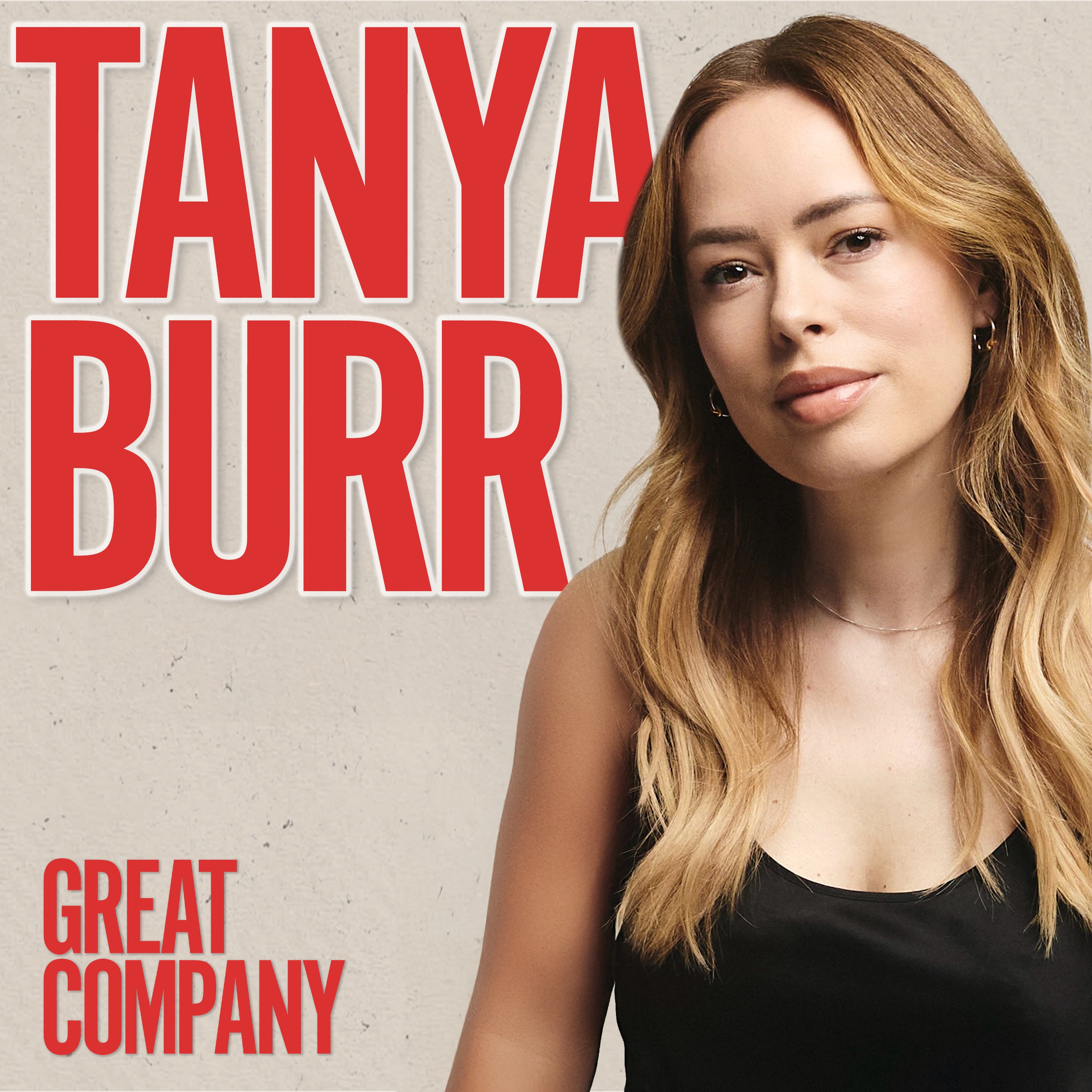
Great Company with Jamie Laing
TANYA BURR: Dating After Divorce, the Brit Crew & Why I Quit YouTube
00:54:56
Loading summary
Transcript322 lines
- [00:00]
A
You were part of something called the Brick Crew.
- [00:02]
B
The Brick crew?
- [00:02]
A
Yeah, the OGs.
- [00:05]
B
It makes me emotional.
- [00:07]
A
2015, you were raking in 10 million views a month on YouTube.
- [00:11]
B
I'm like, what's your question?
- [00:12]
A
What was the revenue looking like back then?
- [00:15]
B
I did YouTube for 10 years. I was stepping away from something that was successful. I found it so hard and just reading the things that were written about me.
- [00:26]
A
What were people saying?
- [00:27]
B
There were so many comments about my weight. I remember just feeling so low about myself. I quit YouTube and I just needed to disappear for a while. Hi, I'm Tanya Burr, and I'm in great company. I made today with Diana Bur. You would have been such a good member of the Brit crew.
- [00:47]
A
I would have loved to be in the Brick Crew.
- [00:50]
B
Looking back, I know that I had all these anxious tendencies when I was as young as seven. And I remember thinking, if only I could be worried about normal teenage girl things.
- [01:00]
A
When you go to the bathroom, why do you have to shut the door
- [01:02]
B
15 times to test it? My brain just goes to, I will be trapped in here forever. It's your mind playing tricks on you.
- [01:08]
A
Quite crippling at times.
- [01:10]
B
Oh, yeah. When I started YouTube, in the beginning, it was fine, and then it came back. I was so terrified of feeling anxious because I didn't understand it and also because nobody spoke about him.
- [01:21]
A
For anyone who is listening right now who's perhaps dealing with that at the beginning and they're not talking to anyone, what would you say to that person?
- [01:29]
B
I would say, hey, guys, welcome back
- [01:32]
A
to another episode of Great Company. As you can see from the trailer and the title, today we have Tanya Burr on the show. Super excited, right? If you're an OG YouTube fan, you know exactly who Tanya Burr is. She was part of the Brick Crew. That was the likes of Casper Lee and Zoeller and Joe Sugg and Tanya Burr and Marcus Butler, these, like, original YouTubers who, like, kind of grew what YouTube is now. Today, we speak a lot about that. We speak a lot about anxiety. We speak a lot about growing up and family and everything around that. This episode today is full of nostalgia. It's full of emotion. It's full of so many amazing things. So we really hope you enjoy it. Now, before we start, I just would like to ask one thing, as I always do, which is I want you to join the community. And by joining the community, all you got to do is subscribe to our show. It takes one second. It's completely free, and it does us so many wonders. I can't Even explain if you can do that one thing for us. Thank you so much. And I promise you we'll keep making the show better and better each week. Okay, here we go. Enjoy this amazing episode of Great Company with Tanya Burr. Welcome to Great Company.
- [02:34]
B
Thank you for having me. I'm so excited to be here.
- [02:36]
A
Do you get nervous for podcasts on a.
- [02:38]
B
Do you know what? I actually haven't done one that I've been nervous for before, but I feel nervous for this. But also I think I hardly ever do podcasts or speak to people in this kind of way and so I do feel a little bit nervous. Yeah.
- [02:51]
A
I don't normally get nervous about anything, but as I get older, for some reason I become more nervous about things. I feel like I've become more self aware, but when I was younger, I didn't care about anything.
- [02:59]
B
I think we didn't think anything through when we were younger. I think that's the thing. And I think we are more self aware, which means we're more. I don't know, it's good in some ways we're wiser, but then we know to be wise and think about things which can then make it more scary.
- [03:18]
A
YouTube.
- [03:19]
B
Yeah.
- [03:19]
A
Do you remember sitting down in front of the camera going, right, I'm going to do this?
- [03:22]
B
Yes.
- [03:22]
A
Who's your inspiration? How does that happen? Who even thinks about doing that?
- [03:26]
B
Well, I think the magical thing about YouTube and what was so special about it at the beginning, and I have to say, I do just feel so grateful to be. I'm forever grateful for YouTube and being in that first wave of content creators and it's just incredible to see what it's become today. It's this kind of powerful tool for connection and creativity and it's just incredible. And what it did for me and how it changed my life, I'll just be forever thankful for.
- [03:58]
A
How do you find it? Who was your inspiration? Why did you do it?
- [04:01]
B
So I was living with an ex and I think one of his older sisters was actually living at home at the time. And I was so super young, it was, it was living with his mum as well. So it was before you kind of move out and get your own place. And they were professional makeup artists and they started creating YouTube videos, I think not even meaning for them to be. For the public, I would think it was for they used to do wedding makeup for people and I think they had a wedding makeup request from someone in another country and one of the sisters was heavily pregnant and couldn't travel to do it. So she said, I'll just film you. I'll film a tutorial of how you can do it and you can use this to do your own wedding makeup in another country and uploaded it to YouTube and not meaning for it to be a public thing and then realizing it was. And that it could be a public thing and you could kind of get subscribers and views and.
- [04:58]
A
And comments and comments.
- [05:00]
B
And I was in a very kind of in between stage. I'd finished school and sixth form. They were like separate things at the time. I was due to go to university in Leeds to do English.
- [05:13]
A
We would have been in the same year. I went to Leeds.
- [05:15]
B
Oh, my goodness.
- [05:16]
A
Have we had mirrored lives? Yeah. What is going on? That is math.
- [05:20]
B
That is so crazy.
- [05:21]
A
Were you studying English? I failed to do English, so I went and did drama.
- [05:25]
B
Really?
- [05:25]
A
Yeah. You were.
- [05:26]
B
That was what I wanted to do as side things because I also did drama kind of all my life and went to a theatre school after my.
- [05:32]
A
Oh, I did it full time because I couldn't do English. I loved English more than. But I didn't get the grades because didn't work hard enough.
- [05:36]
B
That's so interesting. That's crazy. And anyway, I deferred my year because I just didn't feel ready to go. I just. I just wanted to defer. I went traveling, but I actually started YouTube before I went traveling and because they. His sisters just said to me one day, you should just give it a go. It's fun. It's a nice creative outlet for you. And I've always been quite creative, very creative person. And I think that when you are. And you're kind of. I was just working kind of in retail in a. In a 9 to 5 job, trying to save up money to go traveling. And it was uncharted territory. There was no kind of clear blueprint or ideology to follow. So none of us really knew what we were doing. But I think that was what made it incredibly exciting. It was. It was a really exciting time.
- [06:24]
A
You were part of something called the Brick. Brick Crew. The Brick Crew, which was Zoella Joe Sugg, her brother Alfie Days, Casper Lee and Naomi Smart and Marcus Butler. Why do you think the Brick Crew was so successful? Because you guys were like this crew together. And what you would do in. So the way of YouTube is that you would collaborate with each other. And so then it would go and build and build and build. And that collaboration thing was so unique. It's what everyone does now in music and film and YouTube and fashion and business collaboration. But you guys were doing it with content.
- [06:58]
B
It was just so natural. And we were all just. Before we even started collaborating, we were all individually just sharing moments of everyday life. Bits of the girls were doing bits of kind of beauty and fashion and just sharing what we loved. And for me, personally, I think that authenticity just became a cornerstone of how I did everything. You know, lots of people watching us, they could relate to us in a way and feel that familiarity. And obviously there were reality TV shows, like one, you were a part of one. And I think that probably in the same way people enjoyed that, people enjoyed seeing the reality of our lives and seeing it in such a candid way, too.
- [07:51]
A
But, Tanya, I tell you what, I remember doing Clothes Show Live in Birmingham, right?
- [07:56]
B
I did a Clothes Show Live.
- [07:57]
A
You might have done a Clothes Show Life. And I remember being there and I thought I was a bit of a big deal back then. I was like, yeah, I'm. You know, when I go to the Clothes Show Live, people go crazy and they're screaming and it was. Clothes Show Live is a sort of fashion show thing in Birmingham done in the nec, which is a big arena. But what was interesting is I remember doing a. Walking out of hosting something and I could hear these screams and I was like, what is that noise? Like, that is crazy. People going wild. It was because Alfie Days was on one of the stages and I didn't even know who was. I was like, what? Because I wasn't watching YouTube, I didn't understand this, but people were going wild. It was like. It was different to what I had experienced because I was on a reality show which people loved and enjoyed watching. We with YouTube now. And definitely before you could watch this privately in your bedroom, you know, you could sit there and it was something just like intimate. So you felt even more attached to the creator, the YouTuber, you. Right, so what was that moment that you suddenly realized that you were famous?
- [09:00]
B
Probably something like that. Like doing a live event and having lots of people screaming or saying, you know, staying in a hotel, people finding out where the hotel was and all turning up. And the strangest thing was, is turning up with their parents. Like, what parents are allowing their children to go and, you know, essentially stalk someone who, you know, I understand if it's a live event that we've advertised we're going to be at, but if it's just someone's found out what hotel you're staying in.
- [09:34]
A
Stalking, yes.
- [09:35]
B
And parents are just coming along and saying, do you mind.
- [09:40]
A
Do you mind having a photo with my.
- [09:42]
B
Do you mind. Do you mind giving a room tour? Because that's what we would all do on YouTube is do. Is like vlogging room tours. And because we traveled a lot for all these different events that we were doing and stuff, which, like, God knows what they even were. But people would want to be doing what they would see us filming in our YouTube videos. They want to be a part of that and think. Think that they could be a part of that.
- [10:03]
A
Give every part of your life over.
- [10:05]
B
Yeah.
- [10:07]
A
What was your favourite memories from the Brick Crew days?
- [10:09]
B
Staying in hotels together, I think was really fun. I think traveling. Traveling together. And also because, yes, there was the Brick Crew, but I also think the Brick Crew weirdly also included a few Americans. Like, I don't know if you remember. Do you remember Tyler Oakley or Joey Grace, Cepha.
- [10:27]
A
Yes. Tyler Oakley had like a sideshow with Ellen for a bit. Like, Ellen did it. It was like, massive. Huge. Yeah.
- [10:36]
B
Oh, and then also a part of our crew was Troye Sivan, the Australian Troy, who's now obviously a huge singer star. I remember being in a hotel room in Anaheim, which. Have you ever been to Anaheim in California?
- [10:52]
A
No, never meet at Anaheim.
- [10:53]
B
The only reason why I think you would go there would be for some kind of convention or. I think there's a Disneyland there or something. It's the most bizarre place. It's sprawling as well. Much of America is. And just kind of everything is huge. Everything you order in a restaurant is huge. And we were there for VidCon, which is this. It's like a comic con but for YouTubers. And I remember sitting in a hotel room there and. And we'd all kind of just order pizza to our room and just. Just lounge about together and just chat and be able to relate to each other because we were all experiencing this insane thing at the same time. So being able to relate to each other and Troy saying, I've made this song and I'm going to release it and I want to play it to you guys first. And he was so embarrassed he had to walk. There was kind of like a corridor in the room and he put the song on. He was so shy about it and now he's like, huge.
- [11:54]
A
Do you know what? There's something so, like, naive and precious about it all, because I think what you guys used to do is used to play your videos to each other to see what you guys think. Is this a good video? Is that. And it was just like this amazingly unique place. I think how I get it at the beginning, where you were all championing each other.
- [12:12]
B
Yeah.
- [12:12]
A
I think that is so healthy.
- [12:14]
B
Special. Yeah.
- [12:15]
A
Because that doesn't happen. Because now one could argue that YouTube is quite competitive and everyone is sort of fighting for space. We don't have to be. But it feels a bit more that way.
- [12:24]
B
That's very. That's very true. I hadn't thought about it that way. I think that is something that made it so special. There was, there was no competition or ego. I never. I also think, you know, Zoe and I have such a special friendship and we still voice note on a weekly basis and meet up when we can. Obviously we both, you know, have families and busy lives, but it's so nice that we still have that. And I think what's so special about our friendship is we were never competing with each other. We were just always like you say, championing each other. And that was so special.
- [12:57]
A
Can I ask a really personal question? And you can throw it away if you don't want to answer it, but I have to ask it because it's so entrepreneurial you guys back then and like it was the kind of wild west and in 2015 you were raking in 10 million views a month on YouTube.
- [13:14]
B
Like what's your, what's your question?
- [13:17]
A
What was the revenue looking like back then?
- [13:21]
B
It was a lot. If, if I'm. If I'm being honest, they were businessmen.
- [13:25]
A
You have to so related to being a businessman, you know, in that way because it is, it's a business. Right.
- [13:29]
B
But also I can answer this question genuinely and tell you and my friends and family will vouch for this that I am not very business minded. I would say I'm entrepreneurial but more creative. Right. I'd say I'm. I'm more of a creative so not that I didn't benefit from that. And the amount of money that was earned in that time which, which and it was large sums of money and I know that much because I bought a house that money, you know, and I kind of set myself up with it but I wasn't aware of it at all. I. For a long time, for years on YouTube I never looked at the. The so what aren't you money was the views. Yeah, that was a little number in the. Under the video I think on the right hand side like wherever it sits now.
- [14:19]
A
And that would then that how it worked just for someone listening is that the amount of views you would get, you would have advertising within the video and the amount of views you'd get you'd have something called a cpm Right. Which is cost per metric or whatever it is. Every thousand views you get, you're paid a certain amount of money.
- [14:34]
B
A certain amount.
- [14:35]
A
Okay, great.
- [14:35]
B
And back in the day, the CPM was very high.
- [14:40]
A
What height was it?
- [14:41]
B
I couldn't tell you. I just know it was high because people have told me that since, so I obviously knew that I didn't have to worry about money. I, you know, I. That just was. It was just something that came with it. But I was not looking at at the time. I couldn't have told you what the CPM was. I couldn't have told you exactly what I was earning. I couldn't even remember to tell you now. And I wasn't ever. I've never been very sensible. I get it from my dad. He's really hedonistic. We really didn't have a lot of money growing up. I've had to learn to be more sensible. Obviously now having a family just wasn't.
- [15:22]
A
Okay, let me put it in. Were other. Other people made millions though, didn't they?
- [15:26]
B
Yeah.
- [15:26]
A
It's amazing.
- [15:28]
B
And I'll forever be grateful for that. You know, I hadn't even thought about being grateful for the financial side of it, even though that's obviously is really important and did hugely set me up for the rest of my life.
- [15:41]
A
Yeah, but grateful. But also, you have to. Yes, but also you, you, you saw a gap, you went for it and you monetized off it like everyone does. It doesn't matter if that is Bitcoin, Facebook, art.
- [15:53]
B
Yeah.
- [15:53]
A
Music, whatever it is. You saw an opportunity. That's very entrepreneurial and I applaud anyone who, who, who saw it. And I wish I was focusing on that back then. You know, I loved making videos more than anything in the world.
- [16:06]
B
You would have. We would have loved to have.
- [16:08]
A
Wish I was in the Brick Crew
- [16:09]
B
like you would have been. You would have been such a good member of the crew.
- [16:13]
A
I would have loved to be in the Brick Crew. One regret and not investing in Google. You brought your sister Tash today.
- [16:24]
B
Yes.
- [16:25]
A
Would Tash tell me off if I ask any bad questions? Would she jump in?
- [16:28]
B
Oh, yeah, she's. She's the. She's younger. She's the younger sister, really. But she is also the scarier sister.
- [16:36]
A
So if I was going to ask Tash how she would describe you, Tash, how would you describe your sister?
- [16:44]
B
The bravest.
- [16:45]
A
Really?
- [16:46]
B
Yeah. The bravest, strongest lady in my life.
- [16:53]
A
That's an amazing answer.
- [16:54]
B
That makes me emotional.
- [16:56]
A
That made me a little bit emotional.
- [16:57]
B
I wasn't Expecting her to say that.
- [17:00]
A
When my parents or my siblings, typically my parents say to me that they're proud of me, man, I go to, like, mush. I can't. And my dad said it to me recently. And for some reason, when our siblings or our loved ones say really nice things about us. Cause it's unexpected, right? Our siblings are there to normally jibe us and tell us, like, get up or make fun of us. So when actually they become vulnerable and they say something sweet, oh, my God, it like, hits home really hard.
- [17:28]
B
Yeah, I always get that. If my dad in particular says something to me or, you know, even. Even when they stop and tell you that they love you or. Yeah. Or that they're proud of you, it just. It means so much, doesn't it, coming from that person who. Who means so much to you.
- [17:43]
A
Do you think you're a brave person then?
- [17:45]
B
There's so many things about me that I think aren't brave, even. For example, I'm. I'm a really claustrophobic person. And I've had years of therapy about all kinds of things in my life, as I feel like a lot of our generation have. I feel like with the generation that kind of really. She went to town with therapy, and we all openly talk about it, and I think it's amazing, but it's something that I just have never cracked. So even when I just said, oh, I'm just going to go and use the toilet before we do this, because I think, you know, we might be chatting for a while. I don't want to need a. Need a loo break. I open and close the door like 15 times before I would fully close the door. Then I have to test the lock. Am I going to use the lock? If I was actually just, you know, comfortable with your locks and your toilets. But I would say 70% of public toilets, I don't shut the lock on. And I would have to then get someone. I would either have to hold it. If I was by myself or if I was uncomfortable, I would have run and got my sister and said, can you just hold the door for me? It also depends on where I'm at in my head that day and how I'm feeling on a level of anxiety as to whether I'll do it or not. I don't get in lifts. I mean, so rarely if I absolutely had to. But it's something I think about all the time. If I'm going on a work trip and it's in a hotel, I'll call and say, please, can I be put in a room that's on the first floor. And even if they say, oh, we've got you this amazing suite on the. On the top floor, I'm like, I don't want it. I just want to be able to go upstairs to my. Up the stairs and not in the lift. So I think because I have, I'm so conscious of that, that makes me then not feel like a brave person.
- [19:26]
A
Where do you think that came from?
- [19:27]
B
Do you know what? I think one of the hardest things is not knowing where it came from exactly. Because so many things when I. And I think I started doing therapy in my early 20s, and to be honest, it was a couple of years into starting that YouTube journey, which was very intense and so many things were very obvious. And honestly, like two months into doing therapy, I felt so much better about because it was just recognizing where things came from. And once you. It's almost like, you know, when you watch a horror film, which I personally don't do, I don't enjoy horror films, but I have seen them and I know about them and my boyfriend works in film, so. So we'll talk about this kind of thing a lot, is that it's the scariest ones where you don't see the monster or the ghost or whatever the scary thing is, because once you see it, it takes away its power.
- [20:19]
A
Wow.
- [20:20]
B
And so when it's more the unknown and it's your imagination running wild, for me, it was realizing where some things had come from, why I was feeling a certain way. And just. It's not like it totally takes away all of the anxiety about something, but it helps you to understand it, which I think that in turn does help you to deal with it.
- [20:40]
A
It's a really good way of putting it. Yeah, that's a really good way of understanding it, I always say. So I had anxiety, right. And I know you had GA diagnosed GAD when you 7 years old or something around.
- [20:50]
B
Is that general anxiety disorder disorder? Yes.
- [20:53]
A
Yeah. So I, I had anxiety really badly in my 20s and I still did it, crippling, like to the point, which was just unbearable. Right. And. And my, my anxiety was like spurred on from anxiety. Right. So I was scared of anxiety because I didn't know where it came from.
- [21:07]
B
Oh my God.
- [21:08]
A
I feel.
- [21:08]
B
Exactly.
- [21:09]
A
And so I was so afraid that the anxiety was going to come the whole time that monster, that scary thing was going to arrive, that I would fear it. So then it would be a cycle of like, okay, well, then I'm anxious about feeling anxious because I'm anxious and it was just a horrific place to be in. And once you understand it or accept it, once you accept there's a monster in your room, once you accept, hey, there's a monster on. Under my bed, whatever, it's going to be there, that's okay. We just deal with it. That's the moment you become almost free of it in a way. It's still there, but it's how you handle it.
- [21:36]
B
It's so interesting that you said that, the fear of it, because I've never heard anyone describe it exactly like that, even though it is quite a simple thing.
- [21:45]
A
Yeah.
- [21:46]
B
But that's exactly how I felt. When I was in my teens and basically all my time pre therapy, I was so terrified of feeling anxious because I didn't understand it and also because nobody spoke about it. And probably when. I mean, we're. We're probably quite a similar age.
- [22:05]
A
24.
- [22:08]
B
Well, I think you're.
- [22:09]
A
But you were born in case. 89. I'm born 88.
- [22:12]
B
Oh, you're older than me. I had no idea.
- [22:15]
A
Well, we'd be same year, I think, same school year.
- [22:18]
B
You're so much older than me. I think that for us growing up and in our teenage years, there was nobody. I think I remember reading in Heat magazine or something, Frankie Bridge opening up. She was the first person that I ever saw talk about having anxiety and. Whereas now, if there's a teenager having anxiety, they could, you know, go onto social media and have so much content to help them and, you know, so much communication about it, whereas we had nothing. So I thought I was the only one who had it, which made me feel terrified.
- [22:59]
A
Cause you don't have anyone to relate to. No, I've never said this. Do you know the person that I watched to help me through my anxiety at the beginning?
- [23:07]
B
Who?
- [23:08]
A
Zoella.
- [23:09]
B
Really?
- [23:09]
A
I never said that. Yeah, and I totally forgot that until you triggered a memory. When I was dealing with my anxiety, which was panic attacks. Right. Which was when I was in my early 20s and I didn't tell anyone, by the way. I just kept it all in. I used to watch Zoella because she would speak about it.
- [23:22]
B
It's having someone to relate to that's so amazing.
- [23:25]
A
Completely.
- [23:26]
B
I'll have to tell her that. Well, she'll probably listen to this. Her and I are still really good friends.
- [23:30]
A
Really. When you go to the bathroom earlier, right. And you have to shut the door 15 times. Why do you have to shut it 15 times?
- [23:37]
B
To test it. So it's a trust. It's a trust thing.
- [23:39]
A
I think it's every 15 times every time.
- [23:43]
B
It depends if it's somewhere new, then yes. The worst thing is if it stops me from doing things. Like when I first told Dan about that phobia of mine, because I think it is a phobia.
- [23:55]
A
It is a phobia.
- [23:56]
B
He said, what think do you. You imagine will happen? For example, if we're on a date night and we're in a pub and I go to the loo and say, I'm just going to go to the dog, back in a minute. He said, if an hour goes by. He said, bear in mind, he was like, I wouldn't leave it an hour. And I've given him instructions as well. I said, if it's ever longer than even like seven minutes, come and get me. But he said, what do you imagine will happen? Do you think that I'll just say, oh, that's weird to Tom's just stuck in the loo, I'll just go home and carry on with. Carry on with my life and she'll just be in there forever. He was like, I'll just, I'll just have the rest of dinner and then. And then just hop on by myself. And I'm like, do you know, I hadn't really thought about that. My brain just goes to. I will be trapped in here forever.
- [24:40]
A
And you know, it's illogical, but you can't make your brain believe it's illogical. You think it's a logical fear, don't you?
- [24:47]
B
Yeah.
- [24:47]
A
You said I used to go and get sick every single morning because I felt so anxious. I worked myself up so much before school that I was a complete mess and there was no reason for it. You're growing up in Norfolk and you're seven years old and someone says, oh, you have anxiety, right? Is that right?
- [25:06]
B
So I wasn't that young. The being sick every single morning and the really realizing I had. It wasn't until I was about 13, still so young. But yeah, I was really young. And I remember the day that it came that I felt that looking back, I know that I had all these anxious tendencies when I was as young as seven. And I would make lists about things that had to happen that day and tick them off. And I remember being at my grandma's house and just. It's one of my earliest memories and being really, really young and having my granddad's notebook and his pen and just. I can't even remember what it was about. But I would make these kind of tick Lists and be like, well this has to happen and that has to happen. And I guess trying to create a perfect life in some kind of way which weirdly I think has aided me in my career because it's all about curation online, isn't it? But I'd been on a school trip when I was 13 to the south of France. I hadn't traveled a lot as a young child. We didn't have much money growing up. So it was a big deal when I did this trip and do you know what I think it may have been? Yeah, it was my first time even going abroad.
- [26:22]
A
Was it really?
- [26:23]
B
And I didn't go on a plane. We got a coach with, with the school to the south of France.
- [26:28]
A
It's a long drive.
- [26:30]
B
Yeah, it was like 24 hours I think.
- [26:32]
A
Sorry, sorry.
- [26:35]
B
That is.
- [26:35]
A
I really don't know why 13 year old kids and a coach for 24 hours.
- [26:40]
B
That's mad.
- [26:42]
A
With no mobile phones. Read this and you're reading like holes. You were reading. That's more mad than you sort of throwing up.
- [26:52]
B
Yeah, I haven't thought about that for years. I really haven't thought about this. And I remember coming home from that trip and being sat on our living room floor and opening my bag and I got presents for everyone in the family, you know like just little things like a bracelet from a market or something. And I had this feeling of like dread, like this pit in my stomach and I was like what is going on? I feel so. It was like an out of body experience.
- [27:18]
A
Sadness?
- [27:19]
B
No, not sad, like pure danger. The danger? Yes, the. I would compare it to the feeling when. Do you remember being in a supermarket with your mum when you were little and, and suddenly losing sight of her and thinking I've lost my mum. That's the feeling of how I first ever experienced feeling anxiety. But for no reason. I was just sat in my living room with my family. Everyone was happy and fine like and just having that feeling for no reason. I kept it very secret because I was very, very afraid of that feeling and didn't know what was going on with me and I was just so, so afraid that I didn't tell anyone until I started. Every morning I would. The best part of my day was when I woke up before you kind of come to, you know when you're just kind of still in that kind of sleepy dreamy state. And that's when I would feel normal and like the old me. And then I would wake up and then realize, oh, remember the anxiety that I wouldn't even know to call it anxiety. I would just think, oh, that feeling. And have all that feeling of dread and. And then it got to the point where I would run to the loo and. And throw up because I just felt it was like such a huge rush of anxiety that that would happen. My. My house was tiny growing up and I was probably quite loud, being so sick in the. In the loo that, that, that, that wasn't a secret. And so it was actually. My parents spoke to me about it and my dad. I remember we were on a shopping trip in Norwich, the whole family, and it was in a car park and we'd parked the car and my sister and brother and mum had kind of walked ahead and dad was. I don't know, probably at the paint machine. I'd gone with him and he stopped me and said, you know, you can tell me anything. And I said how I was feeling to him. And the next week they organized for. A therapist came to the house, which I think is quite a strange. It was like a house visit.
- [29:23]
A
It's quite rare. It's.
- [29:24]
B
It's really, really strange. And. And I remember I had a TV, like a little. Do you remember those box TVs that came out like this? They were like cubes in my bedroom.
- [29:34]
A
So heavy as well.
- [29:35]
B
Yeah. And there was. There was a music video going on, which I still. I. I could not watch the music video. I don't even know what the name of it is. It was. I think it was Black Eyed Peas. And the music video is them on, like a merry Go round. They're like at a fairground or something. That's what was on when the therapist arrived downstairs. And I was so anxious and so freaked out, like, I could never see that music video again. And I came downstairs and I don't remember anything that she said or that I said, but I know that I wasn't. I was too afraid to articulate how I was feeling. So we did. So we didn't. We didn't speak. I don't think anything came from that. And I said that I never wanted to see her again, even though I'm sure she did nothing wrong. I think I just so wasn't ready to. And then I revisited therapy almost 10 years later.
- [30:36]
A
One of the things about being a YouTuber is that you had to give over everything.
- [30:40]
B
Yeah.
- [30:41]
A
And that comes with problems and issues and comments. Complications. Talk me through that.
- [30:49]
B
I think growing up and simultaneously trying to find myself, you know, discover who I was, but doing that in front of a lot of People. So I was doing what everyone else is doing in their twenties. But the difference was. Yeah, just having. Having an audience, I found the scrutiny really, really difficult.
- [31:15]
A
Like what.
- [31:16]
B
The comments, the. There was a lot in the media back then as well, so it was very kind of. I feel like now influencers are influencers and it's quite separate from traditional media. But back then it was daily mail, you know, on. On a weekly basis. And that's. And I know that you will have experienced that. I've seen things that you and you kind. Fun. Fun of it, which I think is so great, because back then I wouldn't have had the confidence to do that. And I think that you. You may not have. I mean, I don't.
- [31:48]
A
Don't think I would. And I like to think that I would have had. But I don't think I. I don't think I would have done back then either. I think I would ignore it.
- [31:57]
B
It's the same as the anxiety in a way that when we were younger, it's. It's all about being so afraid of it, so just pushing it away. Pushing it away. Whereas actually confronting it is. Is much healthier and so much better. And also the thing is, I just. I look back at my 20s with so much compassion because I.
- [32:16]
A
On yourself.
- [32:17]
B
Yeah. Yeah. Because I found it so hard and just reading the things that were written about me and everything that I said was judged and I had lots of. I think when someone picks apart your personality as well as your looks and just judges every single moment and the way that you look. I had. I remember just feeling so low about myself and, and just really, it's. It's so hard to explain, but I think it really did just get into my head. And I read a lot when I was younger and I think there was so many comments about my weight and also. Which is just crazy because if you looked back at photos for me when I was at kind of the height of my YouTube life and I was just young and just living life and kind of being free, but the comments and the scrutiny around my weight. But then also when I went through tough things in life and then lost lots of weight, and, you know, people then commented on that and. And said that I was too thin. So it was. I think that there's nothing new here. I think every woman who's ever been in the public eye has had her weight scrutinized, and I think that now it doesn't bother me at all. Well, I. I quit YouTube because of the comments, not just because of the comments. So I, I, there was so much kind of going on online and yes, so many comments. There was whole websites dedicated to trolling. There was a lot in the press at that time and I felt like I needed to step away, find my own voice again and I just needed to disappear for a while so that I wasn't feeling like my self worth was tied to how much I was sharing with everyone.
- [34:25]
A
This is 2019, was it?
- [34:27]
B
Yeah, I think, I think so because I came, I quit for five years I never thought I would ever come back. And then suddenly I just had this feeling of just really missing long form content and so. And I came back in 2024. Yes.
- [34:43]
A
When I spoke, I remember I spoke to Casper Lee, right. And when Casper decided to quit YouTube, he said it was a relief. I was like, it was a relief. And he said, yeah, it was a relief. I didn't have to wake up and think about a video. Did you have that?
- [34:56]
B
It was, it was a relief. Yes to not an immediate. I, I don't think I felt the effect so immediately. I think that it took me some time to realize what the pressure that was upon me the whole, all those years. I, I did YouTube for 10 years and until I. A video every week at some points, a video every day. But yeah, at least a video a week. But I think towards the time when it got to the point where I quit, I think I kind of was doing it more like once every two weeks. And then suddenly I never made the decision that the last video that I did, I think it was weirdly like a workout haul like meeting. I think it was sponsored by a fitness brand, Fabletics, and it was me like trying on workout gear in my living room and maybe there was a vlog to go with it. I think it's still up that video
- [35:51]
A
and you were just like, I'm just done.
- [35:53]
B
And I just thought I'm not going to upload for a while.
- [35:57]
A
Was that scary?
- [35:58]
B
That's it. I wasn't scared. I definitely wasn't scared. I think I was really, really done. I think stepping away at that time was the best thing that I could have done.
- [36:06]
A
This is where your bravery comes in, what Tasha Sissa said. Because I tell you why most people would never step away from things that are being successful, that are making you revenue, that are doing whatever that you. And it feels like you in your life you've managed to say, well, this is not right. And I can now I have to step away from it because it's just not right. It's not working. And that is huge bravery. Most people don't. Most people just stay in things, in whatever it is in YouTube, in businesses, in relationships, whatever it is, just because they feel like they have to.
- [36:41]
B
Interesting. I. Yeah, I think I have been someone who always. I have to do what feels right. And yes, looking back, it probably wasn't. It definitely wasn't financially the smartest decision, you know, in terms of my career. It may not have been the smartest decision because when I stepped away from YouTube, I think I was stepping away from something that. That was successful at that point in time, but I knew that I had to do it. For me, I think it was really, really important that I had so much to unpick in terms of my views and my beliefs around sharing and boundaries.
- [37:26]
A
Well done.
- [37:28]
B
And I think it was really important for my happiness.
- [37:32]
A
And around the time you quit YouTube, you were cast in a play called Confidence?
- [37:35]
B
Yes, yes.
- [37:37]
A
Kind of like serendipity as well, right?
- [37:42]
B
Yeah, that. The play. Oh, God. I'll be forever grateful for the director who gave the opportunity to do that play.
- [37:51]
A
Why?
- [37:52]
B
Because I was under qualified for that role. Not in terms of. I don't. I don't believe. I mean, some of our best actors, you know, of our generation have not been to drama school. So I don't mean in that way. I just mean in. That was my debut role in theatre and I was leading a play. It was at the Southwark Playhouse. You know, it's a respected theater and it was a really tricky 90s play. I was thrown in at the deep end, but I learned so much and had the best time doing that play. And that was something. I was so in it, there wasn't time to think about anything else. I was just so focused on it. And if I was given that opportunity again, and I would absolutely love to do theatre again, I've only ever done film and TV since, but I would love, love, love to do theatre again.
- [38:48]
A
You know, the public reaction to you getting the role was sort of slightly negative. Right?
- [38:52]
B
Yeah.
- [38:53]
A
As you said, people said, oh, you're not fit for the role, or whatever it is. How do you react to that?
- [38:57]
B
Well, I think it's fair enough in a way. Like, I wasn't, you know, I hadn't done. I'd only done amateur theatre before, but I was given this opportunity. I mean, I'd be lying if I said it wasn't because of my profile online.
- [39:13]
A
Totally. And that's fair. You'd built your profile online. Right. That's what you'd Done. And you can act and that's what you wanted to do and you took an opportunity and went for it.
- [39:20]
B
Yeah. But I don't regret going for it. I had the most incredible experience. I learned so much, and I've done, you know, some more things since then that much, much better. But also the other thing was, I do have to say, I do think it got reviewed unfairly because people don't like anyone doing things outside of their box. And I. And I think that there was journalists who'd written their reviews before they saw the play. I think they'd already made up their minds what they were going to say.
- [39:58]
A
You went through a public breakup in your 20s and we don't need to go into the relationship at all. Right. But can I ask, what experience did that teach you?
- [40:06]
B
Resilience.
- [40:07]
A
Really?
- [40:08]
B
Yeah. I think going through anything that personal in the spotlight and having, you know, the attention that it got, I think just taught me a lot about resilience and also privacy. And I think that that is something as well that made me really value my privacy. And I think I needed to fully step away in order to be able to come back in any way, shape or form. I think for a while I became very overprotective, but now I found a way to share parts of myself and my life whilst also protecting both.
- [40:46]
A
So with your private life now. So did you then, because it was so exposing. You put so much out there. Now you're just like, actually, no, I want to. Now I'm going to control whatever I put out. Right.
- [40:55]
B
It's so precious to me. And since becoming a mother as well.
- [41:00]
A
How is it?
- [41:01]
B
It's incredible.
- [41:02]
A
Yeah.
- [41:03]
B
It completely. The lens through which you see the world just completely changes. It's so special. You can never have a fully bad day ever again because even there will be hard moments. Oh, my God. The sleepless nights, the even funny things like just an inconvenient poo in public. From the baby. Not from you, I hope. There's obviously, there's so many tough moments that come with having a baby, but the joy that they bring you is something that you will never have been able to have. Joy brought to you in that way before.
- [41:44]
A
Did your anxiety come back? Because it's something which is slightly out of control.
- [41:47]
B
Do you know what? The absolute opposite.
- [41:50]
A
Get out of here.
- [41:51]
B
Because
- [41:53]
A
you're distracted.
- [41:54]
B
You're so, so heavily distracted.
- [41:57]
A
It's so you don't have to think about yourself anymore.
- [41:59]
B
I don't think about myself in the same way anymore at all.
- [42:02]
A
Wow.
- [42:03]
B
My Brain is so full even now and he's just turned three. There's always so much going on and so much to think about with your child. You can't prioritize yourself in the same way anymore, but almost. And in some ways that's. It's difficult because obviously you need to do things for yourself. But the best part is you don't have the time to think about your own worries and concerns. Your worries and concerns become about them, whether if it's like what they're eating or your organising potty training. We did that over the summer and that kind of really. It takes hold of your mind in such a way that it, you don't have time to worry about other things.
- [42:43]
A
It's amazing, isn't it? Your partner, Dan.
- [42:45]
B
Yeah.
- [42:46]
A
What's the best thing about him?
- [42:47]
B
Two things, I would say, his loyalty. And I don't mean that in terms of just, you know, physical like loyalty, but just always having my back. And he's loyal through and through. So important that it really is so feeling like someone's on your team, even
- [43:05]
A
if the tide is against you, you know that that person's there with you.
- [43:09]
B
Yeah. But also just him being my best friend and being able to talk non stop and like him and I could go to dinner and talk like this for the entire time.
- [43:23]
A
It's the best. Someone said to me once, Robin Sharma, he wrote a book called the Monkeys who Sold His Ferrari. It's an amazing book. Right?
- [43:30]
B
Yeah.
- [43:31]
A
He said to me, you should do the 10,000 hour rule with your partner. If you can think, if you can have 10,000 hours with that person, 10,000 dates, 10,000 moments together, 10,000 conversations, you're probably in a good spot to spend the rest of your life with them.
- [43:42]
B
That's so interesting.
- [43:44]
A
That's how you should look at partners. Looks. Yeah. Looks fade, fancying them kind of goes, whatever. Can you spend 10,000 hours with that person? If you can, great, stick with them.
- [43:54]
B
Yeah. Because I often, you know, I'll look at Dan and think he's really, he's really lovely looking. Like, I'm glad that, you know, we're almost six years in and I, I probably fancy him more now than I did even on day one. And that's lovely. It's a really nice thing to have. But the most important thing to me is just. Yeah, it's the conversation, the connection. Because to me that's, you know, feeling, feeling connected is really important to me with anyone in my life. And yeah, being able to just in the car, we never Listen to music. We just talk non stop.
- [44:33]
A
Can I ask a question for someone who's listening again, who perhaps has been through heartbreak, right. And they're struggling, they're thinking, I'm just never going to find someone again. I'm going to be by myself and that's it, I'm done. What would you say to that person?
- [44:44]
B
I would say, chances are, you, you probably won't be by yourself forever. I'm sure that you won't. I. Even when I was single, and I actually really enjoyed being single, I loved it. And I had. I was living with one of my childhood best friends. It was so much fun.
- [45:03]
A
Did you date a lot?
- [45:04]
B
I did, yeah.
- [45:05]
A
Great.
- [45:05]
B
I did. I really, really loved it. I went for it and I loved dating. It was. It was. It was really, really fun. And. And I'd never pre. Properly dated before. I'd had boyfriends in my teenage years, but it's not like you're going out and you're meeting, you know, London or bar and, you know, it was. I was. I was in Tamesborough, this tiny village that I grew up in. You know, a date would be just. Well, you didn't. You would just meet someone at a house party and then they'd become your boyfriend.
- [45:37]
A
Yeah, I know. That's literally what would happen. I went out with someone and didn't even meet them. I just spoke to them on the phone. I was like 12.
- [45:43]
B
I almost did that when I was dating.
- [45:46]
A
No, you didn't. No, you didn't.
- [45:49]
B
I had that. There was one guy that just wanted to talk on the phone all the time, and I think. I think he did think that we were kind of in a relationship, but. But we weren't.
- [45:58]
A
Because you'd never met.
- [46:00]
B
Yeah. And I won't give his name away or anything, but. But he. But he was. He had. He had an accent, is what I will say. And I. I really like talking to him. So I love. I have this thing for accents.
- [46:13]
A
Okay.
- [46:14]
B
I love. I love people with accents.
- [46:17]
A
What kind of accents are we talking? Like, regional accent.
- [46:19]
B
I love a regional accent. Love it.
- [46:21]
A
Really? I'm from Norfolk and his eyes are lighting up.
- [46:26]
B
A regional accent.
- [46:27]
A
I love a regional accent.
- [46:32]
B
This one had a Scottish accent.
- [46:34]
A
Oh, like Ewan McGregor style. Or more like Glaswegian.
- [46:37]
B
More Glaswegian. Oh, nice. But, yeah, I think dating was so fun. But when. But when I met Dan, I. I knew and I. Yeah. Which is me.
- [46:48]
A
Can I ask.
- [46:49]
B
We met on a dating app.
- [46:51]
A
Yeah.
- [46:51]
B
Great day. Yeah, great. Yeah.
- [46:53]
A
Do you Know what's so funny? Every time.
- [46:54]
B
That's how I did all my dating, though. And it was amazing because you just got to meet a lot of different people. If I'd have been waiting until, you know, you're kind of set up three friends, blah, blah. It's like I got to volume date, you know, connect with people all over the world. I think probably because I was on, you know, that one that people go off.
- [47:13]
A
I got rejected from that one.
- [47:15]
B
Did you? Why?
- [47:16]
A
Well, I don't really know is back in the day when, I don't know, they didn't want me. Yeah, it was years ago before I went.
- [47:24]
B
You were going to be like, inappropriate or something.
- [47:26]
A
Yeah, I only send nudes. That's what I was doing. Like, what's wrong with this? Like, this is what we want.
- [47:32]
B
That's so funny. But I think I knew the way that I knew with Dan is that I had one date with him and then I was due to go on a date with someone else. I think I met him. It was actually a Monday evening that I met him, and I was due to go on a date with someone else on a Wednesday and possibly even on a Friday as well.
- [47:55]
A
Let's go.
- [47:56]
B
I am. And I didn't want to go in case Dan was suddenly free and he wanted to see me. And I wanted to make sure that my calendar was clear in case he wanted to see me. And he was working on a job at the time that was very busy and intense. And he'd said to me, listen, and now I understand his job, and I know that it was the truth. And he promises me now that it was the truth. But at the time he said, just so you know, I may not be able to see you for like, he was said, I'd love to see you again.
- [48:25]
A
Quite a good way to get out of dating as well. I'm sorry. I'm in a really intense job. I may or may not be able to see you.
- [48:31]
B
Depends on how it feels.
- [48:31]
A
Depends on how this day goes. But I may or may not be able to see you again.
- [48:34]
B
And he. Yes, he said. He said that to me. And I thought, oh, my God. Well, if we didn't have locked in when we were next going to see each other. And I thought, I don't want to have something in with someone else and have to cancel last minute because I'm also a very reliable person. And so I don't like to let people down. And so I just cleared any other dating off the cards. And I was like, I only Want to see him? And then I saw him on the Saturday. So I met him on the Monday evening and saw him also on the Saturday.
- [48:59]
A
Did you kiss on the first date? No, we didn't kiss on the second date.
- [49:03]
B
We did kiss the first date. Okay, good. But I'm like, do you know what? I think it's nice to kind of have that. Like, what do you think is going to happen?
- [49:12]
A
What do you mean?
- [49:14]
B
As in if you didn't kiss on the first date? Because so many dates where I did kiss on the first date, I never even saw them again. Like, maybe I was just a really bad kisser.
- [49:22]
A
Sophie and I. Sophie and I hadn't even dated. We were like mates. And on a flight on the way back from South Africa, we just started snogging in the seat.
- [49:31]
B
That's amazing.
- [49:31]
A
And then we just like hammered.
- [49:34]
B
I was gonna say that.
- [49:35]
A
Hammered. I was drinking whiskey like a Jack Daniels. Like I was drinking on a flight. We started snogging on a flight and that's like our first ever.
- [49:46]
B
That's so fun though.
- [49:47]
A
Yeah. And then we haven't even dated. Just kept on snogging. Didn't stop.
- [49:52]
B
That's so. That's so lovely. And I also think about having kind of a fun start to. In the fact that you were friends first. And I think what made me come away from a date with Dan when I. I think from the second date I was like, okay, now I really know is that I came away from that date and I voice noted my friend the next day when she said, how did it go? And I. I save the. I could probably find it out. I'll show you after this. I'm not playing it on air, but on our one year anniversary, I remembered that I'd sent that voice note and I went back through all of my whatsapps with this one friend who was actually called Sophie. And I found the voice note and I played it to him. On our one year anniversary when we were like out at dinner and we were actually sat outside in the street, it was quite noisy. And I was like, put it right to your ear. You have to hear everything I've said. But I just said I was like, this guy's different. Like we had so much fun together. And we were, I mean, yes, we got drunk, but also we were like dancing around his kitchen and kind of we were putting on old like 90s songs and fighting over like who was gonna get to put on the song next. And like dancing and just being silly and just having so much fun together.
- [51:03]
A
Does he have an accent.
- [51:04]
B
I know.
- [51:06]
A
Damn. See, only one thing I know. If he had a regional accent.
- [51:10]
B
If he had a regional accent, that would be him.
- [51:12]
A
That would be him forever.
- [51:13]
B
Yeah.
- [51:16]
A
Tony, can I say thank you so much. This has been amazing? We like to end the conversation with eight questions.
- [51:21]
B
Okay.
- [51:22]
A
What's a saying or phrase that makes you smile or cheers you up?
- [51:25]
B
I think you posted this one on your Instagram recently and I promise I haven't just taken this from your Instagram to be like, jamie, I like this one. This too shall pass.
- [51:35]
A
Oh, yeah.
- [51:36]
B
Only because I think it's so powerful to be reminded 100% that everything is temporary.
- [51:43]
A
Best compliment anyone's ever given you.
- [51:46]
B
I think the one my sister gave me about me being brave.
- [51:51]
A
What do you love most about your sister?
- [51:53]
B
Oh, I can't copy her and say bravery, but she is very brave. But I would say her loyalty, maybe. Perhaps I said that about Dan too, so I think loyalty is something I clearly really value.
- [52:03]
A
What scares you most about yourself?
- [52:05]
B
My mind. Not in the way it scared me in my teenage years, but I think how deeply I can feel things and have this intense emotional world inside of me.
- [52:15]
A
Same as me.
- [52:15]
B
Can sometimes spiral. Same as me. I think it makes us great, though.
- [52:19]
A
Yeah. Yeah. It's controlling sometimes. Oh, my God. What's something you can't let go of?
- [52:25]
B
Anything that my son has ever used, touched, had any toy, any old anything to the point where my sister and I went down into. We have a basement in the house and one of the rooms in the basement is a storage room and it's a large room, but it's. You cannot walk in the door of it because it's just boxes and baskets and things. Because I've kept any. Anything that I've ever had or used with him for him. Whether it's like a teddy or an item of clothing or just. Yeah, but I don't hoard anything else in life. I'm really like a get rid of things, organize, you know, have the clear out. That is a problem because I reckon
- [53:06]
A
he'll want it when he's older, right?
- [53:10]
B
But my mum.
- [53:11]
A
I'm so glad you kept my dummy when I was one. Yeah. What's your guilty pleasure?
- [53:17]
B
A guilty pleasure would be ordering on delivery. So I don't even have to leave the house. Ben and Jerry's cookie dough.
- [53:23]
A
Oh, yeah.
- [53:24]
B
Which isn't even my favourite Ben and Jerry's. It's just if I'm in this specific mood, it has to be that it
- [53:28]
A
gets too sweet sometimes. It's good.
- [53:30]
B
Yeah.
- [53:30]
A
Yeah.
- [53:31]
B
And some other. Just kind of random chocolates and sweets and then just sitting in bed and just eating ice cream from the tub. That's a real guilty pleasure of mine.
- [53:43]
A
What turns you off?
- [53:44]
B
Negativity and drama.
- [53:46]
A
100%. What turns you on?
- [53:48]
B
Connection, Positivity. Like zest for life. It's the best, you know.
- [53:55]
A
What do you like most about yourself?
- [53:59]
B
My positivity, I think, actually, coming from that one.
- [54:02]
A
Bonus. Who Was your favorite YouTuber?
- [54:06]
B
Oh, my goodness. I think I'd have to say the only. Like, I don't watch very many YouTubers now, but I still watch Zoe and Alfie and I still love. I know it's weird because I'm their friend. I'm like weird friend slash stalker. Going back to stalker.
- [54:22]
A
I know you're in the hotel, you and your son. They're in there.
- [54:27]
B
Let's go get them. Autograph. I just love their content. They're just so genuinely them. And I just find it so comforting and cozy. That's what I would watch with my tub of cookie dough in bed and just like, yeah, wholesome. Yeah.
- [54:42]
A
Tanya, thank you so much. Colin, you've been brilliant. Everybody. Thank you. That's been amazing.
- [54:45]
B
So much. That was amazing.