← Green & Red: Podcasts for Scrappy Radicals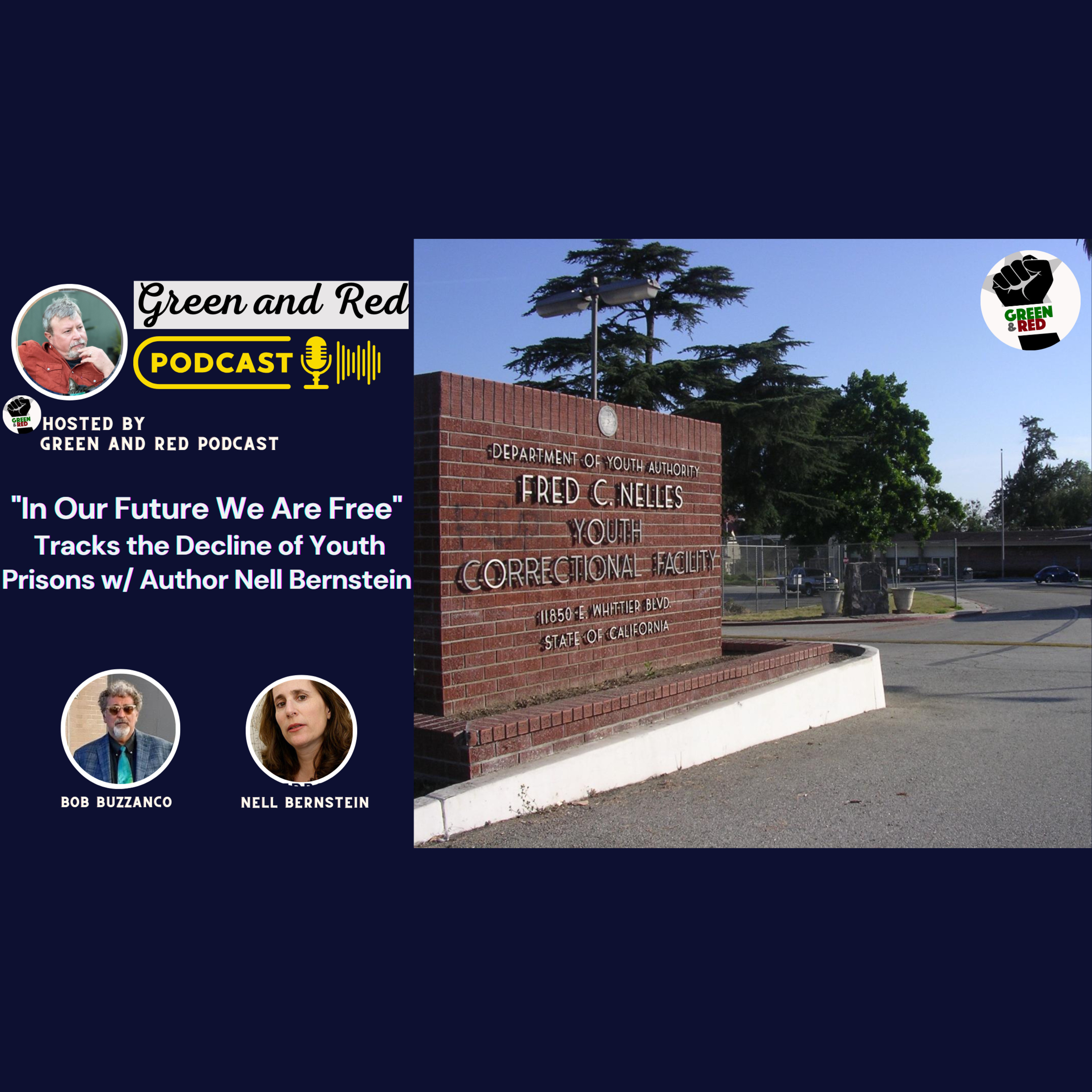
Green & Red: Podcasts for Scrappy Radicals
"In Our Future We Are Free" Tracks the Decline of Youth Prisons w/ Author Nell Bernstein (G&R 451)
00:50:10
Loading summary
Transcript240 lines
- [00:00]
A
Hey there, this is Scott from the Green and Red Podcast.
- [00:03]
B
I want to tell you about this.
- [00:04]
A
Great podcast I came across called the False Positive Podcast. It's hosted by these four friends who live in New York and in 2016 they had a radio show they happened to be broadcasting live on the air the evening of November 2016 when Donald Trump had won the election. They were shocked and angry like many of us, and immediately decided to pivot to a podcast where they could laugh, scream and chat about the latest insanity.
- [00:32]
B
Coming out of the Trump administration.
- [00:34]
A
If you like politics, but hate hearing the dress down version, this is a show for you. False positive streams wherever you get your podcasts.
- [00:44]
C
Welcome to Green and Red Scrappy Politics for Scrappy People, a regular podcast on radical environmental and anti capitalist politics. Brought to you by Bob Bozanko and Scott Parkins.
- [00:58]
B
Welcome to the silky smooth sounds of Brain and Red Podcast. I'm your co host Scott Parkin in Berkeley, California and as always, I am.
- [01:06]
D
Joined by Bob Bozanco from beautiful Trumbull County, Ohio.
- [01:11]
B
Yep, we have an exciting show today which is a little bit of a story about organizing, but it's a story about many other things as well. Today we're going to be talking about the campaigns against youth prisons and we're going to be talking with Nell Bernstein, who has written a couple of books on, on this topic. But the her most recent book is In Our Future We Are Free, the Dismantling of the Youth Prison. And I just want to, before I welcome Mel, I just, I do want to say that we've seen this sort of stunning reduction in the amount of youth in juvenile detention centers and prisons and things like that by 75%, which I actually just blew me away when I read that. Nell, I want to welcome you to the Green and Red Podcast.
- [01:59]
C
Thank you for having me.
- [02:00]
B
And not only is Nel an author, but she's also a former Soros Justice Media fellow. She has written articles in the New York Times, the Washington Post, Glamour, Salon, Mother Jones, many other publications, and then on a variety of radio shows and podcasts and lives outside of San Francisco like me. So maybe just to kick it off.
- [02:23]
A
I pulled a stat from the book.
- [02:24]
B
I think it was an introduction where it says, in the year 2000, there were 108,800 young people inside locked buildings, either county juvenile halls or large state run Youth prisons. By 2022, the number of incarcerated youth had fallen to 27,600, which is a extraordinary drop of 75%. Could you actually maybe just kick off a Little bit about. Just give us a little bit of an overview and then it can lead to the larger conversation about how what has happened in the last 22 years has led to this.
- [02:59]
C
Sure, I'm going to give that my best shot. It did take me a book to figure it out. But a couple of things happened simultaneously and they're hard to untangle. So between 2000 and last count, which was I think 2023, you're right, youth incarceration had dropped by 75%. At least 2/3 of the youth jails and prisons in this country have closed down for good. So it is stunning. I cover this and I was shocked to find that out. We've also seen a 75% drop in youth crime over that time period, which you certainly wouldn't know to read the papers. And we can get more into the relationship between the two if you'd like to. But the drop in youth crime is not the only factor. There's also been a really powerful multifaceted movement on the part of currently informally incarcerated young people. First and foremost, their parents, movement, lawyers, philanthropy, even some system leaders, to move us away from a really destructive practice and towards new ways of dealing with youth lawbreaking. So I think that's the big picture.
- [04:13]
D
If I can go just backward for a second. Talking about youth prisons, I'm assuming that means kids under 18.
- [04:21]
C
Yes.
- [04:22]
D
And if at 2000 there were 108,000, what were they in there for? What were generally they being used for?
- [04:27]
C
Actually, just to clarify, I say youth prisons. Unfortunately, they're known by any number of euphemisms. Training schools, academies, boys camps, blahdy blah. But essentially the youth justice system works parallel to the adult justice system. With adults, you've got jails at the county level and prisons at the state level. At the youth level, you have county juvenile halls and state youth prisons. So I talk about youth jails and prisons because I've denied a lot of them and that's what they are. And I went on long enough that I forgot the rest of your question.
- [05:02]
D
I'm assuming they're under 18. We're talking about what are the ages of most of these? Okay, is there a floor like beyond? They're too young to be in that.
- [05:10]
B
Or so those are.
- [05:11]
C
There's two answers to that. To be sent to one of these places, you have to have committed your offense under 18. But in a number of states you can be held up to 21 or 23 or 25. In state run youth prisons, the question of a floor is a really Interesting one. In at least little over half the states, there's no floor. And that's where you start to see six year olds being hauled out of their classrooms in handcuffs. Despite the very positive picture that I paint in the book, we're now in a moment of backlash. So we're seeing some states lower the floor and start passing laws that allow 11 year olds to be processed in.
- [05:53]
E
The juvenile justice system.
- [05:54]
C
I've seen 11 year olds in juvenile hall and it's a really shocking sight to see a skinny little kid in a baggy jail uniform tearfully asking his mother what they're having for dinner that night. And no one else has brought up the question of the minimum age.
- [06:11]
E
So I'm glad that you did.
- [06:14]
D
We're seeing that in ICE courts now, right? Immigration.
- [06:18]
B
Yeah.
- [06:19]
D
And generally they're there for kind of the same type of these, like property crimes. We all see the stories in school, we see these horrible videos and a lot of these look like just their kids misbehaving. What are they in for?
- [06:30]
C
It runs the gamut. It. When I wrote my last book, Burning down the House, which is a reported account of what these places are like, the vast majority of kids inside them were there for low or very low level offenses. Things like truancy, shoplifting. It is still the case that we hold far too many kids and far more many than the. Far many, far more than the public thinks for these low level offenses. But there's also kids in there for homicides and sexual assaults and armed robbery. It's a mix.
- [07:02]
B
Yeah. And I'd be curious about how much the drug war plays into it. Like how much, I don't know if you know, the percentages of how, how many of them are in there for drug crimes.
- [07:12]
C
So that has also dropped as the drug war has ended, ebbed. Unfortunately, I don't have a percentage there. What I do know from reporting Burning down the house is that drug offenses are where what we weakly call racial disparities are the most extreme. I don't like to use the term racial disparities because it implies that it might be some kind of fact of nature. I generally describe it as racial targeting. And that is where the drug war has had the greatest impact. Right now, a black teenager is five times more likely than a white teenager to be incarcerated. Across the board. When it comes to drug crimes, that gap is much, much wider. So the drug war essentially became a mechanism for discretionary enforcement, which is to say a mechanism for further racism.
- [08:06]
D
This is when I saw this. It really took me by surprise, because in the 90s, you have this kind of Clinton movement toward incarceration with the crime bill. And so to see these numbers go down is really quite striking. At the same time, after Columbine, what do we have, A million cops in schools now? So how did this movement get started? People saying, hey, look, this is a problem. We have too many kids in school, too many kids in jail. I'm sorry, how did this get started?
- [08:29]
C
Like any social movement, sparks were lit all over the country by different people in different places. But I'll tell you what was the origin story for me in this book, and I'm sure it's one of many. But in the course of reporting this book, I met a woman named Subarell, who for many years was at the Youth law Center in San Francisco, and she had sued the California youth Authority over special education. And as part of that settlement, her name and address had to be posted in every institution. So as a result, in the late 90s, she started getting letters from young people not only in California youth Authority prisons, but on lockdown units within them. So really in the belly of the beast. And fortunately for me, as a reporter, before she was an attorney, sue was a librarian. So she kept these letters, and she gave me access to her archives. And there were dozens of letters from kids who had somehow collaborated on this campaign, even though they were in around the clock solitary confinement. And the treatment that they described was familiar to me from burning down the house. And the reporting I did there. They wrote about guards in essentially paramilitary garb storming their cells, stripping them naked, dragging them out, handcuffing or hog tying them, and then beating or pepper spraying them while they were restrained. And I knew these things were happening from previous reporting, but something about these letters, which were written in shaky handwriting because all the kids had was a pencil stub or sometimes just a shard of lead that they'd been able to smuggle in, really brought it home for me. And they also described a practice that I had not heard of. They talked about how guards would duct tape their cell to cut off all ventilation and then throw a chemical grenade in if they had broken a rule or somehow pissed off a guard. And that was shocking enough to me.
- [10:32]
E
That I dug a little deeper, and.
- [10:34]
C
I found a newspaper account where the.
- [10:36]
E
Warden at the time praised this practice as a creative solution to the problem.
- [10:42]
C
Of guards being forced to inhale toxic.
- [10:45]
E
Chemicals that were intended for children. And I say all this as backdrop.
- [10:50]
C
To describe a really phenomenal organizing effort.
- [10:54]
E
That these kids put together it's not just that they wrote to Sue.
- [10:58]
C
They did things like one young man.
- [11:00]
E
Had written down not just the name but the serial number of the grenade that had been thrown into his cell. So even while he was in this blinding chemical fog, he had done that. Because as he wrote to sue, now they can't say, I made it up. Another kid had gotten ahold of the Ward's rights handbook and had numbered his concerns to correspond with each provision that had been violated. Yet another young man had done the same with the United States Constitution. And the thing that really told me that they were organizers, not just suffering humans, but organizers, was how regularly they used the pronoun we. Often somebody would write about something that hadn't happened to them but had happened to a kid a cell or two over. The sentence is, we need our rights respected. We need some outside help. That coordination, even in this abject isolation, really struck me. And sue took the letters and ran with them. She sent them to the media, she sent them to the legislature. She just made it her life's work to make sure these kids were heard. Because back then, people didn't know what was going on inside these places. The notion that these places rehabilitative was very widely accepted. So I think everywhere, like every movement in any time in history, it starts with the people most affected and grows out from there.
- [12:27]
B
Speaking of the rehabilitative element is, I think you mentioned that youth prisons were created to meet two mandates. One was rehabilitate youth, young people and then also enhance public safety as from what you're describing. And I think we've, many of us who are especially who are involved in like social justice issues and abolition issues and things like that have heard many stories like these over the years. Did they meet these goals? Was the failure of this like partially. What sort of moved. Moved us towards this reduction in frustrated youth?
- [13:03]
C
So those are two questions. That's the terrible irony of youth incarceration and incarceration writ large to you and I. It might be intuitive, but there's a pretty robust body of evidence right now demonstrating that locking a kid up not only fails to enhance public safety or rehabilitate that child, it is actively criminogenic.
- [13:25]
E
So you take two kids who did.
- [13:27]
C
The same thing, come from similar backgrounds as social scientists do, and the one who's locked up as a kid is twice as likely to go on and break the law as an adult. So we tell ourselves this fairy tale that it's too bad these kids have to be in cells, but that's what we need to be safe on the street. The reality is we would be safer if we were not engaging in this criminogenic activity. And again, what was the second part of the question? Sorry, it's me.
- [13:57]
B
Yeah, it's okay. It's the end of the day.
- [14:00]
E
Oh, did this con, did this contribute.
- [14:01]
C
To the decline yet? I would like to think that was the case. I would like to think that we were given better information and then made better decisions. Honestly, I don't really think that's how it happened. I think one of the most powerful reasons for the decline of the youth prison and certainly for the closure of the entire state youth prison here in California was financial. As youth crime dropped, as advocates pushed for diversion for some of these low level offenses, the number of kids in a given facility began to decline. And I often say this, but I've.
- [14:44]
E
Never seen.
- [14:46]
C
A youth prison that's full of people close. The process is always first you empty it out, then you close it. So what happened is as the numbers declined, the per capita cost of incarcerating an individual child rose. And in some parts of California, some parts of New York, it got as high as a million dollars a year per kid. And at that point, advocates could move from the moral argument or the public safety argument and just say this is a huge waste of taxpayer money. And that's a much more palatable argument for politicians who live and breathe law and order. So I just don't think it's as simple as we found out it wasn't.
- [15:26]
E
Working and we stopped. I wish it were.
- [15:29]
B
You know, I have some questions I'll ask in a bit about like the rise of the super predator, which I always associate with the 1990s, 1880s, 90s, but with the amount of money that we saw in this sort of, with the crime bills in the 90s, for example, I think there's. I think the number you cite is 41 out of 48 California counties built youth prisons when with all this new money was coming in is as we see this sort of reduction. It's an enterprise too, right? It's construction companies and lobbyists and prison guard unions and all these folks have a financial interest in this. And it's fascinating to me that this organizing effort somewhat was part of stopping that as well. I understand that we also saw this drop in chao crime and things like that still.
- [16:21]
C
But when you remember that youth incarceration is criminogenic.
- [16:24]
B
Yeah.
- [16:25]
C
Then that argument gets really interesting because the less of it you do, the lower youth crime gets. I think the other Important thing to remember is that there's no such thing as a crime statistic. All we have are arrest statistics and prosecution statistics. So if that kid isn't picked up by the police or is picked up and then released, that doesn't register on the crime statistics. So it's not quite as simple as crime dropped. So incarceration dropped. It was more of a virtuous cycle, I think.
- [16:55]
B
It's also, I mean, like you talked about California Youth Authority, which closed in like 2020. Right.
- [17:03]
C
Newcomb made the decision in 2020 and it shut down for good in 2023.
- [17:07]
B
It's also interesting, it's also fascinating. That's like it didn't happen just in California, it happened in like many other parts of the country, which is the great part of the story, is that while it was happening in California, it's happening. You talk about New York and Illinois and Louisiana and places like that.
- [17:22]
C
Yeah, it's happening all across the country, unfortunately. I call the chapter on California how not to Close a Prison. Because the problem in California, compared to a state like New York, where it was done much more thoughtfully, is that although advocates had successfully reduced the number of kids in what came to be.
- [17:43]
E
Called the Department of Juvenile Justice, I think it went through six name changes.
- [17:47]
C
Over the time I was looking at it.
- [17:49]
E
The immediate incentive for closing it was fiscal, not moral. It was the pandemic. Newsom thought that we were going to enter a budget deficit and he just.
- [17:58]
C
Zeroed it out in the budget.
- [18:00]
E
So we didn't do any planning for.
- [18:03]
C
What would happen to those kids. And the really tragic result is that.
- [18:06]
E
Despite a lot of flowery language about creating home, like culturally sensitive, therapeutic, blah, blah, something for them, we didn't do it. Instead, we, every county in the state created what's called a secure youth treatment unit, Secure youth treatment facility, which is a euphemism because in every instance it's a wing of juvenile hall. California, what we done is just transfer kids from large state youth prisons to smaller county juvenile halls, which a lot of advocates, including those who've been inside both kinds of facilities, say is worse because juvenile halls are designed for short term pretrial detention. And now we have the potential for kids to be there for years. So we did it, but we didn't do it thoughtfully.
- [18:53]
B
And does this. Is there any parallels with what's happening in, like, the Indole, the, the adult incarceration system?
- [19:00]
E
There is, there. There is that there's been a drop in adult incarceration as well. I think it's around 30%. But there's a very interesting theory. There was an article in the Atlantic a few months ago that I thought was fascinating that posited that the main driver for the drop in adult incarceration was the drop in youth incarceration, because youth incarceration leads to adult incarceration. It's. It's a pipeline. And this author, I'm sorry, I don't remember his name, posited that as the adult system catches up with this decline in youth incarceration, we're going to see even more significant drops in adult incarceration. So I hope that's true.
- [19:43]
D
Before people are in prison, obviously they get arrested, they appear in court, or they plead out or something like that. Is that kind of where the reform was directed, like not sending kids into prisons?
- [19:53]
C
It was an everything everywhere, all at once strategy. So there were efforts to divert kids.
- [20:01]
E
Before they ever got to a courtroom, efforts to send them into community based alternatives once they got to a courtroom.
- [20:09]
C
The other thing that affects the number.
- [20:11]
E
Of people incarcerated is length of stay.
- [20:14]
C
So there was an effort to dial.
- [20:15]
E
Back these extraordinary long sentences. And on that front, this is interesting. As advocates pushed to close youth prisons, there was a lot of concern that that would lead to an increase in.
- [20:27]
C
The number of kids tried and sentenced.
- [20:29]
E
As adults because judges would want some.
- [20:31]
C
Kind of a tough alternative. Not only has that not happened since.
- [20:35]
E
Around 2020, we've seen an 80% decline in the number of kids tried and sentenced as adults. So I do think that we're seeing some kind of a cultural sea change along with everything else.
- [20:50]
D
I was going to ask about that because I lived in Texas for 30 years where you have people who like, wanted the death penalty for 11 year olds. And so it's really striking that these numbers have gone down.
- [21:00]
E
Unfortunately, in between finishing the manuscript and the book hitting the shelves, which takes about a year, a backlash has really emerged.
- [21:10]
C
And that backlash has focused around adult transfer.
- [21:14]
E
We're starting to hear language out of deep. After that Doge kid was carjacked, allegedly carjacked, we started to hear talk about gangs and hordes and mobs of youth. And whenever you hear young people talked about in that collective kind of language, you know, your ears should prick up.
- [21:31]
C
Because that's super predator talk. And the main outcome of the super.
- [21:37]
E
Predator rhetoric of the 90s was that every state in the nation passed laws facilitating this transmogrification of children into adults for the purposes of punishment. So that's rolled back. But a few months ago, before Congress decided to stop being Congress, they passed a law allowing 14 and 15 year olds to be tried as adults in D.C. because that's where they have jurisdiction. Six or seven states passed similar laws. And here in California, including Alameda county, we've got a new crop of district attorneys who are avidly returning to the practice of charging kids as adults. I met a couple of lawyers a week or two ago, and I feel like they told me there had been 28 kids charged as adults. Don't hold me to this. In Alameda county under the new district attorney. Same thing happening in San Francisco, in San Diego, in a number of counties.
- [22:34]
B
It's like we have a wave of progressive district attorneys and some of them are still out there, but like, definitely the. There's Brooke Jenkins and whoever the new DA is in Alameda County. I forget their name. It's like very much, very much reactionary. Are they talking about putting more money back physical facilities for you? Physical?
- [22:52]
C
No, not that I know of. Not here. But I'm beginning to hear about a couple places in the south where there are efforts to build new prisons. But I think one of the kind of brilliant moves of the activist community was not just to focus on decreasing the number of kids incarcerated, but really to focus on closing the buildings because it becomes much more difficult to go backwards when you don't have those beds ready and waiting. And some facilities, not the majority, but some, have now been purchased by developers and repurposed as things like condo communities, mixed use developments. And that's really the best thing that can happen because then going backwards becomes even more difficult. So, yeah, we're facing a backlash, but I don't see us going back to where we were. Don't quote me on that.
- [23:45]
B
With. With that just be. Because we've talked about it a little bit with the. And with. With that Doge kid. I won't repeat his nickname at this.
- [23:52]
A
Point, but.
- [23:55]
B
The Doge guy who got into an altercation with some TC kids. The sort of resurgence of this rhetoric of the myth of the super predator. Could you actually just talk about what the super predator is like for our younger audience may not be as familiar with that term?
- [24:10]
C
Yeah, lucky them. The super predator is a mythical creature that was cooked up in a lab in Princeton by a guy named John Diulio. I think he was a political scientist, and basically what he did was splice speculative demographics with really old racist tropes to come up with this notion of a super predator who was a monster with no moral compass, no sense of humanity, no conscience, just a bloodlust. And he put this academic spin on it. He looked at pending demographic changes, more young people. And he was quite explicit about this. More black and brown young people coming and pronounced that we were gonna see this horrific crime wave. And I think this. Then he had to take it back a few years later because it didn't happen. And in fact, by the time he came up with this, youth crime had already begun, what would turn out to be a 30 year decline to an historic low. So I think you gotta give the kids a lot of credit. I was working with young people in the Bay Area at that time, and they were very aware of this narrative and really quite determined to push back against it. I was opening a youth newspaper. They pushed back in their writing, they pushed back in their actions in their communities, and they pushed back just by not doing it.
- [25:34]
B
And the political establishment at the time really embraces.
- [25:37]
C
Oh, my God.
- [25:37]
B
It was Biden.
- [25:39]
E
Yep.
- [25:41]
C
Yes. Biden talked about. I don't know of kids so violent that we have no choice but to put them away for a long time. I think Corn Pop.
- [25:52]
D
His anecdote about some bad dude named Corn Pop or something like that. Totally.
- [25:57]
C
That sounds in character. I don't remember Pop.
- [26:00]
D
Wasn't that Scott Corn Pop.
- [26:02]
B
I. I don't. I don't recall that.
- [26:04]
C
But let's flipulate. There probably wasn't a corn pie.
- [26:08]
B
It does sound like something Joe Biden would say. Particularly in the 1990s.
- [26:11]
C
It was everywhere. Newsweek, they all had scowling black kids on the COVID It was big in.
- [26:17]
B
Pop culture at the time, too, I feel.
- [26:19]
C
Absolutely. I could feel it on the street when I would walk around downtown San Francisco, where our office was with one of my writers who was tall and black and maybe wearing a hoodie. People would ask me if I was okay or if I needed help.
- [26:35]
E
It was.
- [26:36]
C
Another one of our writers had a T shirt made that said, no white lady, I don't want your purse.
- [26:43]
E
And people didn't smile back then.
- [26:46]
C
They actually were relieved. This kind of like birth that would.
- [26:51]
E
Split around him got narrower. So it was real to the kids.
- [26:57]
B
And so where Senator Biden was all into this, it was during the Biden administration where there's. There's. He has a little bit of a national program to roll back. The youth.
- [27:06]
E
Yeah.
- [27:07]
B
System too. Correct.
- [27:09]
E
Yeah.
- [27:09]
C
And we just got to give a.
- [27:11]
E
Big shout out to Liz Ryan, who is Biden was co author of the 1994 crime bill, which is one of the most aggressive pieces of legislation around crime that I can think of. Fast forward 25 years. He's the president and he hires Liz Ryan, who is one of this nation's foremost advocates against youth incarceration, to head the Office of Juvenile justice and Delinquency Prevention. And she did amazing work. She actually managed to not only get funding to all kinds of community groups and violence prevention groups, but to push the idea of closing youth prisons. And let's not get too deep into Joe, but you can't get to be the president without being a political creature. And he knew which way the wind was blowing. So the fact that he hired Liz tells me that the wind was really blowing in a different direction by then.
- [28:07]
B
And if I remember correctly, Obama and Holder actually made some progress on adult incarceration as well. They reformed drug laws that let people out. Been in for like low amounts of drugs, but we've got large amounts of time for it and things.
- [28:21]
E
Yeah, I feel like the thing about criminal justice is that most of it, like the great majority of it happens at the, at the county and state level. So my recollection is that he made some changes to federal law, but impacted just a vanishingly small number of people compared to the amount of publicity he got for it.
- [28:41]
B
But sure, he was also the first president.
- [28:43]
D
Whatever.
- [28:43]
B
I'm not a fan of, I just want to say. But he also visited a federal prison. I have family prison time.
- [28:49]
E
Yes. No, it was a positive step. Absolutely.
- [28:53]
C
It just.
- [28:54]
E
I think at one point I saw the number of people affected and I feel like it was 12 or something.
- [29:00]
B
It's good headlines to go back to. The backlash that we're seeing now is. It's very, it's definitely in the rhetoric of the MAGA Republicans and the Trump Republicans to. Actually, I saw a headline where one of the co founders of Palantir actually was talking about how public executions for pre violent crimes is acceptable and things like that. And so we're seeing a bit of. Are we seeing a backlash on the youth justice issue as well?
- [29:27]
C
Yeah. In terms of overheated rhetoric that was some from the president. Jeanine Pirro was kind of rabid in terms of the rhetoric about dangerous kids. I'm not sure it's just them though. I think we're. It's such a, it's such a effective move for a politician to do two things. One, tell the public, be very afraid. And two, say, but don't worry, I can protect you. That's such a powerful vote getter that.
- [30:02]
E
I wouldn't say that it's just a MAGA problem.
- [30:05]
D
I want to go back again to the Actual movement. Because I find that, like, really instructive and important and really fascinating. Most of the time when we talk to somebody, it's something I know a little bit about and I've read a bit on this, but I did not know this story. And if you had said, what's the youth population compared to 2000? I would have said, oh, it's higher.
- [30:20]
C
You know, of course, me too.
- [30:22]
B
Yeah.
- [30:23]
D
So this is really quite striking, but some of these groups really, I think, really have lessons there that I think might be useful for a lot of us. Like books, not bars. How did they do that?
- [30:32]
C
And what was.
- [30:32]
D
What was their approach and how did they get organized? It just seems really fascinating that they were able to take on an issue like this, which, like you said, anytime you're talking about crime, it's dicey. I know people here in Ohio who've never been near Washington, D.C. and they keep talking about how dangerous it is. I've lived there for years. I lived in Houston, never had a problem. But people swear that it's the most dangerous place in the world. So it seems to me like to be able to go after an issue like that. It's really. There's a lot of lessons I think that might be useful in there.
- [30:59]
C
Yeah. So books, not bars was a parents movement. It was parents with kids in the California Youth Authority allied with a couple of advocates in particular who happened to be attorneys. Zach Norris and Lenore Anderson were young attorneys who came out and joined the parents. And there was something so powerful in that alliance. I think, when I think about what allows a youth prison to exist and.
- [31:30]
E
What allows the rest of us to live with it, I think of two things. Invisibility.
- [31:36]
C
There's a reason that we put these places in the middle of nowhere and the sort of walls and bars and.
- [31:41]
E
Razor wire that keep the kids in, keep the rest of us out.
- [31:45]
C
And then on top of that invisibility.
- [31:47]
E
The dehumanization of the kids inside them. So what the parents did with a lot of direct action and increasingly sophisticated lobbying was they did not allow their children to be invisible. And they insisted again and again on their children's humanity. So it's one thing when you've got lawyers and professional advocates and a bunch.
- [32:08]
C
Of thug hugging liberals saying, cut this out. But when you've got a mother in your office with a photograph of her child's battered face and another photograph of her child as a beaming toddler, it becomes a little harder for that child to be an abstraction. One of the most heartbreaking and Powerful things that books, not bars, did. They also acted as a support mechanism for one another, a very close community. And each time a child died in one of the institutions, which just happened far too often, they would come together from around the state and hold a candlelight vigil outside the Capitol. And they were grieving and supporting each other. But they were also saying, we're not going to allow this to go unnoticed because most often that's what happened. And it worked. The newspapers started covering it. Gloria Romero, a state senator, started holding hearings. And they really set in motion, in collaboration with these non impacted advocates, a series of events that ultimately did bring down the California state youth prison system. And it wasn't just California. I also write about mothers in Louisiana. Yeah, there's parents groups across the country doing these things.
- [33:29]
B
Has that been across the board in the country where we've seen these reductions? Or is there any states that are like outliers? I think of Texas. Is Texas an outlier, for example?
- [33:39]
C
I wish I had the Texas numbers in front of me, but no, there has been a real drop in youth incarceration in Texas. I got into Texas a little more deeply when I was reporting burning down the house. But there were a series of really horrific sex abuse scandals in Texas that were brought to light by journalists and advocates and led to a decrease in Texas. Louisiana is a state that you think of as extremely regressive, and it is. And horrific things are happening to incarcerated kids there right now. But I think the numbers are down by over 80% there. I don't think there's a. It varies from state to state, but I'm hard pressed to think of a.
- [34:19]
E
State where the numbers resemble those of.
- [34:23]
C
The turn of the millennium.
- [34:26]
B
And on the fiscal reasons for these youth prisons closing down, how much of the advocates use that as an argument that this is also just not financial? It doesn't make financial sense for state budget. Budget.
- [34:40]
C
It's a widely used argument, but I.
- [34:41]
E
Think the advocates who used it the most effectively. I write about three individuals who ran youth justice systems. Vinny schiraldi in Washington, D.C. gladys Carrion in New York state and Candace Jones in Illinois. So these people somehow got themselves appointed to head these systems with the express intent of driving them into the ground. And they really made the most of the fiscal argument. Gladys did things. She closed, I think, 23 upstate youth prisons, more than half of New York's facilities. But because of union rules, she had to keep them open with just a handful of kids there, or in a couple of cases, with no kids. There. So she flew. I think it was Cuomo out. He landed in a helicopter, and she had him visit an empty facility so he could watch guards mop floors that were already very clean. And then she had him saying, our kids can't be a job engine for somebody else. So I think they. They wielded that argument very effectively. The others did, too.
- [35:53]
D
One. One thing that I thought was pretty important is that I believe. I don't know if it was a federal act required that state boards that oversee this have to include people who have a firsthand experience. I'm assuming.
- [36:06]
C
I would assume not federal, but certainly in California.
- [36:10]
D
So I would assume that means they were actually incarcerated at one point or.
- [36:14]
C
Yes.
- [36:15]
E
Okay.
- [36:16]
C
Although how much say they actually have has been.
- [36:19]
D
Yeah, but I was actually. But even bigger than that, are they important in this, with just narrating their story, telling their stories still even after they get out?
- [36:28]
C
I think they're the heart of it. And it's not just that they're telling their stories. People who I knew, who were just as involved as teenagers 25 years ago, are now leading philanthropy, practicing medicine, running nonprofits, serving in Congress. There's this incredible generation of leaders who are affected by the mass incarceration of youth when they were teenagers. And I. I think, are the real pioneers when it comes to figuring out what really does keep us safe.
- [37:01]
D
One thing that struck me just in the last six months or so is that these stories and images with regard to ICE really are attracting people who normally I don't think would be interested in that. And I just wonder, you mean people.
- [37:14]
C
Who are resisting ice?
- [37:16]
D
Yeah, yeah, yeah. The people resisting and how. Just the horrible things ICE are doing, grabbing little kids, grabbing pregnant women and so forth. And just seeing that, seeing those images and hearing their stories, I think is getting people to respond who I think normally wouldn't be. Wouldn't respond. They would be, I think people I know, for instance, who think that you can't go outside because you know there's crime and you're going to get mugged are responding to this and saying, oh, my God, that's awful. We have to stop that.
- [37:38]
C
Yeah.
- [37:39]
D
Those personal narratives.
- [37:40]
C
I think I've been thinking about that a lot because people putting their bodies.
- [37:45]
D
But.
- [37:48]
C
Alleged immigrants and ICE agents. And you didn't see that when they were taking kids off the street. And maybe you have some thoughts on this. I've really been thinking about why that is, and I. It's beautiful. And I watch those videos to lift my spirit. The narrative is they're not criminals. It's my landscaper, it's the woman who runs my bakery. And I think we need to start thinking about incarcerated kids and remembering that the ones who did it also don't deserve or benefit from the harsh treatment.
- [38:25]
E
That they're subjected to.
- [38:27]
C
And this was a narrative that I fell into that a lot of advocates fell into early on that I think was problematic to talk a lot about how most kids were there for low level offenses. And that's true and that's important.
- [38:42]
E
But the kid who did something serious.
- [38:43]
C
Is also a child, is also amenable.
- [38:46]
E
To change, is also deserving of care and rehabilitation. So I'm just wondering if that's why we see that.
- [38:54]
D
I don't know. I actually have thought about that. I know a bunch of teachers who are wonderful people, but a few of them, more than a few, actually will say, oh, that kid's hopeless. He's going to either be dead or in jail. I hear that a lot. And so I think you still have this idea that these kids aren't rehabilitable. I don't, it's the word rehabilitatable or something like that. But whereas in this, I don't know, I think a lot of it's because Trump's doing it. So it's easier to get some people worked up about it. But I think, Yeah, I don't know.
- [39:21]
C
But you know, and I think where there's been real progress on the idea that some kids are bad seed and can't be rehabilitated, and I do have a chapter on this is in the arena of developmental psychology and neuroscience.
- [39:34]
D
Yeah.
- [39:35]
C
So I think at the moment it's pretty well established.
- [39:38]
E
You hear people joking, parents joking about.
- [39:41]
C
The fact that the adolescent brain isn't.
- [39:44]
E
Fully developed until I have two 24.
- [39:46]
C
Year olds, it comes up.
- [39:49]
E
But that science also evolved over this 25 year period.
- [39:53]
D
Yes.
- [39:53]
E
And I think it, it changed the dog, it changed Supreme Court legislation and it did change public opinion as well.
- [40:10]
D
Like Scott, I had direct my, I had a 20 year old son die by suicide. Been in a little trouble before that. And so I saw that interaction and I saw what happened in school and there's no doubt that there was neurological issues there. You could see from the stories and it, nobody, whether it be at school or wherever, it didn't really seem to sink through. It was easy to mess. That's just an excuse kind of stuff. Yeah.
- [40:35]
E
Oh, I'm so sorry.
- [40:36]
C
That was your experience.
- [40:37]
E
And when I that the, that we've got a better understanding of adolescent yeah.
- [40:41]
D
That'S important to me. Yeah, because it's. Of course, the other thing that struck me is at the time, like, he had a father who's not a dumb guy, had a little bit of money. So every time something came up, I had a lawyer. He escaped. What other kids didn't. I mean, he. He had. I knew people, Kids who were incarcerated for six months or 12 months or whatever, and he never dealt with that because I took care of it. But most kids who were in trouble didn't have that.
- [41:07]
C
Yeah. And I think I. I think that's such a good point. There's. You've brought up so many things for me, but one study that I'm. I'm gonna mention two studies, and one is something I just saw last week which showed that the. I wish I had the numbers in my head. Too old for that, but that the majority of young people who are incarcerated have experienced neurological damage like a brain injury. Not just a mental illness, but a brain injury. The other study that comes to mind is they asked thousands of adults if they'd done anything illegal as teenagers, and upwards of 90% said they had. Upwards of 50% had done something serious enough that they could have been incarcerated. And the kids who were white and whose parents had resources weren't incarcerated and could laugh about what they had done as teenagers. Black, brown, and poor kids don't get to laugh about it. What that tells me is the same thing that the neuroscience says, which is that delinquency, it's not a characteristic, it's a developmental phase. And the very best intervention for the great majority of kids is just to grow out of it. That's a privilege that just accrues to some.
- [42:27]
B
The other area where I feel like this sort of plays into it that Bob and I have talked about from time to time is around gun laws.
- [42:37]
C
Thank you.
- [42:38]
B
In most states, you only need to be 18 to buy a firearm, but you're not gotten past that sort of. Some of that developmental stuff to where you're not going to act in a bad way if you. And then you have states where you have access to firearms, easy access to.
- [42:55]
C
Yeah, because I think that's the heart of our hypocrisy. If we actually cared about the safety of ourselves and our children, it's just so obvious. But we would get guns off the street, not kids off the street, because the event that ends up with somebody dead could end up with a bruise on their face. And you talk about what the neuroscience and the developmental psychology show is, that the parts of the brain that connect an action to its consequence are just that wiring is still developing and not.
- [43:29]
E
Excusing it by any stretch of the imagination.
- [43:32]
C
But a gun is just such a.
- [43:34]
E
Great mechanism for not understanding the suffering you're inflicting. If it's a fist, you feel it.
- [43:43]
C
Yeah, please go.
- [43:44]
D
Over half of suicides. Well, over half of homicides are suicide used with gun. Half of gun murders are suicides with guns.
- [43:51]
C
That's right.
- [43:51]
E
That's.
- [43:52]
D
That's horrible. Shootings at schools are horrific, but it's actually like self inflicted or a loved one, a girlfriend, a partner or something like that.
- [44:01]
C
No, we just make it with kids who.
- [44:02]
D
Yeah, I've been, I've been in education my whole life and young kids just don't have judgment. It's just not there yet.
- [44:08]
E
Yeah, impulsivity is a whole adolescence. And why would you want an impulsive.
- [44:15]
C
Teenager to have access to a gun.
- [44:17]
D
In terms of an impulsive secretary of war who has access? And look what that, look how that's working out.
- [44:22]
E
You know, I think that's probably not.
- [44:24]
D
Disconnected, actually being serious.
- [44:27]
B
Yeah, yeah, yeah.
- [44:29]
D
When you see these people, I imagine as teenagers, it's pretty easy to imagine what they were like as teenagers because they still are.
- [44:36]
E
Don't take me there, please.
- [44:39]
D
Sorry.
- [44:40]
B
We're getting.
- [44:41]
E
Imagine little Pete.
- [44:43]
D
Oh my God.
- [44:43]
B
We have an impulsive 79 year old President as well. So I think that's on the other. I think that's on the other side of all of this.
- [44:51]
E
That is the quirk in brain development. It doesn't always happen.
- [44:54]
B
Yeah, yeah, we're getting near the end of the time. I have one other question around the organizing. I don't know, Bob, we could talk about stuff like this with you for a long time. So.
- [45:03]
D
No, I'm good.
- [45:04]
B
My, my other question's around the organizing, which is because I am an organizer. It's. It was. I feel like it's a great story, all of these different stories that happen in all these different places. And I'm wondering if there was a connected tissue or if there was even like a national coordination that was going on that has led to this, at least in movement spaces where I am like, abolition is definitely like a. Is like a sort of pillar of things that lots of movement people work on. I'm just wondering if there's any level of national coordination that was talking about, you know.
- [45:37]
C
Yes and no. I think there's a lot of learning from each other and adopting each other's tactics. One of the metaphors I use is the AIDS quilt, because it felt like people with all different experiences in all different places who were stitching this movement together. But in terms of national coordination, I want to mention the Annie E. Casey Foundation's Juvenile Detention Alternatives Initiative. One of my mentors, Bart Lubow, ran it for many years, and he worked with county probation and other officials across the country to just pull kids out one by one. He went in there with data analysts so that they could see who they were locking up, because a lot of times they didn't even know that the kids they were locking up weren't dangerous. Helped them develop alternatives. And I remember him telling me that. And then he would bring them together for these big annual conveniences everyone loves. A foundation funded convening. And I remember him saying his favorite sound was hundreds of probation chiefs clapping when another one talked about the drop in youth incarceration in their county. So I think he turned that into a feather in the professional cap. Liz Ryan, who I mentioned, ran ojjdp, started an organization called Youth first, which is. Provides what they call technical support and coordination to movement organizations in various states. But by and large, I think this is a movement that bubbled up from the. At the local and state level just because, again, that's where criminal justice lives.
- [47:11]
B
I think just one other thought is like thinking about how one area of the movement learns from another area of the movement is that is also something we're seeing in this anti ice resistance too.
- [47:23]
C
Yes.
- [47:23]
B
What they did in Chicago, they got better in Charlotte, they're doing better in New Orleans, and so on and so forth.
- [47:29]
C
And of course, now we have the Internet, so it's much faster. In the 90s, people were traveling between California and Louisiana, but the Books not bars slogan started seeing that on signs.
- [47:41]
B
In Louisiana as an organizer in the 2000s in Houston, books not bars was like a big thing, but mostly amongst, like the anarchist abolitionist activists.
- [47:52]
C
But think about that. Another brilliant thing that the kids did was they. There's not a natural connection in people's minds between prison and schools.
- [48:02]
E
Right.
- [48:03]
C
The kids had to make everybody understand that the money we were spending on prisons, like, maybe that's not your problem, it doesn't affect you, but it is causing your child's school to be under resourced. That was just a brilliant rhetorical move, and I'm so glad to hear that it was being used elsewhere.
- [48:21]
B
Yeah, yeah. Books about bars groups were big in Houston and Austin and probably other parts of the state too.
- [48:27]
C
That's wonderful. I didn't know that.
- [48:31]
B
We should probably wrap.
- [48:32]
D
Yeah. I was just going to say this has been great and thank you. Even though it's a fairly bleak subject, it's actually one of the more positive things we've talked to anybody about in a while.
- [48:41]
C
Yeah, I'm really surprised to find myself telling a hopeful story at this moment.
- [48:45]
B
That's.
- [48:45]
C
I expected.
- [48:46]
B
We'll post links to the book in our show notes, but the book is published.
- [48:52]
D
Is it published yet or.
- [48:54]
C
Yeah, yeah, it's out.
- [48:55]
D
It is out. Okay. No, we're still recording.
- [48:58]
B
So, folks, we've been. So the book is in our future. We are free. The dismantling of the youth prison. We've been talking with Nell Bernstein, who's a author and journalist telling this kind of hopeful story in dark times. So it's good, folks, if you like what you hear. And please check us out on Facebook, Instagram and Twitterluesky. If you're watching us on YouTube, give us a hit that subscribe button. If you're listening to us on an audio platform, give us a rate and review. And if you really like us, go to greenandredpodcast.org and hit the support button or become a patron@patreon.com Greenradpodcast Nell, it's been great talking with you today. This has been a great conversation.
- [49:32]
C
Yeah, this I thank you. Thank you.
- [49:35]
B
Yeah, folks out there, y' all keep making trouble and misbehaving. We'll talk to you again soon.
- [49:58]
E
Sam.