
Podcast
Gulf Intelligence Podcasts
Hosted by Gulf Intelligence · EN
Gulf Intelligence is a Dubai-based Energy Markets Publisher that offers Think Tank Consultancy services to partners engaged across the full value-chain of the Middle East Energy Sector. GI leverages its unparalleled last mile of connectivity in the Gulf region to facilitate critical knowledge exchange and intimate networking between National and International stakeholders tasked with leading the commercial development and advancement of the East of Suez physical energy markets.
74episodes
Episodes
Newest firstAll episodes
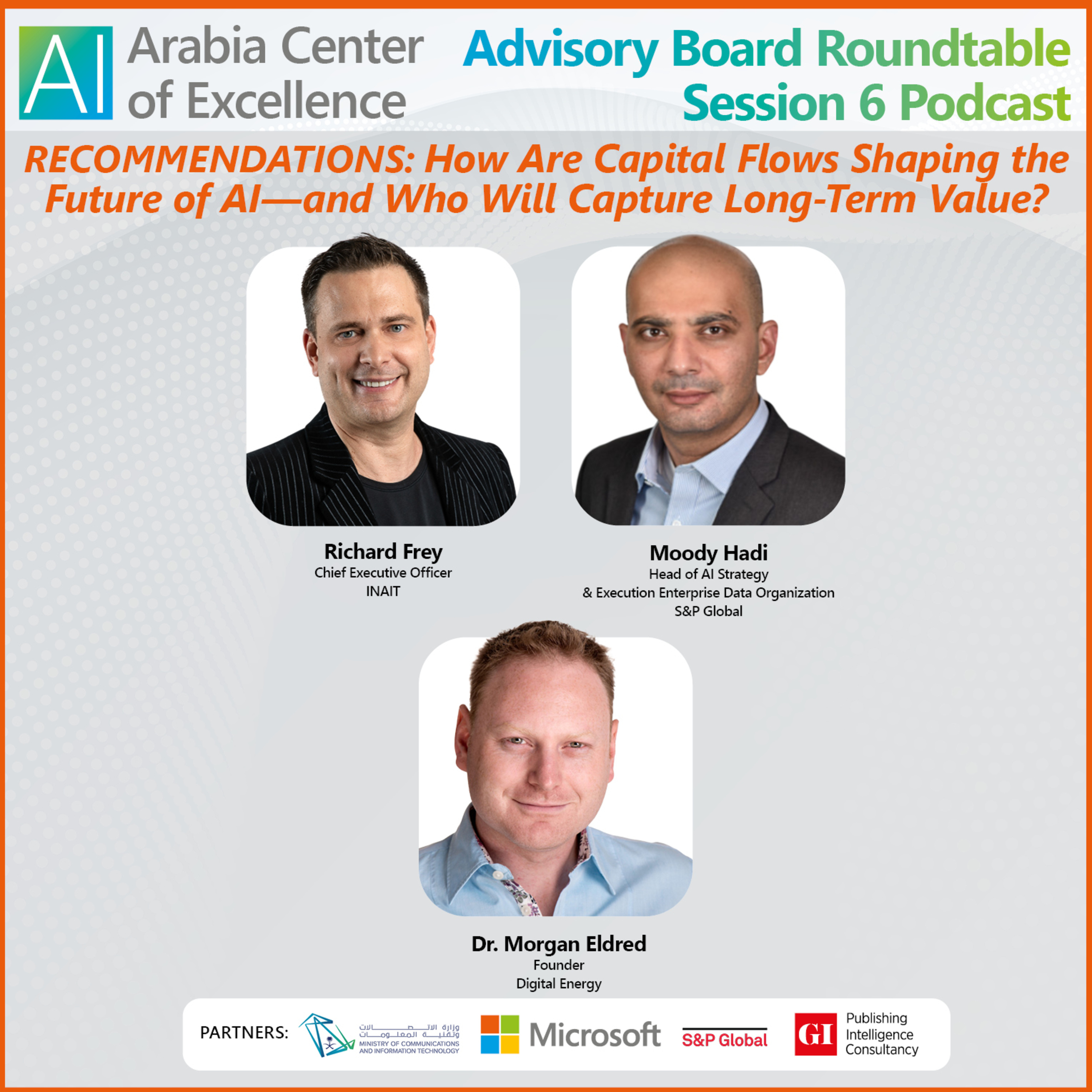
AI Arabia Center of Excellence | Advisory Board Roundtable Session 6 Podcast
2w ago00:31:33Tap to summarize🎙️ AI Arabia Center of Excellence | Advisory Board Roundtable Session 6 PodcastTheme: How Are Capital Flows Shaping the Future of AI—and Who Will Capture Long-Term Value?As global investment in artificial intelligence continues to accelerate, the focus is shifting from funding innovation to creating sustainable long-term value. The challenge is identifying where capital should be deployed, which AI business models will scale successfully, and how organizations can convert investment into lasting economic and commercial returns.Featured Speakers:🔹 Richard Frey, Chief Executive Officer, INAIT🔹 Moody Hadi, Head of AI Strategy & Execution, Enterprise Data Organization, S&P Global🔹 Dr. Morgan Eldred, Founder, Digital EnergyThe discussion explores how strategic investment, enterprise AI adoption, data-driven decision-making, and emerging business models will determine where long-term value is created, which organizations are best positioned to lead the AI economy, and how capital can accelerate sustainable innovation across industries.
Transcribe →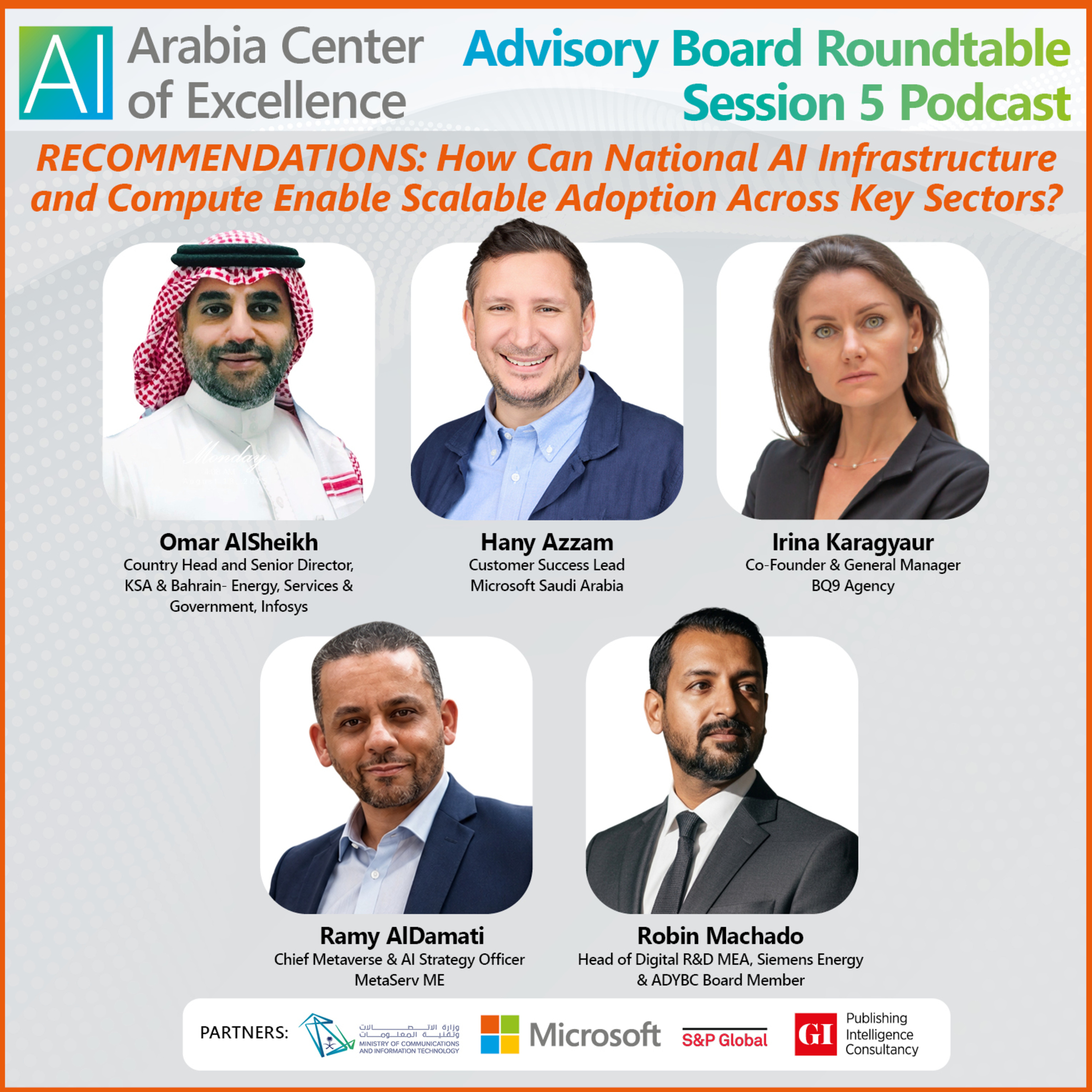
AI Arabia Center of Excellence | Advisory Board Roundtable Session 5 Podcast
3w ago00:31:49Tap to summarize🎙️ AI Arabia Center of Excellence | Advisory Board Roundtable Session 5 PodcastTheme: How Can National AI Infrastructure and Compute Enable Scalable Adoption Across Key Sectors?As artificial intelligence adoption accelerates, access to scalable compute, robust digital infrastructure, and secure AI platforms has become essential for national competitiveness. The challenge is ensuring governments and industries have the infrastructure needed to deploy AI at scale while supporting innovation, resilience, and long-term economic growth.Featured Speakers:🔹 Omar AlSheikh, Country Head and Senior Director, KSA & Bahrain – Energy, Services & Government, Infosys🔹 Hany Azzam, Customer Success Lead, Microsoft Saudi Arabia🔹 Irina Karagyaur, Co-Founder & General Manager, BQ9 Agency🔹 Ramy AlDamati, Chief Metaverse & AI Strategy Officer, MetaServ ME🔹 Robin Machado, Head of Digital R&D MEA, Siemens Energy & ADYBC Board MemberThe discussion explores how investments in AI infrastructure, cloud and compute capacity, trusted digital ecosystems, and public-private collaboration can accelerate AI adoption across government, energy, manufacturing, and other strategic sectors—creating the foundation for sustainable innovation and economic competitiveness.
Transcribe →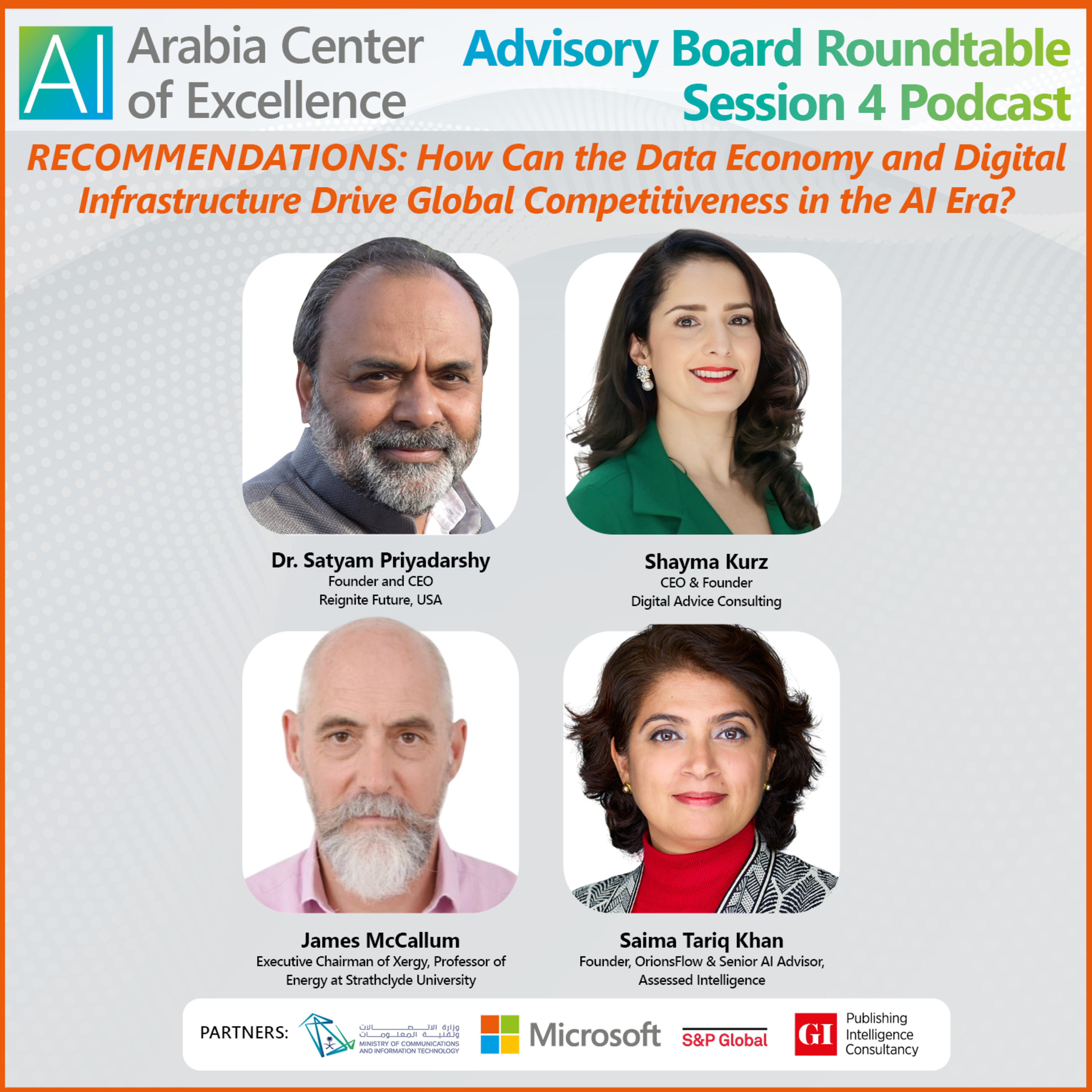
AI Arabia Center of Excellence | Advisory Board Roundtable Session 4 Podcast
4w ago00:29:17Tap to summarize🎙️ AI Arabia Center of Excellence | Advisory Board Roundtable Session 4 PodcastTheme: How Can the Data Economy and Digital Infrastructure Drive Global Competitiveness in the AI Era?As artificial intelligence becomes a defining force in economic growth, nations and organizations must invest in trusted data ecosystems, resilient digital infrastructure, and intelligent connectivity to remain globally competitive. The challenge is building the foundations that enable AI to scale securely, responsibly, and sustainably.Featured Speakers:🔹 Dr. Satyam Priyadarshy, Founder & CEO, Reignite Future, USA🔹 Shayma Kurz, CEO & Founder, Digital Advice Consulting🔹 James McCallum, Executive Chairman of Xergy; Professor of Energy, University of Strathclyde🔹 Saima Tariq Khan, Founder, OrionsFlow & Senior AI Advisor, Assessed IntelligenceThe discussion examines how trusted data, digital infrastructure, governance, and cross-sector collaboration can accelerate AI adoption, enable scalable innovation, strengthen economic resilience, and position nations and enterprises to compete successfully in the global AI-driven economy.
Transcribe →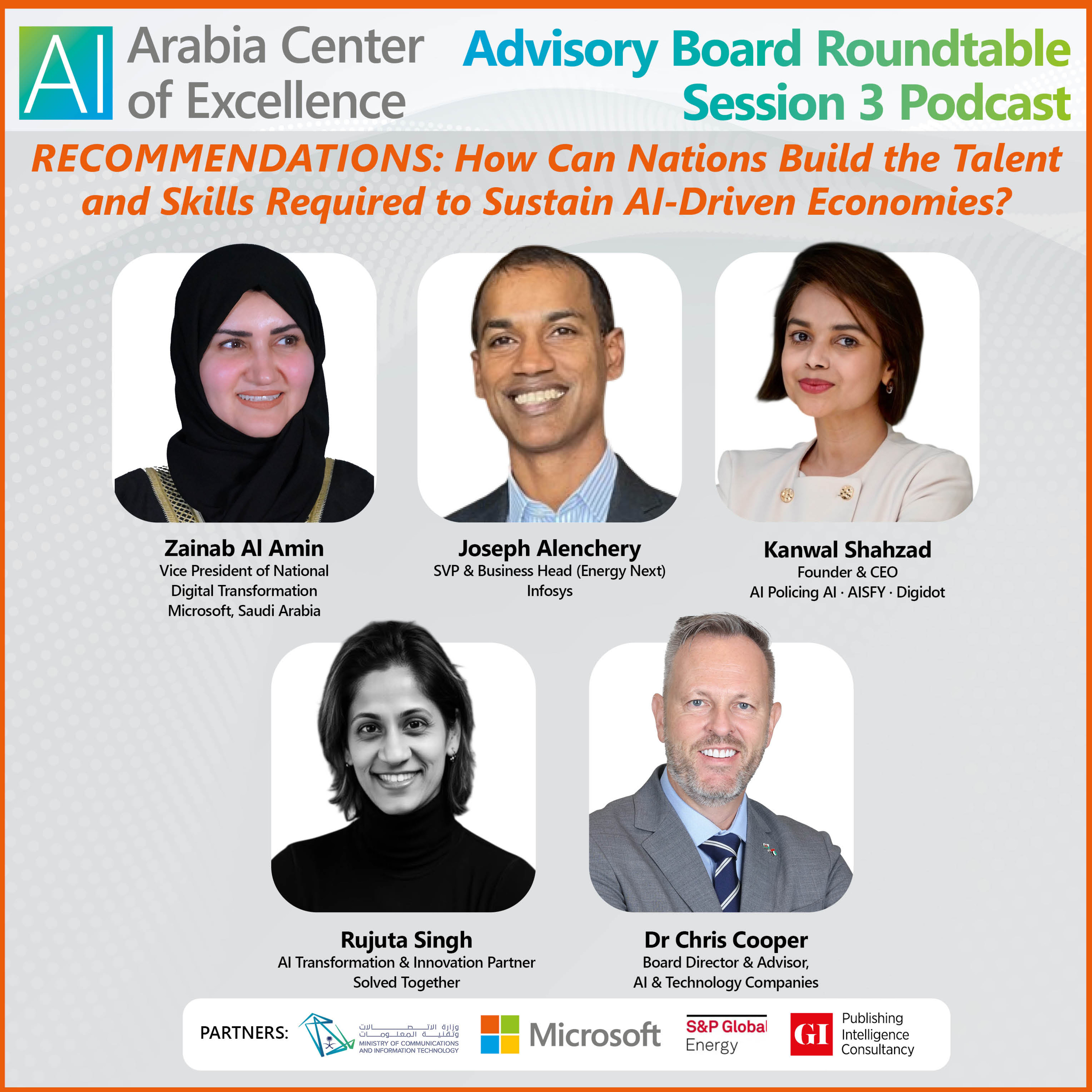
AI Arabia Center of Excellence | Advisory Board Roundtable Session 3 Podcast
Jul 1500:29:48Tap to summarize🎙️ AI Arabia Center of Excellence | Advisory Board Roundtable Session 3 PodcastTheme: How Can Nations Build the Talent and Skills Required to Sustain AI-Driven Economies?As artificial intelligence transforms economies and industries, the success of national AI strategies will depend on developing the talent, skills, and leadership needed to sustain long-term innovation. Building AI-ready workforces requires collaboration between governments, academia, and the private sector to prepare people for the future of work.Featured Speakers:🔹 Zainab Al Amin, Vice President of National Digital Transformation, Microsoft Saudi Arabia🔹 Joseph Alenchery, SVP & Business Head (Energy Next), Infosys🔹 Kanwal Shahzad, Founder & CEO, AI Policing AI · AISFY · Digidot🔹 Rujuta Singh, AI Transformation & Innovation Partner, Solved Together🔹 Dr. Chris Cooper, Board Director & Advisor, AI & Technology CompaniesThe discussion examines how governments, businesses, and educational institutions can work together to develop AI talent, strengthen digital literacy, foster lifelong learning, promote responsible AI leadership, and equip future generations with the skills needed to drive sustainable economic growth in an AI-powered world.
Transcribe →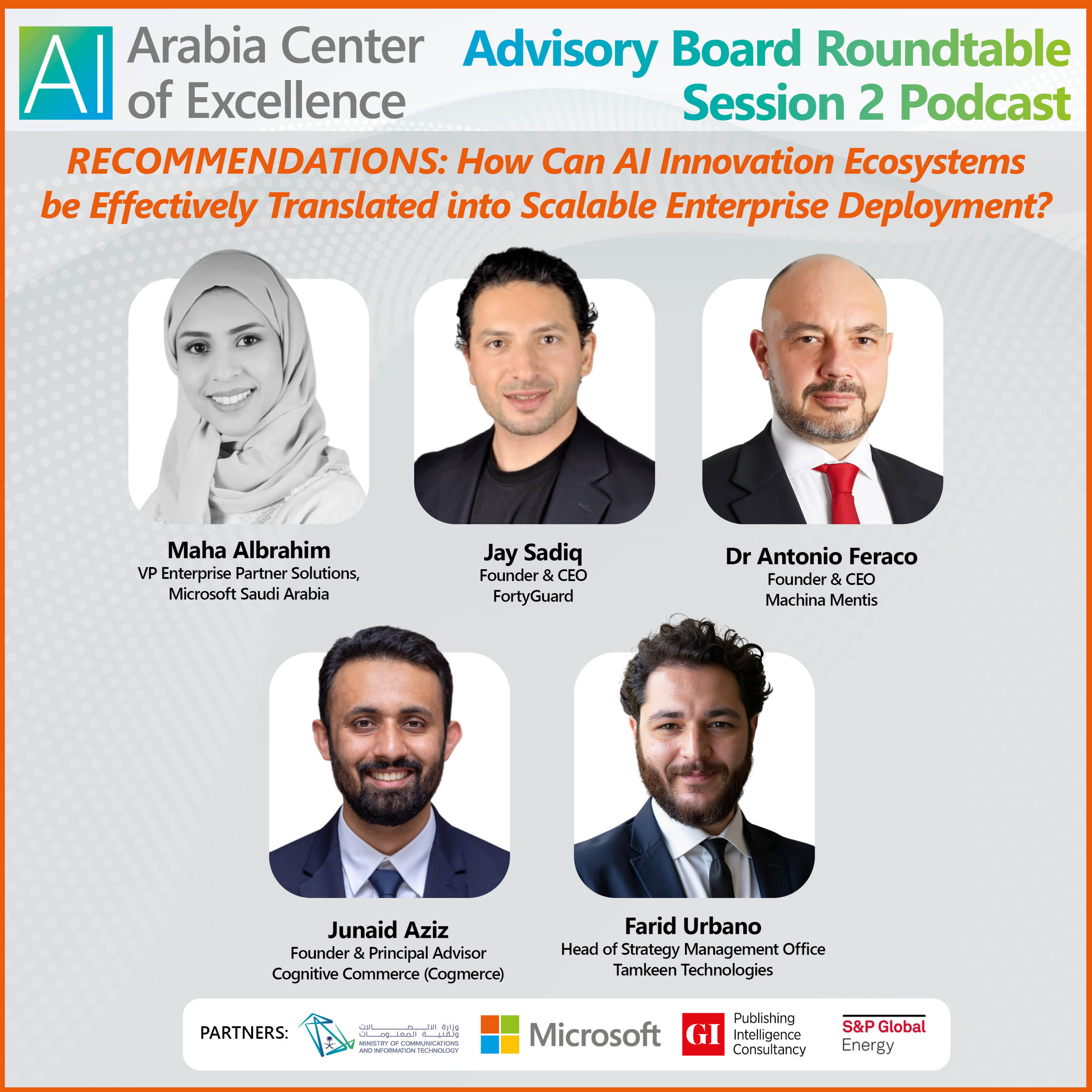
AI Arabia Center of Excellence | Advisory Board Roundtable Session 2 Podcast
Jul 800:27:44Tap to summarize🎙️ AI Arabia Center of Excellence | Advisory Board Roundtable Session 2 PodcastTheme: How Can AI Innovation Ecosystems Be Effectively Translated into Scalable Enterprise Deployment?As artificial intelligence moves beyond pilot projects, the focus is shifting from innovation to execution. Organizations must build the ecosystems, partnerships, governance, and talent needed to transform AI breakthroughs into scalable enterprise solutions that deliver measurable business value.Featured Speakers:🔹 Maha Albrahim, VP Enterprise Partner Solutions, Microsoft Saudi Arabia🔹 Jay Sadiq, Founder & CEO, FortyGuard🔹 Dr. Antonio Feraco, Founder & CEO, Machina Mentis🔹 Junaid Aziz, Founder & Principal Advisor, Cognitive Commerce (Cogmerce)🔹 Farid Urbano, Head of Strategy Management Office, Tamkeen TechnologiesThe discussion examines how organizations can scale AI successfully by fostering innovation ecosystems, strengthening public-private collaboration, developing AI-ready talent, establishing trusted governance frameworks, and embedding artificial intelligence into enterprise operations to drive long-term competitiveness and sustainable economic growth.
Transcribe →
PODCAST: Daily Energy Markets - July 2nd
Jul 200:48:08Tap to summarizeIn the final Daily Energy Markets podcast of the season, the question is whether Brent crude is underpricing the risk of prolonged disruption in the Strait of Hormuz and whether the US-Iran MOU can hold long enough to avoid another regional crisis. David Fyfe argued fundamentals remain tighter than prices imply, Rachel Ziemba warned geopolitical risks remain underpriced, Iman Nasseri forecast higher oil prices later this summer, and Giacomo Prandelli said shipping flows remain far from fully restored.
Transcribe →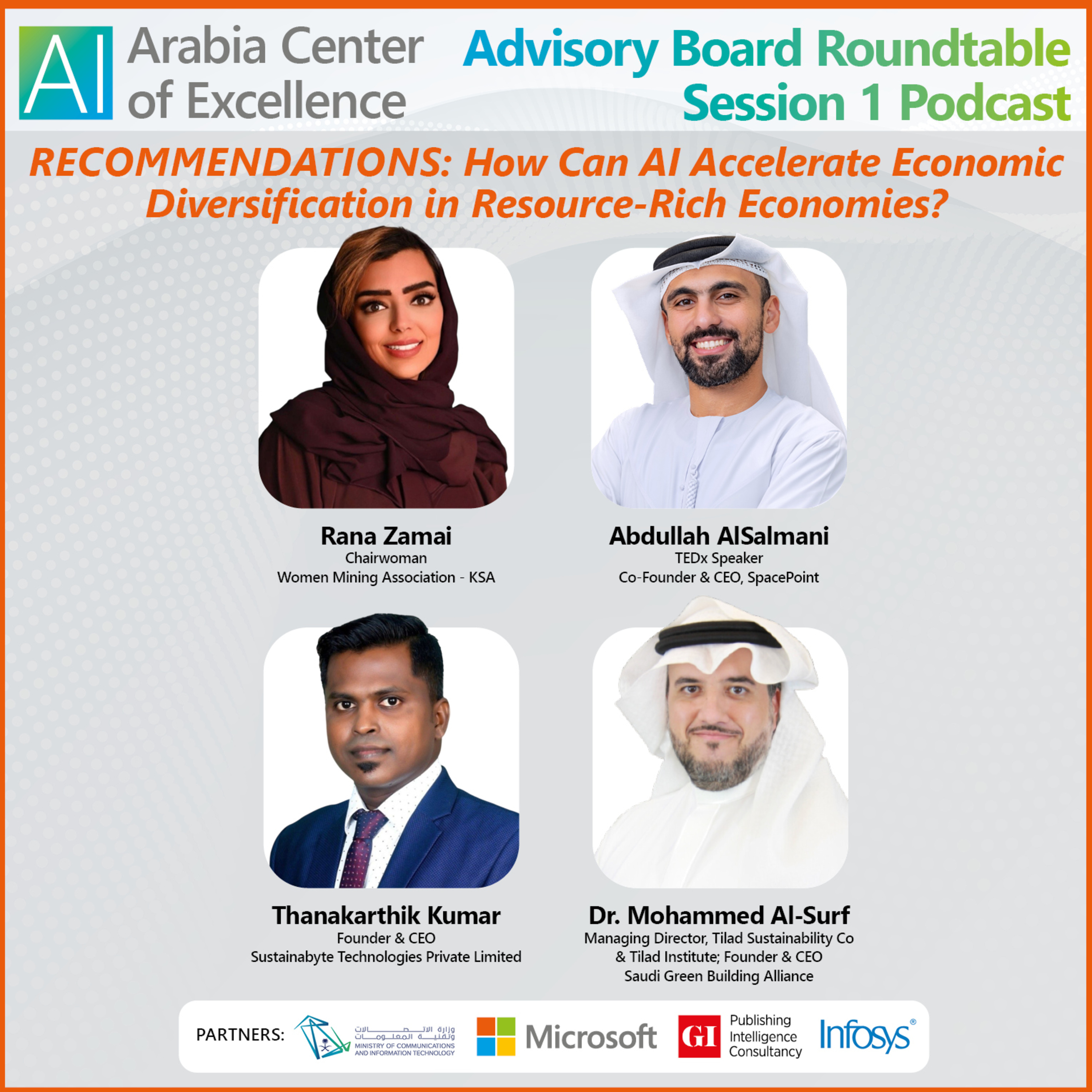
AI Arabia Center of Excellence | Advisory Board Roundtable Session 1 Podcast
Jul 100:27:44Tap to summarize🎙️ AI Arabia Center of Excellence | Advisory Board Roundtable Session 1 PodcastTheme: How Can AI Accelerate Economic Diversification in Resource-Rich Economies?As artificial intelligence reshapes industries and national economies, resource-rich countries have a unique opportunity to leverage AI as a catalyst for economic diversification, innovation, and sustainable long-term growth. The challenge is how governments, industry, and entrepreneurs can collaborate to translate AI ambition into measurable economic impact.Featured Speakers:🔹 Rana Zamai, Chairwoman, Women Mining Association – KSA🔹 Abdullah AlSalmani, TEDx Speaker, Co-Founder & CEO, SpacePoint🔹 Thanakarthik Kumar, Founder & CEO, Sustainabyte Technologies Private Limited🔹 Dr. Mohammed Al-Surf, Managing Director, Tilad Sustainability Co & Tilad Institute; Founder & CEO, Saudi Green Building AllianceThe discussion explores how AI can accelerate economic diversification through innovation, entrepreneurship, sustainable development, digital infrastructure, and cross-sector collaboration—helping resource-rich economies build resilient, knowledge-driven industries for the future.
Transcribe →
PODCAST: Daily Energy Markets - July 1st
Jul 100:48:37Tap to summarizeToday’s Daily Energy Markets examined whether oil markets are underestimating geopolitical risks as Gulf exports resume under a fragile US-Iran MOU. Narendra Taneja warned Brent has shed its risk premium too soon. Pamela Munger tracked cautious tanker movements, Zoe Upson assessed freight markets, and Yesar Al-Maleki highlighted Iraq’s export constraints and OPEC+ outlook.
Transcribe →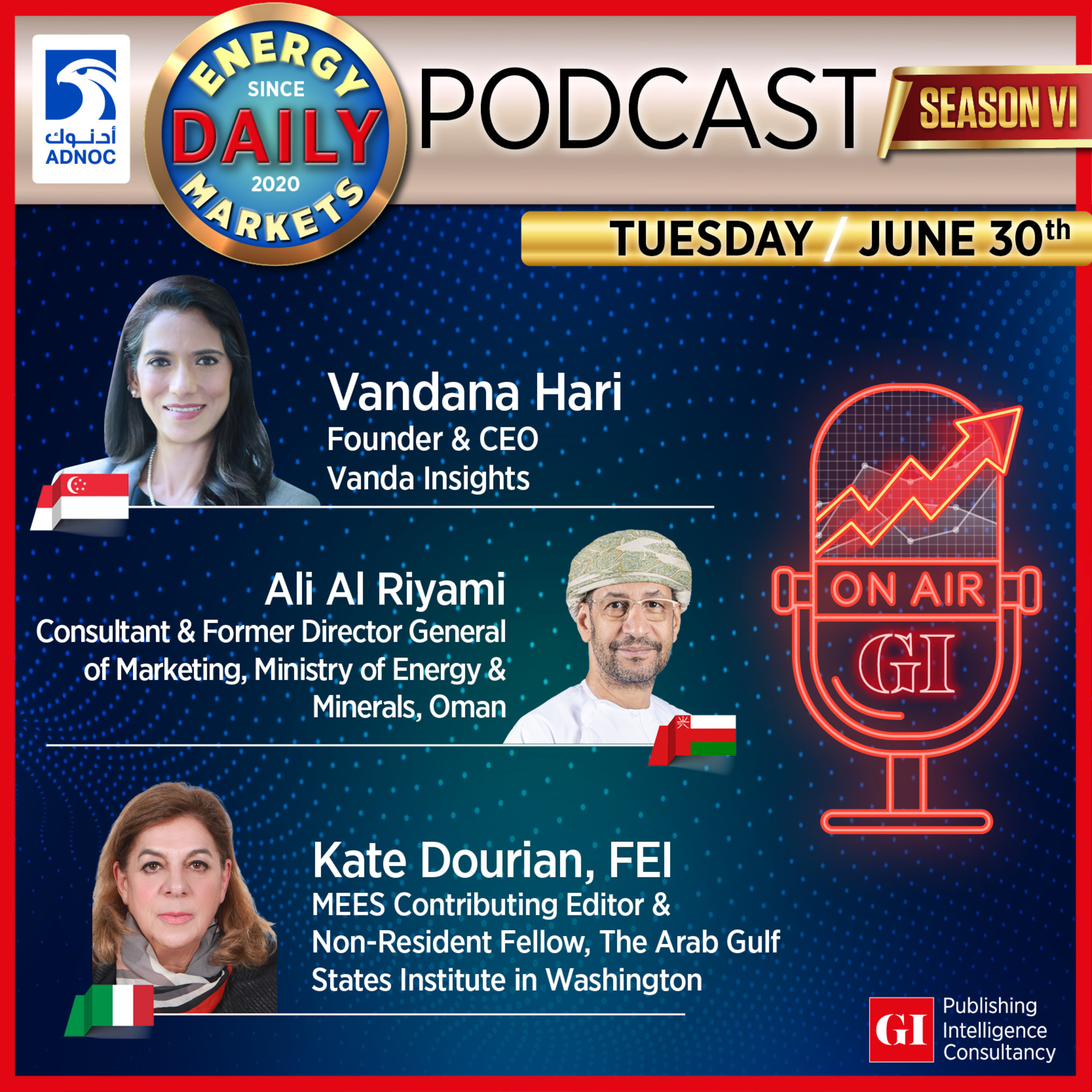
PODCAST: Daily Energy Markets - June 30th
Jun 3000:33:27Tap to summarizeToday’s Daily Energy Markets examined whether a new Oman-Iran framework for managing the Strait of Hormuz could fundamentally reshape global oil trade and pricing long after the conflict ends. Ali Al Riyami outlined negotiations over the Strait’s future governance, Vandana Hari warned markets remain focused on stranded barrels and China's eventual buying return, while Kate Dourian argued geopolitical risks and supply disruptions remain significantly underpriced.
Transcribe →
PODCAST: Daily Energy Markets - June 29th
Jun 2900:41:50Tap to summarizeToday’s Daily Energy Markets examined whether oil markets are treating renewed US-Iran tensions as sideline noise rather than a real threat to supply. Omar Najia questioned heavy bearish positioning, Henning Gloystein highlighted Ukraine’s attacks on Russian energy infrastructure, Liao Na explained China’s weaker oil demand, while James McCallum warned equipment and workforce shortages could delay.
Transcribe →