← GZERO World with Ian Bremmer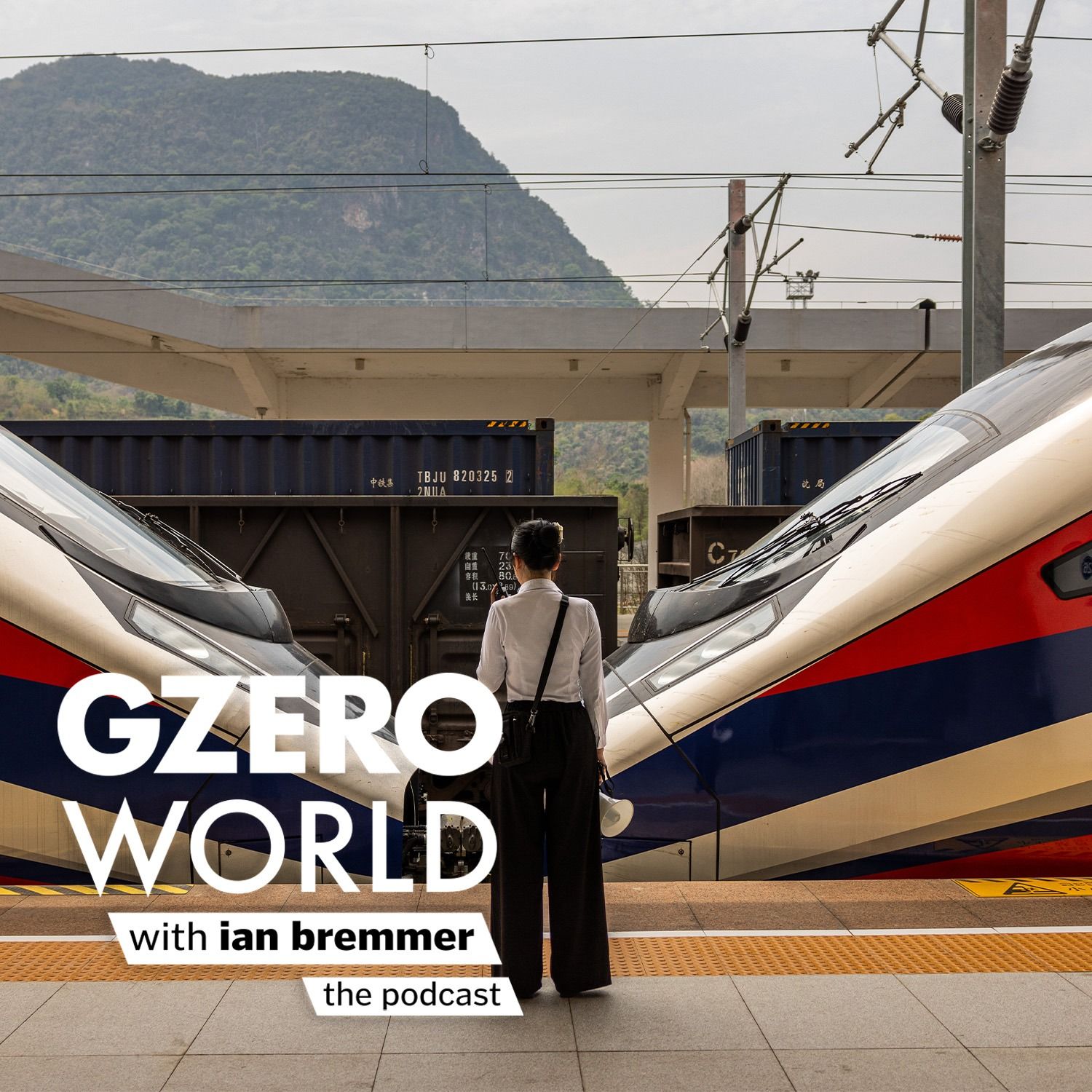
GZERO World with Ian Bremmer
China has become an "engineering state," with Dan Wang
00:24:59
Author and tech analyst Dan Wang joins Ian Bremmer on the GZERO World podcast to talk about the similarities between the US and China, the benefits (and perils) of China's transformation into an "engineering state," and what Washington can learn from Beijing’s race to build the future.
Loading summary
Transcript47 lines
- [00:03]
A
Hello and welcome to the Gzero World Podcast. This is where you'll find extended versions of my interviews on public television. I'm Ian Bremmer, and today we are talking about the United States and China and their competing visions for the future. Over the last two decades, China has transformed into what my guest today calls an engineering state. A country that can marshal near unlimited resources to build most anything. Bring bridges, bullet trains, entire cities overnight. That's led to astonishing growth, but also a stubborn belief that society itself can be engineered for better or for worse. And despite promises of decades of prosperity, it turns out that China overbuilt by a lot. It's now dealing with a debt crisis and a stagnating economy. Meanwhile, the United States has become more cautious, more lawyerly blocking almost anything from being built. But that could also be changing. America has been investing big in chips in data centers, the technology that will power the roads of our digital future. After last week's meeting between Presidents Trump and Xi, relations are in a more stable place. But long term, the US China relationship will be defined by competition and power struggle. So who will win the race to build the future? Can the United States learn from China's rapid rise while avoiding its mistakes? Joining me today is Dan Wang, technology analyst and author of China's Quest to Engineer the Future. Let's get to it.
- [01:48]
B
The Gzero World podcast is brought to you by our lead sponsor, prologis. Prologis helps businesses across the globe scale their supply chains with an expansive portfolio of logistics, real estate, and the only end to end solutions platform addressing the critical initiatives of global logistics today. Learn more@prologis.com.
- [02:15]
A
Dan Wang, thanks so much for joining us today.
- [02:17]
C
Great to be here, Ian.
- [02:19]
A
So, lots of ways into the US China conversation. I want to start with one that I'm sure you've been asked before, which is you say that in the opening of your book that there are no two peoples that are more alike than Americans and Chinese. I always thought it was Americans and Canadians, so you're going to have to explain that to me.
- [02:39]
C
Well, I am Canadian and plenty of us blend in very well with the US and we've exported a lot of comedians over to the US who that is true.
- [02:48]
A
Too many.
- [02:48]
C
Some would say not enough. Others would say, so maybe the Americans need a little bit more comedy at this very moment. I think that Europeans and Japanese are very alike. There is a sense of coziness, comfort, that there is a sense of perfectionism in these two big regions in which they are really good. At making a lot of things really well and everything is super pleasant. I think that Chinese and Americans are much more alike. There is a sense of hastiness with these two people. There's a sense of the technological sublime that really want to pursue these big engineering technological projects. There is a sense in which these are two great powers and other countries like Puny Canada is not, and that the US and China are the countries that are going to be changing the world. And when I'm in the us, when I'm in China, I feel like there is just this sense of entrepreneurial hustle. There's this hunger, there's people who want to make donuts in a way that the Europeans don't really have anymore. And so that I think is the big uniting feature between the Chinese and the Americans.
- [03:52]
A
Look, as a kid that grew up in Boston, time to make the donuts really does resonate with me, right? I mean, remember the guy got up at 5:00 in the morning, the Dunkin Donuts guy? He was always hustling. But when I hear that people talk about China of late, especially the youth in China, I hear about Laying Flat. I don't hear about hustle. I hear about Chinese young people that are less entrepreneurial. Am I wrong?
- [04:13]
C
You're not wrong. But there is also a sense of the American kids who are quiet quitting. And so that is just yet another analog here. I'm speaking to you from San Francisco, where there are a lot of youths who have decided to quietly quit tamping with American characteristics, as they might say in China. But there is also a sense of entrepreneurial drive that you can see very visibly in Silicon Valley. You would be able to see very visibly in China that there are electric vehicle makers, there are still all sorts of consumer Internet companies. There are still kids starting hedge funds much in the same way that people from Boston Night. And so I think that there is still quite a lot of entrepreneurial energy where people want to wake up and make the donuts.
- [04:55]
A
There's been a lot of private sector question mark in China over the past 15, 15 years. To what extent it's okay to get rich, to what extent it's okay to be an individual entrepreneur and to be liked, even loved, by Chinese society. The Jack Ma, out again, back again. But certainly not what he used to be. When young kids would sometimes have his photo up in their rooms like a rock star, how clear is it to an entrepreneur in China that the system actually wants them to succeed?
- [05:38]
C
I think that there are deep uncertainties here and can you imagine anything more terrifying than Xi Jinping's smothering love as he sometimes greets some of these entrepreneurs? I think that there is some uncertainty among a lot of entrepreneurs whether they are going to be still able to pursue all of the activities that make them get up in the morning, or whether the Communist Party will decide to smash a lot of their businesses, as the Communist party did in 2020 and 2021. I think there is going to be, I think, a lingering sense that if the Chinese economy somehow vastly improves in some sort of a miraculous way, that Xi Jinping won't be up to his own tricks and really try to have smothering love or smack a lot of companies around just because he can. But here again, Ian, I promised this last time, I want to apply some American equivalence to what's going on in China, because President Donald Trump has also treated a lot of tech entrepreneurs with smothering love. And I feel that Xi Jinping would be a little bit embarrassed and a little bit blushing if he had so many tech leaders organized around him over dinner, essentially singing his praises. And so here's where the sea goes into the entrepreneurs and gives them blessings upon the head. And that is something that Donald Trump is doing as well.
- [06:58]
A
Well, the fundamental difference, of course, and I'm not suggesting that you're saying that one is better or worse, is that in the United States, that smothering love is actually coming with a lot of money from these technology companies that's meant to ensure that the regulatory environment, the tax environment is actually one that they get to write principally, that they get to determine their own regs, that life under the Chinese Communist Party is very, very different.
- [07:25]
C
From that perspective, there is no doubt, I think, that if you are an elite in Beijing, your life is precarious in much more severe ways than if you're an elite in New York, Boston, D.C. san Francisco, wherever else. That if you are an upper middle class, upper class person in Beijing, maybe you're working in something like finances. And Xi Jinping announces, as he does last year, that there's a salary cap in the financial sector such that people can't make more than $300,000 a year. And some who do make over that, then they have to give back some of their back pay. Entrepreneurs never know if Xi Jinping will smash one of their companies again, as he did with online tutoring, a lot of video games, cryptocurrencies, Jack Ma, you name it. And if you're in the military party state elite, you never really know if One of your patrons will be felled for corruption, in which case his entire network goes down. And so I definitely agree that there is a much greater sense of precarity in China, such that even many elites are put off guard. And many of them want to have foreign passports, foreign homes, foreign auctions, and send their kids abroad as well.
- [08:34]
A
Now, you've lived in China for what, about 10 years?
- [08:36]
C
Six years? 2017, 2023?
- [08:39]
A
A long time. A long time. Enough to have more than a passing acquaintance from that time, from that experience, what's the thing that you would most like to see exported to the United States?
- [08:49]
C
How about a sense of love, of heavy industry, manufacturing, A sense that the industrial physical world is really, really important? I think that there are ways in which China is showing up the United States in all sorts of, let's say, public works as well as the manufacturing base. I'm speaking to you from San Francisco, where this is a state that has been trying to build high speed rail now for about 17 years. This is. In 2008, California voters approved a referendum to build high speed rail between San Francisco and Los Angeles. How many people have taken high speed rail? The number is zero. And probably for the next 10 years, the number will still be zero between San Francisco and Los Angeles. The Chinese are able to build a lot of things that meet the material needs of the people, namely homes, namely solar, wind, nuclear, coal plants, roads, bridges, high speed rail. I think that really gives people a sense of optimism for the past. If you are a resident of Shanghai, you're getting new parks on a yearly basis. You might be getting new subway stations, you might get new high speed rail connections. And given that your life has been better and better over the past decade, you also expect that the future will be better as well. And that is something that I want Americans to have, as well as a more robust manufacturing base.
- [10:10]
A
So are you saying that the China dream, as Xi Jinping has put it, is something that even still today really does resonate with the average Chinese citizen?
- [10:18]
C
I don't know what an average Chinese citizen means. I don't know what an average American citizen means. But I think for broad swaths of the Chinese, public life is still getting better in pretty crucial ways. As I said, if you're a resident of Shanghai, you're getting more ways to get around the city. If you're a resident of Guo, which is a province in China's deep southwest, very inaccessible, highly mountainous, China's fourth poorest province, I spent five days cycling through the southwestern province of Guizhou in the year 2021, Guizhou just now opened the world's tallest bridge. Guizhou has about 45.
- [10:53]
A
It is an extraordinary. The one with the restaurant on top.
- [10:56]
C
Right, restaurant, cafe, dancing hall, arcade, you know, they donut shops and they built.
- [11:00]
A
It in four years.
- [11:02]
C
Built it, probably, something like that. That sounds quite plausible to me under a heavy debt load. But they are constructing a lot of these mountain villages that are going to be better connected through these bridges. And so I think that if you are a resident of the urban areas as well as the countryside, you're getting better infrastructure. If you're in Guizhou, you're getting tied up with other villages, other towns. Perhaps you can take the high speed rail to Shanghai because Guizhou is tied up into the network. And so I think there is still a broad sense in which you're looking at the landscape transform around you and feeling more optimistic about the future.
- [11:40]
A
So I think back not so many years ago to the pandemic, when of course, the Chinese had put zero Covid rules in place for the country for far longer than anyone else and with far greater consequence. They were very, very proud of it. And then a lot of people got really, really fed up with it. That seemed to undermine trust. Was that not so significant or has that been forgotten, washed away in the context of everything else that's happening?
- [12:13]
C
I think that it was significant and also to some extent, it is being forgotten. So part of what I write about in my book is that China is a country I describe as the engineering state because it is made up of so many elites within the Politburo who have had training in engineering. They treat the environment as a engineering project. They build a lot. They treat the economy as an engineering project by smashing companies or trying to direct investment away from real estate. They also treat society as a big engineering project. And so I spend a lot of time writing about the horrors of the One Child Policy, as well as zero Covid in which it really feels like people are yet another building material that the leadership just want to tweak and remold and destroy if necessary. I think that zero Covid is important. I situate it as one of the several enormous traumas that the Communist Party has visited against the Chinese people over the nearly eight decades of its rule. I think about the famine that was created by the Great Leap Forward. I think about the madness of the Cultural Revolution. I think about the brutality of the One Child policy. Yes, sure. As well as the insanity of zero Covid. And I think there are two things that really help people get through zero Covid, one of which is alcohol, another is economic growth. And I think that this is something that the Shanghainese are able to indulge in both. And past a certain point, I think people don't really want to dwell on their national traumas. The COVID experience in the US Also radicalized a lot of people, and I think people have to some extent been able to move on in the US Just as they have in China.
- [13:57]
B
You're listening to the Gzero World with Ian Bremmer podcast, your weekly geopolitical deep dive into the world's biggest news stories, featuring in depth conversations with global leaders and newsmakers. To get more of GZero's insights on global politics every morning, sign up for our free newsletter gzero daily@gzeromedia.com.
- [14:25]
A
When you're in China, what is the perspective of what's happening in the United States? I mean, the propaganda, of course, that you hear at the state level focuses on crime and racism and fentanyl and a lot of things that would make the United States seem much more dystopian than the experience of most Americans day to day. Is that a broad perspective that the Chinese citizenry is presently experiencing?
- [14:59]
C
I think so. I think that experience is real. I think that if you are living in China under this extremely tightly controlled media environment. When I was living in Beijing in 2018, all I was hearing was from about the craziness of Trump's trade war, which he had just launched in 2018, and especially in the early days of COVID 19, in which China, after some early missteps, appeared to get the virus under control and Trump's America obviously did not. And that was a period of considerable gloating, especially of all the troubles in the US in the year 2020 under Biden, the US looked ineffectual, that there was no real policy there, in addition to a lot of hawkish rhetoric against China at that moment. And I think that Chinese media organs, propaganda organs, are having a field day right now with Trump's America, in part because many of us who simply take a look at New York Times headlines or Washington Post headlines, America does look pretty dystopian from the headlines. Now. You and I know, Ian, that life is going on on a normal basis. There are definitely some really disconcerting things, especially if you are a person of color who are quite scared of ice rates, which are getting quite cruel and public in all sorts of ways in the US that many people do feel scared. On the other hand, the economy is chugging along and there are some deteriorations, and people are mostly getting on with their lives. And so, you know, even for many Americans, the state of America through the headlines doesn't look all that great.
- [16:38]
A
And what about the state of China? I mean, do the Chinese people, again, a lot of young people don't even know what Tiananmen Square was at this point. They certainly would. If they know about the Uyghurs. They generally feel supportive of what China's brutal policies there were. I mean, the United States, in some ways, the headlines overdue the level of dysfunctionality in the U.S. social and political systems in China. They whitewashed them.
- [17:07]
C
How?
- [17:08]
A
I mean, back when I was a student in the Soviet Union, of course, there was a lot of cynicism about what you'd read in the press and a recognition that you were being lied to constantly. How aware are young people in China? How cynical are they about what they're being fed by state news organs?
- [17:29]
C
I think there is a general level of skepticism about what is going on in the news because the lived experience for many young people has not been excellent. For the last few years, that young people were disproportionately affected by the crackdowns on the consumer Internet sector, people working in online education, people working at Jack Ma's companies, either Alibaba or Ant Financial, a lot of people have suffered through that. A lot of people who have started new businesses catering to tourists or other consumers, whether that is some sort of a new cafe, bubble tea shop, some sort of thing in the services industry. A lot of tourism has been smashed. And I think it is absolutely the case that youth unemployment is pretty high and people are having a hard time finding jobs. And so I think that is a question of balance about how people feel about life is pretty convenient in all sorts of ways. In Shanghai, perhaps many young Chinese live with their parents, which is culturally much more common in China. The rest of East Asia, maybe they are pretty thrilled about getting still new noodle shops that they're able to try, new parks that they're able to try. But I think that is balanced with a general unease. I think the young people who have suffered the most are people involved in some aspect of journalism, some creative types involved in filmmaking, standup comedy in which the regime has gotten much more censorious. In the recent past, I've met many young Chinese who have decided to emigrate, whether this is to places like New York or Amsterdam or Northern Thailand, in which they are smoking drugs that are legal in the state of California. And so many of Them have felt the strangling chokehold of the censors in the recent few years and they have decided to take leave of that regime.
- [19:19]
A
Talk about the US China relationship for me a little bit, Dan. Do you think that there is a sense of reality from both sides as to what they are trying to achieve?
- [19:32]
C
Probably not. I think reality, asking for reality from within the Communist Party or the White House right now would be stretching. It would be stretching it a little bit. I think that the relationship between the US and China is uncertain. And right now it actually appears relatively friendly, against my expectations at least. I think that is very substantially, because right now Donald Trump appears to be the most pro China member of the White House, which is, you know, could have gone in a very different way, especially if the trade war unfolded with, you know, 150% tariffs on all Chinese goods. And I always felt that even when I was living through the first trade war in Beijing, I'd never really felt that Trump was really, you know, antagonistic necessarily towards the Chinese people. And that many Chinese remark that he usually says great things about China. His granddaughter, the daughter of Ivanka Trump learns, has learned Mandarin. He seems to be much more upset with the Germans and the Japanese, which is very, very strange. And right now the bromance between Xi and Trump is real. It seems like there will be state visits in Beijing as well as Washington D.C. i'm not especially optimistic that this relationship will not somehow fall into peril once again because again, throughout the first trade war, the US and China were often at odds, even after they seemed to be really close to making a deal. So I'm not sure that this will be all lovey dovey for a very long time.
- [21:06]
A
Well, one thing that we know is that Trump is very much opposed to people that can make Trump's life more difficult. And Xi Jinping has that capacity in ways that virtually, maybe, perhaps no other leader on the global stage does. That's because, I mean, obviously after Liberation Day, Trump's willingness to escalate against China was also unprecedented. Right, but I mean, so it's not like you were wrong in suggesting that Trump was gonna come out of the gates hot. It's just that he's backed off very, very substantially. So perhaps the surprise is that China was willing to be as assertive as quickly this time around compared to in the first term.
- [21:48]
C
That's right. I think that especially there was one thing that Beijing did which was to control the export of rare earth magnets.
- [21:56]
A
Yeah, the licensing regime.
- [21:57]
C
Yeah, that's right, yeah. In defense materials, as well as automotives and all sorts of other goods. But what was really striking to me was still, even though the Chinese were indeed, I agree, pretty aggressive, there was still relative restraint there. Because I think that rare earth magnets are not China's only chokehold. There are all sorts of chokeholds available to the Chinese. I'm thinking about all sorts of electronic products, all sorts of batteries, pharmaceuticals, pharmaceuticals, almost all fermented antibiotics, almost all ibuprofen is made in China. So imagine if they actually had a chokehold over ibuprofen. Imagine if they had more of a chokehold over all sorts of electronic products. I think that they only flex but one finger, and if they flex more, they could really have put the US Economy into a stranglehold. Perhaps this is one of the reasons that Trump is actually quite nice at the moment.
- [22:47]
A
So when you look forward at the US China relationship, do you expect now more of a strategic decoupling incrementally, but that is stable, or do you think there's a greater danger of big, sudden escalations? And why in either case, I think.
- [23:08]
C
The answer to that question is yes. I think that we will have some degree of incremental decoupling. We'll have some degree of incremental recoupling. Because part of the challenges of Trump's tariffs is that often it seems to be confused at the start. I was thinking about this a lot in the first trade war and also in the second. Are these tariffs really meant to decouple the US From China, or is it to produce such a great trade deal that the two countries invest extensively in each other to recouple the two economies? And so this is one of these ways in which the tariffs seem to be confused from the start, and Trump believes in one thing and then switches strategies the very next day.
- [23:50]
A
It's interesting that in the last conversation between Xi Jinping and Donald Trump that what Trump seemed to prioritize was not fentanyl, it was not critical minerals, it was TikTok. What do you make of that?
- [24:04]
C
I think there are two groups of people that really love TikTok. First, the youths, and second, Donald Trump. I think it is really remarkable the extent to to which Donald Trump has really flipped and to say that TikTok is his asset because he won the election. And a decent chunk of the youth vote really did turn out, especially among men, to vote for Trump. So Trump has, some would say, flagrantly disregarded the law which has passed that divest TikTok from its parent company ByteDance has flagrantly disregarded the 9zip Supreme Court opinion to uphold this law and so far it seems like he is trying to create some sort of deal. This is the art of the deal maker again doing something arguably illegal. And it seems like Xi Jinping is willing to play along that I don't believe that TikTok is of that critical importance to the Chinese Communist Party. I don't believe that they really value this so much. They don't really value the interests of these this big consumer Internet company, namely ByteDance. I think that they are willing to play along because Trump seems to really believe that TikTok is his thing.
- [25:12]
A
Dan Wong, thanks for joining us today.
- [25:14]
C
Thank you very much Ian.
- [25:19]
A
That's it for today's edition of the Gzero World Podcast. Do you like what you heard? Of course you do. Why not make it official? Why don't you rate and review GZero World 5 stars only 5 stars. Otherwise, don't do it on Apple, Spotify or wherever you get your podcasts. Tell your friends.
- [25:43]
B
The Gzero World Podcast is brought to you by our lead sponsor, prologis. Prologis helps businesses across the globe scale their supply chains with an expansive portfolio of logistics, real estate and the only end to end solutions platform addressing the critical initiatives of global logistics today. Learn more@prologis.com.