← GZERO World with Ian Bremmer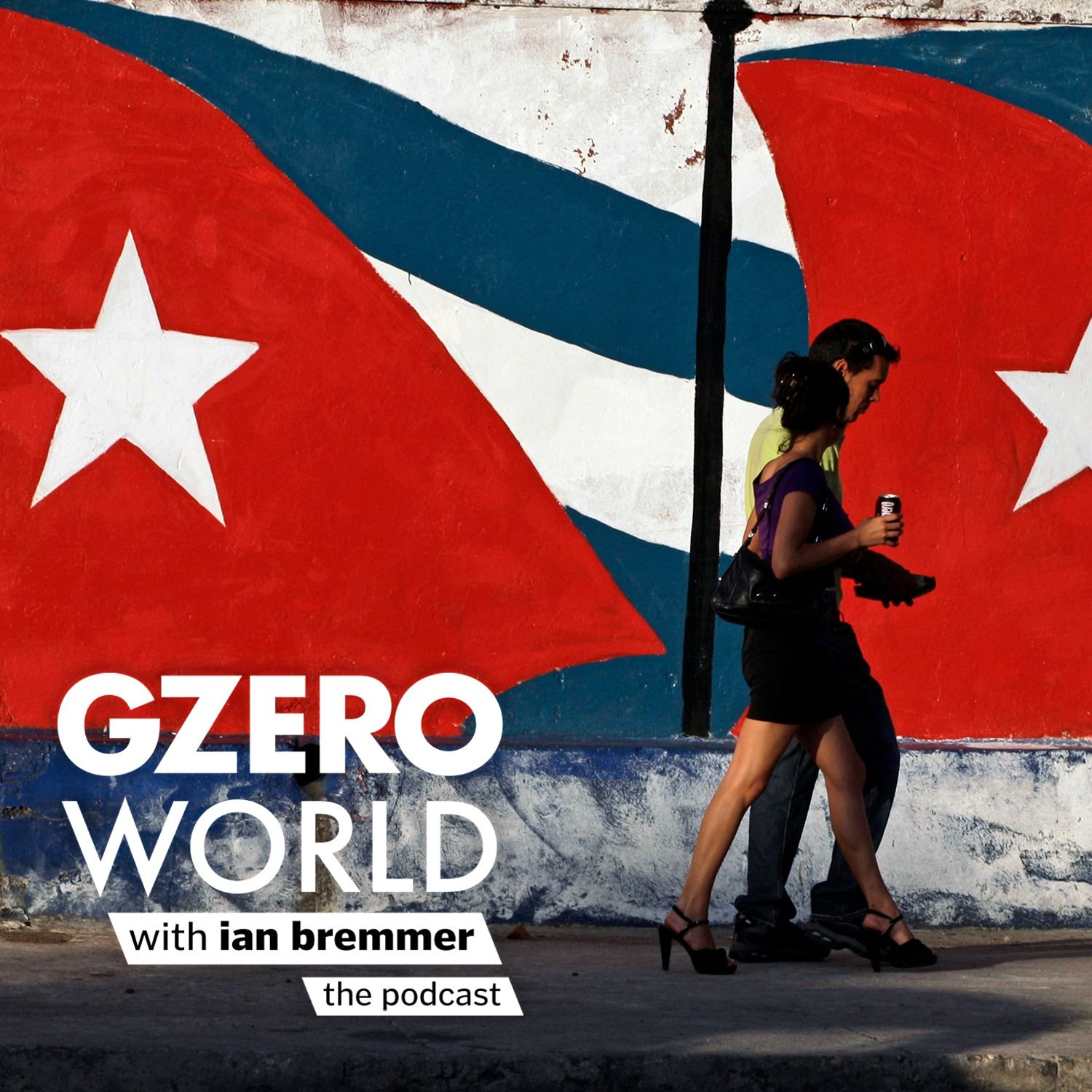
GZERO World with Ian Bremmer
Cuba's Trump standoff and economic crisis with Michael Bustamante
00:24:50
Historian Michael Bustamante joins Ian Bremmer to discuss Cuba's economic freefall, Trump's end game, and the hopes of Cuban Americans.
Loading summary
Transcript62 lines
- [00:03]
A
Hello, and welcome to the Gzero World Podcast. This is where you can find extended versions of my show on public television. I'm Ian Bremmer, and today we are asking, is the United States really on the verge of invading Cuba? In his second term, President Trump has leaned into a more assertive vision of American power in the Western Hemisphere, what he's called a kind of Donro Doctrine. From Venezuela to Panama and beyond. But when it comes to Cuba, the reality is more complicated. A military invasion is actually highly unlikely. What's much more plausible is an attempt to force an economic breakthrough, a deal that opens the island to investment and tourism while delivering Trump a quick and low risk win. That strategy comes at a moment of vulnerability for Havana. The collapse of support from Venezuela, combined with sustained US Pressure has pushed Cuba's already struggling economy into a tailspin. They've had blackouts and fuel shortages and widespread disruption to daily life. For the Castro government, some form of economic opening could be a lifeline. But for Trump, striking that kind of a deal would mean balancing competing pressures at home, especially from political allies who see any engagement with this Cuban regime as unacceptable without fundamental political change. Here to talk about all this and more is Michael Bustamante. He's historian at the University of Miami and an expert on Cuba and US Cuba relations.
- [01:41]
B
The Gzero World podcast is brought to you by our lead sponsor, prologis. Prologis helps businesses across the globe scale their supply chains with an expansive portfolio of logistics, real estate, and the only end to end solutions platform addressing the critical initiatives of global logistics today. Learn more@prologis.com.
- [02:07]
A
Michael Bustamante, thanks so much for joining us today.
- [02:10]
C
Thanks for having me.
- [02:11]
A
So there's been a lot of chatter about Cuba and some action recently. What is happening to the Cubans today?
- [02:23]
C
If by to the Cubans, you mean the Cuban people.
- [02:25]
A
I do.
- [02:26]
C
In Cuba, they are living the most difficult period in their memory. For most, things haven't been nearly this bad since 30 years ago when the Soviet Union fell and Cuba's GDP declined by something like a third in three or four years. On a percentage basis, Cuba's GDP in the last five years hasn't declined nearly as much. But the Cuban economy never recovered to where it was in 1989. And so this crisis feels in the minds of most Cubans much worse than even what they went through in the 1990s.
- [02:57]
A
Hearing about all sorts of shortages in electricity. They don't have fuel, so, I mean, the buses aren't running, they're not picking up Trash. I mean, I assume you're talking to people that are on the ground. I mean, what is day to day life like right now for Cuban?
- [03:12]
C
Yeah, day to day life is incredibly difficult. Imagine that the power's been out for 18 hours. It comes on at 2 in the morning, and you have no choice but to get up and try to cook the rice and beans that you want to feed your family for the following day, because you don't know if you're going to have electricity. So people are really just thinking about not even how they're going to get by that day. They're thinking almost hour to hour. Obviously, there's differences in terms of some Cubans have access to money and resources that come from family outside. Some have a foot in Cuba's nascent private sector. So they're a little bit perhaps more insulated. But for folks who are relying on state sector salaries, they are really, really having a very, very difficult time. And poverty and inequality have become increasingly severe.
- [03:54]
A
Can remittances get in?
- [03:57]
C
Remittances do get in. What's interesting is sort of that the way remittances are getting in has changed somewhat. It used to be that, you know, you went to Western Union in Miami, which had a license to operate in Cuba, you sent money. They were able to take money out in a Cuban equivalent currency and go to a store run by essentially the Cuban military and buy imported goods. What's happened now is that the Cuban military and the Cuban financial system has been cut out of that flow to some degree. And so now there's this whole kind of private sector channel whereby businesses that have a foot on the ground in Cuba, but also say a bank account in a place like Canada or Mexico, they have a website. You can go online, it's almost like Amazon. You can order your family stuff and within three to four days it's delivered to their door. But the money is going to an account outside of Cuba that's then used to pay for it, exports from somewhere to Cuba. And so the economic impact for the Cuban economy as a whole is not great, but it's a real lifeline for many, many people to get by.
- [04:53]
A
Interesting. And so there is some humanitarian aid that I see has been sent.
- [04:59]
C
That's true, right.
- [05:00]
A
I mean, Canada's sending a little, Mexico sending a little.
- [05:03]
C
The United States has sent something. The United States has committed to a few million dollars. I would say in the United States case, it doesn't really, you know, make up for what's lost in terms of just the overall economic Picture as a result of the oil sanctions. But yes, there is aid of different kinds that's getting in. There are non government organizations that work to distribute that aid, too. The Catholic Church is playing a big role. But make no mistake, this is really, really dire times. I mean, no gas, no electricity. People are breaking down the wood doors in their homes to get wood for cooking. Right? They're cooking with fire in the streets. I mean, in Havana, that's how bad things have been.
- [05:39]
A
So if nothing were to happen, if there were no political decision that would change the trajectory that we are now on. Play this out in six months, in a year, in two years, what happens in Cuba as a consequence?
- [05:54]
C
It's really hard to. It's hard to game that out, in a sense, for me, because on the one hand, you would expect that as things get worse, people are gonna get more and more frustrated, and you would see some kind of civic unrest. And maybe that is what would happen. We've seen in recent weeks people going out on their balconies at night and banging parts pots and pans in a kind of collective signal of protest. But whether we would get anything bigger, sort of a taking of the streets, right, In a sort of a mass scale, that's, I think, an open question. And part of the reason it's an open question is because people are so exhausted. They're, as I said, just trying to get by every day. And Cuba has lost a tremendous amount of people to migration in the last few years. The estimates vary, but between a million and 2 million Cubans have left in the last five, six years. It's the largest exodus ever.
- [06:43]
A
So who's left out of, like, what, 10, basically?
- [06:45]
C
Originally out of 11. Right. They've lost more than 10% of their population. So it's more Cubans have left in the last five years than left in the immediate wake of the Cuban Revolution. Not just in terms of absolute numbers, but as a percentage of the population. So it's seismic. So who's left to sort of fuel that protest movement? Cuba also has an aging society. It's one of the oldest countries in Latin America because the people that lead tend to be young. So you could see a situation where this plays out and does lead to some kind of instability or civic, you know, unrest or protest on a mass scale. But you could also just see this kind of wither into just a really, really dark, dark place.
- [07:24]
A
Now, I know it's hard to assess this, but to the extent that the Cubans are blaming someone, how much are they blaming the Cuban government. And how much are they blaming the United States for the hardship?
- [07:36]
C
Well, it's hard to generalize about how Cubans think, because, of course, Cubans have different points of view. But I think what I would say is I think many Cubans I know, they're tired of the blame game that in the geopolitical corners, tends to point their finger at either one act or another, either the Cuban government or the United States. Most Cuban people I know are aware that US Sanctions have a bite. They obviously have impacts on the Cuban economy, otherwise there'd be no reason for them. But the argument that they have heard their whole lives from the Cuban government, that it is only the United States fault, that's something that, even if you agree with it, it's just not working politically anymore. People don't buy it because they have seen their own government make some very serious mistakes over the last few years, like a currency devaluation, which went horribly wrong in 2021, in the middle of the pandemic and led to mass inflation. So they know their own government has some ownership here. And it's. And it's. And they haven't owned up for their part in this mess and their part in making the Cuban economy as vulnerable as it is to the kind of external pressure that they're facing now from the Trump administration.
- [08:42]
A
Now, there was a flurry of Cuba in the news in the Obama administration. We had baseball game. We had, like, the museum that opened up to the Internet. It sounded exciting. It never went anywhere. Why did that fail? What was the intention, and where did it fall short?
- [09:02]
C
Well, I don't know if I would agree that it failed. I mean, I was in Havana and in Cuba generally a lot in that period. And I've never known a period that felt more hopeful, more effervescent. Of course, there were winners and losers in that sort of reform process. But it was a time when, for the first time in all my years of traveling there, I knew people, more or less people my age who were making a decision to stay that they were not thinking of, how do I get out of here? Talented people with professional ambitions and great educations were thinking, I want to stay. I want to start a business. Something is happening. I'm not exactly sure where it's going. It's imperfect, sure. But I want to see and ride this out. The Obama policy at its peak really only had two years to work. And then, you know, two things happen. Donald Trump is elected, and then Fidel Castro dies within weeks of one another. And so that kind of casts a pall on this hope. And so I don't know as if we know where that process would have ended up. But what I would say is that in retrospect, it also is clear that the Cuban government missed an opportunity. They saw the Obama opening. As you know, the United States has definitively turned a page on past policies of sanctions. We can kind of play it safe. We can take our time doing the things internally or with respect to our other relationships and partnerships around the world. We can play off different foreign interests against one another because Cuba is in style.
- [10:22]
A
But they did not jump in and embrace opening with the United States.
- [10:26]
C
They did not. I mean, and it's remarkable to go back and look at Obama's speech in the spring of 2016, which was an incredible work of oratory, calling on the Cuban people, recognizing the responsibility of US Policy, but also calling on the Cuban government to open politically and economically. And the reaction from Cuba, Cuban official quarters in the immediate aftermath was striking. It was, this is Obama's policy is more of the same. It's a Trojan horse. Right. And they missed an opportunity to really double down on, say, US Investment. For some of the loopholes that were created at the time in the sanctions framework. The fact that they didn't meant that it was that much easier for Trump to unwind the normalization thing when he came in, because there weren't this sort of deep web of business ties that connected both places yet.
- [11:12]
A
So now we've had a shift in US Policy, but certainly mounting interest, almost a feeling of inevitability. I mean, this is not like Greenland where you got a flurry and it went away. This is like a steady drumbeat. And it has economic implications, has diplomatic implications. Occasionally it seems to have military implications. Right. Where Trump is expected to do something big. A win is coming on Cuba. What do you see this policy so far as moving towards?
- [11:54]
C
Really hard to say what the end game is here for this administration. And I think the signals have been very mixed. You are right that they have created very high expectations, especially where I live in Miami. Right.
- [12:06]
A
Certainly the Cuban Americans have to be thinking they're finally, it's our time.
- [12:10]
C
The same way they were in 1991. Right.
- [12:14]
A
But this time they all want, like an invasion.
- [12:16]
C
I mean, I don't know if they all want it. There was a poll recently that suggested that there's strong support for some kind of military action. That's actually long been the case. You can poll Cuban Americans going back years and years and find a majority of people will say yeah, we'd like military action, but we also want the government to get out of the the way if we want to send money to our mom. Right. So there's a lot of inconsistency and I think popular attitudes. But make no mistake, expectations are really high that the moment is coming. U.S. diplomats have put that out, that 2026 is the year of change, the year of liberation. But what's that going to mean? You know, the Trump administration, there is
- [12:49]
A
no opposition on the ground in Cuba.
- [12:52]
C
It's not that there is opposition party, a group, there are many groups. The problem is that they are weak, they are not particularly united, and most of the leaders that have existed are either in jail or in exile. So this is not anything like the Venezuela case where you had a very well organized opposition that, despite its own history of fractiousness, came together around the 2024 election and really won that election, I think, has been shown.
- [13:21]
A
And then a lot of them ended up in jail and in exile.
- [13:23]
C
Correct. But at least in that case, there is, I think, a plausible case that you could make that there is a political force that is not just ready but willing and able to sort of take over in the event that the existing state somehow just fall in the Cuban case.
- [13:36]
A
And that is not a case that the Trump administration is making, by the way.
- [13:39]
C
That is not a case that they're making. And I think that's what's more striking that to be in Miami and hear for calls that the big moment of change is on the horizon. If this administration came to the conclusion in Venezuela that even that opposition was not ready to take over and not ready to earn the support of the Venezuelan military, how can they not arrive at a similar conclusion in the Cuban case?
- [14:01]
A
Assuming they. They probably are right.
- [14:03]
C
I think the suggestion, I mean, there's been conflicting reporting and conflicting signs because the politics on this are so difficult for the Secretary of State. It's clear that governments are talking who is Cuban American? Who is Cuban American? Yeah, the governments are talking. US Diplomats have also put out there that they are looking for a Cuban, Delsey Rodriguez, in reference to the Maduro successor that seems to have been basically handpicked by the United States. I think it might be dawning on them that that person doesn't really exist. There's no one, to my mind, in the Cuban government that's that in a position to simply stick their neck out and kind of be the person who's going to do the United States bidding. And so what does that leave you with? And then you add in that you don't really have enough position. So your options seem to be limited. Even if you can somehow decapitate the high ranks of the Cuban state, you're going to have to deal with some remnant of that government that can keep stability because this administration does not total instability 90 miles from its shores that could lead to things like another mass migration crisis. Right? That would be their worst nightmare. So the expectations that have been created for big political change that goes all the way, root and stem political reform versus some of the hard realities, that's where the rubber meets the road. And that's where I think the outcomes here might disappoint some of the expectations
- [15:23]
A
that are sky high in Miami.
- [15:31]
B
The Gzero World podcast is brought to you by our lead sponsor, prologis. Prologis helps businesses across the globe scale their supply chains with an expansive portfolio of logistics, real estate, and the only end to end solutions platform addressing the critical initiatives of global logistics today. Learn more@prologis.com.
- [15:58]
A
So there's certainly been depending on, when you listen to Trump on this issue, there's been a focus on a lot of deals. You can do tourism deals, real estate deals. Maybe you can find a way to work with the Castros themselves, not with the president who has said that he's not going anywhere, of course. And then you say that's a win. You paint that as a win. So two related questions. One, do you think that's where the Trump administration is actually now heading? And two, if it is, what are the implications of that?
- [16:36]
C
It is really hard to know if that's where the Trump administration is heading. I think all things being equal, I could certainly see Trump himself being perfectly fine if that's where this ended up. But they have a problem in that Trump himself has said also repeatedly that part of the reason he's so interested in Cuba is because he's had wonderful Cuban Americans who have supported him. He's appointed many Cuban Americans to diplomatic posts. He has a Cuban American as Secretary of State and seems to want to do right by them in some way, whatever that means. And that do right by them, as most Cuban Americans would define it, is not simply having the opportunity to go participate in a hotel venture. And so that's where Trump's kind of deal making instincts may conflict with some of the domestic political pressure that he's going to get from a place like South Florida. On the other hand, if they are able to craft a deal, as has occasionally been reported, that is basically about economics. And by the way, the Cubans have signaled that they'd be pretty comfortable with that. Their red lines are don't tell us how to run our political system. Don't tell us who to let out of jail. But even if part of the Trump White House is willing to go there, the consequences for someone like the Secretary of State, I think are significant in terms of his future political ambitions, in terms of electoral support for future Republican candidates in Florida. Right, so that's where there's a disjuncture here.
- [18:06]
A
Okay, but Trump doesn't care that much about that. Right. I mean, like, if I'm thinking about Trump wanting a win on the back of Iran, which has not gone well on back of Venezuela, that has. And those two experiences have been very, very different in terms of level of ambition.
- [18:20]
C
Right.
- [18:20]
A
Then why wouldn't he take that? And from his perspective, it's another win, it's another war that he gets to say is essentially over, that he's resolved.
- [18:32]
C
He might very well. And I have no doubt.
- [18:34]
A
Do you think that or you don't think that?
- [18:36]
C
I think Trump might be willing to take that deal any day of the week. I think there are other parties in the administration who also would be, as long as there is as part of that some kind of at least superficial political signal, maybe a little bit more than superficial. The Cuban government, say, lets out a number of political prisoners in jail, doesn't commit to democratization or overnight, but makes some gestures in the same way that the Delsey Rodriguez government has done in Venezuela. Right. But largely you keep the picture of the state the same. That might be perfectly sellable for Trump for many parts of the White House. The question I have, and Rubio himself might be forced to do that, if that's what Trump wants. But then Rubio has a question. Does he go along with it and how does he sell it to his own community? That I think is a really interesting thing to think about. You're right. For Trump, he might not care. Presumably he doesn't have to run for election again. But again, I think for Rubio, that's where the dynamic is really interesting.
- [19:36]
A
So then the other question is, let's imagine that this happens and it's bloodless. And it is. The Americans suddenly are investing like crazy in Cuba and you've got big five star complexes and tourism comes, the economy feels more open, they're getting more information, they're traveling more. Is that, I mean, that may not be Trump long term. It's a different presidency. But to what extent does that would that reality create an inevitability that this regime is actually going to have to open politically because you can't maintain communism in an environment like that for very long.
- [20:14]
C
Well, I think in some ways that was kind of the long term bet of the Obama policy too, was that take the United States out of the equation as sort of the boogeyman in Cuba's internal politics. Take away the scapegoat that everything is the United States fault and engage with the Cuban people, bring in information, and that will, over the long term, create ingredients that will snowball over time. I'm not sure if that would be guaranteed to play out in that way. And I think a lot of it has to do with how that economic opening is structured. If it's an economic opening that's structured in such a way that allows the Cuban military, which already has controlling interests in the tourist industry and a bunch of sectors of the Cuban economy, to really suddenly become kind of the new kleptocrats of an oligarchic economy that doesn't allow Cubans to really build an economy from the ground up. There's no reason that that kind of opening would necessarily have to lead to political opening. I think if and an economic opening is really from the ground up, it's going to require the Cuban government also to make enormous changes in how they structure their economy. They have played with liberalization of the economy to some degree, but it's been sort of one step forward, one step back. They really have yet to signal that they get that their own economic model is broken independent of what the United States does or doesn't do. And then they really need to turn a corner if they do that. There's also a possibility that you could have participants in that private sector, in a domestic private sector, really want to give the government a benefit of the doubt and focus on their own building businesses rather than political change. I don't think there's nothing that's inevitable. There's nothing that's inevitable here. Political change in Cuba is going to take fracture at the top and it's also going to take sustained pressure from the bottom, neither of which we really have to scale that would make that possible.
- [22:08]
A
Trump, looking at the world today, is wanting to make change in Cuba as a priority. The correct political impulse for this administration.
- [22:20]
C
In some ways it seems a surprising impulse given kind of the deal making impulses, given the comfort that this administration has with dealing with autocrats in lots of places around the world, given that this is an administration that could easily cozy up to the current Cuban government and get a hotel deal out of it if they were smart. I mean, I've long thought that the smartest thing Havana could have done from their own self interest point of view back in 2017 was offer Trump a little island off the coast of the main island. Right. Small price to pay for what they're going through now. But I think for Trump, it's also about symbolism. I think this is to be able to say, hypothetically, selling whatever deal comes out of this. As I was, the president who did the thing that no other president did. I mean, that goes straight to, I think, his ego. And so I think Cuba is attractive to the president, not because of natural resource wealth. There's some oil, there's some nickel. But this is not Venezuela. It doesn't have the strategic implications of Iran. This is about the symbolism of communism and being able to say that we planted the flag and defeated that thing that no one else could, even if defeat really isn't defeat in so many ways. So I think for him, the symbolism part is probably how this is being sold to him, is why he should even care at all.
- [23:39]
A
We're not in a Cold War anymore, and there's been support from the Chinese and the Russians, but not all that significant. Why does Cuba matter strategically for the US if at all?
- [23:54]
C
Well, if you go by the administration's national security doctrine, which they published at the end of last year, they do seem to be very concerned about the ties with China and Russia. There have been allegations of a Chinese listening base, sort of unconfirmed. There have been Cubans who have been showing up on the front, on the Russian front. The questions sort of swirling about to what extent the Cuban government may have turned a blind eye to something they knew was going on in terms of recruitment.
- [24:25]
A
But you're right.
- [24:25]
C
I mean, I think aside from those things, Cuba does not represent a national security threat to the United States in the way it did during the Cold War. The Chinese and the Russians remain important allies for Cuba economically. They're sending in aid, but they have also both, from their very different kind of ideological priors, communicated to Havana that they need to get their economic act together. They are not going to bail out the Cuban economy. They may do enough to help it stay afloat, but they're not going to bail it out. And so the argument that you have some existential Chinese or Russian threat off the coast, I think it's a little, it's a tough sell given some of the facts on the ground.
- [25:03]
A
Michael Bustamante, thanks for joining us today.
- [25:06]
C
Thanks for having me.
- [25:10]
A
That's it for today's edition of the Gzero World Podcast. Why not make it official? Why don't you rate and review GZero World 5 stars only 5 stars. Otherwise, don't it do it on Apple, Spotify, or wherever you get your podcasts. Tell your friends.
- [25:32]
B
The Gzero World Podcast is brought to you by our lead sponsor, prologis. Prologis helps businesses across the globe scale their supply chains with an expansive portfolio of logistics, real estate and the only end to end solutions platform addressing the critical initiatives of global logistics today. Learn more@prologis.com.