← GZERO World with Ian Bremmer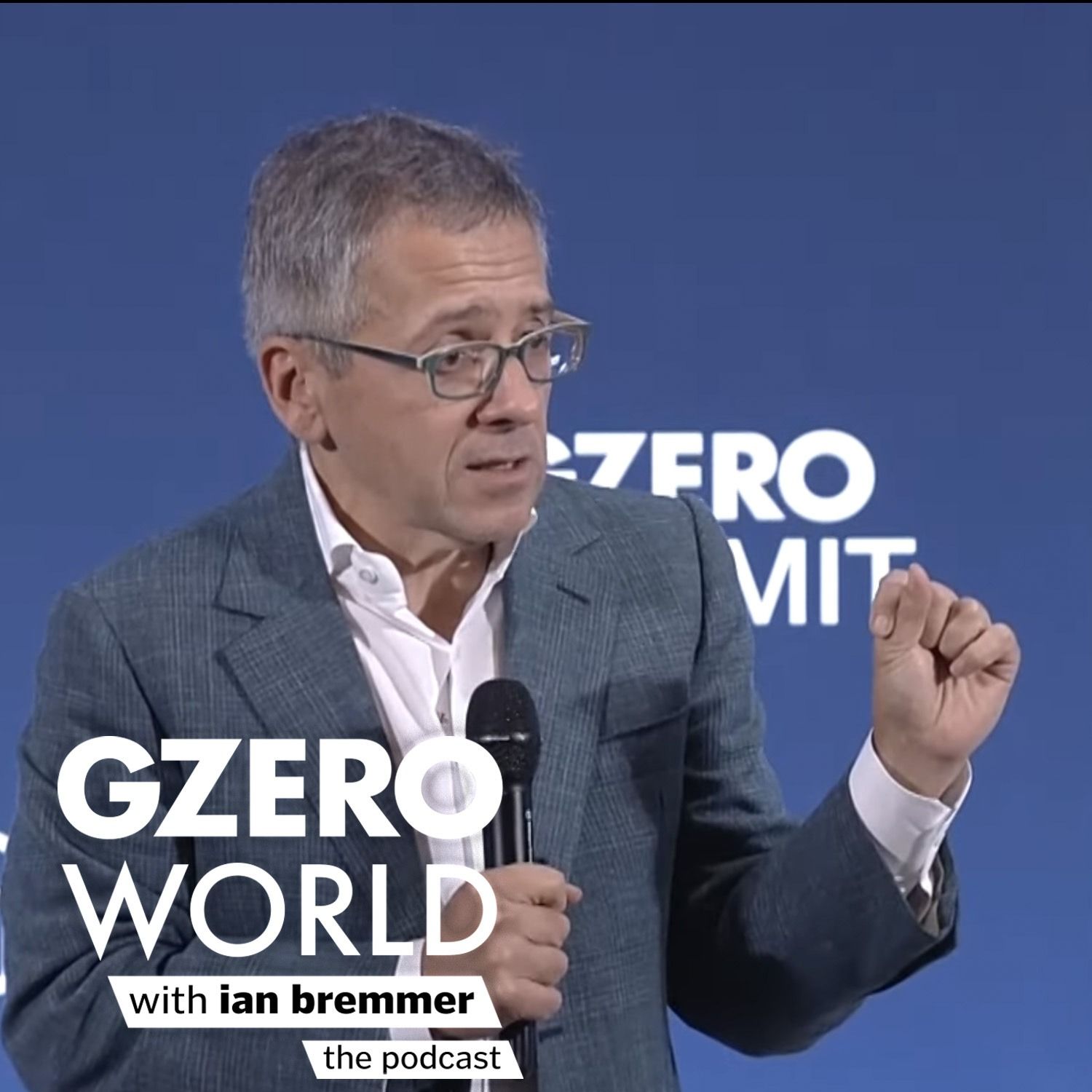
GZERO World with Ian Bremmer
The State of the World in 2025
00:40:42
Ian Bremmer shares his State of the World address from Tokyo, on how America’s retreat from leadership is reshaping alliances and leaving the world more unstable.
Loading summary
Transcript6 lines
- [00:03]
A
Hello, and welcome to the Gzero World Podcast. This is normally where you'll find extended versions of my interviews from the public television show, but today I'm bringing you something a little different. I've just returned from Tokyo, Japan, where I delivered my annual State of the World address to an audience of diplomats, business leaders and opinion makers from around the world. Each year, this speech is a chance to take stock of where things stand geopolitically. And today, the picture is more uncertain than ever. We're not just facing new conflicts and crises. We're facing a deeper transformation of the global order, driven most significantly by the world's most powerful country stepping back. The United States isn't losing influence because of weakness. It's walking away by choice. That decision is reshaping alliances, it's weakening global institutions, and it's leaving many of America's closest partners searching for a plan B. In the absence of global leadership, the Gzero world becomes more chaotic, more transactional, and less stable. So this speech is my attempt to make sense of what that means for the year ahead and the road beyond. Let's get to it.
- [01:29]
B
The Gzero World Podcast is brought to you by our lead sponsor, prologis. Prologis helps businesses across the globe scale their supply chains with an expansive portfolio of logistics, real estate, and the only end to end solutions platform addressing the critical initiatives of global logistics today. Learn more@prologis.com.
- [01:56]
A
Thank you very much. A packed house today, a lot of friends in the audience, and a truly historic day to be hosting a G0 summit here in Tokyo. With the new government coming in, there's plenty to talk about. And yes, the reality of a G0 world that Japan is now not preparing for, but is in the middle of. For 20 years now, 20 years, we have been warned about China's rise, we've been warned about America's decline, and we've been warned about the inevitable collision between the two superpowers. And I want to say in front of you today, that is absolutely not what's happening. China's influence does continue to expand, that's true. And America no longer commands the global stage the way it did at the end of the Cold War. That's also true. But the bigger story of our G zero world is that the United States, still, today the world's most powerful nation, has chosen to walk away from the international system that the United States built and led for three quarters of a century. Not because it's weak, not because it has to, because it wants to. There is no historic precedent for this. It's never happened before. And today I want to talk with all of you about what that choice means, about how America got here, about how others are responding and what comes next. Since the end of World War II, America's elected leaders, presidents and legislators have kept a commitment to U.S. leadership in a troubled world. And in service of that goal, they have bolstered allies to make them stronger, more competitive, and more secure. Japan, coming out of World War II, experienced this as no other. But American willingness to lead is now buckling under a politics of grievance that has taken hold inside the United States. Voters increasingly feel that US Institutions and many of the nation's elected leaders no longer represent them. And as a result, the United States is no longer as committed to international rule of law, to global institutions, or to American allies. Now, this is partly the result of deep political conflict inside the United States. Trump himself is a symptom and a principal beneficiary of this conflict, not the cause. He is also, to be sure, an accelerant. He's making it faster. And much attention has been paid to the Trump administration's reluctance to commit to its allies defense, and rightly so. That also is in part a response to the painful reality, and we need to admit this, that in recent decades, America's allies have brought less to the table than they used to. The European Union, the United Kingdom, Canada, and, yes, Japan are lagging in productivity. They're lagging in investment. They've underspent on their own defense. They're producing fewer genuine technological breakthroughs. And this makes their security and their prosperity more dependent on the United States precisely at the moment than Americans want their government to do. Less, not more. Let's all admit that as table stakes right now. Winston Churchill once said, you can count on the Americans to always do the right thing after they have exhausted all other available options. Now, the United States has always been unpredictable. Elections, trade deals, even war and peace. But the United States has rarely been a unreliable, and Winston Churchill knew that. But today, most leaders that I know outside the United States, including right here in Japan, both in government and in business, see the United States as both unpredictable and unreliable. Governments sign trade deals, and Washington unilaterally changes the terms. The US Suspends intelligence sharing, cuts foreign aid, intervenes in the domestic politics of friendly democracies, threatens the territorial integrity of allies like Canada and Denmark, even if the threats come with a smile and a wink. At the global level, the United States has backed away from countless institutional commitments. A decade ago, Barack Obama forged an Iranian nuclear deal, which Donald Trump later renounced. In 2016, presidential candidate Hillary Clinton abandoned Democratic Party support for the Trans Pacific Partnership, despite years of diplomatic effort when she was Obama's top diplomat. President Obama brought the US into the Paris Climate Accord. Trump reversed that decision. President Joe Biden then reaffirmed U.S. climate commitments, and then Trump renounced them all over again. Washington has washed its hands of the World Health Organization and UNESCO. I do not have time to go through the full list. You all can come up and talk to me after. Unreliability does not imply that there is an absence of American leadership. The Trump administration can claim genuine foreign policy victories. The ceasefire between Israel and Hamas, for example, still tenuous, but shows that Washington can provide leadership for the benefit of other countries and other people. And I expect that Trump is going to stay focused on trying to keep that deal together. But what is the president's strategy for ending the war in Ukraine or forgetting a trade deal with China? And those questions are hard to answer. Not because Trump doesn't have ideas, but because his tactical approaches often contradict one another and they shift in real time. And because Trump frequently doesn't follow through on his threats when he believes he lacks leverage to get what he wants. American unreliability has become the central driver of geopolitical uncertainty and instability in today's gzero world. Now, there is a silver lining in this dark cloud, and it's an important one. I just came back from Beijing this last week and the United States and China continues to lurch from mini crisis to mini crisis on trade and export controls on but the big picture is that they are moving towards a more stable place. And this has happened because Beijing has forced Trump to climb down from threats of a full trade war by using its own dominance of the global market and supply chain for critical minerals and rare earths. They've also used a healthy dose of Chinese strategic patients, and they've persuaded Trump that China has real bargaining power. In response, President Trump has made clear to trade hawks in his own administration that until Washington has developed a hedging strategy for these all important minerals, which will take longer than Trump imagines, that the Americans should try to avoid direct conflict with China. As a result, earlier this year, Washington approved an easing in export controls on certain semiconductor chips in exchange for a Chinese easing of new critical minerals licensing agreements. Don't underestimate the importance of that. Until recently, this move was an absolute no go area for both President Trump and President Biden before him. Now you've seen the headlines in recent days. The United States and China are at it again, drawing battle lines ahead of an expected Trump Xi three hour meeting at the upcoming APEC summit in South Korea. But Xi's willingness to meet Trump at the end of the month and then in China next year without a clear path to a deal in place is a shift in the way Beijing thinks about dealing with the Americans. And it says that China sees that Trump is a man that they want to do business with. The bargaining process will stay contentious, but both leaders want a deal. And I think a deal will come. But beyond stabilizing U.S. china relations, U.S. unreliability is deepening the fears of other governments around the world. At the end of July, the White House announced tariffs on over 90 countries accused of cheating the United States on trade. New duties on most of these states went into effect in early August, but it's the way that Trump went about announcing these penalties that caught other governments and to be fair, American lawmakers off guard. The implementation of duties trade duties in is traditionally a power reserved for Congress. President Trump used a 50 year old economic emergency law that doesn't explicitly even mention the word tariff to claim this right for himself, daring his critics to stop him in court. No previous American president has ever used this tactic. It's clearly not the intention of the law to demonstrate the arbitrary nature of decision making on trade. Decisions with economic and diplomatic implications all over the world. Look at what the US President did on India. It's a country that Trump, like every US President, has courted as a counterweight to China. Then in August, Trump slapped 25% tariffs on him. A few weeks later, he doubled them. Why? Because Prime Minister Modi wouldn't give Trump credit for mediating a ceasefire with Pakistan. For now, the White House has struck agreements with Japan, the eu, the uk, the Philippines, Indonesia, Vietnam. Though in this last case, Trump changed the terms of the agreement with Hanoi after the officials had already signed it. Treasury Secretary Scott Bessen said last week that US And South Korea are in the final stages of negotiations on their deal. But high tariffs stay in place. We are at the highest we have seen from the United states since the 1930s. They cover a range of economic sectors and products that the Trump administration has defined as essential for US national security. You've seen them. Steel, aluminum, semiconductors, aircraft, pharmaceuticals. Oh, and don't let me forget upholstered furniture, cabinets, bathroom vanities. Because nothing says national security vulnerability like an insufficiently domestic supply of bathroom cabinetry. And lest I forget, President Trump is using tariffs and other tools of economic leverage to directly interfere in the domestic politics of friendly democracies. He pledged a $20 billion bailout for Argentina's struggling economy, but only if voters reward President Milei's party in this Sunday's legislative elections. He slapped 50% tariffs on Brazil, which is a country that the United States runs a trade surplus with, to punish the Brazilian Supreme Court for prosecuting and convicting former president and Trump's friend Jair Bolsonaro over his role in a coup attempt. Never mind that Brazil's President Lula has zero control over the Supreme Court's rulings or even over Brazil's tariff rates, which require consensus from Mercosur. Trump does not care. Brazil's election is less than a year away and US Influence might backfire just like it did in Canada earlier this year, benefiting Lula. But either way, Brazil is going to hedge against American unreliability by expanding and deepening its ties with China, with Europe and elsewhere. In all these ways, the American President is de globalizing the world's still most powerful economy and with it the global economy. Now, if only that were the largest dilemma that the United States now poses for itself and the rest of the world. I could stop right now, but we haven't talked about politics yet. The unreliability problem is now compounded by a political revolution underway in the United States. I'm a political scientist and I would never use the word revolution lightly. It implies a fundamental change in a country's governance, an attempt to overthrow what exists and replace it with something new. Now, those motives can be some combination of ideological difference, of ethnic and tribal identities, maybe access to wealth. But a true revolution always believes on the ability and willingness of powerful actors in a system to seize an opportunity created by a belief across society that the existing system is broken and therefore illegitimate. And in this sense, revolutions are made. They're not born. Now, in my lifetime we have seen two state revolutions with global impact. The first was Mikhail Gorbachev's socialist revolution. Soviet Union was long losing ground in the Cold War. They had an out of touch party elite and a sclerotic economic system. They struggled to sustain the state and to fund an arms race that Moscow was destined to lose. And to reverse that, Gorbachev unleashed radical internal reforms. Political openness to encourage opposing political ideas, economic restructuring to inject competitiveness of the free market into the centrally planned economy, and self accounting to devolve political power from Moscow into the Soviet republics. They failed. These reforms undermined the foundations of the Soviet system. They let citizens and oligarchs and nationalists question the regime's legitimacy and and generate internal opposition, widespread social dissent. The fall of the Berlin Wall in 1989 and the Eastern bloc accelerated that. And then a nationalities revolution forced Soviet disintegration. The Gorbachev revolution failed and it took the Soviet Union with it. The second revolution was in China, authored by Deng Xiaoping in the late 1970s. The Chinese Communist Party leader responded to China's underproductive, inefficient and stagnant socialist economy by transforming it from central planning to state capitalism. Open to private enterprise, open to foreign investment, open to trade. Western governments embraced these reforms and that led to China's admission to the World trade organization in 2001. The events in Tiananmen Square in 1989, the collapse of the Soviet Union, all persuaded Chinese leaders that political reform was too dangerous. The party's monopoly on power was non negotiable and it remains so to this day. But the economic revolution succeeded. China lifted hundreds of millions out of poverty. They sustained 10% average growth for nearly two generations. And they became a middle income economy of 1.4 billion, leading the world in many cutting edge technologies today. And now we turn to Washington. Is it right to call what's happening inside the United States a political revolution? It's early to say, but increasingly I believe the answer is yes. The President of the United States says the greatest threat to his country is posed not by Beijing or Moscow, not by terrorists. The true enemies, he warns, are members of the opposite political party, their supporters, their fundraisers, and even their voters. President Trump believes his return to power allows, even demands, the end of political checks and balances on his executive authority. There's not much economic revolution here. We talked about the tariffs already, it's true. And yes, he's trying to undermine the Fed's independence. And he has dabbled at the margins in state capitalism. Golden shares in US Steel, you've all seen that. A 10% stake in Intel, a 15% cut of Nvidia and AMD chip sales. But these are ad hoc moves. They are not doctrine. Trump picks winners and losers to demonstrate power to reward loyalty. But there's no structural transformation of how markets operate in the US or how the private sector engages with and often captures the regulatory system. There's no strategic restructuring of capital. In fact, President Trump abandoned one of his signature promises from 2016. Drain the swamp. He's not talking about that. And corruption and self dealing are not economic revolution. They're just business as usual in America's. Increasingly broken capitalist system. They're just more permitted now. But a political revolution is another matter.
- [21:27]
B
You're listening to the Gzero World with Ian Bremmer podcast, your weekly geopolitical deep dive into the world's biggest news stories, featuring in depth conversations with global leaders and newsmakers. To get more of GZero's insights on global politics every morning, sign up for our free newsletter gzero daily@gzeromedia.com.
- [21:55]
A
President Trump is consolidating executive power by pushing the boundaries of the law. He's usurping powers traditionally left to Congress, the courts and the states. He has tried to undermine his political opposition to ensure they no longer represent a challenge to him and and his allies. Now, in part, that's Donald Trump's transactional approach to power, but it's also political retribution. It is a form of revenge on those that President Trump believes did and tried to do the same to him. Trump has accused the Biden administration of weaponizing the Department of Justice to imprison him, of promoting a cancel culture approach to right wing dissent, including by deplatforming President Trump himself from social media after the January 6th insurrection in the Capitol. President Trump says that the left in America has demonized Trump and his allies as fascists, which they also did with 7 million people demonstrating in the no Kings rallies around across the country this weekend, the largest social dissent that the US has seen since 1969 in Vietnam. And he believes that promotes political violence against him. He can point to two attempts to assassinate him during last year's election campaign, one that missed by this much. Every person in this room would be affected by that for every day of their lives. If that happened to you, if that happened to me. He's got the recent murder of conservative activist Charlie Kirk as well helping him make that point. Now the president's choices focusing on retribution have wide ranging and lasting implications. Inside the United States, the President has taken and won total loyalty of the Republican Party and the reliable and and consistent support of Republican lawmakers for legislative and executive agendas. To undo checks and balances on the presidency, President Trump has begun a sweeping purge of America's professional bureaucracy, which he and his supporters have labeled the administrative state and replaced career civil servants with political appointees personally loyal to the president. He has weaponized the power ministries that he says were weaponized against him the FBI, the Justice Department, the Internal Revenue Service, the IRS and many other regulatory agencies against his domestic political adversaries. He secured executive impunity from the rulings of an independent but no longer co equal judiciary. And in foreign policy, the United States remains committed to to existing norms, treaties and agreements only insofar as they serve the interests of President Trump and his political allies. In short, President Trump is replacing rule of law with rule of the jungle, where the powerful, the strong, do what they will and the weak suffer what they must. Unlike the Gorbachev and Deng revolutions, Trump's revolution follows no grand strategic plan. Instead, it's a relentless pressure campaign on every political front. It's meant to test the limits of what can be done. It's a commitment to act opportunistically as the crises that these policies create open new possibilities to consolidate more power. This plan was launched by targeting those of Trump's opponents who who are most vulnerable and least organized, like undocumented immigrants, green card holders, transgender people, elite universities. And the Trump administration has since moved into the broader political categories of funders, supporters and enablers of his political opponents. All of this undertaken with the intention of normalizing behaviors that have long been politically taboo. Will political revolution succeed? How much more can President Trump accomplish before next year's midterm elections or by election day on 2028? These are the most essential political questions to be answered in the world today. Partially, it's a matter of degree. The United States already has a structural bias favoring Republicans to because of the electoral college system by which presidents are elected. A candidate, as you know, can win the popular vote but lose the presidency thanks to demographics and distribution of electors, which gives you like a roughly 2% advantage to Republican candidates. If you add gerrymandering, the redistricting of districts in Congress, both parties rigging district maps, elections become even less representative, less competitive, less legitimate. More concerning is the possibility of President Trump deploying the National Guard in Democratic cities under the guise of a declared national emergency to suppress voter turnout. Federal probes that are starting into Democratic fundraising and organizations add to these pressures, making these tactics increasingly plausible. And remember, the election is still more than a year away. I am not suggesting that Trump runs for a third term or suspends elections. The Supreme Court would block both of those moves. But uncompetitive elections? Elections that look more like a single party system than a competitive representative democracy? That is becoming increasingly plausible. The broader checks on presidential power are now in question. Trump's grip on the Republican Party and the Democratic Party weakness and division means that legislative functions now independently, much less so from the executive. Even if Democrats retake majority control of the House of Representatives and flipping the Senate looks Very unlikely. No matter what, they can impeach Trump. They can conduct oversight, they can appear partisan, but with no enforcement power, since the Department of Justice's cooperation with any investigation is is no longer plausible. America's judiciary is still independent, but its power pales compared to the executive. The Supreme Court, aware that Trump could refuse to accept decisions he doesn't like, is limiting the scope of its rulings to preserve its own legitimacy. Lower courts aren't as restrained, but their decisions can and often are overturned. And that gives Trump more leeway to to consolidate authority. The media, constrained by profit driven corporate owners, faces pressure from above to avoid antagonizing the White House. Social media is increasingly controlled by Trump's political allies. Even more when TikTok becomes sold to the US and in the case of Truth Social, Trump owns it himself. There are still US institutions that can check the President's power. The military stands for professionalism. Its culture continues to prioritize service to the country over loyalty to any individual. The Pentagon's purges of some high level military officers have made headlines in the US but not like China's of the last week, and they don't undermine the military's core operational integrity. Shifts in political power towards states and cities also offer a buffer. US Governors and mayors are largely technocratic. They govern independently of Washington, and Trump's attempts to weaken democratic national powers do not threaten state and city level governance. Corporate and financial leadership looks weak. They're uncomfortable with political upheaval. They want to avoid political debate while protecting their interests and their shareholders. Most are focusing on regulatory influence over any engagement that could generate political headlines. And then there are the American people themselves. You've seen the 7 million Americans that turned out in thousands of no king protests all over the country this weekend. But remember, Trump was freely and fairly elected, in large part because he personally embodied the political and cultural disruption that voters wanted. Most American voters who said they cared about democracy in 2024 voted for, not against Trump because they were convinced that the US Political system was already broken and that only President Trump would create the disruption that they wanted. In short, standing in front of you today, the fate of Trump's political revolution remains uncertain. A constitutional crisis before the next elections now looks likely. Possible outcomes of that crisis range from a break from Trump within the Republican Party and the conservative movement towards a sustained political shift towards single party rule in the United States. Nor can we rule out enormous political chaos, realignment and violence that the United States has seen historically, certainly in the decades after the Civil War. What about the longer term US outlook. And here the answer is more complicated because historically the structural advantages of the United States compared to other advanced industrial democracies are based on commitments to a few fundamentals that we should remember. All here today a better post war infrastructure base on which to build, including public and private institutions, strong demographics supported by inflows of hard working immigrants, greater public tolerance of an unequal distribution of society's economic gains and greater tolerance of an ability to engage in deficit spending. All four of these fundamental advantages for the United States are now eroding. There are certainly caveats. The US remains the world's most powerful country and there's a lot of damage that can be done before America finds itself in structural decline, which it's not in now. Even though America is seen as unreliable trade and security partners by its allies. And also the accelerating development of artificial intelligence, first time I've mentioned it, is changing the game. And the US is not the only game in town, but it's one of two, the other one being China. And if you have to make a choice between the US and China on the basis of unreliability, on the basis of lack of rule of law, on the basis of lack of an independent judiciary, the US is a much better bet than China. But there is one prediction that I can offer today with the highest confidence and that is that the United States is not going back to the political culture that held sway a decade ago before Donald Trump descended the Trump Tower escalator to take America's center stage. So to close, how should other countries like Japan respond when you're dealing with a leader of the world's most powerful country who ignores council and acts on impulse, most governments are wise to avoid making Trump unfriendly headlines. This is the logic that led Canada to surrender on its plan to impose a digital services tax earlier in the year. And it's why Japan was wise to make unilateral concessions on on automotive tariffs to safeguard their national interests. If you can avoid a fight, other governments should avoid it by whatever means necessary. Let the spotlight of Trump's anger fall on Brazil or anybody else, just not you. Many US allies have moved to proactively limit damage from any future fight with the White House. The uk, the European Union, Southeast Asian countries have offered non reciprocal trade deals. Other countries have thrown lots of money at the US particularly Saudi Arabia, the uae, some countries with like minded governments like Argentina and El Salvador. Now from governments that have more bargaining leverage like China and India, we've seen that standing up for yourself and a willingness to absorb punches can create needed space. By the way, Putin has benefited from that approach with Trump as well. But this strategy is not going to work for everyone. For Japan, the need to stay on a most positive track with Washington remains a fact of life. All countries though, whatever your current relationship with the White House, have to invest in building your own long term capacity and reinforcing your own stability. You just heard this from Governor Koike. You have to become much more economically dynamic and competitive for the future. That is China's current approach. Beijing has also doubled down on its support for existing international institutions, in part because it calculates that if the United States steps back from these institutions, China can have much more control over them. What's Japan doing to respond to that? In short, when faced with the United States that's become so unreliable a player on the global stage, one that can't be counted on to safeguard allies who have under invested in their own security and competitiveness. The right strategy is defense first, hedge second. America's traditional allies must regain their competitive position. That demands a focus on growth, robust industrial policy, streamlined regulatory and bureaucratic authorities, and expansive investment in new technologies. Allies must extract and invest in entrepreneurship. You have to assert much more diplomatic leadership internationally and accept responsibilities in building multilateral architecture. Models already exist. We see Mario Draghi's crucial competitiveness report for the European Union. There's Mark Carney's thoughtfully crafted Canada's strong plan. And Japan's new Prime minister will need to make a mark at least as ambitious as that. Most of us in this room are probably skeptical. That means it's not enough. The requirement is urgent. The near term politics of making these transformations is daunting. The EU is far from a state and Europe needs consensus rulemaking. They get pushback from weak governments makes it an enormous challenge. There's opposition from the fast rising Reform Party in Britain, provincial governments in Canada, and this government coming in in Japan. A coalition itself is facing a more multiparty UN Japanese system. It's going to be hard, but once all of these economic, political, security and diplomatic investments are made, America's unreliability in the years well beyond Trump will matter less. In short, the defense and hedging strategies are already well underway. And they're likely to succeed in varying degrees in various places over time, even as I am for now at least skeptical about a short term turnaround for competitiveness. So what does all this mean for our future? We're now living in a post American order and no one is willing or able to fill the vacuum. China has its own problems and is not prepared to bite off more than it can chew. Very cautious. All of this means a deeper G0 world. More conflict, more impunity, causing more damage that lasts for longer. This geopolitical trajectory is not sustainable. During the Cold War, it took the Cuban Missile Crisis to convince leaders that armed confrontation would be catastrophic and that new communication channels and agreements were essential. Now we don't know what form the crisis that we need to build. A new post Gzero order will take this time, but we know that crisis is coming. And until then, all of us, governments, businesses, individuals, have to brace for growing turbulence because the old rules don't apply anymore and the new rules haven't been written yet. The next few years are going to be painful, but the good news is that history isn't deterministic. Our trajectories can shift. And they can shift because people keep the possibility of something better alive long enough for an opportunity to appear. We need a lot more empathy, more leadership. We need more cooperation and trust, not just from world leaders, because too many refuse to see the danger or they hope to profit from it. I'm actually talking about us, the people in this room. We can't wait for politicians to act, everyone talking their own book. We can't rely on markets and everyone selling a product. We can't count on Washington to lead, we or Beijing to step up, or multilateral institutions to fill the gap. We have to invent new communities that are grounded in truth, not spin, that are bolstered by action, not just talk and cooperation, not division. That's hard. As I stand up here and I address you today, I understand that. But there's no secret lever to pull. There's no hidden strategy that makes this easier. I just know that we don't have a choice. And for that I thank you. Appreciate all of you being here today and congrats to us. Cheers. That's it for today's edition of the Gzero World Podcast. Do you like what you heard? Of course you do. Why not make it official? Why don't you rate and review GZero World? 5 stars only 5 stars. Otherwise, don't do it on Apple, Spotify, or wherever you get your podcasts. Tell your friends.
- [41:26]
B
The Gzero World Podcast is brought to you by our lead sponsor, prologis. Prologis helps businesses across the globe scale their supply chains with an expansive portfolio of logistics, real estate, and the only end to end solutions platform addressing the critical initiatives of global logistics today. Learn more at prologis. Com.