← GZERO World with Ian Bremmer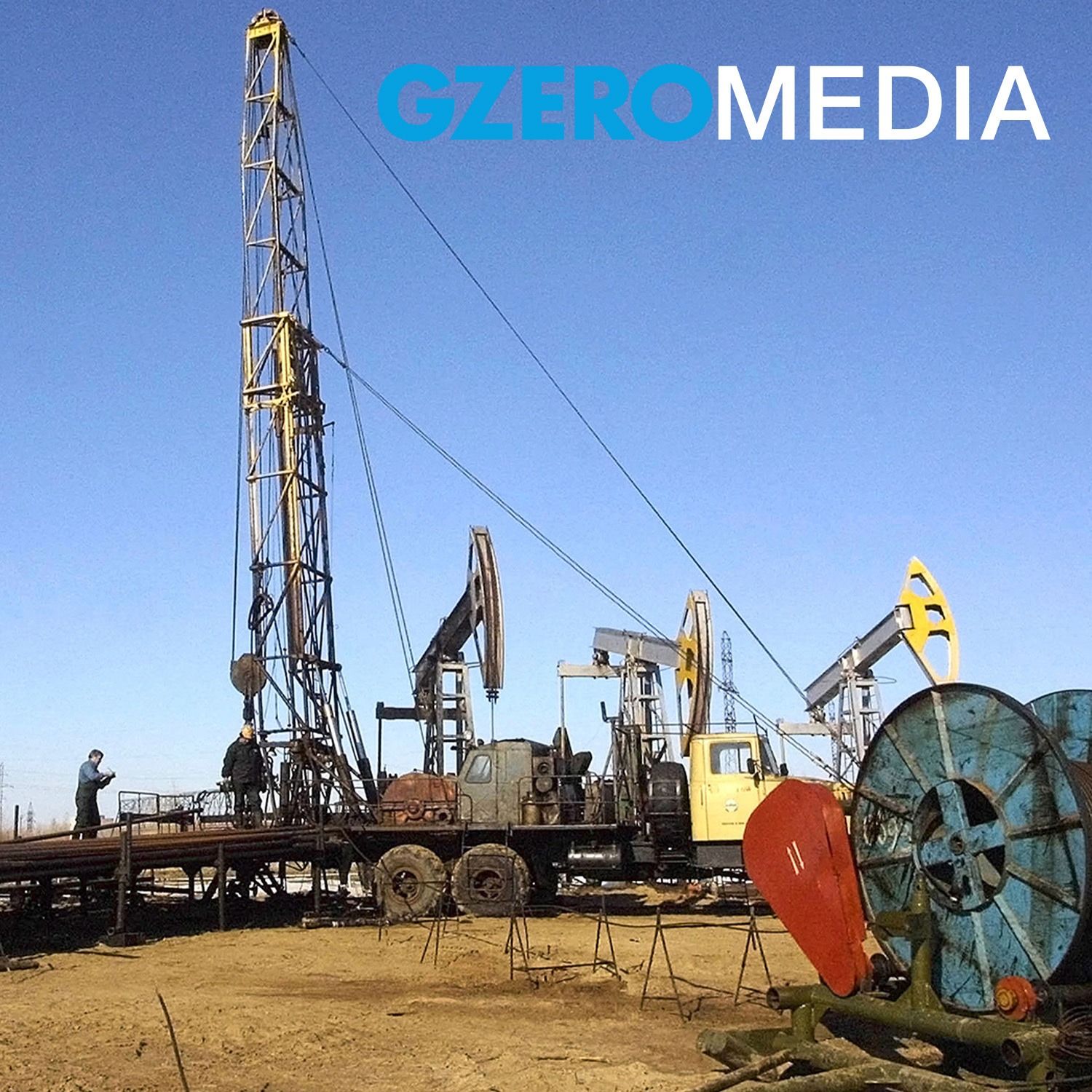
GZERO World with Ian Bremmer
Trump hits oil states
00:21:46
US President Donald Trump has been piling the pressure on Russia and Venezuela in recent weeks. He placed sanctions on Russia’s two largest oil firms and bolstered the country’s military presence around Venezuela – while continuing to bomb ships coming off Venezuela’s shores. But what exactly are Trump’s goals? And can he achieve them? And how are Russia and Venezuela, two of the largest oil producers in the world, responding? GZERO's Zac Weisz and Riley Callanan discuss.
Loading summary
Transcript112 lines
- [00:00]
A
Hi, Riley.
- [00:01]
B
Hi, Zach. How are you today?
- [00:03]
A
I'm very well. How are you?
- [00:04]
B
I'm ready to talk some politics.
- [00:06]
A
Great. We're just in the right place. What should we talk about?
- [00:10]
B
I think I'd love to start by hearing about what you wrote about this week.
- [00:13]
A
Sure. So I wrote about Russia this week. I've heard of it, yes. It's a big country. A very big country.
- [00:20]
B
Not as big as it once was, though.
- [00:22]
A
No, the biggest. Lie Landmass, I should clarify. Not the biggest by population. And no, it wasn't. It's not quite as big as it once was. But the US has put new sanctions on Russia. Exactly. Yes. New sanctions, New sanctions. Now, there's been a lot of sanctions on Russia over the last few years, ever since it began its full scale invasion of Ukraine at the SOD 2022.
- [00:43]
B
So why are these different?
- [00:45]
A
Well, these are the two largest Russian oil firms, Rosneft and Lukoil, that have been sanctioned. And that's significant because the Biden administration wasn't even willing to go this far. They sanctioned the third and fourth biggest Russian oil firms, not the top two. And now the Trump administration is doing just that.
- [01:05]
B
Why were they worried about, why not go for the big ones? Why were they hesitant?
- [01:09]
A
Great question.
- [01:10]
B
These.
- [01:10]
A
They were very concerned that by putting these sanctions on it would increase the price of oil significantly and that would increase inflation as well, which the Biden administration had a massive problem with during that, during its time in office. So, yeah, they didn't want to put those sanctions on. Now. The markets were not as kind of upset or scared, should I say, this time around, they maybe saw it coming to some degree. And also, I'm not exactly sure. There are a few other reasons why the oil prices haven't jumped as yet after these new sanctions come in. Maybe because the Gulf states have been producing more and more oil as well. They're digging up more oil. So prices are also generally lower. So, yeah, not, not, not as much of an issue, not as much backlash in terms of price this time.
- [01:58]
B
Okay. But is it going to be felt in Russia at all?
- [02:01]
A
So that's the big question, generally. Generally speaking, experts told me that we can't expect Moscow or Vladimir Putin to change its approach to the war in Ukraine in the immediate future. However, this could have significant effects for Moscow, particularly with its government revenues. Oil and gas responsible for 30 to 50% of government revenue. It obviously fluctuates based off of oil prices, gas prices and how much they're producing and selling and so on.
- [02:33]
B
But Their economy is heavily dependent on.
- [02:36]
A
Heavily dependent on this. And the two biggest buyers of Russian crude oil right now are China and India. Now, China is a big ally. You wouldn't necessarily expect them, them to stop buying Russian oil or to comply with U.S. sanctions. Yeah, and India, meanwhile, has a sort of policy of non alignment. So it doesn't. It likes to be kind of friends with everyone, but no one's best friend. So it likes to maintain solid relationships with everyone.
- [03:00]
B
But these sanctions are probably going to hurt their economies or affect them as well.
- [03:05]
A
If you're an Indian oil refiner, for example, and you buy Russian oil and you continue to buy Russian oil from these top two firms, now it's possible, if the US Enforces it, that you'll lose access to international payment systems. And that could be really, really bad for business. That could really hurt these refineries businesses. And this isn't just India, by the way. This is for Chinese refiners too as well, who might be looking at this and saying, actually it's better for business for us to buy non Russian oil and to look elsewhere. So this could have a massive impact for Moscow.
- [03:36]
B
Was that any part of the Trump administration's hesitancy that they didn't want to hurt, say, an ally like India or provoke China by hurting their economies? And for that reason, is there anything, any reason to think that these might not be enforced?
- [03:49]
A
So that's a great question. Well, first of all, the Trump administration has been pushing India to stop buying Russian oil for some time, at least notionally. Some people say that they're only doing it because they're trying to negotiate better terms for a trade deal with India. But that's an aside. They have been publicly at least pressuring India to stop buying Russian oil. And, and this step basically pushes the refiners themselves rather than the governments necessarily, to just stop, to stop buying from Russia. As for China, that's a tricky one. China is a big ally of Russia. China doesn't want to. Well, the Chinese government specifically doesn't want to force its refineries to stop buying Russian oil. They're not going to do that. That's according to experts who I spoke to. But what they might do, what just might happen anyway, as I said, is these refineries will just say, well, it's better for business for us to buy elsewhere and China will thus stop buying Russian oil. Now you might say, well, some of the oil might be going elsewhere. Over 80% of Russian crude exports go to either India or China. These are the two biggest Buyers of Russian oil by far. So if they lose, if Russia loses those markets, the ramifications are huge.
- [04:58]
B
Wow. And if they do lose those markets, do you think there's a chance it brings Putin to the negotiating table, maybe has effects on the Ukraine war?
- [05:07]
A
Will that happen? Well, as I said in the immediate term, doesn't look like Putin's going to change course. The other thing to note here is Putin has a very high threshold for pain. He's had severe losses on the battlefield in terms of number of soldiers that have been killed. His military forces are moving very, very slowly when it comes to the front. And the economy, although it's been fairly resilient, has had issues, especially with inflation. So. And yet he's continued the warfare, the war efforts, Three and a half years now. It's been going on over three and a half years. So he doesn't seem like he's going to be willing to stop. However, if he's losing such a big chunk of government revenues, then he might be forced in the negotiating table. And that very well could happen if these sanctions are enforced, if these Chinese and Indian firms stop buying Russian oil. And Putin will basically be forced to say, listen, there's only so much that we can take. If the economy is literally crashing, he might have to come to the negotiating table. So it's not going to happen in the near term, but maybe in the medium to long term. According to experts I've spoken to, it very well could happen if these sanctions implemented. So a few caveats there, but it's within the realm of possibility. Yes.
- [06:17]
B
Perks of being a dictator. You can have a high threshold for pain, but can't finance a war effort if your economy is crashing.
- [06:23]
A
Correct. It becomes a little bit tricky. Yes, yes. So from one oil producing nation to another, Venezuela, you've been writing a little bit about it recently.
- [06:32]
B
Yes, good segue. Venezuela, which has the world's largest oil reserves, is facing immense military pressure from the us. Just today, Tuesday, another boat was struck, allegedly carrying narcotics off the coast of Colombia at this time, bringing the death toll up to 57 people now that have been killed. There are One of the US's largest warships is off the coast of Venezuela. The US is conducting joint military drills with Trinidad, which is just seven miles off of Venezuela's shores. So the presence of the US military is encroaching sharply upon Venezuela and the leader, Nicolas Maduro, was getting very nervous.
- [07:20]
A
Okay, let's back up a second because you mentioned the US has been bombing certain ships that are coming out of Venezuela. And they're conducting military drills around Venezuela. Why are they doing this? What's going on?
- [07:33]
B
So the Trump administration is trying to crack down on the drug trade, and they allege that these boats are carrying narcotics and that's why they are being bombed. However, because of the sheer size of the military buildup that. The fact that there's a nuclear submarine that Trump has said that he has allowed for a covert CIA mission to take place within Venezuela's borders, there's reason to believe that this is actually all in the effort of ousting the leader of Venezuela, Nicolas Maduro.
- [08:12]
A
There was a covert mission. Didn't Trump admit that there was a covert mission?
- [08:15]
B
Yes, which makes it kind of not very covert. But that is a, quote, covert CIA mission is currently going on in Venezuela. But you didn't hear it from me. And don't tell anyone because it's covert.
- [08:27]
A
Yes, but Trump did.
- [08:28]
B
But Trump did tell the entire media.
- [08:31]
A
Well, it was. The New York Times report came out and he confirmed it. Yes, yes. Okay, so there's a lot going on. And you're saying that he's considering getting. He might be wanting to get rid of the Venezuelan leader, Nicolas Maduro. And is that actually possible?
- [08:48]
B
It's certainly possible, whether realistic. But is it realistic or is it, or what are the consequences? Are very real and important questions right now. The two most likely avenues, based upon experts I've spoken to, are some sort of COVID mission, hopefully one a little bit more covert than. Than the one that Trump told confirmed to the New York Times could oust Maduro or the presence of the military and the increasing frequency of these ships could lead to the military, which currently backs Maduro, to break away, to crack that they could put enough pressure on the regime that top commanders basically leave Maduro's side. There's currently a $50 million bounty on Maduro's head. So could give some information that leads to Maduro being ousted or killed. That being said, whether that would lead to democracy, because nobody thinks that Maduro is a good guy. He's a dictator. He's made 8 million people have to flee the countries, collapse the economy. But he is backed by the military, which may not give up power so easily. A top general or, you know, might fill that temporary power vacuum. And if the US Isn't prepared to actually usher in democracy into a much a very big country, then they could be breaking a political system and not being willing to buy the consequences, which could be catastrophic.
- [10:24]
A
You've spoken to an opposition leader in Venezuela? Well, I don't know if she is in Venezuela. Maria Karina Machado?
- [10:31]
B
Yes. She is in hiding. I didn't ask her where she was.
- [10:34]
A
Okay, fine. So what, what did she say anything about her plans for, you know, kind of getting back into or not getting. Getting into power or even kind of. Are there any rumors about whether she's talking to the US about maybe how she can get into power? Is that, what's the latest with that?
- [10:56]
B
Yes. I did interview Maria Karina Machado, who was this year's Nobel Peace Prize winner, and she has struck up an alliance with the Trump administration. She told me that she's spoken to Trump about how if democracy was restored to Venezuela and Maduro was ousted, the nearly 8 million Venezuelans that have fled the country could return, which is something the Trump administration would like to see as they are trying to get more and more refugees and immigrants out of the country. So they are aligned in certain areas, and she's good at finding common ground with Trump. But as of what I've seen, there isn't a plan in place to fully oust the military dictatorship, the military power structure, and usher in democracy in its wake.
- [11:44]
A
Yeah. That would mean Miami's population would be significantly diminished. Well, I don't want to say significantly diminished. There would be a lot of people. There are a lot of Venezuelans who are in Miami. Yes, let's put it that way. So if many of them returned. Yes. Yeah. You mentioned Maria Karina Machado is a Nobel Prize Prize winner. I didn't know if you know this, but I am also a Nobel Peace Prize winner.
- [12:06]
B
I did not know that. In fact, I'm finding it hard to believe. What did you win the Nobel Peace Prize?
- [12:13]
A
I'm not the only one that won this. That year it was. The whole European Union won. In 2012.
- [12:19]
B
The entire European Union won. What? Just for not breaking out into war for a couple of decades, which is.
- [12:26]
A
For us, is a great achievement, actually. So.
- [12:29]
B
But you didn't forfeit that, right? When you, your, your country voted to leave the European Union to me, I would take back the Nobel Peace Prize.
- [12:41]
A
I mean, listen, I, you know, sorry.
- [12:42]
B
You don't want our euro. You don't get our peace prizes.
- [12:44]
A
No, no. I was part of the European Union when it was handed to the European Union. And, you know, much like a soccer player who wins a trophy with a team and then leaves that team thereafter, they still get to retain that winner's medal. So I like, fair enough. I like to think I still have that Nobel Prize. I haven't Been physically awarded, I should say.
- [13:06]
B
It's not on your mantle at home.
- [13:08]
A
It sadly isn't. It's not got round to me.
- [13:10]
B
You guys take it in turns.
- [13:12]
A
Yeah, that's. That's a tricky thing. So, yeah, we should move on. Speaking of South America, there's been a lot going on in Argentina. Yes.
- [13:22]
B
Malay had a big week this week.
- [13:23]
A
He had a big week, yes. Any thoughts on his mutton chops?
- [13:27]
B
I think they're exquisite. I think that he's got a nutty professor look and I hope it never changes.
- [13:35]
A
Well, it's certainly not looking that way because he had a great week. I mean, he even won in the Buenos Aires province, which is.
- [13:43]
B
Why is that significant?
- [13:44]
A
Well, the opposition Peronist party, that's kind of their base. That's where they do best. So even in the place where they would normally do best, they couldn't even win there. So Milei is very much on the rise there.
- [13:57]
B
He swept.
- [13:58]
A
He swept. He basically swept. He got. I mean, there were concerns within his own group that a corruption issue and economic stagnation over the recent months would mean that he'd only get like 30 to 35% and he got above 40%, which in Argentina is. Is massive because there's a lot more kind of fissures in terms of. There's many, many different parties, really, is what I'm trying to get at. It's not like the us there's just one or two options.
- [14:24]
B
So, yeah, it was just the midterm elections. Like, why. Why does this matter?
- [14:28]
A
Well, first of all, he had such little representation in Congress that they. The Congress was able to override a presidential veto if enough of the opposition parties got together and voted against him. Now, they can't do that because he's got over a third of the Chamber of Deputies. And it looks like. I mean, the way it's heading, I mean, he could have a majority in Congress conceivably at the next election, but fundamentally, it gives him some leverage. He was able to get some things done in his first year in office. In his second year, he had less leverage as things had moved on and as the economy stagnated a bit. And now this election comes and he does really well. And now it's clear that actually he's more popular than people could have imagined.
- [15:09]
B
Yeah, quite an affirmation of his leadership. And he has. He's been fighting and his mutton chops. Yes, probably mostly because of his mutton chops, if you ask me, but he's been fighting an uphill battle. Like when I remember when he first came into office, everybody doubted that his libertarian economic policies were going to work for Argentina. I mean, there's still some debate over how much he's propping up the peso and what he would do if the US wasn't giving it the support that he wasn't giving him the sport that he is. But I mean, this shows that the voters are still behind him.
- [15:44]
A
Yes. I mean the ones chops. Yeah, and his button chops. The one small hitch is that turnout was fairly low, is like 68%, which might sound high, but actually all Argentinians are obliged to vote. There's a very small fine that they get if they don't vote. But still it was a lot lower than in previous elections. So maybe some of it is. He, I don't want to say got lucky. He benefited from some sort of apathy that some Argentinians had to towards politics right now. But yeah, I mean they clearly gave him a lot of credit for significantly lowering the inflation rate in Argentina, which was a massive issue. He, he did slash that. Even though the economy isn't perfect. It's, it's in, in that specific regard. It's a lot better than it was and he's benefiting from that.
- [16:28]
B
Well, we also are having some elections in this country this week in this very city. In this very city. There was a rally over the weekend for Zoran's campaign and Kathy Hochel came and she was. They basically, they almost chanted her off the stage saying, tax the rich. Tax the rich. Tax the rich. There's plenty of Democrats that feel very alienated from Zoran's campaign. Like even this race has shown that there are deep divisions in a very blue city. But there's also been some really great moments at this race.
- [17:03]
A
What are your favorite moments?
- [17:05]
B
My favorite moment actually came from not a Democrat. All of them came from Curtis Lewis.
- [17:12]
A
Yep. The red beret.
- [17:14]
B
Wearing the red beret.
- [17:15]
A
Loving Curtis Lewis.
- [17:17]
B
Yes. My guardian angel, Curtis Lewis. He. When he said that all parades should be legal, I've never felt more represented by a candidate.
- [17:27]
A
You're just a pro parade person.
- [17:29]
B
I'm so. I've been a single issue voter on parades for so long.
- [17:32]
A
No one's talking about it.
- [17:33]
B
Yeah, yeah, no one's talking about it.
- [17:35]
A
And Courtesy finally brought it up.
- [17:37]
B
And he finally brought it up. He was asked about public transportation and he started talking about how he was shot five times by a yellow cab driver. He's just, he's a true New Yorker.
- [17:47]
A
I thought it Was the like some sort of mafia or Gambinos?
- [17:51]
B
I don't know. He said that was why he doesn't go near yellow cabs anymore. There was a yellow cab involved. Maybe it was the getaway car, I don't know. But the.
- [17:59]
A
He ain't getting any yellow cab.
- [18:01]
B
He's not getting any in the yellow cab. And yeah, he's just a true New Yorker. And while I don't think that he has a chance of winning this race, I do think that we should erect a statue to him. And I'm happy to, you know, to organize that.
- [18:17]
A
I'm also, I'm almost looking at some of the numbers. I mean, Cuomo seems to be like gaining a little bit on Mamdani at the, at the end here, but Mamdani is still the favorite. Yeah, but what's interesting is that Cuomo's numbers at the moment seem to mirror what Republicans have previously got in previous years. So I'm almost wondering if the people voting for Sliwa in this occasion are actually just Democrats who just really enjoy his vibe. I don't know.
- [18:45]
B
Yes, I think they're the people that write in Elmo and the people that like on there or, you know, Kanye west or. And the people that have been a member of my political party for a long time who love parades.
- [18:59]
A
The Pro Parade party.
- [19:00]
B
The Pro Parade party.
- [19:01]
A
Yes, the ppp.
- [19:02]
B
The ppp. Not to be confused with the ccp.
- [19:07]
A
Oh, the ccp. I thought you said the purchasing power.
- [19:09]
B
We have a lot of purchasing power in the ppp. We're kind of like the behind the strings, behind the scenes actors.
- [19:17]
A
Yes.
- [19:17]
B
Yeah.
- [19:18]
A
No, I for one will miss certain aspects of Eric Adams comms efforts.
- [19:24]
B
I do too. I will too.
- [19:25]
A
Yeah. I mean, fundamental, you know, he would love to talk whenever he'd have some sort of delegation from a far away country. He would love to highlight that their capital, that New York was like their version of this. So, you know, if he was meeting with the, you know, Ukrainian delegation, he'd be like, New York is the Kiev of America. And he'd meet with, I don't know, the Burkina Faso delegation. He said New York is the Wagadugu of. Of America.
- [19:52]
B
And he's not wrong.
- [19:53]
A
And on and on. Well, I've not been to Ouagadougou, but I've not been to Kyiv either. So I. Yeah, maybe we should. Maybe we should find out more about.
- [20:02]
B
My question is who will be implemented to be the next rats are? Because the rats are. Did not. Has stepped down and we are currently rats are less in the city.
- [20:13]
A
For all the listeners outside of America. There's a major, major rat problem in New York City and other cities in America and they hire Eric Adams. The outgoing mayor hired a rat czar foot.
- [20:27]
B
He appointed a rat pointed rat's arm.
- [20:29]
A
Paid her quite a lot of money.
- [20:30]
B
Yes, I think. Yeah, yeah. And six figure salary.
- [20:34]
A
Six. Way, way above six figures. Yeah, yeah. Way above $100,000, let's put it that way with six figures still. But she and she's left and we're not sure who's what. Has she done a good job?
- [20:47]
B
Do we know she has done a good job. I went on her tour where she takes you around and teaches you to be a better militiaman against in the war on rats. And she was on. She knew everything about rats and she also had such a reverence for the rats that like you like she really understood her enemy kind of thing. And.
- [21:13]
A
And your enemy all that.
- [21:15]
B
Yes, yes. And I don't know how we're going to do better but she chose to step down and I just, I want to know who. Who it will be in the next administration.
- [21:26]
A
Well stay tuned to find out more. And on that very, very interesting note, Riley, thanks very much for chatting.
- [21:31]
B
Thank you Zach.
- [21:32]
A
And we'll see you next time.
- [21:34]
B
See you next time.
- [21:34]
A
Take care.
- [21:38]
B
He was asked you public transportation. About public transportation. Any.