← GZERO World with Ian Bremmer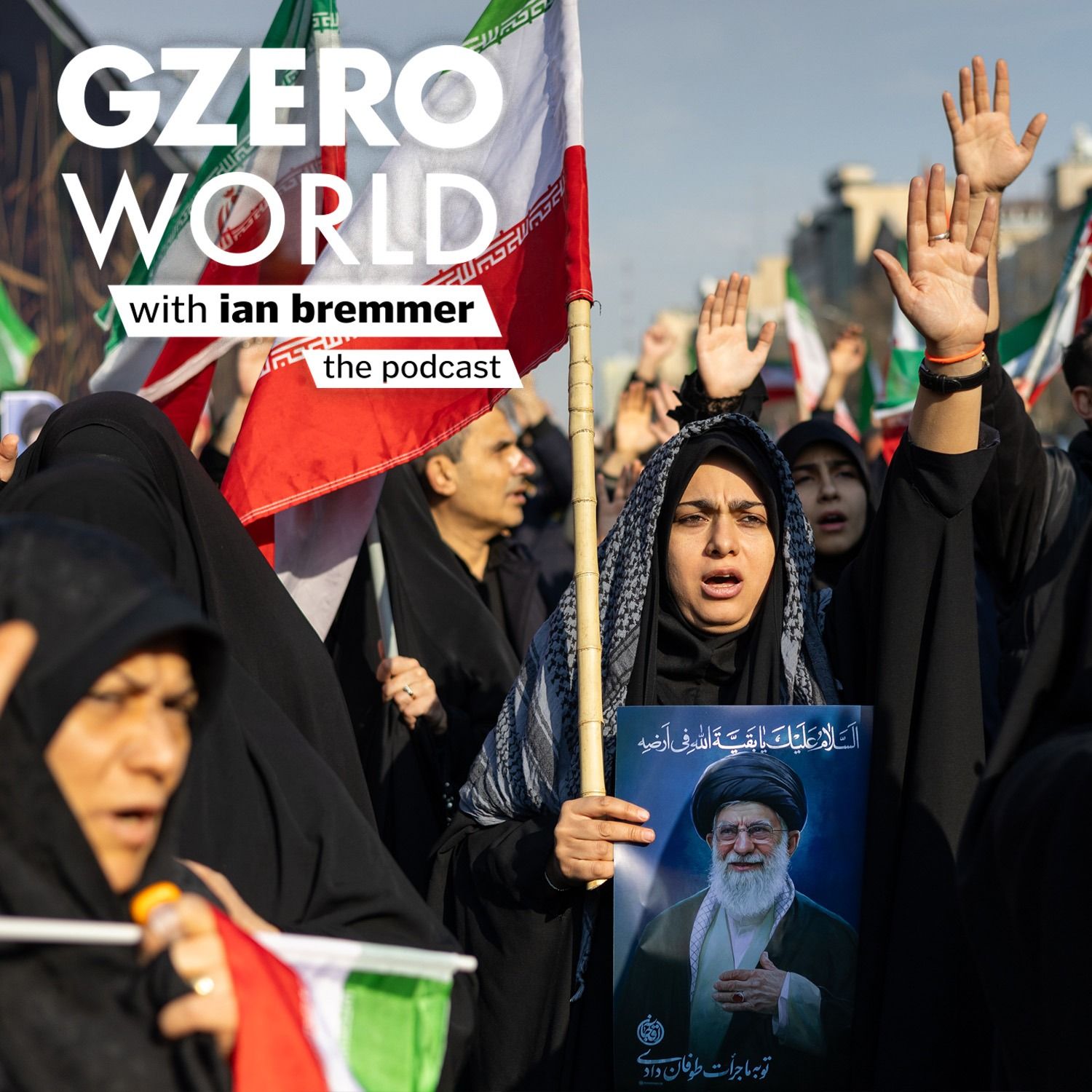
GZERO World with Ian Bremmer
Unpacking Iran’s competing endgames with Brookings Institution’s Thomas Wright
00:35:35
Ian Bremmer sits down with Thomas Wright, Brookings Institution fellow and former Senior Director at the US National Security Council, to unpack the deepening war in Iran and the divergent strategies shaping it.
Loading summary
Transcript99 lines
- [00:03]
A
Hello, and welcome to the Gzero World Podcast. This is where you can find extended versions of my show on public television. I'm Ian Bremmer, and we are just weeks into an Iran war that is quickly widening in scope. President Donald Trump was hoping for a quick and decisive military operation like he had in Venezuela. Instead, a successful first strike that crippled Iran's ability to retaliate and killed its supreme leader has metastasized into a broader regional conflict. Pulling in Gulf states and pushing up oil prices. Reminds me of Secretary of State Colin Powell's warning to President Bush in the run up to the Iraq war. You break it, you own it. Or maybe the reverse. If you can't own it, you break it. Ahead of the strikes on Iran, Operation Epic Fury, Trump offered multiple rationales. Stopping Iran's nuclear program, destroying ballistic missiles, alleged assassination plots, even regime change. President Trump's definitions of victory may not be quite the same as Israel. Prime Minister Benjamin Netanyahu and the Islamic Republic may be down, but it's certainly not out. In fact, senior Iranian clerics appointed Iran's new Supreme Leader, Moshava Khamenei, on Monday, days after Donald Trump called him an unacceptable choice and as Israel threatened to kill the successor to the former supreme leader. So where is all this heading? I just came back from Washington, D.C. where I caught up with Thomas Wright, the Brookings Institution. He served in some of the highest national security posts during the Biden administration. He understands the implications of a cornered Iran better than most. So let's get to it.
- [01:53]
B
The Gzero World podcast is brought to you by our lead sponsor, prologis. Prologis helps businesses across the globe scale their supply chains with an expansive portfolio of logistics, real estate, and the only end to end solutions platform addressing the critical initiatives of global logistics today. Learn more@prologis.com.
- [02:19]
A
Tom Wright, welcome to the show.
- [02:21]
C
Thank you. Thanks for having me.
- [02:22]
A
Gonna start with Iran, of course, we have some different antagonists with some different perspectives in this war. I mean, it's Israel and the United States fighting together, but not necessarily fighting for exactly the same things. What does that mean to you?
- [02:41]
C
So we're early into the war now, and I think it' syou know, there was a very dramatic opening with the killing of the Supreme Leader and dozens of his senior officials. But since then, I think we've seen a divergence between the US And Israeli strategies, and we've also seen a separate Iranian strategy emerge. So the U.S. position, the president's position is he wants a Venezuela model, right? He wants to do a deal with somebody, ideally within the regime, who wants to work with him. He's not particularly concerned if they're democratic or if they're benign domestically.
- [03:15]
A
And you think that's equally true, even though he explicitly said, I'm going to rescue these Iranian people, 30,000 of whom we believe were killed within three days?
- [03:26]
C
Yeah, I think it's. I mean, he has said a number of contradictory things, but this week, when he's done a litany of media interviews, sometimes just answering the phone from journalists who will call him up. Right. He's repeatedly talked about the Venezuela model. And we know from, you know, from Venezuela and from Syria and from other cases that he does sort of look for that, you know, strong figure who will be pragmatic from his point of view and sort of do. The Israeli point of view is very different. They don't want an IRGC dictatorship. They, I think, are going to go full bore for regime change, but they don't want any figure from the regime. I mean, they want to get rid of the regime. And I think they partly believe that if, you know, the regime holds on in some way and does a deal with Trump, that he will lose interest at some point, that they'll be able to rebuild their military over time, you know, that the US May even be a partner in some ways economically of the regime because Trump will see it as a success. But it's pretty clear that the president doesn't really have a theory of the case for an end state beyond this sort of pragmatic deal making. And then we have the Iranians, which we may come onto in a minute. No, go ahead.
- [04:40]
A
Yeah, but I think obviously they're not aligned, but.
- [04:43]
C
Yes, no, no, but, yeah, but their like approach, which the president said surprised him, has been to attack, you know, over 10 countries to fire missiles into the UAE and Saudi Arabia.
- [04:57]
A
Even Oman. Even Oman, which was involved in leading the negotiations.
- [05:02]
C
Yeah, and that I think their sort of theory of victory, I mean, they just want to survive. Right. They want to endure. And they're trying to create so much economic chaos in the region that the Gulf states and maybe the markets will put pressure on the administration, you know, to end the war in the short term because, you know, as, you know, like many of these Gulf states, states, if you look at a country like the uae, their future economic model is sort of premised on the idea that they are safe and stable, that their
- [05:33]
A
airport works, for example, hotels or like, you know.
- [05:36]
C
Yeah, but they have, you know, they're trying to get. They're spending hundreds of billions of dollars to persuade the frontier AI companies to set up some of the most strategically sensitive and necessary frontier data centers, like in their country. And one of those data centers, the Amazon one, was attacked the other day. So what message does that send? So I think the Iranians are sort of counting on because they can sort of win a narrow military fight, they're sort of counting on the enlarging of this war, bringing pressure to bear on the Trump administration.
- [06:11]
A
So, I mean, I understand that logic that does sort of presume that the Iranians are acting in a more cohesive way as opposed to they can't really communicate with their local commanders. This so called mosaic structure where local commanders with missiles are just launching them at whatever targets they can actually hit. And that means nearer by gcc, not hardened because they can get through.
- [06:38]
C
Yeah, no, I think there's definitely some of that because of the compromised nature of the command and control, you know, Israeli and US penetration of their communications. So I think all of that is true. And I'm not trying to make out that it's a super sophisticated strategy, but I think there is a plan there. And their plan has been, I mean, because some people noted initially that attacking other countries just creates a bigger coalition against you. So it seems irrational, but I think there is a logic there to it. And how long the Gulf Arab states can sustain this as they cycle through their air defense, like interceptors and other munitions, I think is an open question. And so I think that's sort of where we are, you know, early into this war is that you have these three strategies and each of them is encountering difficulties. Each of them is sort of not prepared in certain respects. You know, the US obviously is not prepared for the evacuation of US citizens from the Gulf. With many of these countries under attack. Iran obviously, as you said, has no real means of, you know, communicating with itself. They made some very foolish decisions early on, including having a meeting of the Council of Experts to select the new supreme Leader above ground, you know, a few days into the war. And then it was hit with an Israeli missile. So they've all had different setbacks.
- [08:14]
A
If you were advising the president right now, assuming we are where we are, what should the American medium term strategy for the Iran war be? Not a week or two, but six months out. Where should they try to be getting to and for what reason?
- [08:37]
C
So, firstly, my sort of assumption here is that this was an unnecessary war, right? There was no urgent threat or imminent threat that they went to war. The US and Israel because they perceived that Iran was at its weakest point since 1979. And they saw an.
- [08:53]
A
And there's some truth to that.
- [08:53]
C
Yeah, yeah. And I think they saw an opportunity to. To degrade militarily or maybe to topple the regime. So it was by its very nature a war of choice. Right. There was no reason necessarily to do it. And the degradation of Iran's military capability has come at the cost of depleting a lot of U.S. munitions and air defenses. Munitions and air defenses that are necessary for other theaters. So there is a real sort of cost there. It's not just we could eliminate this threat.
- [09:25]
A
So even assuming the war is over today, those costs.
- [09:29]
C
Exactly.
- [09:29]
A
Yeah.
- [09:30]
C
I think the. The other.
- [09:31]
A
You're saying you would not have recommended.
- [09:33]
C
No, absolutely not.
- [09:34]
A
In a way that, say, Venezuela, perhaps you would have.
- [09:37]
C
I think. I mean, let me. I think Venezuela is sort of complicated. I wouldn't have been in favor of that, but I think. Because we can get into that separately. But I think last June strikes, for instance, I think are more defensible. Right. I think if you're on midnight Hammer strike, if you look at what Trump did on Fordeau, I think you can make a case that their pushing back
- [10:01]
A
their nuclear program made some sense and
- [10:03]
C
that the repercussions were limited. And then Iran, the timeline had significantly extended. And so really, we could have arguably accepted a more flawed deal because the timeline had been extended. Right. All the flaws of the JCPOA matter less if actually the clock has been put back.
- [10:25]
A
So given all that, go back to the way I asked the question, which is we are where we are, so we are. So medium term, what are you then recommending?
- [10:32]
C
Yeah, I mean, I think he should try to end it in the near term, and I think he shouldn't let it go on for four weeks or eight weeks or six months. I think the longer it goes on, the greater the risk there is of a fragmentation within Iran and of it turning into a larger Syria. I think that the plan that was in the press to arm the Kurds, I think, is one thing that could further sort of destabilize Iran in some ways. And so I think it's important to avoid that scenario. Getting rid of the regime, getting rid of the supreme Leader, and bringing in a better government, obviously that will be sort of a benign outcome here. That will be a good result, but there's no guarantee that that will happen. And so there is a risk of something worse now.
- [11:20]
A
I mean, Trump, in a sense, might argue in response, the reverse Pottery Barn, if He can't own it. If he can't have regime change, then break it.
- [11:30]
C
Right.
- [11:31]
A
So it's not going to be a unified Iran. It's going to be the Kurds with one piece and, you know, sort of a regional solution. At least then it's a much weaker regime that you're dealing with that you can't stand. You would say to that what?
- [11:44]
C
I would say that that could create a much bigger problem. I mean, it could be sort of a serious civil war on steroids. You know, a country of 93 million people with nuclear materials, with all types of weapons, that has traditionally been a unified country. But if you try to deliberately, to break it and you have geopolitical rivalries, the region getting pulled into it, that's something. And that could be a much bigger headache, certainly a much bigger headache than trying to manage a regime that was already at its weakest point since 1979. I mean, I think this is a key point. It was not a regime that was stronger than it ever had been in the past and was sort of deeply sort of threatening. It was threatening, but it was actually weaker than it had been in the past. And military action was taken last year. And even if it wasn't a full obliteration, it still had a dramatic effect on its nuclear program. So.
- [12:44]
A
And their proxies in the region, like
- [12:45]
C
Hezbollah decapitated, Syria, Assad gone. So we had time. Like, we had time. And you have to sort of, in geopolitics, obviously, you know, manage different risks with differing degree of urgencies, depending on the severity of risk and the imminency. And they are choosing to prioritize one, a regime that was relatively weak, where there was no imminency, and then they're ignoring, you know, completely ignoring, in fact, other threats that are far more significant.
- [13:17]
A
So, but what you are recommending, what you would have to be recommending to Trump would be, sir, that regime that you thought that you were going to be able to work with and come in, stop the war, and you're just going to have to give up on that, is that.
- [13:31]
C
Well, unless they had, I mean, if they had real reason to think that, you know, the Israelis were on board and they were collectively going to do a deal with the regime, someone in the regime, and they were willing or, you know, that there was sort of a popular uprising that stood a good chance of success, you know, not having access to, obviously, any of the internal information. My assumption is, just from the press is that that is not possible, at least in the short term.
- [14:01]
A
Yeah, they Certainly don't feel confident.
- [14:03]
C
And they're not giving the impression that they have a real plan and they have a means of sort of achieving it. And so the risk is that the longer this goes on, the more it destabilizes the region, the more potentially, if they succeed in really in eliminating most of the leadership in the regime and maybe pounding on economic, energy infrastructure targets. And if they do that sort of on scale, you know, they could bring about this fragmentation and create this sort of giant, you know, black hole like in the Middle East.
- [14:40]
A
Now, at least part of their concept of a plan appears to be providing support to the Kurds, Kurds outside of Iran that could come in and fight against this regime. How credible do you think that is as a plan, and what do you think the pitfall?
- [14:59]
C
My understanding is that it's partly about arming or helping Kurds inside Iran. And the largest Kurdish group inside Iran, I believe, is called pjab, or pjab, which is an affiliate of the pkk. And so, yeah, the PKK in Turkey. And so that obviously would be deeply concerning to Erdogan and to the Turks. And it also jeopardizes the peace process that's sort of underway between the Turks and the pkk. And so I think the administration's really playing with fire here. It's not inconceivable that Turkey would act, I think, to prevent the Kurds from establishing an enclave in Iran like they did in Syria with the sdf. So I think we don't really know exactly where this is headed, but I think it's safe to assume that this is the type of thing that the President, the administration, is looking at when they're trying to sort of throw spaghetti to the wall and see what they could do to generate some power on the ground to open up another vector of pressure on Iran.
- [16:18]
B
The Gzero World podcast is brought to you by our lead sponsor, prologis. Prologis helps businesses across the globe scale their supply chains with an expansive portfolio of logistics, real estate, and the only end to end solutions platform addressing the critical initiatives of global logistics today. Learn more@prologis.com.
- [16:44]
A
Is it fair to say the Turks among American allies are the angriest right now of what's going on?
- [16:50]
C
I mean, I think they're deeply concerned about this part. The Spanish might be giving them a run for their money opposition.
- [16:58]
A
They're not letting the Americans use the bases.
- [16:59]
C
Yeah, but I think it is, I think for, I think for the Turks, I think there's a core sort of national interest, you know, here at stake, that's deeply concerning to them. And that, I think, is something that obviously the administration needs to, you know, resolve diplomatically with Ankara. But above all, I think that they should be avoiding steps that would. They should be avoiding steps that would really, you know, undermine the territorial integrity of Iran. I mean, their position, our position, the administration and the US More generally's position should be that we want, you know, a healthy, unified sort of Iran under, you know, obviously democratic or more benign, you know, leadership that's more legitimate. But we're not seeking to break Iran or to destroy it. And if we go down that path, I think we undermine, you know, the opposition and we basically strengthen the position of the regime.
- [18:01]
A
Now, looking at the implications of this more broadly, the Americans did not give a heads up of any sort to the Europeans, their allies in NATO, before they engaged in these strikes. The response of the Europeans has been generally tepid, critical of Iran, not wildly supportive of the United States, not very aligned, kind of out of the picture. Right. The Chinese have been critical, but aren't really doing anything. I mean, it kind of seems like if you take away what's happening in Iran, the consequences for Trump, he's not deterred by anybody out there, doesn't seem to be needing their coordination at all. I mean, how does that make you think about where the world is and is heading right now?
- [18:46]
C
This is consistent with their position for the last 14 months, which is they have been, the Trump administration, the Europeans and the allies in that they've been broadly supportive of what the president is doing. They praised him in public, they've tried to accommodate him in their policy, and they have been very muted in their criticism, even when he's attacked them economically, directly. And the reason for that is because they're absolutely terrified of breaking with because they don't have a plan B for, you know, their own security without America. And that's why they took a very unfair trade agreement without real retaliation, because they believed they needed the US On Ukraine and on European security. And I believe it's why, you know, they, some European officials like the NATO Secretary General Mark Ruda the other day were very praising and almost sycophantic toward the president, you know, on Iran. And I think that's because they want to show, you know, that they're not. They don't want to give him an excuse to break with them. And so they need America on board. They're trying to hedge, they're trying to build up their own stuff, but they don't believe that that will be viable in the near term, within the next three years.
- [20:03]
A
That's fair.
- [20:04]
C
I think there's a logic to it, you know, and they can point towards to some successes. They obviously took a little bit of a harder line over Greenland.
- [20:11]
A
Yeah.
- [20:11]
C
In January. But for the most part, they've been trying to accommodate him. And I think you see that in the early stages of the war where, you know, he has said, will NATO be there for us when we are there for it? This is obviously different because the US Was not attacked. It's not in the NATO area of, you know, responsibility. But they still, they still believe that he will actually hold them to account if they even criticize him in some ways.
- [20:39]
A
And the Brits are providing their bases, I mean, despite not having been coordinated with in any way in advance.
- [20:45]
C
Well, I think they denied the use of Diego Garcia initially. And then Prime Minister Stormer had a bit of an about turn because of the Iranian response. But President Trump called them out repeatedly in his press conference with Chancellor Merz to say he was very disappointed in Starmer, very critical of their decision on Diego Garcia. But, you know, the British decided that because they needed, as Blair needed in the Iraq war, they need some semblance of international law. Right. They need sort of a story that they can say that they've been doing this in the legal way and obviously the administration is not particularly interested in that. And they thought you should just, if we want to go, you should be alongside it.
- [21:34]
A
So the accommodative position makes an awful lot of sense for allies that don't feel like they have a choice. But for China, Right. I mean, yes, the public statements have been critical without any question, but what they've actually done so far, crickets in response, I mean, not only to the Americans taking out Maduro and Venezuela now taking the oil, as it were, but now, you know, decapitation strikes in Iran and, you know, the Chinese might as well be the United nations for all of the effectiveness of their statements.
- [22:04]
C
Yeah, no, no, it's a really interesting point because we have seen greater alignment between China and IR over the last few years. And, you know, that, I think, has been mainly economic and some political. And so China's taken more oil. There's been some problems from a US Perspective with the evasion of sanctions. I think China has helped Iran in some of that. And then also, you know, they brought Iran, you know, more into their political groupings and there's been more sort of diplomacy with Iran. But as you point out last June and also now they have not been there for Iran militarily and neither really has Russia. There are some reports that they're sending, so have sent or will send some, you know, weapons before this conflict started. But I think it's been much less than the Iranians would want. And I think that's because the Chinese sort of need Iran less than Iran needs China because they don't actually want to confront the United States directly over this. I do think that North Korea and Russia are different. Right. I think this will sort of accelerate Russia, Chinese cooperation, and Chinese North Korea cooperation has never been great, but it will definitely accelerate Russia, North Korea cooperation.
- [23:24]
A
Now, the other story, if we weren't talking about Iran, you and I would definitely be talking about technology. Big fallout between anthropic and the US government with OpenAI coming in and saying they're prepared to take over that military contract. The Americans saying that Anthropic is basically almost Persona non grata in this environment. For a country that is trying to build up its own national champions or certainly is in a Cold War type race with the Chinese on AI, that seems unhelpful.
- [23:59]
C
Yeah, I mean, the US Government currently has a tougher position on Anthropic, one of the most important cutting edge AI companies in the United States and the world than it does on Deep Seq and the Chinese technological ecosystem, which is kind of shocking.
- [24:14]
A
Right?
- [24:14]
C
Which is definitely shocking. You know what I mean?
- [24:16]
A
There's a sense the Defense Department actually uses Anthropic.
- [24:20]
C
Yeah, yeah. I mean, I don't think there is prohibition on defense contractors using Chinese models, not that I think they particularly are. And I think they're interpreting that, the administration's interpreting that as contractors can't do anything with Anthropic, even if it doesn't pertain to, to their work with the Department of Defense.
- [24:39]
A
And that is unprecedented for US Companies.
- [24:41]
C
Unprecedented never happened before. These are authorities that have only really been used for Chinese entities or foreign entities that are hostile. And I think it' syou know, we've seen OpenAI come in, but I think it's a hugely risky and dangerous step. I mean, what the Pentagon is basically saying to Silicon Valley is if you work with us and you take a wrong step, you know, we will either partially nationalize your company or we will try to ruin your company and burn it to the ground by designating you as supply chain risk. And so I think it will make a lot of these companies very cautious about working with the government. Obviously, OpenAI has stepped into place here, but I think there will be a general sort of climate of fear. And then I think that Anthropic has actually, they were the first company to put their models on classified systems. They are very outspoken on national security questions and foreign policy, more so than most. Yeah.
- [25:42]
A
Dario Amadei is the one that was saying, we don't want to work with the Chinese, actually.
- [25:46]
C
Right.
- [25:46]
A
The CEO of Anthropic is saying, no, we want to make sure that, like, the west are the good guys and they should win.
- [25:52]
C
Yeah, yeah. I mean, this is the irony is that Pete Hexap was saying that they're woke up and that it's a woke company, but actually they've been more hawkish than the administration of China and on authoritarianism more generally. And they favored a very strong sort of military and want to get the US Sort of up to speed on the use and integrating AI into national security systems. And, you know, their objections here were. I mean, I think they're interesting to spend a moment on because they had two objections which were quite different in a way. Anthropic's objections to what the Department of Defense, or what they called one, was on surveillance, on domestic surveillance. On principle, they believed that AI gave the department capabilities that would jeopardize liberties at home. On autonomous weapons. They didn't have a principled objection. They believed the technology was unsafe and not ready to be used. And they believed that if the.
- [26:57]
A
And this is for the targeting by drones for lethal use.
- [27:02]
C
Yeah. So they were autonomous. They were worried about weapon systems without a human, as they put it, on the loop. Not in the loop, but on the loop, meaning that there needed to be a kill switch, that if there was a weapon that was used, that a human should have the option of disabling that at some point, either in the initial decision for use or after it was fired or after it was launched in some way. And the department or Pete Hegsett's view was that that was, you know, not legitimate, that that should be up to the department. But it wasn't actually a principled objection by the company. They were worried, and Amadei has written about this sort of extensively, they're worried. They don't fully understand their own models.
- [27:45]
A
The tech is not safe.
- [27:46]
C
Yeah. But because, as they put it, these are grown more than built, and they develop sort of almost personalities of their own. And in testing, they've been shown to be prone to sometimes, not all the time prone to blackmail and lying and disobeying orders in some way and using nuclear weapons. Their worry I think is if you put that in before it's ready and there's a catastrophe, you know, they will be held partly responsible.
- [28:15]
A
But I thought Silicon Valley was like where you, where you go to put things in before they're ready.
- [28:20]
C
Maybe, maybe. But I'd like to think there will be.
- [28:22]
A
Move fast and break things, right?
- [28:24]
C
Yeah. But I would hope there's an exception on the most important issues of national security. But the Pentagon's position is there shouldn't be. Right. That they should be the ones who stand.
- [28:32]
A
And OpenAI's position is they're aligning with the Pentagon, basically.
- [28:37]
C
Yeah. They believe they have some, you know, I think there's some language that says that, you know, that there will be safeguards, but not in the way that Entropic was asking and not in ways that are fail safe. I see.
- [28:52]
A
So, I mean, look, when we talk about these new AI leaders in the United States, you know, they're all trying to make as much money as possible. They're all doing their incredible, you know, sort of of raising of funds, but they do have very different worldviews. They have very different sort of states that they're trying to get towards. Talk about that a bit.
- [29:13]
C
Yeah, I think it's a really interesting phenomenon that in the last few years you see these individuals who are very powerful individuals in the tech sector developing and articulating sort of different worldviews and perspectives on everything from domestic politics to the rise of China. And if you look at a few Amade, we sort of talked about, who believes very passionately that the US needs to beat China in the AI race and that if they get their first authoritarianism could shape the future for the world, including America. You have at Google, Demis Hassabas, who worries about AI risk, but I think is deeply personally committed to global governance, doesn't believe that's very sort of viable at the moment, but continually says the world needs to come together to regulate and govern this in some way, in
- [30:10]
A
a way that is not a cold war between the European Chinese.
- [30:13]
C
Yeah. Then you have at Microsoft, Mustafa Sullivan, who wrote a book, the Coming Wave on AI risks, who is also worried, I think, about where we're headed and skeptical of global governance, but has sort of articulated maybe in less dramatic form than some of the others, you know, the need to tackle these risks. You know, then on the hardware side, you've Jensen Huang, who, you know, has said that AI powerful AI is not like nuclear weapons. Every country should have it. And if China, China should get there, everyone should get there. Basically as quickly as possible. And that if you integrate, you know, US chips with China, that will be sort of a force for stability and will mean that China's reliant and dependent on the US in a way that is basically stabilizing. And then, of course, you have individuals like Elon Musk who have a more quasi apocalyptic view in terms of we need to build a second planet for humans on Mars and we should use AI to sort of get there, seize a high risk of. Of danger, even extinction with some of the technology. So I think it's sort of a. You know, these individuals obviously will act in their commercial interest, but I think their political perspective, their geopolitical perspective matters as well, and I think has been consequential. Jensen Huang was pretty influential in getting the S2 hundreds. Exactly, exactly. And I think you see other sort of examples, and we'll see other examples of that.
- [31:48]
A
I think it's important because to the extent that AI is becoming a geopolitical force in its own right.
- [31:55]
C
Yeah.
- [31:57]
A
Then, you know, just as we think about different U.S. and governmental political leaders as having very different orientations of the future, we care a lot.
- [32:05]
C
Yeah, exactly.
- [32:05]
A
Who wins there. We care a lot what kind of a country it is. We don't talk as much about that in the private sector, but if they're becoming geopolitical actors, then suddenly we need
- [32:15]
C
to care an awful lot. Yeah, exactly, exactly. And I think we often obsess over strategic debates in the foreign policy world or amongst leaders and dissect their worldviews. And I think we've both done that over time. What does Donald Trump really think? What does Vladimir Putin really think? But the tech world, I think in this moment of a real revolution that could sort of fundamentally upend the balance of power as well as the domestic economy, I think some of those assumptions that they have will matter.
- [32:50]
A
So let's look a little longer term. What do you think is realistically the best and worst case scenario for Iran in, say, a year's time?
- [33:00]
C
I mean, the best case scenario, and I think this is unlikely. Realistic scenario. Yeah, I mean, I think it's. But I think it'. Sit'. Siti wouldn't rule it out as impossible, is that there would be a better regime in place, a regime that, if not fully democratic, is more legitimate. You know, there's obviously considerable dissatisfaction and unrest within Iran at the regime. They do not have popular support. They are not really. They lack legitimacy. And so if that emerged, I think that would be very, very welcome. And if there was the opportunity to do that, I think it would be irresponsible not to try to cultivate it. I do think that that is, you know, unlikely, unfortunately, partly because the regime has not lost its capacity for domestic repression. Even if it cannot fire missiles abroad, it can definitely kill protesters at home. And there's no real way of achieving regime change from. From air power alone. If we set that aside, I think that the worst case scenario is sort of fragmentation. And this sort of least worst bad scenario is probably that the war ends and the regime has its capacity significantly diminished and is sort of tending toward its internal economic crisis and that the region can sort of get back to, if not normal, a greater level of cooperation and try to turn the page.
- [34:34]
A
That baseline, which is what you seem to be trending towards, that is also a regime that, from the perspective of the Iranian people, the 93 million, is going to feel very much like the regime it has been living under.
- [34:46]
C
Yeah, yeah. And they may. You know, I think that regime will continue to be very vulnerable because, you know, it will not have really the economic capacity to provide basic services. It may not be able to provide energy and electricity, you know, to households and firms, you know, simultaneously, for instance. And so you could end up with that breaking down, you know, of its own accord. But I think that that was possible before the war started. You know, I think there was a. That's one of the reasons the war was a mistake is because actually just sticking with the status quo of keeping pressure up through sanctions, using the time that was bought from the strikes last June, holding out the prospect of diplomacy if they were willing to engage, but just basically continuing on with no great degree of urgency was perfectly viable. There was no reason to say that the choice is either a comprehensive deal or that they were unable to accept a war. That was completely a false choice.
- [35:48]
A
Tom Wright, thanks for joining us today.
- [35:49]
C
Thank you.
- [35:54]
A
That's it for today's edition of the Gzero World Podcast. Do you like what you heard? Of course you do. Why not make it official? Why don't you rate and review GZero World? 5 stars only 5 stars. Otherwise, don't do it on Apple, Spotify or wherever you get your podcast. Tell your friends.
- [36:17]
B
The Gzero World Podcast is brought to you by our lead sponsor, prologis. Prologis helps businesses across the globe scale their supply chains with an expansive portfolio of logistics, real estate and the only end to end solutions platform addressing the critical initiatives of global logistics today. Learn more@prologis.com.