← GZERO World with Ian Bremmer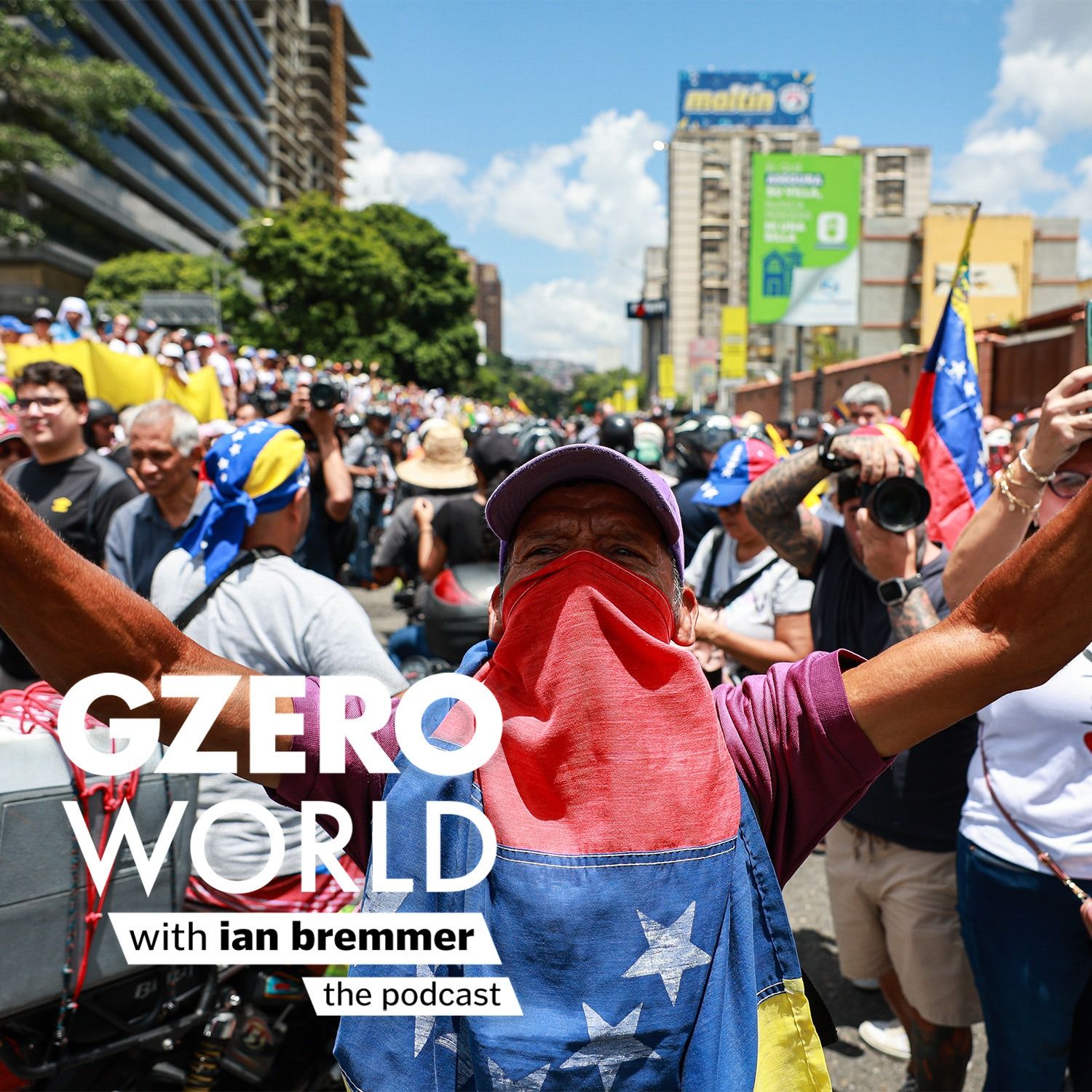
GZERO World with Ian Bremmer
Venezuela after Maduro with Senator Gallego and Frank Fukuyama
00:35:54
After the US raid that captured Nicolás Maduro, what comes next in Venezuela, and what does Trump’s “Donroe Doctrine” mean for the world?
Loading summary
Transcript78 lines
- [00:03]
A
Hello, and welcome to the Gzero World Podcast. This is where you can find extended versions of my conversations on public television. I'm Ian Bremmer, and it's been about a week since the Trump administration greenlit a dramatic US Military operation that captured Venezuelan strongman Nicolas Maduro and his wife in Caracas, bringing them back to New York City. The raid itself was a striking demonstration of American power. The intelligence, coordination and execution involved make clear that the. But this was an operation only the United States could have carried out. There's also little international sympathy for a dictator whose rule collapsed Venezuela into a failed state and produced a refugee crisis larger than Syria's after its civil war. What comes next is far less certain. How does the United States run, as Trump says, a country of 30 million people, even temporarily? Will Acting President Del C. Rodriguez, a longtime Maduro ally, actually follow Washington's lead? And will Venezuela and its powerful military accept that arrangement? The balance of power, of course, favors Washington politically. This operation was a major win for Donald Trump, a president under pressure at home who has now shown he can act decisively abroad without allies, without large scale strikes, and without losing a single American troop. Trump has framed this moment in terms of raw power, openly embracing what he calls the Don Roe Doctrine and signaling that American dominance in its sphere of influence will not be questioned. This is the law of the jungle, where the biggest stick sets the rules and others adjust accordingly. And it's a message being heard well beyond Caracas, from Latin America to Europe.
- [01:44]
B
Joining me with the latest reactions from Capitol Hill is a Democratic senator from Arizona, Ruben Gallego. And later, I'll be discussing this unprecedented new chapter of American foreign policy with Stanford University's franchise, Frank Fukuyama.
- [02:10]
C
The Gzero World podcast is brought to you by our lead sponsor, prologis. Prologis helps businesses across the globe scale their supply chains with an expansive portfolio of logistics, real estate, and the only end to end solutions platform addressing the critical initiatives of global logistics today. Learn more@prologis.com.
- [02:36]
B
Ruben Gallego. Welcome to Gzero World.
- [02:38]
D
Thanks for having me.
- [02:39]
B
Hey, so, a lot on Venezuela, of course. I guess I wanted to start by saying that in the last couple of days, I've seen that the Republicans publicly seem to be close to in lockstep with President Trump. I'm wondering behind the scenes, are you hearing anything different from your colleagues in the Senate across the aisle?
- [02:57]
D
I think what I'm hearing is mostly a wait and see. I think they, because of the limited scope of what occurred there, they don't want to go sideways with the president, except for maybe a few. But now that totally changes. If there's more troops on the ground, there's more action. There's a lot of things that I think could potentially start drawing some of these more moderate to moderate to rational Republicans kind of join us in trying to, you know, stop the presidency from going overboard.
- [03:25]
B
What have you learned since the attacks from the White House about their plans for Venezuela going forward?
- [03:33]
D
That there really isn't a plan. They're kind of just, you know, playing this as it goes, which is, you know, very scary that they're doing that. They're hoping that the vice president, the newly installed new dictator there, is going to be able to, you know, still hold control with, over the country, while at the same time negotiate in good faith with the White House. And I just don't think that's going to. It's going to play out as much as they, as well as they, they think it is. But at the end of the day, you know, I think the Venezuelan diaspora is going to be very disappointed by what occurred. And, you know, really, the American public themselves just, just don't really understand what's happening here and aren't being supportive of a fairly successful military action.
- [04:16]
B
So, I mean, in the near term, it would seem that, I mean, the military, you're not gonna take out the military. So even if you want to move towards a democratically elected government, that is going to take time. I guess what I'm wondering is, I mean, you know, Marco Rubio, a former colleague of yours in the Senate, someone that obviously understands the Venezuelan diaspora well, someone who would support some, someone like Maria Machado does not want Venezuela to be a dictatorship. How do you think, do you have any sense in how he navigates this? Because that's clearly not the top priority for President Trump.
- [04:53]
D
Right. And generally speaking, the White House kind of dealing with them both on foreign policy issue and even some domestic policy issue when it comes to immigration. There are a couple of real divisions over there, and some of those divisions kind of break down between isolationists and kind of more people towards the Marco Rubio bent. The kind of Stephen Miller World vs Stephen Miller, JD Vance World vs, you know, a couple more of, like the Lutnicks and kind of traditional mainstream Republicans. And I think what's happening right now is that they're both fighting for the president's ear. They're both trying to basically curry favor with him. And the outcome would be entirely different versus, you know, I think, you know, Stephen Miller cares about Power and holding power, and thinks that, in my opinion, that the more important thing is if there is a puppet there, that then the White House has more control, that he's more likely to actually recommend that the current dictator stays versus Marco Ruby, who does understand both the local domestic political pressure, which is you have a lot of Southern Floridians will be really mad if they traded one autocrat for another autocrat. And two, that at the end of the day, all. All it is doing is going to plunder the economy of Venezuela. And, and so that's why there is no movement happening right now. That's why you have all these mixed messages coming out of the White House, because they don't actually know what they're doing yet. And they're trying to find some level equilibrium, at least to start moving forward. But I don't think we're going to see a real move or path coming anytime soon.
- [06:21]
B
Now, the United States clearly does have a level of leverage, both because the military operation was quite successful, they were willing to deploy it, and it's not going anywhere anytime soon. Not to mention the power imbalances and the fact that Venezuela didn't get any support from their friends in Russia and China and Iran, Hezbollah, you name it.
- [06:41]
A
Right.
- [06:41]
B
So, I mean, given all of that, what are the things you think the Trump administration should do? What should they be prioritizing in the next weeks and months, maybe to turn this into something that could be more sustainable?
- [06:55]
D
I mean, if I was in. In the Trump administration, I was a rational actor trying to find a good outcome. I would be trying to put together a path forward to. Into a stable democracy, calling for elections, at times, certain release of prisoners. In the meantime, to show a level of respect to the path that you are going to send assurances.
- [07:20]
B
The many political prisoners that are in place right now.
- [07:22]
D
Exactly. Release political prisoners to prove that you're willing to go down that road. Some level of reform. When it comes to economic reform, I would do like some kind of economic agreement with the United States or all these things that could actually set a really good tone and potentially avoid conflict. That's what I would do if I was Venezuela. The problem is I'm not sure Venezuela understands where the motivation, the interest and the rationale is coming from the White House. So they may not be able to really gauge what is the right outcome.
- [07:54]
B
Out of this and any plans for a bipartisan Senate efforts, both in terms of the legislative front in Washington and also potentially any trips going down to the region.
- [08:08]
D
So we're certainly going to be looking at using the war powers resolutions to do a couple votes this week regarding both war in Venezuela, even the bootstraps, something that I authored for the Caribbean region. I think there will probably be some codas that go down to the region, but obviously not to Venezuela. As well as right now, we're also focusing, unfortunately, on Greenland, something that we didn't think we had to take as serious, but they're clearly. Is something happening at the White House? And after we saw what happened in Venezuela, we can't really take any chances that these guys are gonna do something really crazy there.
- [08:45]
B
And Denmark, I mean, they do feel a little frozen out right now. I mean, not only because Trump, Stephen Miller, others are saying that, you know, all options are on the table and they want sovereignty, they want to have Greenland, but also because they've sort of frozen out the Danes in terms of direct diplomacy. So what do you think needs to happen here? What can the Senate do? And again, is, is this a bipartisan effort? Is this an area that you think the Republicans really do see as kind of a red line that Trump should not cross?
- [09:13]
D
I am actually working on legislation right now both to limit the amount of money, like any money that can be used federally to invade Greenland through our appropriations process. We're putting together war powers resolutions, basically stop trying to stop us from going into Greenland. We're currently talking to the government of Denmark as senators. This is more on the Democratic side. The other two efforts actually are bipartisan to really make sure they understand that this is not a popular position. And we have heard Republicans publicly state that they don't want to see Greenland being invaded. Now, the most important thing is for us to have a unified focus as a Senate to make sure we send that message to the White House so they don't just kind of run roughshod over this and thinking that there's going to be automatic support for such a crazy thing.
- [10:01]
B
And otherwise, just as we think about the region and this Don Roe Doctrine, both allies, friends, Mexico, Colombia, that are concerned about their sovereignty and what the US Might do unilaterally against narco cartels. They are drug infrastructure as well as adversaries like Cuba and Nicaragua. Anything you want to add?
- [10:21]
D
Well, look, I think it's important for me, especially with my Colombian heritage and Mexican heritage, I'm certainly doing outreach to both countries to make sure they understand that, you know, position that the President's taken is not a position that is shared by the whole government, especially the Senate. I hope that some of them will also calibrate what they do themselves because the president is very sensitive, as we've noticed, and some movements or ill timed comments can really trigger potentially some very caustic reactions. So, you know, just the kind of, you know, personal connections, communications are what we're going to continue doing. And then of course, again, anything else we can find within the power of us as the Senate to restrict the executive, we're going to have to do it and we want to do it.
- [11:15]
B
Senator Ruben Gallego, thanks so much for joining us today.
- [11:18]
D
Thanks for having me.
- [11:25]
C
The Gzero World podcast is brought to you by our lead sponsor, prologis. Prologis helps businesses across the globe scale their supply chains with an expansive portfolio of logistics, real estate, and the only end to end solutions platform addressing the critical initiatives of global logistics today. Learn more@prologis.com.
- [11:51]
B
Joining me now to discuss what this all means for the region and the world is a man who wrote a little book about the end of history. And yes, with a lot of awareness.
- [11:58]
A
Of just how much history was still to come, Stanford University's Frank Fukuyama.
- [12:04]
B
FRANK fukuyama, STANFORD UNIVERSITY Good to see you, my friend.
- [12:08]
E
Good to see you, Ian.
- [12:09]
B
So maybe start with the Don Row doctrine before we dive into Venezuela. When you hear that expression of U.S. foreign policy, how how does it strike you?
- [12:23]
E
Well, it worries me a lot because American interests are not restricted to the Western hemisphere. Even if they were, the assertion of dominance over everybody else in the hemisphere by the United States is not a good look for American foreign policy. But it also means a downgrading of Europe and Asia, where we have extremely big interests and a lot of big threats potential. And it worries me that if we get too sucked into and preoccupied with our hemisphere that we're going to let things slide elsewhere in the world.
- [12:59]
B
Do you think America is downgrading its interests in other parts of the world? I mean, there's been a really big military sale to Taiwan. The US Is certainly engaged on Iran these days and with the Israelis and the Gulf states and the like. How do you consider it?
- [13:15]
E
Well, certainly the national security doctrine laid out pretty explicitly, you know, that downgrading it did not mention Russia or China as threats that we had to deal with. And they're the, you know, the big hegemons in their respective regions. So certainly rhetorically we've downgraded. The other thing is that so much of the Trump foreign policy has been driven, I think, by more by personal interest on the part of the president than by any kind of coherent strategy. You know, I think in that respect, the attack on the Iranian nuclear enrichment plant was. It was an unfortunate example because I think it demonstrated to the president that you could do a quick in n out strike, it'll be effective, and, you know, you can claim a victory. And, you know, he did this with Maduro in capturing the president of a sovereign country. But when you go to Ukraine or Taiwan or other parts of the world where there may be instability, you're not going to have a one and done, you know, kind of operation. These are really serious. And, you know, from everything I see about this president, he's not prepared to get into a serious, protracted, costly military engagement with another peer superpower. So I think that's important to keep.
- [14:38]
B
In mind when you see what happened in Venezuela. I mean, the one and done approach in the sense that it's not boots on the ground, it's not regime change, it's not an effort to create a new government made in America's image, it is a spectacular military operation. Maduro is out. Most people are not particularly shedding tears over that.
- [15:05]
E
It's.
- [15:05]
B
If Trump were to leave it at that, would you say, would you consider that successful or not particularly?
- [15:11]
E
No, I would say not particularly. Because more than other leaders, you know, the Venezuelan authoritarian regime does not revolve around Nicholas Maduro. You know, if you took Putin out or Xi out, you'd have very different situations. But, you know, he was just a frontman for a broader, you know, in a way, criminal conspiracy. And that conspiracy is still there. And so there's still going to be drug running, and there's still going to be human rights violations, and there's still going to be, you know, support for Iran and China. So I don't think you've solved the problem at all. And then furthermore, you know, if you really thought about domestic American interest, one of the most important ones is refugees. Eight million Venezuelans have left the country. A lot of them are in the United States. And a lot of these refugees that Donald Trump doesn't like actually would like to go home to Venezuela. And unless you create the conditions where they felt safe to do so, they're not gonna, you know, they're not gonna budge. So, no, I don't think it's gonna be a big success if they, if they just leave at this point.
- [16:17]
B
So what do they now need to do? Because clearly the conditions are not in place to have democratic elections tomorrow. And you couldn't get rid of the military overnight even if you wanted to. Clearly, there's, there's differences in how important democratic elections are to say Marco Rubio, than they would be for. But if you were advising them, and I know that you've had a lot of contact with the democratic opposition in Venezuela of late there at Stanford, what would you be saying?
- [16:45]
E
Well, I think that in the short run, they don't have any choice but to work with Del C. Rodriguez, the vice, now the president. Acting president. Yeah, acting president. Because they do need, you know, stability in the short run. But with the blockade of oil that we are imposing on them, their economy is going to collapse. I mean, it's already in horrible shape. But, you know, they're not going to be able to feed their own people in, in a few short weeks. And that could lead to, you know, some very, very serious social instability and you could get defections, you know, of officers within the regime who are just, you know, saying we, we can't handle this situation. And in that situation, it may be the case that, you know, maybe the democratic opposition may look a little bit more appealing because, you know, what you need in these, you know, and let's not kid ourselves, this is a nation building exercise. You know, you're trying to refound a country and you're trying to do it by remote control from Washington. But you know, what's fundamental, and I think what we learned in Iraq and Afghanistan is legitimacy is important. You have to have a government a and then it has to be a government that people are willing to obey whose laws, you know, mean something to people. And that's the point at which, you know, maybe even Donald Trump may come around to thinking, yeah, maybe we do need a democratically legitimated leader. But that's, you know, that's something that's going to take a while to develop.
- [18:18]
B
That's a power sharing environment and it's not going to happen tomorrow. What are the early steps? If Marco Rubio, now he's got his success, he's Secretary of State and national.
- [18:29]
A
Security advisor, he cares.
- [18:31]
B
He's got constituents there in Florida that really want these emigres to be able to go back home. They want to be able to invest in this country. They also want a legitimate democracy. I mean, that is what the Venezuelans in the United States want. What are the things that he might be able to do? What should he press President Trump for over the course of the next couple of months?
- [18:53]
E
Yeah, you know, I think one of the things we've learned in many countries around the world is that being an opposition group, even a well organized one in civil society, a democratic opposition group does not prepare you for governing. And a lot of the unfortunate, unfortunately, a lot of the failures in the last couple of decades have been, you know, taking power when you're not really ready to do this. So there's a lot of preparation that needs to be done on the part of the democratic, you know, opposition who's going to occupy these different ministerial posts, you know, how are they going to structure economic policy? There's a lot of work of that sort. I think that actually we've got a lot of leverage that we could exercise over the existing regime to keep it, you know, if, if the goal is actually at some point to have democratic elections. They also have to be prepared to accept, you know, let's say international observers and we got to start talking to, about, you know, what our expectations are if we're not going to hit them a second time or, you know, capture more of their, their leaders. Beyond that, though, I would say that, you know, as a student of nation building exercises, you cannot plan these things, you know, terribly well in advance because they always go sideways at some point in ways that you're not expecting. And I think the expectation that you can plan these things is, is, is a danger. You have to be much more improvisational as we go along. So we'll see. I, you know, this administration does not give me a lot of confidence that, you know, they know what they're doing. But for the Venezuela, for the sake of the Venezuelan people, I hope they, you know, they actually can see a way through this.
- [20:40]
B
It's interesting. On the one hand, there's been almost no planning about what kind of a government you would have in Venezuela and what they should be doing. On the other hand, there's been an extraordinary amount of planning over the last six months into making sure that this military operation had not only suitable planning, but also had the intelligence to support it. The people on the ground inside Caracas providing support. And I mean, no American servicemen or women died during the operation. I mean, legitimately, the kind of thing that the Russians, the Chinese couldn't even dream of pulling off. How do you think the Trump administration can execute so incredibly well on such a complicated and difficult military operation? And yet, you know, for you and others to have so little confidence that they can get it right diplomatically.
- [21:30]
E
Well, look, this has been true not just in the Trump administration, but for many previous administrations. The military, the US Military is really good. You know, when they do an operation, they sit down, they have a lessons learned exercise. They make changes in doctrine, enforce structure in training. All of These things, they do this extraordinarily well. The civilian side, they don't. The State Department has never held a lessons learned exercise as far as I can see, in terms of trying to do it better the next time. You know, at the time of the Afghanistan and Iraq interventions, I was heavily involved in all of the discussions of how do you prepare for the next nation building exercise? Because we don't have a government structure that actually can coordinate all the different ministry. You know, the Justice Department has to do rule of law reform, the economic, you know, the Treasury Department has to stabilize the currency. And you know, there's a huge coordination job that we did not really do well at all in, especially in Iraq. And you know, at the time we thought maybe we need a standing capacity to do this sort of thing. And it never happened. And so here we are basically having to learn the same damn lessons over and over again. The military, on the other hand, is a really good institution that really learns and, and you know, it keeps an institutional memory of, you know, how to do these sorts of things.
- [23:02]
B
As we look across, outside of Venezuela, across the Western hemisphere, broadly defined, we can include Greenland, since Trump obviously does. If this is going to be a core priority for the Trump administration and the Americans have more military capability and the Chinese are dominant economically, commercially, trade wise in most of these countries, and that's not going to change anytime soon. What are the kinds of things that the Trump administration should be looking at? What do you think the things are, they are likely to look at going forward?
- [23:35]
E
Well, you know, what worries me is the one and done scenario is going to be reenacted in other countries. Trump has accused President Petro in Colombia of being a drug dealer. He's not a drug dealer. He's not a Nicolas Maduro. He's a legitimately elected president. I happen to not like his politics very well. He's the first leftist president that Colombia has ever elected, but he's a, you know, legitimate president.
- [24:02]
B
And I mean, they're about to have elections and a right wing president's likely to come in. So you can wait a few months, can't you?
- [24:07]
E
Yeah, but I'm afraid that Trump, you know, has now got this bug that, you know, I've, he's got, I mean, I sort of liken it to a 10 year old boy with a, that suddenly finds a flamethrower in his backyard and he says, wow, look at what I can do with this. So he's now got this instrument that he can use, you know, and there are really very Few things restraining him. So I hope that they're not seriously thinking of doing anything, you know, to Colombia. I suspect that they may launch some strikes on, you know, narco gang encampments, you know, cocaine processing plants all over the jungles of Colombia or in Mexico. Hopefully, it will not go beyond that. And if it doesn't go beyond that, I think, you know, we may be able to get through this period, you know, without too much upsetting the broader politics of the region.
- [25:00]
B
And, of course, when you talk about Marco Rubio, his interests are not primarily Colombia and Mexico. His interests are primarily Cuba. And that has been a regime that has bedeviled a succession of American presidents, Democrat and Republican. Efforts to open up towards the Cuban government have failed, mostly prevented by the Cuban government itself. What do you think is the possibility there for the United States?
- [25:28]
E
Well, it's interesting. So Cuba has gone through an interesting evolution. It used to be an ideologically driven Communist country under Fidel Castro. His brother Raul continued that for a while, I think less charismatically. But it's basically turned into a kind of criminal organization because all of these security people, of whom there are many in Cuba, have now gotten into the business themselves of narco trafficking, of external extortion, of, you know, various sorts of criminal activities. And so I don't think it's a regime that can be defined by ideology. Now there's a really interesting thing that's about to happen, which is this oil blockade. We are preventing Venezuela from exporting oil, and Cuba is, you know, completely dependent on Venezuelan oil. And so their economy, the Venezuelan economy, is on its way to collapse, and the Cuban economy may collapse very seriously. And this might be the first time that you're going to see a real crack in the regime where, you know, that security apparatus really has got its back to the wall and really isn't going to have very many options if.
- [26:40]
B
That were to happen. Is there a likelihood of a Cuban refugee crisis suddenly spiking in the US as well? A lot closer to the US Than Venezuela?
- [26:49]
E
Yeah, well, definitely. I mean, both Venezuela and Cuba, if they both fall into this kind of economic chaos, are going to send, you know, lots of refugees all over the region, but Cuba, you know, to the United States, just because of the proximity.
- [27:04]
B
So does that mean if you're the Americans, you should be more concerned about what happens if the Cuban economy collapses and more excited about the idea that you can really bring this government to its knees and force a transition?
- [27:16]
E
It kind of depends on how messy these things get. I think that one of the other lessons that I take away from earlier nation building exercises is that you always have mission creep. You know, that you start thinking that you can get things done by a quick strike. You discover that actually things are more complicated than that. And so you decide, well, you know, we have to stabilize Cuba, and we can't really do that without putting people there. Same thing with Venezuela. And so before you know it, you're up to your neck in trying to control the politics of these two different countries. You know, the American people, the problem, I don't know, it's probably a virtue, actually. The American people can tolerate this kind of an action for two, three, four years. But if it continues and it gets messy, I actually put the timing at about four years, the length of a presidential administration, because one administration gets you into this kind of mess, and then four years later you're still in the mess. And then people get really upset and they say, what the hell are we still doing here? That was true in Vietnam, it was true in Nicaragua, it was true in a lot of other places, Afghanistan. But eventually we got tired of it. And so I think that that's really the political calculation. In the short run. A successful, a seemingly successful operation gets you a lot of plaudits. And that capital, that political capital then begins to deplete pretty quickly the longer it goes on.
- [28:50]
B
The Russians, of course, very openly critical of what just transpired in Venezuela, but they're not doing anything about it, that I can see. The Chinese were shocked. They're very critical. They're not doing anything about it. Supporting their friends in Venezuela. The Europeans, not even particularly critical, more cautious, and monitoring the situation makes them look a lot weak. Should other countries in the world that are, you know, that find stability useful at least, and most of them do, should they be acting differently in this environment?
- [29:26]
E
Well, yeah, I think so. I mean, we haven't talked about imperialism yet because, in fact, Stephen Miller managed to be pretty open, or say the quiet part out loud.
- [29:39]
B
On Greenland, you mean.
- [29:40]
E
On Greenland, Yeah.
- [29:41]
B
Yes.
- [29:42]
E
So this is not the end of, you know, these foreign adventures on the part of this administration. You've got Colombia, Mexico, Greenland. They haven't talked about Panama recently, but that's an another possible target of an expansionist American foreign policy. In the case of Greenland, well, it can really kill NATO if the dominant NATO ally that has always been the adult in the room with, you know, the NATO allies itself, becomes a major threat to other NATO allies like you just imagine Article 5 that pledges every NATO member to come to the aid of any other NATO member that's attacked. What if one of them is attacked by another NATO member? So they're obviously not going to band together to fight the United States. And I just think that'll be the end of NATO. You know, what's the point?
- [30:32]
B
That implies that the United States were to send troops and invade Greenland, which I think is quite unlikely. And you've also heard Stephen Miller say that that's not going to happen. Again, people are reading different things into it, but it strikes me that the Americans are more likely to take a page from the Russian book here, not with Ukraine, but the asymmetric warfare where they use information campaigns, you know, sort of, they use influence operations, you know, a little bit of espionage, some carrots, too. I mean, if the United States goes more that route, refuses to negotiate with Denmark, but is engaging directly at Greenland and they want it, and they're trying to develop. Use their influence, but it's not like they're invading. Well, at that point, that's not the end of NATO. It's really hard for the Europeans to respond to that.
- [31:17]
E
No, it's very. It's very hard. And I think that ultimately they're not going to be able to resist that kind of, you know, that kind of activity because, you know, the US Is just too powerful and it's got too many instruments by which it can do this sort of. Sort of influence. But it's certainly going to set some terrible precedents. You know, the United States just wants to control this territory, and it's going to do it regardless of international law, prior agreements, treaties, you know, whatnot. And again, you know, this is the problem that a spheres of influence kind of worldview allows the other spheres, Europe and Asia, to be dominated by their local hegemonic power. And, you know, that's, that's not good for world peace.
- [32:07]
B
I mean, we haven't really talked about norms, but what we have seen is that a lot of the norms that people have presumed exist and are strong and will continue. Either Americans presuming them about the way their political system works, or allies presuming them about the way the United States will behave turn out to be rather less robust than they had initially believed. And so what does it mean if you have a United States, the world's most powerful country, that simply rips up norms, does that mean that Greenland just becomes American? I mean, if you put your crystal ball on and you've spoken a lot about where you think the world is heading over your storied career, where do you think the world is likely to be geopolitically in five years time?
- [32:55]
E
Well, you can imagine some really bad outcomes and you can imagine some okay outcomes. I think that if Trump weakens domestically and there's already some signs that that's beginning to happen, maybe he will be forced to pull back. You know, if you get a Democratic victory in November that retakes the House for the Democrats, it's going to, you know, it's going to put some brakes on, on Trump, although less in foreign policy than in other areas. But the downside is really bad. You know, Ukraine could fall to Russia. I mean, the whole of Ukraine and not just the Donbass. China could, I think less a full scale invasion, but they could throw a blockade around Taiwan. They've been holding exercises to practice that sort of thing. And at that point, the United States isn't going to do one of these one and done things. These are really serious military rivals and the US Is going to have to decide whether it's in or out. And under this president, I just can't imagine that he's going to be willing to risk, you know, a big war with a big superpower.
- [34:08]
B
So you're saying that the Chinese and the Russians have greater optionality in this environment?
- [34:13]
E
I think the Russians, you know, could end up dominating Ukraine and then move on to other targets in Europe, you know, Georgia, Moldova, the Baltics. And I think China could reincorporate Taiwan and then, you know, as I think they've been aiming at for some time, you know, be the dominant power in East Asia and force the other American allies like Korea and Japan to toe the line.
- [34:41]
B
So we take one moment and just look back on the first year of the Trump administration. What do you think that they have learned that is different from the first time around? How much do you contrast the US in the world in 2026 with what you did at the end of the first Trump administration?
- [35:03]
E
Well, I think they learned a lot of unfortunate lessons. Trump in his first term was pretty constrained by the various advisers he had from doing things like leaving NATO and, you know, and the like. But this time around, you know, as we were saying earlier, I think he's discovered that he's got this very powerful military instrument at his command. Unlike in domestic politics, he can use that instrument anywhere he wants and he can get away with it because there is no international law that's enforceable the way domestic law is. And I think that that's really, you know, the new element in foreign policy is a very narcissistic president discovers that he's got these powers that he didn't fully exercise and may not even have realized he had and now, you know, is interested in trying to use it elsewhere.
- [36:02]
B
Frank Fukuyama it's always a pleasure to talk to you.
- [36:05]
E
I wish it were a cheerier subject, but good to talk to you. Ian.
- [36:12]
B
That'S it for today's edition of the Gzero World Podcast.
- [36:15]
A
Do you like what you heard? Of course you do.
- [36:18]
B
Why not make it official? Why don't you rate and review GZero World 5 stars only 5 stars. Otherwise, don't do it on Apple, Spotify.
- [36:25]
A
Or wherever you get your podcasts.
- [36:27]
B
Tell your friends.
- [36:36]
C
The Gzero World Podcast is brought to you by our lead sponsor, prologis. Prologis helps businesses across the globe scale their supply chains with an expansive portfolio of logistics, real estate and the only end to end solutions platform addressing the critical initiatives of global logistics today. Learn more@prologis.com.