← GZERO World with Ian Bremmer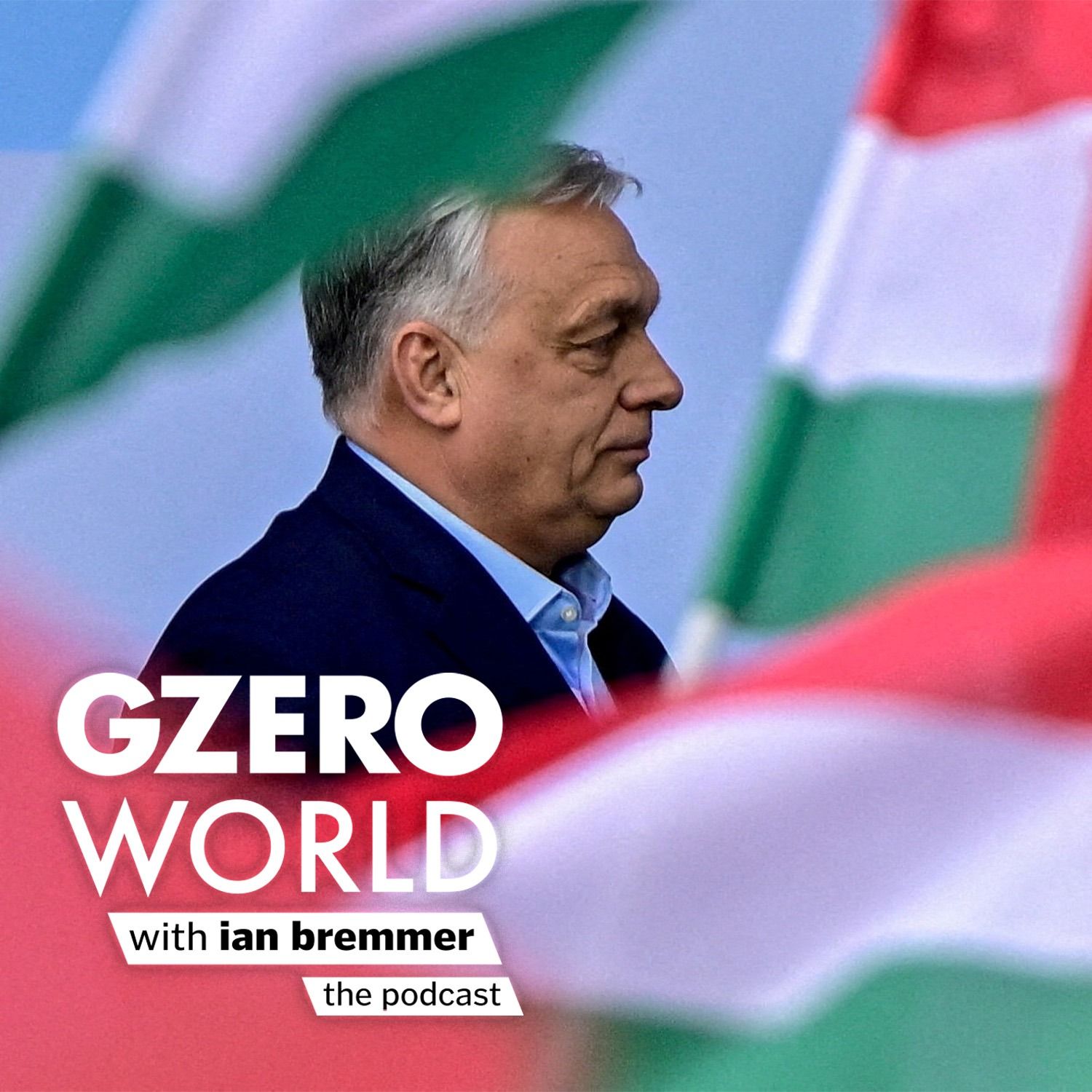
GZERO World with Ian Bremmer
Viktor Orbán's last stand, and the future of Europe's far right with Ivan Krastev
00:21:48
Ian Bremmer sits down with Ivan Krastev, Chairman of the Centre for Liberal Strategies and political scientist, to discuss Hungary's consequential upcoming election and what it means for the far right globally.
Loading summary
Transcript27 lines
- [00:02]
A
Hello and welcome to the Gzero World Podcast. This is where you can find extended versions of my conversations on public television. I'm Ian Bremmer, and today we are talking about one of the most consequential elections in the world this year. Hungarian Prime Minister Viktor Orban, Donald Trump's closest ally in Europe, is facing his toughest political challenge in more than a decade and a half in power. With just days to go until Hungary's April 12 parliamentary elections, the strongman leader who has dominated Hungarian politics for well over a decade now finds himself trailing a former protege, Peter Magyar. If Orban loses, does that spell the end of far right populism in Europe? The short answer is no. But still, the geopolitical stakes are real. Orban has been a key Trump partner inside the European Union, often at odds with Brussels, increasingly isolated by EU and walking a careful line between Russia and China. Joining me now to break down the Hungarian election, the geopolitical implications and what it all means for European politics more broadly, political scientist and Central Europe expert, Ivan Krastov. Let's get to it.
- [01:24]
B
The Gzero World Podcast is brought to you by our lead sponsor, prologis. Prologis helps businesses across the globe scale their supply chains with an expansive portfolio of logistics, real estate and the only end to end solutions platform addressing the critical initiatives of global logistics today. Learn more@prologis.com.
- [01:50]
A
Ivan Kostev, wonderful to see you on the show.
- [01:54]
C
My pleasure.
- [01:55]
A
So I want to start with talking about Hungary. You've met with Viktor Orban. He gets a lot of attention in the United States primarily because President Trump likes him. What do we not understand in the States about Victor, that you think we should listen?
- [02:16]
C
Orban is an extremely important figure for the far right. In my view, he plays the same role like Fidel Castro used to play for the left in the 1970s. So very few people know where Hungary is, but they have the feeling that this is the place where the real conservative revolution is happening. What is interesting about Orban is first, he's thinking power for a long time, 16 years now. Secondly, what is important for him is that he's the institutional, the ideological, the financial hub of European New Right. He's the person, if you are right wing or far right government somewhere and you're losing the elections and people want basically to put you in court for something that you do, the place to get an asylum is going to be Hungary. If you have far right party that wants to run on the elections, you can keep your bank account, your money in the Hungarian bank. And also, Viktor Orban really invested a lot in the relations with Maga movement. He put a lot of money with project with the Heritage Foundation. He became probably the only European leaders that many of the Magda voters who are not interested in Europe at all know the name.
- [03:31]
A
Now, I understand the fact that he's become a standard bearer for those leaders. It's less clear why that has meant that he's been aligned both with the Russians and with the Chinese. And I'm wondering, and I know those are very different reasons and alignments, but I'd love to hear a bit of your thoughts on that.
- [03:55]
C
Yeah, this is a great point, because normally when people in America think about Orban, they believe that there is somebody who really is betting on Trump, on the United States. And this is not true. Economically. The major bet of the Hungarian government is China. For the last several years, Chinese investment in Hungary is higher than the Chinese investments in Germany and France together. And the major reason why they invest in Hungary, a place where basically there is no access to the sea. This is a very small country, 10 million people, very small economy, is that Mr. Orban is ready to veto in the European Union any type of anti China economic policies. And in the case of Russia, this is, by the way, part of the paradox. Mr. Orban made his political career 1989. He was the Hungarian leader, and he was a young man asking the Soviet troops to leave Hungary. And this was his high moment back then. But now he basically made the dependence on Russian oil and gas very important, almost the definition of Hungarian sovereignty. And the most important for developing these relationships was that Mr. Orban defined Brussels as the major challenge and the major threat to Hungarian sovereignty. So as a result of it, basically betting on Russia, betting on China, betting on Trump, was the way for him to tell his voters, you are the only sovereign nations in the European Union. But fortunately for him, this story basically can turn sadly on the elections on April 12th.
- [05:32]
A
Now, do you think that his ideological roots, are they structural, are they attached to something in his background, or are they more opportunistic? I'm wondering, is he more, in your view, a right wing populist in the manner of Castro on the left, or is he closer to Trump?
- [05:58]
C
This is interesting. They're different with Trump. And he started, as, you know, as a liberal. And here's an interesting story. Mr. Orban comes from a very humble background. He comes from the countryside. He comes from a family which was not interested in politics. He was interested in football. And his major hero was the soccer player. He was not a politician. But what is interesting, with the passing of time, I do believe he internalized his own conservatism. And there is a lot of Type of a 19th century Type of Hungarian conservatism. As you know, after the World War I, Hungary was one of the big losers kind of reshaping of European politics. Hungary lost a lot of land and a lot of Hungarians ended up living outside of Hungary. So his major appeal always was 20th century was so bad for Hungary that we cannot be the loser also in the 21st century. From this point of view, he's closer to President Putin than to President Trump. Because honestly speaking, President Trump is not particularly rooted in the American history. I don't believe that he's particularly interested in any of his predecessors. While for Viktor Orban, he is very much about Hungary, Hungarian history. He goes back and back to this, a great time of Hungary. So he's very much a classical European nationalist, very different than kind of this much more postmodern stories. And also what is interesting about him, it is talking about opportunism. If you listen to him and if you see, for example, this very strong anti migration, for example rhetoric that made him a major European figure during the 2015 crisis, you're going to imagine that almost no foreigners can be found in Hungary. But if you're going to see which was the European Union member state that gave most work permits for people to come to work in 2018, it was Hungary. So from this point of view, there is a basic conservative instinct, there is a lot of conservative ideology, but he can be very opportunistic. And because of the fact that there is a lot of labor shortages on the Hungarian side, he's much more flexible on this story. Where he's not flexible is that he believes that Hungarian democracy basically is an ethnic project. So foreigners can come, they can work, but they're never going to be allowed to vote.
- [08:20]
A
And I mean, he's also well known for his Euro skepticism. But on the back of the pandemic, there's a lot more money that could be transferred from the eu, from Brussels and wealthy countries coffers into the poorer countries economies and budgets. And of course that includes Hungary. How much leverage has that given the major European powers over Orban?
- [08:46]
C
It is an interesting story because there were two elements of the success of Mr. Orban regime. One was European money and the other was the anti European rhetoric. And he was great combining both. Of course, all this stopped some years ago and now basic problem of Hungary is that because the European money stopped, the standard of living has declined in a certain way. When it comes to GDP per capita and when it comes to, to the standard of living, Hungary is doing worse than most of the other European countries. And this is the major issue that you can see also around the elections. The opposition totally is running on social and economic issues and Mr. Orban is totally running on a kind of a big picture major international politics, talking about war in Ukraine, talking about the relations with the United States. So he ended as a globalist. He ended as the one who is basically much more interested in global politics. And this is why it's interesting how these elections are going to end up for him. But there is one thing that probably particularly the Americans who are not following Europeans on a daily level cannot understand, is that while Hungary is not such an important country, if Orban is going to lose the election, this is going to affect dramatically also the behavior of other new right parties in Europe. This is going to be true for how the Czech governments are going to believe, how the Slovak government is going to believe this. This is of course going to impact incredibly European policy towards Ukraine, because now orban is vetoing 90 billion for support of Ukraine. But also, strangely enough, if Orban is losing and if President Trump is going to lose the midterm elections, then for the far right, the major story was to what extent they should really subscribe to the Trumpian revolution and to what extent they should try to have a deal with some of the pro European mainstream parties and looking for new European consensus. Because what is interesting about Orban, all his economic model is based on the assumptions that the common economic space is going to remain. Listen, the Chinese have an interest to Hungary to the extent that Hungary is member of the European Union. If Hungary decides to leave the European Union and Mr. Orban never has been declaring that he wants to leave the eu, then suddenly nobody is really interested in a small market of 10 million.
- [11:22]
B
The Gzero World podcast is brought to you by our lead sponsor, prologis. Prologis helps businesses across the globe scale their supply chains with an expansive portfolio of logistics, real estate and the only end to end solutions platform addressing the critical initiatives of global logistics today. Learn more@prologis.com.
- [11:49]
A
We've seen those shifts made by the Italians. They're not talking italics it by, you know, sort of Le Pen and Bardella in France as well. I mean, you know, Brexit taught. I think a lot of people on the far right that this doesn't work so well for your economy. But I wanna look ahead to the elections which are coming very soon in Hungary. It certainly looks, I mean, he's down pretty big. It looks like he's going to lose. At the same time, this does not come across as a leader that's prepared to leave power easily or peacefully. So I wonder to what extent you think these are going to be fully free and fair elections. To the extent that they're not, how much of a challenge is that? And assuming he does lose, as we've seen in the polls, by a significant margin, how do you think he reacts?
- [12:42]
C
Listen, it's a great question. I'm not sure that I can give you the proper answer. And honestly speaking, I'm not sure that even Mr. Orban knows exactly how he's going to behave first, because he has not lost elections for a long time. So when you have been winning in four elections in a sequence, it's difficult for you to understand that you're going and to believe that you're going to lose the elections. Poll agencies are giving different results. So he probably still believes that he can make it. He has a very strong dominance in the media. He put a lot of effort in social media. He was talking about digital warriors and he basically made the digital electro war critical. And when you're talking about free and fair elections, elections are not going to be fair. To the extent that the government really used a lot of administrative resources. There was just documentary being published in Hungary, shown on the cinema two days ago, showing the pressure that was put on a small villages on a of rural areas where mayors are going and saying, listen, either you're going to vote for Fidesz or you're going to lose everything. But what is interesting about Magyar, the major opposition candidate, is that he has three distinctive characteristics from all other opponents that Mr. Orban has been seeing over these years. First, he's not a liberal, he's a conservative himself.
- [14:07]
A
He's from Orban's own party.
- [14:09]
C
He was in his party. He was married for the. Basically the former Minister of justice as Mr. Orban, somebody very close to Mr. Orban. And his major message is, I'm going to be conservative, but I'll not be corrupt. Secondly, he's doing really well in some of these same rural areas and small villages because he was traveling the country. He was not basically the candidate that is totally relying on social media. He was basically going and people can touch him. And certainly, and this is very important. While Orban is a very gifted politician, no doubt about this, people exhausted of him. This is A urban fatigue. And you can see it, and you can see it in business circles and you can see it here and there. So what is going to happen if he's going to lose the elections? First, the problem is how big is going to be the loss. And Hungarian system is such that in a certain way you need, for example, for the opposition, they need between four and six points more to be sure that they're going to have a majority. But if they're going to have between 11, 12 points, they can end up with constitutional majority.
- [15:15]
A
Right?
- [15:16]
C
Yeah. Which happened basically to Mr. Orban in 2010. I'm saying this because if he's simply going to lose the elections and they're not going to be constitutional majority, he decided to stay in opposition for three reasons. First, he has such a control over prosecutor's office, courts, stuff with his own people. And also having President Trump in Washington, he knows that basically nobody can go against him very much, strongly, personally. Secondly, he could believe that the new government is going to be seen as weak and ineffective. But what is going to change is going to be, of course, his power, his symbolic power. And he knows that this is going to weaken both his relations to the United States, but also his leadership of a new right in Europe. This is why for him, this is going to be a major decision to be taken. But don't forget, when people decide to move in a certain direction, if they decided to do it and we have not seen basically the election results, it not easy to reverse the results. You can play, you can get 1%, 2%, 3%. But what we are going to see in Hungary's either people decided to fear change and stay with Orban, but much more likely, if we really believe the policies, that they decided to go for change, and then if he decided to stand against the change, this could be a high cost for him too. So I don't know how the situation is going to develop. I don't believe that he should personally feel kind of that this losing elections is going to lose everything. But of course, losing elections psychologically is going to have an incredible impact on European politics. Nobody who is not in Europe these days can imagine how important this election is for many other places.
- [17:08]
A
I see that Vice President Vance is planning his trip right before the elections to Hungary to meet with the Prime Minister and to put his finger on the scale. Do you think that trip is helpful or does it undermine Orban in the eyes of the Hungarian electorate?
- [17:28]
C
Listen, we're going to know the answer of this question on the election night, but this is the problem which basically the new right in Europe is facing. Is Trump bringing votes or basically is anti Trump bringing votes? And particularly in the moment when there is a war which is not particularly popular in Europe, you can see that many people are claiming that the way in Iran was also one of the reasons why for Meloni was so difficult to go on the referendum. Because being aligned with Trump, particularly after Greenland, particularly after the war, is not popular on the other side. Hungary is a small country and of course taking advance there is showing how important you are. As you know, the Russians also make it very clear how strongly they stand behind Orban. I think that to the extent that Russia is so much interested that three additional political technologies wedded to the Russian embassy in Budapest just to go and try to see how they can help. I'm saying this because also for President Trump and for President Putin, or losing is going to be their personal loss in a certain way this is going to affect them. Because till now President Trump was quite successful betting on some of the Latin American elections. He betted on his allies and his allies won. If he's going to bet on his oldest and probably best known ally, Mr. Orban, and if Mr. Orban is going to lose, then basically being backed by Trump is going to be much less valuable than it was.
- [19:04]
A
So before we close, I'd like to ask you at least a couple questions about how this war in Iran is affecting Europe, Eastern Europe. I mean, obviously it has been useful for Putin. He is making a lot more money. His sanctions, many have been suspended by the Americans and it's harder to get a lot of American weapons to go to Ukraine via Europe when they're needed urgently in Iran. What's the effect, what's the concrete effect that we've seen over the first month of this war on the Europeans list?
- [19:40]
C
At first Europeans understood that for Trump they don't matter. They learn about the war from the TV sets. Secondly, it was very much clear that compared with Iran, Ukraine, which is so important for the Europeans, is a no priority for Trump. Secondly, now Russia not simply is getting much more money and they're going to be less air defense system for Ukraine. But now the Russians get a certain leverage over Trump because they are once keeping a certain relations with the Iranians. And the more the war goes, this is important. And while the last weeks it is very kind of a fashionable to talk about middle powers, we should also start to talk about middlemen. Because one of the things that is important in all this new constellation is that people who are negotiating Russian, Ukraine war on American side and people who are negotiating war in Iran are the same people. So as a result of it, Europeans feel very vulnerable. Plus high energy prices are highly destabilizing for the European Union. It's really, in a way, Europe is one of the major losers of the war. The war is not popular. Listen, Iranian regime was never popular in Europe. People didn't like it. In many countries, particularly in Eastern Europe, there is also quite strong anti Islam sentiments. But at the same time, people are not clear what President Trump wants to achieve. And also after Venezuela, when you have this kind of a magic easy victory, people have the feeling that they don't know the direction in which President Trump will go. And one of the figures that make a very strong impression on me, there was a recent public opinion poll asking who are the major kind of a threat for the peace in the world. And in Poland, probably one of the most pro American places in Europe that you can imagine. Of course, number one comes Russia. Russia comes United States and Israel. And this is new and this is a major development. And from this point of view, the view of President Trump has changing. He was not particularly popular in Europe anymore, but in my view now he's a much more problematic. Also for the new right, they don't know to stay with him, to leave him. They understand him anymore. They had the feeling that they're on the same page and now they are not sure.
- [22:01]
A
Ivan Krastev, thanks for joining today.
- [22:04]
C
Thank you for inviting.
- [22:08]
A
That's it for today's edition of the Gzero World Podcast. Why not make it official? Why don't you rate and review GZero World 5 stars only 5 stars. Otherwise don't do it on Apple, Spotify or wherever you get your podcasts. Tell your friends.
- [22:30]
B
The Gzero World Podcast is brought to you by our lead sponsor, prologis. Prologis helps businesses across the globe scale their supply chains with an expansive portfolio of logistics, real estate and the only end to end solutions platform addressing the critical initiatives of global logistics today. Learn more@prologis.com.