← GZERO World with Ian Bremmer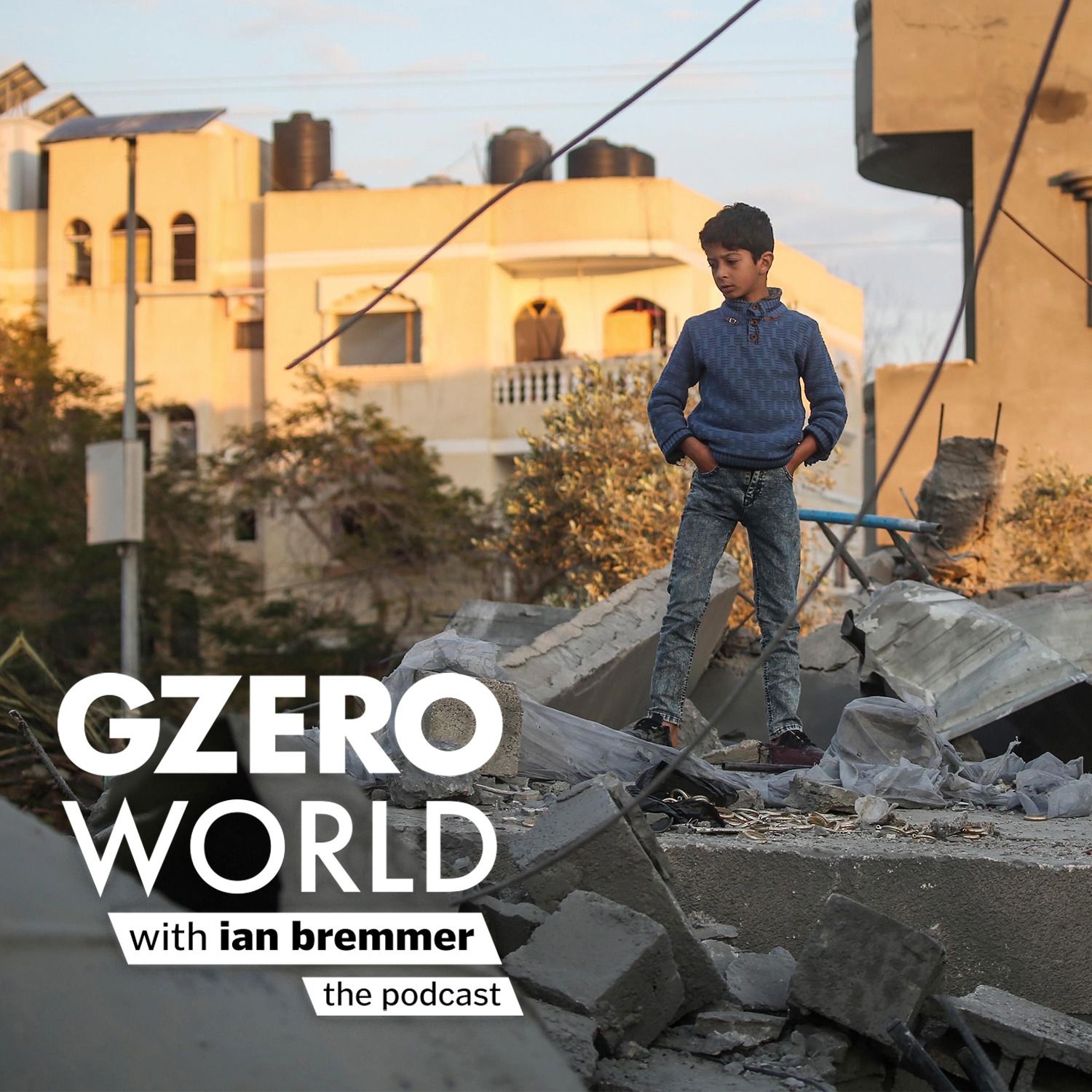
GZERO World with Ian Bremmer
War and Peace in 2025, with Clarissa Ward and Comfort Ero
00:50:48
Global conflict was at a record high in 2025, will 2026 be more peaceful? Ian Bremmer talks with CNN’s Clarissa Ward and Comfort Ero of the International Crisis Group on the GZERO World Podcast.
Loading summary
Transcript62 lines
- [00:03]
A
Hello and welcome to the Gzero World Podcast. This is where you'll find extended versions of my interviews on public television. I'm Ian Bremmer. And today, instead of zooming in on a single issue, we're looking back on 2025 and taking stock of a world increasingly defined by conflict. Two major wars dominated the news this year, Gaza and Ukraine, for good reason. They transformed global politics, they triggered humanitarian crises, and they reshaped alliances. But while Ukraine and Gaza captured our attention, nearly 60 other wars and armed struggles have been raging around the world. It's the most active period of conflict since the end of World War II. Some are decades long battles, like Myanmar's devastating civil war. Others are more recent, like the surge of terrorist insurgent groups in Africa's Sahel. But each is a symptom of a broader global order that's breaking down, driven by weakening institutions, regional rivalries, climate shocks and failing states. And the toll is enormous. Governments are pouring record sums into military spending instead of education and health care. There are more forcibly displaced people now than at any point in recorded history. Global trust is evaporating. That all has consequences. So today we are shining a light on global conflict in 2025. Both the headline making wars and and the ones the world has overlooked. We're asking how we got here and what might keep our fragmented world from breaking apart. To help, I'm joined by two people who see the world's biggest conflicts up close. CNN's chief international correspondent Clarissa Ward and Comfort Arrow, President and CEO of the International Crisis Group. Let's get.
- [01:56]
B
The Gzero World podcast is brought to you by our lead sponsor, prologis. Prologis helps businesses across the globe scale their supply chains with an expansive portfolio of logistics, real estate and the only end to end solutions platform addressing the critical initiatives of global logistics today. Learn more@prologis.com.
- [02:22]
A
Crystal Ward, thanks for joining us on gzero.
- [02:25]
B
Thank you for having me.
- [02:26]
A
We all see you from various places around the world frequently. Places that we are not going to attend ourselves and appreciate that hard work. Tell me, you know, in the context of you covering in person some of the most heart wrenching global stories of conflict and dismay. What has hit you the hardest over the past year?
- [02:52]
B
The thing that has hit me the hardest, which perhaps is not obvious to many people around the world, is the fact that as international journalists, we're still not able to get inside Gaza and report from on the ground. There have been some opportunities for journalists to go into the so called yellow zone of The Gaza Strip, the 53% of it that is under the control of the IDF.
- [03:19]
A
They're still embedded, though, with the IDF.
- [03:21]
B
They're embedded with the IDF. And what's crucial, and again, I think a lot of people don't realize this, you cannot talk to Palestinians if you go in with the idf for pretty obvious reasons. Right. So what that means is that we are really playing catch up, constantly trying desperately to put together the pieces of the puzzle. We obviously are working closely with Palestinian journalists on the ground who have been doing heroic and courageous work. But now that there's a ceasefire, which really had been the ostensible reason given by the IDF for not allowing international journalists in, and I should add, there have been regular infractions, and it's still a dangerous, volatile situation on the ground, but. But still the reason that was articulated, security no longer really holds. And so it's very frustrating for those of us who have been covering this story very closely, obviously since October 7th, but for decades beforehand as well, to not be on the ground reporting firsthand and crucially, talking to Palestinians and platforming those voices.
- [04:32]
A
So there's a ceasefire in place. The Israelis continue to occupy roughly half of Gaza, but they don't occupy the other half. What's the reason given? What's the justification for why journalists aren't able to travel in those places?
- [04:52]
B
Honestly, there isn't an actual justification or reason given when we continue to lobby about this. And I should say the Foreign Press association in Israel has been pushing hard, has petitioned the Supreme Court, and we keep being told, effectively, that it's under review. And we have pitched to go in with international humanitarian organizations like the UN or any number of other organizations who are willing to take us and basically to embed with them, which would mitigate a lot of the risks associated in terms of deconfliction, crossing from that yellow area into the red area, so to speak. And we have also offered to do limited embeds, just one day, two days. And still there has been a clear reluctance to let journalists in, which has been very frustrating and which has really affected our ability to cover this story in the way that we are, those of us who are experienced conflict reporters used to doing.
- [06:03]
A
What have we learned that we didn't know before from the limited access, embedded access that journalists have had now for a couple of months into the 53% of Gaza, that they're allowing that to occur.
- [06:20]
B
I think it's not so much about learning something we didn't know before, because we have all been watching this UNFOLD on our phones, on our social media feeds, on the reports coming in for Palestinian outlets and Arab language outlets, the that are on the ground and have been so throughout the last couple of years. But I also think there's no substitute for seeing those images of the absolute mass devastation of this entire area. I mean, we're really talking about a moonscape here with your own eyes. And as a reporter covering a story, Ian, that is so hotly contested, that is so politicized, that is so divisive, where information is constantly being weaponized. Having your own two feet on the ground and your own two eyes looking at whatever it is that's right in front of you allows you to speak with some level of authority and clarity that otherwise will continually be questioned because of the kind of red hot emotion on both sides of this conflict.
- [07:38]
A
That's interesting because on the one hand there's obviously a lot of Israeli effort to say there's still food in Gaza, there's still restaurants in Gaza, there's still Palestinians that are able to have a normal life. On the other hand, you have this narrative of look, there's widespread devastation, but it's because of Hamas, because Hamas was actually using the civilian population in Gaza to hide themselves and to protect themselves and to risk those lives in ways that were themselves war crimes. If that's the spectrum of explanation, where do you fall?
- [08:20]
B
Well, I think it's impossible to say without being able to go in and be on the ground yourself. And by the way, that line of argument is one that I have used repeatedly with Israeli authorities. I've said if your issue is that there has been propaganda, misinformation, misreporting, then allow some of us in to go and look with fresh eyes. And to be honest, by not allowing journalists in, you're really lending credence to the idea that this whole thing has never been about security. It has been about trying to hide away from the eyes of the world the devastation and horrors that have been taking place over the last two years in Gaza. And we can do a good job of working out what's happening on the ground from the outside. But to be clear, there is absolutely no replacement for being there. And I'm not just even talking about fact checking and trying to understand the kind of anatomy of any given story. I'm also talking about the sights, the smells, the feels, the human connections, the small moments on camera that capture a much larger theme. I mean, I obviously work in a visual medium. So to be outside and relegated to using what we can cobble together and having some people on the ground who can film some elements who, again, to be clear, are risking their lives and doing extraordinarily courageous work every day. But it just doesn't allow for us, I don't believe, to fully convey to our audiences who are already feeling kind of anxious and overwhelmed because of how hotly politicized this conflict has become, to adequately convey to them the realities.
- [10:23]
A
I appreciate that, Clarissa. Let's move to Ukraine, where we don't have those restrictions to get to the front lines of the war on the Ukrainian side. But we do have an incredibly dangerous environment where it's hard even for soldiers to get to the front lines, given the drones that are picking them off every day, making it a lot harder to understand what the war is actually like. Now, you've been recently spending time in Romania talking to young men that have escaped the draft through some sort of free fire zones as well. Give us some of your experience of how this, almost four years now of this completely unrestrained war, I mean, two countries throwing everything they have militarily at each other on the front lines, and the Russians throwing everything they have at the Ukrainians in their civilian populations. You're one of the world's best known war correspondents covering this war. Talk to us a little bit about it.
- [11:30]
B
You know, what's extraordinary in Ukraine is that again, because of the nature of the warfare, it's very difficult now to get to the actual front lines because the front lines effectively are being manned by drones at this stage. And a few very brave souls who are out there who will go in the dead of night, jump into a trench, operate their drones, and then jump out again when they have an opening. And so it looks very different to any war that I have ever covered, and it is dangerous in a way that no other war I have covered is because traditionally you might have a moment to. Okay, we hear Schelling from coming over, coming from over there. We know the pattern of this. Are they bracketing if we move our location and you can plan accordingly. And you know that you have maybe a window of some time. And there are kind of rhythms to a war that you learn to observe in Ukraine with these drones, you might have a few seconds and not a few minutes. So the whole nature of warfare has completely changed the fundamentally and probably for good with this conflict. And because it is so deadly, because it is so brutal, and because it is such a relentless grind, I mean, this really is a war of attrition. You are seeing hundreds of thousands of Ukrainian men who are trying to leave the country illegally. So, as you know, martial law dictates that if you're between the ages of 23 and 58 and you are Ukrainian men, you are not allowed legally to leave the country, even though the mobilization age is actually 25. And so what you're saying it was.
- [13:29]
A
28, they just brought it back.
- [13:30]
B
It was 28. They brought it back.
- [13:32]
A
That was hugely controversial, of course, very.
- [13:34]
B
Unusual controversial, and led to a massive spike in these illegal crossings. So. And again, we haven't heard that much about these stories. Obviously, inside Ukraine, it's something of a taboo. They're going to Moldova, but they're going, many of them, to Romania. Why? Because it's within the eu. As soon as they cross into Romania, they can pass on to other Schengen areas. Usually they don't spend a long time in Romania, but to get into Romania, they have two options. They can either cross through the Carpathian Mountains, which are extremely steep and dangerous. These journeys take at least four or five days, and 19 Ukrainian men have died making that journey. And the other option is to cross the Tisa river, that is effectively a border between Romania and Ukraine. Again, 10 Ukrainians have died trying to cross that river. And what was extraordinary, being now in Romania in a time where you would think, okay, negotiations, maybe they're not going somewhere fast, but there's at least a little bit of momentum. There are conversations being had, there are documents being passed back and forth, and yet we are still seeing up to 100 Ukrainians every single week fleeing into Romania. And I sat down in a cafe in a town called Sziget on the border with a 34 year old taxi driver from Kyiv called Viktor, who had literally just crossed hours before from Ukraine on his own five days in the mountains, four nights, at one stage thought he might die. And I was like, what are you doing? Why would you do this? And he was very matter of fact about it. He said, you know, to leave is a risk, but to stay is a death sentence. And I think you are seeing a lot of men, and again, it's not always spoken about who are coming to the same conclusion, who feel that they don't have a future if they stay in Ukraine, and who are increasingly turning towards the most desperate option, which is to try to leave the country illegally.
- [16:00]
A
You know, I mean, I talk to a lot of Ukrainians, Clarissa, and we talk about how courageous they are and how they've been able to stand up to a much larger Russian fighting force. They don't like being considered superhuman, right? I mean, they bleed and they're scared, and this is their country, and they're just as weak and vulnerable as we are, but they're being put in an impossible situation. I saw some surveys recently that showed that there was a majority of Ukrainians that were fully supportive. They were sympathetic to people that wanted to defect, that wanted to leave for precisely that reason. So, I mean, I understand it's not popular because it makes them look as less than these extraordinary, like, you know, super brave fighting forces, but, my God, what they're going through.
- [16:51]
B
No, and I think we do the Ukrainians a disservice, actually, when we lionize them to the point of being superhuman, we are actually stripping them of their humanity. Many Ukrainians are ordinary people who want to build a great life and a better future for their families. And of course, they love their country, and of course they hate what's happened. But there's also a limit. There's a limit. And it's so interesting when I have had conversations with Ukrainians privately for years where they have talked about concessions of territory in Donbass, for example, and where they have privately acknowledged that if that's what it would take, then of course we should do it. But because no one wants to say it publicly, and because I think in no small part as well, the narrative around Ukraine, as you just alluded to, has been, these guys are superhuman. They can do anything. They're the underdog that has given a bloody nose and keep going, guys. You're amazing. Well, what if not everybody wants to keep going? What if some people want to make sure that their kids are going to have a better life than they have had? And I don't want to speak for all Ukrainians because Ukraine is not a monolith. And when you have these conversations and they're quiet and behind closed doors, you realize there's a lot more nuance in the conversation internally.
- [18:26]
A
So does it? I mean, I don't want to bring the politics immediately in, but of course, President Trump's perspective has been, hey, the Russians are a lot stronger. They're gonna win eventually, so we're better off just cutting a deal. Even if that deal is more favorable to the Russians today, which, of course, the Europeans are having a much harder time with. Does it make you more sympathetic to what he's been saying? Irrespective of what you think about the man, just because you've been spending all of this time on this conflict?
- [18:57]
B
I think it would make me more sympathetic to the idea of, we gotta end this and we Just gotta figure out a way. What is harder to get one's head around, having covered this conflict so closely, is the kind of humiliation of Zelensky in the Oval Office. The disdain that we hear in the tone that's used to talk about Ukraine and Ukraine's leadership, and also this apparent, if not infatuation, certainly something of a candle for Vladimir Putin. That is harder to understand, forget from a personal level, but just on a geopolitical, strategic level for the President of the United States, that is harder to understand. But the idea that the war must end and it must end soon, and that painful concessions will have to be made, I think you would find that would resonate with quite a lot of Ukrainians, provided they were given some concrete guarantees of their security.
- [20:10]
A
And, Clarissa, I mean, we've been spending so much of our time in the last year focusing on these two major conflicts, despite how hard it is to cover them, despite how limited the access to things that you really need to know, the attention has certainly been there. If money and attention were no object, where's the place in 2026 that you'd really like to be able to spend more time getting to know the story and bringing it to people around the world?
- [20:36]
B
I think I would definitely like to spend more time in Sudan. I actually traveled there last year to Darfur and ended up getting detained for four days, and so was not able to do the type of reporting that I had hoped to do on the ground. This is a conflict that is complex on many levels, but the scale of the atrocities that we're seeing and the level of external actors who are involved, particularly the United Arab Emirates, who are effectively, in a sense, backing the rsf. And to be clear, you know, without getting into the weeds on this, there are no good guys in Sudan. Right. The good guys, arguably, were the pro democracy, pro protesters who took to the streets and risked their lives some years ago, but, you know, and lost. Well, I mean, they extracted a promise and then that promise was broken.
- [21:45]
A
Was broken. Correct.
- [21:46]
B
And so now you have these two warring factions, neither of whom are certainly heroes, but the RSF still stand apart from. For the scale of the atrocities and the horrors. And by the way, we've seen this movie before, a different version of it, back during the genocide in Darfur, which was covered more in the west, and you had people like George Clooney who were very vocal about it. The problem you have right now, I think, is maybe two or threefold number one access. It's. It's almost impossible to get into Darfur. A couple of journalists have managed it. Yisrael Bagar from Sky News in particular, I have to give her a shout out because she's been doing pretty amazing work. And secondly, I think that there is. Because of the complexity of the conflict and because of these phones, I think people are feeling overwhelmed by the number of conflicts that they are expected. Indeed, it is demanded of them to care about this, know about this, educate yourself about this, feel emotional about this, post about this. And I think for a lot of people, it feels like overwhelm and overload. And so the way that I try to mitigate that some way is by finding human stories like. Like, let's put aside the politics of all of this. Let's just find human stories of experiences that other people are having that maybe you can find, you know, move you to feeling you want to be more engaged or you feel empathy. But that's contingent in no small part on access. The other story, I think, is absolutely fascinating and very important, and this is not a new story. It's been going on for 30 years now is Congo. And again, this is so fascinating because it's all relating to minerals and smartphones and car batteries. And so it has. It has so many different tentacles. But this is the kind of reporting in that takes a lot of time, it takes a lot of money, and it does require a lot of bandwidth of the viewer or the reader.
- [24:11]
A
Yeah. And, I mean, it is one where the United States has also gotten a little bit involved, and there's been a little bit of progress in terms of willingness to, you know, sort of ascent to some kind of a ceasefire, that maybe we're starting to get engagement from the militias on the ground. But it requires, you know, continued effort in a part of the world that, frankly, the US has not only historically limited interest, but also limited expertise, limited capacity, and not a lot of orientation for multilateralism with those that have more experience.
- [24:48]
B
I think that's very true. But what I find so interesting is how many people I talk to in conflict zones around the world who actually see President Trump as potentially being a force for good in terms of helping to push to resolve some of these conflicts. I have always found it fascinating. Before the US Election, I would talk to people who were very strongly in the Palestinian camp and people very strongly in the Israeli camp, all of them Americans. And a lot of them felt that Trump was their guy on both sides. And I found that so interesting. I was like, surely one of you is gonna end up being disappointed here. Right. But I think it is because There is this sort of singular forcefulness and an ability to throw out the rule book and railroad something through, and an ability to talk about things in a more mercantile way, maybe like, let's make a deal. Who gets this? You get that? I do this. I get that. Which, you know, could replace some of the lofty human rights based rhetoric that has traditionally been the mainstay of American diplomacy, which, by the way, a large swath of the world are sick to death of hearing from the United States of America. And so I have found that to be a very interesting and unexpected consequence of President Trump part two. And even now, despite the enormous challenges that remain in Gaza, I mean, we don't even have these international security forces on the ground yet. How do you disarm Hamas? When do you train the Palestinian police? How do you get them back in? How will they take power? Who will be the de facto leader? I mean, there are a huge number of massive, massive obstacles to overcome.
- [26:52]
A
And yet it's better than it was six months ago, 100%. And so, I mean, the hostages are all out. Nobody thought that was going to happen.
- [27:00]
B
Nobody thought that was going to happen. The hostages were out. The situation in Gaza is still horrific in terms of the humanitarian situation, in terms of the fact that there are continued strikes, hundreds of Palestinians have died since the ceasefire took effect. But no one can claim that this is not a significant improvement on where we were just a few months ago.
- [27:22]
A
You know, Clarissa, I mean, I think that if Trump could wave a magic wand and just end wars all over the world, the some 60 violent conflicts that are occurring right now in various countries, most of which we pay no attention, I think he'd wave that wand. He'd still want to reserve the right to bomb things occasionally, you know, just to, you know, sort of make sure that those actors did what he wanted, like we see in Venezuela, we saw in Iran. But ending wars? Yeah, and look, I think a part of it is when he was growing up, he had the connections and his family had the money to allow him to avoid serving in the US army in a war he didn't believe in, he was scared of. I think he comes to that, honestly. We talk about the fact that the Ukrainians aren't superheroes. Most American young men and women aren't superheroes either. And they don't want to be sent to fight in Vietnam or Afghanistan or Iraq, especially for things they don't really believe in. They come back, they're not treated as heroes. And to what purpose? So, I mean, there, I think it's actually a useful impulse.
- [28:21]
B
No, I agree. But I do think we're entering a moment, particularly in the west, where we're losing faith in the idea that anything is worth fighting for. We feel that everything is so corrupted, we've become so cynical and so divided that the idea of fighting for an ideal, it almost sounds Pollyannish in this day and age. And while I would absolutely agree that if there was any way to wave that magic wand and end these wars, and maybe it is the case that pragmatic, ruthless, mercantile deal making is the way to do it right, the more interconnected the economies, the better chance you have of things backsliding because you have those friction points that at least slow it down before you get straight back to bombing each other again.
- [29:25]
A
I guess the point for me is that the Americans with the world's largest military have spent too much time thinking that the answer to every problem is going in with that military. And I've always believed that diplomacy and foreign aid and private sector engagement and boycotts and sanctions and all of those other nuanced, kind of pointy headed, not so loud and, and it's not shock and awe, but that the United States, with its allies with friends all over the world, can have a lot of impact. You know, I mean, apartheid South Africa was brought to its knees with an outcome that ended up with Mandela bringing the country together, not tearing them apart. That didn't require invasion, it didn't require regime change. It required consistent multilateral economic and diplomatic pressure. And I guess I'd like to go back to seeing if some of those things could be more effective. I've been glad that Trump has been not quite as fast on the trigger figure to go and blow up Venezuela. And he's doing like the boycotts first, cuz I think a lot fewer people will die that way.
- [30:36]
B
But at the same time, he has dramatically cut usaid. Like, and I know, and that obviously has. I think that's the kind of story, you know, everyone wants to rush to be like, oh, they canceled this program and now 50 babies are dead. That's not the way it works. This is incremental, but it is no less devastating. It's just like watching a really bad train crash happen in slow motion. And I think we will only get a real feel for not just the death and destruction on a sort of human level in terms of disease, but also in terms of the seeds of conflict that will be sown as a result of those cuts eventually.
- [31:23]
A
Clarissa Ward, great conversation. Thank you so much.
- [31:26]
B
Thank you Ian, You're listening to the GZERO World with Ian Bremmer podcast, your weekly geopolitical deep dive into the world's biggest news stories, featuring in depth conversations with global leaders and newsmakers. To get more of GZero's insights on global politics every morning, sign up for our free newsletter gzero daily@gzeromedia.com.
- [32:01]
A
That was my interview with Clarissa Ward and her perspective covering global conflict on the ground. Now for the global view, here's Comfort iro, President and CEO of the International Crisis Group. Comforter, thanks so much for joining us today.
- [32:15]
C
Thank you for inviting me in.
- [32:18]
A
So we talk a lot about Gaza and Ukraine and not so much about the rest of the almost 60 major international conflicts happening around the world. Start with a quick tour. Talk about the places that you're spending most of your time that the rest of the world is not paying enough attention to.
- [32:38]
C
Thanks. So let me say one thing, Ian. I think it's important not to stop talking about the Ukraine's and the Gazans because what happens there in those two conflicts set the precedent for other places. And I say this in relation to the principle of non aggression. So when I think about that and I think about other territorial expansionist type conflicts, the reference point for us is is Ukraine, that what you let go there enables other president setting type interventions. Gaza again, in terms of mass expulsion, of displacement of the weaponization of food, of watching sort of war crimes being committed or crimes against humanity. Again, it's important to center our attention on those two things. But you're right that below those two conflicts, Ian, that are at the heart of sort of media and diplomatic attention, the list of conflicts that are off the radar or deprioritized but don't grab the same degree of intent attention are quite long. So if I look at it from region to region, I look at Haiti, for example, where I think a year ago or a year and a half ago a number of us would have said that the idea of an international police force that didn't have the necessary financial and political backing from the US or Canada or even from the region inevitably meant that we needed to think through another model for bringing peace around in Haiti and then another set of conflicts, another region that's of course top of everybody's mind is on the African continent, from the Sahel to Sudan. We've got an interesting development taking place in the Great Lakes. We never imagined, Ian, for example, that the United States would get engaged in the way that it's been absorbed now and you saw the two presidents there signing a peace agreement on the White House. At the same time, the rebels were still advancing in pace.
- [34:44]
A
So the Rwanda DRC conflict, Rwanda and.
- [34:47]
C
Drc, particularly in eastern drc. And when I say to you in that it's important to keep Ukraine at the shadow at the back of our minds, it's because that is also at one level about territorial grab there. And then when I look at sort of other regions, Asia, for example, Myanmar a few years ago, it was very much at the top of everybody's mind with the Rohingya crisis. And you still have a military junta that is entrenched and is also at the center of some of the most aggressive campaign against civilians. And then in Europe, we've got, and we tend to talk about just Ukraine, but we have the making maybe of some kind of peace deal between Armenia and Azerbaijan, as you remember, you know, Azerbaijan taking back Nagorno Kara back, but still a lot of tensions between them. Those are the sort of other conflicts, sort of the top of the international agenda that don't sort of get much attention in the way others are. And then there is also the development on the South China Sea and also Taiwan at the back of everybody's rare view as well.
- [35:51]
A
So, I mean, I hear to go back to Ukraine for a second. When President Trump talks about it, he says, well, look, the Russians are bigger, so ultimately they're gonna win. And so much of the way that lots of these conflicts around the world that you are exercising yourself with so importantly also appear to be if they're resolving, resolving by the law of the jungle, resolving by the stronger, being able to impose outcomes. What is the role today of the international organizations? What's the role of organizations like yours? What's the role of governments that clearly many of whom are not happy with the outcomes by regional governments or those that have more influence? Talk a little bit about how one avoids or mitigates the law of the jungle.
- [36:49]
C
Look, that's an important question, Ian. And of course, we are talking in an era where we're seeing significant backsliding in terms of the norms and the guardrails and the constraints that would normally hem bad behavior or that would normally prevent this level of aggression, whether it's in Ukraine or elsewhere. So the fact that the multilateral firewall, I mean, I've mentioned aggression, but even basic principles about good neighborly relationships and even about the role of the United nations peacekeepers, the fact that heads of states or military juntas can, with a stroke of a pen, decide that the UN Must Exit shows you how precarious international organizations are, their legitimacy, their trust. The fact also, I mean, it's not unusual that those countries in the region that are the troublemakers are also brought to the table to be peacemakers also. So that's not a new and unusual fact, but the fact that these countries themselves are shaping facts on the ground, determining the outcome of smaller countries, is a cause for alarm. Now, I'm also talking to you at a time where we are seeing some openings, unexpected processes that we didn't imagine. So I mentioned the Great Lakes, I mentioned also Sudan. But nonetheless, the key challenge is how you convert a number of these deal makings into more sustainable peace processes. So you don't see a situation where deals are signed in pencil and they don't stick and they don't have any legs to stand on, and that there's nobody doing the hard work to negotiate with all the key players and making sure you've got all the pillars that are in place to get those peace processes to stick.
- [38:51]
A
We do have in the United States today a president who talks more about some of these countries that you've spent so much time on, whether it's Rwanda and the Democratic Republic of Congo, whether it's Thailand and Cambodia. I mean, President Trump has mentioned these conflicts, conflicts that he says that he's brought peace to, that he wants to bring peace to. He talks about himself as a peace president. It's certainly, as you say, an iconoclastic, a new approach to some of these conflicts. And yet it does seem legitimately that President Trump, Trump actually wants to say, no, no, no, we want to end these wars. These aren't good wars. Talk a bit about where you've seen useful progress as a consequence of that and where you haven't.
- [39:44]
C
Yeah. So there's a sense in which he wants peace and he wants that to be his legacy. And as you and I will agree that he's North Star is the idea of getting a Nobel Peace Prize as well. So all those things are true. We were generally surprised at Crisis Group, for example, to see the kind of opening that we've got today in the Great Lakes region. Now, there's a choreography of actors that have been involved in that. Qatar, crucial to that, the Africa Union, African leaders also crucial to get in that process on the way. But, Ian, this is happening. A peace deal is being signed and the fighters are still fighting. So the question is, what is it going to take to convert that, to make sure that the M23 don't continue their fight into the heart of the DRC, that they don't pursue what appears to be an effort to replace the government, that you're able to check the ambitions of Rwanda and that you're also able to deal with internal DRC dynamics. So this is not a news story. This is a region that has been at conflict for over three decades as well and managing those rivalries. So that's one and a big surprise, but a very good surprise to see that it's been involved there.
- [41:09]
A
So when we see a peace deal signed, one that President Trump has been directly involved in with those leaders and the fighting continues, is that because the leaders lack the strength to impose their will? Is it because they are not actually committed to peace on the ground, or is it somewhere in between?
- [41:32]
C
It's all those things. I mean, as I said, Ian, this is not a conflict that just started this year. The new story in this conflict is the role of the United States. And in effect, if one stood back objectively, you will see that the peace agreement is a good summary of the various agreements that have been tested out that the Africa Union or other regional leaders have tried to pursue over the last few years. So for example, the Angolan leader had been trying on various occasions to try and get the regional leaders together. But the breakdown of trust between Kagam, President Kagame of Rwanda and President Chisaked of the drc, the old legacies of the genocide militia forces, the concerns about Rwanda's own interest into the drc, these have been there already enter the US There was a commercial lens to this. There's also the wider and that's a.
- [42:33]
A
Critical minerals lens, critical minerals lens and.
- [42:36]
C
I think to secure saw what was bubbling away with Ukraine. There's also from a geopolitical lens in the relationship between Qatar, Rwanda and the drc, providing a new lens in which to deal with peacemaking. Because the traditional actors in the conflict in had tended to be the region, Europe particularly and the African Union. Those sets of actors are not playing the same frontline role that they were In a sense they've shifted to the back and that you've got a new set of players, new sets of issues, different sets of interest that may cajole the various actors together. And the critical minerals, the commercial dimension of this, the economic peacemaking engaged in this is a new dynamic. But it hasn't changed the blame game in the conflict between the two sides. And in the end you need a leaders to leaders conversation. You do need Kagame and Tshisekede coming to sit together and discussing what is actually driving this conflict and addressing their own interest about the governance both in the eastern drc, Eastern Congo, but also the power balances between Kagame and Tshikiri.
- [43:51]
A
So what I hear from you is a lot more needs to be done. But the role that the United States has played over the past months in this conflict between the DRC and Rwanda has largely been constructive.
- [44:06]
C
It has been constructive, which is why I said that we have to avoid falling into the negative camp in understanding a number of the deal making that we have seen. We've seen surprisingly new openings. I think the concern for us, Ian, is whether any of these processes stick.
- [44:25]
A
We see this in so many places, right? I mean, in Gaza, a lot of work done, the hostages actually released. Most people thought that couldn't happen. But the sustainability of the deal continues to be an enormous question. The disarmament, the predisposition of, you know, who occupies what part of Israel, how, Gaza, what part, you know, gets rebuilt. Russia, Ukraine, you know, a deal that's being pushed by the United States right now, which the Ukrainians and Europeans say that if you sign that deal, you're just gonna have more conflict going forward. You're not actually ending the war. Thailand and Cambodia, they had an agreement, but then they're fighting again several months later. We hear the same thing about DRC in Rwanda. So, I mean, if you were to look around the world, tell me, which of these conflicts do you think the conditions are most ripe for resolution that is sustainable and why?
- [45:22]
C
That's a good question. As I speak to you, I'm trying to think, and it's not that I don't think any of them can stick. I think the careful choreography and making sure that behind the deal making of President Trump and the potential openings that he has, that you have the appropriate cast of characters ready to come in to fill the vacuum. Because, you know, I think one of the, I think one of the obvious points that I'm seeing that in my observation is that the theatrics, the immediate sort of desire to say, I have put forward a peace deal, being able to convert that into something more sustainable. There's a lot of uncertainty and a lot of unpredictability about how we're going to get that to stick. So you talked about Gaza. I think there are three things that are a bit worrying right now. There's a real fear and it's a warning that we gave, that we may enter a situation where we are stuck in phase one and that get into the more difficult issues around governance and around who provides the continuing sort of transitional interim government within Gaza. Getting there is going to be very difficult. We may not get there. And so we're going to be stuck in this limbo of our no war, no peace situation. And in essence, a scenario that may be welcomed by certain actors, but doesn't address the livelihood concerns of the millions of Gazans that are going to be stuck in that limbo. How you get the constitution of the Board of Peace, real concerns about when that is going to happen, the technical committee, where you'll see more Palestinians involved in that process, how we're going to get there, and then the team that is going to be involved in the day to day monitoring, because you can't imagine that heads of states are going to be monitoring this every day. So there's that middle layer in between getting all of that worked out, Ian, making sure that you're addressing the day to day conditions of Gazans. And then on top of that, who is going to provide the international forces for the international stabilization Force? Who wants to go into a setting where there are still concerns, addressing the concerns of Israel around the decommissioning of the Hamas fighters, how you construct a peace force in that situation? These are hard questions that still need to be addressed.
- [47:59]
A
So comfort, before we close, I want to turn to the conflict that is closest to the American shores and that's Haiti. And here it's a traditional problem, which is we don't see any of the resources required to actually ensure that there is a peace that can be kept. Inadequate security, inadequate policing, boots on the ground, not enough money for aid. And as a consequence, you have this entire country, which is right, and you couldn't be closer to America's neighborhood. And it's completely lacking government, it's violent criminality, controlled by a series of gangs. Why have we allowed that to get to this? How did it get to this degree?
- [48:50]
C
It's not done. And you know, we saw an important vote taking place earlier round about September, Ian, where a voting took place that ending the Security Council, sort of nearly seven months of diplomatic limbo on Haiti. That tells you in terms of sort of a new force to battle Haiti's gangs. That tells you just how difficult it has been to get international actors to coalesce around. What type of support, what type of political support, what type of international military or security support could help? Could the international actors bring together agree on to halt the spiraling wave of violence led largely by gangs in the country? Now, look, this idea of the international police was initially approved by the Security Council two years ago and that mission has received to talk to your issue about financing and that mission has received only a fraction of the voluntary funding and the personnel that was needed. The big question now today is that how can you conceive of a bigger force when it was hard to get the minimum funding that you needed and the political guarantee that was necessary to help begin to ensure that those forces could begin to provide the necessary leverage and stand up, stand up against the gangs as well. And I have question marks also about this idea of a gang suppression force, whether it can get the adequate support that it needs to be able to push back and sustain a presence on the ground. I think there are lots of question marks and we will come back and debate this next year because we may find that this force, just like the international stabilization force that has been stood up for the Gut for Gaza and all other similar ideas like this, you'll find out that if they don't have the political backing, financial weight and the necessary political will to drive through and to address the violence, we are going to come back and have this debate all over again.
- [51:01]
A
Comfort Hero, thanks so much for joining us today.
- [51:04]
C
Thank you, Ian.
- [51:08]
A
That's it for today's edition of the Gzero World Podcast. Do you like what you heard? Of course you do. Why not make it official? Why don't you rate and review GZero World? 5 stars only 5 stars. Otherwise, don't do it on Apple, Spotify or wherever you get your podcasts. Tell your friends.
- [51:32]
B
The Gzero World Podcast is brought to you by our lead sponsor, prologis. Prologis helps businesses across the globe scale their supply chains with an expansive portfolio of logistics, real estate and the only end to end solutions platform addressing the critical initiatives of global logistics today. Learn more@prologis.com.