← GZERO World with Ian Bremmer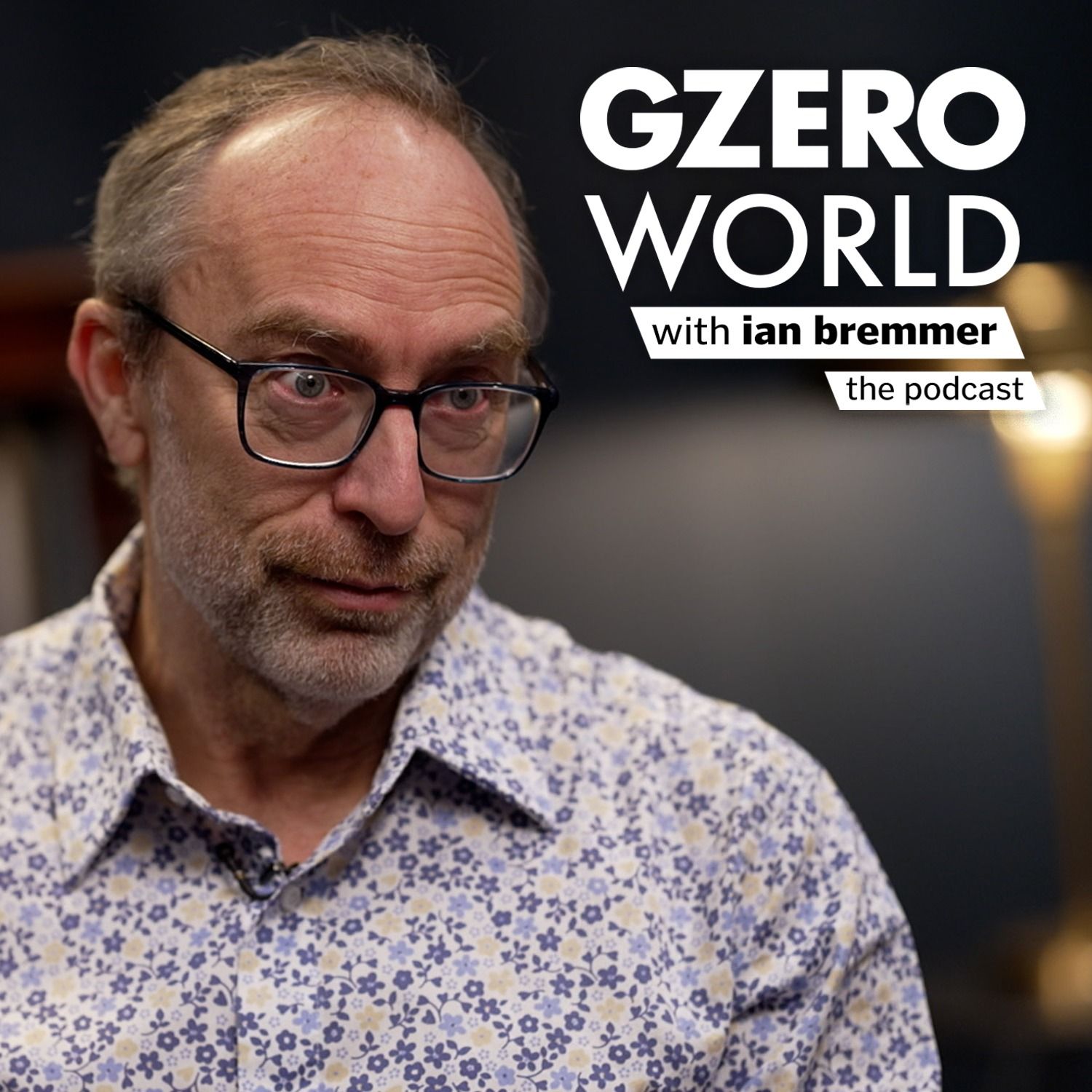
GZERO World with Ian Bremmer
Why we still trust Wikipedia, with cofounder Jimmy Wales
00:37:15
Can we continue to trust Wikipedia in an age of polarization and AI? Cofounder Jimmy Wales explains why millions, if not billions, still do.
Loading summary
Transcript116 lines
- [00:03]
Ian Bremmer
Hello and welcome to the Gzero World Podcast. This is where you can find extended versions of my interviews on public television. I'm Ian Bremmer, and this week we are talking about one of the most visited and most trusted websites on earth, Wikipedia. At a time when Americans can't seem to agree on anything, we somehow still agree on Wikipedia. The crowdsourced encyclopedia online ranks consistently among the top 10 websites worldwide and has become our go to source for everything from candlepin bowling to the Manhattan Project. But trust is fragile, and recently Wikipedia has come under fire, especially from the political right, for alleged bias, including an uproar earlier this year over an article titled the Gaza Genocide. Meanwhile, artificial intelligence is changing the way we all consume and create information. Can Wikipedia keep up? Today, I'm joined by Wikipedia co founder Jimmy Wales to talk about the future of Wikipedia, the rise of AI, the collapse of institutional trust, and whether a platform built on openness and consensus can survive an age defined by outrage and division. Let's get to it.
- [01:31]
Podcast Sponsor Announcer
The Gzero World Podcast is brought to you by our lead sponsor, prologis. Prologis helps businesses across the globe scale their supply chains with an expansive portfolio of logistics, real estate, and the only end to end solutions platform addressing the critical initiatives of global logistics today. Learn more@prologis.com.
- [01:57]
Ian Bremmer
Jimmy Wells, thanks for joining us on Gzeromini.
- [01:59]
Jimmy Wales
Thanks for having me. It's good to be here.
- [02:01]
Ian Bremmer
So, Jimmy, your new book is about trust, and at a time when there seems to be such a deficit of trust in leaders of all sorts, not just political, how do you think Wikipedia maintains that sense of commitment, engagement and belief among the community?
- [02:23]
Jimmy Wales
Yeah, I mean, this is exactly what sort of got me to write the book. Just thinking about, gosh, we've got this enormous crisis of trust in the world right now. Yeah. Wikipedia has gone from being kind of a joke in the early days to one of the few things people trust and obviously not perfect. And we have to keep maintaining our principles and do the things for trust. But I wanted to reflect on, okay, what did we do? What are the things that organizations need to do that people need to do to build trust? And, you know, a lot of it's kind of obvious and maybe a little bit surprising in other, you know, having a clear, good purpose, transparency. And so, you know, that's, it's so important and I think we have to get back to a culture of trust.
- [03:06]
Ian Bremmer
If you started Wikipedia today in this environment, would it survive?
- [03:13]
Jimmy Wales
You know, I think so, I think so, but it is, it's a fascinating question, and it's actually hard to get your head around, because if you think about a world today without Wikipedia, the Internet would be quite different. I mean, Wikipedia is really part of the infrastructure of how everything works. And, I mean, who knows what would be there instead and all of that. But, you know, I think so. And actually, one of the things, you know, the Internet, like, we think of it today as being really toxic, and it is like, there's so much toxicity.
- [03:42]
Ian Bremmer
It's incredibly toxic.
- [03:43]
Jimmy Wales
So much toxicity.
- [03:44]
Ian Bremmer
And it wasn't when you started Wikipedia.
- [03:46]
Jimmy Wales
Well, was it or wasn't it? I think this is the interesting thing. So before the World Wide Web and Tim Berners Lee and all of that, we had something called Usenet, which was like a giant message board, unmoderated and in principle, almost unmoderateable because it was on a distributed system across lots of different mainframes and things like that. And it was notoriously toxic, horrible. Like, people were absolutely flame wars endlessly. So I always say, turns out we don't need algorithms to teach us to be mean to each other. We can do it all on our own. And so there was that, but there was also. There was this great moment of feeling of great optimism, like, wow, the Internet, you know, creativity, communication, innovation and all of that. But also we were. We were, I would say there was a moment of risk where, if you remember, you know, AOL was really huge. There were services like Prodigy, CompuServe, all complete walled gardens. And if one of those, and AOL probably was the dominant candidate for that, had become the dominant platform, it might have become a monopoly. And the Internet, the open Internet, might not have ever quite made it. And then it would be really hard to start something new because you would have to sort of pay fees to be on the platform and things like that. And so fortunately, we ducked that. And so in many ways, starting something like Wikipedia for the next Jimmy Wales, the next young person out there, is actually probably easier than ever, in a sense. Starting versus succeeding, obviously, is a more complicated question.
- [05:21]
Ian Bremmer
But also gaining trust. Gaining trust. Also being able to be engaged with a broader audience as opposed to being seen as supporting one group of people or the other. I mean, is that doable in this environment?
- [05:36]
Jimmy Wales
Well, it's hard and it's hard. Is it harder? Is it harder? I think it is harder. It feels to me harder than it has in the past because there's so much the culture wars, the. The divisiveness, you know, all of that seems deeper than it was. And I, you know, how do you really judge that? I think we all have a sense that that's probably true. And you know, even for Wikipedia, like, we get challenged on this, you know, Elon Musk calls us Wokopedia and things like this, and he's starting grokopedia, all of this. So it feels like we have a much more divisive social and political environment today. People feel much more partisan. And so that does make all of these things much more difficult. I live in London and actually the BBC is also under the same kind of pressure. So the BBC, of course, has a mandate to be neutral and I think they do a pretty good job of it. I mean, you can always criticize around the edges, but they've had like, the head of the BBC's resigned. The head of BBC News has resigned because they did this.
- [06:41]
Ian Bremmer
Trump related.
- [06:42]
Jimmy Wales
Was it Trump related? Yeah. And, you know, so it's become quite difficult to, to sort of be trusted in that way to say, like, okay, well, like, are you a fair arbiter of the facts?
- [06:55]
Ian Bremmer
So is Wikipedia suitably trusted to your standards today?
- [07:02]
Jimmy Wales
Mostly. Mostly. I mean, when I look at Wikipedia, part of the way I look at Wikipedia is it's enormous. And so when we talk about certain divisive issues, divisive topics, that is actually a very small percentage of the work. I think most people have used Wikipedia in all kinds of obscure ways. It's kind of the awesome thing about Wikipedia, almost anything you can think of, you can go there and see who are these amazing people who wrote all this great stuff on the more difficult topics. I think we do a great job in some and I think we could do better in others. I'll just tell a little story about Ukraine and Russian Wikipedia. So I met a Ukrainian journalist at a, at a conference.
- [07:44]
Ian Bremmer
And so Wikipedia is shut down in Russia, right? You can't access it directly?
- [07:49]
Jimmy Wales
No, no, we're, we're fully accessible in Russia. Is it.
- [07:52]
Ian Bremmer
China's the place.
- [07:52]
Jimmy Wales
That's not China. We're, we're blocked in China. In, in Russia, they've, they've issued a few fines and they sort of snap at us now and then, of course we don't pay the fines and we just kind of ignore them and nothing ever happened.
- [08:05]
Ian Bremmer
So Russian citizens are on Wikipedia.
- [08:07]
Jimmy Wales
They are on Wikipedia. Yeah, exactly. So I met this Ukrainian journalist and she said, ah, but what does the Russian Wikipedia say about the war? Like, how, how neutral is it? And I said, you know what, I hear good things, but I don't speak Russian. Why don't you tell me? You know, she's a fluent Russian speaker, as many Ukrainians are. So she went off that night, came back the next day and I said, oh, wow, did you have a chance to look at it? She said, yeah, yeah. I read the entire sort of Wikipedia entry about the war. Okay, how was it? And she said it was better than I expected. And she said, like, there are a few things I would have a quibble with, but broadly I was like, great, that's actually, I'm really happy to hear that because there's a few things I would quibble with, lots of things in Wikipedia. And so in a lot of cases, the community does a great job of really navigating these tough issues.
- [08:53]
Ian Bremmer
Why would the Russians tolerate that? Because, I mean, they don't in most spaces.
- [08:57]
Jimmy Wales
Yeah, I mean, I think there's two major things that I'm aware of that aren't blocked in Russia that are a little bit surprising. One is YouTube and one is Wikipedia. And I think it's because people love wikipedia, they love YouTube, they use it, it's very practical. You sort of need it. And there's not a really great alternative for Wikipedia. I mean, the Russians have tried multiple times to sort of set up their own state run competitor. It never really goes anywhere. So I just think, I think they sort of also, I think they understand, like it's one thing with social media that where people are organizing protests and things like that, that's not what we do at Wikipedia. So they sort of get it. And you know, the idea in the modern era, it's like one of the great things we hoped for, the Internet, which is actually true, is like the kind of censorship that attempts to really prevent the citizens from even knowing about something is in the past. Like you can't do that. And in fact, even like the Chinese censorship, they understand, like when they censor any discussion of Liu Xiaobo who won the Nobel Prize, they know it's not that Chinese people don't know that a Chinese person won. It's about a chilling effect on the domestic conversation. And so they sort of know like, yeah, people are going to. The Russians know people are going to read Wikipedia, they're going to whatever they read the foreign media and so on and so forth, they can't control it all. I think what they do is more chilling effects on the domestic conversation.
- [10:26]
Ian Bremmer
They also try to flood the zone in terms of their own information, their own people that are promoting their own interest.
- [10:31]
Jimmy Wales
Absolutely, absolutely. I mean, I was at a dinner many years ago now in Moscow and sitting with the editor of a major magazine. And he said, oh, I can make Wikipedia say whatever I want. I just pay $100 each to a few Wikipedians and I can change it. I was like, let's talk about. Let's think that through. Because those Wikipedians would have to be known and trusted people in the community. They would start writing strange things. The other community members would go, like, what are you doing? Do you have a source? All of that. It wouldn't last. You wouldn't get very far. And in fact, it cause a huge stir because it's a completely decentralized model. Completely decentralized model and a very open community. I'm like, you're the editor in chief of a magazine. You can print whatever you want. So it's a lot easier to corrupt you than it is to corrupt Wikipedia. And so, yeah, it's an interesting thing.
- [11:18]
Ian Bremmer
Do AI models where it's not just about one or two or three people that you pay $100 to, but you can throw hundreds of thousands of agents at a page. How do you deal with that?
- [11:31]
Jimmy Wales
So if right now, if somebody started flooding Wikipedia with a thousand entries in one night, even pre AI, they would be blocked. They would be stopped very quickly. Like, what the hell are you doing? Like, stop, slow down. Let's have a conversation. What's going on? And so flooding Wikipedia is much harder than, say, social media where you can create thousands of. I mean, this is absolutely what they do, create thousands of accounts and send some tweets and things like that. And at least so far, you know, AI agents aren't really able to mimic a human being for very long or for very much. You know, you can pretty quickly tell. And in fact, if you've got some experience, you know, it's pretty obvious. AI writing, not always, but, you know, it's kind of obvious. And also, like, from our perspective, it's like, okay, are you engaging in the dialogue? Are you making valid points is really more important than who you are? Which is why, you know, we've always said, like, anonymity isn't a problem as long as there's a pseudonym that's stable and reliable. Like, I don't really care who you are. But if you're the same person who I've known for three years and we've worked together on many articles, then if we disagree on something, there is that level of trust of like, okay, hold on. Then, you know, I. I have some respect for you as a person. I'm going to have to listen and grapple and we're going to have to find a compromise. Whereas in social media, you know, as you know, you can post anything you want on X and, you know, if it bothers somebody somewhere, you'll get hundreds of accounts yelling at you. And they're all completely random strangers or possibly bots, you know.
- [13:07]
Ian Bremmer
Yeah. I mean, my experience with Wikipedia is that the vast majority of people are just really, really wonky. I mean, they're like, they have very specific interests and they want to get those things right. It's like Trekkies times a million, times a million.
- [13:22]
Jimmy Wales
That's exactly right.
- [13:23]
Ian Bremmer
Where are the places that you do see a structural political problem and what is it?
- [13:29]
Jimmy Wales
Yeah, I mean. Well, lately I've been raising concerns about our coverage of Israel, Gaza.
- [13:37]
Ian Bremmer
Yeah, I've seen that.
- [13:38]
Jimmy Wales
Simply because I think that we at the moment, and there's a big discussion taking place about this, we say things in the voice of Wikipedia far more than we should. And I think that voice of Wikipedia, we really should have a very, very high bar for that. It's one thing we should absolutely accurately report, and no holds barred on people saying this is a genocide, people saying it isn't, people saying whatever. But for us to take a side would require, in my view, near unanimity within the community. It's such an important thing.
- [14:16]
Ian Bremmer
What's an example of a near unanimity thing? That Wikipedia is rightfully having a voice.
- [14:21]
Jimmy Wales
Yeah, I mean, it's actually interesting. I was looking for one the other day because I'm writing some stuff up for the community, some thoughts about this. I thought, oh, well, how about flat Earth? Clearly we must say that the Earth is not flat, but actually we say something like, there's a scientific consensus that the Earth is not flat.
- [14:41]
Ian Bremmer
So it's not really the Wikipedia voice.
- [14:43]
Jimmy Wales
It'S flat in the Wikipedia voice.
- [14:45]
Ian Bremmer
So you're saying that on Gaza, you've taken Wikipedia voice. Why have you done that? How has that happened?
- [14:50]
Jimmy Wales
I mean, it's really. Now we're gonna get super wonky about Wikipedia, but it has to do with the way the. The discussion. We do something called an rfc, which is like a debate discussion, not a vote. Exactly. The way it was closed and request for comment. Yeah, and the way it was closed, the way we think about how do we decide these issues? Because the concept of Wikipedia is you want to have consensus around pretty much every edit, and that's kind of the basis for Wikipedia. But what does consensus really mean? And that gets complicated. So let's say you've got a binary Choice, like which photo of the Eiffel Tower we're going to have this one or that one. So somebody may start an RFC and people start giving their opinions. And in that, you know, eventually, just to stop an edit war, somebody will close the discussion and say, okay, like, we're going to go with this. And probably for something like that, it's not massively important one way or the other.
- [15:47]
Ian Bremmer
You don't know the French very well, Jimmy.
- [15:50]
Jimmy Wales
60% will be fine and the 40% will go, yeah, okay, fine. Like, you know, most people seem to prefer the other one, so I'm going to let it go. So that's enough for consensus.
- [15:59]
Ian Bremmer
Hard to see that on Gaza.
- [16:00]
Jimmy Wales
Hard to see that on Gaza. And so, you know, but one of the techniques and one of the really valuable things that we do, and actually there's a great example of this, and in our article about abortion, there's some really great, like the way it's presented, you know, everybody who's working in that space will understand. So I always say, imagine a kind and thoughtful Catholic priest and a kind and thoughtful Planned Parenthood activist, and the key specification is kind and thoughtful. And they're going to try and work together on this and they're never going to agree. But they also both understand Wikipedia can't say abortion is a sin, and it can't say abortion is a fundamental right of women. But what it can say is the Catholic Church position on abortion is thus and such. And the Pope has said this, and critics responded that, and it sounds like.
- [16:48]
Ian Bremmer
A Wikipedia, because you're trying to be a resource.
- [16:50]
Jimmy Wales
And that's exactly what it says. Really wonderfully written. And you say, like, this is balanced. Because we don't try to answer the question or take a side. We just describe the debate. And so where that gets tricky is like, okay, well, where do we draw the line and say, well, actually, there isn't any actual real debate. There's lots of things just saying, for example, Paris is the capital of France, there's no debate. And if somebody pops onto a talk page saying, actually, I disagree, actually, I think Rome is the capital of France, people are just going to go, yeah, okay, sorry. And so consensus doesn't necessarily have to mean unanimity, but it should be pretty close, particularly if it's a really important issue. And so that's the conversation we're having is like, can we relook at how are consensus, like decisions being made when you're closing an RFC and things like that.
- [17:42]
Ian Bremmer
So what is the Wikipedia voice on Gaza, right Now?
- [17:44]
Jimmy Wales
Yeah. I mean, right now it says that what's going on in Gaza is an ongoing genocide, which is clearly one side.
- [17:52]
Ian Bremmer
One specific side of the discussion. How has that happened? Happened?
- [17:56]
Jimmy Wales
Well, it's what I'm saying. When somebody closed, they looked, they found a majority vote instead of consensus. That is my view. I think there was that we had a huge problem with a troll sock puppet who was like creating fake accounts. And a lot of people called it troll sock puppet. Yeah, explain to me.
- [18:14]
Ian Bremmer
It sounds exciting, but explain to me what a troll sock puppet is.
- [18:16]
Jimmy Wales
A troll, you know what a troll is. Somebody called I know what a sock.
- [18:19]
Ian Bremmer
Puppet is, but I hadn't brought those two together.
- [18:21]
Jimmy Wales
Well, so a sock puppet. So somebody creates lots of accounts, pretends to be different people. It was pretty clear, it was pretty obvious, but they were coming in through lots of different IP addresses. And basically there was this huge sort of project to clear this out. And there is a sense amongst some, I'm not going to take a side on this, but there's a sense among some that basically way too many people on one side of the debate got caught up in that blocking and legitimate users got caught up in that blocking. Another element is what we call the. It's called the.
- [18:53]
Ian Bremmer
And that was on the Israel side.
- [18:54]
Jimmy Wales
On the Israelis, because the troll was pro Israel and causing a lot of trouble. And so there was a collateral damage. That's one of the things that has happened. Another element is there's a restriction, because it's been so contentious, the arbitration committee put a restriction on saying you have to have at least 500 edits and you have to add an account for at least 30 days.
- [19:18]
Ian Bremmer
If you're going to opine on this.
- [19:19]
Jimmy Wales
Issue before you can come in on.
- [19:20]
Ian Bremmer
This issue in the rfc.
- [19:21]
Jimmy Wales
And that's a problem. That's a problem because people of goodwill who come to this and they're like, hold on, that seems pretty aggressive. I mean, by the way, I've been searching, there are no major news services anywhere, Reuters, the BBC, nobody is in their own voice saying this is a genocide. And they do say that about other things. And so that people of good faith have not been able to participate. So these things are going to change. In my. I'm confident. But it's important to know, like, my role in Wikipedia is I'm not the editor in chief, I can't make these things happen, but I can coach people, remind people, convene people. And I think there's a lot of people in the community are like, yeah, this, we've gotten like through a series of circumstances, we've gotten to a place that isn't great and we really need to look at a lot of the processes and figure out how do we get here, because it's not living up to what Wikipedia should be doing.
- [20:19]
Podcast Sponsor Announcer
The Gzero World podcast is brought to you by our lead sponsor, prologis. Prologis helps businesses across the globe scale their supply chains with an expansive portfolio of logistics, real estate and the only end to end solutions platform addressing the critical initiatives of global logistics today. Learn more@prologis.com.
- [20:46]
Ian Bremmer
Now, how do you deal with the other side of the issue? Which is, I mean, you've talked about the BBC, you've talked about Reuters, you know, Western sources based with journalistic standards, but also with journalists that have been brought up in the West. They have certain perspectives. Most of the editors are male, I assume most of the editors are white. How do you deal with that? Because that's not. When people think about Wikipedia and they see the globe or something that's globe shaped on the homepage, you would think that would represent 8 billion people. Yet the reality of the experience is there's a Western bias.
- [21:20]
Jimmy Wales
Yeah, well, yes and no. I always joke when people say, oh, I assume mostly white, I'm like, you've clearly not met the Japanese Wikipedians. They're mostly Japanese. But the point still stands. The point is valid. And even the Japanese Wikipedia tend to be quite that. They're probably all Trekkies and they're nerds and geeks and all of that. And we think it's a problem not because we have some woke agenda or affirmative action. That's not it at. It's like if it impacts the quality of the content, then it's problematic. And so there was a study done. It's been many years ago now. I bet if you did the study again, it would be a little improved now, but maybe not looking at major, like, authors who've won major literary prizes, so novelists who've won big prizes. And if you look at the articles about men, they are longer than the articles about women.
- [22:10]
Ian Bremmer
Shocking.
- [22:11]
Jimmy Wales
Yeah. It doesn't mean I would be stunned.
- [22:13]
Ian Bremmer
If that was the case.
- [22:13]
Jimmy Wales
Yeah, yeah, it is and it isn't because. And I think this is an important nuance here. It isn't because the male Wikipedians think, oh, novel by a woman, that's obviously not interesting and not important. It's more like people write about what they know, they write about what they've read, what they're passionate about. So if you take a very simple, like one genre, hard science fiction, the readership is majority male by quite a wide margin. And that's beyond Wikipedia's scope. That's just a fact about the world. And so those will be, you know, people will be completely obsessed by those and, and they will write huge entries and then other authors maybe not so much. And that's a problem. And so this is why we need like, okay, well there, this is really important. We need people who are reading those novels, we need more people. And who are those people? Well, maybe in some case it's going to be well that that author has a majority female audience and therefore we need more women editing Wikipedia. So it is something that we really do think is.
- [23:14]
Ian Bremmer
Now the DEI approach would be okay, we just need like a standard that says that these female authors are going to have sort of longer bios, which clearly is not what you want to do.
- [23:27]
Jimmy Wales
No, no, what we really want to do is just say, let's bring in more people, let's make sure. So from our perspective, how do you do that?
- [23:34]
Ian Bremmer
How do you bring in more women?
- [23:35]
Jimmy Wales
Yeah, so there's a few elements to it. So I do think, and I'll say a stereotypical comment, but it's about men, so it's a little bit safer. But Wikipedia is written in a very, the tone of Wikipedia is very authoritative and so forth. And it turns out your 28 year old tech geek male is quite good at speaking as if they know what they're talking about, even if they don't know anything about it. But the truth is we've done focus groups in the past ask highly qualified women, oh, well, why don't you edit Wikipedia? And they are far more likely than men in a similar focus group group to say, well, I'm not really sure I know enough. And that's a cultural thing, it's beyond Wikipedia. But it's something we have to grapple with. We have to say, okay, right, so we know this, we know we need to have really make sure we've got a welcoming environment. And then that brings us to sort of internal questions of like, you know, just in the last few years we've just passed a universal code of conduct which is really about doubling down on and really emphasizing like, how should you behave as a Wikipedia volunteer? And so like one of our oldest rules is no personal attacks. So in a Wikipedia debate you're not supposed to use ad hominem or attack other people and things like that. So the opposite of social media, in.
- [24:55]
Ian Bremmer
Other words, which actually required yeah, yeah, exactly.
- [24:58]
Jimmy Wales
And encouraged often by the algorithms. And so obviously that doesn't. Just saying that's the rule and all that. It doesn't make it magically happen. I think broadly there is a sense in our community and there's a, A culture that says, you know, but we're human beings. So people get upset, they yell at each other, and then, you know, like, in normal, healthy, real life communities, if you fly off the handle of someone, you should probably apologize, like, and then people can forgive you. And it's kind of like, okay, yeah, yeah, okay, yeah, yeah, that didn't go well. We had a big fight. You know, let's, let's start over. And so, you know, to the extent that we fail at that and we have a brusque sort of harsh environment, then that's problematic. And, you know, and we know this from social media, like, one of the things, one of the great fallacies of sort of Elon's approach to moderation, which is to have almost none at all on X, is the idea of like, oh, we should encourage free speech for everyone. And that. Yeah, but if you've therefore created a culture where people who have a slightly different view from the majority of your users get yelled at and abused and shouted down, you know, certain types of people, basically you're quiet, thoughtful, kind people, they're just like, yeah, I'm out. Totally. And I find, you know, there's loads. He's fine with that. He's fine with that. Yeah, because I don't, I, you know, it's sort of like, you know, the idea of the purpose of Twitter being perhaps people have said this. I don't know if Elon said it, but like, the global town square, like, it's a pretty horrible town square. You know, you go there, you get mugged and people spit on you. It doesn't seem like the idea of a place where people can come together. And yeah, it's a free speech area where people can put forward unusual ideas and maybe they're wrong and we're going to have a pleasant discourse about it. It's just toxic. It's just like a horrible environment. And that doesn't work for anybody.
- [26:54]
Ian Bremmer
I wonder how you feel as the person, the co founder of Wikipedia, how you feel like you need to personally live the values of this organization.
- [27:10]
Jimmy Wales
So I think so some of the things is like, I remember when Obamacare passed and a reporter asked me what did I think of Obamacare? And I'm like, nobody cares what I think about Obamacare. Like, I don't feel like I have standing to talk about that. And frankly it's not, you know, it's like that's not an opinion that I really want to be on the record one way or the other. I have my private view which, and so there are, there are many cases where I do think, okay, my personal.
- [27:40]
Ian Bremmer
Views, so stay in your lane is important.
- [27:42]
Jimmy Wales
Yeah. And so for example, Gaza genocide. I have expressed no opinion about whether or not I think it's a genocide. I think I can say it's horrible, the whole situation is tragic. But that's not relevant, that's not the point. And so for me to take a side and become a campaigner on one side of an issue or another is often a really bad idea for me. Unless for example, I do say I'm very happy to campaign about issues that I think are relevant and that I feel I have some authority to speak on. So things like if some proposed Internet regulation would be damaging to Wikipedia, I think I have to say, like, that actually isn't going to work for us. Like that's going to be bad for Wikipedia. And you know, in, in the UK we're, we're sort of in a thing about the Online Safety act, which is potentially going to treat Wikipedia as if it's social media and, and sort of various things, various assumptions that are made that, you know, the way social media works, almost everything works except for Wikipedia is what I call the, the feudal model, which is all the users are just serfs on the masters estate and then the moderators are employees of the company and it's all very top down. Wikipedia's, you know, it's very democratic, it's very open, the moderators are come from the community. There's not really top down in the same way. And so if you imposed obligations on the Wikimedia foundation to handle the moderation, that would be disempowering one of the few things on the Internet that actually basically works pretty well. So I do speak about things like that. And obviously we faced censorship around the world. We have Wikipedians in jail in various places and we do say like this is not okay. We have to stand up for freedom of expression.
- [29:35]
Ian Bremmer
Understood. Now here you are marshaling millions of people that are involved in the site and all of these entries, most of which are not politically controversial at all. At what point is there going to be a Wikipedia LLM that is trained on all of this stuff that allows a student or anyone on the net to query it, engage with it and it becomes a much less biased yeah.
- [30:07]
Jimmy Wales
Well, I mean, I would say we already have that in one sense because all of the LLMs are trained on Wikipedia data. It's a fundamental.
- [30:15]
Ian Bremmer
So you go to GROK and it will use Wikipedia sources. Among other things.
- [30:19]
Jimmy Wales
Among other things, yes. Yeah, exactly. But I do think there is an interesting piece there that is a little bit different, which is to say our search experience. So if you go to Wikipedia and you go to our search box and you type why do ducks fly south for winter? Basically, the search engine has no idea what you're talking about. It's keyword bust and you probably will find ducks in winter. Whereas with a large language model where you could actually ask a question like that and it would respond not with its own made up stuff, but respond with exact quotes from the relevant Wikipedia entries or tell you, oh, the answer to that is in the article on bird migration.
- [31:00]
Ian Bremmer
Yeah, that'd be incredible.
- [31:01]
Jimmy Wales
It'd be great. And so I do think that we will be moving in that direction.
- [31:04]
Ian Bremmer
You already worked with our search.
- [31:06]
Jimmy Wales
Yeah, yeah. So we have a machine learning group who are doing all kinds of experiments and things like this. We've got, we're working with. We're very ideological about open source and so we. So I think we're probably not going to partner with Google or OpenAI or anybody like that to sort of replace our search engine with the proprietary thing they've built for us. That's just not our style. We really value our independence. And so the open source is a big part of that. And so that, that means we'll have to develop something ourselves and so on and so forth. So it'll take some time.
- [31:42]
Ian Bremmer
So you are a nonprofit?
- [31:43]
Jimmy Wales
We are a charity.
- [31:44]
Ian Bremmer
And you're not a non profit like OpenAI, like you're going to stay a nonprofit.
- [31:48]
Jimmy Wales
We're a charity. Yeah, exactly.
- [31:49]
Ian Bremmer
And the vast majority of your funding actually comes decentralized every year from all of these sources. That doesn't change, right?
- [31:57]
Jimmy Wales
That doesn't change. No, no. We're really fundamentally funded by the small donors. Somebody told me the other day, our average donor, average donation is just over $10. And so that's actually really, really important. So again, that virtue of independence, right. Gives us the intellectual independence that we might not have. I mean, when Elon was doing his doge work and sort of taking a chainsaw to various government spending, I emailed the finance team. I'm like, can you just confirm for me that we don't get any money from the. And they're like, yeah, we don't get Any money from any governments. And that's never been like a super hardcore principle of ours. It's just been always true. So I'm not going to tell you we've never had any government grants anywhere in the world. Maybe we have. I don't know of any, but it'll be small. And also, we're not funded by one or two billionaires. I mean, people used to complain. Actually, they probably still do. But I just, I don't go on Twitter anymore. But it's like, oh, why are you always putting these banners on the site asking for money? Why don't you just get, get Google and Microsoft and Facebook to pay?
- [33:00]
Ian Bremmer
For fairly obvious reasons.
- [33:02]
Jimmy Wales
Some fairly obvious reasons of, like that actually think that through a minute. It's actually really important. And that's become more obvious. Like when we, when we look at, you know, something like Elon putting I don't know how much money into funding something because he doesn't agree with Wikipedia, you think, wow, what if, what if we, what if Elon had come to us, you know, however many years ago and says, I'll just fund it all.
- [33:27]
Ian Bremmer
It'd be completely different.
- [33:28]
Jimmy Wales
You don't need to do it. Then suddenly we would be under somebody's thumb and that would be terrible. And so that's really important. So thank you to all the donors.
- [33:36]
Ian Bremmer
But this is the key point, right, to close is that, I mean, at one point when the Internet felt a lot more decentralized. Today the Internet feels a lot more centralized. The platforms and their algorithms, and Wikipedia is absolutely contrary to that. Are there a couple other things happening, like Open source, for example, where you say, you know, the pendulum might be starting to swing back towards decentralization?
- [34:04]
Jimmy Wales
Yeah, I do. So. I mean, one of the things I really love is Signal, the messaging app. It's because it's run by a nonprofit, just like Wikipedia. They're super ideological about their business model, is not going to take them down a path that leads them to wanting to break encryption, to whatever. I think that's fantastic.
- [34:23]
Ian Bremmer
And even cabinet secretaries use it, apparently.
- [34:28]
Jimmy Wales
Exactly. And I mean, that's hilarious. And then, oh yeah, another thing, like, I think something that's really interesting that's going on in the world of AI is the open models. So the open source software, the open models are basically a half step. There are several months behind the cutting edge proprietary models. And I think that's super interesting and actually really important because it does mean that we are going to have a much greater diversity of what's going on in that Space and certainly it poses an interesting challenge for regulators because you can tell like if it's only five big companies that can do it, you can regulate five big companies, you just tell them what to do and they're going to have to comply and all that. 250,000 open source developers running machines on their own, you know, on their own dime and so forth.
- [35:25]
Ian Bremmer
Because it's going to be decentralized.
- [35:27]
Jimmy Wales
It's going to be decentralized and loads of everybody's going to want it. Like a lot of.
- [35:30]
Ian Bremmer
But that's a problem for the Global South. That's a problem.
- [35:33]
Jimmy Wales
Of course, people that are not going.
- [35:34]
Ian Bremmer
To have access to individual compute, you.
- [35:37]
Jimmy Wales
Know, the cloud based stuff is there and it's going to be great and all of that and probably will always be a half step ahead. But the point is like a lot of the things, you know, that you can do, I mean I, I'm, you know, I think most people are surprised and a little concerned and I certainly am when people are basically pouring their heart and soul into chatgpt in a conversation about very, very personal things. And, and it's concerning for more than one reason. So one reason is, well, hold on, is it giving good advice or is it actually radicalizing people or doing whatever? I think it's, think it's probably kind of okay. I think there's things that have to be looked at there, but, but also like, gosh, we know who owns that information. Who owns that information. What are the, what are the possibility of data breach or leaks or indirect leaks and things like that? I just think, oh, you probably shouldn't be doing that, but local models can be quite good at that sort of thing. And even things like, you know, things you wouldn't want to leak that aren't like super, super personal, but it's sort of like, gee, I actually, I want to write a resignation letter from my job, but I'm not sure I'm going to do it yet. And I'm going to resign and I want to.
- [36:48]
Ian Bremmer
That's pretty super personal, actually.
- [36:50]
Jimmy Wales
It is super personal, but if it leaked five years later you would be like, well okay, I did resign or it didn't and like whatever is not that bad but you know, like really intimate personal problems. Yeah, any time in your life you wouldn't want. So, you know, so I think there's going to be a lot of demand and also just like it can be so useful in all kinds of local contexts. So anyway, I just think that's an interesting space where the question is are we going to have a handful of big companies who are absolutely running our lives or can we do that on our local computer? That's something where I do think there is this decentralized versus centralized thing going.
- [37:24]
Ian Bremmer
On and that tension persists.
- [37:26]
Jimmy Wales
It persists and I think it always will.
- [37:28]
Ian Bremmer
Jimmy Wells, thanks for joining us.
- [37:30]
Jimmy Wales
Thanks. Good to be here.
- [37:34]
Ian Bremmer
That's it for today's edition of the Gzero World Podcast. Do you like what you heard? Of course you do. Why not make it official? Why don't you rate and review GZero World 5 stars only 5 stars. Otherwise, don't do it on Apple, Spotify or wherever you get your podcasts. Tell your friends.
- [37:57]
Podcast Sponsor Announcer
The Gzero World Podcast is brought to you by our lead sponsor, prologis. Prologis helps businesses across the globe scale their supply chains with an expansive portfolio of logistics, real estate and the only end to end solutions platform addressing the critical initiatives of global logistics today. Learn more at prologis.
- [38:17]
Jimmy Wales
Com.