Loading summary
Transcript35 lines
- [00:01]
A
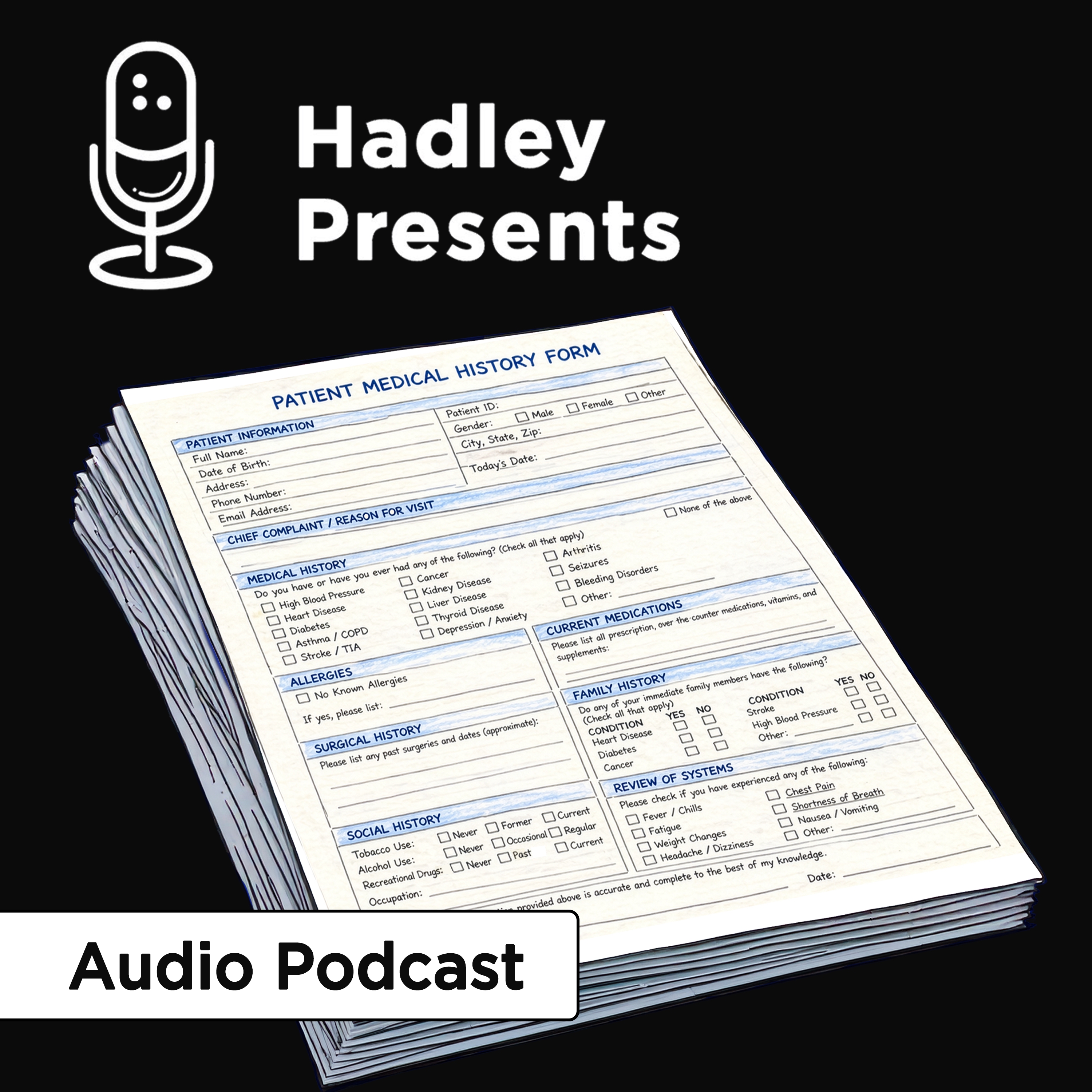
Paperwork is never a fun activity, and vision loss can bring some additional challenges. In this episode, Sam Seavey of the Blind Life joins us to discuss challenges for dealing with forms and paperwork. I'm Ricky Enger, and this is Hadley Presents. Welcome to the show, Sam.
- [00:21]
B
Hey, Ricky. Thank you so much for having me back.
- [00:24]
A
It's always fun to have you, even though the topic that we're talking about today is not nearly as much. Cool and exciting is what we usually chat about, that being tech and gadgets and such. But it's a necessary evil, I think paperwork informs. So before we jump into that, there may be some people who are listening who are not familiar with you and what you do. So can you just give a brief intro?
- [00:52]
B
Sure. Well, I am an assistive technology specialist. I run an AT program at a nonprofit. I do that couple days a week, and then the other seven days a week is creating content online. I have a YouTube channel called the Blind Life where I share my life living with vision impairment, mostly talking about assistive technology and adaptive skills and systems and equipment, all of that fun stuff. So most of that, obviously, I run into a lot of paperwork, so I think I'm a good person to talk about this.
- [01:27]
A
Yeah, it seems it's one of those things you can't get away from, no matter how much you might try. And believe me, I try. But paperwork is a thing that we all have to deal with, and I think it comes in a lot of different varieties, I suppose. So you've got the electronic stuff. You've got even different kinds of electronic stuff like PDFs or there's a web form or any number of other things. But traditionally, we're accustomed to paper forms, and those still crop up everywhere. So for me, as a totally blind individual, I'm probably going to deal with paper forms a little differently than someone who does have some vision. So why don't we just talk about some of the strategies that you might use or suggest to clients if you've still got some vision?
- [02:20]
B
Yeah, that's a great point. I think we're coming at this from all angles because I am low vision, and so I'm still trying to rely on what usable vision I have to accomplish these tasks. So, yes, we still get the paper forms, usually doctor's offices, things like that. And luckily, a lot of this is kind of going towards the digital, but that presents issues as well. And I know we're going to touch on that. But for us with low vision, ideally, I talk about with clients, I talk about using magnification Whenever possible, using some type of handheld magnifier. Although that's tricky sometimes managing a magnifier in one hand and a P and the other. So depending on their level of magnification that they need, if you can get some type of stand magnifier, whether it's an optical magnifier on like a stand with a light, that's fantastic. But generally we're going to be saying throw it onto your video magnifier, your CCTV and fill it out that way. And in a lot of most cases, that's very doable. It takes a little bit of practice to get to navigate the form. And you know, especially with high magnification, finding the spot that you need to fill out. You know, I talk about, well, put your, put your pen down and then try to find your hand, find the tip of the pen on the screen and, but, you know, it's, it's doable. It's doable.
- [03:49]
A
Yeah. And if you're, if you're listening and you're thinking, okay, what's a stand magnifier or a hand or a, you know, video or digital magnifier, that's totally fine. We do have a set of workshops that go through all of those things and just kind of shows you examples of these are the magnifiers that we're talking about in the situations that you might use them. But yeah, I think you're absolutely right. Magnification is going to be the first thing that people with some remaining vision try. Now, of course, if you've gotten to that point where you don't have enough vision to deal with that print, you're going to be looking at some other alternatives. Now that may be digital, which we're about to get into, or it may just be, you know, straight up asking for help with filling out that paper. Right.
- [04:46]
B
Yes. Especially if, you know, even for the low vision users, you know, if you're at the doctor's office, you might not be lugging around your giant cctv.
- [04:55]
A
Right.
- [04:56]
B
So, you know, you might, you might be able to do a little bit of a workaround using your phone as a magnifier. But yeah, sometimes the easiest thing is to just ask for the help. And there's, there's nothing wrong with that at all. They're usually always eager to help.
- [05:13]
A
Yes. And I think that's its own thing, the process of asking for help, because it can feel weird and it can feel like, you know, I should be able to do this and maybe if I had enough Time I could, and I think we'll, we'll touch on that in a little bit. But paper forms, like you said, are somewhat being phased out in favor of something digital. So what are the good things about having a digital form? Something that you can use a phone or a computer to fill out.
- [05:49]
B
Well, for the low vision users, oftentimes you can zoom in and on that screen, your phone or your computer screen, you can zoom in, you can make it larger and make it easier to read the digital forms if you're a screen reader. Most of them tend to work pretty well with screen readers and that can be really easy to navigate as well.
- [06:15]
A
It really is a sense of freedom. I was so surprised. You know, nobody looks forward to filling out forms, but I did have this feeling of, hey, I can do this. One example is checking in on the portal for my doctor's office. Now you can do that ahead of time and they ask you all these questions and you got to go through with your medical history and all of that. And it was always kind of annoying for me to be sitting in the doctor's office and leaning over to whisper someone the answer to the question because I didn't want the whole office to know, whatever it was. And now with something digital, the screen reader would read that aloud. Of course, if you're using magnification, then you're able to read that a lot easier. You can change your contrast in a way that you might not easily be able to do with a paper form and even with a digital magnifier. And so it's nice. But the digital forms are not always accessible. That's always such a letdown, right? Have you encountered this where you think a form is going to work and it doesn't for some reason?
- [07:31]
B
Oh, yes, yes. I actually just last week encountered this where a company sent me a contract that I needed to fill out and opened it up. I believe in Acrobat and it did not work. It just was not. It was. That's the thing with digital forms. They're usually PDFs, which PDFs kind of hit or miss. Generally they're not great, but sometimes they are. It really all comes down to the way that it was created. If it was created with accessibility in mind, then awesome. But a lot of companies don't. And so it might be what's called a flat PDF where it's, it just doesn't work well, especially with a screen reader. And I ran into that the other day and I had to print it off and then manually sign it and Then I had to rescan it and upload it back to them. And it was just so many different steps. And so I made sure to, when the email that I returned it to them, I made sure to let them know that in the future, please send me accessible information that's accessible. Because this was not. And it was a bit of a challenge and I don't want to have to deal with that.
- [08:41]
A
Exactly right. It's such a letdown. And I think a lot of companies don't even know about what this is until you point it out to them. You know, did you know that you can design your PDF so that a person can actually type their info into it? Other situations are, even just a signature can be weirdly inaccessible. You think, okay, I've gotten through this whole form and it's been accessible. And then it gets to the part where you have to write your signature and they're not accepting the typed signature. I've had to do things where it's like, okay, I've turned off my screen reader and kind of scribbled around on the screen and hoped it was in the right place.
- [09:34]
B
Yes. And trying to use a mouse too, which is.
- [09:36]
A
Yeah, right.
- [09:38]
B
Very hard.
- [09:39]
A
So if you happen to know that you're going into a situation like the doctor's office where it's a pretty good bet there's going to be forms involved, are there things that you do or think about ahead of time so that you're a little better, better prepared to handle whatever they might throw at you?
- [10:00]
B
Yeah, there's some things you can do to kind of prepare. First is if you know it's going to be a paper form, then you can request that they can send it to you in the mail prior to your appointment or provide it the way you can print it out. And then you might be able to get some help, one of your sighted supporters, family member or friend to help fill that out prior to your appointment. As you mentioned, going into the portal and getting that taken care of prior, if that's available, is great as well. But my, my thing is in my old age, I'll say in my old age, in my wisdom of age, I, I'm a big advocate of being an advocate. I say, you know what, speak up for yourself. And if you walk in there, I have to do this quite often at my doctor's office for some reason. I just say, I, unfortunately, your, your form's not accessible. I'm going to need some assistance. And, you know, you don't have to be mean about it. You don't have to be kind of rude about it. As I said before, they are always super happy to help and it's part of their job duties there at the doctor's office. So shouldn't be afraid to ask for help.
- [11:08]
A
Yeah, I think that's such a good point because we often are afraid to ask for help for various reasons. Some of it is about pride or not wanting to feel like a burden or, you know, just that I should be able to do this myself. And then some of it is, is having had some negative experiences and just assuming that someone is going to feel put upon or, you know, they're busy and you feel like, well, now they have this obligation to help me. And really the truth is, in a lot of cases they do have that obligation to help you. It may not feel great, but when the office is busy and they've got other things to do. But if that form hasn't been made available and in a way that you can work with it, like you said, you don't have to be rude and angry, just you got to get the thing done and this is the way to do it.
- [12:08]
B
Yeah, and I guarantee you're not the only one.
- [12:11]
A
Exactly. It's not just you. Have you had some real horror stories? Whether it was with advocacy, getting some help with a form, or maybe it was just the form itself, and whatever form the form was in was just really challenging and you kind of decided to bang your head against the wall for a little bit and try and get it done.
- [12:38]
B
Nothing too dramatic. It's usually things like that, receiving the form just in an inaccessible format or usually forms that I have to fill out having to do with the government. Those are the, those are the most fun because it's like 15 pages and it's, it's, oh, you can skip this section, but if you need to fill out this section, then you got to go all the way Back to section A4. And, you know, and so trying to navigate those using magnification is very tricky because the spot you need might be right next to you, but you're zoomed in and so it's not in your field of view. And so it's, it could, it could be on a completely different planet and you just have no idea. So those are, those are the trickiest ones, I think.
- [13:23]
A
Yeah. And it's a lot of reading too, so you could be dealing with some visual fatigue if you've got those 15 pages to deal with. As a screen reader user, I've had some interesting ones where it was a PDF or even a Word document where I could read read it. But it was laid out in a way that was very visually appealing, but not so much easily navigable with a screen reader. So it's not clear, okay, where do I fill this out so that when I print it, it looks the right way and it's not associated with some other section? So that can be a challenge where something is almost, but not quite accessible. So you're thinking, okay, I got this, I got this. And then three hours later you're think, do I got this? I'm not really sure. So how do you go about figuring out when you've tried to work with something and it's taking too much time or you've got that visual fatigue? How do you figure out where the line is to just stop and go? Is this really worth my time and effort to do it like this?
- [14:43]
B
Yeah, I think, like I said, as I get older, my line is getting smaller and smaller where I'm just. If it's frustrating at all, and not just that it's a very large form that I have to fill out and I just don't want to do it. And, you know, that's different. But if it's clearly, like you said, it's not structured in the way that works well with the screen reader, it's not done in a very linear format, and the screen reader is jumping all around and just not making sense. Well, that's an inaccessible accessibility issue, and I don't put up with those anymore. I just. As I've gotten older, I. I just, I'll stop and I'll send a message out to the. The sender and be like, I'm sorry, but you need to fix this on your end and then send it back to me, because I shouldn't have to be putting up with this and dealing with this frustration when it. This was a problem on your side. Once again, very polite. I don't want to be rude or anything. I don't want to be a jerk, but I definitely want to be, you know, firm and get my, my point across, that it's up to you to fix this and then send it back to me, and then we can move forward.
- [15:48]
A
It takes a while for some of us to learn. And I'll say, I'm still a work in progress, but just like you, with age comes wisdom. And I'm realizing, yeah, I got better ways to spend my time than dealing with this. And I don't get a medal at the end of it either. You know, if I accomplish it and Send it back to the person. They just check a box and go, yeah, the form is done. I don't get anything more than if I had just gone the route of, like you said, ask for something a little more accessible. Or maybe I can utilize a different resource to get it done. So one of those things is advocacy. Are there some other ways that you deal with this? For me, it's using the AIRA service, where you can have a visual interpreter and they can jump onto your computer or whatever it is and assist. Maybe that is reformatting it after you've typed in all of the stuff. Or maybe it is, you know, writing in that PDF, whatever it is, they are very helpful for me. Are there other resources like that that you can think of?
- [17:08]
B
Well, that. That is a fantastic option. I really like that as well. You know, if it's a digital document that I need to sign, I will try it in a bunch of different resources, I guess you could say, like, you know, I'll try it in Acrobat, see how that works. I might try to open it up in Edge on Windows computer to see if maybe. Okay, you know, there's. That. There's always that hope that, oh, maybe it's going to work this time. All else fails, I might grab my wife and, and say, you know, honey, I need help, please come help me.
- [17:42]
A
Exactly. And that's a good resource, too. You don't always have someone available to do that, but sometimes that's what you do. It is quick, it's efficient, and as long as you have some other tools in your toolbox, sometimes that really is the most efficient thing. Hey, can you just show me where to sign or whatever it is?
- [18:07]
B
Yes. And I think the bottom line to all of this is not to drive yourself crazy with this. There are solutions, there's options for getting it done. Like you said, you know, you reach that. That line where you're just like, I can't deal with this anymore. It's not worth it. And so there are other options out there.
- [18:27]
A
Absolutely. Well, this has been a lot of fun. Who, who to thunk it? You know, we're talking about forms and paperwork, which is never a delight, but I think the discussion is going to be so helpful for people and I appreciate your sharing your resources and just kind of your thoughts on approaching this. Is there any last thing that you want to leave people with? Whether it's a strategy that we didn't mention or, you know, just some ways to deal with that frustration and kind of getting past it, I would say
- [19:03]
B
that you're not alone. We all deal with this, even. Even those of us that seem like we have it all together and we are the most amazing blind people on the planet. No, we deal with this frustration on a daily basis sometimes. And the key is to not let it drive you crazy. You know that it's not worth it. Whatever it is, it's not worth it. We can. We can find a way to get it done without pulling our hair out.
- [19:31]
A
Yes. I love that. Well, thank you so much, Sam, again for sharing just some tips and your thoughts and how you approach this. I think it's really helpful. We will have a link to your YouTube channel in the show notes as well as a link to our information on magnifiers if you're hoping to learn a little more about those. And screen readers, too, if you're listening to this and saying, what's a screen reader? And you know, is that going to be useful for me? Yep, we got you covered there, too. It is always a delight to have you, Sam. And until next time, thanks so much for stopping by.
- [20:12]
B
Thank you, Ricky. My pleasure.
- [20:15]
A
Got something to say. Share your thoughts about this episode of Hadley Presents or make suggestions for future episodes. We'd love to hear from you. Send us an email@podcastadleyhelps.org that's P O D C A S T hadleyhelps.org or leave us a message at 847-784-2870. Thanks for listening.