
Podcast
Hanselminutes with Scott Hanselman
Hosted by Scott Hanselman · EN
Hanselminutes is Fresh Air for Developers. A weekly commute-time podcast that promotes fresh technology and fresh voices. Talk and Tech for Developers, Life-long Learners, and Technologists.
36episodes
Episodes
Newest firstAll episodes
Stack Overflow for the Agent Era - with VP of Product Alex Lato
2w ago00:33:10Tap to summarizeAlexandra Lato, VP of Product at Stack Overflow, joins Scott to talk about how Stack Overflow is evolving for the age of AI agents. They explore the new "Stack Overflow for Agents" feature, where a single prompt bootstraps an agent with all the knowledge and APIs of Stack Overflow, and what it means for how developers, agents, and communities share and verify knowledge together. https://agents.stackoverflow.com/
Transcribe →
Who is left behind when AI moves fast? with Dr. Chinasa T. Okolo
3w ago00:34:51Tap to summarizeDr. Chinasa T. Okolo is the Founder and Scientific Director of Technecultura and a consultant for the United Nations and the World Bank. She talks with Scott about the yawning gap between AI's pace of development and policymakers' ability to understand it. She also discusses what it means to do AI governance research with a focus on Global Majority communities that are too often left out of the conversation. https://www.chinasatokolo.com
Transcribe →
The space between the Commits with Zed and DeltaDB's Nathan Sobo
Jun 1800:33:35Tap to summarizeScott talks with Nathan Sobo, CEO and co-founder of Zed, about what comes after the traditional code editor. They start with Zed’s vision for a fast, collaborative, AI-native development environment, then go deeper on DeltaDB: a new approach to versioning software at the operation level, not just at the commit level. Nathan explains why so much important software work happens “between commits,” how agent conversations and code changes can become durable shared artifacts, and what it might mean for Git, collaboration, and the future of programming tools. Nathan previously helped build Atom at GitHub, and Zed describes DeltaDB as operation-level version control for human and AI collaboration. https://zed.dev/deltadb
Transcribe →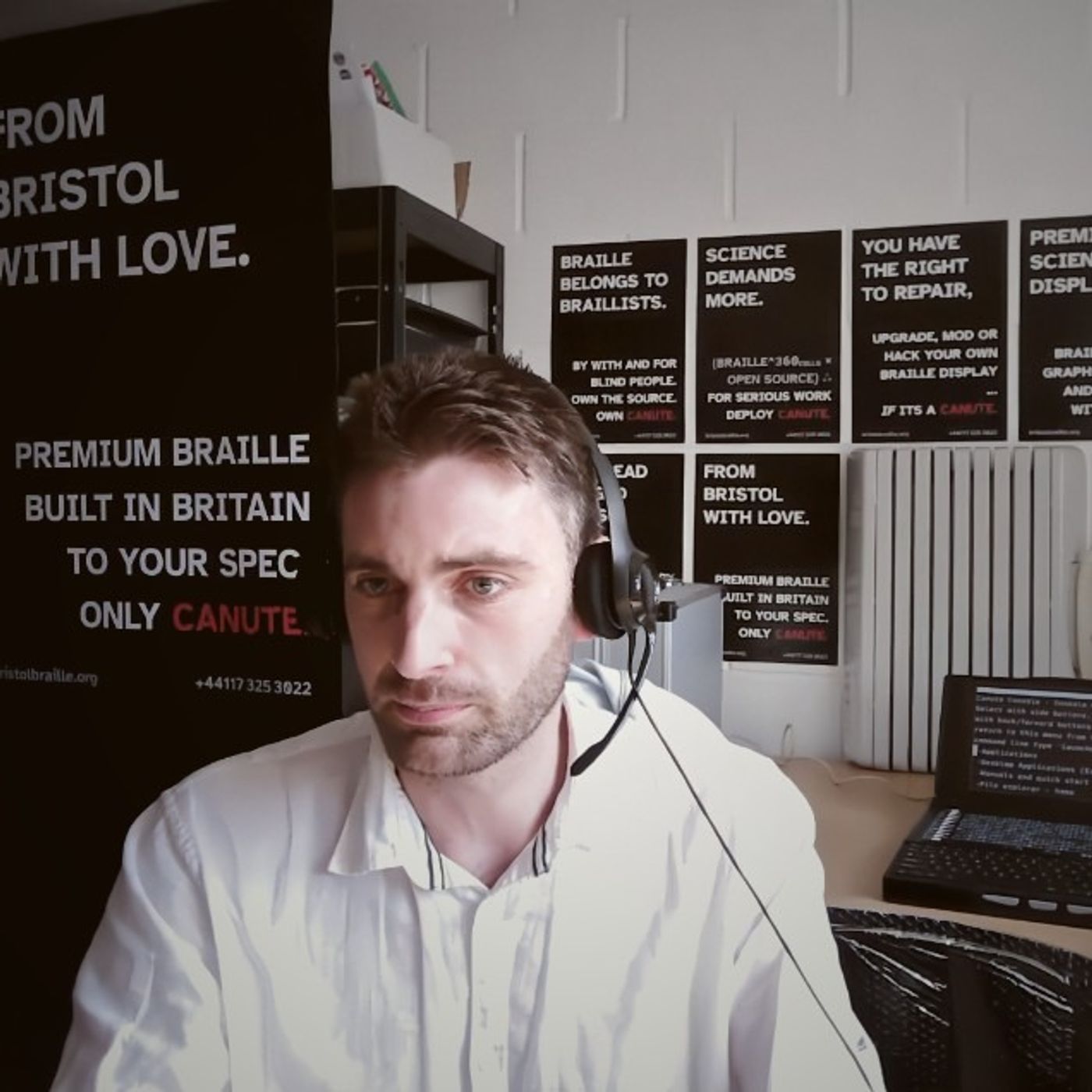
Braille Is Freedom with Bristol Braille's Ed Rogers
Jun 1100:38:53Tap to summarizeOn this episode of Hanselminutes, Scott talks with Ed Rogers of Bristol Braille Technology about the Canute project and the long road toward affordable multiline Braille. Most refreshable Braille displays show a single line at a time; Canute changes the experience by giving readers nine lines and 360 cells of spatial context. Ed shares how multiline Braille opens up new possibilities for reading, coding, math, music, diagrams, education, and independence and why Braille remains a vital technology for literacy, employment, and full participation in the digital world. https://bristolbraille.org
Transcribe →
"Observabilitying" the Future of Software with Charity Majors
Jun 400:32:00Tap to summarizeCharity Majors is the co-founder and CTO of Honeycomb.io, where she pioneered the concept of modern observability for distributed systems. Before Honeycomb, she spent years at Parse (acquired by Facebook), Facebook, and Linden Lab building Second Life. She is the co-author of "Observability Engineering" and "Database Reliability Engineering" (O'Reilly). She writes at charity.wtf. Whatever she and Scott are planning, they are gonna observability the heck out of it.
Transcribe →
Cloud Commitments Without the Lock-In with Archera's Aran Khanna
May 1400:31:40Tap to summarizeScott talks with Aran Khanna, co-founder and CEO of Archera, about a new category of cloud financial tooling: "Insured Commitments." Instead of locking into 1- or 3-year reserved instance contracts and hoping your usage matches, Archera offers commitments as short as 30 days. They get into the economics of cloud purchasing, how AI workloads are changing capacity planning, and what FinOps looks like in 2026. http://archera.ai
Transcribe →
How IBM Z Is Modernizing Mainframes with Skyla Loomis
May 700:31:43Tap to summarizeScott talks with Skyla Loomis, General Manager of IBM Z Software, about the ongoing relevance of mainframes in 2026. They discuss the enduring power of mainframes, how generative AI is transforming COBOL modernization, and why enterprise infrastructure still runs on IBM Z. Skyla shares insights on developer experience, compliance challenges, and the misconceptions about mainframe technology in a cloud-native world.
Transcribe →
Making opinionated AI tooling decisions with Nimbalyst's Greg Hinkle
Apr 3000:31:34Tap to summarizeGreg Hinkle, co-founder of Nimbalyst and former VP of Software Engineering at Salesforce, joins Scott to discuss the future of AI-assisted development. They explore the challenges of managing multiple AI coding agents, finding flow state in an agentic world, and why visual workspaces matter. Greg shares Nimbalyst's opinionated approach to integrating tools like Excalidraw, task management, and session organization directly into the developer workflow. https://nimbalyst.com
Transcribe →
The Joy of Unplugging Cables: Kelly Shortridge on Security Resilience
Apr 2300:32:56Tap to summarizeKelly Shortridge, author of "Security Chaos Engineering: Sustaining Resilience in Software and Systems" and CPO at Fastly, joins Scott for an ACM ByteCast joint episode about why security should be designed for failure rather than prevention. From airplane coffee makers causing critical failures to squirrels being the real "advanced persistent threat" to power grids, Kelly makes the case that no system is perfectly secure — and the teams that feel most in control are often the least prepared. The conversation covers metrics theater, the cost-resilience tradeoff, why software has unique advantages for simulation that we're not leveraging, and where LLMs fit (and don't fit) in security workflows.
Transcribe →
Why Tori Westerhoff says we should talk to strangers
Apr 900:36:27Tap to summarizeTori Westerhoff joins Scott to explore the intersection of AI, human psychology, and personal growth. As people increasingly use LLMs for introspection and decision-making, Tori argues that we're missing the diversity of thought that comes from community, even particularly random encounters with strangers. She reveals her own practice: a daily noon reminder to talk to strangers. "If you sycophant yourself, you're never going to grow," she explains. The conversation delves into how LLMs can create echo chambers of thought, and why the randomness of human connection, even just someone on the same bus, helps us update our mental frames and break out of programmed decision-making paradigms.
Transcribe →