
Podcast
Happy English Podcast (Natural American English)
Hosted by Michael DiGiacomo Happy English · EN
The Happy English Podcast helps English learners learn natural American English with clear lessons, practical phrases, everyday conversation tips, and listening practice.
Hosted by American English teacher Michael DiGiacomo, the show features short and practical lessons to help you build vocabulary, improve pronunciation, and speak English confidently in real conversations.
Episodes range from quick tips to longer explanations and cover useful topics like phrasal verbs, idioms, pronunciation, grammar, and natural conversation patterns used by native speakers.
If you want to learn English, improve your American English pronunciation, practice English listening, and speak English more confidently in everyday conversation, the Happy English Podcast will help you step by step.
Since 2014, the podcast has published over 1,000 episodes and reached more than 8 million downloads worldwide.
Get free weekly English lessons plus instant access to my FREE Vocabulary Workshop.:
https://learn.myhappyenglish.com/free-english-lessons
Watch video versions of the podcast:
https://www.youtube.com/@HappyEnglishNY/podcasts
Hosted by American English teacher Michael DiGiacomo, the show features short and practical lessons to help you build vocabulary, improve pronunciation, and speak English confidently in real conversations.
Episodes range from quick tips to longer explanations and cover useful topics like phrasal verbs, idioms, pronunciation, grammar, and natural conversation patterns used by native speakers.
If you want to learn English, improve your American English pronunciation, practice English listening, and speak English more confidently in everyday conversation, the Happy English Podcast will help you step by step.
Since 2014, the podcast has published over 1,000 episodes and reached more than 8 million downloads worldwide.
Get free weekly English lessons plus instant access to my FREE Vocabulary Workshop.:
https://learn.myhappyenglish.com/free-english-lessons
Watch video versions of the podcast:
https://www.youtube.com/@HappyEnglishNY/podcasts
85episodes
Episodes
Newest firstAll episodes
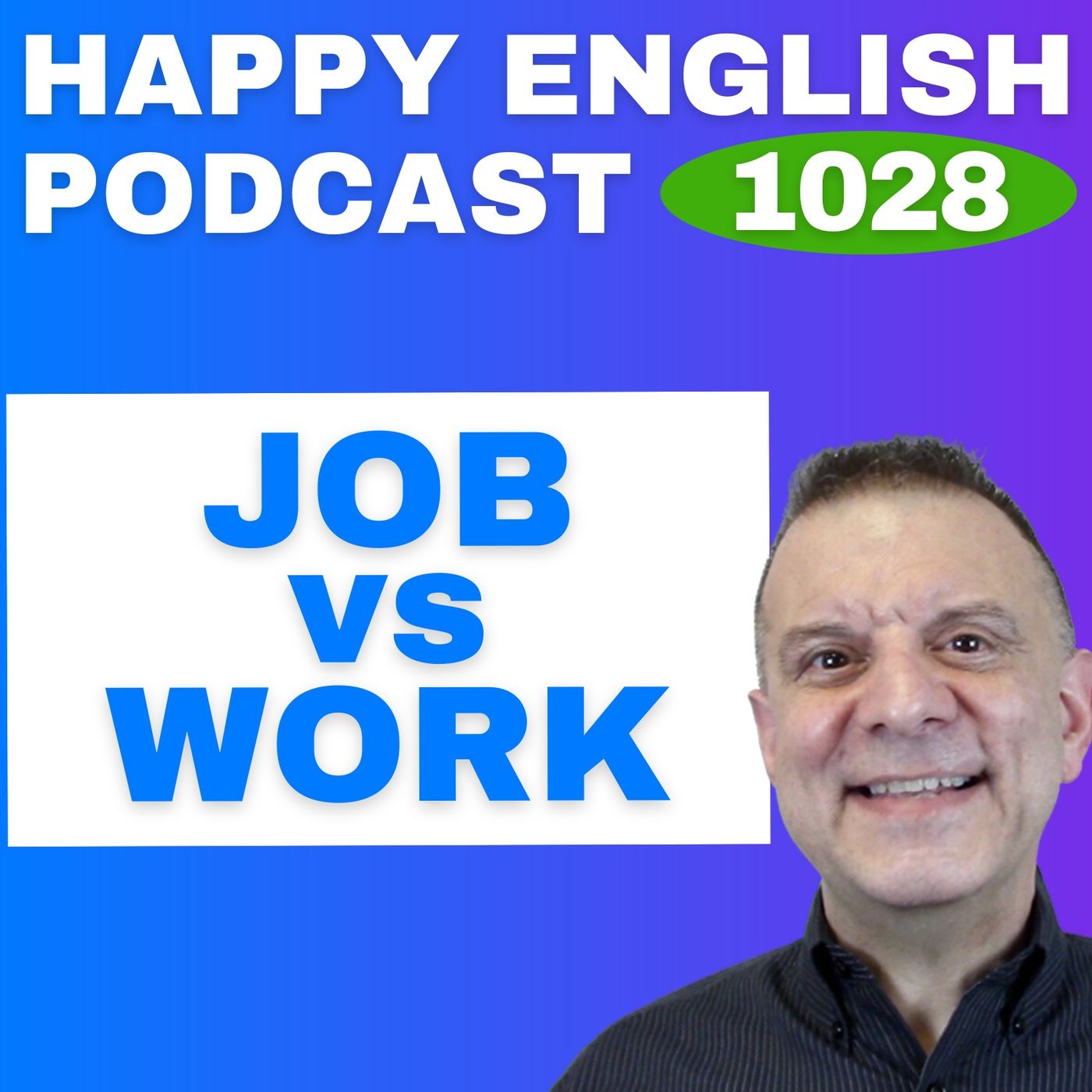
1028 - Work vs. Job – What’s the Difference?
Apr 1000:10:41Tap to summarizeWork. Job. Two very common words, right? But a lot of people get confused about how to use them. Do you say, “I have a work,” or “I have a job”? Can you say, “I’m going to my work” or "I'm going to my job" I mean like, what’s the real difference between work and job? If you’ve ever wondered about that, don’t worry - you’ve come to the right place. Because that’s what we’re going to look at today.The Happy English PodcastHelping people speak English better since 2014Over 1,000 episodes • 8 million downloads📘 Build your vocabulary with my free Vocabulary Workshophttps://learn.myhappyenglish.com/vocabulary-workshop-signup🎥 Watch video versions of the Happy English Podcast on YouTubehttps://www.youtube.com/@HappyEnglishNY/podcasts🌐 Learn more about my English lessons and courseshttps://www.myhappyenglish.com
Transcribe →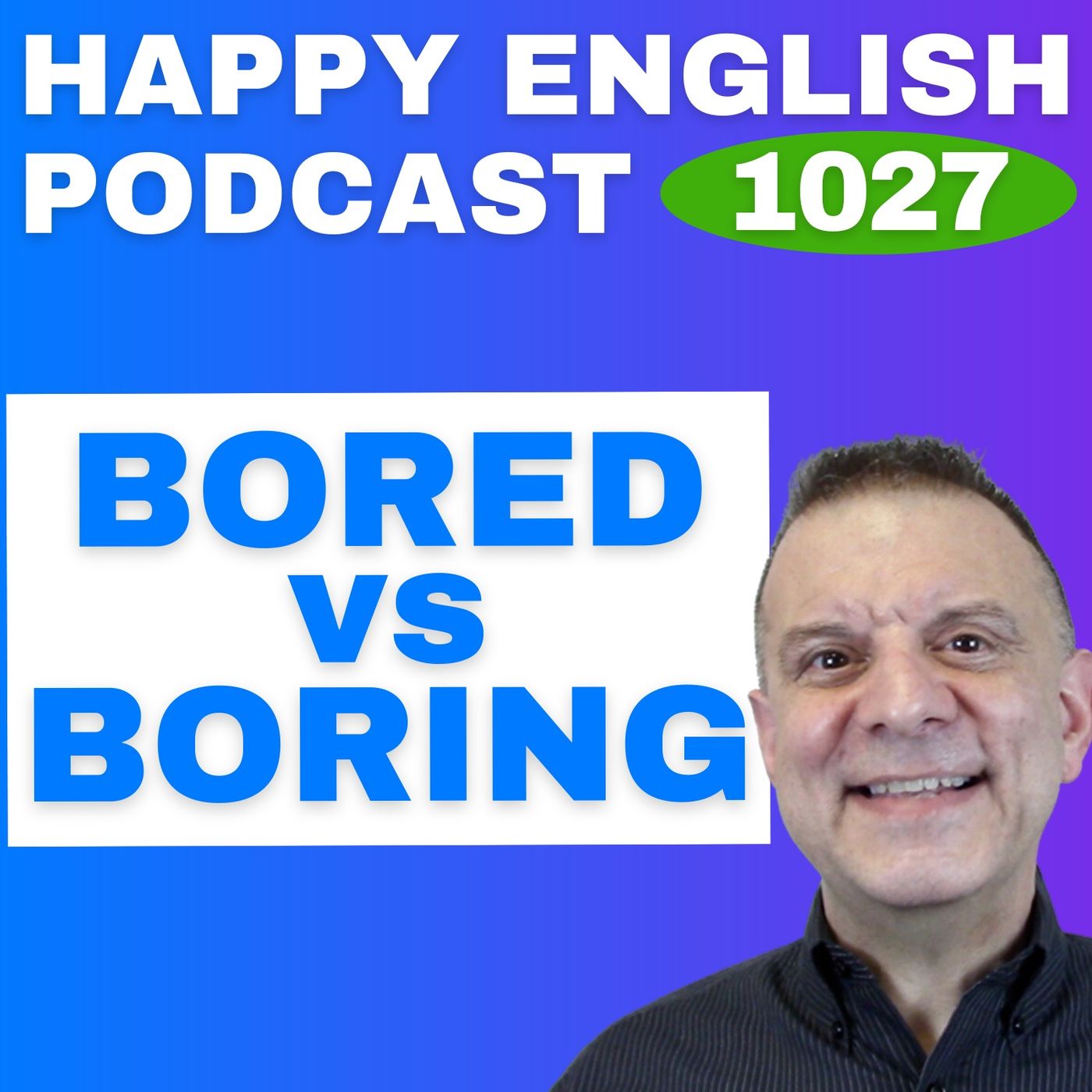
1027 - Bored vs. Boring - What’s the Difference
Apr 800:06:24Tap to summarizeBored. Boring. Two simple words, right? But this is something that a lot of people mix up all the time. Like, if the party wasn't so good, is it, “I’m boring,” or “I’m bored”? And what about if someone says, that teacher is so boring. If you’ve ever been confused about this, don’t worry - you’re not alone. So let's dive into this today!The Happy English PodcastHelping people speak English better since 2014Over 1,000 episodes • 8 million downloads📘 Build your vocabulary with my free Vocabulary Workshophttps://learn.myhappyenglish.com/vocabulary-workshop-signup🎥 Watch video versions of the Happy English Podcast on YouTubehttps://www.youtube.com/@HappyEnglishNY/podcasts🌐 Learn more about my English lessons and courseshttps://www.myhappyenglish.com
Transcribe →
1026 - Borrow, Lend, Rent, Lease - What's The Difference?
Apr 600:10:45Tap to summarizeBorrow. Lend. Rent. Lease. Four simple words, right? But it seems like it's easy to mix these up. Is it , can you lend me a pen? Or can you borrow me... wait... can I borrow. So what IS the difference? When can we use borrow, lend, rent, and lease? And how do we actually use these in everyday English?If you need help with this vocabulary, you've come to the right place. Because that’s what we’re going to look at today.The Happy English PodcastHelping people speak English better since 2014Over 1,000 episodes • 8 million downloads📘 Build your vocabulary with my free Vocabulary Workshophttps://learn.myhappyenglish.com/vocabulary-workshop-signup🎥 Watch video versions of the Happy English Podcast on YouTubehttps://www.youtube.com/@HappyEnglishNY/podcasts🌐 Learn more about my English lessons and courseshttps://www.myhappyenglish.com
Transcribe →
1025 - Don’t you IS Don-cha Speak Naturally in a Minute | Happy English
Apr 500:01:44Tap to summarizeHey there! It’s Michael here - and welcome back to Speak Naturally in a Minute from Happy English. I’m here every week with a quick one-point lesson to help you improve your pronunciation, rhythm, and intonation.Today, let’s look at another very common sound change in American English: “don’t you.” In everyday American English, we usually pronounce don'y you as don-cha. That’s because when the T sound and the Y sound come together, they blend into a CH sound. And the OO of you becomes UH. So... don’t you becomes don-chaDon’t you know that? becomes Don-cha know that?Don’t you want to go? becomes Don-cha wanna go?Don’t you remember? becomes Don-cha remember?Let’s practice. Repeat after me: Don-cha know that? Don-cha wanna go? Don-cha remember?Nice and smooth - don-cha. Using this kind of linking makes your English smoother and more natural.Hey, thanks for listening! And remember to follow and subscribe so you won’t miss the next Happy English Podcast and next week’s Speak Naturally in a Minute. Until next time, keep learning and keep it cool.The Happy English PodcastHelping people speak English better since 2014Over 1,000 episodes • 8 million downloads📘 Build your vocabulary with my free Vocabulary Workshophttps://learn.myhappyenglish.com/vocabulary-workshop-signup🎥 Watch video versions of the Happy English Podcast on YouTubehttps://www.youtube.com/@HappyEnglishNY/podcasts🌐 Learn more about my English lessons and courseshttps://www.myhappyenglish.com
Transcribe →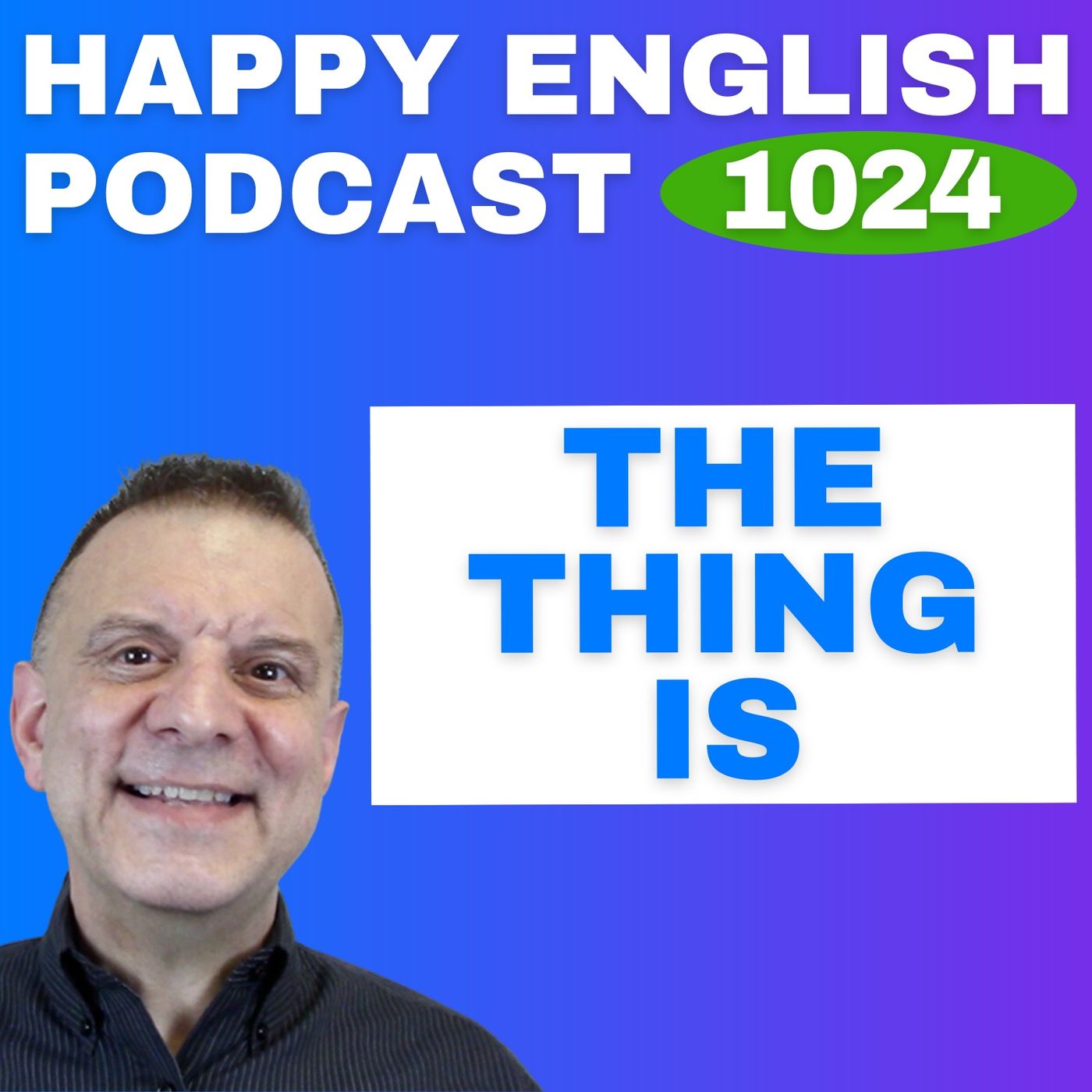
1024 - The Thing Is - English Tips in a Minute | Happy English
Apr 400:01:44Tap to summarizeHey there! It’s Michael here - and welcome back to English Tips in a Minute from Happy English. I’m here every week with a short, simple tip to help you speak English more naturally and confidently. Today, let’s look at a really common conversational phrase - “the thing is…”We use the thing is when we want to explain a situation or give a reason, especially when there’s a problem, a limitation, or something we need to clarify. It’s very similar to here’s the thing, but a little softer and more casual.For example, someone might ask: “Why didn’t you come to the party?” You could say: “The thing is, I wasn’t feeling well.”Or maybe you’re explaining a situation: “The thing is, I already made other plans.”We often use this phrase when we want to be honest, but also polite. It helps soften what we’re about to say.Remember to follow or subscribe so you don’t miss the next Happy English Podcast and next week’s English Tips in a Minute. Hey, thanks for listening - and until next time, keep learning and keep it cool.The Happy English PodcastHelping people speak English better since 2014Over 1,000 episodes • 8 million downloads📘 Build your vocabulary with my free Vocabulary Workshophttps://learn.myhappyenglish.com/vocabulary-workshop-signup🎥 Watch video versions of the Happy English Podcast on YouTubehttps://www.youtube.com/@HappyEnglishNY/podcasts🌐 Learn more about my English lessons and courseshttps://www.myhappyenglish.com
Transcribe →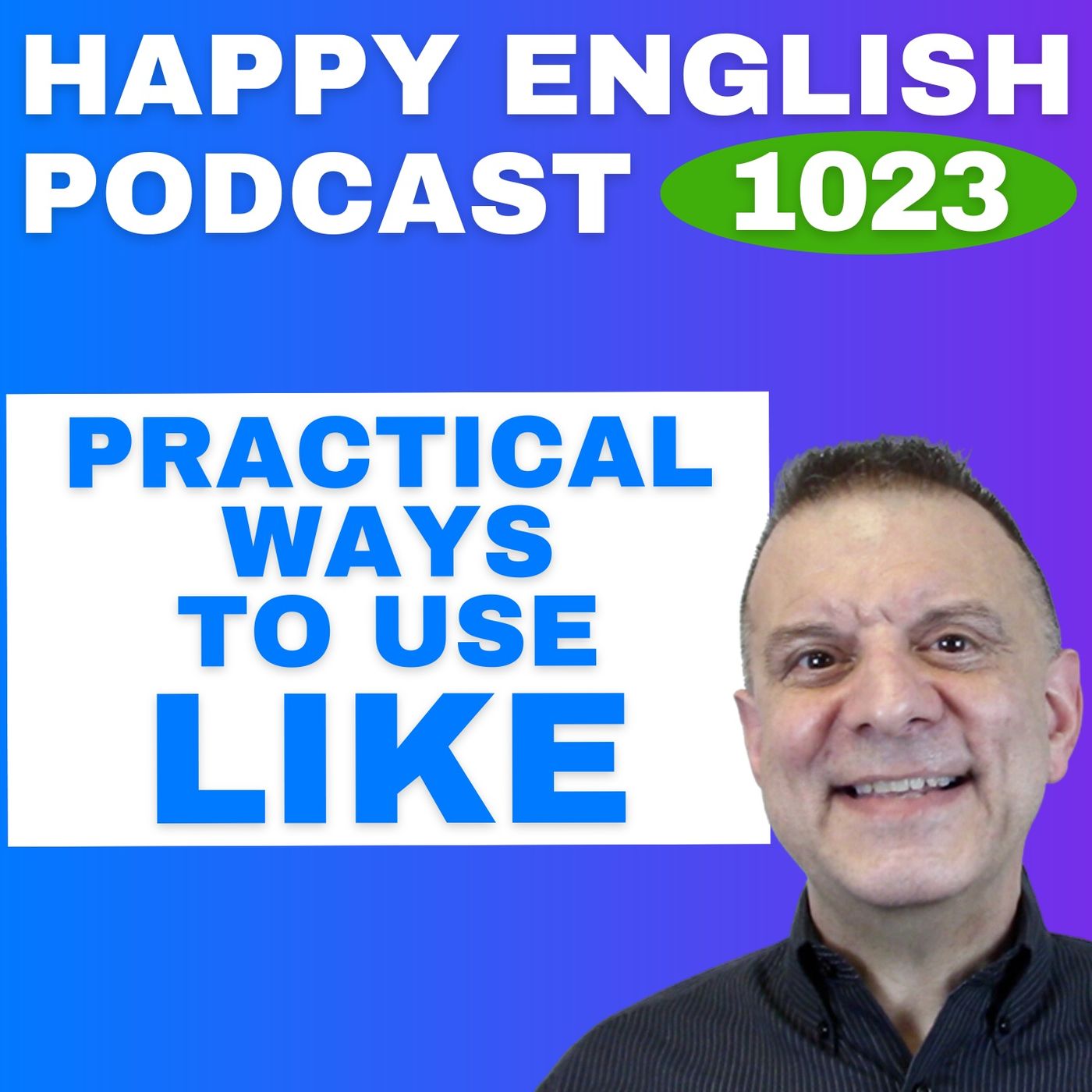
1023 - Practical Uses of Like in Everyday English
Apr 300:08:32Tap to summarizeDo you ever feel like people use the word like all the time… and you’re not really sure why? You hear things like, “I was like…” “It was like…” “He’s like, 50…” and sometimes it feels like that word is everywhere. So if you’re wondering - what does like actually mean in these situations, or, how can I use like like that, you’ve come to the right place. By the end of the podcast English lesson, you’ll learn several practical ways you can use like.The Happy English PodcastHelping people speak English better since 2014Over 1,000 episodes • 8 million downloads📘 Build your vocabulary with my free Vocabulary Workshophttps://learn.myhappyenglish.com/vocabulary-workshop-signup🎥 Watch video versions of the Happy English Podcast on YouTubehttps://www.youtube.com/@HappyEnglishNY/podcasts🌐 Learn more about my English lessons and courseshttps://www.myhappyenglish.com
Transcribe →
1022 - Play vs Do vs Go - How to Talk About Sports Naturally
Apr 100:08:34Tap to summarizeHave you ever tried talking about sports in English and suddenly, you get mixed up with using play, do, or go? Is it “I play skiing”? “I do skiing”? “I go skiing”? Or maybe you’ve heard things like, “I play tennis”… but also “I go swimming”… and then someone says, “I do yoga”… and now you’re thinking… wait, what’s the rule here?Don’t worry - you’re not alone. This is one of the most common questions English learners have. So in today’s podcast English lesson, we’re going to look at how to use play, do, and go when talking about sports and activities, and how you can sound more natural when you talk about them. The Happy English PodcastHelping people speak English better since 2014Over 1,000 episodes • 8 million downloads📘 Build your vocabulary with my free Vocabulary Workshophttps://learn.myhappyenglish.com/vocabulary-workshop-signup🎥 Watch video versions of the Happy English Podcast on YouTubehttps://www.youtube.com/@HappyEnglishNY/podcasts🌐 Learn more about my English lessons and courseshttps://www.myhappyenglish.com
Transcribe →
1019 - Just vs Already vs Yet - How to Really Use Them
Mar 2700:07:39Tap to summarizeJust. Already. Yet. Three little words. They should be simple, right?But then when you try to use them in conversation, you’re not really sure which one sounds right.Should you say, “I just finished”? Or “I already finished”? Or “I haven’t finished yet”?These are small words, but they can be kind of confusing. So for today’s podcast English lesson, we’re going to look at how you can actually use just, already, and yet in everyday conversation.The Happy English PodcastHelping people speak English better since 2014Over 1,000 episodes • 8 million downloads📘 Build your vocabulary with my free Vocabulary Workshophttps://learn.myhappyenglish.com/vocabulary-workshop-signup🎥 Watch video versions of the Happy English Podcast on YouTubehttps://www.youtube.com/@HappyEnglishNY/podcasts🌐 Learn more about my English lessons and courseshttps://www.myhappyenglish.com
Transcribe →
1018 - Practical Uses of Will and Gonna in Everyday English
Mar 2500:08:26Tap to summarizeHave you ever studied will and be going to and thought… “Okay, I understand the rule… but I still don’t know which one to use when I speak”? Maybe your textbook says something like: “Use will for the future,” and “Use be going to for plans.” And technically… that’s correct. But in real conversations, native speakers are not thinking about grammar rules. We’re reacting in the moment. And depending on the situation, we naturally choose will or gonna.So for today’s podcast English lesson, we’re going to look at several very practical situations where you can use will and gonna in everyday conversational English.The Happy English PodcastHelping people speak English better since 2014Over 1,000 episodes • 8 million downloads📘 Build your vocabulary with my free Vocabulary Workshophttps://learn.myhappyenglish.com/vocabulary-workshop-signup🎥 Watch video versions of the Happy English Podcast on YouTubehttps://www.youtube.com/@HappyEnglishNY/podcasts🌐 Learn more about my English lessons and courseshttps://www.myhappyenglish.com
Transcribe →
1017 - Spring Idioms for Everyday English
Mar 2300:08:33Tap to summarizeHave you ever noticed how spring feels like a fresh start? The weather gets warmer, the days get longer, and suddenly you feel like doing something new. Maybe you want to start exercising, clean your house, or even change your habits. That feeling of new energy and new beginnings is something we often connect with spring. In English, we actually have a lot of idioms and expressions that reflect this idea of growth, change, and starting over. For today’s podcast English lesson, we’re going to look at several very useful idioms related to spring that you can use in everyday conversation.The Happy English PodcastHelping people speak English better since 2014Over 1,000 episodes • 8 million downloads📘 Build your vocabulary with my free Vocabulary Workshophttps://learn.myhappyenglish.com/vocabulary-workshop-signup🎥 Watch video versions of the Happy English Podcast on YouTubehttps://www.youtube.com/@HappyEnglishNY/podcasts🌐 Learn more about my English lessons and courseshttps://www.myhappyenglish.com
Transcribe →