← Happy Wife Happy Life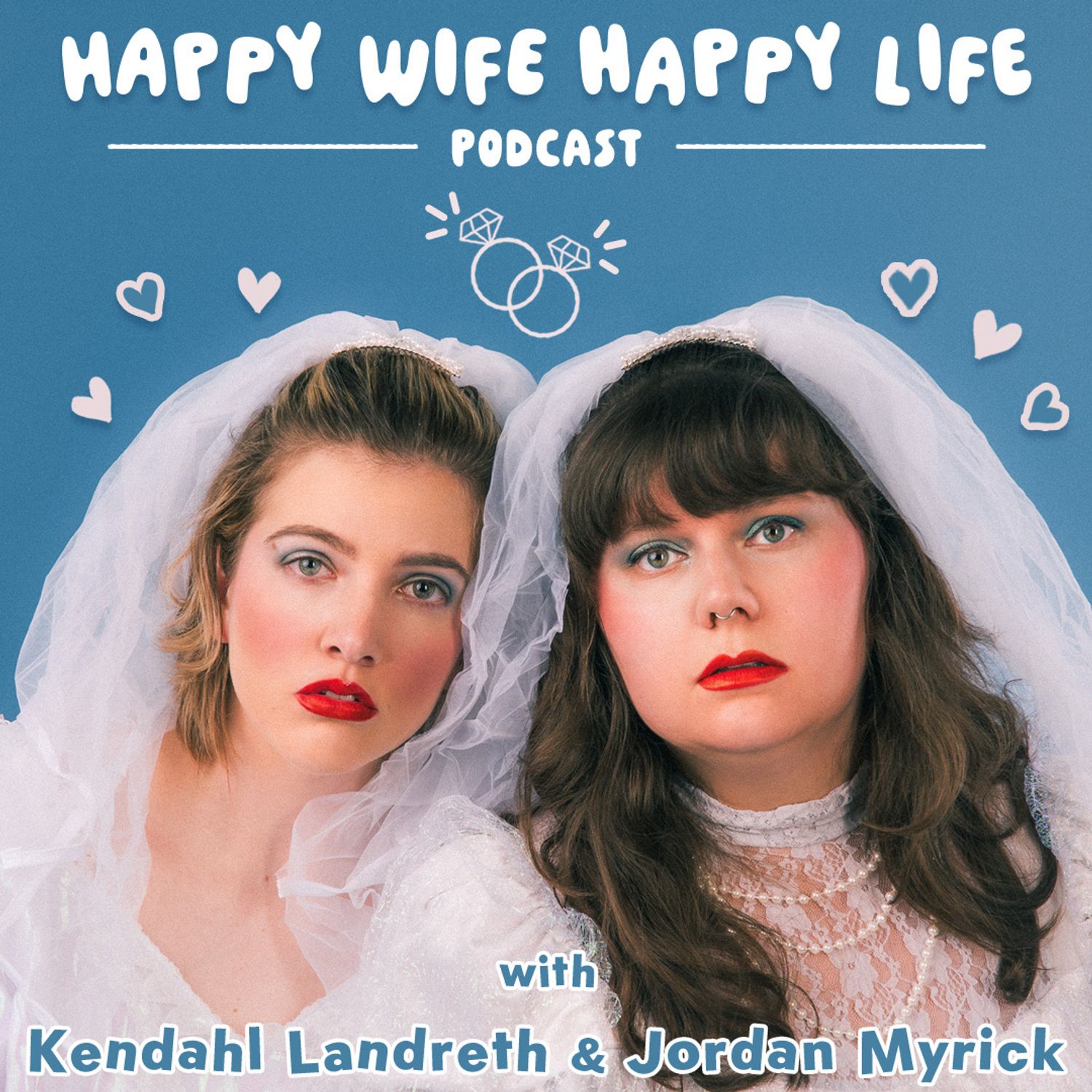
Loading summary
Transcript389 lines
- [00:01]
A
Ever notice how ads always pop up at the worst moments when the killer's identity is about to be revealed during that perfect meditation flow. On Amazon Music, we believe in keeping.
- [00:15]
B
You in the moment.
- [00:16]
A
That's why we've got millions of ad free podcast episodes so you can stay completely immersed in every story, every reveal, every breath. Download the Amazon music app and start listening to your favorite podcasts, ad free included with Prime.
- [00:34]
B
Welcome to Happy Wife, Happy Life.
- [00:35]
A
We're your hosts. I'm Kendall Landris.
- [00:37]
B
And I'm Jordan Myra.
- [00:38]
A
And we are two incredibly unqualified but.
- [00:40]
B
Deeply in love comedians who are here to help you with all things relationships. And on today's episode, we're talking private, not secret. Hi, Kenny.
- [00:54]
A
Hi, Jord.
- [00:54]
B
I'm just feeling on the top of the world because.
- [00:57]
A
Oh my God.
- [00:59]
B
Because it's Monday and we had the most incredible weekend.
- [01:02]
A
We had the type of weekend I feel like you and always talk about.
- [01:05]
B
We dream about a weekend you dream of.
- [01:08]
A
It really was. It was like Friday. What was it? You came home and we immediately started watching a TV show, right?
- [01:16]
B
Yes.
- [01:17]
A
Is that what happened? I'm trying to remember the timeline.
- [01:18]
B
Well, here, let me go back in my calendar. So Friday. Oh, I was on set and I felt bad.
- [01:23]
A
You were sick.
- [01:24]
B
I wasn't feeling well. So I came home and we did Sleepover on the couch. Yes. And we started a new show called Vigil. We're loving it. Well, we loved it. We finished.
- [01:34]
A
Finished it.
- [01:34]
B
The two seasons that are available comes.
- [01:36]
A
Out next year in. And it's being filmed. I don't know if this is where it's going to be located at, cuz sometimes they'll film in random spots. But it's being filmed in a place that's very special to your heart.
- [01:48]
B
Why did I forget already?
- [01:49]
A
The in. It's like in the northernmost part of somewhere.
- [01:53]
B
Spard. Sward. Spard.
- [01:56]
A
Yeah.
- [01:57]
B
How do you say wait?
- [01:58]
A
I don't know. I really.
- [02:02]
B
It is. Yes. I follow a woman on Tik Tok named Cecilia and she lives in Sard, which is the furthest point humans basically can go in the world, to my understanding.
- [02:13]
A
Yeah. And so the new season is being filmed there. But we started watching.
- [02:16]
B
So exciting.
- [02:17]
A
It has an actor who I'm obsessed with who plays in the show Gentleman Jack.
- [02:21]
B
Yes.
- [02:22]
A
Which is one of those YouTube shows that I have not watched the show, but I've seen so many clips on YouTube that I feel like I've watched the show because there's lesbians in it. So I've seen all the lesbian kissing scenes. Obsessed.
- [02:35]
B
When you started the show, I thought this was going to be like, the lesbian show. It's not that gay.
- [02:39]
A
No, no. But then I. So I started. Sometimes I look up on YouTube, like, sorry, I still do this. I. I used to do this as a teenager. I still do it. I'll be like, lesbians and TV shows. And I'm watching little compilations, and I saw this with the. The girl from Game of Thrones, Rose, Leslie, who I love as an actor.
- [02:56]
B
So.
- [02:58]
A
And I was like, wait, I want to watch the show. I think Jordan would like it because I love a romance. I'll watch a show just for the romance, but Jordan will absolutely not. But you love crime mystery.
- [03:06]
B
I love a mystery, a thriller.
- [03:08]
A
You love all of that. And I was like, I really think you're going to like the show. And we loved it.
- [03:12]
B
Yeah.
- [03:13]
A
I just love it. I think the acting is so good. I feel like the plot is so good.
- [03:16]
B
It's been really fun. The first season takes place on a submarine, which was fun.
- [03:19]
A
I like. I think I like the first season better than I like the last season.
- [03:21]
B
I do as well. I did like the last season, though, but the first season is better. But I'm excited to see this one in, like, a whole new climate, a whole new territory. I'm excited. And then we finished that. We started watching it's called Deadlock, which is also. No, not BBC, because it's Australian.
- [03:36]
A
Australian.
- [03:36]
B
It's an Australian TV show about a lesbian detective solving a series of murders. Murders in her town. And we've been loving that. It's like, one of the funniest shows I've seen in a really long time.
- [03:50]
A
Really funny. Like, every line is just like. It almost reminds me of 30 Rock, where, you know when you're watching 30 Rock, you're just like, how in one scene have they had, like, 30 lines?
- [04:01]
B
That are so many.
- [04:01]
A
So genius. Yeah. Where it's just like, who even thought of that? It's so smart. I feel that way about this show. It's so funny. The acting is really funny. So we just relaxed, like we had. We spent almost the entire weekend on the couch, except for Saturday. We spent, like, six hours doing cleaning projects that we've been putting off for so long.
- [04:18]
B
Oh, more than that, even. We, like. I mean, spent almost the whole day, like, fully giving a refresh to the house.
- [04:24]
A
Yeah.
- [04:24]
B
Which I love well.
- [04:25]
A
And Jordan went under our bed, which is a place we never ventured down under because it's a scary very place if you have a bed. That lifts up. I'm sure you're in the same boat where you're like, what's down there? I don't know, and I don't want to know.
- [04:34]
B
Yeah.
- [04:34]
A
Jordan, like, reorganized that whole area. We're still getting the office done. It was great. And then Sunday, we literally just chilled. I got to read a little.
- [04:43]
B
It was a dream.
- [04:44]
A
I did my gingerbread house cooked. We went to the gym.
- [04:48]
B
It was beautiful.
- [04:49]
A
We had a really nice time. And I did get a little bit of the Sunday scaries. I feel like I was not ready to go back to work this week.
- [04:56]
B
Yeah.
- [04:56]
A
But now that I'm here, it's not so scary. It's okay.
- [04:59]
B
No, I mean, luckily, our work is still together.
- [05:00]
A
Yeah. I mean, we can just pretend we're on the couch.
- [05:02]
B
That's true.
- [05:03]
A
Kind of like. It's kind of like the weekend still.
- [05:05]
B
Yeah.
- [05:05]
A
But it's so nice to have a show. We always say that, like, you need to just have a show. I feel the same way about a book. Like, having something to come home to that you're just, like, yearning to go home to is so nice.
- [05:14]
B
It's so fun. And it's just like, we sit down and there's no. You know what? I think it is, too. You know, when you, like, want to watch something or you want to eat something, there's a lot of, like, hemming and hawing over. Like, what are we going to watch? What are we going to do? It's like. And then you're so nice. I've been making meals in the crock pot. So we come home and dinner's ready and already selected for us, and then we already have our show. So it's just like, the whole night is plug and chug. We know exactly what we're doing, and you don't have decision paralysis. It's incredible.
- [05:39]
A
But I think we figured it out, because you and I do have a little bit of different taste in media. I think we have an overlap, but we do have a little different taste. I can watch stuff that's bad. Like, I can. I'm fine watching a show that is, like, bad, but there's lesbians in it or there's a romance or it's silly. It's fun. Sometimes I, like, there's not, like, even if there's no lesbians, a show that's, like, kind of. But in a comforting way, if that makes sense.
- [05:59]
B
Yeah, of course.
- [06:00]
A
I'm totally fine to watch that. I will watch shows that I feel like you would literally never. You couldn't be paid to watch.
- [06:05]
B
Yes. But I think the same for me. I feel like, Right.
- [06:08]
A
You watch a lot of shows that I'm, like, a little bored by something. So I'm just like, okay, I don't really care. But I feel like we found. Okay, we have to these specific crime shows with a little bit of, like, fun banter.
- [06:21]
B
Yeah. It's like a British crime drama or Australian crime drama or European crime drama with banter.
- [06:26]
A
Banter heavy.
- [06:27]
B
Banter heavy. Good. Mystery. Female leads. Female leads. I am going to, though, make you watch Luther.
- [06:35]
A
Okay, that's fine. But I need female leads for the sole purpose that when there's more than three men in something, I have no idea who's who. And I literally struggled with that with Vigil, and so did you. There's so many white men in suits. I'm like, I don't know who any of these people are. They all look the same to me. Yeah.
- [06:51]
B
When they went British Navy. So it's like they're also, like, dressed literally exactly the same.
- [06:57]
A
But I feel like with women, at least, it's like their haircut's different. They're like, you know, they have so many different ways they can be made to look different. Men. I'm just like, I have no idea who anyone is. There were a couple moments on the show where they do this big reveal, and I literally would be like, who is that? I don't know who that is.
- [07:12]
B
Yeah, they would be like, here's the bad guy. And we'd be like, who's that? Has he been on the show or is he new?
- [07:15]
A
It's just like a random white man. Like, I have no idea. So I need female leads. And if there's lesbians, it's an A plus for me. I need. If there's lesbians, I'm. I'm clocked in.
- [07:25]
B
Yeah. So if you have Rex for those things, drop them below.
- [07:29]
A
Yes, I prefer. But if you watch Visual, know that it's like, I don't need it to be romance heavy. I don't need to be the plot line to be about romance.
- [07:36]
B
Yeah.
- [07:36]
A
But I like there to be a lesbian romance in it.
- [07:38]
B
Yes, I think that's fair.
- [07:40]
A
Maybe one scene an episode. One scene.
- [07:41]
B
Every other one seen an episode. That's a lot.
- [07:44]
A
Vigil had way more than that.
- [07:46]
B
No, that was actually about them being lesbians.
- [07:48]
A
No, just them together.
- [07:50]
B
Oh, I don't know. I don't even feel like Vigil had that one every episode.
- [07:53]
A
Yeah, well, sometimes.
- [07:55]
B
Crime drama all the time.
- [07:56]
A
That's True.
- [07:56]
B
Season one.
- [07:58]
A
Season one was so many flashbacks. I don't know. But season two, I felt. No, they. I feel like had season. Well, they would have heavy lesbian episodes. Yes. Where it'd be like they weren't really together for a couple episodes, and then one episode was, like, heavily focused on their relationship.
- [08:10]
B
Yes.
- [08:11]
A
And I like that.
- [08:11]
B
Well, all this kind of goes into what we're talking about, because today's episode is about private, not secret. Secret. And they had their relationship be private, not secret, for a little while.
- [08:21]
A
Okay. Yeah.
- [08:21]
B
And private, not secret, if you're not familiar, is this concept that a lot of people do where it's like, your relationship's not it. Right. Like, people can know you're in a relationship or, like, whatever, but you keep a lot of aspects of it private. Obviously, it's a very popular thing that influencers do. I feel like the first person I ever saw do it was, like, Victoria Paris, maybe, like, someone who, like, posts a lot of content, but it's this thing of, like, we're not secret, but, like, we're private. And I feel like it manifests the most on social media in, like, I post a photo where it's like me hugging someone so you can see my face, but then it's like, them from behind, you don't quite know who it is, or like, me holding a hand.
- [09:00]
A
Oh, whose hand is that? We don't know.
- [09:02]
B
We, as the public, don't know.
- [09:03]
A
That feels pretty secret to me, I guess.
- [09:05]
B
But I guess it's not secret because, like, people see you in public and people know you're in a relationship. And I'm sure the people around you know, but you're not fully putting it on blast online.
- [09:15]
A
But anyone can do this.
- [09:16]
B
It's not just a celebrity, this.
- [09:17]
A
And I. Because I think initially I was going to be like, I feel like we're private, not secret.
- [09:21]
B
What?
- [09:22]
A
Because I just feel like. Like we're. I feel like you and I keep. We're not obviously a secret. We're dating. We have a podcast together about dating, and we talk about dating, and we're very openly dating, but we're very private about our relationship. I feel like, like, actual aspects of our relationship. I think we're pretty private about.
- [09:38]
B
Yes.
- [09:39]
A
Not agree.
- [09:40]
B
We are private, not secretive. I. So it's like, along the same lines. I. I think, you know, I think.
- [09:45]
A
It'S like, because we share stuff, but we share what we've talked about. We're comfortable sharing.
- [09:49]
B
Yeah. Because anything, obviously, like, I think sometimes you see these people where they're like, we have a podcast, and it's 100 raw. We lay it all out there. A lot of times those relationships don't last or maybe don't seem like they're doing so hot, in my personal opinion. I think for us, it's like, you have to share what feels good to you, and you want to be your true, authentic self and give an accurate representation of your relationship. But also, there are some things that are, like, private. I think we've talked about this before, but sometimes people like, why don't they talk about sex more? And I'm like, because that's private, you pervert. Like, that's what I mean, Kendall. Like, get your eyes out of our bedroom, Kendall.
- [10:23]
A
But also positive things, too. Like, you said. Like, not just like. Like, oh, we have things we don't talk about because they're really uncomfortable conversations. Like, it's not that. I think that's why I'm like, oh, private, not secret. Because I feel like there's a lot of positive, sweet aspects to our relationship that we don't bring.
- [10:35]
B
And we've said this. Sex.
- [10:37]
A
Okay.
- [10:37]
B
Baby talk.
- [10:39]
A
That would be so funny if we did baby talk on this podcast. It would make John so uncomfortable.
- [10:43]
B
I know.
- [10:43]
A
Can you imagine? Like, us and baby talk talking about sex, and John's like, kill me.
- [10:47]
B
Special little nicknames. Yeah, we have a lot of special little nicknames for each other that we don't talk about. Kendall's uncomfortable right now, even just me acknowledging them.
- [10:53]
A
We don't even talk about, like, cute things. We do. We don't talk about, like, cute things. Like, we don't talk about, like, I was just gonna say cute things again.
- [11:01]
B
Well, yeah, because first and foremost, this is a comedy podcast.
- [11:04]
A
Yeah.
- [11:04]
B
So. And we've, like, talked about this before, where sometimes people will be like, oh, they're, like, negging each other, or they're. And I'm like, oh, yeah, we're just. We're, like, joking. It's a comedy podcast. This is not the time where we're like, we're not in couples therapy. During these videos, I guess would be, like, my thought.
- [11:22]
A
Like, well, we're not. Yeah, we're also, like, not sharing, like, the emotional things, like, even positive or negative. Like, I think we're pretty. Like, if anything's past a certain threshold of emotion, we don't discuss it on this podcast or on social media in general.
- [11:38]
B
It's like, if it's not funny, we don't share it.
- [11:41]
A
Yeah. Yeah.
- [11:42]
B
You know, I think it's kind of like, the end. You're very private in general. I would say I'm a little bit more of an open book than you are, but even with people. Yes, you're extremely private.
- [11:51]
A
Private with even my family.
- [11:53]
B
Yeah. And. And not like, just in regards to our relationship. Like, you're just private. You're private person in general, which I think surprises a lot of people. But, yeah, you are extremely private. So that's something that I had to acclimate a little bit more to when we started dating, which is totally fine with me. But I think. Yeah, you.
- [12:07]
A
Like, in what ways do you think I'm private? Because I think that, but I don't think we've ever talked about that. That you think I'm private.
- [12:12]
B
Well, I don't think you're private. You are private. Like, you just. You don't like to share stuff that's unnecessary with people you don't want to like. You will do almost anything for the laugh, but if it's not funny, you don't want to share it. I mean, the first thing that's coming to my mind, if I may share, is you, like, not posting when your dad passed away. And you were like, oh, I feel like it looks bad that I'm, like, not working and not, like, posting at all. And I'm like, well, you could just post something, being like, hey, like, my dad passed away, but I'm going to like, make. Yeah, more like, this is why I haven't just fallen off the face of the earth. Like, something happened to me. And you were like, I don't want to tell people my dad died. And I was like, okay, yeah, that's totally fair, too.
- [12:55]
A
Like, talking about that, totally fine.
- [12:57]
B
But whatever it is, I don't know, like, no, I got anything like that where you're. If it's not funny, if it's not for the purpose of being funny. And once again, not, like, dishonest. You're not, like, lying or anything, but it's just.
- [13:11]
A
You don't see the point in saying it.
- [13:12]
B
Yeah, you like to keep things close to your chest. I wish I had, like, more examples, but a lot of them are things you don't want me to talk about, so I can't bring them up.
- [13:21]
A
Example of a thing I won't share.
- [13:22]
B
Yeah, yeah, but I'm like, that's something where it's like. Because you talk. You talk about the fact that your dad has passed, but we normally talk about it, like, funny aspects of your dad. And it wasn't like you were like, I'm so sad. I can't talk about it. You were just like, nobody needs to know about my private life. It was like, kind of.
- [13:34]
A
I don't want anyone. I don't want anyone to know. That is how I feel.
- [13:37]
B
Yeah.
- [13:37]
A
Also, I think, because I think I find myself to be. Honestly, this podcast has chilled me out more in this regard, but I think I was very much like a person on camera versus a person in my private life. And I still do connect to that. I feel like right now I'm being pretty chill. Like this how I am in real life. It's like, what am I talking? I guess if I'm like an Elvis impersonator, this is me in real life. I don't know what I mean.
- [13:57]
B
So weird.
- [13:57]
A
I'm being awkward, but I just.
- [13:59]
B
This is how uncomfortable she is with sharing stuff. She's like, absolutely short circuiting.
- [14:02]
A
It's just like, no one cares. I guess that's my thing. I'm like, this is me in real life. Like, well, it's not that different. I just think I have was very, like, this. I'm on or I'm off, you know?
- [14:10]
B
Yeah.
- [14:10]
A
And so I think sometimes I'm comfortable sharing the me on, but me off. Because, like, word soup, I feel, like, nervous and I just don't like sharing those things. And I also think I don't like making people, like, putting people in situations where they feel like they need to, like, comfort. Comfort me. I don't want to be comforted. I don't want to be taught. I don't want you to tell me. Not. Not in. Because that'd be bad. It'd be the most normal thing. Like, if I came up to someone, I was like, my dad died and they', oh, my God, I'm so sorry. I wouldn't be like, no, no, stop. I obviously am fine, but I just don't like putting people in that position. It doesn't make me feel better. So I'm like, no one needs to.
- [14:44]
B
Be in that position.
- [14:45]
A
But I think I only brought that up in our relationship is to say that I know we're not the picture of private. Not secret.
- [14:51]
B
Right.
- [14:52]
A
But I think in a lot of ways, we are very private. Private, which I think would be surprising to people because it seems like we just put everything out there. But I think we don't put 75% of our relationship out there. There.
- [15:03]
B
Yeah. And I think the thing is people get the gist of it. Right. Like, the point of this podcast is to have a podcast that hopefully makes you laugh and Ideally, helps you feel comfort or community, and then also gives you insight into ways that maybe you could be better at dating or have relationships.
- [15:23]
A
The rest is pretty boring, honestly. That's what the. We show the stuff you'd really want. It's not any big secrets. It's just a little more boring, probably.
- [15:29]
B
Absolutely. But I'm like. Like, we are actually really good at being in a relationship, so I think. You don't agree.
- [15:35]
A
No, I do agree.
- [15:36]
B
See, she doesn't like me sharing that. But we are.
- [15:38]
A
No, but that's the part I think is probably. We're very sweet with each other, I think.
- [15:41]
B
Yes. Yeah. Yeah. But I think that, like, we. I think also famously, we both give really good advice to friends and family and whatever. I think we're good advice givers.
- [15:51]
A
Yeah.
- [15:51]
B
And so I think we took our love and talent of giving advice with our comedic professions and made this podcast to create, like, fun community. This podcast is not about, like, revealing. Revealing every element of Kendall and I to the public necessarily.
- [16:06]
A
Well. And I think sometimes something to think about, you'll. You can find in our advice. I feel like our. Our advice we give is very much driven by where we're at in our relationship.
- [16:15]
B
Yeah.
- [16:15]
A
Like, Allison, actually, I've never done this. I was gonna say, I'll listen to an episode.
- [16:19]
B
I've never. You don't even like to listen to the episodes when we have to edit them. Kendall hates listening to her own voice. That's something about Kendall.
- [16:24]
A
Oh, boy. Yeah. I don't like. So, no, I've never gone back. I pretty much don't watch anything I've ever been in. But. But I remember things I said from, like, two years ago doing this podcast that I would not say now. Not because they are bad. I just don't agree with them anymore. Or I'm kind of like, oh, I have a different perspective on that now. After we have grown or we, like, every year, I feel like advice I would have given a year ago is different from advice I would have given now. So I also think, like, our relationship really paint, like, what would you call it informs.
- [16:51]
B
The podcast.
- [16:51]
A
The podcast.
- [16:53]
B
And that's why we have guests sometimes, too, so they can come in and throw in their two cents.
- [16:55]
A
Well, and why we're not professionals. It's like, I'm usually. My advice is fully based on my thoughts.
- [16:59]
B
Yeah.
- [17:00]
A
So, like, there's been times we've been asked questions where we just, like, had a conversation about something, and I'm like, well, now I'm really fired up about this. Actually, but it's like now I'd be like, it's really not a big deal. You guys don't have to freak about it.
- [17:10]
B
Sure. Yeah. 100. You're crawling out of your skin to stop talking about crazy.
- [17:14]
A
I feel like I'm gonna be crazy.
- [17:16]
B
You're. You are. But it's very cute and charming.
- [17:19]
A
Oh my God. No, it's so weird because I feel like I'm so open, but weirdly, like talking about. It's so weird. That line.
- [17:25]
B
Yeah.
- [17:26]
A
That I don't even know what the line is, but the second I cross it, I literally can't function. I feel I'm like, I don't know what.
- [17:33]
B
You know what? You, I. You really. You don't like talking about where the line is? I think that we could kind of talk about anything and it would be totally fine, but once we like hold our feet to the fire and be like, where's the line that you start to kind of freak.
- [17:47]
A
I was just thinking about this because we just filmed with Gwynedd and Tim and we were talking about like conversations you have around, like, basically talking about someone's on the road and how do you choose to navigate the time spent with. With blah, blah, whatever. And it was making me think. I was like, I feel like we've been really lucky because you and I don't often have to communicate about a specific line.
- [18:08]
B
Yeah.
- [18:08]
A
Because I feel like you and I just naturally are usually like on the same page.
- [18:12]
B
We're very on the same page.
- [18:13]
A
And I was thinking about it in that regard because I think around work, you and I have really. Which is crazy. Never had a conversation about when does work trump? When does our relationship trump work? When does our work trump relationship?
- [18:27]
B
Sure.
- [18:28]
A
And I think you and I have always just been on the exact same page with that and we've never discussed it. Right. I don't think we really have. But it's like you and I just both feel the same about work. And I feel like always, usually work is a huge priority for both of us. And so it's not a big deal if, hey, you have to cancel this date night. Cuz you have to go film this thing or I have to cancel this. We're both like, totally on.
- [18:49]
B
Also, work is so sporadic. So it's like there are times when you're like working like gangbusters and then there's times that you have literally no work at all in this industry. So I think we also, since we're both in this industry, we have an understanding of like, how it works. Kind of like how like, sometimes a doctor will date another doctor because they just get it.
- [19:05]
A
Yes. You know, and there's, like, things that I'm like, oh, that's. It's also all in pursuit of, like, I want you to have a successful career, and I'm, like, proud of you. So I'm like, yes, do that thing. That's great. Do that. But then ever so often, there'll be a thing that I think you and I both know, without even saying it trumps work. You know what I mean?
- [19:21]
B
Yeah.
- [19:21]
A
Where it's just like, oh, I wouldn't. I would never cancel on that. Or I would never for some reason.
- [19:26]
B
You know what I mean?
- [19:26]
A
I don't know.
- [19:26]
B
Yes. 100%.
- [19:27]
A
Maybe I'm not comfortable about talking about the lines because I've been fortunate to not really have to.
- [19:31]
B
There you go.
- [19:32]
A
Am I being so weird? I feel so insecure.
- [19:34]
B
Oh, my God. Sorry.
- [19:35]
A
We don't have to. I'm being. I'm just. Just me being open to them. I'm just insecure.
- [19:39]
B
Crazy. No.
- [19:40]
A
Am I acting weird? No. Okay, cool.
- [19:42]
B
Are you okay?
- [19:43]
A
Yeah.
- [19:44]
B
You were in a weird mood this morning.
- [19:45]
A
I've been in a weird mood for a month. I don't know what is going on with me.
- [19:48]
B
Yeah. I mean, the weather's changing. Yeah.
- [19:50]
A
Do you think it's. I think I'm just, like, working so much right now.
- [19:55]
B
Yeah. Yeah.
- [19:55]
A
In solitude.
- [19:57]
B
Yeah.
- [19:57]
A
Like, all of my work right now is done by myself. And that's not always been the case for me. And I think I'm, like, naturally fine doing that. Like, I. Naturally. It's not like I think, oh, I need to go out and see people to recharge or anything like that, but I feel like for the last month and a half, I've spent so much time in my own brain that sometimes then when I'm thrust into, like, a social setting, I feel crazy.
- [20:21]
B
Crazy.
- [20:21]
A
Like, I feel like I'm, like, out of my body watching myself.
- [20:23]
B
Okay, well, maybe that means you need to spend more time with people.
- [20:27]
A
Yeah, maybe. I'm trying. Yeah. I'm sure. But then it's hard when you have so much work and then you're like, but I need to stay home and do this thing. You know what I mean?
- [20:33]
B
I absolutely know what you're talking about.
- [20:35]
A
So it's hard. So I think I've just, like, kind of, like, I do need to see more people. I think the last month I felt a little weird because I just haven't had a lot of Interaction with people. And then because of the job that we do, I feel like I'm not really having human interaction. And then when I do have human interaction, it's crazy. It's like, okay, I haven't seen people.
- [20:51]
B
In two weeks, and I'm, like, writing on a writing project. I'm working. Really? By myself. Yeah.
- [20:56]
A
I'm at my laptop. I'm go. I'm, like, all by myself. And then it's like, okay, the one outing you're gonna do is, like. For example, we went to a. Our movie premiere for a movie we were in.
- [21:04]
B
Yeah.
- [21:04]
A
So I'm like, I'm seeing so many people, and everyone's talking to me, and then I am going up and doing a Q A. And then after, I'm going and thanking everyone. It's like the most intense social setting ever. So it feels like. But because I've been so busy, I only leave the house for something that's like an intense. Intense.
- [21:19]
B
Yeah. Maybe we just start to have someone over for dinner once a week.
- [21:24]
A
God, I don't want to be. I'm always scared I'm gonna become, like, a. What are they called?
- [21:27]
B
A hermit. A hermit. I'm sorry. Today on YouTube, in the comments, someone called you Kendall. Is that a slur? Landruth. And I thought that was really funny.
- [21:34]
A
You know what? Better to be safe than sorry.
- [21:36]
B
So true. All right, let's move on to questions.
- [21:39]
A
All right, today's episode is sponsored by quints. And oh, what an absolute treat it is whenever I get to talk about quints, because they are genuinely one of my favorite brands. Brands. If you're looking for luxury gifts without paying luxury prices, it's time to check out Quinn's. Quince has something for everyone. Mongolian cashmere sweaters for just $50. Beautifully tailored Italian wool coats. Check out Quince's bath and kitchen goods to dress up your whole home. I love quince. I wear them almost every day. I really try to keep my closet super minimalistic, just because if I have too many clothes, it overwhelms me and I panic and I don't know what to wear. And quince is the perfect place to get all of your essentials. Like, I. I just. Every single day, if I have an item in my closet that's clean, which it's usually not, because you should have already worn it. If I have a quint item that's clean in my closet, it's just an easy, quick, simple thing to grab that I know looks good, and it feels high quality, and it looks just so sleek. My absolute favorite pair of workout shorts that I wear so often and am obsessed with are from Quint, so I just could not recommend it enough. Quint partners directly with ethical factories and top artisans. Since there's no middleman, you're getting quality products at half the cost of other high end brands. Find something for everyone on your list with Quince. Find gifts so good you'll want to keep them for yourself with quince. Go to quince.com wife for free shipping on your order and 365 day returns. Now available in Canada too. That's Q-U-I-N-C-E.com wife to get free shipping and 365 day returns. Quince.com wife life today's episode is sponsored by Aura Frames. Stop looking for the perfect gift. Check out Aura Frames. Aura's digital frame is the gift your loved ones will display all year long. Aura makes sleek easy to use digital photo frames. Share memories with your loved ones from anywhere. It couldn't be easier. I think we all have an older relative in our life that takes millions and millions of photos of what I don't know, but the storage on their phone is always full. So when I received my Aura Frames, I was so excited for all of the people that I was going to gift it to who I knew would love it so much and be able to display it and look at family photos all the time. Especially Jordan. And I live in la, so a lot of our family doesn't live nearby and it's just so nice the thought of having photos of us on their mantle at all times. They could also put different photos, but in my head for some reason it would be photos of the two of us, which I'm now realizing they may want other photos.
- [24:01]
B
You know what?
- [24:02]
A
Maybe they won't. We also have a wedding sometime in the near future and so maybe we'll fill all of these frames with photos from our wedding and gift it to people. I'm sure they would love that. Anyways, with the Aura app you can upload unlimited photos and unlimited videos. So many pictures of Kendall and Jordan. You can have unlimited unlimited pictures of us. You can preload photos. You'll have the perfect gift right out of the box for limited time. Save on the perfect gift by visiting auraframes.com to get 35 off Aura's best selling Carver mat frames named number one by wire cutter by using promo code Happy Wife at checkout. That's a U R A frames.com promo code Happy Wife. This deal is Exclusive to our fans and aura frames. Sell out fast. Order yours now and get it in time for the holidays. Support the show by mentioning happy wife, happy life at checkout. Terms and conditions apply.
- [24:55]
B
So these questions are all about. About privacy and secrecy in relationships. About relationships, etc. This person wants to know, how do you feel about phone calls when you live together? Do you take them in front of each other?
- [25:07]
A
Oh, interesting. So privacy, like, within the home. Yeah, I think it depends.
- [25:12]
B
Okay.
- [25:13]
A
I think, like, well, I can only speak to us. Is like, I feel like you have most phone calls right in front of me, but then ever so often, I hear kind of like a, oh, oh, one second. And then you go and you close the door.
- [25:25]
B
It's really only if it's something that I. Well, if your business.
- [25:29]
A
None of my business.
- [25:30]
B
If you're writing and I don't want to be, like, just jabbering on in your ear, I'll leave the room. Or if, like, you know, if a friend calls, like, crying or something, like, maybe I'll leave the room just to, like, give them a little privacy. And then normally they're like, you could just tell Kendall or whatever. So it's like, normally I still tell you about it anyway after, because they told me to, but I think that's kind of it. But, yeah, I don't. I don't have a lot of things that I need to speak about privately.
- [25:56]
A
No. And I don't, like, I said, speak to anyone, so I'm so true. It's rare I'm taking, like, a phone call like that, but I will put. I'm more likely to put. Your family is huge on letting people know if they're on speakerphone.
- [26:08]
B
Oh, my God, it's so funny. If you call my dad and my dad has you on speaker one, he goes like this. You answer phone. Hello, you're on speaker one. Marcus in the car, which is my mom. Marcus in car. The car. You're on speakerphone. Did you understand? Do you understand that you're on speakerphone? Respond yes or no. My dad is so sweet, scared.
- [26:24]
A
But I did not grow up with it. I don't know, maybe we were just not a big phone call family. I have no idea. But I. That was something I learned via you. Because I wouldn't think about it, of course. If, like. So I don't know. There are times where I'd be like, by the way, if someone's like, I got to tell you something, I'd be like, just so you know, you're on speakerphone. But I Feel like if. With little conversations, like, if my mom just calls me and she's like. Like, hey, I wanted to make sure you got that, like, email I sent you. I'm not like, by the way, Jordan's here. Also a dress figure. And I feel like usually my family or my friends will respond and be like, well, what were you gonna say? So I wasn't gonna say anything bad.
- [26:56]
B
No. But it's still good to know you. Still decorum. You gotta. You gotta know. It's really good decorum because both you and your mom will do that where, like, you'll be, like, talking to your mom. And then all of a sudden, you'll. Your mom will be like, well, what do you think? And I'm like, who are you asking that to? Who's in the room?
- [27:10]
A
Room?
- [27:10]
B
Where are you? You know what I mean? And you'll do the same thing where.
- [27:13]
A
It'S live on the radio.
- [27:14]
B
Yeah, exactly. Girl's like, I'm in the middle of my office and all my coworkers are listening to me or whatever. I'm just like, what? I gotta know.
- [27:20]
A
But therapy is something I really don't want anyone in my house for.
- [27:28]
B
Yeah.
- [27:28]
A
Which I would assume would be very common practice. But as we've talked about, I think our old roommate Charles used to do therapy with the door open.
- [27:36]
B
Yeah.
- [27:36]
A
And I had to go, charles, you have to close the door for therapy. It makes me feel so crazy. But, I mean, literally talking about me, talking about anything most of the time, not me, but it's like he did not care. He had no thoughts about it. I feel like I need to be by myself, so. But I schedule therapy when you're gone.
- [27:53]
B
Yeah. I don't care. I don't need to obviously, like, go in the room and do it with the door closed. But like, some. Like, one time you accidentally walked in while I was doing therapy, and you're like, oh, my God.
- [28:02]
A
Sorry, sorry, sorry.
- [28:03]
B
Oh, my God. Sorry, sorry, sorry. And then after, you're like, I'm so sorry I did that. I was like, I actually don't care at all. Or I don't care if you hear me because I'm, like, not talking about anything that, like, you couldn't hear.
- [28:11]
A
Well, it was so funny. I remember that time because you'd been like, I think I just felt bad that you just told me this. You're like, I'm going in the room for therapy. And I was like, great. And then literally, I remember it, like, two minutes later, I was like, why am I not in the same room as Jordan. Like, I was like, what are we doing? Like, we're. We're not connecting right now. Like, we've just gone to two separate rooms.
- [28:33]
B
Like, you throw the door open, literally.
- [28:35]
A
And then immediately I was like, oh, my God, I'm so sorry, but I don't think. I think it just really is up to the person.
- [28:40]
B
Sure.
- [28:40]
A
Yeah. But sometimes I also can tune you out. Like, you'll be on the phone for. Well, I mean, but you'll be on the phone for a long time with friends, and I'm not, like, listening. I'm able to just kind of.
- [28:49]
B
Yeah. Just go about your day. Yeah. Okay. This person wants to know, in what instances is it okay to check your partner's phone without their consent or knowledge?
- [28:57]
A
I would say never without their consent. Well, I guess it's a different thing. I've checked your phone for.
- [29:02]
B
You check my phone all the time, but not always on my phone.
- [29:05]
A
I guess I think checking. It's like I. The other day, without your consent or knowledge, went and used the camera to take a picture of my gingerbread house.
- [29:11]
B
And I saw that this morning. Right.
- [29:13]
A
And I actually went on your Instagram because I wanted to be first story. I went on your Instagram and I took a picture of your Instagram. Then I saved it, Then I sent it to myself. But I would never, like, I don't think it's ever okay to go, like, snooping into someone's text without you asking.
- [29:25]
B
I think it's okay to go snooping.
- [29:26]
A
Have you on mine.
- [29:28]
B
No, because I don't need to snoop.
- [29:30]
A
Yeah.
- [29:30]
B
I don't think everyone should snoop all the time, but I think, like. Like, there are times when, like, I think snooping can be appropriate. I mean, my appropriate.
- [29:39]
A
But I'm like, not in a good relationship, I guess.
- [29:41]
B
No, no, no, no, no. I mean, I think, like, yeah, if you're in a good, healthy relationship, you never need to snoop. And you probably just have, like, an open door phone policy, like Kendall and I do. But sometimes you got to snoop a little.
- [29:54]
A
Yeah. I'm. No need to.
- [29:55]
B
And then I think you should break up. But.
- [29:57]
A
Well, that's the thing is I'm like. That's such a. I think you have to be careful. You have to know yourself. Because I think there are people, and I think I could have been like this if I was in a relationship like that. I'd become addicted to it. Like, I once to it to, like, checking. Yeah. If I snooped once, there's no going back. I've Checked once. I'm gonna do it every day.
- [30:13]
B
I think it's sort. I think it would have to be like, if you're like, I'm already gonna break up with this person, but I think they're cheating on me, and I need to confirm that they're cheating on me. And then it's just like, that's the one situation. And then you break up with them, I think that's fine. I think to have an ongoing partner who you regularly check their stuff without their knowledge. Bad news bearers.
- [30:31]
A
I don't like that we're always too like. I feel like people are always like, well, if there was a. There wasn't a problem, that wouldn't be a. Even a thing to talk about. And I'm like, but sometimes there's a principle of it.
- [30:41]
B
Well, I think the bigger thing, the thing that we run into often is that you're gonna spoil a gift.
- [30:46]
A
Yes.
- [30:46]
B
So if you're in a good relationship, you have to be careful because you're going to spoil a gift.
- [30:49]
A
Spoiled gifts, work stuff.
- [30:51]
B
We've gotten spoiled plans.
- [30:53]
A
Yeah, plans.
- [30:54]
B
Anything like that. You have to be careful like that. But I. Yeah, I think, like, if your partner's like, fully gaslighting you, and once again, as I always say, you have to be honest with yourself. Are you someone who's always paranoid that someone's cheating on you and they never are? Okay, that's probably you problem. If this is not something you regularly run into and then you're like, I know my partner is cheating on me and he's gaslighting me and you do a little snoop and then you break up with him. I'm not saying you should do it. I'm just saying I don't think it's beyond the realm of my comprehension to understand why someone would do that.
- [31:24]
A
Yes. But I still think, think even with you, I'm like, I have never thought that you were cheating on me. I don't think you ever would. I literally think if I saw a photo of it, I, like, wouldn't believe it. I feel like that's AI. I, like, I don't ever think about you cheating on me.
- [31:37]
B
Yeah.
- [31:37]
A
If I woke up in the middle of the night and you had my phone and were scrolling through text, I would be upset with you. I would feel. I would feel. Well, I would be like, what are you doing? And if you're like, I'm sending myself this thing, I'd be like, okay. But if you're, like, looking through my phone, I think I would feel like my privacy was. Because it's not privacy. First of all, I think I would be like, well, why didn't you just do this when I was awake?
- [31:57]
B
I think ask me or whatever. Yeah, but that's totally different.
- [32:00]
A
Because it would break my trust.
- [32:02]
B
Yeah, because we're in a good relationship. But because also it's. It indicates that I don't trust you.
- [32:08]
A
Yeah, exactly.
- [32:09]
B
I guess also once again, all the scenarios where you would do it are bad. Like let's say like if you thought your partner was like an active addiction and you were trying to like investigate that. That. Yes, I think that's also. But it's.
- [32:20]
A
I think there are couples that are just like, no, we check each other's phone every night. I think that's weird. And I think also even if you're in a good relationship, that's weird. Like then if you're in a good relationship, don't do it. But I think it all comes from this place. And I won't make us talk about phone locations cuz I will rant about it for a million years. But I refuse to turn my location on. And okay, everyone in the comments can think I'm a cheater. I'm not. But every I think think with my problem with that, my problem with all of this stuff, my problem with air tags in every thing and in your child's like diaper. It's all freaking weird to me. And it's to me it. Because it feeds this sense of control that does not exist. Feeds this like I can confirm my partner's not cheating with me. I can make, if I know enough, my partner won't cheat on me. If I know enough my, if I have enough control over the situation, my kid won't be kidnapped. It's like you don't have control over any of this. And where does it end? Where does the. Where does it stop? That's what I'll say. And that's how I feel about checking the phone.
- [33:20]
B
It's like I think I just date.
- [33:22]
A
A cheater and then find out the natural good oldfashioned way and then break up versus checking the phone all the time. Because then at the end of the three years of every day you checking the phone, they cheat on you, it's like, okay, well and it can be.
- [33:35]
B
A self fulfilling prophecy a little bit. If you are never trusting your partner and you're constantly showing that you never trust your partner, that can manifest in bad ways.
- [33:42]
A
And it takes a way that I think that everything is a muscle. So for me with like the location. I said I wasn't talking about it, but just for two seconds.
- [33:48]
B
Started with the locate.
- [33:49]
A
Because I, I, it freaks me out. I'm just like. Because to me, everything's a muscle. And it's like if, for example, you're 20 minutes late home from work and I'm like, where's Jordan? What are my instincts? I am a very. I used to be struggle with this a lot. If my mom didn't pick up the phone after one ring, I would call her 50 times. Like, I would, I would like, she's dead. I 100% she died, I would make I. So I struggle with that stuff. If I had the ability to check my mom's location, for example, I call her. She doesn't answer. And instead of self soothing and going, kendall, what are the facts? Your mom's 20 minutes late home. It's not a big deal. I go and I check her location. She's still at the office. Immediately, I'm soothed by this thing. And I'm like, I think over time, you lose the ability to soothe yourself and you lose trust with your partner. That's not based in a phone. That's not based in the fact that you can check at any point that that person is home.
- [34:41]
B
I hear what you're saying, and I conceptually agree with you. That being said, I think the phone location thing is still, like, we just disagree on it. I think in a happy, healthy relationship, there's no reason why you can't have each other's locations for emergency situations. You don't think you'd look, I'm telling.
- [35:00]
A
You, when I'm coming home from work.
- [35:02]
B
You work in our house, so. No, but I have the location of lots of people. I never look. I never look unless it's helpful. Unless they're like, where are you in the mall? I'm also in the mall. And then I'll look and see where Lily is, and then I can find her better in the mall.
- [35:18]
A
Then we're getting rid of the natural communication. The natural. I know, baby next to the orange.
- [35:22]
B
I know, sweetheart. Kendall's obsessed with going back to like the Paleolithic era.
- [35:27]
A
No, because I think it's. We've talked about this. What did you tell me? And I've been trying to do better about it. Our minds are literally deteriorating from the use of gps. No one knows knows where anything is, and we shut our brains off. And so now I try to actively. When I'm driving, okay, I'm turning off the gps. I. Where am I Going, these are the markers I can remember. We're like deteriorating our brain.
- [35:48]
B
But I think there's every middle ground. I think there's a middle ground of everything. Right? And so for me, it's like, yes, I don't use GPS when I don't need to, because that's supposed to be good for you. Allegedly I do use GPS if I don't know where I'm going. And I think the phone location thing is the same thing. It's like, well, I wouldn't need to check where you are ever. For sure. You're always at home, but I would never need to check where you are. And if you're not at home, I'm like, what? You're like getting your favorite dinner with Eric. I'm like, I, like, I don't need to know where you are at all times, but I don't think it hurts to have just like a backup safety contingency that you can use in case of emergencies.
- [36:22]
A
But I think the problem is with you. I trust you. I would, I would turn on. On principle, I'm not turning on, but I trust you 100%. But I think the problem is it's become now, and I've seen these videos, parents with, with couples, people are like, I, I would say the majority of people are like, I cannot imagine not having my partner or my kids location on. To me, that's making it completely okay for a super controlling thing to be put into a relationship. That's not healthy. But I don't. My husband makes me put my. No, it doesn't have to be.
- [36:54]
B
That's different though.
- [36:55]
A
Right now it's considered like, even we've had friends. I tell, I think most of our friends, when I say, oh, I refuse to put my location on, they're like, like, you should really put your location.
- [37:03]
B
Yeah. Because you're so indignant about it. When is the thing, like, could you're. I think you're so hung up on the concept of it and like the principle of it, as you just said, which I once again agree with. I'm like, if you were like compulsively checking my location when I was at work. Yeah, it's like a totally different thing. But if you can't get a hold of me for six hours or.
- [37:25]
A
But what am, what am I gonna do if I. But that's. This is very strange with it. What am I going to do? People are always like, what if you're kidnapped? First of all, the first thing a person's going to take is my Phone and throw it on the side of the road, and that's gonna be no help. But also, if you. If you're missing for six hours and I check your location, I just feel like it won't even be like, we're so past that. Like, I'm calling the police at that point.
- [37:48]
B
You can't call the police after six hours of someone not being.
- [37:51]
A
And that's the real problem.
- [37:52]
B
Aware of your. Yeah, but it's like if you. You.
- [37:56]
A
No, I hear you. Do you know what I mean?
- [37:58]
B
Once again, it's just a backup contingency. I think with children, it's similar, but also, like, I would share my location with my children as well. That way it's not a control tactic. I think if it's like, I have to have your location, but you can't have mine, it's like, what? But I'm like, I would share my location. I do share my location with a couple of our friends. I would share it with you. I would share it with our kids. I would share with my parents. Like, there's people I would share with kids.
- [38:23]
A
It would be like, well, now we're building this. This. Like your kids don't tell you something because they want to tell you something. They tell you something because they know you know. Either way you're gonna know.
- [38:32]
B
No, because I'm not looking at it. That's the thing. If you take the stress off of it, if you don't make it this thing of like, yeah, if you put your kids location on, then you're like, just so you know, I know where you are at all times. So you keep that in mind. But even like, if you turn your kids location on and you don't tell them and you never look at it, and then if it's an emergency, you look at it, it's like, great. If your whole family shares their locations with each other in case of an. Great. Like, who cares?
- [39:00]
A
Turn it on. You can turn mine on.
- [39:01]
B
I told you.
- [39:02]
A
It's funny, the other day we were chat. We were like in the bathroom doing our hair, and you're like, I already turned your location on. And I literally got so mad because I was like, I believed it immediately. I have no idea. You didn't. But I have no idea how to turn it. I don't even know what it is. I know nothing about it. I'm like, I just don't like the idea of you turning my location.
- [39:19]
B
Making fun of her that I could have turned it on. She would have absolutely no idea. I didn't But.
- [39:23]
A
But, yeah, I think it's just a.
- [39:24]
B
Thing where it's like, I totally get what you're saying about, like, the hyper dependency on the phone. And also, like, I mean, this is something where it's very much a way in which my OCD manifests is, like, trying to have control over things so you can make sure things are always safe, particularly for, like, people you love or people around you. And so I completely understand how, like, yeah, if you turn your partner's location on and you're compulsively checking it either to see if they're cheating or see if they're, like, quote unquote safe, it's not a great idea. And that's something maybe you need to work on in therapy. Maybe it's not right for you. I'm not saying everyone should, like, mandatorily have to do it, but I don't think it's a bad idea as, like, once again, a backup safety contingency, just. Even just for the purpose of, like, I lost my phone.
- [40:06]
A
Go find my phone I could really use.
- [40:08]
B
You know what I mean? Like, I think it has a lot of. I think it has a couple uses, but if you don't make it, this control thing, that's totally different. And then, like, you never use it. I would literally never look at it except for once in a blue moon, because we would never have an emergency, see? But I would look at it once in a blue moon when, like, I thought you were, like, Dunkin Donuts or something. And then I would just text you and be like, enjoy, Duncan. Like, you know what I mean? Something, like, goofy and fun. I think it could be really cute.
- [40:29]
A
Yeah. Okay.
- [40:30]
B
Think on it.
- [40:31]
A
All right, I'll think on it.
- [40:32]
B
This person wants to know our thoughts on keeping your porn interests from your partner. Oh, and then they specified no illegal stuff. What? Jesus. Yeah, yeah, we didn't think. Yeah, yeah, don't look up illegal stuff. That's what I would say first and foremost about that being your porn.
- [40:48]
A
I don't understand the question, like, your.
- [40:50]
B
Porn preferences, but, like, are they asking.
- [40:51]
A
If it's good or bad to do that?
- [40:52]
B
I think they're just, like, wondering, like, what do you think about, Like, I.
- [40:55]
A
Think that would be crazy to keep my.
- [40:57]
B
My porn thoughts.
- [41:00]
A
I tell you, I feel like probably more than you want to know about what I watch on the Internet.
- [41:05]
B
I was about to say, I've told you every single thought I've ever had in my entire life.
- [41:11]
A
I'm also a huge updater. Like, when Jordan Once again, because I work at home by myself and never speak. So when Jordan gets home, sometimes I really am. It's. I sound insane. I'm like, you get home. And I'm like, like, well, I cleaned the dishes, and then I reorganized this, and then I watched porn, and then I did this, and then angel and I sat on the couch, me cuddled. And it's like, information you don't need to know, and it's not helpful, but I just love telling you every moment of every day, so I definitely tell you that. And I also. We've. Well, I guess this is maybe tmi, but we've watched it together, Kendall.
- [41:40]
B
Now they know that I've seen porn.
- [41:41]
A
Yeah.
- [41:43]
B
Yeah. I think it's nice to share with each other because I'm sure it can. Can enhance your sex life in ways. But I also don't think there's anything wrong if you're like, this is what I'll say. I figured it out as I was saying it. I wouldn't keep a fetish private if there's something you really like or really interested in. I wouldn't, like, keep that in and never share that with my partner. But let's say one day I am watching a video, and then another video pops up, and they're all dressed like clowns or whatever, let's say. And all of a sudden, I'm watching this thing with clowns in it.
- [42:18]
A
And you're into it. Well, it's happening.
- [42:21]
B
It's happening. Like, do you know what I mean? Like, I'm not saying I'm into clowns. And I watch it, and I don't walk away being like, well, I'm so into clowns. I need to talk to Kendall about it. But it's just like, oh, every once in a while, I should Google clown. To be clear, I'm not into clowns. That's not my thing.
- [42:34]
A
Not very believable.
- [42:35]
B
Listen, I got things. That's not my thing. But I wouldn't, like, be. Be like, I have to tell Kendall and not telling Kendall that once every 60 days, I maybe incorporate one piece of clown porn, like a lady with, like, face paint on or whatever. Do you know what I mean?
- [42:51]
A
Like, I don't think that I've watched many of things I've never told you, but not out of, like, I don't want to tell you. I've just been like, I don't care.
- [42:57]
B
But if you're like, oh, that's my fun little thing, like, once. Once every 60 days, I watch a little.
- [43:02]
A
Wait A minute.
- [43:03]
B
A little clown video. I'm like, yeah, you're allowed to have things that you keep to yourself. I personally would not keep something that I, like, really was into or a fetish or an interest or whatever to myself because it feels like it's probably closing you off sexually to your partner. I would guess. I'm not.
- [43:18]
A
I haven't even had an opportunity to buy clown makeup.
- [43:20]
B
I know. And I would never want to take that away from you.
- [43:22]
A
I know.
- [43:22]
B
If I was into clowns. I'm not. Everyone knows I'm into. What? Boats. Everybody knows that. Everybody knows. I've said it many times. Many places. Most of what I want to watch is sex on boats.
- [43:33]
A
I'm trying to think of the weirdest thing I ever got into watching porn. And I think it was. I got into a really. This was a long time ago, but I started watching a lot of truck driver.
- [43:44]
B
Whoa. A totally different mode of transportation than me.
- [43:46]
A
Yeah. Truck driver. Amateur. Wow. Would search it.
- [43:50]
B
And that's also things, too.
- [43:51]
A
Like, I can just chat. Was.
- [43:52]
B
I don't like amateur personally. That's not for me.
- [43:55]
A
Well, I like amateur less now. Well, it depends on what it is, but I think I wouldn't watch it. Yeah. I think it's. It gets complicated.
- [44:01]
B
I just personally, because I'm unwell. Amateur porn is like a style of porn. But a lot of times I'm like, but what if this is leaked footage they didn't know was being taken? Because, once again, I have obsessive compulsive disorder, and I'm constantly paranoid that people are filming me. So that's something that, like, that makes it where I can't enjoy that. But you're more into that than me.
- [44:21]
A
Yeah. For some reason. That was a long time. It was straight, too. I just think it felt really straight. Yeah, it felt really naughty. It felt like we. This man's supposed to be working.
- [44:29]
B
There's so many on the clock. He's on the clock. It was always.
- [44:32]
A
Always very gross, like, and very gruff. It was all it. Just a lot of it. I really. Yeah, I liked. I haven't done that in years. But that is probably the weirdest. Just when you said clowns, I was like, I don't know if I've ever gone down, really, a thing like that. But that's the closest.
- [44:44]
B
But sometimes you just find a little something like that or whatever where it's like, yeah, I think you don't have to. But I think in general, I think you should be sharing with your partner sexually. I think it's good. I think it's healthy.
- [44:54]
A
Great.
- [44:54]
B
You know, and are you guys happy you. You heard a little bit about our sex life here on the podcast? Okay.
- [44:59]
A
Yeah.
- [45:00]
B
Are you guys happy? We do truck driver stuff.
- [45:02]
A
If you've seen a grocery store dress.
- [45:04]
B
Truck on the side of the road, be careful. We're inside of it.
- [45:06]
A
We're inside of it. No, weirdly, I don't mind talking about my sex life. Like I talk about anything with my own sexual stuff, but talking about us together.
- [45:14]
B
Yeah, it feels just like, different. Yeah, I'm talk about truck Stop, Truck.
- [45:17]
A
Stop, amateur all day.
- [45:18]
B
Absolutely. Yes, I know, I'm the same way. But yeah, talking about it because it just feels like. Feels like a different thing I think you've created together. But you guys got a little bit out of us today. I hope you're happy. And that's our episode. Saying it like that, it makes me feel, like, happy. Weird. I hope you're happy.
- [45:34]
A
There's no more. We only have. Oh, no. We're out of time, huh? Yeah. Oh, well, sorry. I liked this topic. I would do more questions from this topic.
- [45:41]
B
Okay.
- [45:41]
A
I liked it.
- [45:42]
B
All right, well, maybe next week we do a part two.
- [45:44]
A
Thank you so much for being here, Jordan.
- [45:46]
B
And thank you so much for being here, Kendall. I love you.
- [45:48]
A
Love you too. Thank you all for being here. And if you're listening on Apple Podcasts, Spotify anywhere you get your podcast, really, please make sure to like, like, comment and subscribe. And then I was going to say, like, review it. Yeah, review it. Yeah. And then if you're on YouTube, make sure to like, comment and subscribe. I got them mixed up, but you guys know what I mean.
- [46:03]
B
Everyone knows what we're talking about. Just please do it. You've probably already done it, but if you haven't, we really appreciate it. It really helps us. And you can join our Patreon, where we have a lot of exciting stuff coming in 2026, which is very, very soon. But right now we also have ad free episodes. We have book clubs. We have just fun little chats. We have all the time. We have exclusive Patreon episodes. We have giveaways. We have all kinds of stuff over there. So head over there. It's not that much money and it helps Kendall and. And I make this independently produced and created podcast.
- [46:29]
A
Yes. Thank you all so much for being here and have a great week.
- [46:31]
B
Happy Monday.
- [46:32]
A
Bye. This episode is brought to you by Progressive Insurance. Do you ever think about switching insurance companies to see if you could save some cash? Progressive makes it easy to see if you could save when you bundle your home and auto policies. Try it@progressive.com Progressive Casualty Insurance Company and affiliates. Potential savings will vary. Not available in all states.